
Review · CYCLING TOURS
3-Hour Bike Tour of Tiergarten and Berlin’s Hidden Places
Berlin’s story comes into focus when you leave the grand avenues. This three-hour bike tour links leafy Tiergarten with odd, peaceful, and often overlooked corners of central Berlin, including medieval church ruins, a bear enclosure, a love-themed stone installation, and housing designed for the future in 1957. The route feels like a string of short stories, not a roll call of famous monuments.
I like the easy pace and the mix of bike lanes, garden paths, and quiet side streets. I also like the way the tour connects Berlin’s past with its constant rebuilding, from Nikolaiviertel to the 3D city models near Märkisches Museum. The main drawback is the lack of a refreshment stop, so three hours can feel long if you arrive without water or a snack.
In This Review
- Key points at a glance
- Why this bike tour sees a different Berlin
- Starting at Poststraße and entering Tiergarten
- Nikolaiviertel and the place where Berlin began
- Märkisches Museum and Berlin’s changing shape
- Bears, Berlin’s name, and the city’s symbols
- Parochialkirche and Franziskaner Klosterkirche
- The Global Stone Project, Berlin’s unusual Stonehenge
- Hansaviertel and the future imagined in 1957
- Clärchens Ballroom and old Berlin charm
- Scheunenviertel and the final urban contrast
- What the $45.10 price gets you
- Language, weather, and what to bring
- Who will get the most from this ride
- Should you book the Tiergarten and hidden places bike tour?
- FAQ
- How long does the bike tour last?
- Where does the tour begin and end?
- Is bicycle rental included?
- What language is the tour offered in?
- How many people can join the tour?
- Do children need an adult with them?
- Does the tour operate in bad weather?
- Can I cancel for a full refund?
Key points at a glance
- Tiergarten gives you a calm start: Pedal through Berlin’s central park before moving into the city’s older quarters.
- The stops are unusually varied: Expect medieval ruins, urban planning, bears, courtyards, art, and an old dance hall.
- David may lead the ride: He is described as a Berlin original, both well informed and funny.
- The group stays small: The tour runs with 5 to 15 participants, which suits a guided ride with frequent stops.
- German is the only standard language: Choose a private tour if you need English.
- Bring your own drink and snack: Food and drinks are not included, and there is no planned break to buy them.
Why this bike tour sees a different Berlin
Berlin can be tiring on foot. Its sights are spread across a wide area, and the city’s most interesting details are often tucked behind broad streets or inside courtyards. A bicycle helps you cover ground without turning the day into a march.
This route is not built around the Brandenburg Gate, Checkpoint Charlie, or a long stop outside the Reichstag. Instead, it gives you a feel for Berlin as a city that keeps changing while carrying scraps of its earlier life along with it.
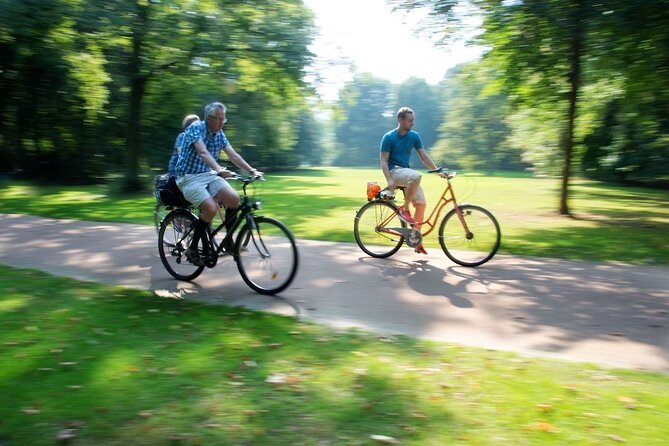
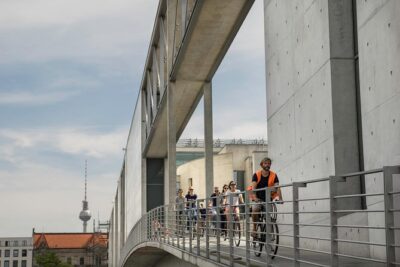
You ride an urban cruiser, with a helmet included, and follow a guide through bike lanes, garden paths, and quieter streets. The tour lasts about three hours and has a maximum of 15 people. That is large enough to provide a social feel, but still small enough for a guide to manage regular stops and explanations.
The tone matters here. Guide David is described as a true Berlin character, with strong subject knowledge and a good sense of humor. That combination suits this route, since several stops need a bit of context before their importance becomes clear.
More bike days around Berlin:
- Berlin: Sights and Highlights Bike Tour with a Local Guide
★ 4.8 · 2,698 reviews - Berlin Highlights 3-Hour Bike Tour
★ 5.0 · 948 reviews - Berlin City Bike Tour with Beer Garden Stop
★ 5.0 · 917 reviews
Starting at Poststraße and entering Tiergarten
The tour begins and ends at Free Berlin Bike Tours, at Poststraße 11 in central Berlin. Bike rental and the starting point are included, and the location is near public transportation.
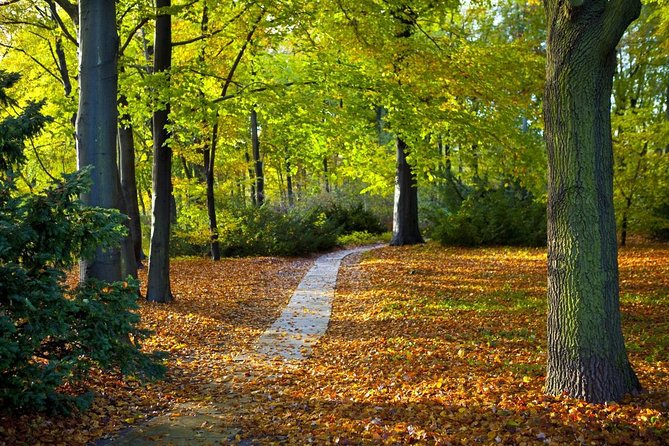
The first proper section takes you into Tiergarten, Berlin’s central park. You spend about 30 minutes here, using paths and quieter routes to get comfortable on the bike. This is a smart opening: you can settle into the saddle and learn the rhythm of the group before dealing with more complex city streets.
Tiergarten also gives you a useful contrast. Berlin may be known for its walls, war damage, memorials, and hard-edged modern buildings, but the city has a broad green center. The park makes the capital feel less crowded and gives the ride some breathing room.
The route is leisurely rather than athletic. You do not need this tour to be a serious cyclist, but you should be comfortable riding for three hours with repeated stops. Children must be accompanied by an adult, and most people can participate.
Nikolaiviertel and the place where Berlin began
From the park, the tour moves toward Nikolaiviertel, described as the place of Berlin’s origin. This small quarter sits in the middle of the city but has a quieter, more enclosed feel than the major avenues nearby.
Much of the quarter was destroyed and later remodelled during the 1980s. That detail makes it useful for understanding Berlin’s habit of rebuilding the past rather than simply preserving what survived. What you see is not an untouched medieval district. It is a later recreation shaped by changing ideas about how old Berlin should look.
The stop lasts about 10 minutes, so expect a concise explanation rather than a long walking visit. I like this kind of stop on a bike tour because the guide can give you the essential context and then keep the route moving.
Märkisches Museum and Berlin’s changing shape
Near Märkisches Museum, the group pauses to look at large 3D city models of Berlin. These models help show how the city is constantly renewed.
This is one of the more useful educational stops on the route. Berlin’s changes can be hard to understand from street level. A model lets you see the city as a whole and consider how new buildings, rebuilt quarters, housing projects, and open spaces fit together.
You spend about 15 minutes here. That is enough time to grasp the basic idea without turning the bike tour into a museum visit. The museum itself is not listed as an included admission, so you should not expect an indoor museum tour as part of the experience.
For me, the models add value because they tie together many of the later stops. The tour is not just showing you unusual places. It is asking how Berlin decides what to keep, what to rebuild, and what to replace.
A few more Berlin tours worth weighing up
- Berlin Highlights: 3-Hour Bike Tour
★ 4.9 · 809 reviews - Berlin: 3-Hour Street Art Tour
★ 4.7 · 778 reviews - Berlin: 3-Hour Secret Food Tour
★ 4.8 · 269 reviews - Berlin: 3-Hour Segway Tour
★ 4.7 · 112 reviews
Bears, Berlin’s name, and the city’s symbols
The next stop is Bärenzwinger Berlin, where the guide explores the connection between the name Berlin and bears. You spend about 10 minutes here.
That subject gives the ride a lighter turn. After discussions of destruction, rebuilding, and city planning, a question about bears offers a simple way into Berlin’s symbols and local identity. It is also the sort of detail that is easy to miss when you are rushing between major sights.
Do not expect a long animal visit or a separate admission experience. The stop is presented as a place for a short explanation about the name Berlin and its connection to bears. The value is in the story, not in spending a large part of the afternoon there.
Parochialkirche and Franziskaner Klosterkirche
The churches provide some of the strongest historical contrast on the route. At Parochialkirche, the guide covers religion, destruction, rebuilding, and designated survivors. Even the wording points to the wider Berlin theme: the city lost much, rebuilt much, and preserved certain pieces for specific reasons.
The stop lasts about 10 minutes. That is brief, but a bike tour benefits from these short doses of history. You get a reason to notice the building and its setting without being asked to sit through a full architectural lecture.
Franziskaner Klosterkirche offers another look at medieval Berlin. The church is described as an abandoned place and a rare memorial to the city’s medieval past. In a capital often associated with 20th-century conflict and modern design, that older layer can be easy to overlook.
Together, these two churches show why this tour is different from a standard highlights ride. You are not only seeing polished landmarks. You are also seeing damaged, altered, or partly forgotten places that reveal how uneven Berlin’s survival has been.
The Global Stone Project, Berlin’s unusual Stonehenge
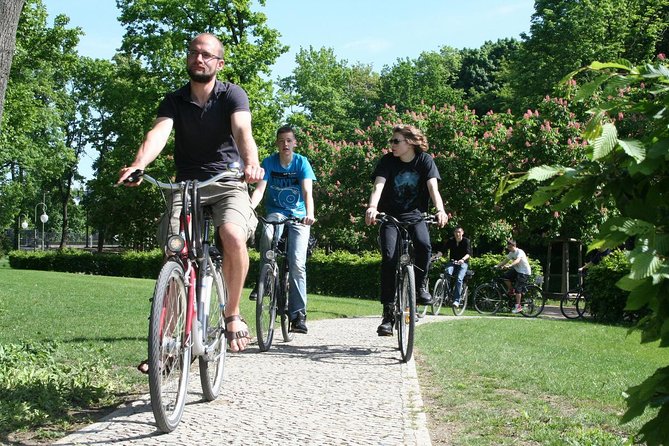
The Global Stone Project is one of the route’s strangest stops. It is presented as Berlin’s Stonehenge, with a theme involving love and difficulty.
You spend about 15 minutes here. The description is playful, and the site seems designed to prompt questions rather than deliver a straightforward history lesson. That makes it a good fit for the tour’s overall mood, which mixes serious city history with curious local details.
I would not book this ride expecting every stop to be a major monument. Some are valuable because they are unexpected. The Global Stone Project is likely to work best if you enjoy places that make you pause, look around, and ask why they are there.
Hansaviertel and the future imagined in 1957
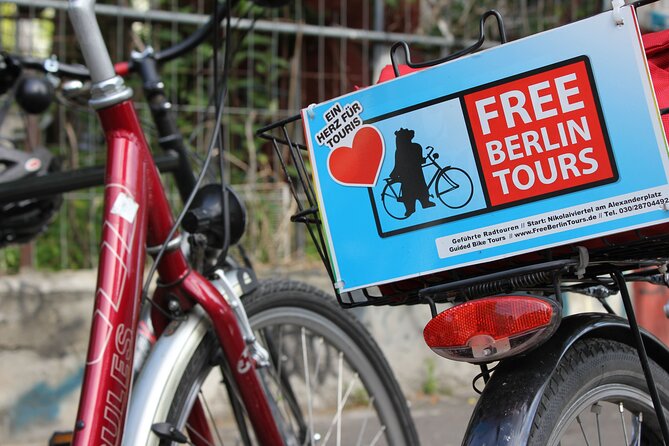
Hansaviertel shifts the focus from old Berlin to postwar modernism and housing. The stop looks at the future of housing from the perspective of 1957.
This is an important part of the tour because it shows that Berlin’s past is not only churches and ruined quarters. It also includes bold plans for how ordinary people should live. Housing design can tell you a great deal about a city’s politics, social goals, and hopes for the future.
You spend about 15 minutes here. The guide’s explanation should help you read the area as more than a collection of buildings. Look for the ideas behind the design, especially the belief that new forms of housing could improve daily life.
Hansaviertel also gives the route a useful balance. Nikolaiviertel looks back toward Berlin’s origins and later reconstruction. Hansaviertel looks forward, at least as imagined in the 1950s. Between them, you see two very different answers to the question of what Berlin should become.
Clärchens Ballroom and old Berlin charm
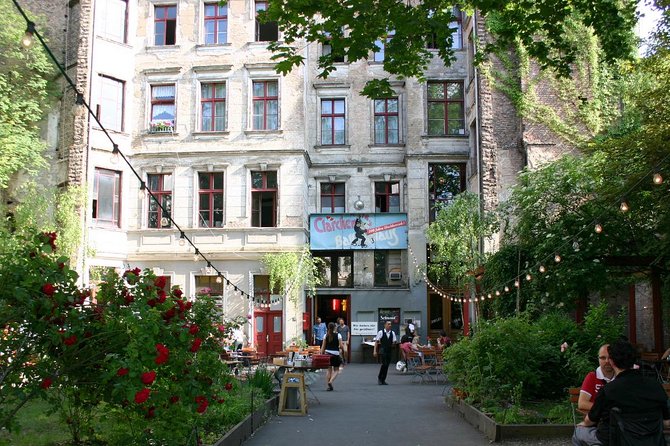
Clärchens Ballroom brings the tour into a more theatrical part of the city. The stop is framed around a place that has kept dancing while surrounded by a slightly morbid charm.
You spend about 10 minutes here. The ballroom adds atmosphere without requiring a long indoor visit, and it gives the tour a human scale. Cities are not only made of government buildings and memorials. They are also made of places where people gather, dance, flirt, and carry on through difficult times.
This stop may appeal to you if you like Berlin’s less polished side. The route does not pretend that every interesting place is neat or fully restored. Instead, it points to the city’s ability to keep using old spaces in new ways.
Scheunenviertel and the final urban contrast
The final listed stop is Scheunenviertel, a district known here for courtyard oases, shopping, dining, culture, art, and nightlife. You spend about 15 minutes exploring its character before returning to the starting point.
This is a good place to finish because it brings together several themes from the ride. You get older urban forms, changing businesses, cultural life, and the contrast between public streets and enclosed courtyards. The area also shows how parts of central Berlin have become fashionable and expensive.
The phrase urban paradise for the posh points to an issue worth keeping in mind. The district may be attractive and full of places to eat, shop, and go out, but it is not presented as an untouched local quarter. It is a part of Berlin shaped by renewal and rising appeal.
Once the stop is over, the ride returns to Poststraße 11. The full experience is about three hours, including the opening and closing time connected with the bike rental point.
What the $45.10 price gets you
At $45.10 per person, the tour sits at a reasonable price for a three-hour guided activity in a major European capital. Your fee includes the bicycle, helmet, and professional guide. It does not include food, drinks, hotel pickup, or drop-off.
The value comes from the route and the interpretation. If you rented a bike on your own, you could cover some of the same streets, but you would miss the links between the sites. The guide explains why a rebuilt quarter matters, how a city model helps you read Berlin, and why an abandoned church or modernist housing estate deserves attention.
The price is less compelling if you want a fast ride through every famous landmark. This is not a substitute for a dedicated tour of the Brandenburg Gate or Berlin Wall sites. It is better viewed as a second look at the city, or as an opening ride that helps you decide where to return later.
The small group limit also helps the price feel fair. With 5 to 15 people, the tour avoids the scale of a large bus group. Still, it is not a private experience, and the exact feel will depend on the day’s group size.
Language, weather, and what to bring
The standard tour is available only in German. If you need English, you should choose a private tour instead. This is the most important booking detail for many people, so check it before paying.
The tour operates in all weather. Berlin weather can change quickly, and three hours on a bicycle leaves you exposed to rain, wind, or cool temperatures. Dress for the forecast, and bring water and a small snack.
The lack of a planned food or drink break is the one clear practical weakness. A three-hour ride is manageable for many people, but you should not count on stopping at a café or shop during the route. Eat beforehand and carry what you need.
You receive confirmation when booking in most cases. If you book within two days of departure, confirmation may arrive within 48 hours and depends on availability. Free cancellation is available up to 24 hours before the start time, while cancellations or changes inside that window are not refunded or accepted.
Who will get the most from this ride
I would choose this tour if you want history with movement, local stories instead of a checklist of famous sights, and a route that shows Berlin’s awkward contrasts. It suits first-time visitors who have several days in the city, as well as repeat visitors who have already seen the major central landmarks.
It is especially good for you if you enjoy:
- Urban history told through small places
- Architecture and housing design
- Rebuilt districts and surviving ruins
- Quiet green routes through a large city
- A guide with personality and humor
- Seeing several neighborhoods in one outing
It is less suitable if you dislike cycling, need frequent meal stops, or want an English-language group tour. You should also think twice if you prefer long, detailed visits inside museums and churches. Most stops last 10 to 15 minutes, so the tour gives you a strong introduction rather than a full examination of each site.
Should you book the Tiergarten and hidden places bike tour?
Book it if you want to understand Berlin through its odd corners and changing neighborhoods. The combination of Tiergarten, medieval remains, city models, Hansaviertel, Clärchens Ballroom, and Scheunenviertel gives you a broad look at the city without the usual sightseeing script.
The strongest reasons to go are the unusual route, the relaxed cycling pace, and the chance to ride with a guide such as David, whose style combines humor with solid local knowledge. Bring water, confirm that German works for you, and arrive ready for all-weather riding.
Skip it if you need English, want a private experience, or expect a major landmark at every stop. For the right rider, though, $45.10 buys more than a bicycle rental. It buys a guided way to notice the Berlin that is easy to pass by.
FAQ
How long does the bike tour last?
The tour lasts approximately three hours, including the time connected with the departure and return point.
Where does the tour begin and end?
The tour begins at Poststraße 11, 10178 Berlin, Germany, and ends back at the same meeting point.
Is bicycle rental included?
Yes. Use of a bicycle and helmet is included in the price.
What language is the tour offered in?
The standard tour is available only in German. For English, you should choose a private tour.
How many people can join the tour?
The tour requires a minimum of 5 participants and has a maximum of 15 participants.
Do children need an adult with them?
Yes. Children must be accompanied by an adult.
Does the tour operate in bad weather?
Yes. The tour operates in all weather conditions, so you should dress appropriately.
Can I cancel for a full refund?
Yes. You can cancel at least 24 hours before the experience start time for a full refund. Cancellations or changes made less than 24 hours before the start time are not refunded or accepted.
Just added around Berlin
- Berlin Highlights in One Day★ 5.0 · 3 reviews
- Private Berlin One Day Tour with a Local: See the City Unscripted★ 3.5 · 3 reviews
- Individual city tour Berlin for max. 8 persons★ 5.0 · 3 reviews
- Transfer from Berlin Schönefeld Airport (SXF) to Berlin city Hotels – ROUND TRIP★ 4.0 · 3 reviews
- Berlin: Museum Island Tour★ 5.0 · 3 reviews
- Private Analogue Photography Experience in Berlin★ 5.0 · 3 reviews
- Berlin: Local Food Tour in Secrets Hidden Gems★ 4.0 · 3 reviews
- Potsdam Highlights – Private sightseeing tour by minibus★ 5.0 · 3 reviews
Cycling Tours, compared.
Sights and Highlights Bike Tour with a Local Guide
Read our review →
Berlin Highlights Sightseeing Bike Tour in Small Groups
Read our review →
Alternative Bike Tour of Kreuzberg & Friedrichshain
Read our review →
Guided Bike Tour of the Berlin Wall and Third Reich
Read our review →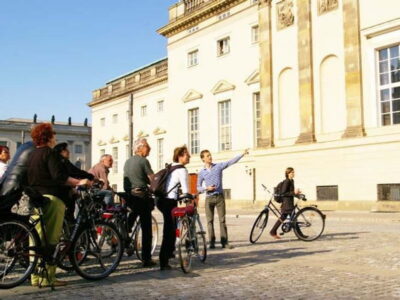
Browse the lists this tour appears in