
Review · 1-DAY TOURS
Berlin Highlights in One Day
Berlin’s story is written in sharp contrasts: Prussian avenues beside Cold War scars, grand monuments beside modern glass, and former East and West Berlin still revealing their separate pasts. This six-hour private tour gives you a fast but personal way to connect those pieces, with a local guide shaping the route around your interests.
I like the custom itinerary, which lets you focus on history, architecture, the Wall, or the city’s modern culture. I also like the chance to see both central sights and less obvious corners with a resident guide such as Luciana, whose Spanish-language explanations are useful for many visitors. The main consideration is the pace: six hours is enough for an excellent overview, but not for extended visits inside Berlin’s museums or monuments.
In This Review
- Key points at a glance
- Why six hours works for Berlin’s big picture
- Starting in the west: Memorial Church and Kurfürstendamm
- Victory Column and the route toward central Berlin
- Brandenburg Gate and the Memorial to the Murdered Jews of Europe
- Potsdamer Platz and the city rebuilt in modern glass
- Checkpoint Charlie and the physical remains of the Wall
- Hackescher Markt, Museum Island, and Alexanderplatz
- Baroque Berlin and the 800-year story
- How the private format affects value
- Pace, languages, and practical comfort
- Who should book this Berlin day tour?
- Should you book it?
- FAQ
- How long does the Berlin Highlights in One Day tour last?
- How many people can join the private group?
- What languages are available?
- Is hotel pickup and drop-off included?
- Are public transportation tickets included?
- Are food and drinks included?
- Is the tour wheelchair accessible?
- Can the route and pace be customized?
Key points at a glance
- A full six-hour private outing: Your group of up to six has the guide’s attention rather than following a large crowd.
- A route built around you: Share your interests when booking so the pace and stops can be adjusted.
- Berlin’s divided past made clear: Compare former East and West Berlin through places such as Checkpoint Charlie, the Wall remains, Kurfürstendamm, and Alexanderplatz.
- Major sights across the city: Expect landmarks including Brandenburg Gate, Museum Island, the Victory Column, Potsdamer Platz, and the Memorial to the Murdered Jews of Europe.
- Public transport connects the route: Transport is used during the day, but your tickets are not included.
- A flexible, outdoor-focused format: Wear good shoes and weather-ready clothing, since much of the experience takes place outside.
Why six hours works for Berlin’s big picture
Berlin is too spread out for a useful city overview on foot alone. This tour solves that problem by combining walking with public transportation, allowing you to connect the western city center, the former East, the old government quarter, and districts shaped by reunification.
You are not signing up for a single theme. The route can cover Berlin’s nearly 800-year story, from its early beginnings along the Spree to its role as Prussian capital, divided Cold War city, and modern German capital. That broad sweep is the main attraction.
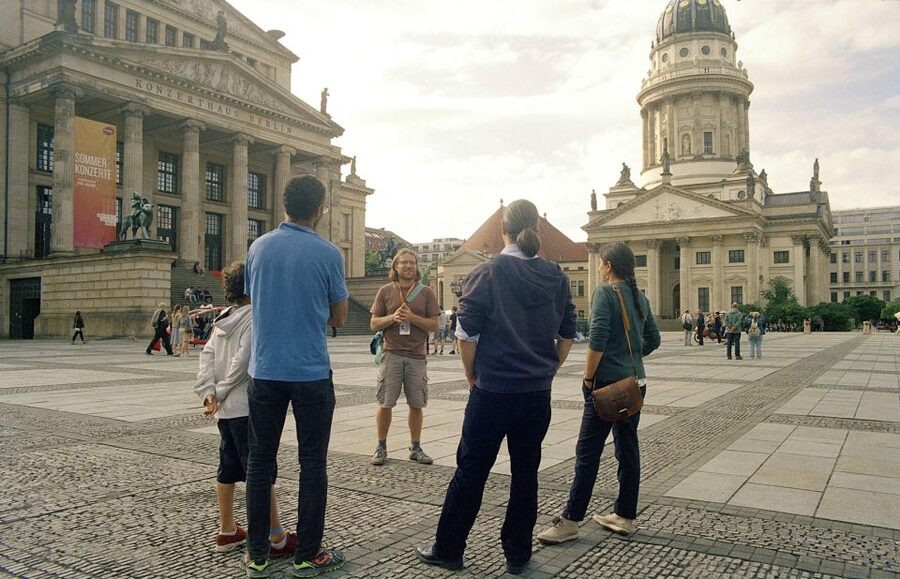
The private format matters here. In a group of up to six, you can ask why a square looks the way it does, pause for a clearer explanation, or shift attention if one part of Berlin catches your interest. The guide can adjust the pace for the people in your group rather than keeping to a rigid public schedule.
Still, keep your expectations realistic. The tour is designed to show you Berlin’s major sights and explain their place in the city’s story. It is not a six-hour museum visit, and most of the program is outdoors. You will see many places, but some stops may be brief.
A few more Berlin tours worth weighing up
- Berlin Complete in one day
★ 5.0 · 222 reviews - From Berlin: Sachsenhausen Concentration Camp Day Trip
★ 4.7 · 52 reviews - Private Tour: Potsdam Day Trip from Berlin
★ 4.5 · 43 reviews
Starting in the west: Memorial Church and Kurfürstendamm
If your route begins in western Berlin, the Memorial Church and Kurfürstendamm offer a useful introduction to the city’s postwar split. Kurfürstendamm, often shortened to Ku’damm, became the best-known commercial boulevard of West Berlin. Nearby Bahnhof Zoo also carries the flavor of the former western center.
The Memorial Church is especially useful as a first stop because it connects old Berlin with the destruction of World War II. Its damaged tower remains beside a newer church, making the contrast easy to read without a long lecture. You can see how Berlin chose to preserve a scar rather than rebuild everything into a clean new shape.
The western portion of the route also helps balance the better-known sights in the former East. You will not get only the royal avenues and government monuments of central Berlin. Instead, you see how West Berlin developed its own identity while surrounded by East German territory.
This area is not the strongest part of the tour if your main goal is medieval Berlin or the Holocaust memorials. It is valuable for orientation, though, and it helps you understand that Berlin was not divided into two identical halves. Each side had its own streets, institutions, symbols, and daily rhythm.
Victory Column and the route toward central Berlin
The Victory Column gives the tour a chance to explain Prussia’s rise and Berlin’s changing role as a capital. Its location in the Tiergarten area also brings a different visual note: open parkland, long avenues, and a grand urban plan rather than tight historic streets.
The column is linked to Prussian military victories, so it can open a discussion about the era when Berlin became the center of Prussia. That period shaped the city’s avenues, monuments, and political importance. You will see that Berlin’s story did not begin with the twentieth century, even though the recent past often gets most of the attention.
The tour focuses on outdoor viewing, so do not assume that climbing every monument or entering every building is part of the plan. The value here is the guide’s explanation of how the site fits into the city’s development, plus the chance to see how Berlin’s broad avenues connect its major districts.
Brandenburg Gate and the Memorial to the Murdered Jews of Europe
Brandenburg Gate is one of the essential Berlin stops, but its meaning changes depending on the era you are discussing. It once marked a royal entrance, later became a symbol of division, and now represents a reunited German capital. A guide can help you read those layers instead of treating it as just a handsome photo stop.
The gate is close to the Memorial to the Murdered Jews of Europe, which gives the central route its most serious moment. The memorial’s field of concrete stelae is meant to be experienced by walking through it, not simply viewed from a distance. The changing height and uneven paths create a setting that calls for quiet attention.
This section needs a respectful pace. You may want time to walk through the memorial on your own, even while the guide provides historical context. Since the tour covers many parts of Berlin, ask early if this site is a priority for your group.
The nearby government quarter and Unter den Linden also show how Berlin presents itself today. Former royal planning, twentieth-century destruction, division, and national reunification all meet within a fairly compact part of the city.
A different side of Berlin on the same trip:
- Berlin: Reichstag, Dome and Government District Guided Tour
★ 4.7 · 18,288 reviews - Berlin: 1-Hour City Tour by Boat with Guaranteed Seating
★ 4.3 · 16,993 reviews - Berlin: Boat Tour Along the River Spree
★ 4.4 · 11,252 reviews - Discover Berlin Half-Day Walking Tour
★ 5.0 · 9,624 reviews
Potsdamer Platz and the city rebuilt in modern glass
Potsdamer Platz is one of Berlin’s clearest examples of post-reunification change. Once cut through by the Wall, it became a major redevelopment zone after German reunification. The Sony Center, with its futuristic roof and modern architecture, provides a sharp contrast to Brandenburg Gate and Unter den Linden.
I find this stop useful because it keeps the tour from becoming a parade of old monuments. Berlin is not a preserved historic town. It is a city that has repeatedly erased, rebuilt, and reinvented parts of itself.
The drawback is that modern architecture can feel less emotionally immediate than the Wall or the Holocaust memorial. If you prefer older buildings, tell the guide so the route can give more weight to Baroque Berlin, Museum Island, or the former royal center.
Potsdamer Platz is also a reminder of the tour’s limits. You can understand the area’s role and see its main features, but six hours does not allow for a detailed architectural study of every building or a long stop at each complex.
Checkpoint Charlie and the physical remains of the Wall
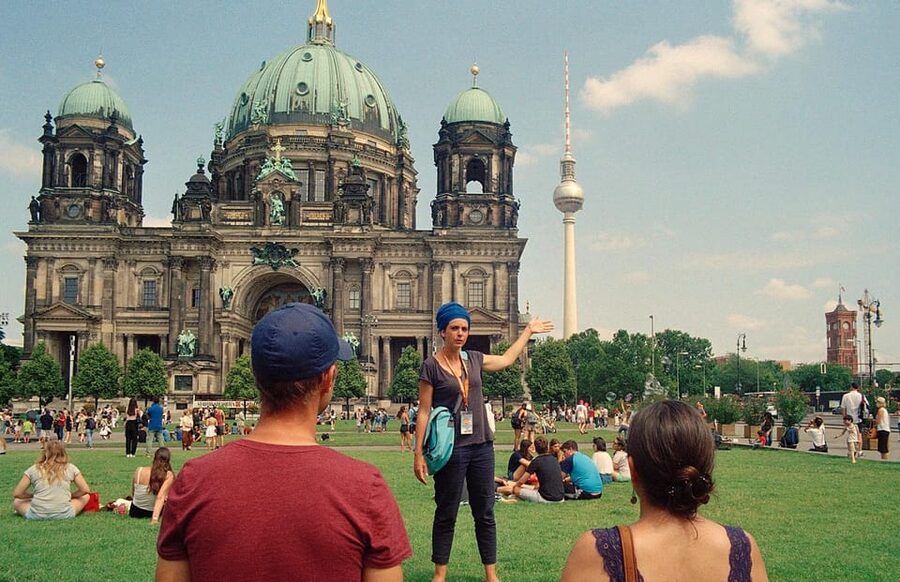
Checkpoint Charlie is one of Berlin’s best-known Cold War locations. It was a crossing point between the American and Soviet sectors, and its name remains tied to the years when Berlin was divided by checkpoints, barriers, and political tension.
The site today is part historical marker and part heavily visited city attraction. That makes the guide’s explanation especially useful. You can separate the real history of the crossing from the modern presentation around it.
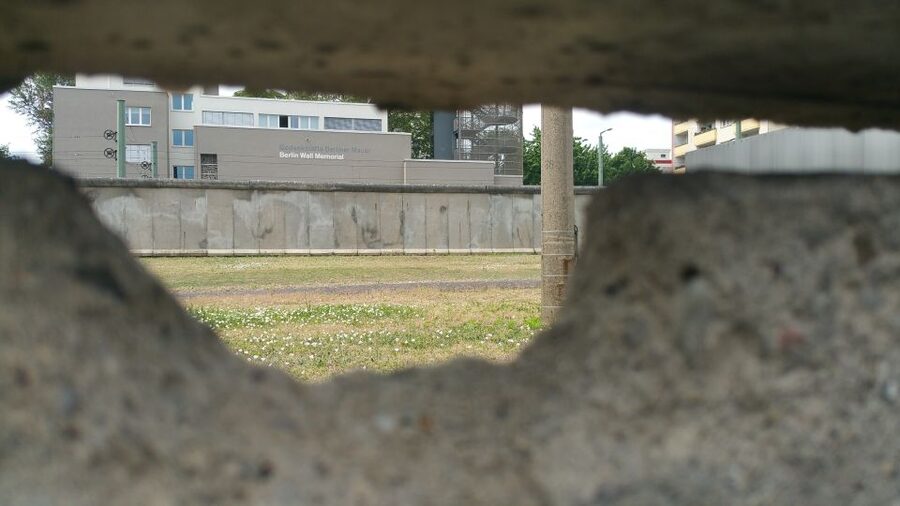
The remains of the Berlin Wall offer a different kind of evidence. A surviving stretch, however modest, helps you understand that the border was not an abstract line on a map. It cut through neighborhoods, streets, and ordinary routines. Your guide can place the remaining wall fragments within the larger story of East Germany, West Berlin, escape attempts, and reunification.
Do not expect a long stop at every Wall location. The tour’s strength is comparison: you see the former border, then move through areas that now function as one city. That movement helps make Berlin’s transformation easier to grasp.
Hackescher Markt, Museum Island, and Alexanderplatz
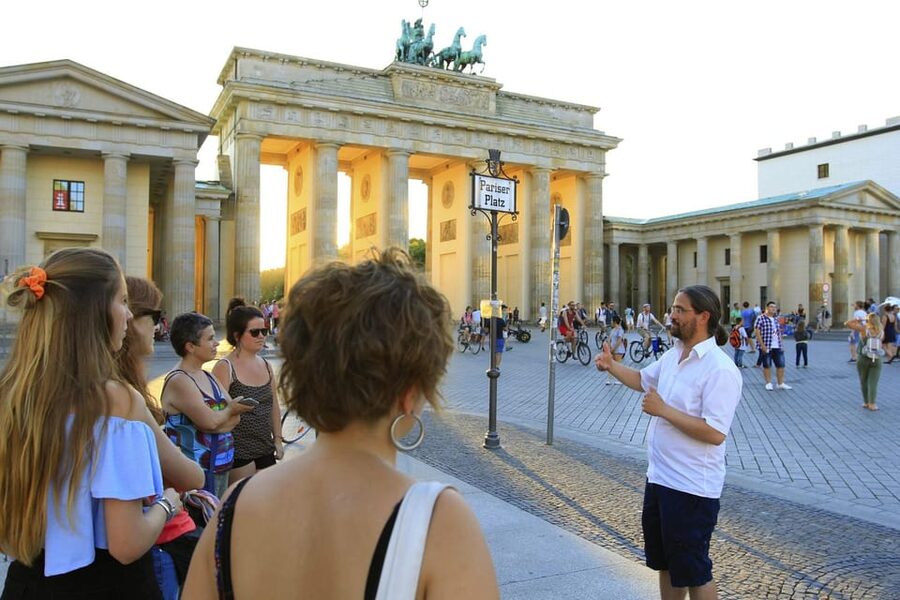
The route through Hackescher Markt brings you into the former East Berlin center. This area is useful for seeing how the eastern side has changed, particularly as shops, restaurants, and creative spaces have filled old urban blocks. The square itself is lively, but the tour’s main purpose is to explain its place in Berlin rather than turn it into a food outing.
Museum Island offers one of the city’s grandest architectural settings. The group of museums sits in the historic center beside the Spree, and the area reflects Berlin’s role as a Prussian capital and cultural center. You can admire the buildings from outside and decide if you want to return later for a full museum visit.
That distinction is important. Museum admission is not part of the tour information provided, and the experience is described as an outdoor tour. If the museums are high on your list, use this stop to get oriented, then plan a separate visit.
Alexanderplatz gives you another strong contrast. Its broad open space, major transport connections, and East German associations make it a useful counterpoint to the classical buildings along Unter den Linden. Together, Hackescher Markt, Museum Island, and Alexanderplatz show how different parts of the former East have been adapted for present-day Berlin.
Baroque Berlin and the 800-year story
Berlin can seem like a city built almost entirely in the twentieth century, but the tour also reaches back to its Baroque period. This was when Berlin grew as the capital of Prussia, leaving behind avenues, squares, court buildings, and formal city planning.
You will not get a full academic course in medieval or Baroque Berlin in six hours. You will get something more practical for a first visit: a timeline that connects the early settlement on the Spree with the royal capital, the wartime destruction, the GDR period, and reunification.
That long view is one of the tour’s strongest features. A wall fragment makes more sense when you know what the city was before division. A grand avenue means more when you understand the political power that shaped it. Even a modern square becomes easier to read when you know what stood there before the war.
The guide’s role is important here. Names, dates, and buildings can blur together during a busy day. A local guide can turn separate stops into a connected story, especially if you ask questions about the periods that interest you most.
How the private format affects value
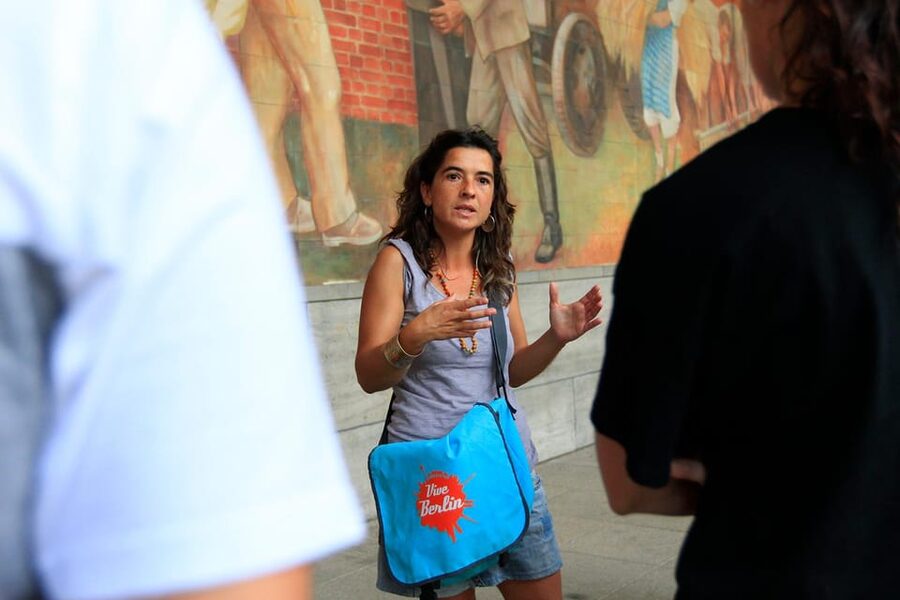
The price is $511 for a private group of up to six. For a full group, that works out to about $85 per person for six hours, before public transport tickets and any food or drinks. For one or two people, the per-person price is much higher, so the format offers its best value to families or small groups who want a private day rather than separate tickets for a standard group tour.
Hotel pickup and drop-off add practical value. You do not need to find an unfamiliar meeting point, and the day can be shaped around the most useful start and end locations. You should wait in your hotel lobby 10 minutes before pickup.
The tour uses public transportation, but tickets are not included. That is a small extra cost, yet it is worth remembering when comparing the total price. Food and drinks are also separate, so plan for your own break during the six-hour outing.
I would choose this tour if you want context, flexibility, and a broad first look at Berlin. I would not choose it if you want long indoor visits, a single specialist subject, or the lowest possible price per person.
Pace, languages, and practical comfort
The guide can tailor the pace to the participants, which is useful for mixed-age groups or anyone who needs a slower day. The experience is wheelchair accessible, but much of the route takes place outdoors and includes public transportation, so you should share any specific mobility needs when booking.
English, German, and Spanish are available. Luciana led the experience for two Spanish-speaking groups, and her role received especially strong praise for clear explanations, a prepared approach, and allowing the group to see Berlin at its own rhythm. That makes her a useful name to request if her availability matches your date, although the available information does not promise that she will guide every departure.
Comfortable shoes are essential. You will be moving between monuments, squares, streets, and transport links, and Berlin weather can change quickly. Wear clothing suited to the forecast rather than relying on the idea that a city tour is mostly a slow walk.
Book as early as possible and send your wishes in advance. Tell the provider if you care most about the Wall, the former East, Prussian Berlin, architecture, memorial sites, or modern culture. The more specific you are, the more useful the private format becomes.
Who should book this Berlin day tour?
This experience suits first-time visitors who want a firm sense of the city before exploring particular museums and neighborhoods on their own. It also works well for families, friends, and small groups who value a private guide and hotel pickup.
It is especially helpful if Berlin’s divided past feels confusing. The route links Checkpoint Charlie, Wall remains, Alexanderplatz, Kurfürstendamm, Brandenburg Gate, and Potsdamer Platz in a way that lets you compare former East and West Berlin directly.
Spanish-speaking visitors may find Luciana’s guiding style appealing, based on the strong response to her clear and informative Spanish tours. English and German speakers also have a choice of language.
I would think twice if your ideal day means entering every major museum, lingering at each monument, or taking a slow food-focused walk. The tour covers a lot of ground, and its purpose is orientation and context. You will see more of Berlin than you could comfortably cover on foot in one day, but you will need a return visit for deeper exploration.
Should you book it?
Book this tour if you want Berlin explained as a connected city rather than a checklist of famous sites. The private group setup, hotel pickup, multilingual guiding, and flexible routing make the $511 cost easier to justify when shared by six people.
The best booking strategy is simple: reserve early, name your priorities, bring good shoes, and budget for public transport and refreshments. Choose it for a broad, thoughtful introduction to Berlin, then use the rest of your trip to return to the places that deserve more time.
FAQ
How long does the Berlin Highlights in One Day tour last?
The tour lasts six hours.
How many people can join the private group?
The price covers a private group of up to six people.
What languages are available?
The live guide is available in English, German, and Spanish.
Is hotel pickup and drop-off included?
Yes. Hotel pickup and drop-off are included, and you should wait in the hotel lobby 10 minutes before the scheduled pickup.
Are public transportation tickets included?
No. The tour uses public transportation, but you must pay for the transport tickets separately.
Are food and drinks included?
No. Food and drinks are not included.
Is the tour wheelchair accessible?
Yes. The activity is listed as wheelchair accessible.
Can the route and pace be customized?
Yes. The guide tailors the tour to the group, and you should share your wishes as early as possible so the route and pace can be adjusted.
Just added around Berlin
- Private Berlin One Day Tour with a Local: See the City Unscripted★ 3.5 · 3 reviews
- Individual city tour Berlin for max. 8 persons★ 5.0 · 3 reviews
- Transfer from Berlin Schönefeld Airport (SXF) to Berlin city Hotels – ROUND TRIP★ 4.0 · 3 reviews
- Berlin: Museum Island Tour★ 5.0 · 3 reviews
- Private Analogue Photography Experience in Berlin★ 5.0 · 3 reviews
- Berlin: Local Food Tour in Secrets Hidden Gems★ 4.0 · 3 reviews
- Berlin & The Third Reich Private Guided Tour★ 5.0 · 3 reviews
- Potsdam Highlights – Private sightseeing tour by minibus★ 5.0 · 3 reviews
1-Day Tours, compared.
Private Day Trip to Potsdam from Berlin by Train
Read our review →
Berlin in one day – day tour with an expert guide
Read our review →
Potsdam Day Trip from Berlin with a Local: Private & Personalized
Read our review →
Browse the lists this tour appears in