
Review · BERLIN
Produce Techno and House Music in Berlin
Berlin’s club sound begins with hands-on work: a drum pattern, a bass line, a few knobs, and a patient ear. In this two-hour studio session, Andy Sexton walks you through the making of a house or techno track inside an industrial building in the city’s clubbing district.
I like the small group of up to four, which gives you a real chance to touch the equipment instead of watching from the back. I also like the mix of modern software with vintage synthesizers, drum machines, microphones, piano, guitar, and percussion. The main thing to consider is the short running time. You can create a track and learn a clear working method, but you will not master music production in one afternoon.
In This Review
- Key points to know before you book
- Making Berlin techno from the inside
- What happens during the two-hour session
- 1. Getting familiar with the studio
- 2. Programming synthesizers and drum machines
- 3. Recording and arranging the track
- 4. Mixing the track for club play
- Why the small group changes the experience
- Andy’s teaching style and who will benefit
- The studio equipment is part of the appeal
- Is $147 fair for two hours?
- Practical details for a smooth visit
- Book this if you want to make, not just hear, Berlin music
- FAQ
- Where does the music production session take place?
- How long does the experience last?
- Who teaches the session?
- Is the class taught in English?
- Do I need previous music production experience?
- What will I learn to do?
- How many people can join the group?
- Is the studio wheelchair accessible?
- What is the minimum age?
Key points to know before you book
- You make a track, not just watch a demonstration: The session covers programming, recording, arranging, and mixing.
- Andy Sexton teaches in English: His approach suits complete beginners and people who already make music.
- The studio has character and range: You can work with professional software, modern gear, vintage equipment, and acoustic instruments.
- The group is capped at four people: This keeps the session personal and useful for hands-on learning.
- The final mix is prepared for club play: You leave with a better idea of how a finished groove is shaped.
- The experience is accessible to newcomers: No previous production skills are needed, but participants must be at least 10.
Making Berlin techno from the inside
This is not a club tour, a DJ set, or a lecture about Berlin nightlife. You enter a working music studio and see how electronic music is built from its smallest parts.
That distinction matters. Berlin’s house and techno culture can seem mysterious from the dance floor. The finished track may sound simple, but its pulse depends on choices about tempo, rhythm, bass, texture, space, and arrangement. Andy’s session gives you a practical way to hear those choices.
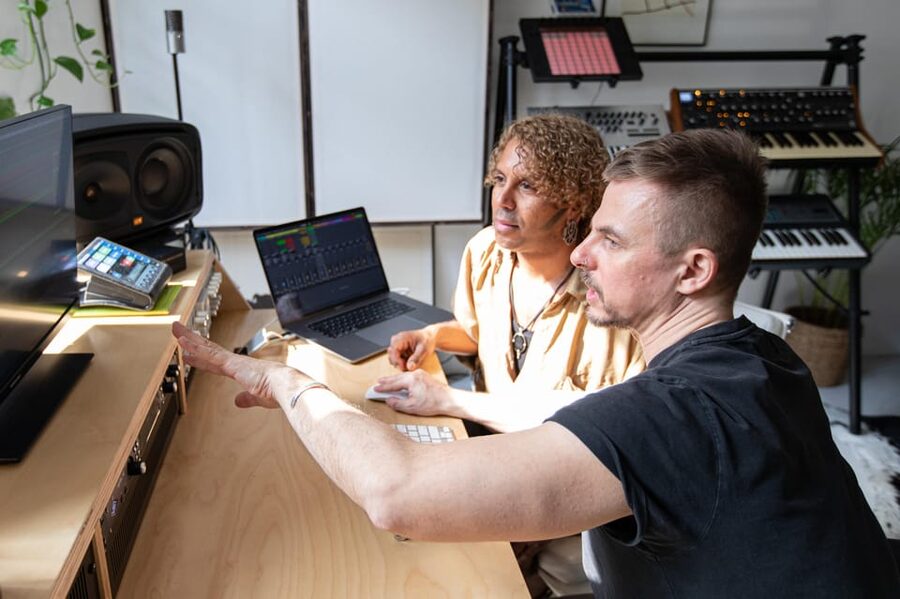
You start with the basic tools of electronic production. Synthesizers create tones and bass sounds. Drum machines provide the kick, snare, hi-hat, and other rhythmic pieces. Professional software lets you record, edit, arrange, and balance those sounds.
You do not need to arrive with a song idea or a home studio. The session is designed for people who want to make music but do not know how to begin. That makes it a useful introduction for curious Berlin visitors, especially if you have spent the night hearing techno and wondered how the music comes together.
Other Berlin tours people book alongside this one:
- Berlin: Reichstag, Dome and Government District Guided Tour
★ 4.7 · 18,288 reviews - Berlin: 1-Hour City Tour by Boat with Guaranteed Seating
★ 4.3 · 16,993 reviews - Berlin: Boat Tour Along the River Spree
★ 4.4 · 11,252 reviews
What happens during the two-hour session
The exact order can change with the group, but the experience is built around a complete production process. You are not simply shown a few machines and sent home with a vague sense of how they work.
1. Getting familiar with the studio
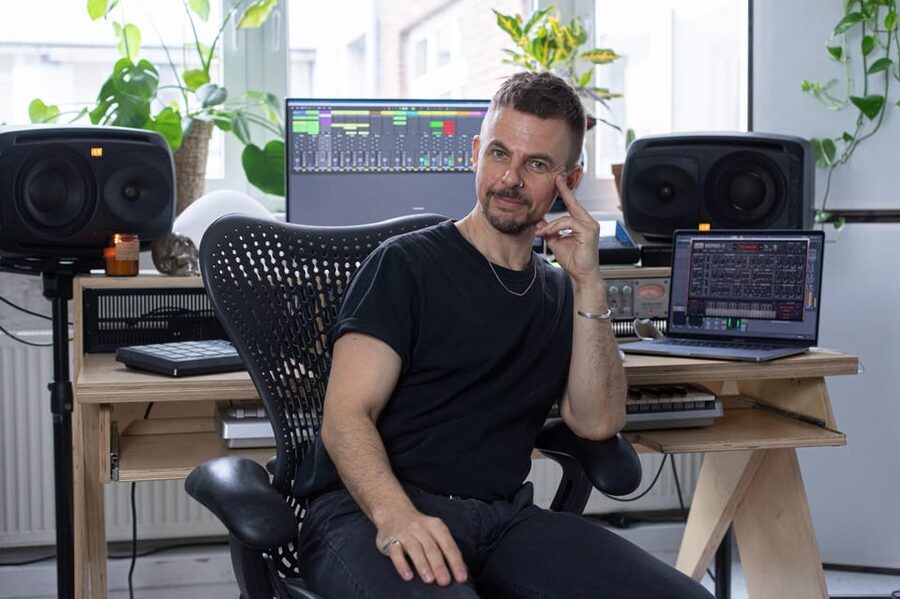
The session takes place in a professional studio in the heart of Berlin’s clubbing district. The meeting point is the front door of a large industrial building with reddish-brown brick. Arrive a few minutes early so you are not trying to find the entrance while the session is starting.
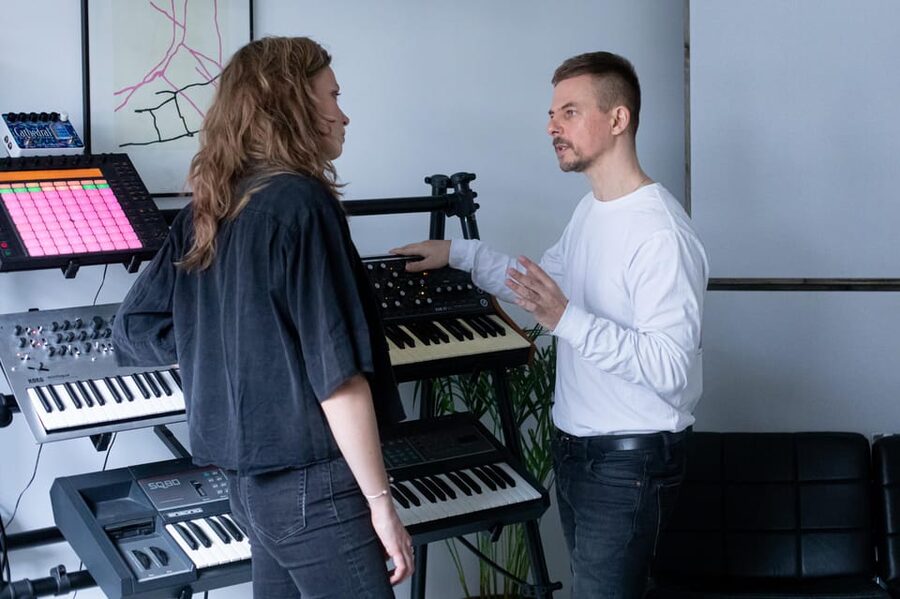
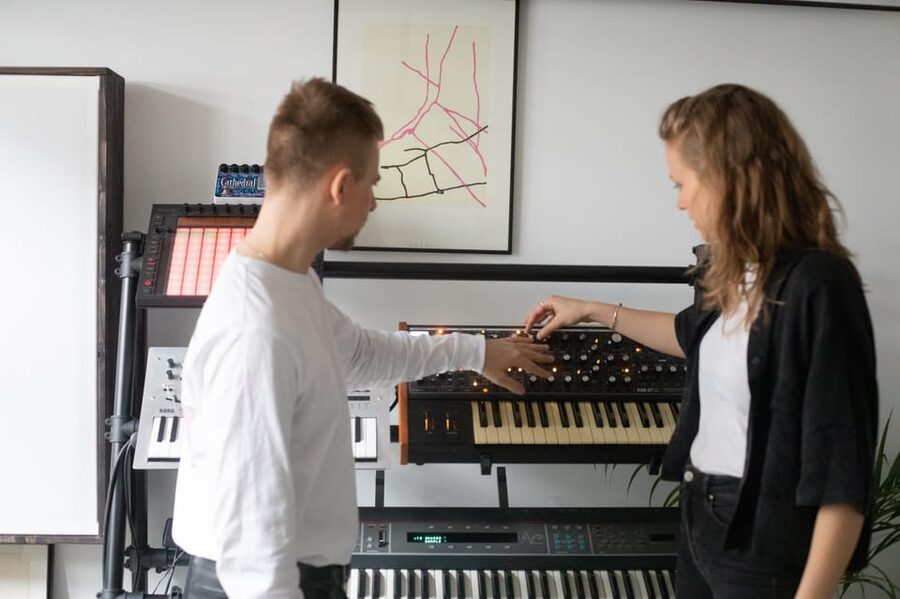
Inside, you can expect access to music production software and a selection of modern and vintage equipment. The studio also has microphones and acoustic instruments, including piano, guitar, and percussion. Not every instrument needs to appear in your track, but the range helps show that electronic music can include much more than computer-generated sounds.
For a first-time producer, the equipment may look intimidating. That is where a small group helps. With no more than four participants, you should have room to ask simple questions and follow the steps without feeling rushed by a large class.
2. Programming synthesizers and drum machines
The first major creative task is shaping sound. Andy introduces synthesizer and drum machine programming, showing how raw tones and beats become the parts of a house or techno track.
You may begin with a beat, a bass sound, or another musical idea. The useful lesson is not just which button to press. It is learning how small changes affect the groove. A drum pattern can feel tight, loose, heavy, or sparse. A synthesizer can provide a low bass pulse or a brighter sound that adds movement.
This is a good part of the session for beginners because you can hear cause and effect quickly. You change a setting, play the loop, and hear what happened. For more experienced music makers, the value is different. You can use the studio’s equipment and Andy’s method to rethink how you build grooves and organize your work.
A different side of Berlin on the same trip:
- Discover Berlin Half-Day Walking Tour
★ 5.0 · 9,624 reviews - Berlin: Hop-on Hop-off Bus Tour with Live Commentary
★ 4.3 · 8,579 reviews - Berlin: Government District around the Reichstag Guided Tour
★ 4.7 · 8,447 reviews - Berlin: Reichstag, Plenary Chamber, Cupola & Government Tour
★ 4.6 · 8,422 reviews
3. Recording and arranging the track
Once the basic sounds are in place, you record and arrange a house or techno track in professional software. This is where a loop becomes a piece of music.
Arrangement means deciding when elements enter, when they drop away, and how the track moves from one section to the next. A steady club track still needs structure. The kick, bass, percussion, and synth parts have to work together rather than compete for attention.
The workshop’s strongest promise is that you work toward a finished result in a short time. That gives the lesson a clear purpose. You are not learning isolated technical tricks. You are applying them to one small production from beginning to end.
A two-hour class cannot cover every feature of a recording program. It can, however, show you a sensible workflow. One participant described learning useful methods and frameworks that could help long after the session. That is the sort of benefit to look for here: a starting system you can use later, not a certificate or a full professional qualification.
4. Mixing the track for club play
The final stage is mixing down the track and preparing it for playing in a club. Mixing is the point where the separate parts need to sit together as one piece.
You learn why balance matters. The kick should not disappear under the bass. Percussion should add motion without turning the track into noise. Synthesizer parts need enough space to be heard. The goal is not just to make many sounds. It is to make the whole track function.
This section may be especially useful if you have experimented at home and found that your music sounds crowded or flat. The session gives you a basic sense of how production decisions affect the finished result.
Some participants have extended the session and taken a small track home. That extra time is not part of the stated two-hour schedule, so you should not book assuming it will happen. Still, it shows that the format can lead to a concrete result instead of ending with a quick software demonstration.
Why the small group changes the experience
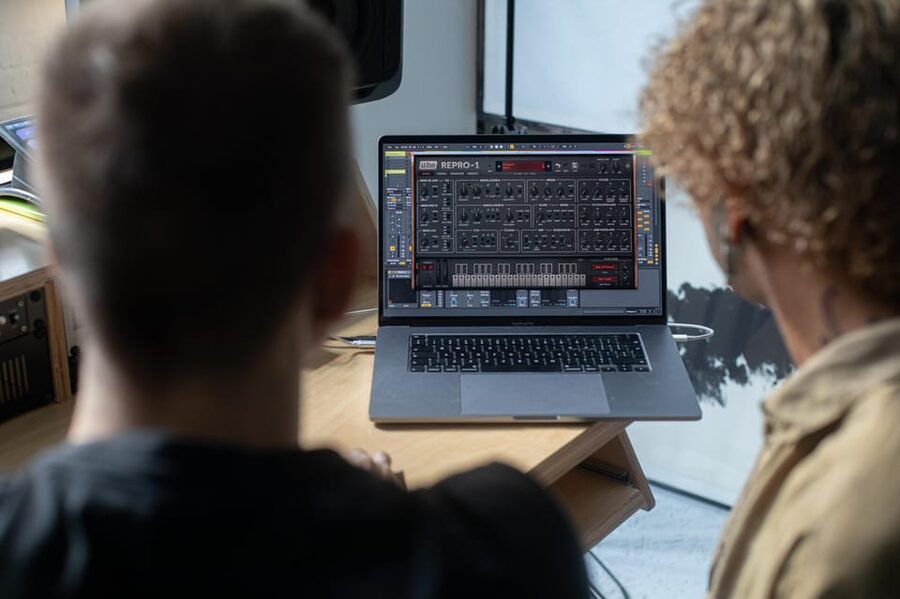
Four people is a useful limit for a practical class. In a large workshop, you might spend most of your time looking over someone else’s shoulder. Here, the format is better suited to questions, experimentation, and direct work with the tools.
The small size also makes the session less formal. You can ask basic questions without worrying that you are slowing down a room full of experienced producers. That matters because music software has its own language, and beginners can easily feel lost when instructors move too quickly.
At the same time, the group size means your final track is a shared activity unless you book or attend in a way that gives you more individual control. The supplied information does not promise a private lesson. If you need one-to-one coaching, confirm the arrangement before booking.
Andy’s teaching style and who will benefit
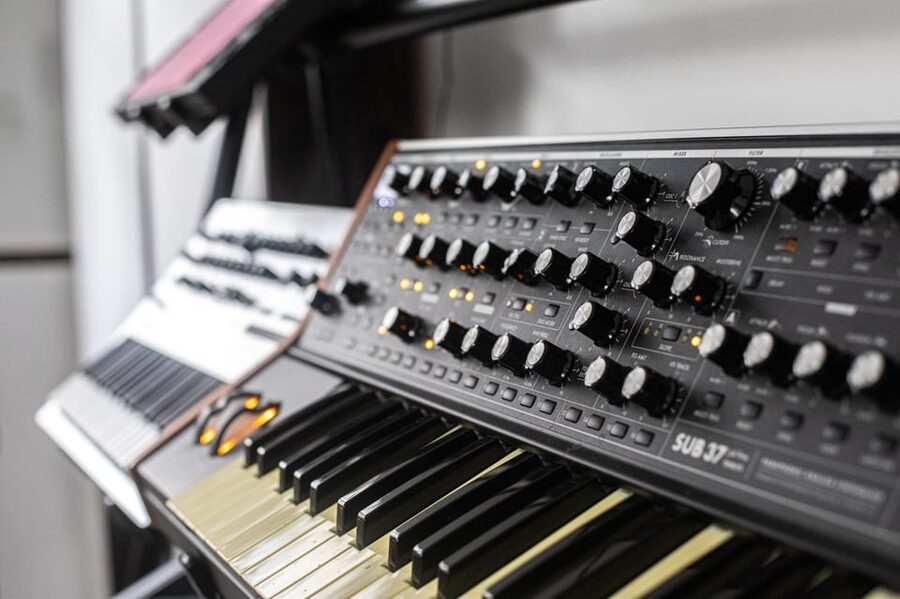
Andy Sexton is presented as both producer and instructor. The strongest part of his role is the combination of technique and creative thinking. He does not only show how to operate a synthesizer or drum machine. He also explains a way to organize the work and approach music making.
That makes this a good fit for three kinds of people:
- Complete beginners who want a friendly first step into production.
- Existing music makers who want to improve their workflow, grooves, or use of hardware.
- Berlin music fans who want to understand the craft behind the city’s club sound.
The session can also work for a mixed-ability group. One booking included a person with cognitive impairment who wanted to produce music, and Andy adapted with empathy and patience. A language barrier was present in that case, but the group still created a song together. The official teaching language is English, so you should be comfortable following instruction in English, while the hands-on nature of the class may help make concepts easier to grasp.
The minimum age is 10. Children under 10 cannot take part. This is not a children’s entertainment activity, though an older child with a real interest in music could find it rewarding.
The studio equipment is part of the appeal
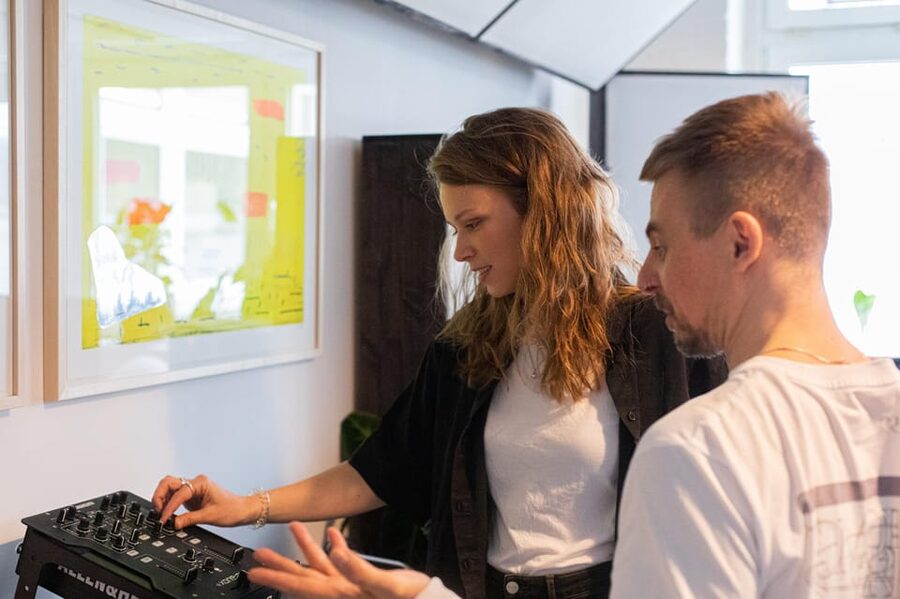
The room itself adds value. You get access to professional music production software, modern equipment, vintage gear, microphones, and acoustic instruments. That mix gives you more than a standard computer lesson.
Vintage equipment can make the session feel connected to the physical side of music making. You turn knobs, press keys, tap out rhythms, and hear changes immediately. Modern software then gives you the control needed to record, edit, arrange, and mix those sounds.
The piano, guitar, and percussion also broaden the picture. House and techno are often described through machines, but the studio shows that producers can combine electronic and acoustic sources. You might find that a simple percussion sound or instrument part changes the character of a loop.
Still, equipment alone does not make a great lesson. The useful part is learning how to choose sounds and place them in a track. Try not to treat the session as a gear-shopping tour. Its value comes from using the equipment within a clear production process.
Is $147 fair for two hours?
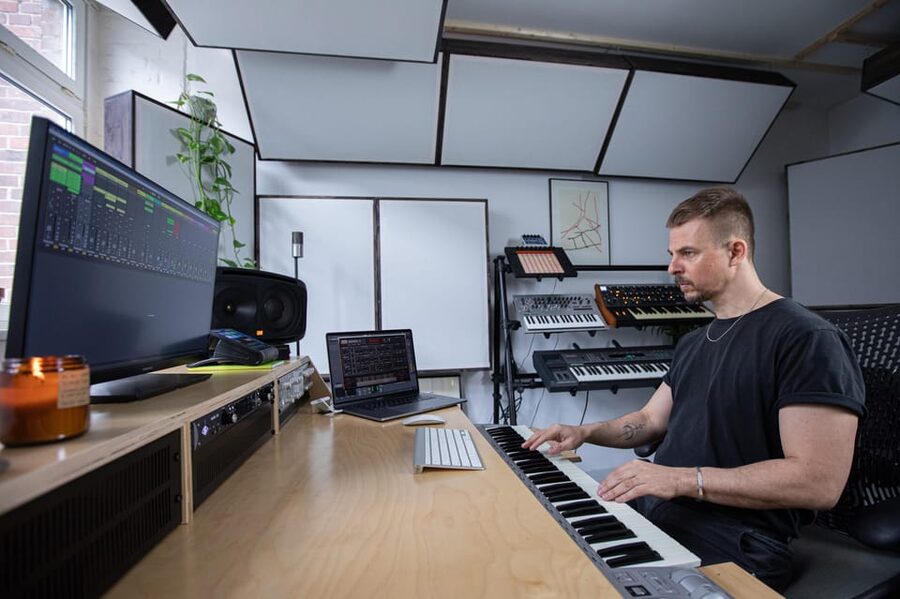
At $147 per person, this is not a cheap way to fill two hours. You are paying for specialist instruction, studio access, use of professional software, and a small class rather than a general sightseeing activity.
The price makes more sense if you want active participation. A club ticket gives you an evening of music. This experience gives you a chance to examine how the music is made and create a track of your own. It may also save you from buying equipment or software without knowing how to use it.
For a casual visitor with no interest in making music, the cost is harder to justify. You could learn about Berlin’s club scene in less expensive ways. But if you have thought about producing music, the session offers a compact introduction with a clear beginning and end.
The best value comes when you arrive ready to ask questions. Think about what you want to learn first: building a beat, making bass sounds, arranging a track, or mixing. Two hours pass quickly, so a little preparation helps you use the time well.
Practical details for a smooth visit
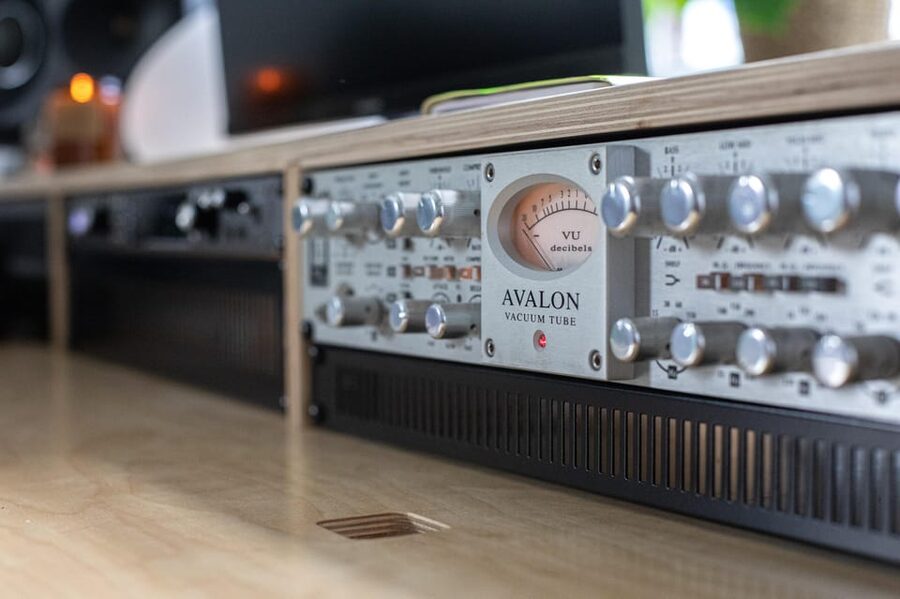
The session lasts two hours, and available starting times depend on the date you choose. Transportation to and from the studio is not included, so you need to make your own way to the meeting point.
Look for the large industrial building with reddish-brown brick and meet at the front door a few minutes before the scheduled start. No meals or drinks are included, and smoking, alcohol, drugs, and littering are not allowed.
The studio is wheelchair accessible. The group is limited to four participants, and instruction is in English. You can cancel up to 24 hours before the activity for a full refund, and the reserve-now, pay-later option lets you hold a place without paying immediately.
These details are simple, but they matter. A late arrival cuts into a short lesson, and the lack of included transport means you should plan the route in advance.
Book this if you want to make, not just hear, Berlin music
I would book this experience if you are curious about electronic music and want to leave with a working understanding of production. The strongest reasons are Andy’s hands-on teaching, the small group, and the chance to build a track through programming, arrangement, and mixing.
I would skip it if you want a nightlife tour, a long studio visit, or a polished finished song guaranteed in two hours. The class is an introduction and a practical workshop, not a full producer training course.
For a beginner, the most useful outcome is confidence: you learn where to start and how to move from a beat to a structured track. For an experienced producer, the vintage gear, studio setting, and outside perspective may make a follow-up session worthwhile. Bring curiosity, arrive on time, and expect to work.
FAQ
Where does the music production session take place?
It takes place in a professional music studio in the heart of Berlin’s clubbing district. The meeting point is the front door of a large industrial building with reddish-brown brick.
How long does the experience last?
The scheduled duration is two hours. Starting times vary, so check availability for your chosen date.
Who teaches the session?
The instructor is music producer Andy Sexton.
Is the class taught in English?
Yes. English is the listed language for the activity.
Do I need previous music production experience?
No. The session is suitable for people with no prior music production experience, as well as music makers who want to improve their approach.
What will I learn to do?
You will learn about synthesizer and drum machine programming, record and arrange a house or techno track, and mix it down for preparation for club play.
How many people can join the group?
The group is limited to four participants.
Is the studio wheelchair accessible?
Yes, the activity is listed as wheelchair accessible.
What is the minimum age?
Participants must be at least 10 years old. Children under 10 are not permitted to join.
Just added around Berlin
- Berlin Highlights in One Day★ 5.0 · 3 reviews
- Private Berlin One Day Tour with a Local: See the City Unscripted★ 3.5 · 3 reviews
- Individual city tour Berlin for max. 8 persons★ 5.0 · 3 reviews
- Transfer from Berlin Schönefeld Airport (SXF) to Berlin city Hotels – ROUND TRIP★ 4.0 · 3 reviews
- Berlin: Museum Island Tour★ 5.0 · 3 reviews
- Private Analogue Photography Experience in Berlin★ 5.0 · 3 reviews
- Berlin: Local Food Tour in Secrets Hidden Gems★ 4.0 · 3 reviews
- Potsdam Highlights – Private sightseeing tour by minibus★ 5.0 · 3 reviews