
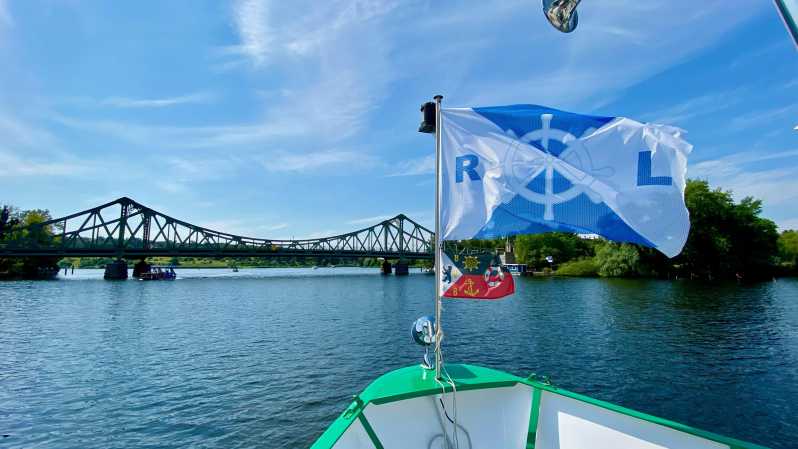
Review · CRUISES & BOAT TOURS
Berlin: 7 Lakes Boat Tour through the Havel Landscape
The most unusual part of this Berlin boat tour is how quickly the city gives way to water, woods, villas, castles, and old border sites. From Spandau, you follow the Havel through a chain of lakes toward Potsdam, then return by way of Wannsee and Peacock Island. It is a peaceful way to see places that are spread too far apart for a simple walking tour.
I like the Prussian palaces and gardens viewed from the water, especially Babelsberg Palace and Glienicke Palace. I also like the former GDR-West border setting, which gives the scenery more meaning than a standard sightseeing cruise. The main drawback is that commentary is in German, so non-German speakers may get less from the historical explanations.
In This Review
- Key points
- Why this Havel cruise feels different from city sightseeing
- From Spandau to Grunewald’s wooded shore
- Imchen Island and Kladow from the water
- Great Wannsee and the homes of Berlin’s southwest
- Little Wannsee, Pöhlesee, and Stölpchensee
- Griebnitzsee and the approach to Potsdam
- Babelsberg Palace and Glienicke Bridge
- Jungfernsee, the Church of the Redeemer, and Peacock Island
- What $30 buys you
- Who should book this Berlin boat tour?
- Practical details before you go
- Should you book the 7 Lakes Boat Tour?
- FAQ
- Where does the 7 Lakes Boat Tour leave from?
- How long does the cruise last?
- Is the commentary available in English?
- What sights can I see from the boat?
- Is food included in the ticket?
- Can I cancel the booking?
Key points
- Three and a half hours on the Havel: This is a substantial half-day cruise, not a quick circuit around central Berlin.
- A chain of seven lakes and waterways: The route links the Great and Little Wannsee, Pöhlesee, Stölpchensee, Griebnitzsee, Jungfernsee, and the Havel.
- Prussian sights from the water: Babelsberg Palace, Glienicke Palace, Peacock Island, churches, villas, and formal gardens appear along the shore.
- Former East-West border scenery: The route passes through waterways once closely watched during Germany’s division.
- German live commentary: The boat has a host or greeter, but the stated language is German.
- Practical value at $30: For a 3.5-hour cruise with commentary and a toilet on board, the price is reasonable if you want scenery and history in one outing.
Why this Havel cruise feels different from city sightseeing
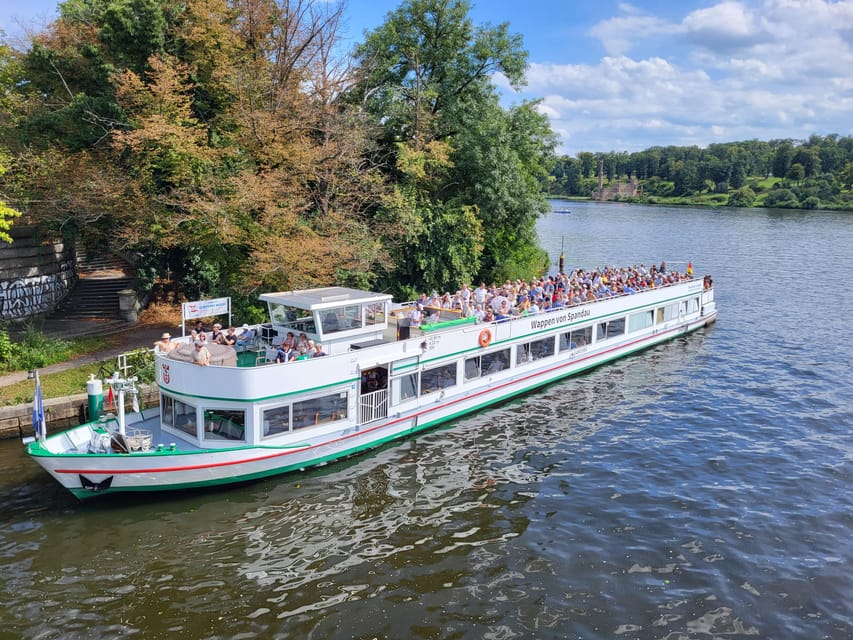
Many Berlin boat trips focus on the Spree and the central sights. This one heads southwest from Spandau, into a quieter world of wooded banks, wide water, grand homes, parks, and historic estates.
That change of pace is the point. You will not spend the trip passing one famous building after another. Instead, the interest comes from the way the scenery unfolds: a forested point, then a peninsula lined with villas, then a palace set above the water, then a bridge tied to Cold War history.
The route begins at Anlegestelle Spandau, Lindenufer, behind Spandau Town Hall on the Havel. The departure point belongs to Reederei Lüdicke. You should allow time to find the pier, since the meeting point is not in central Berlin and is specifically described as being behind the town hall.
The boat remains on the water for about 3.5 hours and returns to Lindenufer. That makes the cruise simple to plan. You do not need to arrange a second pickup in Potsdam or find your own way home from a different shore.
More boat trips in Berlin:
- Berlin: 1-Hour City Tour by Boat with Guaranteed Seating
★ 4.3 · 16,993 reviews - Berlin: Boat Tour Along the River Spree
★ 4.4 · 11,252 reviews - Berlin: 3.25-Hour Spree & Landwehrkanal Boat Tour
★ 4.6 · 4,311 reviews
From Spandau to Grunewald’s wooded shore
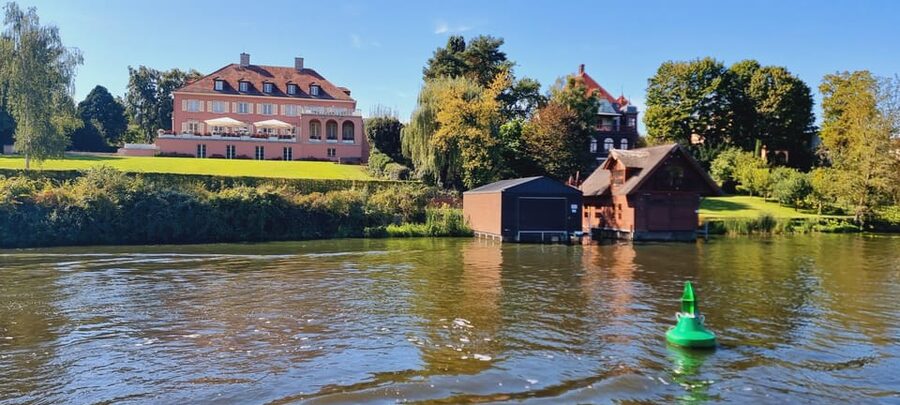
Once the boat leaves Lindenufer, the scenery soon becomes more open and green. You pass toward Grunewald, Berlin’s largest protected natural area, and the Grunewald Tower.
The tower is viewed from the boat rather than visited, so do not expect time to climb it or walk through the surrounding woods. Still, it helps you understand the scale of this part of Berlin. The city is nearby, yet the water route feels far removed from traffic and apartment blocks.
The boat also passes Schildhorn, a notable point along the Havel. This is a good early section of the cruise for simply watching the banks. The appeal is not one single attraction, but the mix of protected woodland and historic shore properties.
Next comes Schwanenwerder Peninsula, one of the more residential stretches of the route. The boat gives you a broad view of villas and gardens that are difficult to appreciate from roads on land. You see the relationship between the homes and the water, which is part of what makes this southwest corner of Berlin so attractive.
Imchen Island and Kladow from the water
Imchen Island is another memorable feature. It is described as one of Germany’s smallest nature reserves, and you pass it rather than go ashore.
That distinction matters. This is a sightseeing cruise, not a nature walk. You get a short view of the island and its protected setting, but you should not expect a stop, guided nature visit, or chance to explore on foot.
The boat continues toward Kladow harbor and later passes Kladow, Spandau, on the return portion of the route. These water-level views give the trip a local feel. You are not only looking at grand estates. You are also seeing the working shoreline and residential edges of the Havel area.
If you enjoy taking photos, keep your camera ready throughout this section. The sights do not arrive in a tight sequence, and the boat’s movement means that a view may last only a short time. The supplied information does not specify seating arrangements or viewing sides, so it is best to treat the whole boat as a changing viewpoint rather than plan around one guaranteed seat.
Great Wannsee and the homes of Berlin’s southwest
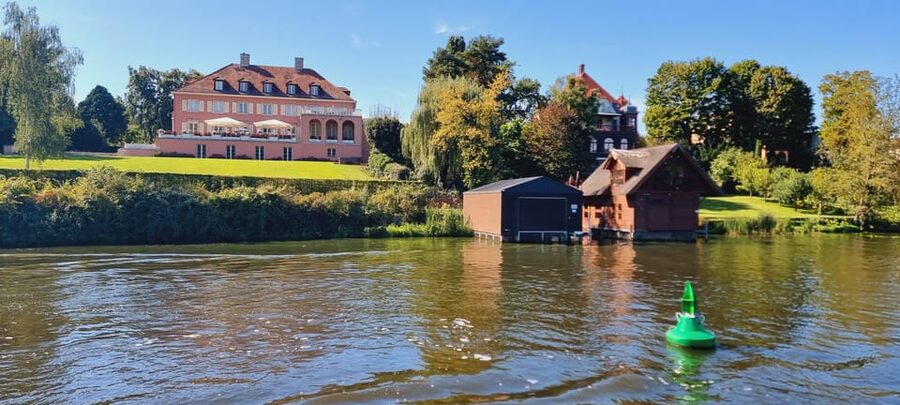
The cruise then reaches the Great Wannsee, one of the best-known bodies of water in Berlin. You pass the Wannsee lido, Villa Lemm, the House of the Wannsee Conference, and the Liebermann Villa.
Each sight carries a different kind of interest. The lido points to Wannsee’s long role as a leisure area. The villas show the wealth and taste that developed along the lakeshore. The House of the Wannsee Conference brings a much darker historical subject into view.
You only pass these places from the water. If you want to visit the House of the Wannsee Conference or the Liebermann Villa indoors, you will need to make a separate visit on another day. The cruise is useful as an overview, but it does not replace a museum visit.
The Liebermann Villa is especially striking from the lake because its setting is part of its identity. The same is true of the other shoreline estates. From land, walls, roads, and trees can interrupt the view. From the boat, you get the broad composition of villa, garden, and water at once.
This is also one of the stronger sections for visitors who prefer architecture and gardens to dense historical commentary. The water keeps the experience calm, and the changing shoreline gives you plenty to look at even if you do not catch every German explanation.
A different side of Berlin on the same trip:
- Berlin: Reichstag, Dome and Government District Guided Tour
★ 4.7 · 18,288 reviews - Discover Berlin Half-Day Walking Tour
★ 5.0 · 9,624 reviews - Berlin: Hop-on Hop-off Bus Tour with Live Commentary
★ 4.3 · 8,579 reviews - Berlin: Government District around the Reichstag Guided Tour
★ 4.7 · 8,447 reviews
Little Wannsee, Pöhlesee, and Stölpchensee
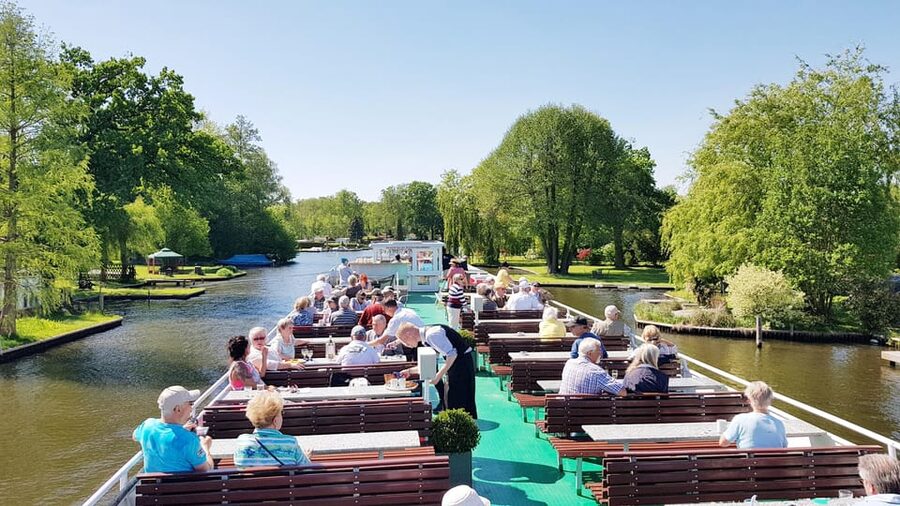
From the Great Wannsee, the boat moves toward the Little Wannsee and then through Pöhlesee and Stölpchensee. These smaller waters make the cruise feel more varied than a simple run along one broad river.
You pass gardens, villas, and natural banks. The scale changes as the waterways narrow and widen again. This is where the title’s seven-lake idea becomes clear: the route is a linked water journey, not one long straight ride.
I like this middle section because it gives the cruise room to breathe. The larger sights are memorable, but the smaller lakes help you see why the Havel area is valued as a whole. The UNESCO recognition applies to the cultural and natural setting, including parks, castles, churches, and the water routes that connect them.
The tradeoff is that the cruise can feel slow if you want a checklist of major Berlin attractions. This is not a fast city tour. You spend time looking at shorelines, and the reward is the setting rather than constant narration or close-up access.
Griebnitzsee and the approach to Potsdam
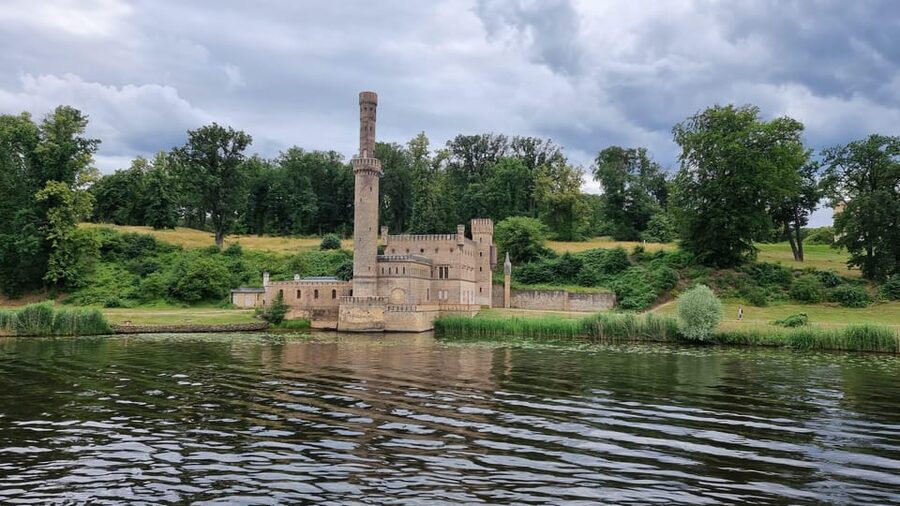
The route continues through the Prinz-Friedrich-Leopold Canal to Griebnitzsee, then reaches the Potsdam Havel. Griebnitzsee is an important transition point. You are moving from the Wannsee area toward a concentration of royal and state architecture near Potsdam.
The water route provides useful context. Palaces such as Babelsberg and Glienicke were not placed beside lakes and rivers by accident. Their gardens, views, and approaches were designed around the water. Seeing them from a boat gives you a better sense of that design than a quick roadside view.
The cruise passes through the former border area between East and West Germany. During the division of Germany, these waterways were not simply scenic recreation areas. Their position between East Berlin, West Berlin, and Potsdam gave them political weight and practical restrictions.
That history is one of the best reasons to choose this tour over a purely scenic lake cruise. You are looking at attractive water and parks, but you are also moving through a place where the border once shaped daily life and travel. The guide’s live commentary is meant to add that historical layer, though the German-only format limits its usefulness if you do not understand German.
Babelsberg Palace and Glienicke Bridge
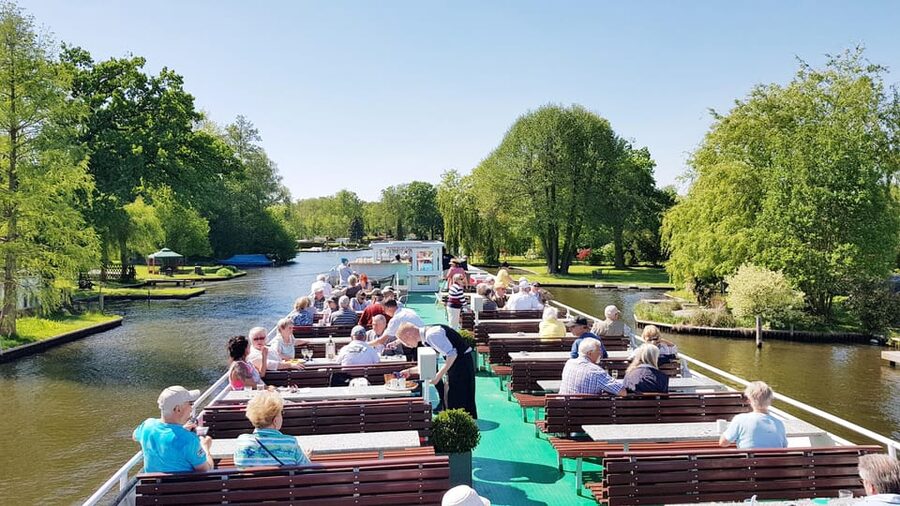
Babelsberg Palace and Park is one of the visual high points. The palace sits near the water in a setting made for long views, gardens, and royal display.
Because the boat passes by, you get the exterior relationship between palace and shoreline rather than a full palace tour. That is enough to make the sight rewarding, especially for anyone interested in Prussian architecture or landscaped parks. If you want rooms, collections, or a detailed look at the grounds, plan a separate land visit.
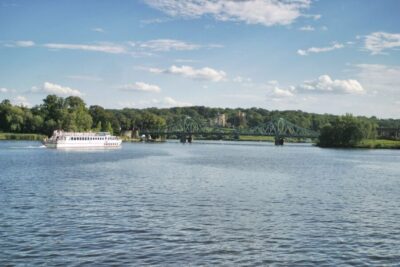
The next major sight is Glienicke Palace, also located directly beside the water. Then the boat passes under Glienicke Bridge, the famous Cold War exchange point often called the Agents Bridge.
The bridge is more than a photogenic structure. Its political history gives the cruise a sharp change in tone. One moment you are looking at palaces and gardens. The next, you are passing through a place connected with secret-agent exchanges between East and West.
This is one of the moments when the boat’s route really earns its price. You do not have to connect several distant attractions by public transport, and you see how close the royal residences and Cold War border sites are to one another.
Jungfernsee, the Church of the Redeemer, and Peacock Island
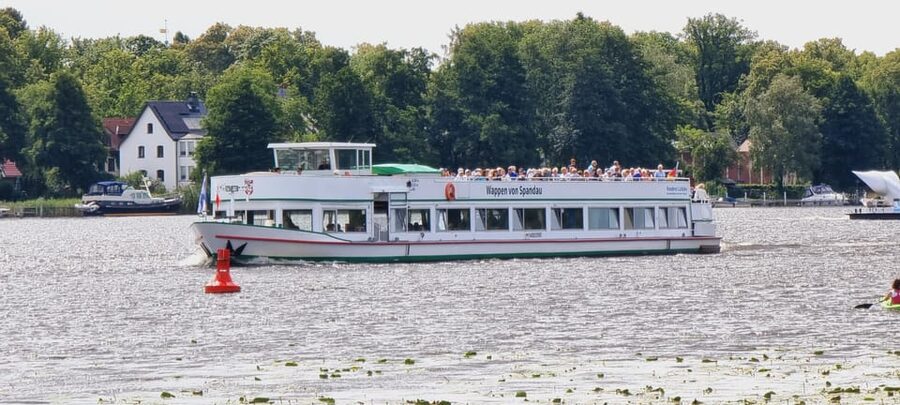
After Glienicke Bridge, the boat reaches Jungfernsee. The wider water opens the view again, with more room for the shore parks and buildings to appear in context.
The cruise then goes upstream past the Church of the Redeemer in the former border area. The church is another example of how the route combines architecture, nature, and political history without requiring a series of separate excursions.
The final major sight is Peacock Island, or Pfaueninsel, with its small pleasure palace and historic buildings. The island has a storybook appearance from the water, which makes it a fitting late highlight after the more formal palaces and the serious Cold War sites.
Again, this is a pass-by visit. You will not disembark to see the island in detail. If Peacock Island is high on your list, treat this cruise as an introduction and return separately if time permits.
From there, the boat turns back toward Lindenufer. The return gives you a second chance to watch the Havel banks, Kladow, and the changing light on the water. By the end, the route has covered a remarkable range of scenery without requiring you to pack and unpack or change vehicles.
What $30 buys you
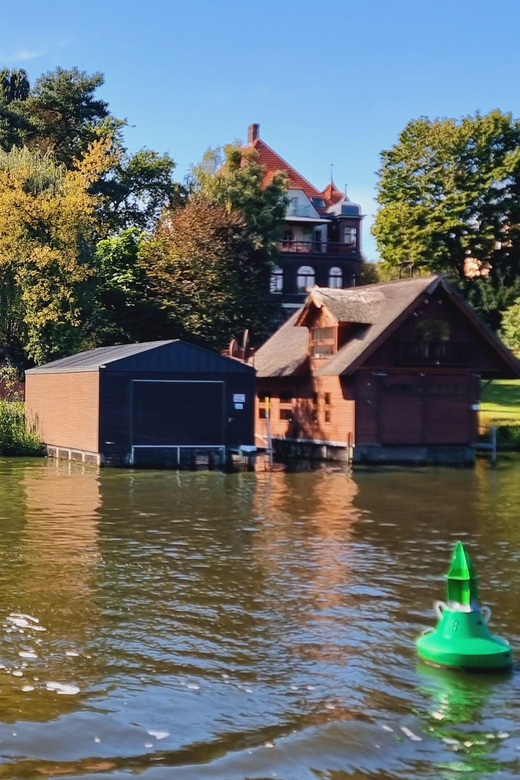
At $30 per person, the cruise offers solid value for a 3.5-hour outing. You receive the boat ride, live German commentary, and a toilet on board. That duration matters: even allowing for a relaxed pace, you see a large section of the Havel and its connected lakes in one sitting.
The price is especially fair if you would otherwise pay for separate transport to Wannsee, Potsdam, Glienicke Bridge, and Peacock Island. The cruise does not include entry to palaces, museums, or historic houses, but it does let you see their exteriors and settings from a useful angle.
Food and drinks are not included. The information provided says purchases are available on board, while also stating that food and drinks are not allowed, so read that as a restriction on bringing your own refreshments. If you need a meal, check what is available on the boat rather than assuming a full restaurant service.
The cruise has a 4.6 rating from 744 reviews, and a recent verified German booking gave it the highest rating while describing it as interesting and highly recommendable. That praise fits the tour’s main strength: it packs scenery, architecture, and German history into one steady, well-defined route.
Who should book this Berlin boat tour?
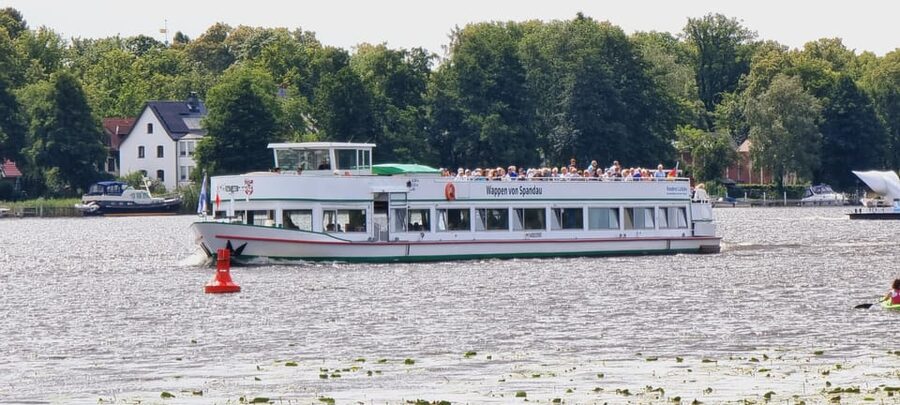
I would choose this cruise if you want:
- A quiet half-day away from central Berlin
- Palaces, villas, parks, and historic shorelines
- A broad introduction to the Havel and Wannsee area
- Cold War history connected to real places
- A low-effort sightseeing option with no walking between sights
- A scenic outing at a moderate price
It is also a sensible choice for anyone who has already seen central Berlin and wants a different side of the city. The route is less about famous downtown buildings and more about the southwest’s water, estates, and border history.
I would hesitate if you speak no German and expect detailed explanations. You will still see the sights, but the live commentary is in German, and no other language is listed. I would also choose a land-based visit instead if you want to enter the House of the Wannsee Conference, the Liebermann Villa, Babelsberg Palace, or Peacock Island.
The cruise may also be less satisfying if you dislike long periods of passive sightseeing. Three and a half hours is a real commitment. Bring patience, watch the banks, and think of it as a scenic history lesson rather than a transport ride between attractions.
Practical details before you go
The departure point is Anlegestelle Spandau at Lindenufer, behind Spandau Town Hall on the Havel, at the Lüdicke shipping company pier. The boat returns to the same location after 3.5 hours.
The host or greeter speaks German, and live commentary is included. A toilet is available on board. Food and drinks are not part of the ticket, and the provided conditions say outside food and drinks are not allowed, with purchases available on board.
You can cancel up to 24 hours before departure for a full refund. You can also reserve now and pay later, which is useful if your Berlin schedule is still shifting. Starting times vary, so check the available departure when choosing your date.
Should you book the 7 Lakes Boat Tour?
Book it if you want Berlin scenery with genuine historical weight. The combination of Wannsee villas, Prussian palaces, UNESCO-recognized Havel scenery, and the former East-West border is unusual, and the 3.5-hour route covers far more ground than you could comfortably walk.
Skip it if you need English commentary, indoor visits, or a fast list of central Berlin attractions. For everyone else, $30 is a fair price for a calm, well-rounded look at Berlin’s southwest waterways, especially on a day when you want to trade city streets for open water.
FAQ
Where does the 7 Lakes Boat Tour leave from?
The boat leaves from Anlegestelle Spandau at Lindenufer, behind Spandau Town Hall on the Havel. The pier is operated by the Lüdicke shipping company.
How long does the cruise last?
The cruise lasts 3.5 hours and returns to Anlegestelle Spandau at Lindenufer.
Is the commentary available in English?
The stated language for the host and live commentary is German. No English commentary is listed.
What sights can I see from the boat?
You pass Grunewald Tower, Imchen Island, Schwanenwerder Peninsula, Wannsee, the House of the Wannsee Conference, Liebermann Villa, Pöhlesee, Stölpchensee, Griebnitzsee, Babelsberg Palace, Glienicke Bridge, Jungfernsee, the Church of the Redeemer, Peacock Island, and Kladow.
Is food included in the ticket?
No. Food and drinks are not included. Purchases are available on board, and the stated conditions do not allow outside food and drinks.
Can I cancel the booking?
Yes. You can cancel up to 24 hours in advance for a full refund. Reserve now and pay later is also available.
Just added around Berlin
- Berlin Highlights in One Day★ 5.0 · 3 reviews
- Private Berlin One Day Tour with a Local: See the City Unscripted★ 3.5 · 3 reviews
- Individual city tour Berlin for max. 8 persons★ 5.0 · 3 reviews
- Transfer from Berlin Schönefeld Airport (SXF) to Berlin city Hotels – ROUND TRIP★ 4.0 · 3 reviews
- Berlin: Museum Island Tour★ 5.0 · 3 reviews
- Private Analogue Photography Experience in Berlin★ 5.0 · 3 reviews
- Berlin: Local Food Tour in Secrets Hidden Gems★ 4.0 · 3 reviews
- Berlin & The Third Reich Private Guided Tour★ 5.0 · 3 reviews
Cruises & Boat Tours, compared.
1-Hour City Tour by Boat with Guaranteed Seating
Read our review →
Hop-On Hop-Off Sightseeing Bus with Boat Options
Read our review →
2.5-Hour East Side Boat Cruise with Commentary
Read our review →Browse the lists this tour appears in