
Review · TOURS
Berlin Battlefield Tour – Operation Berlin 1945
The most gripping part of this tour is that Berlin’s final battle unfolds beneath your feet. You walk from the Moltke Bridge toward the Reichstag and then on to Weidendammer Bridge, following the route of Soviet assault troops and the Germans’ desperate last attempt to escape. The places are real, close together, and tied to a clear military story.
I like the use of then-and-now photographs and maps, which help turn today’s broad civic spaces into wartime positions. I also like the small-group format and the chance to hear a guide such as Jochen explain strategy, bravery, fear, and confusion without reducing the battle to a list of dates. The main drawback is price: at $57 per person, it costs more than many general Berlin walking tours, and one booking had a muddled meeting point when the guide arrived without the promised umbrella.
In This Review
- Key points before you book
- Following the last battle from Hauptbahnhof
- The opening viewpoint and the shape of the story
- Moltkebrücke and the fight for a crossing
- Platz der Republik and the road to the Reichstag
- The Reichstag and the final Soviet objective
- Weidendammer Brücke and the German break-out
- What the guide adds to the experience
- Is $57 a fair price in Berlin?
- Weather, footwear, and the practical side of the walk
- Who should choose Operation Berlin 1945?
- Should you book the Berlin Battlefield Tour?
- FAQ
- How long does the Berlin Battlefield Tour last?
- Where does the tour begin?
- Where does the tour finish?
- What language is the tour conducted in?
- What locations are included?
- Can I see inside the Reichstag?
- Is the tour wheelchair accessible?
- What should I bring?
- Does the tour operate in bad weather?
- How much does the tour cost?
Key points before you book
- A 150-minute walk through the final Battle of Berlin, beginning at Hauptbahnhof and ending at Weidendammer Brücke.
- The Moltke Bridge, Platz der Republik, Reichstag, and Weidendammer Bridge form the core of the route.
- Military strategy and human stories share equal billing, from Soviet command decisions to civilian and soldier desperation.
- Jochen is one guide to look out for, praised for bringing the subject to life with strong command of the material.
- The tour runs in rain or shine, so comfortable shoes, water, snacks, and rain gear matter.
- The $57 price buys a specialist history walk, but budget-minded visitors may find it high beside other Berlin tours.
Following the last battle from Hauptbahnhof
Meet outside the MEININGER Hotel Berlin Hauptbahnhof at Ella-Trebe-Straße 9, on the south side of Berlin Central Station. You should arrive 10 minutes early. The stated meeting signal is a guide holding a blue umbrella.
That signal is useful in the open area around the station, but do not treat it as a minor detail. One booking went wrong when the guide left the expected pink umbrella at home, began with part of the group, and failed to alert the remaining people. The guide was eventually found, and the tour itself continued well, but I would keep the operator’s contact details handy and arrive early enough to identify the guide before the walk starts.
The route is conducted in English and lasts 150 minutes. It is a walking tour rather than a bus excursion, so the story develops step by step. You do not simply arrive at a monument, hear a short explanation, and move on. The guide connects bridges, open ground, buildings, and escape routes into one sequence.
That format suits you if you like military history explained on location. It may feel less satisfying if you want long indoor visits or a broad survey of Berlin from ancient times to the present. This tour has one subject and keeps returning to it: the last battle for the Nazi capital in 1945.
Other Berlin tours people book alongside this one:
- Berlin: Reichstag, Dome and Government District Guided Tour
★ 4.7 · 18,288 reviews - Berlin: 1-Hour City Tour by Boat with Guaranteed Seating
★ 4.3 · 16,993 reviews - Berlin: Boat Tour Along the River Spree
★ 4.4 · 11,252 reviews
The opening viewpoint and the shape of the story
The first viewpoint takes about 20 minutes, including the visit, guided explanation, sightseeing, and walking. The supplied details do not name the exact viewpoint, so you should expect an opening orientation rather than a major museum stop.
This first section matters because the Battle of Berlin can become confusing fast. Commanders, bridges, government buildings, artillery positions, and shifting front lines are hard to picture from a textbook. A map and a view across the area give you the basic layout before the guide adds the pressure of the fighting.
You will hear the tour framed around military decisions and personal courage. The guide examines how Soviet and German commanders responded to a battle that was already heading toward an unavoidable end. You also hear about desperation, hope, and carnage, which keeps the tour from becoming a clean diagram of arrows moving across a map.
Expect a serious tone. This is not a light sightseeing walk with a few wartime facts added for color. The stated presentation includes the sound and terror of weapons such as the MG42, along with artillery fire and close street combat. These elements are intended to help you picture the battle, but the guide’s work is most useful when those dramatic details remain tied to real places and decisions.
Moltkebrücke and the fight for a crossing
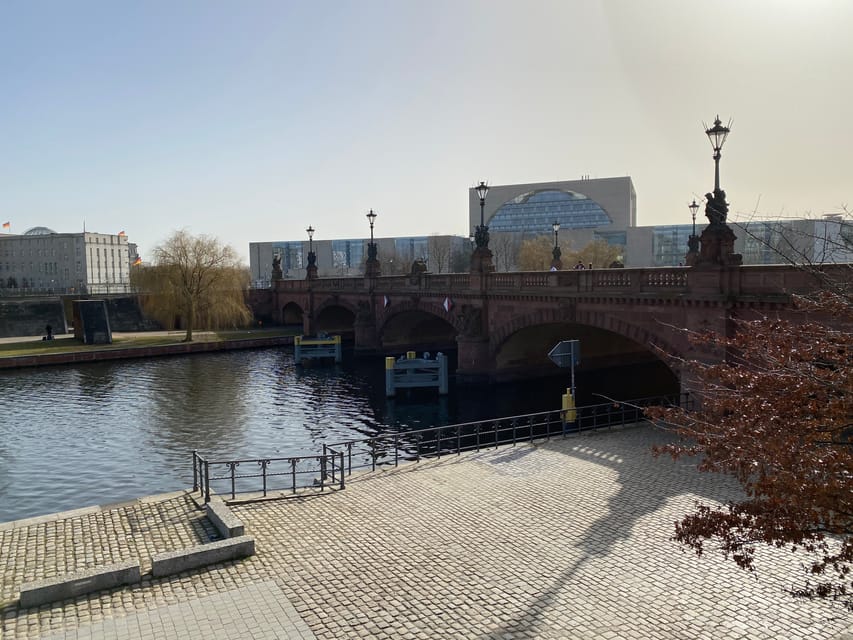
The walk then reaches Moltkebrücke, also known as the Moltke Bridge, for about 20 minutes. The bridge was strategically important because crossings over the Spree shaped movement toward the government district.
Here, the guide can show why a bridge is more than a scenic place over water during an assault. Control of a crossing affects the movement of troops, ammunition, armor, and wounded men. It also gives commanders a route toward key objectives. You begin to see why the final battle was fought over small pieces of ground with such force.
The bridge section is one of the tour’s strongest features for visitors who want military strategy rather than only political history. You are asked to think about approach routes, defensive positions, and the choices facing commanders under pressure. The guide also places ordinary soldiers inside that plan. A bridge may be a line on a map, but crossing it meant moving into fire.
The walk itself is manageable for most people who are comfortable on their feet, but it is still a continuous outdoor activity. You should wear shoes suited to pavement and carry water. The tour provides umbrellas throughout the year in case of rain, but a raincoat is still sensible because the walk takes place outdoors and runs in poor weather.
Platz der Republik and the road to the Reichstag
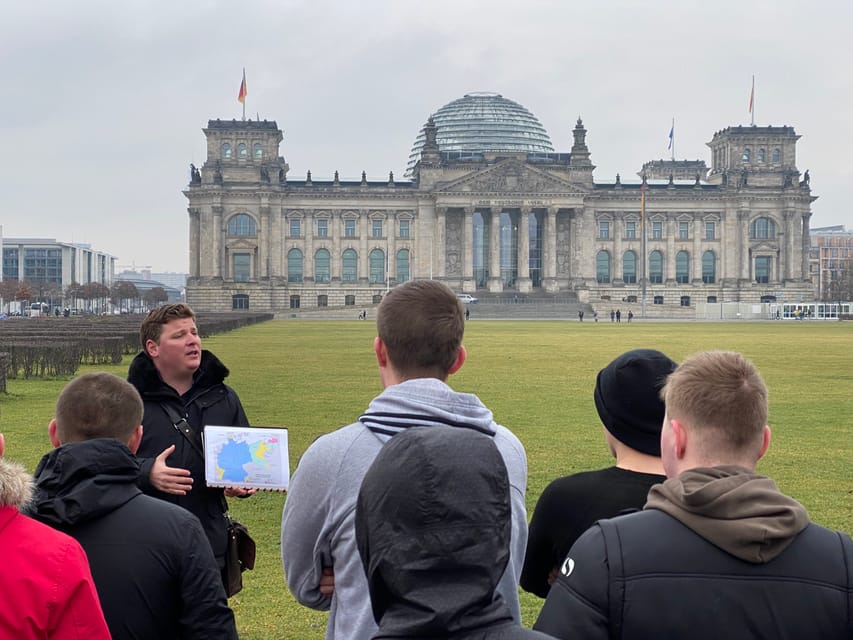
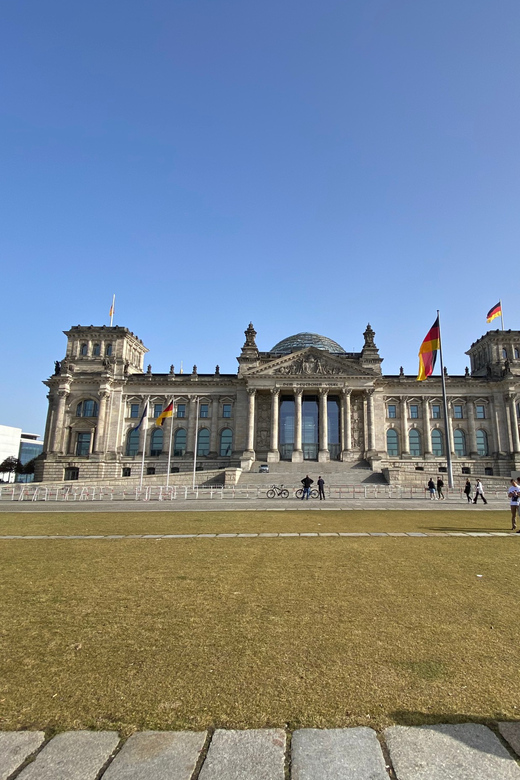
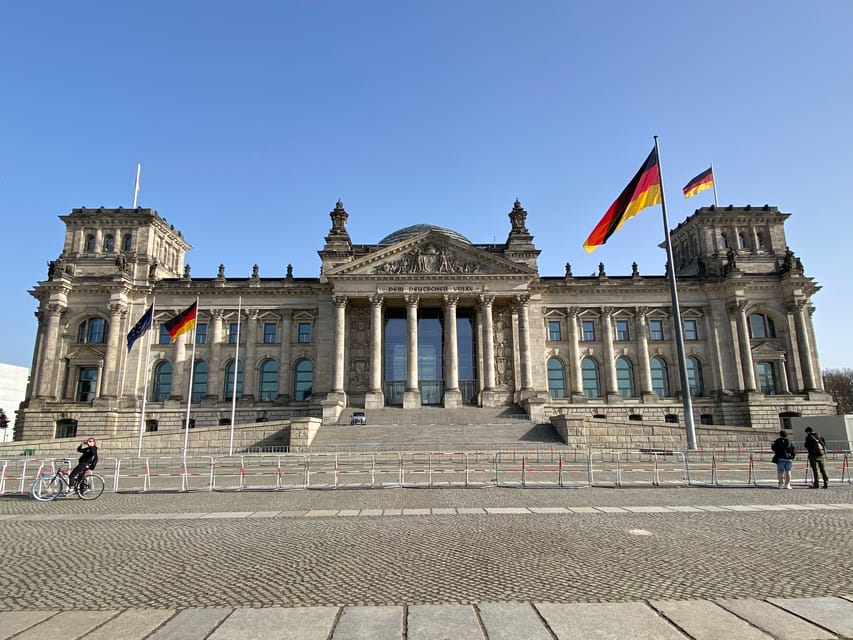
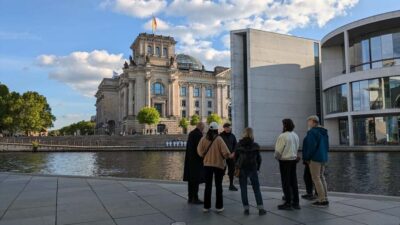
The next stop is Platz der Republik, with about 20 minutes for the visit, explanation, and walk. This open space beside the Reichstag allows the guide to discuss the approach to the Soviet objective and the intensity of the final street battles.
The square works well as a teaching spot because it gives you room to consider distance and exposure. In a battle for a government center, the final approach was not simply a ceremonial march. Every open stretch could become dangerous, and every building could hold defenders.
The guide’s job here is to explain the clash between the wider Soviet plan and what happened at street level. Commanders made decisions about pressure, timing, and objectives, while soldiers faced smoke, rubble, gunfire, and uncertainty. The tour promises stories of heroism and bravery, but it also includes the less comfortable parts: confusion, sacrifice, and the human cost of pursuing a symbolic target.
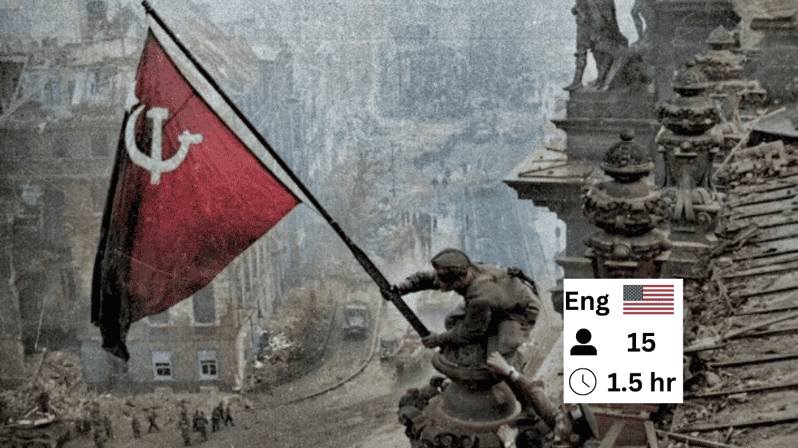
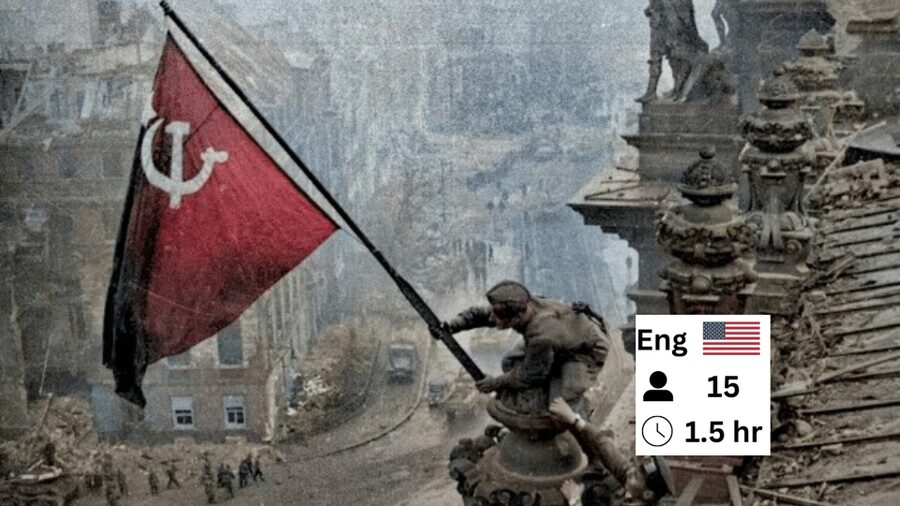
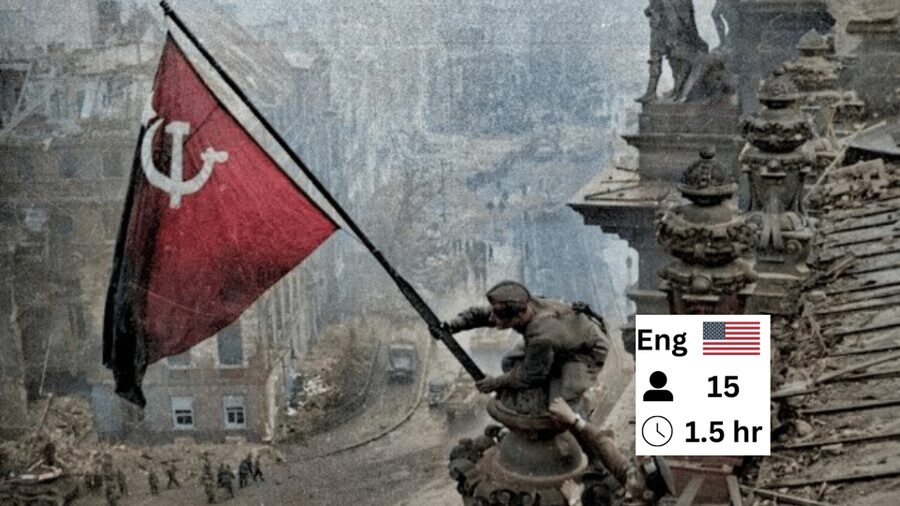
This is also where the advertised account of the Soviet flag raising becomes important. The tour presents a less familiar version of the story and asks you to examine how the famous image was created and remembered. If you already know the standard account, this section may give you a sharper sense of the difference between a wartime event, a staged photograph, and a national story.
Do not expect a full visit inside the Reichstag building. The route describes the Reichstag as a guided stop and pass-by, not an interior tour. That distinction matters. You are studying the building as the primary Soviet objective and the scene of the assault, not booking entry to the modern parliamentary interior.
A different side of Berlin on the same trip:
- Discover Berlin Half-Day Walking Tour
★ 5.0 · 9,624 reviews - Berlin: Hop-on Hop-off Bus Tour with Live Commentary
★ 4.3 · 8,579 reviews - Berlin: Government District around the Reichstag Guided Tour
★ 4.7 · 8,447 reviews - Berlin: Reichstag, Plenary Chamber, Cupola & Government Tour
★ 4.6 · 8,422 reviews
The Reichstag and the final Soviet objective
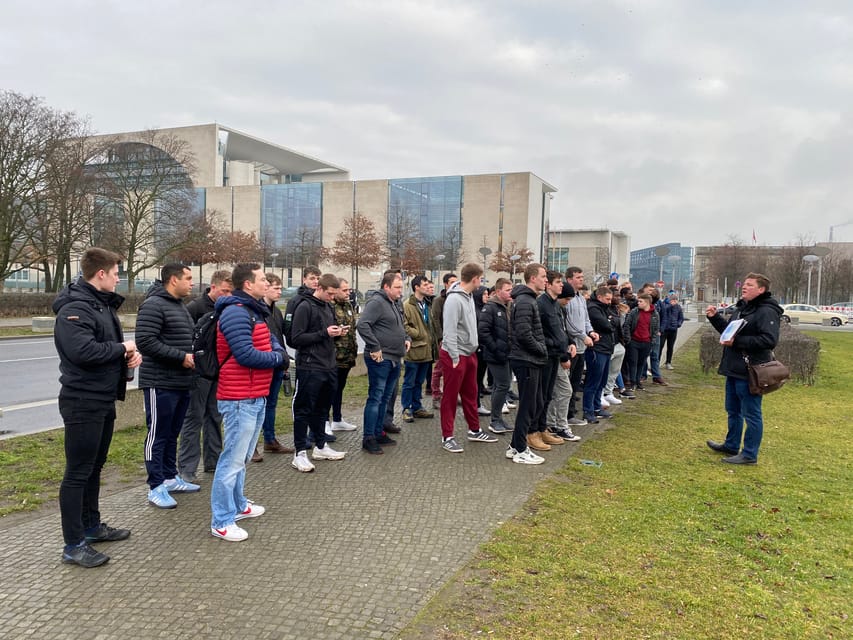
The Reichstag receives about 30 minutes, making it the longest stop on the route. That extra time reflects its importance. The building represented far more than a physical position. Capturing it gave the Soviets a powerful symbol for the end of the European war.
At the Reichstag, the tour focuses on the assault itself and the tense moments that led up to it. You will hear about the forces involved, the decisions made by Soviet and German commanders, and the fighting required to reach and secure the building. The emphasis is on the battle around the structure, rather than on the Reichstag’s later political life.
This stop should reward anyone who enjoys connecting symbols with strategy. Military objectives are often chosen for practical reasons, political reasons, or both. The Reichstag carried enormous symbolic weight, so its capture mattered even beyond its immediate tactical value.
The advertised treatment also includes the famous Soviet flag-raising story. The guide aims to explain what happened behind the familiar image and why the public version does not tell the whole story. That can be especially worthwhile if you have seen the photograph many times but have never asked how it was produced or what it left out.
Still, keep your expectations grounded. This is a walking explanation at an outdoor historic site. There is no promise of original wartime interiors, a weapons display, or a museum collection. The value comes from the guide’s interpretation, maps, images, and ability to make the surrounding ground legible.
Weidendammer Brücke and the German break-out
The final major stop is Weidendammer Brücke, reached after roughly 20 minutes of walking and guided sightseeing. The tour ends here, so you should plan onward transport from this area rather than returning to Hauptbahnhof.
The bridge is tied to the German break-out, giving the walk a grim final chapter. By this stage, the story is no longer only about the Soviet assault on the Reichstag. It turns to the people trying to survive or escape as the city collapsed around them.
This is where the tour’s human focus becomes most pronounced. You hear tales of desperation, hope, and carnage, rather than a tidy finish at the moment a flag appeared over a building. A bridge can become a route to safety, a bottleneck, or a killing zone. The guide uses the location to explain how military collapse affected the people caught inside it.
Ending at Weidendammer Brücke gives the tour a useful shape. You begin with orientation, follow the assault toward the Reichstag, and finish with the break-out. The route does not pretend the capture of a symbolic building instantly ended the suffering. That makes the final section important, even if it is emotionally heavy.
Because the tour ends at the bridge, you may want to arrange a pause afterward. The supplied information does not specify nearby facilities or a return transfer, so do not assume the guide will escort you back to the station. Carry water and a snack, especially if you are booking the walk as part of a full day of sightseeing.
What the guide adds to the experience
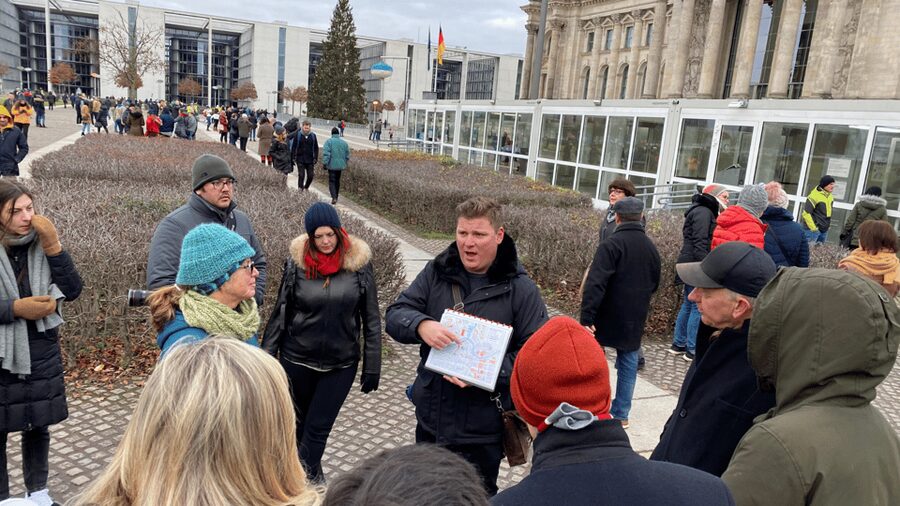
This tour depends heavily on the person leading it. The strongest praise is reserved for Jochen, whose subject knowledge and storytelling are said to bring the battle alive. That tells you what to value when choosing this experience: not just the route, but the guide’s ability to explain cause and effect while keeping the human story in view.
You will hear the battle presented through maps and then-and-now photographs. Those tools help bridge the gap between present-day Berlin and a city damaged by weeks of fighting. A modern street rarely announces what happened there. The images give the guide a way to show the changes, while the maps help you follow movement that cannot be seen today.
The small-group format should also help. A group with fewer people is better suited to stopping at a bridge, gathering around a map, and asking questions than a large crowd. The exact group size is not provided, so do not assume a private tour. You are booking an exclusive small-group experience, not a one-on-one guide.
The guide uses dramatic language about gunfire and artillery, but the real gain is structure. You learn military strategy, the decisions facing Soviet and German commanders, and the effect of those decisions on people in the streets. If you enjoy dates without context, a guidebook may be enough. If you want the ground beneath a story to matter, this format is more useful.
Is $57 a fair price in Berlin?
The listed price is $57 per person. That is a clear premium over many ordinary Berlin walking tours, and one booking specifically found a price near 50 euros high compared with other local options.
I would judge the cost by your interest in the subject. If you want a specialist tour devoted only to the Battle of Berlin, the price pays for a focused route, a live English guide, a small-group setting, maps, and then-and-now images. You are not paying for admission to several attractions, so the guide’s interpretation has to carry the value.
For a visitor with only a passing interest in World War II, $57 may be hard to justify. Berlin offers many historical walks, and a general tour can cover more ground and more periods for less money. You may also prefer a museum visit if you want artifacts, indoor displays, or time to read at your own pace.
For a serious military-history enthusiast, the calculation is different. The tour links four specific battlefield locations and gives you a guided account of the assault on the Reichstag and the German break-out. That focus is the point. You are buying a specialist explanation, not a general introduction to Berlin.
Free cancellation up to 24 hours before the start and the option to reserve now and pay later reduce some booking risk. The tour is wheelchair accessible, though the route includes walking and outdoor stops, so you should confirm that the practical pace and surfaces suit your needs.
Weather, footwear, and the practical side of the walk
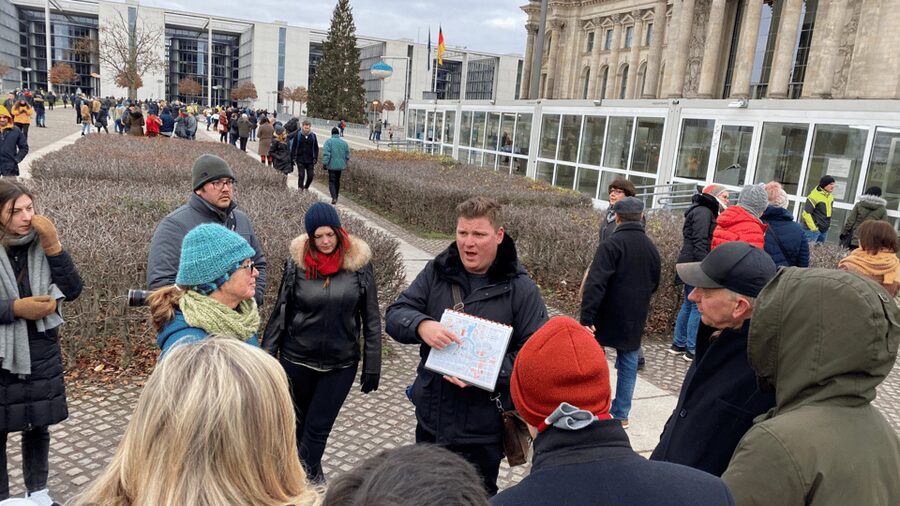
The tour runs rain or shine. Berlin weather can change quickly, and the route has no promise of long indoor shelter. Bring comfortable shoes, water, snacks, and an umbrella or raincoat. Umbrellas are provided throughout the year in rainy conditions, but your own rain gear gives you a backup and keeps your hands free when the guide is using maps or photographs.
Arrive 10 minutes before the start. The meeting point is in front of the MEININGER Hotel Berlin Hauptbahnhof, not inside the station. The hotel sits on the south side of Hauptbahnhof, and the guide is supposed to be outside with a blue umbrella.
The umbrella issue deserves a practical note. The official meeting instruction says blue, while one booking referred to a pink umbrella that the guide had forgotten. Since visual signals can change, save the tour operator’s phone number and check the guide’s description before leaving your hotel. This is a simple precaution, but it could save you from missing the first part of the walk.
The tour is in English only. That is helpful if you want a detailed explanation without switching languages, but it will not suit you if you need another language. The duration is 150 minutes, and the route ends at Weidendammer Brücke rather than circling back to the starting point.
Who should choose Operation Berlin 1945?
I would recommend this tour to you if you already have an interest in World War II, military planning, the fall of Berlin, or the political meaning of the Reichstag. It is also a good choice if you learn best by standing in the places where events unfolded.
You will get the most from it if you prepare for a serious, outdoor history lesson. Read a short overview of the Battle of Berlin beforehand, or at least learn the names of the Reichstag, Moltke Bridge, and Weidendammer Bridge. A little preparation will make the maps and command decisions easier to follow.
I would hesitate if you are looking for a relaxed general sightseeing walk. The subject includes death, destruction, and desperation. The tour’s dramatic style may appeal to some people, but you should not expect a gentle introduction to Berlin.
I would also think twice if the price is your main concern. At $57, this is a specialist purchase. You are paying for focus and interpretation, not a long list of included attractions. The strong guide can make that worthwhile, but the experience depends on the quality of the live presentation.
Should you book the Berlin Battlefield Tour?
Book it if the final Battle of Berlin is one of the main reasons you want to understand the city. The route from Moltke Bridge to the Reichstag and Weidendammer Bridge gives you a clear physical framework, while the maps, photographs, and military analysis add detail that a self-guided walk may miss.
Skip it if you want broad Berlin coverage, museum interiors, or the cheapest possible walking tour. Also plan carefully for rain, bring sturdy shoes, and arrive early enough to locate the guide. With Jochen or another strong specialist at the front, this can turn a short walk through central Berlin into a serious look at the war’s final European battle.
FAQ
How long does the Berlin Battlefield Tour last?
The tour lasts 150 minutes, or two and a half hours.
Where does the tour begin?
It begins outside the MEININGER Hotel Berlin Hauptbahnhof at Ella-Trebe-Straße 9, 10557 Berlin. The hotel is on the south side of Berlin Central Station.
Where does the tour finish?
The tour finishes at Weidendammer Brücke. It does not return to the starting point.
What language is the tour conducted in?
The live tour guide speaks English.
What locations are included?
The route includes an opening viewpoint, Moltkebrücke, Platz der Republik, the Reichstag, and Weidendammer Brücke.
Can I see inside the Reichstag?
The supplied tour details describe the Reichstag as a guided sightseeing stop and pass-by. They do not include admission to the interior.
Is the tour wheelchair accessible?
Yes, the activity is listed as wheelchair accessible.
What should I bring?
Bring comfortable shoes, water, snacks, and an umbrella or raincoat. The tour also recommends rain gear for unfavorable weather.
Does the tour operate in bad weather?
Yes. The tour takes place rain or shine. Umbrellas are provided throughout the year in the event of rain.
How much does the tour cost?
The listed price is $57 per person. You can reserve now and pay later, and cancellation is free up to 24 hours before the activity for a full refund.
Just added around Berlin
- Berlin Highlights in One Day★ 5.0 · 3 reviews
- Private Berlin One Day Tour with a Local: See the City Unscripted★ 3.5 · 3 reviews
- Individual city tour Berlin for max. 8 persons★ 5.0 · 3 reviews
- Transfer from Berlin Schönefeld Airport (SXF) to Berlin city Hotels – ROUND TRIP★ 4.0 · 3 reviews
- Berlin: Museum Island Tour★ 5.0 · 3 reviews
- Private Analogue Photography Experience in Berlin★ 5.0 · 3 reviews
- Berlin: Local Food Tour in Secrets Hidden Gems★ 4.0 · 3 reviews
- Potsdam Highlights – Private sightseeing tour by minibus★ 5.0 · 3 reviews
Tours, compared.
Reichstag, Dome and Government District Guided Tour
Read our review →
1-Hour City Tour by Boat with Guaranteed Seating
Read our review →

Reichstag, Plenary Chamber, Cupola & Government Tour
Read our review →