

Review · THIRD REICH & WWII SITES
Berlin: Third Reich and Cold War 2 Hour Walking Tour
Berlin’s hardest history is spread across ordinary streets, government buildings, memorials, and empty spaces. This two-hour walking tour links those places into one clear story, from Hitler’s rise and the destruction of the Second World War to the Berlin Wall and German reunification.
I like the route’s strong geographic logic, beginning at Brandenburg Gate and moving south toward Checkpoint Charlie. I also like the balance between famous sights and less obvious evidence, such as the former SS and Gestapo headquarters and the Red Army tanks at the Soviet War Memorial. The drawback is that two hours moves quickly, so some stops receive a short explanation rather than a full museum visit.
In This Review
- Key points worth knowing
- Starting at Brandenburg Gate, where Berlin’s story turns
- The Reichstag and the 1933 fire
- Soviet tanks and the Battle of Berlin
- Walking through the Holocaust Memorial
- Hitler’s bunker site and the danger of empty space
- Detlev-Rohwedder-Haus and the birth of East Germany
- The Topography of Terror and the machinery of repression
- A real stretch of the Berlin Wall
- Checkpoint Charlie and the Cold War showdown
- How the guides shape the experience
- Pace, comfort, and weather
- Is $23 a fair price?
- Who should book this Berlin history walk?
- Should you book it?
- FAQ
- How long is the Berlin Third Reich and Cold War walking tour?
- Where does the tour begin?
- Which sights are included?
- What languages are available?
- Is the walking tour wheelchair accessible?
- What should I bring?
Key points worth knowing
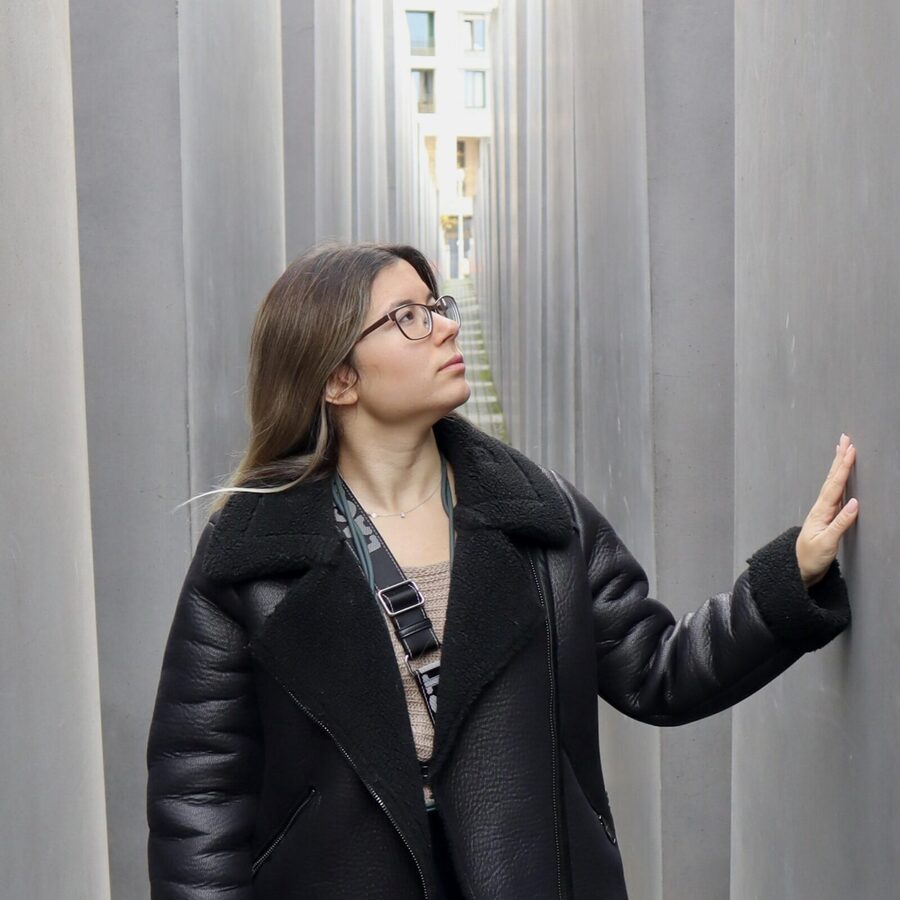
- The route covers about 2 kilometers, making it a manageable introduction to central Berlin.
- The 200-meter Berlin Wall section gives you a real stretch of the former border rather than only a token fragment.
- The Reichstag, Hitler’s bunker site, and Checkpoint Charlie connect major events to specific places.
- The Soviet War Memorial in Tiergarten includes preserved Red Army tanks and honors 80,000 Soviet soldiers killed in the Battle of Berlin.
- Guides such as Hannah, Jimmy, Steve, Ru, Scott, Marie, and Peter have led sessions praised for clear storytelling, good pacing, humor, and thoughtful answers.
- English and German tours are offered, with shared and private formats available.
Starting at Brandenburg Gate, where Berlin’s story turns
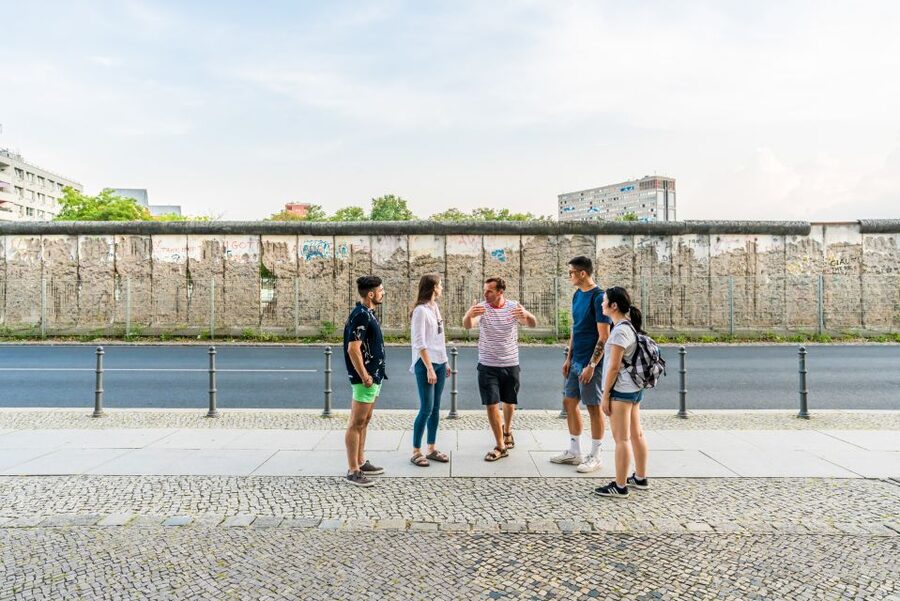
Meet in front of the tourist information point at Pariser Platz 1. Look for the guide with the pink umbrella. Brandenburger Tor station is the easiest public transport stop, served by S-Bahn lines S1, S2, S25, and S26, plus U5. Buses 100 and 245 also stop nearby.
Brandenburg Gate is an excellent starting point because it has carried several different meanings. It was a grand entrance in Prussian Berlin, a backdrop for Nazi displays, a symbol of Cold War separation, and finally one of the clearest images of reunification in 1989.
Your guide uses the gate to explain how Berlin became a stage for political power. You will not simply take a photo and move on. The point is to understand how one monument could be absorbed by different governments and ideologies.
This is also where the tour’s format becomes clear. You listen outdoors, then walk between stops while the guide fills in the gaps. That keeps the experience active, but you should not expect long indoor visits or time to study exhibits at your own pace.
More Cold War Berlin:
- Berlin’s Best: 2 Hour Walking Tour Third Reich and the Cold War
★ 5.0 · 5,486 reviews - Cold War, Berlin Wall, Spies and the East Side Gallery
★ 5.0 · 1,024 reviews - Berlin: Cold War Walking Tour on Berlin Wall Route
★ 4.8 · 437 reviews
The Reichstag and the 1933 fire
The short walk to the Reichstag brings you to one of Germany’s most important political buildings. The guide explains the mystery and political impact of the Reichstag Fire in 1933, an event used by Hitler’s government to weaken civil rights and tighten its grip on power.
The value here is context. The Reichstag was not just damaged during a dramatic moment in German history. Its destruction became part of the process by which democracy was dismantled.
You will also hear how the building survived war, fell into disuse during Germany’s division, and later returned as the home of the German parliament. That arc gives the Reichstag unusual weight. It links the end of the Weimar Republic with the democratic Germany you see today.
You will view the building from outside on this walking route. If you want to visit the dome or enter the parliament complex, that requires separate planning.
Soviet tanks and the Battle of Berlin
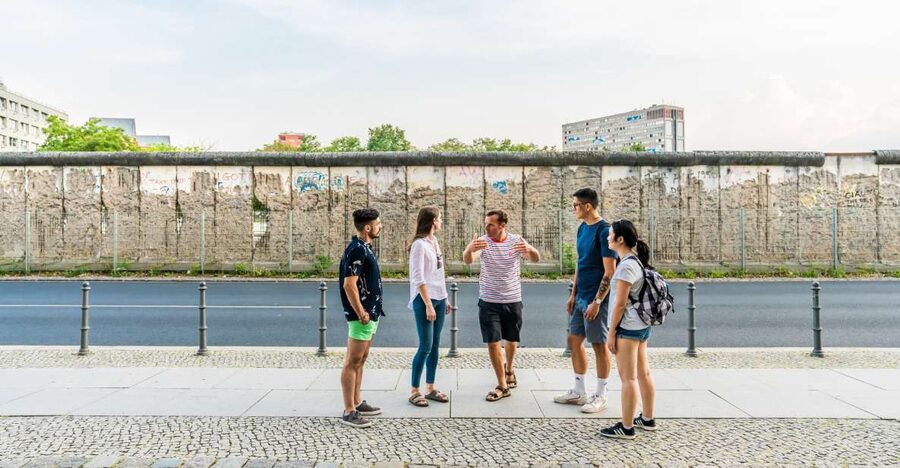
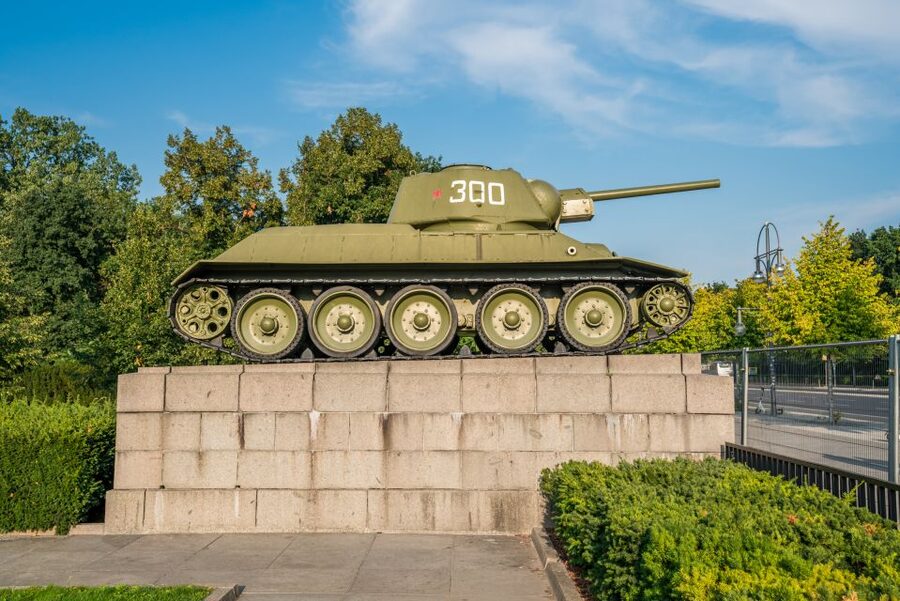
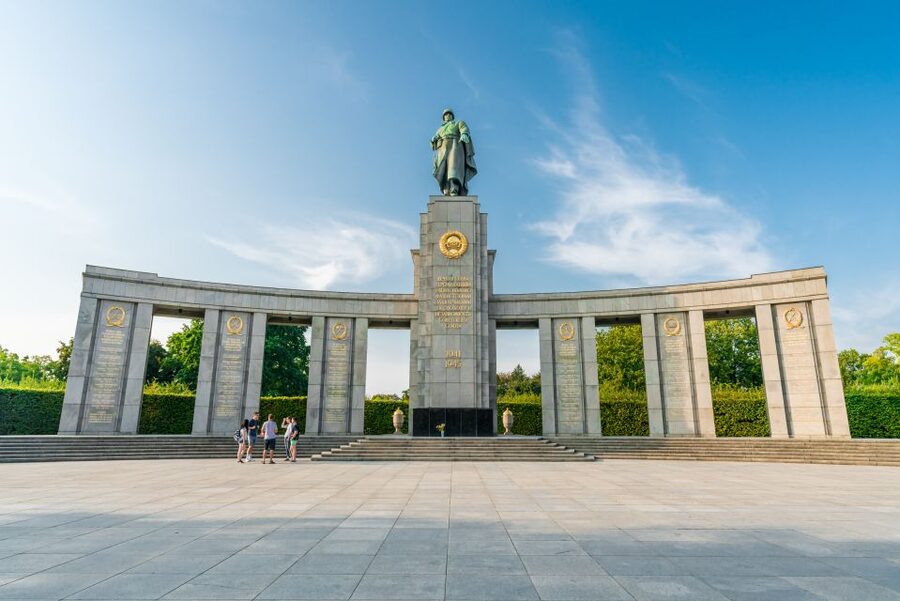
The route continues to the Soviet War Memorial in Tiergarten. This broad memorial includes preserved Red Army tanks and honors about 80,000 Soviet soldiers who died during the Battle of Berlin.
The memorial can be easy to pass without a guide. Its size, military hardware, and position near central Berlin raise difficult questions about victory, occupation, mourning, and political memory. Your guide explains the role of Soviet forces in the final battle and the memorial’s place in the postwar city.
This stop adds an important layer to the tour. The story is not limited to Nazi crimes or the later East-West split. It also deals with the violent cost of defeating the Nazi regime and the Soviet presence that shaped East Berlin after 1945.
Take a moment to look beyond the tanks. The memorial is a formal place of remembrance, not simply a Cold War photo stop. The guide’s explanation helps you read it as part of Berlin’s postwar story.
Walking through the Holocaust Memorial
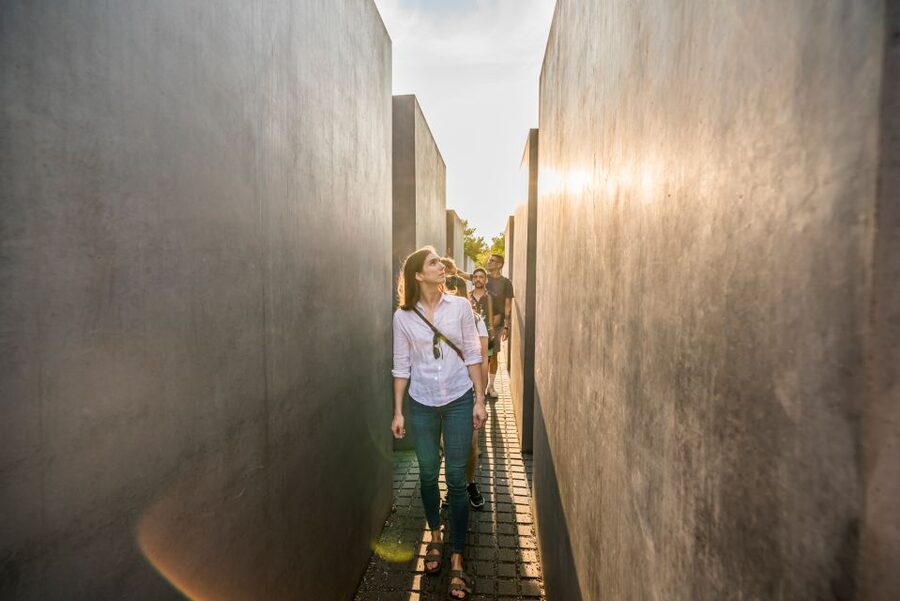
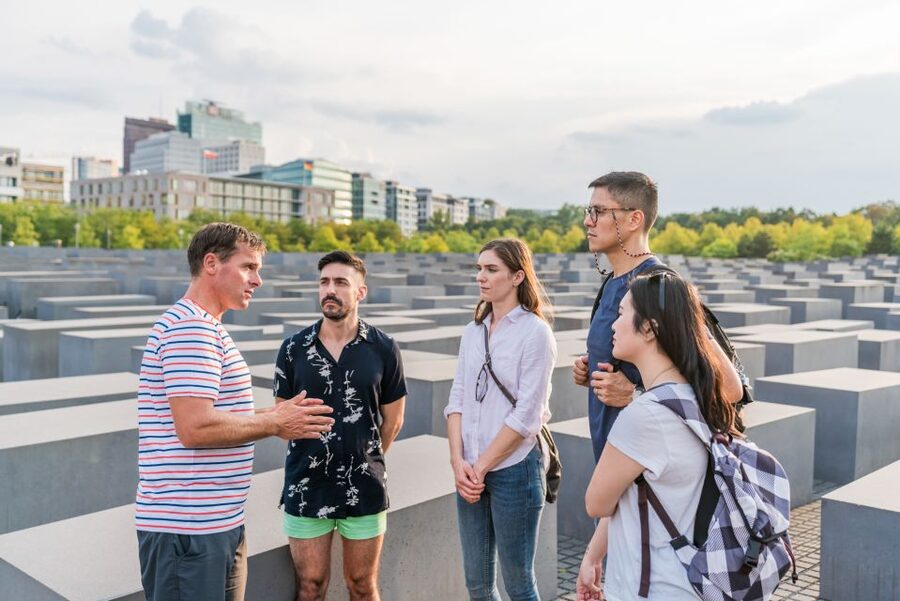
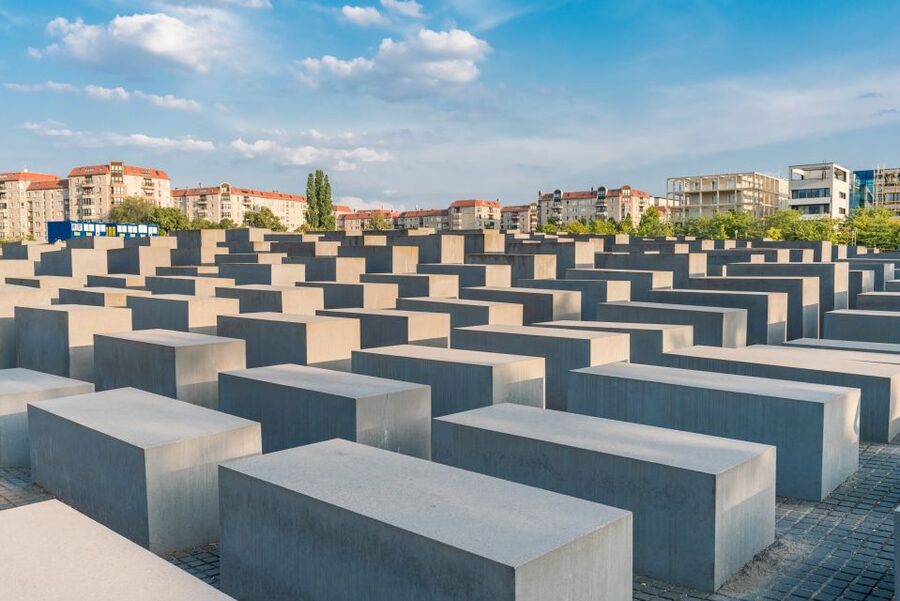
The Memorial to the Murdered Jews of Europe is one of the tour’s most powerful stops. Its field of concrete blocks creates a physical experience that changes as you walk through it. The tour honors the six million Jewish victims of the Holocaust and gives the crime a central place in Berlin’s modern identity.
I appreciate that this site appears in the route after the Reichstag and Soviet memorial. The sequence makes clear that political dictatorship, war, mass murder, and military defeat cannot be separated into neat chapters.
A walking tour cannot replace the memorial’s underground information center, which is not part of the advertised route. Still, standing among the blocks gives you time to reflect, especially if the group pauses rather than rushing through.
This can be an emotional section of the tour. The subject is treated seriously, and the outdoor setting means you should be prepared for weather and changing temperatures.
More Third Reich sites in Berlin:
- Berlin: Berlin Story Bunker Entry Ticket
★ 4.6 · 6,759 reviews - Third Reich Berlin: Hitler and WWII Walking Tour
★ 5.0 · 3,301 reviews - Berlin: Third Reich, Hitler, and WWII Walking Tour
★ 4.9 · 1,133 reviews - Berlin Third Reich Sites: Half-Day Walking Tour
★ 5.0 · 835 reviews
Hitler’s bunker site and the danger of empty space
Near the Holocaust Memorial, the tour reaches the site of Hitler’s bunker. The bunker itself is not open as a historical attraction. Instead, the guide explains where Hitler spent his final days as the Third Reich collapsed.
That absence matters. You are not entering a preserved command room or viewing dramatic ruins. You are standing at a place that is now deliberately understated, with the story carried mainly by the guide’s words and the surrounding urban setting.
For many people, this is one of Berlin’s strangest historical encounters. A leader who shaped Europe through dictatorship and war ended his life in an underground shelter, while the city above was being destroyed. The stop helps connect the grand political story to its final, grim details.
It is also a useful reminder that Berlin’s history often survives through location rather than visible architecture. Keep your expectations realistic. This is an explanation at a site, not a bunker tour.
Detlev-Rohwedder-Haus and the birth of East Germany
The next stop is the former Ministry of Aviation associated with Hermann Göring. The same building later became the birthplace of East Germany in 1949, giving it two very different political identities.
That change is exactly why the building belongs on this route. You can trace the shift from Nazi rule to the Soviet-backed German Democratic Republic through one address. The guide uses the site to show how government spaces were reused after the war, even when the political system changed.
This is one of the less familiar stops, and it rewards careful listening. The building may look like another large government block, but its history covers dictatorship, occupation, and the creation of a divided German state.
The tour is strongest when it makes these connections. Famous sights bring you to Berlin, but places like this help explain how power worked behind the grand monuments.
The Topography of Terror and the machinery of repression
At the former headquarters of the SS and Gestapo, the guide describes how Nazi terror was organized. The site, now associated with the Topography of Terror, focuses attention on the institutions that carried out persecution, imprisonment, and violence.
You will likely find this stop more disturbing than visually dramatic. The power comes from understanding that terror required offices, records, orders, and officials. It was not only the work of a single leader. It depended on a system.
The tour gives you an outdoor introduction rather than a full visit to the documentation center. If Nazi Germany is your main reason for coming to Berlin, allow extra time to return here independently and study the exhibitions.
Within a two-hour route, this is an efficient way to place the regime’s crimes in their physical setting. The guide’s storytelling is especially important here. Several guides, including Ru, Scott, Ariel, and Joachim, have been praised for making difficult material clear and for answering questions in a thoughtful way.
A real stretch of the Berlin Wall
The route then reaches a 200-meter section of the Berlin Wall. This is more useful than seeing only a single painted slab because the length lets you understand the border as a barrier, not merely as a souvenir.
Your guide explains escape attempts, the risks people took to get from East to West, and the effect of the wall’s fall. The details make the Cold War personal. Families, friends, and neighborhoods were divided by a political line that became concrete, guard posts, and controlled crossings.
The wall also changes the rhythm of the tour. Earlier stops deal with dictatorship and wartime destruction. Here, the story shifts to surveillance, restricted movement, competing ideologies, and daily life in a divided city.
The section is a reminder that Berlin’s division lasted for decades, not just during one famous night in 1989. You will hear about the final hours before the wall came down and how its fall led to German reunification.
Do not expect an untouched border zone. Much of Berlin has changed, and the city around the remaining wall sections is active and modern. The guide’s explanation supplies the missing context.
Checkpoint Charlie and the Cold War showdown
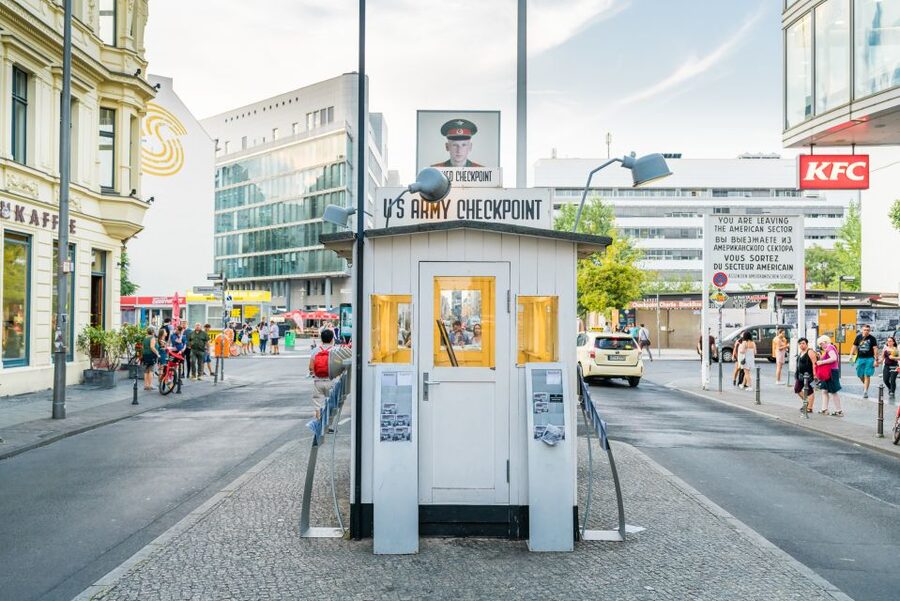
The walk ends at Checkpoint Charlie, the former crossing point where American and Soviet tanks faced each other during a tense Cold War standoff. It is one of Berlin’s most photographed places, but a photo alone tells you little.
The guide brings the site to life through stories of escape attempts, border controls, and the political pressure surrounding the crossing. This is where the tour’s Cold War thread reaches its clearest point.
Checkpoint Charlie can feel commercial and crowded, and the present-day setting does not fully convey the danger of the original border. That is precisely why a guide helps. You need someone to explain what has disappeared, what has been reconstructed, and why the location mattered.
The advertised route concludes here. Meeting information also describes the activity as ending back at the starting meeting point, so check the current details when booking if your onward plans depend on the exact finish. In practical terms, plan for the route to take you from Brandenburg Gate through central Berlin toward Checkpoint Charlie.
How the guides shape the experience
This tour depends heavily on the person holding the pink umbrella. The subject is serious, and a flat delivery would make two hours feel long. The strongest guide style combines dates and facts with short human stories, clear transitions, and room for questions.
Guides named Hannah, Jimmy, Steve, Ru, Scott, James, Klaus, Marie, Peter, Jamie G, Tina, Mikhail, Alex, Xavier, Joachim, Ariel, Raffaello, Thomas, Jasper, Ben, and Emma have led sessions associated with this experience. Their strengths include easy-to-follow explanations, humor used with care, strong storytelling, and a pace that keeps the group moving without feeling hurried.
The feedback attached to different guides points to a useful practical truth: the experience can vary slightly by guide. Some emphasize the Third Reich, others Cold War Berlin, and some add unusual small facts or personal stories. All sessions cover the main route, but the tone and depth may differ.
Several guides have been praised for speaking clearly and loudly enough for the whole group. That matters in busy city streets, where traffic and other tour groups can compete with the explanation.
Pace, comfort, and weather
You will walk about 2 kilometers in two hours. The route is a comfortable city stroll rather than a strenuous hike, but you will spend most of the time standing outdoors.
Wear comfortable shoes. Bring water, a camera, and an umbrella. Tours operate in all weather, including public holidays, so rain is not a reason to assume the tour will be canceled.
The route is listed as wheelchair accessible. Still, outdoor city conditions can vary, and the experience includes stops on public streets and open memorial grounds. If you need specific assistance, confirm the current arrangements before booking.
A shared group keeps the price low and gives you the energy of a public tour. A private group is available if you want to ask more questions, set a different pace, or keep the history lesson focused on your own interests. Language options are English and German, but the shared and private formats may not always offer the same language choices.
Is $23 a fair price?
At $23 per person, this is good value for a first look at Berlin’s 20th-century history. You cover major landmarks across two hours, with a guide tying them into one narrative instead of leaving you to assemble the connections yourself.
The value is highest if you are new to Berlin, short on time, or want historical bearings before visiting museums. You see the Reichstag, Holocaust Memorial, bunker site, Topography of Terror area, Berlin Wall, and Checkpoint Charlie without paying separate admission fees.
The price buys explanation, not entry to indoor museums. If you want documents, artifacts, detailed exhibitions, or long periods at one site, you will need additional visits. Think of this tour as a well-planned outdoor introduction.
A 4.9 rating from 6,830 reviews suggests a strong record, and the repeated praise centers on guide quality, clear storytelling, good pacing, and the ability to answer questions. Those are exactly the features that matter most on a history walk.
Who should book this Berlin history walk?
I would recommend it to first-time visitors, students of European history, and anyone who wants to understand why Berlin looks the way it does. It also works well on your first day, since the route gives you useful context for later visits to museums and memorials.
Families with older children may find the walk engaging, though the Nazi period and Holocaust require mature discussion. The route is also a good fit for people who prefer a manageable outdoor activity instead of a long museum visit.
You may want another option if you already know Berlin’s Third Reich and Cold War sites well. Two hours cannot explore every subject in detail, and the group format may limit how long you can stay at each stop.
Should you book it?
Book this tour if you want the main historical landmarks connected by a clear story, especially at a fair price. The combination of Brandenburg Gate, the Reichstag, the Soviet War Memorial, the Holocaust Memorial, Hitler’s bunker site, the former Nazi security headquarters, the Berlin Wall, and Checkpoint Charlie gives you a strong foundation in only two hours.
Go in ready to walk, listen, and think. Do not expect a bunker interior or extended museum time. If you accept that this is an outdoor overview, the route offers a serious, useful, and often moving introduction to the forces that shaped modern Berlin.
FAQ
How long is the Berlin Third Reich and Cold War walking tour?
The tour lasts two hours and covers approximately 2 kilometers on foot.
Where does the tour begin?
Meet in front of the tourist information point at Brandenburg Gate, Pariser Platz 1. Look for the guide with the pink umbrella.
Which sights are included?
The route includes Brandenburg Gate, the Reichstag, the Soviet War Memorial in Tiergarten, the Memorial to the Murdered Jews of Europe, Hitler’s bunker site, Detlev-Rohwedder-Haus, the Topography of Terror area, a 200-meter Berlin Wall section, and Checkpoint Charlie.
What languages are available?
Tours are offered in English and German. Shared and private options may not always offer the same languages, so check the available format before booking.
Is the walking tour wheelchair accessible?
The activity is listed as wheelchair accessible. The route takes place outdoors on city streets and memorial grounds.
What should I bring?
Bring comfortable shoes, water, an umbrella, and a camera. Tours operate in all weather conditions and on public holidays.
More 2-Hour Experiences in Berlin
- Berlin: 2-Hour Lake Oberhavel Cruise from Tegel
★ 4.4 · 577 reviews - Berlin 2-Hour Segway Tour
★ 4.6 · 238 reviews - East Berlin and the Berlin Wall 2-Hour Walking Tour
★ 5.0 · 228 reviews - Berlin: Backyards of Berlin 2-Hour Tour
★ 4.7 · 163 reviews
More Walking Tours in Berlin
- Discover Berlin Half-Day Walking Tour
★ 5.0 · 9,624 reviews - Berlin: Discover Berlin Walking Tour
★ 4.9 · 5,998 reviews - Berlin: Hidden Backyards Guided Walking Tour
★ 4.8 · 5,360 reviews - Berlin: Alternative Berlin Walking Tour
★ 4.6 · 1,204 reviews
Just added around Berlin
- Berlin Highlights in One Day★ 5.0 · 3 reviews
- Transfer from Berlin Schönefeld Airport (SXF) to Berlin city Hotels – ROUND TRIP★ 4.0 · 3 reviews
- Private Berlin One Day Tour with a Local: See the City Unscripted★ 3.5 · 3 reviews
- Individual city tour Berlin for max. 8 persons★ 5.0 · 3 reviews
- Berlin: Museum Island Tour★ 5.0 · 3 reviews
- Private Analogue Photography Experience in Berlin★ 5.0 · 3 reviews
- Berlin: Local Food Tour in Secrets Hidden Gems★ 4.0 · 3 reviews
- Berlin & The Third Reich Private Guided Tour★ 5.0 · 3 reviews
Third Reich & WWII Sites, compared.


Berlin’s Best: 2 Hour Walking Tour Third Reich and the Cold War
Read our review →
Third Reich Berlin: Hitler and WWII Walking Tour
Read our review →

Berlin Third Reich Sites: Half-Day Walking Tour
Read our review →
Guided Bike Tour of the Berlin Wall and Third Reich
Read our review →
Hitler’s Germany: Berlin During the Third Reich & WWII
Read our review →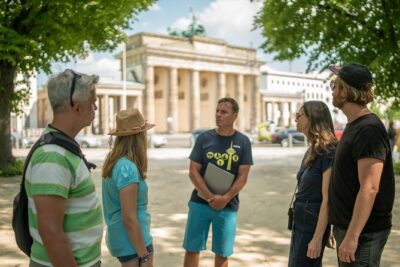
Private Walking Tour Berlin Third Reich Hitler and World War II
Read our review →Browse the lists this tour appears in