
Review · THIRD REICH & WWII SITES
Berlin: Third Reich, Hitler, and WWII Walking Tour
Berlin’s Nazi past is not tucked away in a single museum. It is spread across ordinary streets, government buildings, open squares, and empty patches of ground. This three-hour walk connects those places, taking you from the former centers of Nazi power to the rubble and defeat of 1945.
I like the way the tour puts Hitler’s bunker site beside the larger story of Berlin, instead of treating it as a sensational attraction. I also like the route’s range, from the Topography of Terror exhibit to the Soviet War Memorial, with the Reichstag and Brandenburg Gate tying the story to the city you see today.
The main drawback is simple: three hours on foot is a long stretch, and one recent participant noted that there are no planned water or toilet breaks. Group size can also affect the experience, so private or small-group options may be worth considering.
In This Review
- Key points about Berlin’s Third Reich walking tour
- Starting at Friedrichstraße and the Palace of Tears
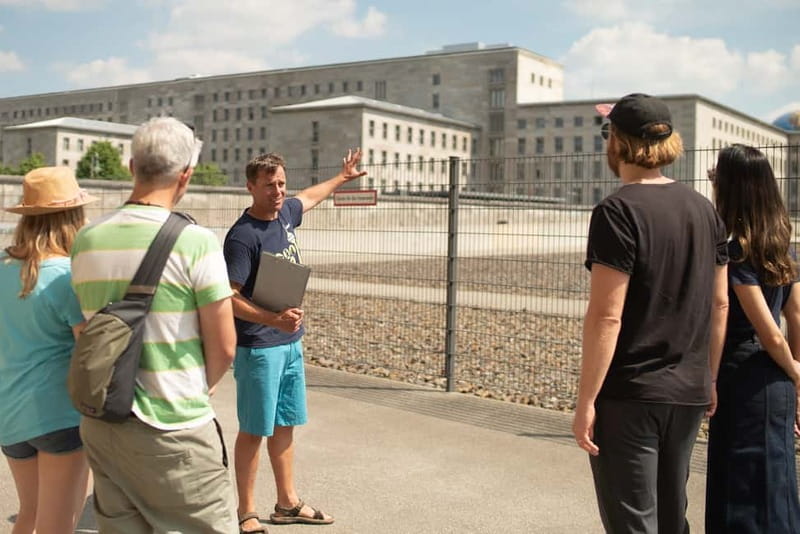
- Seeing the ministries that powered Nazi rule
- Reading Albert Speer’s Germania plan in the city streets
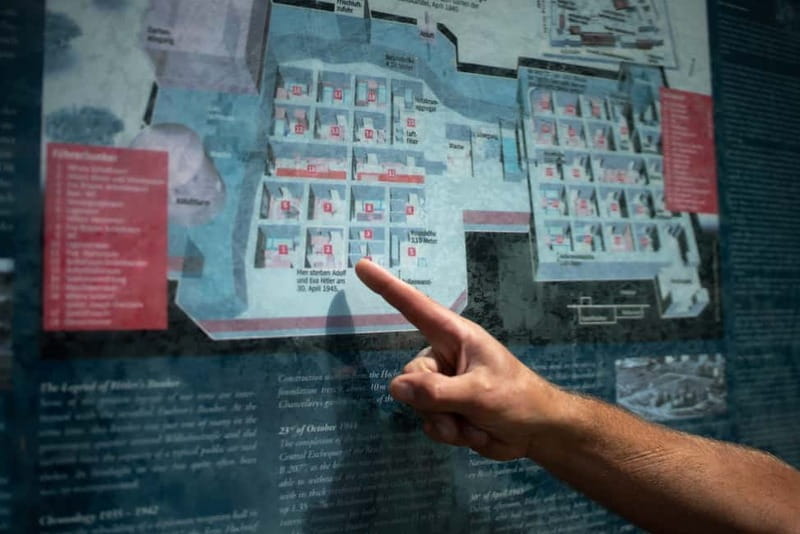
- Standing above the Führer’s Bunker
- The New Reich Chancellery and Nazi Europe’s seat of power
- Using the Topography of Terror to understand Nazi persecution
- The Reichstag, Brandenburg Gate, and the final battle
- Finishing at the Soviet War Memorial
- How the guides shape the experience
- Is $20 good value for three hours?
- Who should book this walking tour?
- Should you book it?
- FAQ
- How long is the Berlin Third Reich and WWII walking tour?
- How much does the tour cost?
- Where does the tour begin?
- How do I recognize the guide?
- Where does the tour finish?
- What languages are available?
- Is the tour available as a private experience?
- Does the tour operate in bad weather?
- What should I bring?
- Can I cancel for a full refund?
Key points about Berlin’s Third Reich walking tour
- Hitler’s bunker site: Stand above the former Führer’s Bunker and hear the final days of the Nazi regime, including what happened to Hitler’s remains.
- Former Nazi power centers: See the locations of Goering’s Air Defence Ministry, Goebbels’ Propaganda Ministry, and Himmler’s SS and Gestapo headquarters.
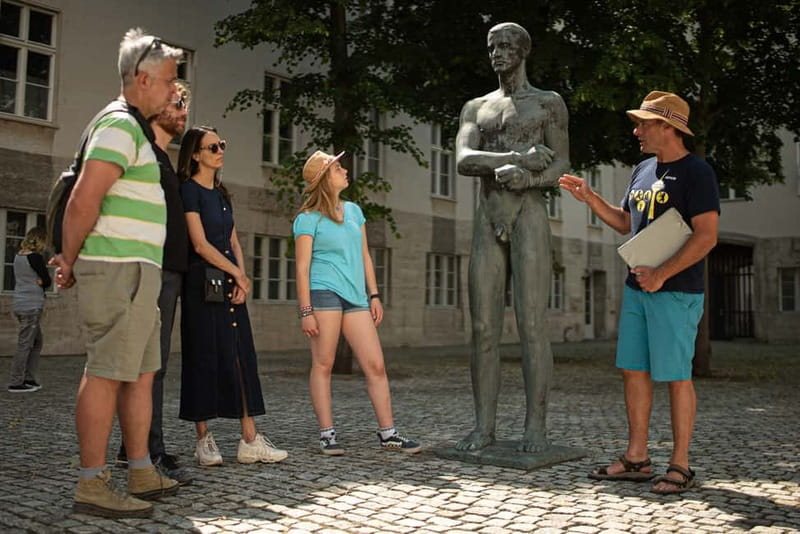
- Germania planning: Walk along part of Albert Speer’s grand plan for a remade Nazi capital.
- Topography of Terror: Use this important exhibit to connect Nazi institutions with the system of persecution and terror.
- WWII’s final battlefield: Follow the Soviet advance around the Reichstag and finish at a memorial with T-34 tanks and Red Army howitzers.
- Strong guide roster: Guides including Hannah, Mikhail, Jimmy, Martin, Will, and others are praised for clear explanations, warmth, humor, and careful handling of difficult subjects.
Starting at Friedrichstraße and the Palace of Tears
The meeting point is outside Friedrichstraße train station, on the square between the station and the Tränenpalast, also called the Palace of Tears. Look for guides wearing a blue lanyard and yellow name tag, usually with yellow umbrellas.
This is a fitting place to begin. The Palace of Tears recalls the divided city and the painful farewells made at this border crossing during the Cold War. The tour itself focuses on Nazi Germany and World War II, but Berlin’s twentieth-century stories overlap constantly. A guide may connect the end of the war with the later Soviet occupation, the Berlin Wall, and the city’s division.
You need to arrive ready to walk. Wear comfortable shoes and clothing suited to the weather. The tour runs rain or shine, so a waterproof layer or sun protection can make a real difference.
The walk ends back at the same meeting point. That makes it easy to continue sightseeing, catch a train, or visit the nearby Palace of Tears after the tour.
More Third Reich sites in Berlin:
- Berlin: Third Reich and Cold War 2 Hour Walking Tour
★ 4.9 · 6,830 reviews - Berlin: Berlin Story Bunker Entry Ticket
★ 4.6 · 6,759 reviews - Berlin’s Best: 2 Hour Walking Tour Third Reich and the Cold War
★ 5.0 · 5,486 reviews
Seeing the ministries that powered Nazi rule
One of the strongest parts of the route is its attention to institutions, not just famous personalities. You see the former location of Goering’s Air Defence Ministry, linked to the Luftwaffe and the planning of the Blitz. You also pass the former sites of Goebbels’ Propaganda Ministry and Himmler’s SS and Gestapo headquarters.
Much of the challenge in Berlin is that Nazi buildings were destroyed, repurposed, or absorbed into the modern city. A bare wall or an unremarkable government building can mean little without explanation. This is where the guide earns the $20 price. You get the political map that turns scattered addresses into a working system of power.
The focus is not only on Hitler. The tour shows how military planning, propaganda, police terror, and party control worked together. That wider view matters because Nazi Germany was not created by one man acting alone. The regime depended on offices, officials, laws, soldiers, informers, and a vast machinery of repression.
Guides such as Hannah have been praised for explaining sensitive subjects respectfully and answering questions carefully. Will has been singled out for strong command of fascist history and vivid storytelling. Mikhail is described as able to handle questions on Nazi Germany while also adding useful Cold War and general Berlin context.
Guide quality will always vary by date, but the named guides associated with this experience suggest a broad range of teaching styles. Some are lively and funny. Others are more formal. The common thread is preparation and a willingness to stop for questions.
Reading Albert Speer’s Germania plan in the city streets
The walk also covers Hitler’s proposed Germania project, developed with architect Albert Speer. This plan aimed to remake Berlin as the grand capital of Nazi Europe, with huge avenues and monumental buildings designed to project imperial power.
You will not see Germania as a completed city. That is part of the point. The route lets you understand how architecture was meant to serve dictatorship. Monumental scale could make the state feel permanent, overwhelming, and larger than the individual.
This section helps you read Berlin’s streets with a sharper eye. Instead of seeing only present-day offices, roads, and open spaces, you begin to notice how Nazi planners imagined movement, ceremony, and control. The guide’s explanation is essential because the physical remains alone do not tell the full story.
The subject can become abstract in a book, but it is easier to grasp when you are standing on the planned axis itself. I especially value this part for visitors who already know the basic WWII timeline and want to understand how ideology shaped the capital.
Standing above the Führer’s Bunker
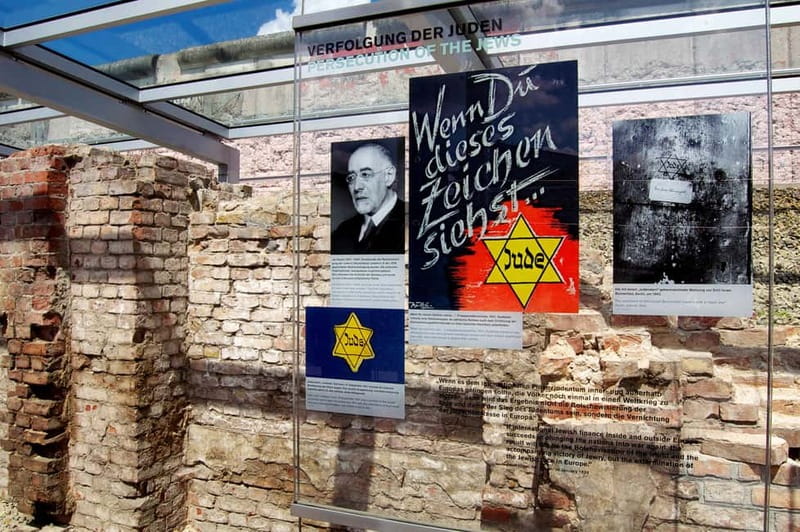
The former Führer’s Bunker is one of the tour’s most anticipated stops. Hitler spent his final days there as Soviet forces closed in on Berlin, and he died by suicide in the bunker in April 1945.
Today, the site is not a grand memorial or preserved underground attraction. The tour takes you to the location above the bunker and explains what happened there. That plain setting is important. It avoids turning the place into a shrine and makes the contrast between Nazi fantasy and final collapse especially clear.
A strong guide will place the bunker within the wider end of the war. You hear the sequence of Hitler’s final days, the fall of Berlin, the destruction around the Chancellery, and the later fate of his remains. This is history that can easily become lurid, but the best guides keep the focus on evidence, consequences, and the human cost of the regime.
The bunker stop is also where the tour’s tone becomes most serious. You are not visiting an intact room or a dramatic film set. You are looking at a location in a normal city setting, then using the guide’s account to reconstruct the final hours of a government that had caused enormous destruction.
More walking tours in Berlin:
- Discover Berlin Half-Day Walking Tour
★ 5.0 · 9,624 reviews - Berlin: Discover Berlin Walking Tour
★ 4.9 · 5,998 reviews - Berlin: Hidden Backyards Guided Walking Tour
★ 4.8 · 5,360 reviews - Third Reich Berlin: Hitler and WWII Walking Tour
★ 5.0 · 3,301 reviews
The New Reich Chancellery and Nazi Europe’s seat of power
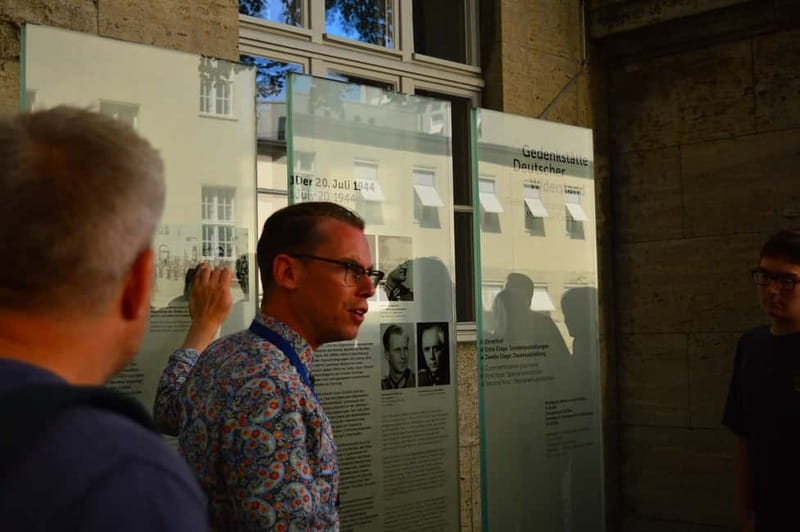
The tour discusses the former New Reich Chancellery, Hitler’s grand seat of power and one of the clearest examples of the regime’s taste for monumental design. The building itself was destroyed after the war, but its role remains central to understanding how Nazi leaders presented authority.
This stop adds useful context to the bunker. The Chancellery represented power at its peak, while the bunker represented the regime’s final enclosure. Together, they show the sharp arc of the Nazi state, from public spectacle and conquest to panic and ruin.
You should expect explanation of a former site rather than a preserved interior visit. That is typical of Berlin’s Nazi-era locations. The city’s destruction in 1945 and later rebuilding mean that a walking tour often depends on maps, photographs, surviving fragments, and a guide’s ability to explain what is no longer visible.
That can be a strength. You are encouraged to compare the past with the present instead of treating history as a sealed museum display.
Using the Topography of Terror to understand Nazi persecution
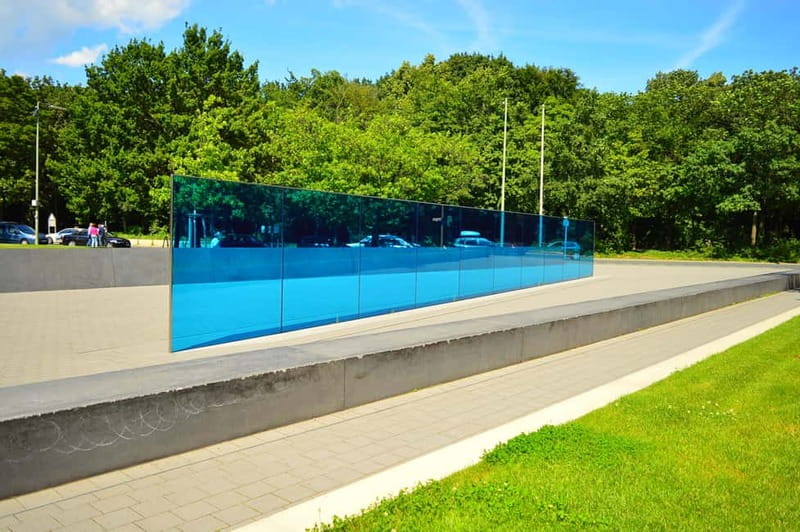
The Topography of Terror is a major stop on the route. Its name refers to the former headquarters of the Gestapo, SS, and Reich Security Main Office, institutions that helped organize Nazi terror.
This exhibit gives the walking tour a needed documentary anchor. Outdoor sites can show where something happened, but an exhibit can provide photographs, records, and a clearer account of the people and agencies involved. Together, the two formats work better than either one alone.
Allow yourself time to absorb the material. The tour’s schedule is fixed at three hours, so the depth of the stop may depend on the guide’s pacing and the group’s questions. If you are hoping to study every panel in detail, you may want to return independently.
I find this part especially useful because it counters the temptation to reduce Nazi history to Hitler, uniforms, and battlefield movements. The Topography of Terror points toward the victims and the administrative systems that made persecution possible.
The Reichstag, Brandenburg Gate, and the final battle
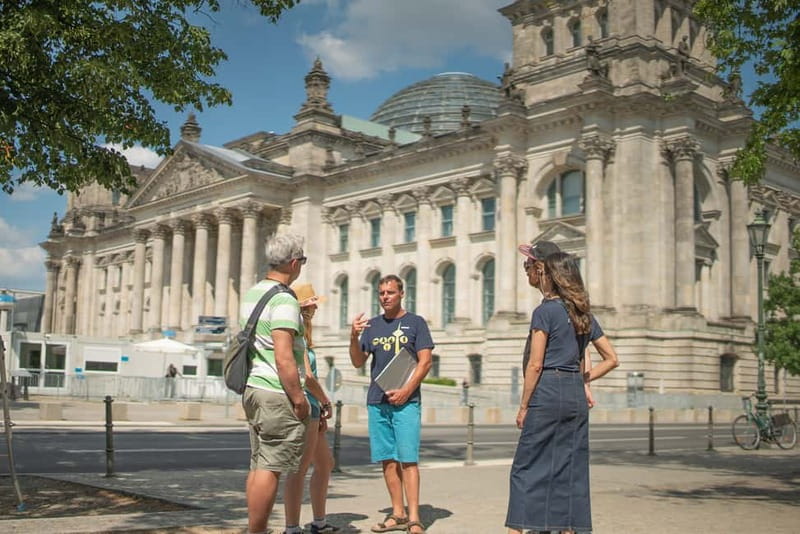
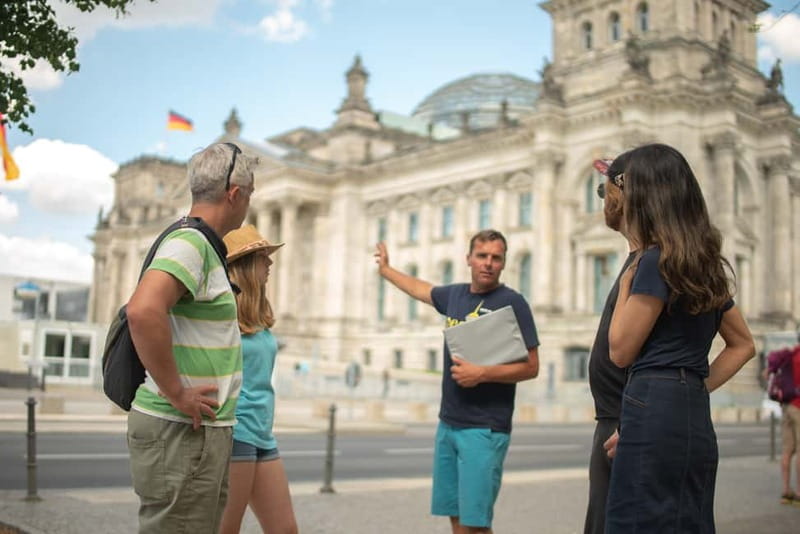
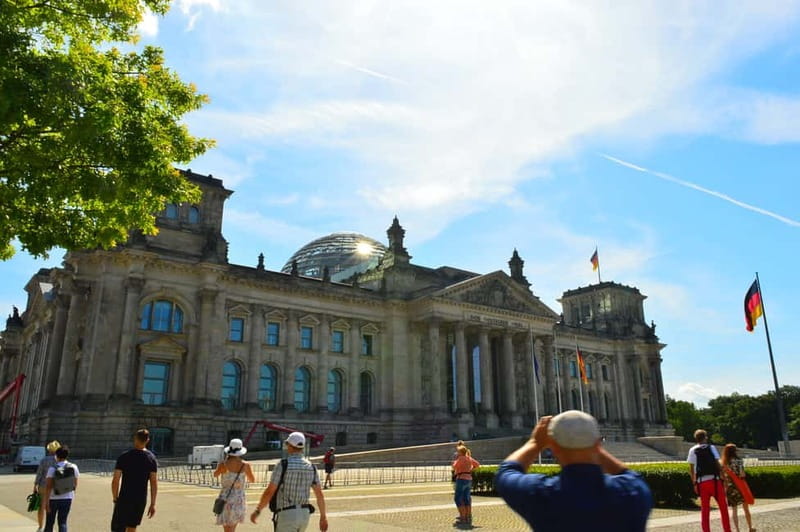
The route then moves toward the Reichstag, one of the key sites in the final battle for Berlin. You hear about the Soviet assault and why this area became central to the collapse of Nazi Germany.
The Reichstag is more than a famous photograph stop. Its damaged shell became a symbol of defeat, then later a symbol of the rebuilt German state. A guide can help you separate the building’s different meanings across time, from the Nazi era through Soviet victory and modern reunified Germany.
The Brandenburg Gate adds another layer. Under the Nazis, it was used as a symbol of power. During the Cold War, it stood near the divide between East and West Berlin. Today it is one of the city’s best-known landmarks, but the tour reminds you that its meaning has never been fixed.
This is one of the route’s most valuable features. You are not simply checking off famous sights. You are seeing how the same monument can be used by dictators, claimed by occupying powers, and later adopted as a sign of national unity.
Finishing at the Soviet War Memorial
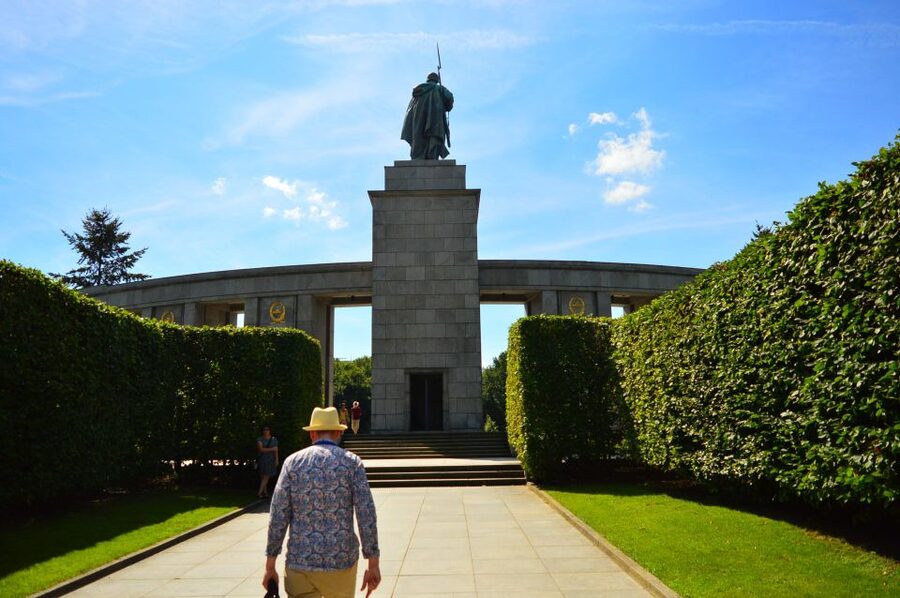
The tour ends its historical arc at the Soviet War Memorial, where T-34 tanks and Red Army howitzers flank the site. The memorial honors Soviet soldiers who died in the battle for Berlin and marks the military force that defeated Nazi Germany.
The weapons on display make the memorial visually powerful, but the guide’s context matters. The Soviet victory ended the Nazi regime, yet the battle caused immense destruction and loss of life. A good explanation avoids presenting the memorial as a simple celebration and instead places it within the brutal final weeks of the war.
This stop also gives the tour a clear ending. You have followed the story from Nazi ambition and control through defeat, occupation, and the reshaping of Berlin. The walk returns to Friedrichstraße afterward, bringing you back to a city that now functions as a modern European capital.
How the guides shape the experience
The guide is the heart of this tour. Berlin’s Nazi sites rarely offer enough visible remains to carry a three-hour walk on their own. The experience depends on clear storytelling, accurate dates, good maps or visual references, and a calm approach to crimes and suffering.
The strongest guide comments point to several useful qualities. Hannah is praised for careful treatment of sensitive material. Xavier is noted for spotting details that visitors might miss even at familiar landmarks. Jörg is described as charismatic, while Callum is praised for mixing formal history with plain, approachable language.
Jimmy and Martin are both praised for passion, clear answers, and a willingness to encourage questions. Artie is described as adding lesser-known facts and keeping the group informed. Mikhail is praised for connecting Nazi history with Cold War Berlin. These details suggest that you can expect more than a memorized list of dates.
The tour is offered in English, German, and Spanish. Private and small-group options are available, though the standard group may feel less personal. One participant specifically found the group size less appealing, so ask about the format when booking if discussion and easy access to the guide matter to you.
Is $20 good value for three hours?
At $20 per person, this is a strong-value introduction to Nazi Berlin. You cover several important locations, receive a connected account rather than isolated facts, and avoid paying admission for a packaged attraction. The main thing you are buying is the guide’s interpretation.
The value is highest if you are new to Berlin or want a clear framework before visiting museums on your own. It is also useful for anyone studying WWII history, since one guide has been praised for making the subject accessible to a student preparing for a history exam.
The price is less decisive if you already know the city well and prefer quiet, self-guided visits. You may still learn new details, but the group pace and fixed route will limit how long you can spend at each site.
Bring your own water. At least one participant specifically noted the lack of water and toilet breaks, and three hours of walking can feel long in warm weather. Plan accordingly before the tour starts.
Free cancellation is available up to 24 hours before the tour for a full refund, and you can reserve now and pay later. Private options include hotel pickup, but the regular meeting point is outside Friedrichstraße station.
Who should book this walking tour?
I would choose this tour if you want the Nazi and WWII story explained in a logical order, with the locations doing part of the teaching. It suits first-time visitors, history students, museum fans, and anyone who wants to understand why Berlin’s famous landmarks carry so many layers of meaning.
It is also a good choice for families with older teenagers, provided they are ready for serious subject matter and several hours on foot. The guide’s ability to answer questions can make difficult material easier to approach.
I would hesitate if you need frequent rests, dislike walking in poor weather, or want to spend long periods inside exhibitions. The tour operates rain or shine, and the standard format may not provide the flexibility of a private visit.
Should you book it?
Book this Berlin Third Reich and WWII walking tour if you want a focused, affordable history lesson that takes place on the actual streets where the regime operated and fell. The route covers the bunker site, Nazi ministries, the Topography of Terror, the Reichstag, Brandenburg Gate, and the Soviet War Memorial, giving you a useful three-hour framework.
Choose a small-group or private option if you want more time for questions or find large groups tiring. Otherwise, the $20 standard tour offers a practical starting point for understanding Berlin’s darkest period, especially when led by a guide such as Hannah, Mikhail, Jimmy, Martin, Will, or another strong member of the team.
FAQ
How long is the Berlin Third Reich and WWII walking tour?
The tour lasts three hours.
How much does the tour cost?
The listed price is $20 per person.
Where does the tour begin?
It begins outside Friedrichstraße train station, on the square between the station and the Tränenpalast, also called the Palace of Tears.
How do I recognize the guide?
The guides wear a blue lanyard and yellow name tag. They also hold yellow umbrellas.
Where does the tour finish?
The activity ends back at the Friedrichstraße meeting point.
What languages are available?
The tour is offered in English, German, and Spanish.
Is the tour available as a private experience?
Yes. Private and small-group options are available.
Does the tour operate in bad weather?
Yes. The tour operates rain or shine, so bring weather-appropriate clothing.
What should I bring?
Bring comfortable shoes, comfortable clothing, and clothing suited to the weather. Bringing your own water is also sensible because there are no scheduled water breaks noted for the tour.
Can I cancel for a full refund?
Yes. You can cancel up to 24 hours in advance for a full refund. You can also reserve your place and pay later.
Just added around Berlin
- Berlin Highlights in One Day★ 5.0 · 3 reviews
- Individual city tour Berlin for max. 8 persons★ 5.0 · 3 reviews
- Transfer from Berlin Schönefeld Airport (SXF) to Berlin city Hotels – ROUND TRIP★ 4.0 · 3 reviews
- Private Berlin One Day Tour with a Local: See the City Unscripted★ 3.5 · 3 reviews
- Berlin: Museum Island Tour★ 5.0 · 3 reviews
- Private Analogue Photography Experience in Berlin★ 5.0 · 3 reviews
- Berlin: Local Food Tour in Secrets Hidden Gems★ 4.0 · 3 reviews
- Berlin & The Third Reich Private Guided Tour★ 5.0 · 3 reviews
Third Reich & WWII Sites, compared.



Berlin’s Best: 2 Hour Walking Tour Third Reich and the Cold War
Read our review →
Third Reich Berlin: Hitler and WWII Walking Tour
Read our review →
Berlin Third Reich Sites: Half-Day Walking Tour
Read our review →
Guided Bike Tour of the Berlin Wall and Third Reich
Read our review →
Hitler’s Germany: Berlin During the Third Reich & WWII
Read our review →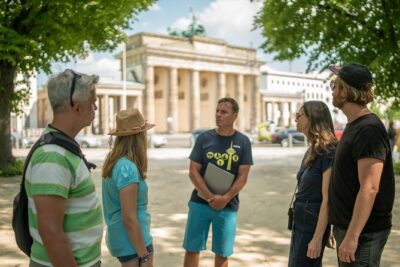
Private Walking Tour Berlin Third Reich Hitler and World War II
Read our review →Browse the lists this tour appears in