
Review · WALKING TOURS
Berlin: Discover Berlin Walking Tour
Berlin’s past is not tucked away in one museum. It is under your feet, in open squares, beside ordinary streets, and behind modern buildings. This tour brings that story together as you walk from the Brandenburg Gate and Museum Island to Checkpoint Charlie and Hitler’s bunker site.
I like the way the tour links Prussian, Imperial, Nazi, Cold War, and modern Berlin instead of treating each period as a separate lesson. I also like the choice of a shorter or longer route, plus guides who use personal Berlin stories and humor to make heavy subjects easier to follow. The main drawback is simple: you will be outdoors for 2 to 4 hours, rain or shine, and the longer option covers a lot of ground.
In This Review
- Key points about the Berlin walking tour
- Why this walk helps you understand Berlin
- Brandenburg Gate and the symbols of power
- Bebelplatz and the Nazi book burning
- The Memorial to the Murdered Jews of Europe
- Hitler’s bunker site and the end of the war
- Museum Island, Berlin Cathedral, and Palace Square
- Checkpoint Charlie and the Berlin Wall
- People who shaped the city
- What the guides do best
- Timing, walking pace, and weather
- Is $23 a good value?
- Who should book this Berlin walk?
- Should you book the Discover Berlin Walking Tour?
- FAQ
- How long does the Discover Berlin Walking Tour last?
- How much does the tour cost?
- Which languages are available?
- Is a private group available?
- Which major sights does the tour visit?
- Does the tour visit the site of the Nazi book burning?
- Does the tour include museum admission?
- What should you bring?
- Can you cancel for a full refund?
Key points about the Berlin walking tour
- See Berlin’s major historic sights in one route: The tour brings together the Brandenburg Gate, Berlin Cathedral, Palace Square, Museum Island, Checkpoint Charlie, the Berlin Wall, Bebelplatz, and Hitler’s bunker site.
- Follow the city through several eras: Your guide connects medieval Berlin with Prussian power, the German Empire, the Nazi period, the divided Cold War city, and Berlin today.
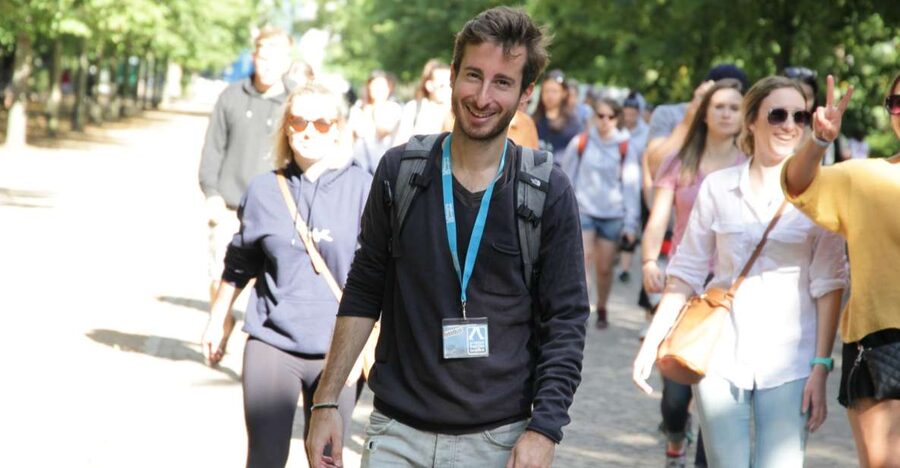
- Expect strong storytelling: Guides including Anja, a historian-archeologist, and Berlin local Gregor have been praised for clear explanations, personal insight, warmth, and well-timed humor.
- Choose between 2 and 4 hours: The shorter walk suits a tight schedule. The longer route gives you more time for context and questions.
- Prepare for serious subjects: The tour includes the Nazi book burning at Bebelplatz, the Memorial to the Murdered Jews of Europe, wartime destruction, the Berlin Wall, escape attempts, and the site linked to Hitler’s final days.
- Pay $23 for a useful first look: At this price, the tour can save you hours of planning and help you decide which museums and memorials deserve more of your time.
Why this walk helps you understand Berlin
Berlin can be confusing at first. Its grand avenues, empty memorial spaces, rebuilt landmarks, and scattered Wall remains do not always explain themselves. You may pass from a royal square to a Nazi-era site in a few minutes, then reach a Cold War crossing without seeing an obvious border.
That is where a good guide matters. The point is not simply to collect photographs. It is to understand why the city looks the way it does and why Germany treats its past with such care.
The route begins with Berlin’s long story, including its early origins in a swampy medieval setting. From there, the narrative moves through Prussian and Imperial rule before reaching the darker chapters of the 20th century. The best part of this structure is the sense of cause and effect. You are not hearing disconnected facts. You are seeing how power, war, division, and reunification changed the same streets.
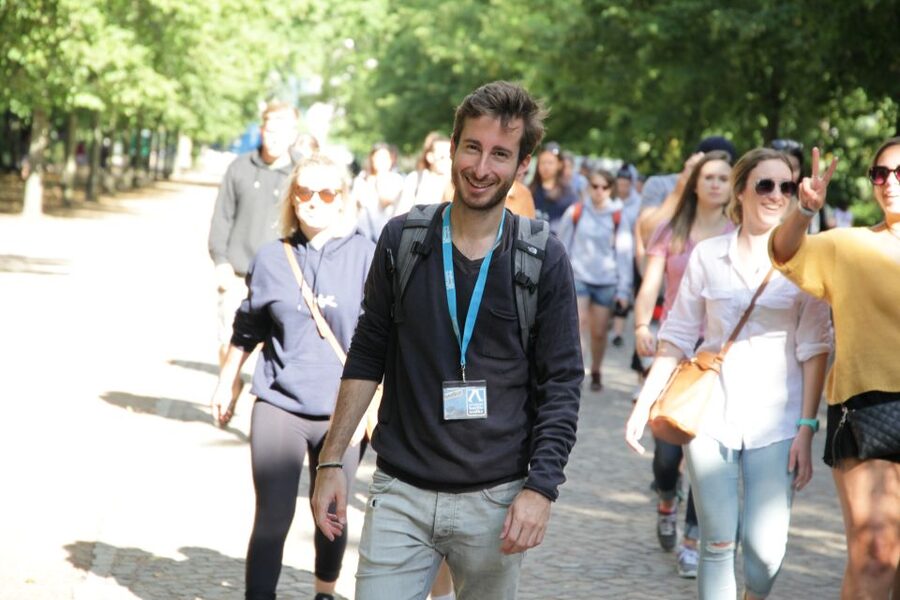
Guides such as Anja, Philipp, Georgia, Tobi, Luisa, and Gregor have been praised for making difficult material clear without making it feel like a school lecture. Gregor, who grew up in Berlin, has also brought family memories of a city that changed during his lifetime. Those personal links can help you picture Berlin as a lived-in place, not just a collection of historic sites.
More walking tours in Berlin:
- Discover Berlin Half-Day Walking Tour
★ 5.0 · 9,624 reviews - Berlin: Third Reich and Cold War 2 Hour Walking Tour
★ 4.9 · 6,830 reviews - Berlin’s Best: 2 Hour Walking Tour Third Reich and the Cold War
★ 5.0 · 5,486 reviews
Brandenburg Gate and the symbols of power
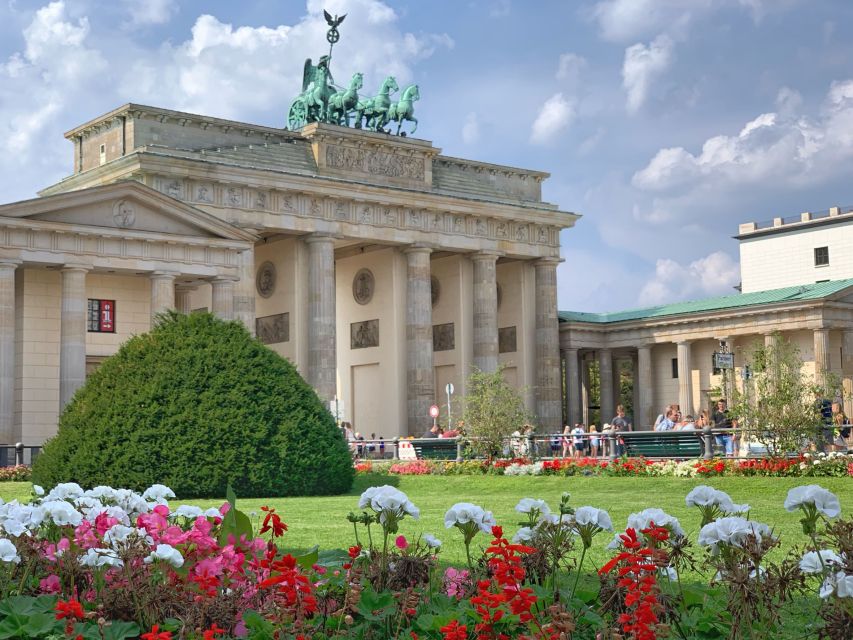
The Brandenburg Gate is one of Berlin’s essential stops, but it is more than a handsome neoclassical entrance. It has been used as a symbol by Prussian rulers, imperial Germany, the Nazi regime, the divided Cold War city, and the reunited nation.
Your guide uses the gate to explain how the meaning of a monument can change with the government standing behind it. The structure itself remains, but the political messages attached to it shift over time.
This is a useful early stop because it gives you a visual key for the rest of the walk. Berlin repeatedly reuses old symbols, sometimes proudly and sometimes with caution. You will see that tension again at the Holocaust memorial, at former government sites, and along the old Wall.
The Brandenburg Gate is also one of the tour’s most familiar sights, so it offers an easy start for first-time visitors. You can take in the architecture while your guide explains the events that turned it into a global image of division and reunion.
Bebelplatz and the Nazi book burning
Bebelplatz is an elegant square with a disturbing past. It is associated with the Nazi book burning of 1933, when books considered politically or culturally unacceptable were destroyed in public.
A memorial built into the pavement recalls the event. Looking down through the glass, you see empty bookshelves beneath the square. The design is quiet and easy to miss, which is exactly why a guide adds value here. Without an explanation, you might walk across the plaza without noticing the memorial or understanding what happened.
This stop also shows how Berlin remembers Nazi crimes without turning every memorial into a grand monument. The empty shelves create a sense of absence. They ask you to consider censorship, fear, and the removal of ideas from public life.
The subject is serious, but the walk’s storytelling format helps. Guides are used to answering questions and placing the event within the wider political rise of the Nazis. You should expect thoughtful discussion rather than a quick photo stop.
The Memorial to the Murdered Jews of Europe

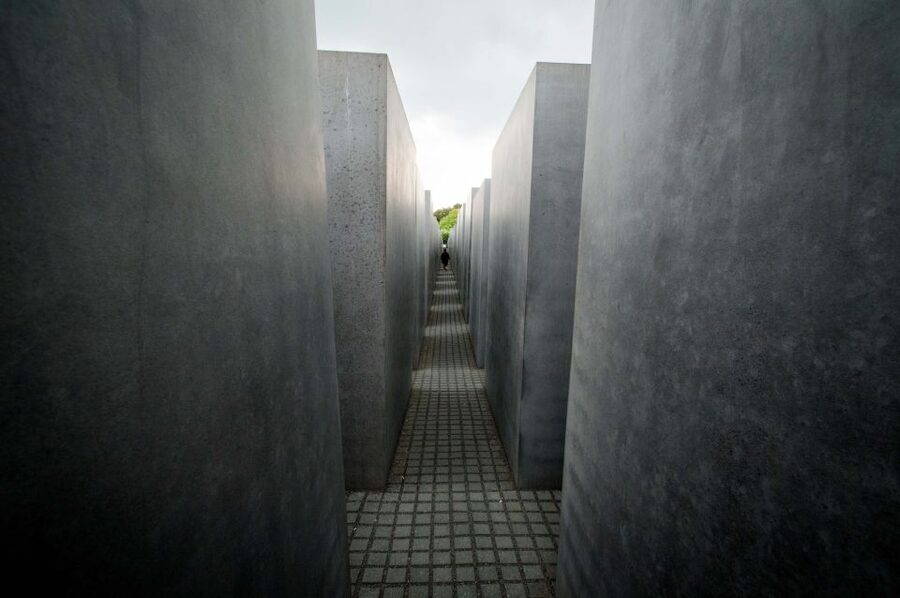
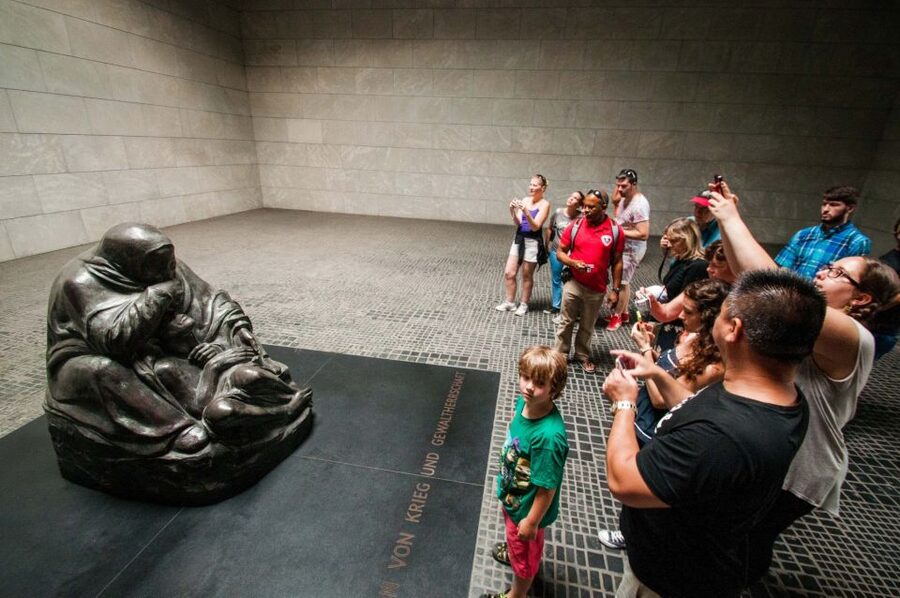
Near the Brandenburg Gate, the Memorial to the Murdered Jews of Europe takes up a large field of concrete blocks. The design can feel open and orderly from the edge, then more unsettling as you walk among the rising slabs.
Your guide explains the controversy around the memorial’s design and the difficult question behind it: how can a modern city represent the murder of Europe’s Jews without reducing it to a simple image or slogan?
This is one of the tour’s most important stops because it connects physical design with moral responsibility. The memorial does not tell the entire story on its surface. You need historical context to understand why it was built, what it leaves open to interpretation, and how it fits into Berlin’s approach to remembrance.
Expect the guide to give you time to look and think. The site is not a lighthearted landmark, and the tone should remain respectful. The walk covers a great deal, but this is a place where you may want to return later for a slower visit.
A different side of Berlin on the same trip:
- Berlin: Reichstag, Dome and Government District Guided Tour
★ 4.7 · 18,288 reviews - Berlin: 1-Hour City Tour by Boat with Guaranteed Seating
★ 4.3 · 16,993 reviews - Berlin: Boat Tour Along the River Spree
★ 4.4 · 11,252 reviews - Berlin: Hop-on Hop-off Bus Tour with Live Commentary
★ 4.3 · 8,579 reviews
Hitler’s bunker site and the end of the war
The former site of Hitler’s bunker is an unusual stop because there is little to see. The bunker was destroyed and the area is now surrounded by ordinary urban development. You stand above the location associated with Hitler’s suicide in April 1945, but there is no dramatic ruin or museum entrance to mark it.
That absence is part of the lesson. Your guide helps you understand why the site looks so ordinary and why the location has not been turned into a shrine. The story belongs to the collapse of Nazi Germany, the final days of the war, and the deliberate effort to prevent the place from becoming a focus for extremist visitors.
This stop works best when you listen closely. You are not visiting a preserved room. You are using the location to picture the end of a regime that had reshaped Europe through dictatorship, war, and mass murder.
For many people, this is one of the tour’s most striking moments. Berlin’s most famous stories often sit beneath unremarkable streets. The guide turns that plain patch of ground into a point of historical understanding without glorifying the people connected to it.
Museum Island, Berlin Cathedral, and Palace Square
Museum Island gives the walk a different mood. The island brings together major cultural institutions, while Berlin Cathedral and Palace Square show how the city has handled monarchy, war damage, reconstruction, and modern public life.
You may not enter the museums during the walking tour, but the outside views help you plan the rest of your stay. If you have limited time in Berlin, a guide can help you decide which buildings deserve a proper interior visit and which can be appreciated from the street.
Berlin Cathedral is especially useful as a landmark because it makes the scale of the historic center easier to understand. Palace Square adds another layer, showing how old royal spaces have been altered and debated over time.
The value here lies in the connections. You are not just looking at grand façades. You are hearing how Berlin’s rulers used architecture to project authority, how war changed the center, and how modern Berlin continues to argue over what should be rebuilt, preserved, or reinterpreted.
Checkpoint Charlie and the Berlin Wall
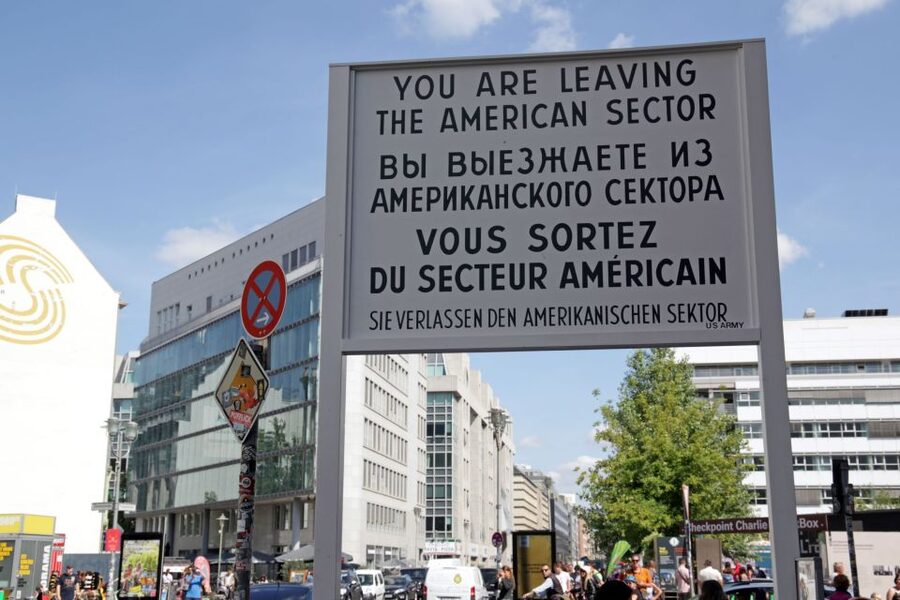
Checkpoint Charlie is one of Berlin’s best-known Cold War sites. It marked a crossing between East and West Berlin and became associated with tension between the United States and the Soviet bloc.
Today, the area can feel busy and commercial, so the historical setting is not always self-explanatory. Your guide supplies the missing context: how the city was divided, how residents lived with the border, and why escape attempts became such dangerous acts of courage.
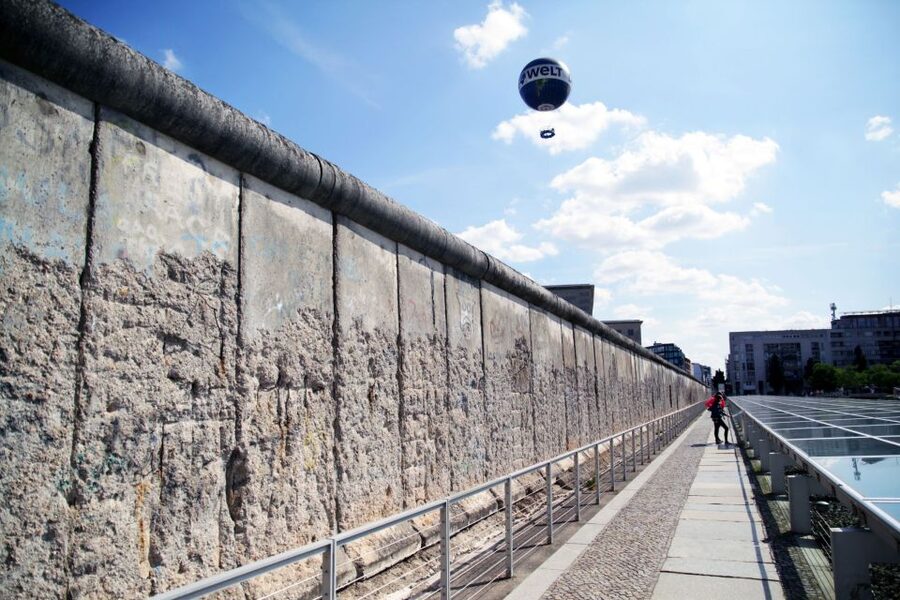
The tour also covers places connected to daring escapes across the Berlin Wall before its fall in 1989. These stories give the Cold War section a human scale. Instead of hearing only about governments and military standoffs, you learn about people who took enormous risks to cross from East to West.
This is another stop where you should manage your expectations. Checkpoint Charlie is not a preserved border crossing frozen in time. It is a modern city site with a complicated presentation. The guide helps separate the real history from the surface-level spectacle.
People who shaped the city
The tour adds human stories through figures such as Albert Einstein, Marlene Dietrich, and John F. Kennedy. These names broaden the picture beyond rulers, generals, and dictators.
Einstein connects Berlin with scientific and intellectual life. Dietrich brings in film, performance, and the experience of a famous German who became strongly associated with opposition to Nazism. JFK links the city’s Cold War story with the international attention focused on divided Berlin.
These references make the walk less predictable. You get a sense of Berlin as a place shaped by artists, scientists, politicians, ordinary residents, and people caught in events larger than themselves.
A strong guide also makes room for modern Berlin. Several guides have been praised for explaining how past events still affect the city today. That link is important. Berlin is not a finished history lesson. Its memorials, buildings, and public debates continue to reflect the choices made after 1945 and after reunification.
What the guides do best
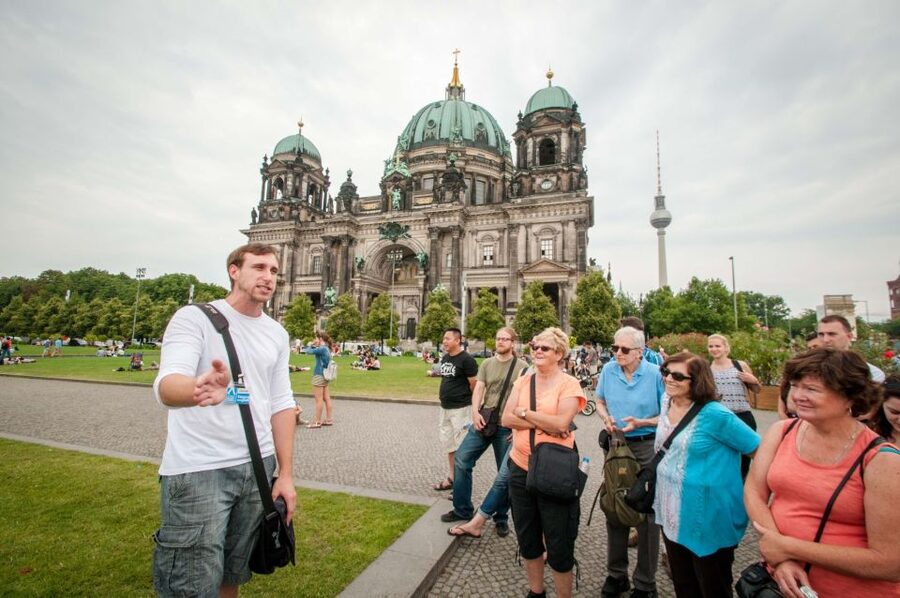
The strongest feature of this tour is the guide. The activity is offered in English or German, and the guide’s style can shape the entire experience.
The praise is consistent across named guides such as Anja, Philipp, Joel, Tobi, Stefan, Luisa, Gregor, Georgia, Walid, Glen, and Rueben. Their shared strengths are clear explanations, warmth, humor, enthusiasm, and the ability to answer questions without losing the thread of the walk.
Anja’s background as a historian-archeologist suits a tour built around context. Gregor’s family connection to Berlin gives the city a personal angle. Joel has been especially attentive to comfort in severe winter weather, pausing in sheltered spots and offering practical help to a cold participant. Walid has been praised for a steady pace and regular stops, including a format that worked well for a 13-year-old.
You should still remember that guides have individual personalities. Some are more theatrical, some more academic, and some more focused on personal stories. The common thread is an effort to keep the history understandable and engaging.
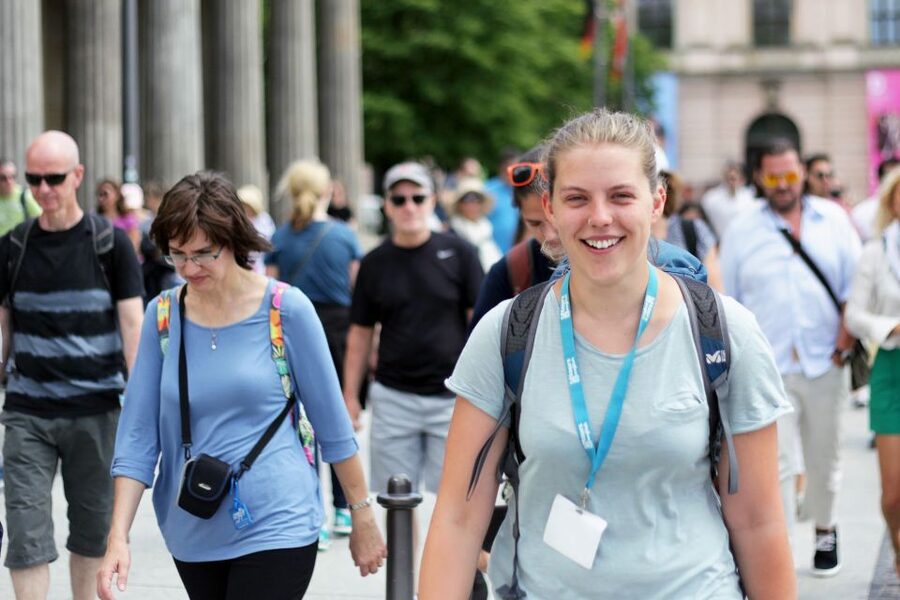
The group can be large at times, with one guide handling around 20 people. That is manageable, but you will need to stay close enough to hear and keep track of the group. A private group is available if you prefer a more personal format, though the supplied price is listed as $23 per person and meeting details vary by booking option.
Timing, walking pace, and weather
You can choose a 2-hour or 4-hour format, subject to available starting times. The shorter version is useful if you have only a small opening in your schedule or want a quick orientation before visiting museums on your own.
The longer option is better if Berlin’s political history is a main reason for your visit. It allows more stops, more explanation, and more time for questions. Even so, this is still a walking tour, not a seated lecture. Wear shoes suited to city streets and bring weather-appropriate clothing.
The tour runs rain or shine. Winter feedback shows that guides try to adjust by stopping in sheltered places, but you should not rely on that alone. Bring a warm coat, hat, and gloves in cold weather. In wet conditions, waterproof layers will make the experience far more pleasant.
Because the walk covers major sites across central Berlin, you should expect regular movement rather than a stop at every landmark for a long period. The pace has been described as steady, with breaks when needed, but personal stamina still matters.
Is $23 a good value?
At $23 per person, this is a strong value for a first visit to Berlin. You are paying for a live guide who brings together places that would otherwise require separate research, map work, and reading.
The value is highest if you care about context. You can see the Brandenburg Gate, Checkpoint Charlie, Berlin Cathedral, and Museum Island on your own. What you cannot easily recreate is the full chain linking those places to Prussian rule, Nazi persecution, the divided city, and modern Germany.
The tour can also protect your limited vacation time. Afterward, you will have a clearer idea of which memorials and museums deserve a longer visit. The price does not include museum entry, so budget separately if you plan to go inside the institutions on Museum Island or visit other paid sites.
For a private group, the experience may feel more flexible and personal. For a regular group, the low price makes it easier to accept a little less control over the pace.
Who should book this Berlin walk?
I would recommend it most strongly to first-time visitors, history-minded families, and anyone with only a day or two in Berlin. It is also a good fit if you want a clear starting point before exploring museums alone.
Teenagers can follow it well when the guide uses stories and regular stops. The experience also suits adults who want serious history presented in plain language, with room for questions and a little humor.
You may want something else if you dislike long periods outdoors, have difficulty keeping up with a walking group, or prefer to explore each site slowly. This tour gives you breadth and context. It does not replace a quiet museum visit or a long personal reflection at a memorial.
Book it early in your Berlin stay if possible. The tour’s greatest practical benefit is the orientation it provides. Once you understand the center, you can spend the rest of your trip returning to the places that caught your attention.
Should you book the Discover Berlin Walking Tour?
Yes, if you want Berlin’s major sights to make sense rather than simply appear on a checklist. The $23 price is fair, the 2 to 4-hour choice helps with scheduling, and the guide quality appears to be a major strength across different departures.
Choose the longer route if you enjoy political history and want time for questions. Choose the shorter one if you need a quick introduction. Pack for the weather, stay close to the guide, and expect difficult subjects handled with care.
This is not a tour for avoiding Berlin’s painful past. It is a useful way to face it, understand it, and see how it still shapes the city.
FAQ
How long does the Discover Berlin Walking Tour last?
The tour lasts between 2 and 4 hours, depending on the option booked and availability.
How much does the tour cost?
The listed price is $23 per person.
Which languages are available?
The tour is offered in English and German.
Is a private group available?
Yes. A private group option is available.
Which major sights does the tour visit?
The route includes the Brandenburg Gate, Checkpoint Charlie, Museum Island, Berlin Cathedral, Palace Square, Bebelplatz, the Berlin Wall, and the site of Hitler’s bunker.
Does the tour visit the site of the Nazi book burning?
Yes. The tour visits Bebelplatz, the location associated with the Nazi book burning.
Does the tour include museum admission?
The included item is a guide. Museum admission is not listed as included.
What should you bring?
Bring weather-appropriate clothing because the tour takes place outdoors.
Can you cancel for a full refund?
Yes. You can cancel up to 24 hours in advance for a full refund. You can also reserve now and pay later.
Just added around Berlin
- Berlin Highlights in One Day★ 5.0 · 3 reviews
- Private Berlin One Day Tour with a Local: See the City Unscripted★ 3.5 · 3 reviews
- Individual city tour Berlin for max. 8 persons★ 5.0 · 3 reviews
- Transfer from Berlin Schönefeld Airport (SXF) to Berlin city Hotels – ROUND TRIP★ 4.0 · 3 reviews
- Berlin: Museum Island Tour★ 5.0 · 3 reviews
- Private Analogue Photography Experience in Berlin★ 5.0 · 3 reviews
- Berlin: Local Food Tour in Secrets Hidden Gems★ 4.0 · 3 reviews
- Berlin & The Third Reich Private Guided Tour★ 5.0 · 3 reviews
Walking Tours, compared.



Berlin’s Best: 2 Hour Walking Tour Third Reich and the Cold War
Read our review →

Third Reich Berlin: Hitler and WWII Walking Tour
Read our review →


Browse the lists this tour appears in