
Review · WALKING TOURS
Berlin: Hidden Backyards Guided Walking Tour
Berlin’s best stories often hide behind plain street entrances. This two-hour walk through Spandauer Vorstadt leads you into courtyards where artists work, residents pass through, and old buildings reveal how Berlin’s Jewish quarter and working neighborhoods changed over time. The street frontage is only the cover. The real reading happens inside.
I like the way this tour joins architecture with social history, rather than treating courtyards as pretty backdrops. I also like the route’s practical mix: Haus Schwarzenberg for art and rough-edged Berlin character, then the more polished Hackesche Höfe and Heckmann-Höfe.
The main consideration is language. The activity is offered in English and German, but some sessions have been conducted only in German, so confirm your chosen departure carefully if English is essential. The walk also runs rain or shine, and you will be outside for the full two hours.
In This Review
- Key Points About Berlin’s Courtyard Walk
- Starting at Hackescher Markt and Entering Spandauer Vorstadt
- Haus Schwarzenberg and Berlin’s Creative Side
- Hackesche Höfe and the Polished Courtyard Tradition
- Rosenhöfe, Sophienkirche, and the Neighborhood’s Layers
- The New Synagogue and Jewish Berlin
- Auguststraße and the Passageways Most People Miss
- Heckmann-Höfe and a Calmer Finish
- How the Guides Shape the Experience
- Is $23 a Fair Price for Two Hours?
- Who Should Take This Berlin Courtyards Tour?
- Practical Tips for Making the Most of the Walk
- Should You Book the Berlin Hidden Backyards Tour?
- FAQ
- Where does the Berlin Hidden Backyards tour start?
- Where does the tour finish?
- How long does the tour last?
- How much does the tour cost?
- Which languages are available?
- Is food or drink included?
- Is the tour wheelchair accessible?
- What happens if it rains?
- Can I cancel for a refund?
- Can I reserve the tour and pay later?
Key Points About Berlin’s Courtyard Walk
- The meeting point is easy to find: Start in front of the BUTLERS shop at Hackescher Markt 4.
- The route goes beyond postcard Berlin: You’ll enter courtyards and passageways that are easy to miss from the main streets.
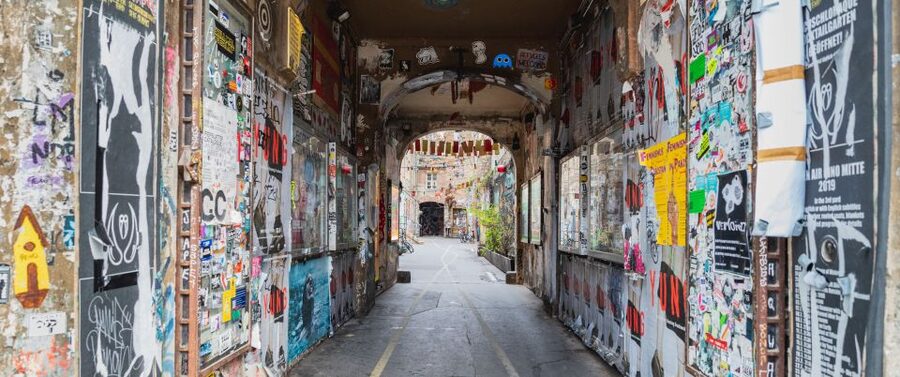
- Haus Schwarzenberg adds creative edge: Its walls carry street art, and its buildings now house studios and cultural spaces.
- Jewish Berlin is central to the story: The walk explains the growth of Jewish life around the New Synagogue.
- Heckmann-Höfe offers a quieter pause: Trees, ivy, and colorful walls create a pleasant break from Oranienburger Straße.
- The price is fair for the context: At $23, you pay for a live guide who connects several courtyards into one clear story.
Starting at Hackescher Markt and Entering Spandauer Vorstadt
Meet your guide in front of BUTLERS at Hackescher Markt 4. This is a busy central location, so give yourself a little time to find the shop and gather before the group moves off. The tour finishes on Oranienburger Straße, with two listed drop-off points in that area.
The opening section introduces Spandauer Vorstadt, the historic quarter now folded into Berlin-Mitte. The useful idea here is transformation. You are not simply walking through attractive courtyards. You are seeing how a district’s buildings and public life changed as Berlin changed around them.
A good guide makes this part matter by explaining the connection between building form and daily life. The area’s courtyards were not designed as isolated sights. They were practical inner spaces where people lived, worked, stored goods, made things, and moved between businesses and homes.
I find this a strong way to begin because it gives you a frame for the rest of the walk. Without that context, Hackesche Höfe can look like a photogenic shopping complex and Haus Schwarzenberg can look like a wall covered in graffiti. With the story, both become clues to the city’s past and present.
More walking tours in Berlin:
- Discover Berlin Half-Day Walking Tour
★ 5.0 · 9,624 reviews - Berlin: Third Reich and Cold War 2 Hour Walking Tour
★ 4.9 · 6,830 reviews - Berlin: Discover Berlin Walking Tour
★ 4.9 · 5,998 reviews
Haus Schwarzenberg and Berlin’s Creative Side
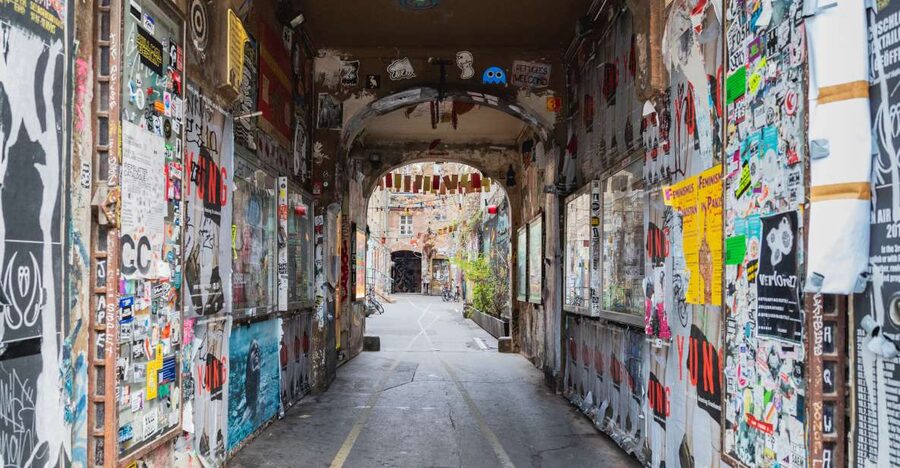
Haus Schwarzenberg is one of the most distinctive stops. Its courtyard has a rough, weathered feel, with walls covered in street art and buildings that have served different purposes over the years. Today, the space is associated with art studios and creative activity.
This is the courtyard for you if you prefer Berlin with a little grit still showing. It is not polished in the way some restored central courtyards are. That is precisely the point. You can see how an older building complex has been adapted rather than scrubbed clean of every mark.
The guide’s explanation is important here. The value is not just in taking a photograph of the artwork. You learn how the courtyard shifted from earlier functions into a place for artists and cultural projects. The result is a more useful view of Berlin’s character: old spaces survive because people keep finding new uses for them.
Allow time to look closely. Street art changes, and the walls are part of the atmosphere, but the surrounding architecture carries just as much interest. The contrast between worn surfaces and active studios gives this stop its appeal.
Hackesche Höfe and the Polished Courtyard Tradition
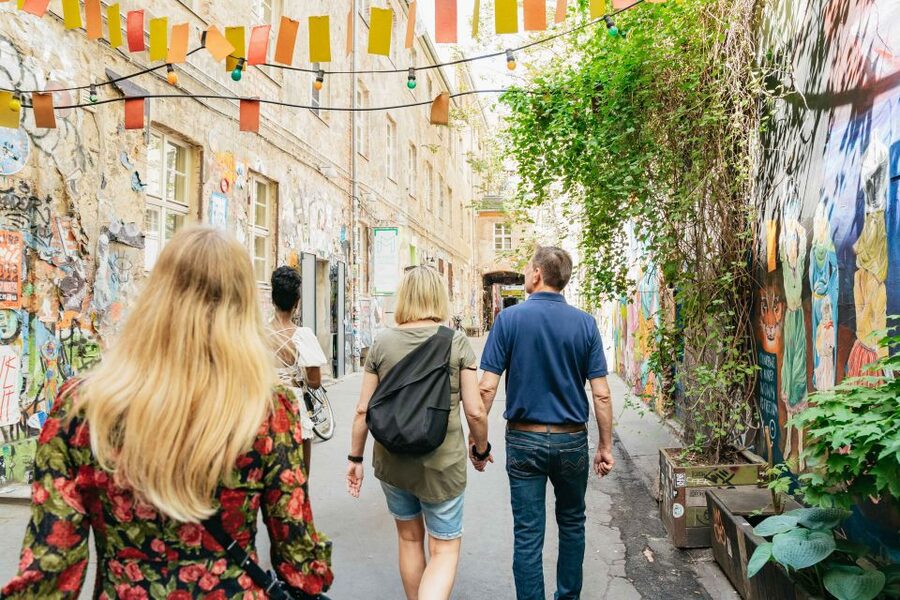
The route then reaches Hackesche Höfe, one of the best-known courtyard complexes in Berlin. This is not an unknown corner, and you should not expect complete solitude. Shops and regular city activity give the place a more finished, public feel than Haus Schwarzenberg.
That contrast helps. The tour does not present every courtyard as the same kind of place. Hackesche Höfe shows how historic architecture can be restored and brought into modern commercial life. Haus Schwarzenberg shows a looser, more alternative pattern of use.
Look up as you move through the courtyards. The appeal is in the sequence of connected spaces, changes in color and decoration, and the way the buildings pull you away from the noise of the surrounding streets. A guide can point out details you might otherwise pass without understanding.
This stop may be less satisfying if you want only places that feel secret. It is a familiar Berlin sight, and some parts can feel busy. Still, it belongs on the route because it gives you a clear example of the courtyard style and a useful comparison with the less restored spaces that follow.
Rosenhöfe, Sophienkirche, and the Neighborhood’s Layers

Rosenhöfe adds another courtyard setting to the walk. By this point, the pattern becomes clearer: Berlin’s inner courtyards are not one uniform attraction. Each has its own degree of restoration, purpose, and connection to the surrounding streets.
The tour also reaches Sophienkirche. This change of focus is welcome. After several enclosed courtyards, a church gives the route another architectural and historical reference point. It helps place the neighborhood’s Jewish, religious, residential, and commercial stories within the same urban setting.
The supplied route does not promise an interior visit to the church, so plan to appreciate it as part of the walk rather than expecting a formal church tour. The guide’s commentary is what turns the stop into something more than a quick look at a facade.
This is also where the two-hour limit matters. You get a sequence of places, but not unlimited time at each one. If you like to study every doorway or take many photographs, the pace may feel purposeful. For most people, that is a benefit. You cover more ground without turning the tour into a slow architectural seminar.
A few more Berlin tours worth weighing up
- Berlin: Reichstag, Dome and Government District Guided Tour
★ 4.7 · 18,288 reviews - Berlin: Government District around the Reichstag Guided Tour
★ 4.7 · 8,447 reviews - Berlin: 1-Hour Boat Tour with Bilingual Live Guide
★ 4.7 · 3,629 reviews - Berlin: Sights and Highlights Bike Tour with a Local Guide
★ 4.8 · 2,698 reviews
The New Synagogue and Jewish Berlin
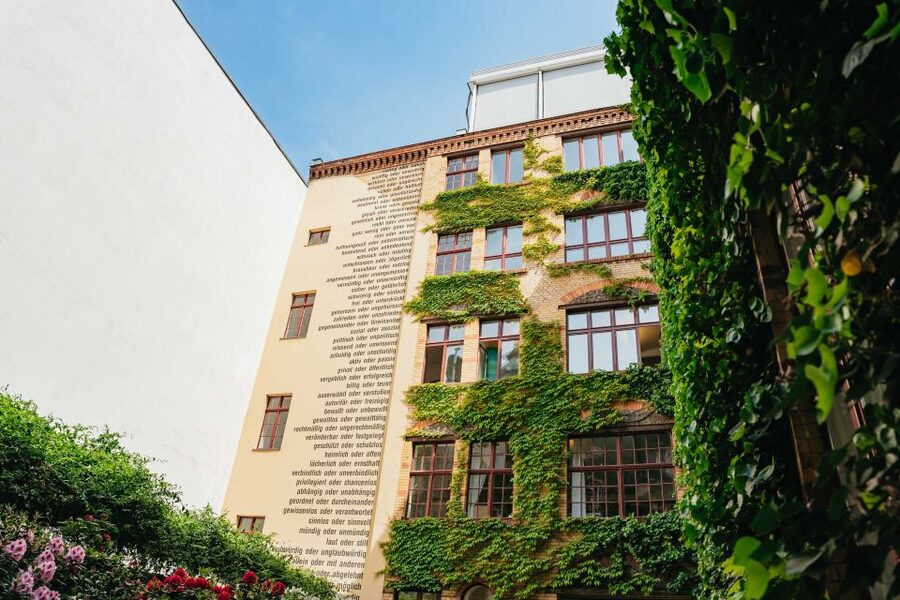
The area around the New Synagogue is one of the route’s most meaningful sections. The walk explains how Spandauer Vorstadt became a center of Jewish life and how that identity forms part of the district’s story today.
This subject deserves care. The experience is not simply a walk past attractive courtyards with a small historical note added at the end. Jewish life around the New Synagogue is one of the main threads tying the neighborhood together.
Guides have brought in specific stories, including the history of the first female rabbi. Details like this help put human scale on a subject that can otherwise feel too broad. You hear about people, institutions, and changing social roles, not only dates and architectural styles.
I especially value the way this portion connects the local quarter to wider Berlin history. The buildings are not frozen exhibits. They have witnessed changes in religion, commerce, politics, war, division, reunification, and modern urban life. The guide’s job is to make those connections understandable without turning the walk into a long classroom lecture.
If you have already visited Berlin’s major museums and memorial sites, this neighborhood walk can add useful local context. It does not replace those places, and it is not presented as a full survey of Jewish history in Berlin. Instead, it shows how that history is rooted in a particular set of streets and buildings.
Auguststraße and the Passageways Most People Miss
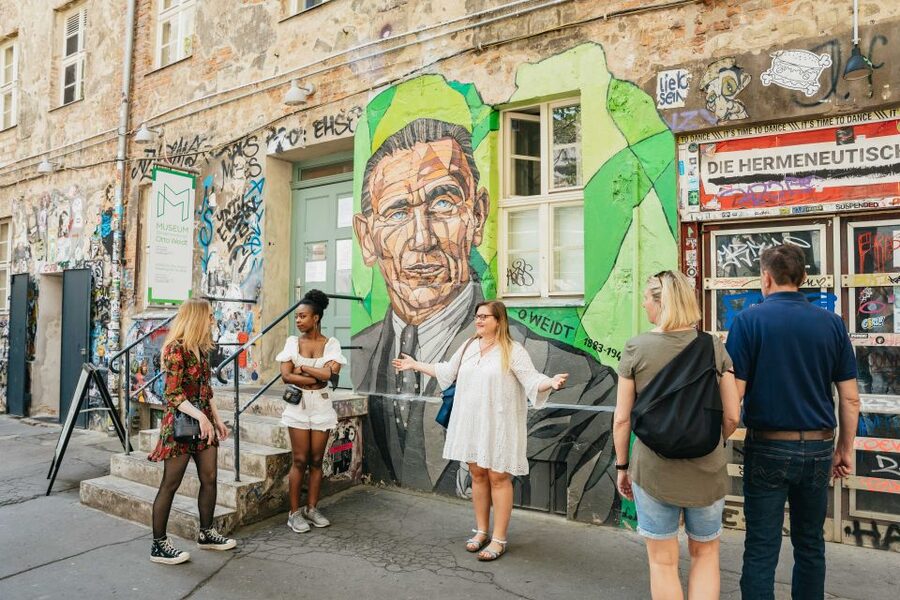
The route includes Auguststraße, another chance to see how the district works beyond its main attractions. Here, the experience is less about checking off a monument and more about learning to notice entrances, side passages, and interior spaces.
You may have walked near these courtyards before without realizing what was behind the doors. That is one of the tour’s practical strengths. A local guide knows which entrances are relevant, which spaces can be visited, and how to connect them into a route that makes sense.
The walk also gives you a better feel for Berlin’s Berlin mixture, the blend of living, working, creative, and commercial uses often found in older urban blocks. The phrase came up in the feedback from one especially pleased participant, and it describes what you see well. A courtyard can be both historic and active, both residential and cultural, without being reduced to one role.
Do not expect every stop to be dramatic. Some spaces are valuable because they reveal ordinary urban design rather than offering a grand view. That is part of the appeal for people who have already seen the Brandenburg Gate, Museum Island, and the major memorials.
Heckmann-Höfe and a Calmer Finish
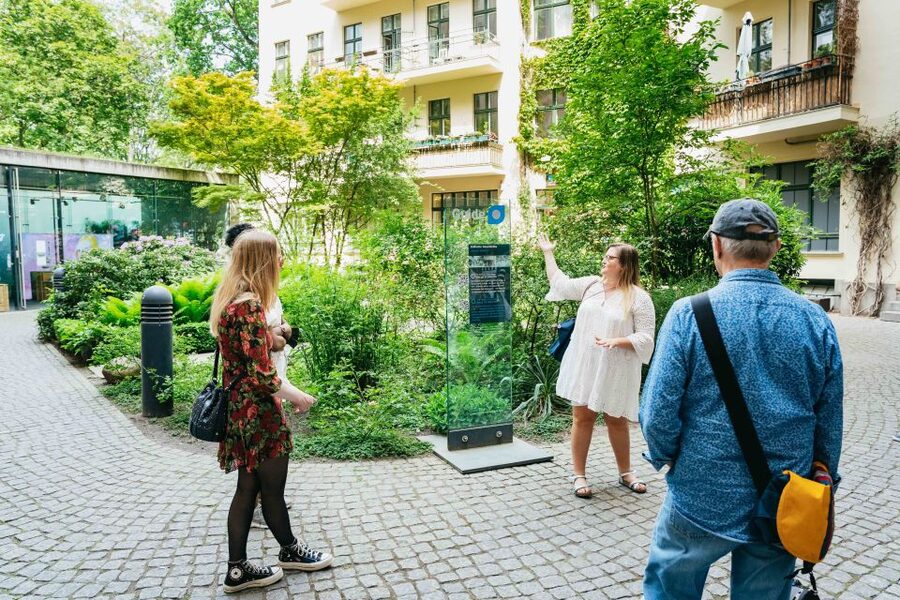
Heckmann-Höfe is the route’s most relaxing final stop. This 19th-century courtyard has colorful details, trees, and ivy-covered buildings, creating a pleasant pocket away from Oranienburger Straße.
The atmosphere here differs from Haus Schwarzenberg. Where Schwarzenberg feels raw and artistic, Heckmann-Höfe feels more settled and welcoming. You can pause, look around, and appreciate how a former working courtyard now functions as a place where people meet, eat, work, and spend time.
The word oasis is often overused for city courtyards, but it fits the practical experience here. Traffic and street movement fall away once you are inside. The trees and enclosed walls soften the setting, even though you remain in central Berlin.
The finish on Oranienburger Straße is convenient. You are left in an active part of Mitte, rather than somewhere difficult to reach. You can continue exploring on foot or use the area as a base for the next part of your day. Food and drinks are not included, so this is a sensible place to stop for your own refreshment after the walk.
How the Guides Shape the Experience
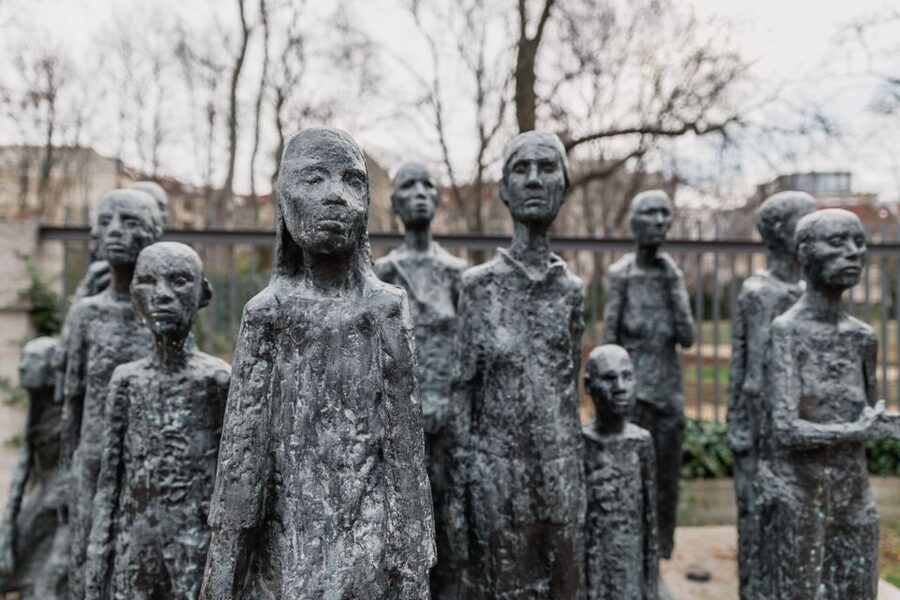
The guide is the most important variable on a history walk. The route has good material, but the experience depends on how clearly the person leading it connects architecture, Jewish life, and everyday Berlin.
Several guides have been singled out by name in past bookings. Nick is described as friendly, engaging, and able to carry the story through hundreds of years of Berlin history. Susanne has been praised for a lively presentation style and for explaining large amounts of information without making the walk feel heavy. Lydia and Alex have also led well-received tours.
That does not mean you should expect a specific guide on your departure. Names can change with scheduling, and one original guide was replaced by another because of illness. The useful point is that the strongest part of the experience is the guide’s storytelling, not a fixed performance by one individual.
You should also pay attention to language when booking. English and German are listed as available languages, but at least one booking was conducted only in German, and another participant specifically noted that the German-only format made the historical explanation hard to follow. If you need English, check the selected time rather than assuming every departure is bilingual.
The pace appears manageable. The walk lasts two hours and has been described as easy, though you should still expect regular standing and walking on city streets and courtyard surfaces. It is listed as wheelchair accessible, which is useful, but courtyards can have different surfaces and access conditions, so you may want to confirm any specific mobility needs before booking.
Is $23 a Fair Price for Two Hours?
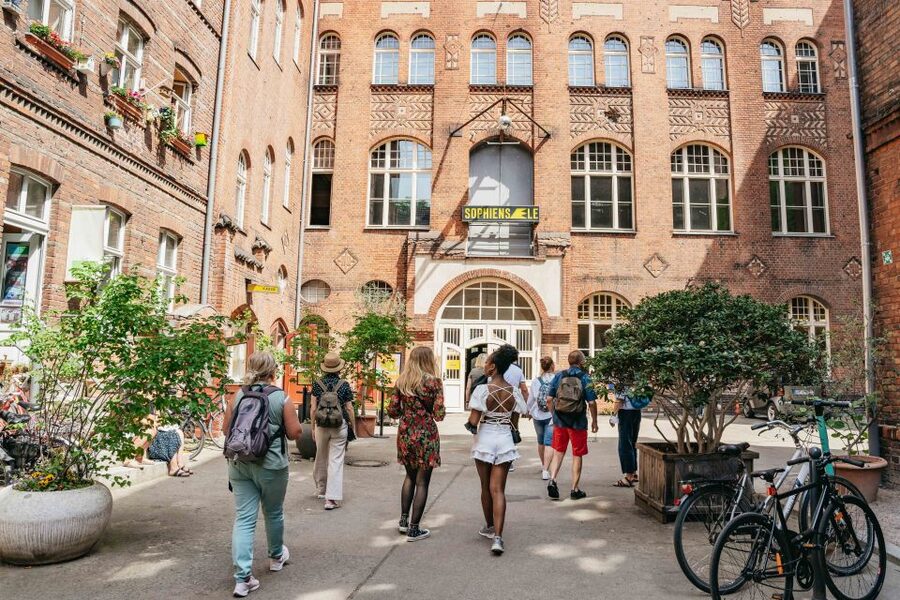
At $23 per person, this is a reasonable buy if you want more than a self-guided stroll. You could walk through some of the public courtyards on your own, but you would miss the connections between them and may not know which side entrances are worth seeking out.
The value comes from three things:
- A local route through several courtyards
- Historical explanation tied to the exact buildings around you
- Access to lesser-known spaces that are easy to miss while walking between major sights
The price is less compelling if you have only a short time in Berlin and still need to see the city’s main landmarks. This tour is best after you have covered, or at least planned, the central sights. It rewards curiosity more than checklist sightseeing.
There are no food or drinks included, so budget for your own break afterward. That is not a serious drawback on a two-hour walk, especially with the tour ending near Oranienburger Straße.
Free cancellation up to 24 hours before departure and the option to reserve now and pay later make the booking less rigid. Those policies are useful in a city where weather can change quickly, although the tour itself runs rain or shine.
Who Should Take This Berlin Courtyards Tour?
I would recommend it to you if you enjoy architecture, urban history, street art, or the everyday side of a city. It is also a good second-day activity, once the big sights have given you a basic map of Berlin.
It suits adults and older children who can manage a two-hour walk and enjoy listening to a guide. The mix of courtyards and stories gives the route enough visual change to avoid feeling like a lecture on foot.
It is especially useful for:
- First-time visitors who want a closer look at Mitte
- Repeat visitors who have already seen Berlin’s major attractions
- People interested in Jewish Berlin and the area around the New Synagogue
- Photographers looking for courtyards, walls, passageways, and architectural contrasts
- Visitors who prefer local streets to shopping centers and major monuments
You may want to skip it if you strongly dislike walking in poor weather, need long seated breaks, or want a tour focused only on famous landmarks. The walk is deliberately about places that sit just outside the standard sightseeing path.
Practical Tips for Making the Most of the Walk
Wear shoes that can handle two hours of city walking. You will move between streets and courtyards, and even an easy route is less enjoyable in thin or uncomfortable footwear.
Bring a rain layer. The tour takes place in all weather, and the courtyards can be just as interesting in the rain, but you will have no indoor escape built into the format.
Arrive at the BUTLERS shop at Hackescher Markt 4 with enough time to identify the meeting point. The finish on Oranienburger Straße is convenient, so you can plan a meal or another activity nearby.
Keep your camera ready, but do not let photography crowd out the explanations. The best information concerns how these spaces functioned and changed, and that story is easier to follow when you are not rushing from one picture to the next.
If you need English, check the language attached to your chosen start time. English and German are offered, but the experience has not been consistently bilingual. This is the one practical issue I would take seriously before paying.
Should You Book the Berlin Hidden Backyards Tour?
Book it if you want to see how Berlin works behind its main streets. At $23, the tour offers a clear route, a live guide, and a strong mix of Jewish history, architecture, art spaces, and local urban life.
I would not choose it as your only Berlin tour. I would choose it after the major sights, when you are ready for a closer look at Mitte and the stories tucked inside its blocks. The courtyards are the hook, but the real value is learning why these spaces survived and how people continue to use them.
FAQ
Where does the Berlin Hidden Backyards tour start?
The tour starts in front of the BUTLERS shop at Hackescher Markt 4 in Berlin.
Where does the tour finish?
The listed drop-off area is Oranienburger Straße, with two drop-off locations there.
How long does the tour last?
The walking tour lasts two hours.
How much does the tour cost?
The listed price is $23 per person.
Which languages are available?
The tour is offered with live guides in English and German. Check the language for your selected departure, since some sessions may be conducted only in German.
Is food or drink included?
No. Food and drinks are not included in the tour price.
Is the tour wheelchair accessible?
Yes, the activity is listed as wheelchair accessible.
What happens if it rains?
The tour runs rain or shine. Bring suitable clothing and footwear for the weather.
Can I cancel for a refund?
Yes. You can cancel up to 24 hours in advance for a full refund.
Can I reserve the tour and pay later?
Yes. The reserve-now, pay-later option allows you to book without paying at the time of reservation.
Just added around Berlin
- Berlin Highlights in One Day★ 5.0 · 3 reviews
- Private Berlin One Day Tour with a Local: See the City Unscripted★ 3.5 · 3 reviews
- Individual city tour Berlin for max. 8 persons★ 5.0 · 3 reviews
- Transfer from Berlin Schönefeld Airport (SXF) to Berlin city Hotels – ROUND TRIP★ 4.0 · 3 reviews
- Private Analogue Photography Experience in Berlin★ 5.0 · 3 reviews
- Berlin: Museum Island Tour★ 5.0 · 3 reviews
- Berlin: Local Food Tour in Secrets Hidden Gems★ 4.0 · 3 reviews
- Berlin & The Third Reich Private Guided Tour★ 5.0 · 3 reviews
Walking Tours, compared.



Berlin’s Best: 2 Hour Walking Tour Third Reich and the Cold War
Read our review →
Third Reich Berlin: Hitler and WWII Walking Tour
Read our review →


Browse the lists this tour appears in