
Review · THIRD REICH & WWII SITES
Third Reich Berlin: Hitler and WWII Walking Tour
Berlin’s Nazi past is not locked away in one museum. It is spread across ordinary streets, government buildings, memorials, and empty lots. This three-hour walking tour connects those places, taking you from the Reichstag and Brandenburg Gate to Hitler’s bunker site and the former Nazi ministries where war and persecution were directed.
I like two things especially. First, the route links the rise of Hitler’s government with its violent collapse in 1945. Second, the guides add people and choices to the stone and concrete: Hitler, Goebbels, Göring, Stauffenberg, and Berlin’s civilians all have a place in the story. The drawback is simple: you walk briskly outdoors for about 5,000 steps, and Berlin can be brutally cold.
In This Review
- Key points to know before booking
- Why this walking route works in Berlin
- Starting near Friedrichstrasse and the Reichstag
- Trains to Life, Trains to Death
- The Reichstag and the end of German democracy
- Soviet War Memorial in Tiergarten
- Brandenburg Gate and Nazi spectacle
- Art, architecture, and Albert Speer
- The Holocaust Memorial
- Hitler’s bunker site and the New Reich Chancellery
- Wilhelmstrasse and the machinery of power
- Göring’s Air Ministry and the Topography of Terror
- Resistance, Stauffenberg, and the people who opposed Hitler
- How much walking and what to wear
- Is the $24.07 price fair?
- Who should book this tour?
- Should you book it?
- FAQ
- How long is the Third Reich Berlin walking tour?
- Where does the tour begin?
- Where does the tour end?
- Is Hitler’s bunker open to visitors?
- Does the tour enter the Reichstag?
- Is the Holocaust Memorial included?
- How much walking is involved?
- Is the tour offered in English?
- What is the cancellation policy?
Key points to know before booking
- Hitler’s bunker site is an empty location today: You stand above the former bunker, near the site of the New Reich Chancellery, rather than entering an underground chamber.
- The route covers major Nazi sites: Expect the Reichstag, Brandenburg Gate, Wilhelmstrasse, the former Air Ministry, the Holocaust Memorial, and Topography of Terror.
- The tour connects politics with daily life: Guides explain the Nazi rise to power, the 1933 Reichstag fire, wartime air raids, propaganda, resistance, and deportation.
- Strong guides shape the experience: Maria, Paul, Ru, Chris, Ciarán, Tom, Tina, and others have been praised for clear explanations, good storytelling, and thoughtful answers.
- It is an outdoor history lesson: Wear warm layers, bring comfortable shoes, and prepare to remain outside for most of the three hours.
- The $24.07 price is good value: You get a local guide and a carefully arranged route through places that are easy to miss alone.
Why this walking route works in Berlin
A self-guided walk through central Berlin can leave you with impressive buildings but little sense of how they fit together. This tour solves that problem by giving you a sequence: the weakening of democracy, the machinery of dictatorship, the war, the Holocaust, resistance, and the final Soviet assault.
The subject is grim, and the best guides handle it with care. Paul, Ru, Maria, Ciarán, and Tom have all been praised for making difficult events clear without turning the tour into a string of dates. You should expect plenty of facts, but also explanations of how one decision led to another.
The group can include up to 25 people. That is large enough to provide energy and small enough for a guide to speak to the group on city streets. The exact guide is not guaranteed, but the experience has featured guides including Irish Paul, Canadian Chris, Jamie G, Hannah, Georgia, Pete, Ben, Emma, Callam, and Xavier.
More Third Reich sites in Berlin:
- Berlin: Third Reich and Cold War 2 Hour Walking Tour
★ 4.9 · 6,830 reviews - Berlin: Berlin Story Bunker Entry Ticket
★ 4.6 · 6,759 reviews - Berlin’s Best: 2 Hour Walking Tour Third Reich and the Cold War
★ 5.0 · 5,486 reviews
Starting near Friedrichstrasse and the Reichstag
The meeting point is listed at Reichstagufer 17, near Friedrichstrasse Station. Arrive 15 minutes early. The station is a useful central reference point, and public transport serves the area.
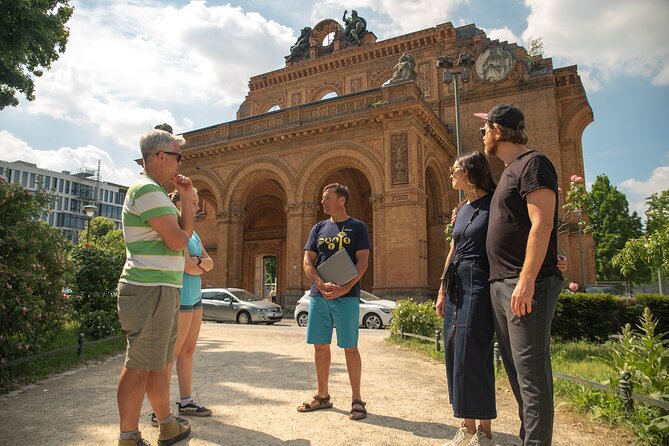
The opening portion gives you the map for the next three hours. Your guide sets out the key places ahead, including the Reichstag, Wilhelmstrasse, Hitler’s bunker site, and the Soviet War Memorial. This introduction matters because Berlin’s center has changed so much since 1945. Modern offices and open plazas often cover the places where Nazi leaders worked.
You will not simply hear about Hitler’s inner circle. The guide also explains how ordinary Berliners lived under dictatorship, endured air raids, and watched civil rights disappear. That wider view keeps the walk from becoming a parade of famous Nazi names.
Trains to Life, Trains to Death
The memorial called Trains to Life, Trains to Death recalls the deportation of Jews from Berlin to concentration camps. It is a short stop, but the subject gives the tour a necessary human focus.
Here, the story moves away from ministries and military plans. You confront the fate of people who were taken from their homes and sent away by train. The memorial works well within the route because it connects government orders with the lives destroyed by them.
Do not expect a long museum visit at this point. The stop lasts about 10 minutes, and the main value comes from the guide’s explanation and the chance to pause at the memorial.
The Reichstag and the end of German democracy
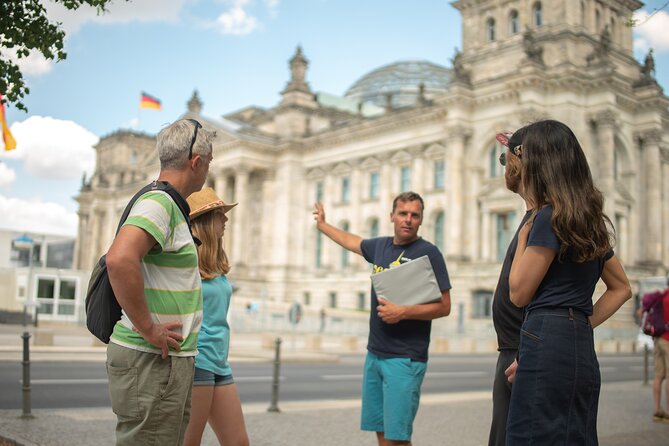
The Reichstag is one of the most useful stops for understanding how Hitler came to power. The 1933 fire gave the Nazis a pretext to suspend civil liberties and suppress political opposition. It helped turn a democratic crisis into dictatorship.
The building also carries the memory of 1945. During the Battle of Berlin, Soviet forces fought toward the Reichstag, and the Soviet flag was raised there in the final days of the war. The image became a symbol of Nazi defeat.
You view the building from outside rather than taking a tour of the interior. That is a limitation if you hoped to see the dome, but the outdoor stop keeps the route moving and places the building within the larger story of Berlin’s fall.
More walking tours in Berlin:
- Discover Berlin Half-Day Walking Tour
★ 5.0 · 9,624 reviews - Berlin: Discover Berlin Walking Tour
★ 4.9 · 5,998 reviews - Berlin: Hidden Backyards Guided Walking Tour
★ 4.8 · 5,360 reviews - Berlin: Alternative Berlin Walking Tour
★ 4.6 · 1,204 reviews
Soviet War Memorial in Tiergarten
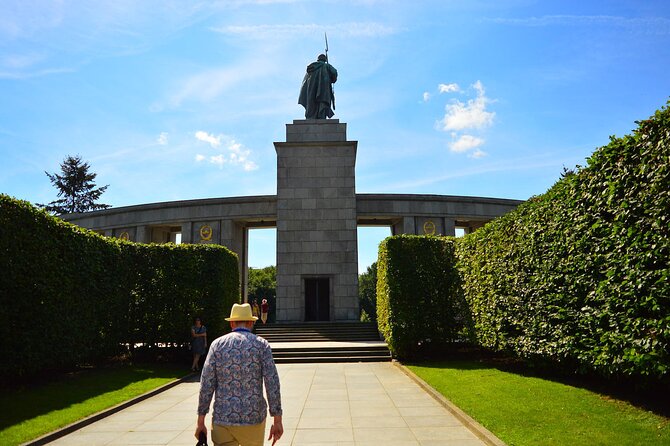
The Soviet War Memorial in Tiergarten is both a military cemetery and a monument to the Red Army soldiers killed in the Battle of Berlin. A large Soviet soldier holds a flag above two fallen Nazi soldiers, creating an unmistakably political image.
The memorial gives you a chance to consider the cost of the final assault. Nazi Germany was defeated, but Berlin was not liberated without enormous loss of life. Your guide can connect the monument with the route taken by Soviet forces toward the city center.
This is one of the few places on the walk where the Soviet role receives a physical setting. It also adds complexity to the usual western account of the war. You see the memorial free of charge, with about 15 minutes set aside for the stop.
Brandenburg Gate and Nazi spectacle
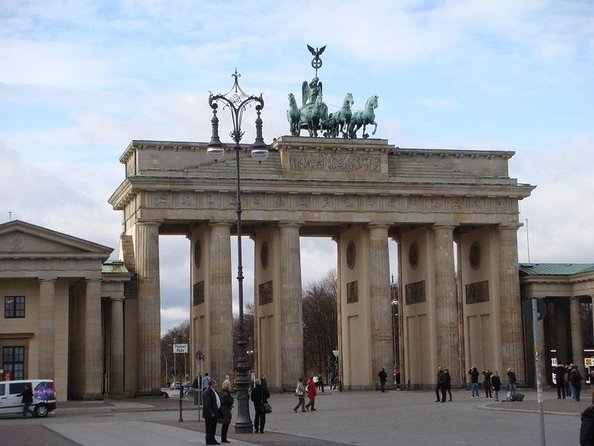
The Brandenburg Gate is now linked with German reunification, but the Nazis also used it as a stage for public displays of power. The gate appeared in propaganda and served as a backdrop for rallies and military imagery.
Your guide helps separate the landmark’s older history from its Nazi-era use. This is valuable because the gate can look like a timeless symbol, detached from the political events around it. In reality, its meaning has shifted more than once.
The stop lasts about 10 minutes. You will not spend long examining the gate, but the location fits neatly into the tour’s larger explanation of public ceremony, propaganda, and political control.
Art, architecture, and Albert Speer
At the Akademie der Künste, the discussion turns toward culture and architecture. Albert Speer, Hitler’s chief architect and later Armaments Minister, promoted grand neoclassical designs meant to express Nazi power and authority.
The stop raises a useful question: how do art and design support a dictatorship? The academy was not simply a Nazi command center, but Berlin’s cultural institutions were part of the wider struggle over propaganda, taste, and public image.
This is a brief exterior stop. If architecture interests you, listen closely here. The guide’s explanation gives more meaning to buildings and public spaces that might otherwise seem merely grand or severe.
The Holocaust Memorial
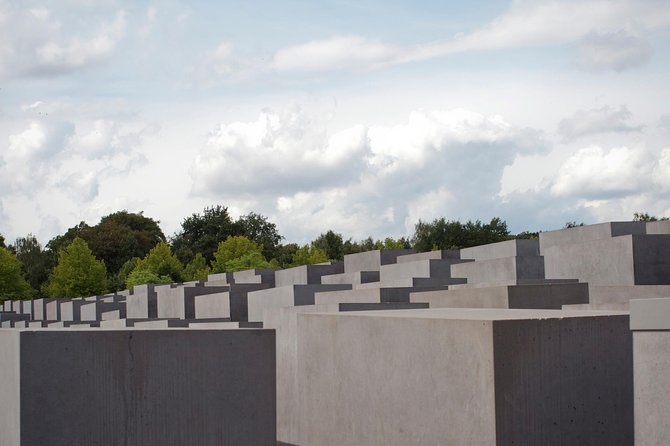
The Memorial to the Murdered Jews of Europe is a field of 2,711 concrete slabs, or stelae, set at different heights. The paths rise and fall, and the changing scale can make the space feel confusing and unsettled.
You walk through the memorial rather than only looking at it from the edge. That physical experience encourages quiet reflection, though the stop is short, about 10 minutes. The memorial is not a substitute for a museum visit, and the tour does not include its underground Information Centre.
I appreciate its place on this route because the Holocaust is not treated as a detached chapter. It follows the stops connected to government, propaganda, and military power. The sequence shows how persecution became policy and then mass murder.
Hitler’s bunker site and the New Reich Chancellery
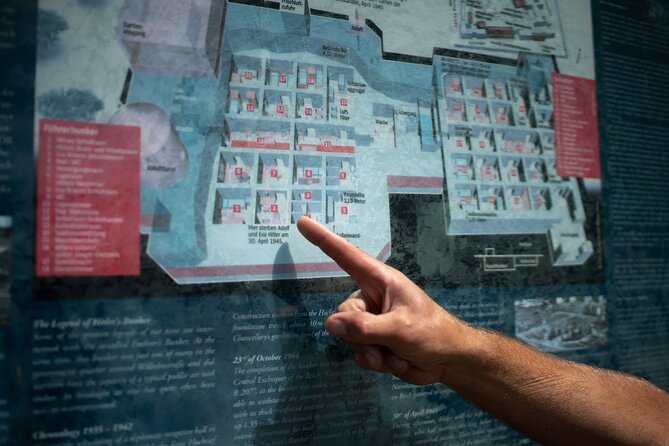
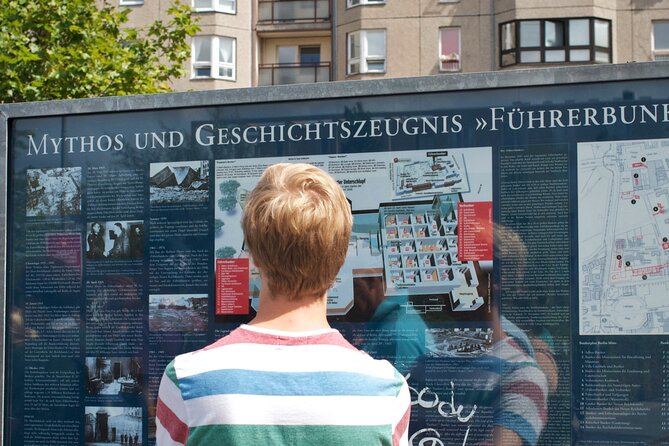
At the Führerbunker site, you stand above the place where Hitler spent his final days and died in April 1945. The bunker itself is not open to visitors. The location is largely unremarkable, which is part of the point.
The former New Reich Chancellery was built under Albert Speer and served as the headquarters of the Nazi government. Much of it disappeared after the war, leaving a city block that can be easy to overlook. A guide gives you the missing context and explains what happened in the final days.
One particularly effective approach, associated with guide Eran, was to lead the group across the area before revealing the bunker sign. That kind of pacing can make the stop more powerful than simply announcing it at the start.
Do not expect a dramatic ruin or preserved room. Expect an ordinary-looking urban site with a disturbing past. Without explanation, you could walk past it without noticing anything.
Wilhelmstrasse and the machinery of power
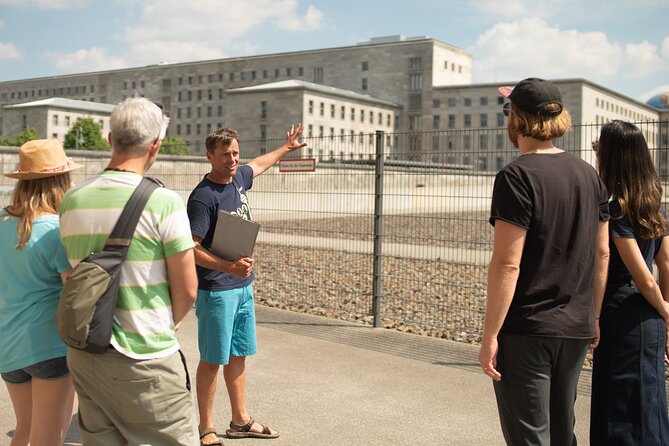
Wilhelmstrasse was the heart of Nazi government administration. Ministries connected with foreign affairs, propaganda, the Reich Chancellery, and military planning operated along this street.
Joseph Goebbels worked in this political world as Minister of Propaganda. His department shaped speeches, news, public events, and the regime’s presentation of the war. The guide also explains how Nazi policy toward Jews and other persecuted groups was put into practice through state offices and orders.
The street has been altered by wartime damage and later redevelopment. That makes it less visually dramatic than a preserved palace, but it is historically important precisely because it was a working center of government. You are looking at the setting for decisions, not a theatrical reconstruction.
Göring’s Air Ministry and the Topography of Terror
On Niederkirchnerstrasse, you see the former Reich Air Ministry, associated with Hermann Göring and the Luftwaffe. The building’s scale and severe design reflect the authority the Nazi state wanted to project.
The structure has been reused since the war, so the guide’s narrative is essential. You learn how the Luftwaffe directed air operations and how Göring’s position placed him near the top of the Nazi hierarchy.
The final stop is Topography of Terror, located on the former SS and Gestapo headquarters site. Its exhibitions use photographs, documents, and personal accounts to explain how Nazi terror was organized and enforced.
The tour ends outside at Niederkirchnerstrasse 8, close to Checkpoint Charlie. That is a useful finish. You can continue into the museum independently, but the walking tour itself does not include admission. Allow extra time if you want to study the displays.
Resistance, Stauffenberg, and the people who opposed Hitler
The tour does not present every German as a willing Nazi supporter. It covers resistance figures including Henning von Tresckow, Hans Oster, and Claus von Stauffenberg.
Their stories add moral and political complexity. Opposition existed within the army and government, but it was dangerous, divided, and often late. The discussion helps you understand the July 1944 attempt to kill Hitler and the risks faced by people who tried to end the regime.
This section is especially useful for anyone who knows the broad outline of the war but wants to understand German resistance. It also prevents the common mistake of treating the end of the dictatorship as something achieved only by foreign armies.
How much walking and what to wear
This is a genuine walking tour, not a coach trip with short photo stops. One detailed account estimated about 5,000 brisk steps between points of interest. Comfortable shoes are essential.
The entire experience is outdoors except for any optional time you choose to spend inside a museum afterward. In winter, the cold can be a serious issue. People have completed the walk in temperatures as low as minus 7 Celsius, but you should layer up, bring a warm drink if useful, and cover your hands and ears.
The pace has been described as comfortable by some participants, but the route still takes three hours. If you need frequent sitting breaks or dislike walking in poor weather, this may not suit you.
Is the $24.07 price fair?
At $24.07 per person, the tour offers good value for a guided half-day in central Berlin. You receive a three-hour route and a local expert who supplies the links between sites. There are no major admission fees built into the experience, but the route itself is the product.
The value is strongest if you are short on time or visiting Berlin for the first time. You can see places that are hard to interpret alone, including the bunker site, former ministries, and lesser-known memorials. The tour also helps you decide which museums deserve more of your time later.
The price does not include hotel pickup, drop-off, or entry to the Reichstag or Topography of Terror. You meet in the city center and make your own way back afterward, so plan your transport around that.
Who should book this tour?
I would choose this walk if you want a clear account of the Third Reich and the final Battle of Berlin, especially if you prefer places and stories over a formal museum lecture. It suits history buffs, families with older children, and anyone who wants more context before visiting Berlin’s memorials.
The tour can also work well for a teenager who has not studied the subject in detail. The guides are praised for making complex events understandable, answering questions, and keeping the pace lively without making light of the subject.
I would not choose it if you want to enter Hitler’s bunker, spend a long time inside the Reichstag, or visit a series of museums. The bunker is only a site viewed from above, and the tour stays on the move.
Should you book it?
Book this tour if you can manage three hours on foot and want Berlin’s Nazi history explained as a connected story. The strongest parts are the route design, the final-days focus, and the guides’ ability to add context to places that otherwise look ordinary.
Bring good shoes and dress for the forecast. Arrive early at Reichstagufer 17, listen carefully at the Holocaust Memorial and bunker site, and consider staying near Topography of Terror afterward. For $24.07, this is a sensible way to get your bearings in one of Berlin’s most difficult but important chapters.
FAQ
How long is the Third Reich Berlin walking tour?
The tour lasts approximately three hours.
Where does the tour begin?
It begins at Reichstagufer 17, 10117 Berlin, near Friedrichstrasse Station and the Reichstag area.
Where does the tour end?
The tour ends at Topography of Terror, Niederkirchnerstrasse 8, 10963 Berlin. The end point is very close to Checkpoint Charlie.
Is Hitler’s bunker open to visitors?
No. You stand above the location of the former bunker and hear about Hitler’s final days and death there in April 1945.
Does the tour enter the Reichstag?
Admission to the Reichstag is not included. The tour visits the building from outside.
Is the Holocaust Memorial included?
Yes. The route stops at the Memorial to the Murdered Jews of Europe. The tour information does not include admission to any separate underground exhibition.
How much walking is involved?
The experience is a brisk three-hour walk. One detailed estimate puts the route at about 5,000 steps.
Is the tour offered in English?
Yes. The tour is offered in English and includes a local expert guide.
What is the cancellation policy?
You can cancel up to 24 hours before the local start time for a full refund. Cancellations or changes made less than 24 hours before the start time are not accepted for a refund.
Just added around Berlin
- Berlin Highlights in One Day★ 5.0 · 3 reviews
- Private Berlin One Day Tour with a Local: See the City Unscripted★ 3.5 · 3 reviews
- Individual city tour Berlin for max. 8 persons★ 5.0 · 3 reviews
- Transfer from Berlin Schönefeld Airport (SXF) to Berlin city Hotels – ROUND TRIP★ 4.0 · 3 reviews
- Private Analogue Photography Experience in Berlin★ 5.0 · 3 reviews
- Berlin: Museum Island Tour★ 5.0 · 3 reviews
- Berlin: Local Food Tour in Secrets Hidden Gems★ 4.0 · 3 reviews
- Berlin & The Third Reich Private Guided Tour★ 5.0 · 3 reviews
Third Reich & WWII Sites, compared.



Berlin’s Best: 2 Hour Walking Tour Third Reich and the Cold War
Read our review →

Berlin Third Reich Sites: Half-Day Walking Tour
Read our review →
Guided Bike Tour of the Berlin Wall and Third Reich
Read our review →
Hitler’s Germany: Berlin During the Third Reich & WWII
Read our review →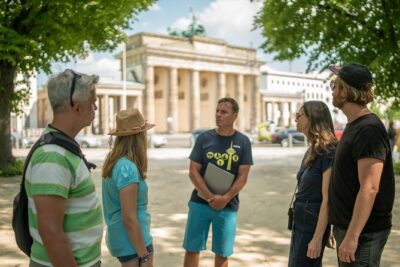
Private Walking Tour Berlin Third Reich Hitler and World War II
Read our review →Browse the lists this tour appears in