
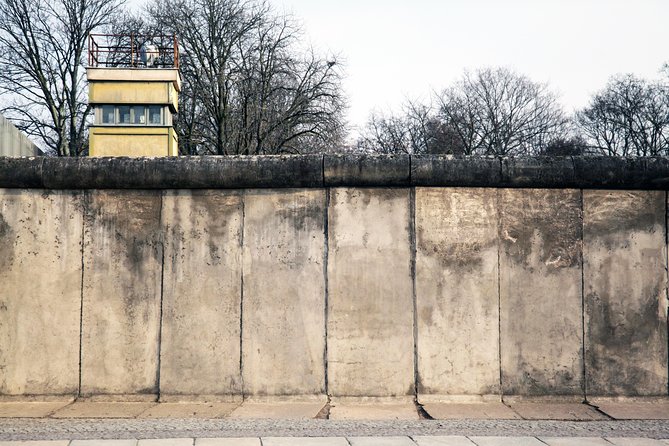
Review · BERLIN WALL TOURS
East Berlin and the Berlin Wall 2-Hour Walking Tour
The most moving part of this tour is the preserved Berlin Wall and Death Strip, where you can see the space between the barriers and touch surviving sections of the border. Your guide connects these stark remains to real escape attempts, surveillance, and the sudden events of November 9, 1989.
I like the human scale of the tour, especially the stories about ordinary East Berliners and the way guides such as Anastasia, Ariel, Tom, Georgia, Jasper, and Dylan explain difficult politics in plain English. I also like the small group limit of 20 and the low price of $21.78, which gives you a useful Cold War primer without taking up half a day.
The main drawback is that two hours moves quickly. You will use Berlin public transport, and the roughly €10.60 AB-zone pass is not included. The published end point also needs checking, since the route description finishes at Alexanderplatz while the meeting details place the end near Nordbahnhof.
In This Review
- Key points to know before you book
- Why the Berlin Wall still feels immediate
- Beginning at Hackescher Markt
- Friedrichstrasse and the Palace of Tears
- The Berlin Wall Memorial and the Death Strip
- The Chapel of Reconciliation and the old watchtower
- Bornholmer Strasse and the night the border opened
- Former Stasi headquarters and life under surveillance
- Finishing near Alexanderplatz or Nordbahnhof
- Is $21.78 good value?
- Who will enjoy this walk most?
- Should you book East Berlin and the Berlin Wall?
- FAQ
- Where does the tour begin?
- What time does the tour start?
- How long does the walking tour last?
- What language is the tour offered in?
- Is public transportation included?
- Where does the tour finish?
- What happens if I need to cancel?
Key points to know before you book
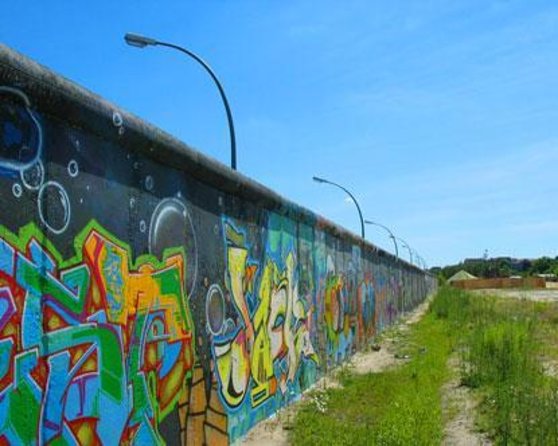
- See the Berlin Wall in its original setting: The memorial preserves a section of the Wall, the border strip, a watchtower, and evidence of escape attempts.
- Understand the Palace of Tears: Friedrichstrasse station was where families said goodbye before crossing back to West Germany.
- Hear the story behind November 9, 1989: At Bornholmer Strasse, your guide explains how a confused announcement helped open the border.
- Meet Berlin’s darker side: The former Stasi headquarters reveals how East Germany watched and controlled its own citizens.
- Expect a history-led walk: This is less about photo stops and more about context, personal stories, and the mechanics of division.
- Budget for transport: The tour price covers the guide and walk, but not the Berlin AB public transport pass.
Why the Berlin Wall still feels immediate
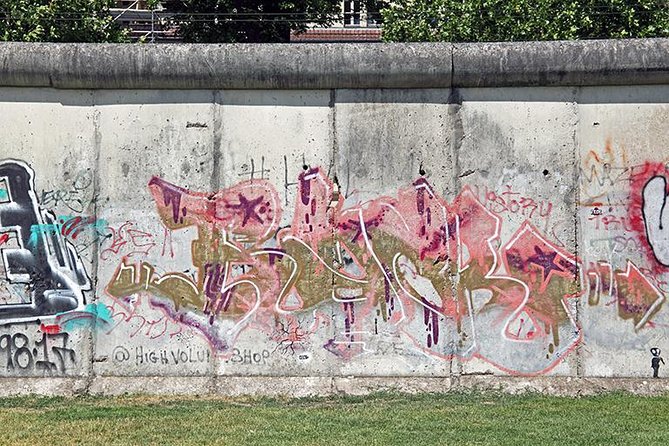
Berlin can make the Cold War seem abstract. A museum panel may explain the division of Germany, but a walk along the former border shows how the split cut through streets, homes, train lines, and family life.
That is the strength of this experience. You are not simply taken to a famous piece of graffiti-covered wall. You are shown how the border worked. Your guide explains the first Wall, the later barriers, the open space between them, and the orders that made escape so dangerous.
At the Berlin Wall Memorial, the so-called Death Strip can be viewed from above. That higher perspective matters because the border was not just one concrete slab. It was a controlled zone designed to expose anyone trying to reach the West.
I especially value the focus on people who lived with the division. The guides explain how East German citizens managed daily life under a government that increasingly watched its own population. Escape tunnels, hidden routes, sealed-off buildings, and the fate of people who failed to cross give the subject a personal weight.
The tone also seems to vary by guide, which is normal for a walking tour. Ariel is described as mixing strong detail with humor. Dylan is praised for conversational explanations and for answering questions. Tom is noted for connecting the large political story to individual lives, while Jasper is described as a patient storyteller. Georgia, Heidi, Nathan, Jimmy, Campbell, Pip, Tobi, Susan, Stephen, Hannah, and Anastasia are also named as engaging guides.
That range suggests the company has a strong guide team, though your exact experience will depend on who leads your group.
More of the Berlin Wall, end to end:
- Skip-the-Line: Berlin Wall Museum at Checkpoint Charlie
★ 4.1 · 2,041 reviews - Berlin: East Side Gallery Spree Cruise in a Solar Catamaran
★ 4.0 · 1,039 reviews - Cold War, Berlin Wall, Spies and the East Side Gallery
★ 5.0 · 1,024 reviews
Beginning at Hackescher Markt
The tour starts at Neue Promenade 3, beside Hackescher Markt station, at 10:00 a.m. This is a central and convenient meeting point in the former East Berlin area.
Your guide begins by setting up the Cold War rather than throwing you straight at a wall fragment. You will hear how the rivalry between the United States and the Soviet Union grew after the Second World War, why Berlin became a pressure point, and how military and political tension split the city.
This opening is important for first-time visitors. Without it, the Wall can seem like a single event that appeared in 1961 and vanished in 1989. The tour presents it as part of a longer struggle over Germany, Berlin, power, and competing political systems.
There is only a short scheduled pause at Hackescher Markt, so arrive ready to start. The meeting point is near public transport, but Berlin’s stations can be confusing, especially if you are unfamiliar with the difference between S-Bahn, U-Bahn, tram, and regional train services.
Friedrichstrasse and the Palace of Tears
The route continues toward Friedrichstrasse, one of central Berlin’s major streets and the location of Berlin Friedrichstrasse station. This area once brought East and West together through a heavily controlled crossing.
The Palace of Tears was the local nickname for the former border station. East Germans said goodbye here to family and friends who were returning to West Germany. The name captures the emotional purpose of the building better than any official label could.
Your guide uses the site to explain how movement between the two Germanys worked. The crossing was not an ordinary railway stop. For people allowed to visit, it could be the place where a short family meeting ended, perhaps for years.
The stop itself is brief, listed at about five minutes, so do not expect a long interior visit. Its value comes from the explanation and the setting. You are standing at a place tied to separation, bureaucracy, and unequal freedom of movement.
This is also where the tour can feel more personal than a standard city sightseeing walk. Architecture alone does not tell you why one station carried such an emotional nickname. A guide supplies the missing human details.
The Berlin Wall Memorial and the Death Strip
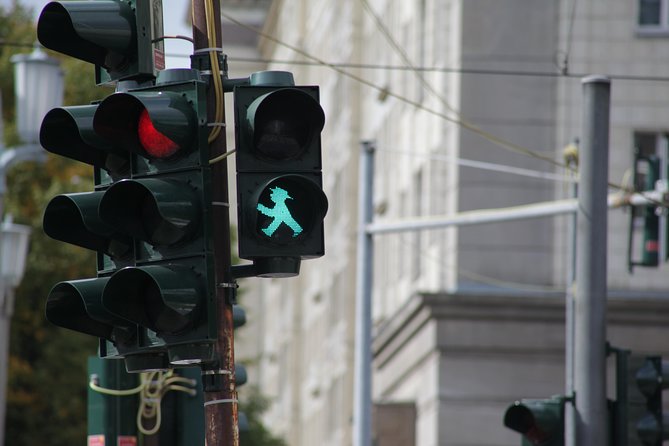
The Berlin Wall Memorial is the heart of the walk. You spend about an hour in this area, far longer than at the short introductory stops.
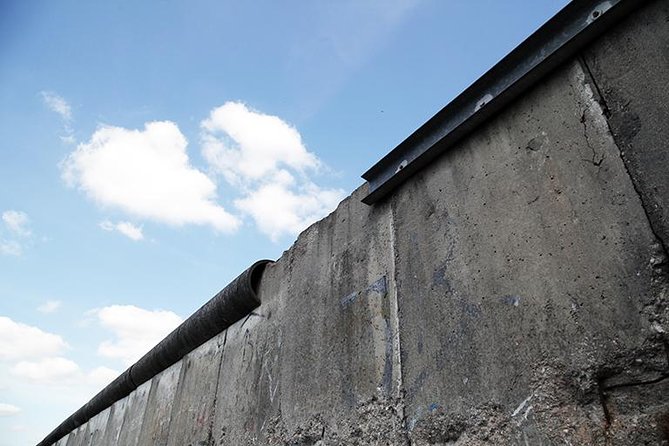
Here, a section of the Wall remains preserved in its original form. You can get close enough to touch surviving concrete, though the real value is not the physical contact itself. It is seeing the border where it once operated, with the spacing and terrain still helping you picture how escape attempts unfolded.
The memorial includes a view over the former Death Strip. From above, you can see the area between the front and back barriers, the zone watched by East German guards. Your guide explains how shoot-to-kill orders were used against people trying to escape.
The discussion also covers the ways residents tried to get out. The guide may use photographs and stories of those who died, along with examples of tunnels and other plans. One particularly striking theme is how buildings along the border were altered or sealed to stop people from escaping through them.
Give this section your full attention. It is the point where the tour shifts from political background to physical evidence. You can see that the Wall was not only a symbol. It was an engineered system built to prevent movement.
The memorial is open-air, and the tour operates in all weather. Wear shoes that are comfortable for walking and bring suitable clothing. Rain or cold will not make the subject easier to absorb, and heat can become tiring during a talk-heavy stop.
More East Berlin and DDR history:
- Berlin: DDR Museum Tickets
★ 4.3 · 3,443 reviews - Berlin: 75-minute Trabi Safari
★ 4.8 · 2,854 reviews - Berlin: East and West Hop-On Hop-Off Bus Tour
★ 4.2 · 2,195 reviews - Berlin Self-Drive Trabi Tour with Guide
★ 4.5 · 410 reviews
The Chapel of Reconciliation and the old watchtower
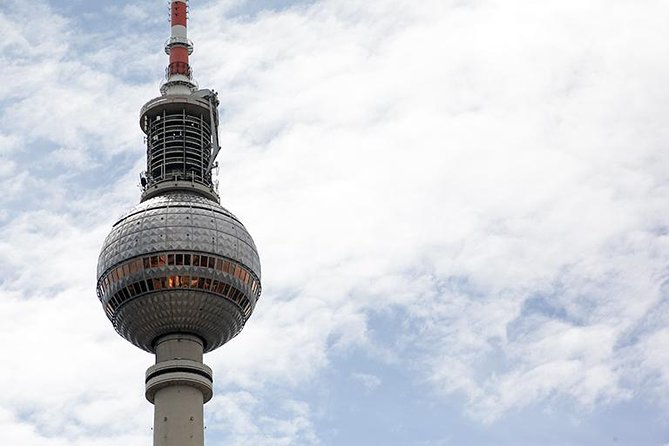
The Chapel of Reconciliation sits within the memorial area and provides a quieter pause. It is a place of worship connected to the former border site, and your guide explains its history.
The nearby GDR Watch Tower is another useful piece of the border system. It is described as the oldest remaining relic of the Berlin Wall. Unlike a broad memorial display, a watchtower shows the border from the guard’s point of view.
You may spend only around five minutes at each of these stops. That is enough for orientation and explanation, but not enough for a detailed visit inside every site. If you want to study the memorial at length, return on your own after the tour.
Ackerstrasse adds another location where your guide explains how the border affected the surrounding neighborhood. These short stops work best as part of the whole route. You see different parts of the system instead of spending two hours beside a single wall panel.
Bornholmer Strasse and the night the border opened
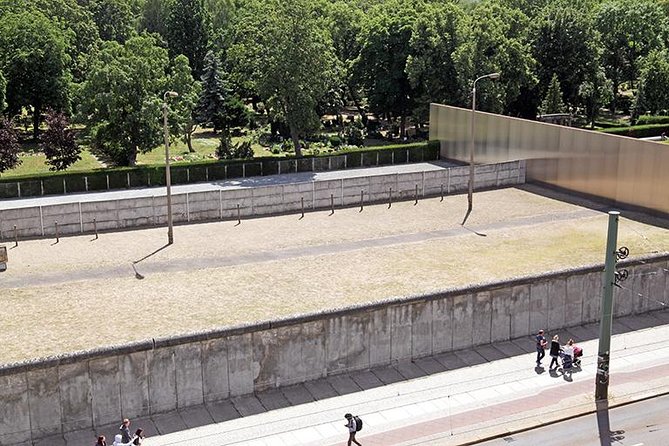
The tour heads north to Bornholmer Strasse, the place where the Wall first came down on November 9, 1989. This is one of the most useful parts of the experience because the end of the Wall was not a tidy, planned ceremony.
Your guide explains how a mistake by an East German politician helped trigger the opening. A confused announcement about new travel rules led people to gather at the crossing. Guards were not prepared for the crowd, and the border eventually opened.
That story gives you a better sense of how quickly history can turn. The Wall had divided Berlin for decades, yet its opening began with confusion, pressure from ordinary people, and officials struggling to respond.
The site also helps balance the earlier, grim sections of the tour. At the memorial, the focus is on control and failed escape. At Bornholmer Strasse, the focus turns to public pressure and release.
The supplied route information does not give a precise separate time for Bornholmer Strasse, and the overall tour lasts only about two hours. Expect a focused explanation rather than a long stop with extensive free time.
Former Stasi headquarters and life under surveillance
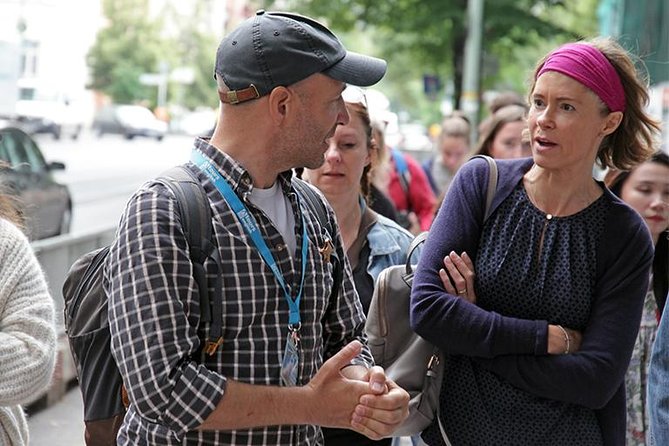
The tour also visits the headquarters of the Stasi, East Germany’s secret police. This is where the story shifts from a visible border to an invisible one.
The Wall controlled where people could go. The Stasi helped control what they said, whom they met, and what the state knew about them. Your guide explains how surveillance expanded until the government was monitoring its own citizens on a broad scale.
For me, this is essential context. A visit focused only on concrete and escape tunnels can leave you with the impression that the main problem was the border itself. The Stasi stop shows the wider system of government control behind it.
The stop is not described as a full museum visit, so you should expect an exterior explanation or a focused look at the site rather than admission to a large collection. The tour includes the professional guide and walking route, not entry tickets to paid attractions.
Guides are encouraged to connect official policy with ordinary behavior. Pip, for example, is described as focusing on individual experiences in East Berlin, while Susan links architecture to the city’s changes from medieval times through the Second World War, the Cold War, and the present.
That approach suits you if you want more than dates. It also means the amount of detail can depend on questions from the group. Ask about daily life, family visits, escape attempts, or the Stasi if those subjects matter most to you.
Finishing near Alexanderplatz or Nordbahnhof
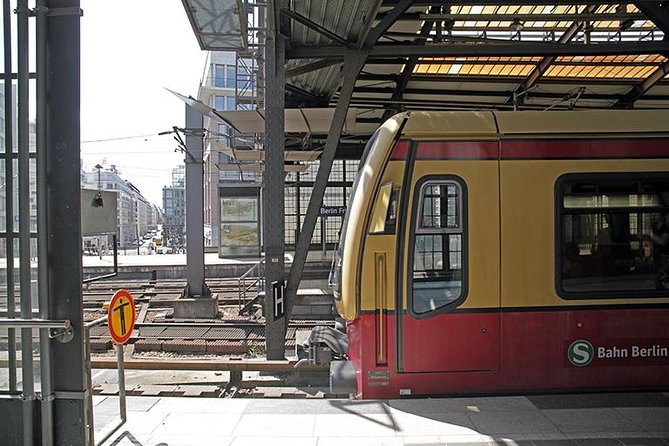
The route description says the walk finishes at Alexanderplatz, beside the Berlin TV Tower in the center of the former East German capital. Alexanderplatz is a practical place to continue sightseeing, eat, or connect with public transport.
The meeting information, however, gives the end as the Berlin Wall Memorial at Bernauer Strasse 111 and says the tour ends close to Nordbahnhof. Those locations are not the same, so confirm the final meeting details before setting another appointment immediately afterward.
This matters because the tour includes movement through Berlin and may involve public transport. The Berlin AB-zone pass is not included and is listed at about €10.60. Buy the correct ticket before the relevant journey, and keep your group together when boarding.
One negative account describes confusion when the guide helped some people buy train tickets and others rushed to board. That is a useful warning, not necessarily a pattern. Make sure you understand the next stop, have your ticket ready, and do not assume the guide will wait at a closing train door.
The group limit is 20 people, though one group was around 10. A smaller group makes it easier to hear stories and ask questions, especially at the memorial. Still, the exact group size can change from date to date.
Is $21.78 good value?
At $21.78 per person, this is a low-cost way to get a structured introduction to Berlin’s Cold War story. You are paying for a professional guide and a two-hour walk, not for museum admission or private transport.
The value comes from the route and the interpretation. You could reach the Berlin Wall Memorial on your own, but you would need to piece together the meaning of the Death Strip, watchtower, chapel, escape attempts, Stasi system, and border opening yourself.
The added transport cost is worth including in your budget. At about €10.60 for the AB-zone pass, your total outlay is higher than the advertised tour price, though the transport ticket may also be useful for the rest of your day depending on your plans.
The price is especially fair if you have only a short time in Berlin. Two hours gives you a clear foundation without committing you to a full-day excursion. Several guides also provide suggestions for other places and restaurants, which can help you plan what comes next.
The tradeoff is depth. You will not have enough time to explore every memorial display, museum, or Stasi exhibit. If you already know the Cold War story well, you might prefer a longer specialist tour. If the subject is new to you, this is a sensible starting point.
Who will enjoy this walk most?
This tour suits first-time Berlin visitors who want to understand the city’s division rather than simply photograph a wall fragment. It also works well for families, since one guide was praised for making the subject accessible to a family group.
You should book it if you like history explained through places and personal stories. The walk is also a good fit for people who prefer a guide who can answer questions instead of following a silent audio route.
It may be less suitable if you need a completely fixed, slow-paced itinerary. The route includes public transport, outdoor stops, and a lot of information in a short period. You should also avoid scheduling it when you need to reach another appointment immediately afterward.
The tour is offered in English, uses a mobile ticket, operates in all weather, and allows service animals. Most people can participate, but you should dress for conditions and wear practical shoes.
Free cancellation is available up to 24 hours before the start time for a full refund. Changes or cancellations inside that window are not accepted for a refund.
Should you book East Berlin and the Berlin Wall?
I would book this tour if you want a strong, affordable introduction to Berlin’s Cold War past and prefer real locations over a lecture room. The Berlin Wall Memorial, Palace of Tears, Bornholmer Strasse, and Stasi headquarters give you a useful spread of places, while guides such as Tom, Dylan, Georgia, Jasper, Heidi, Nathan, Jimmy, Pip, and Anastasia have shown an ability to make the subject clear and personal.
Book with two cautions. Set aside money for public transport, and confirm whether your group finishes at Alexanderplatz or near Nordbahnhof. If you can accept those details and give the tour your full two hours, it offers a serious look at a not-so-distant past for very little money.
FAQ
Where does the tour begin?
The tour begins at Neue Promenade 3, 10178 Berlin, Germany, next to Hackescher Markt train station.
What time does the tour start?
The listed start time is 10:00 a.m.
How long does the walking tour last?
The tour lasts approximately two hours.
What language is the tour offered in?
The tour is offered in English.
Is public transportation included?
No. A Berlin AB-zone pass, listed at approximately €10.60, is not included.
Where does the tour finish?
The route description says the tour finishes at Alexanderplatz near the Berlin TV Tower. The meeting details give the end as the Berlin Wall Memorial near Nordbahnhof, so confirm the final location before booking another activity.
What happens if I need to cancel?
You can cancel up to 24 hours before the experience starts for a full refund. Cancellations or changes made less than 24 hours before the start time are not accepted for a refund.
More 2-Hour Experiences in Berlin
- Berlin: 2-Hour Lake Oberhavel Cruise from Tegel
★ 4.4 · 577 reviews - Berlin 2-Hour Segway Tour
★ 4.6 · 238 reviews - Berlin: Backyards of Berlin 2-Hour Tour
★ 4.7 · 163 reviews - Berlin: 2-Hour Premium Segway Tour
★ 4.5 · 157 reviews
More Walking Tours in Berlin
- Discover Berlin Half-Day Walking Tour
★ 5.0 · 9,624 reviews - Berlin: Third Reich and Cold War 2 Hour Walking Tour
★ 4.9 · 6,830 reviews - Berlin: Discover Berlin Walking Tour
★ 4.9 · 5,998 reviews - Berlin’s Best: 2 Hour Walking Tour Third Reich and the Cold War
★ 5.0 · 5,486 reviews
Just added around Berlin
- Berlin Highlights in One Day★ 5.0 · 3 reviews
- Private Berlin One Day Tour with a Local: See the City Unscripted★ 3.5 · 3 reviews
- Individual city tour Berlin for max. 8 persons★ 5.0 · 3 reviews
- Transfer from Berlin Schönefeld Airport (SXF) to Berlin city Hotels – ROUND TRIP★ 4.0 · 3 reviews
- Berlin: Museum Island Tour★ 5.0 · 3 reviews
- Private Analogue Photography Experience in Berlin★ 5.0 · 3 reviews
- Berlin: Local Food Tour in Secrets Hidden Gems★ 4.0 · 3 reviews
- Berlin & The Third Reich Private Guided Tour★ 5.0 · 3 reviews
Berlin Wall Tours, compared.

Skip-the-Line: Berlin Wall Museum at Checkpoint Charlie
Read our review →
East Side Gallery Spree Cruise in a Solar Catamaran
Read our review →
Cold War, Berlin Wall, Spies and the East Side Gallery
Read our review →

Guided Bike Tour of the Berlin Wall and Third Reich
Read our review →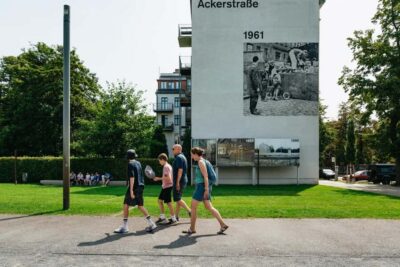

Browse the lists this tour appears in