
Review · DDR & EAST BERLIN TOURS
Berlin: 75-minute Trabi Safari
Berlin’s Trabi Safari turns sightseeing into a small traffic adventure. You take the wheel of a Trabant, the famously basic car of former East Germany, and putter through central Berlin in a convoy. The car is noisy, slow, cramped, and wonderfully odd. You will pass the Brandenburg Gate, Checkpoint Charlie, the Berlin Wall, and East Side Gallery while people on the pavement point cameras at you.
I like two things here. First, you get a much better feel for Berlin’s layout than you do from a bus window, since you travel through the city under your own power. Second, the live radio commentary gives the ride a human touch, with guides such as Axel, Thomas, Harold, Simon, and Charlie mixing useful history with jokes. The main drawback is price: at $93 per person, you are paying a premium for the novelty, and the 75-minute route is more amusing than thorough.
In This Review
- Key points before you book
- Why Berlin’s Trabi makes a better tour vehicle than a bus
- Starting at TrabiWorld on Zimmerstraße
- Getting used to the column shift and small engine
- Potsdamer Platz and the modern city
- Brandenburg Gate and Unter den Linden
- Berlin Cathedral, Red City Hall, and the TV Tower
- Checkpoint Charlie and the former Wall route
- East Side Gallery and Oberbaum Bridge
- What the 75-minute format really gives you
- Price, insurance, and practical value
- Who should drive, and who should ride
- Extend the experience at Trabi Museum
- Should you book the Berlin Trabi Safari?
- FAQ
- How long is the Berlin Trabi Safari?
- Where does the Trabi Safari start?
- What sights does the route pass?
- Do I need a driving license?
- Can more than one person drive the car?
- How many people fit in one Trabant?
- Is insurance included?
- What languages are available?
Key points before you book
- Drive the actual Trabant: Learn its column-mounted gear change, two-stroke quirks, and modest 25-horsepower performance.
- See Berlin in convoy: Follow a guide past Potsdamer Platz, Brandenburg Gate, Unter den Linden, Checkpoint Charlie, and East Side Gallery.
- Listen by radio: Each car receives live commentary in English or German, which matters because the Trabi engine can be loud.
- Share the driving: If two people want a turn, you can usually change drivers at a stop halfway through the route.
- Expect a compact cabin: Each car holds up to four people, with a total limit of 330 kilograms, or 727 pounds.
- Bring the right license: Drivers must be at least 18, hold a Class B license, and be fit to drive.
Why Berlin’s Trabi makes a better tour vehicle than a bus
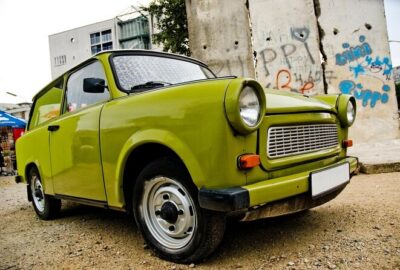
The Trabant was the everyday car of the German Democratic Republic, or GDR. It was built in East Germany and became a symbol of life behind the Iron Curtain. Production continued for decades with very few major changes, so driving one today is less like renting a vintage sports car and more like operating a cheerful mechanical relic.
That is the point. You are not gliding quietly from monument to monument. You are coaxing an elderly car through city traffic, listening to the engine buzz, feeling the body rattle over cobblestones, and learning controls that seem designed by someone working with a very small budget.
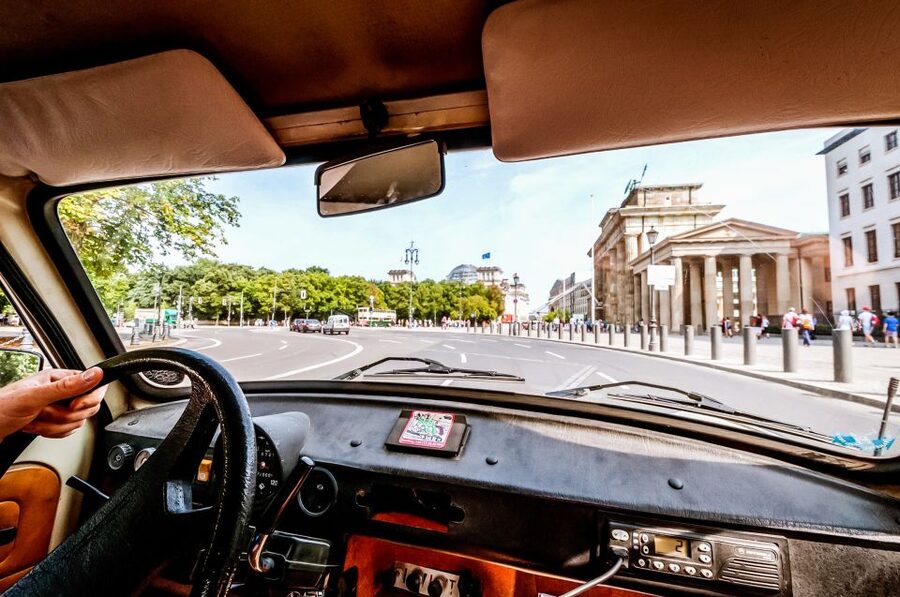
The car’s gear stick is mounted on the steering column, and the manual gearbox takes some practice. The first few turns can feel tense, especially if you are used to driving on the left, have not driven a manual car for years, or have never driven a left-hand-drive vehicle. The introduction covers the basic controls before the convoy leaves, and the guides explain what to do if you get separated or need help.
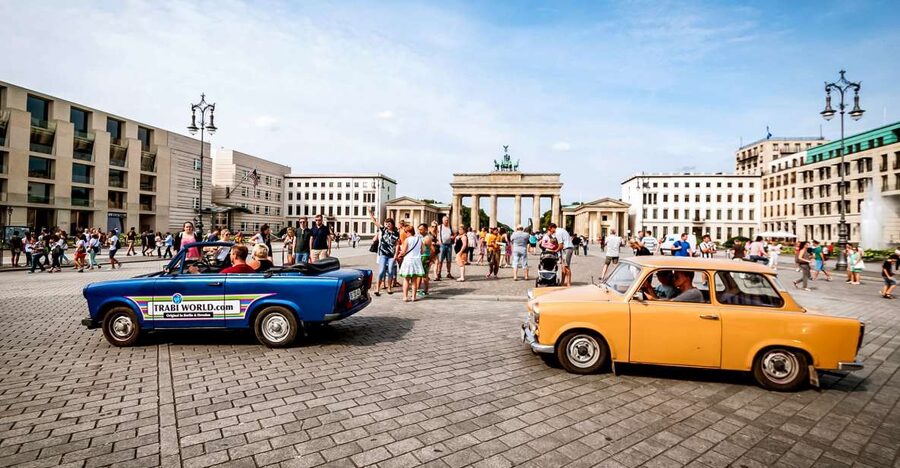
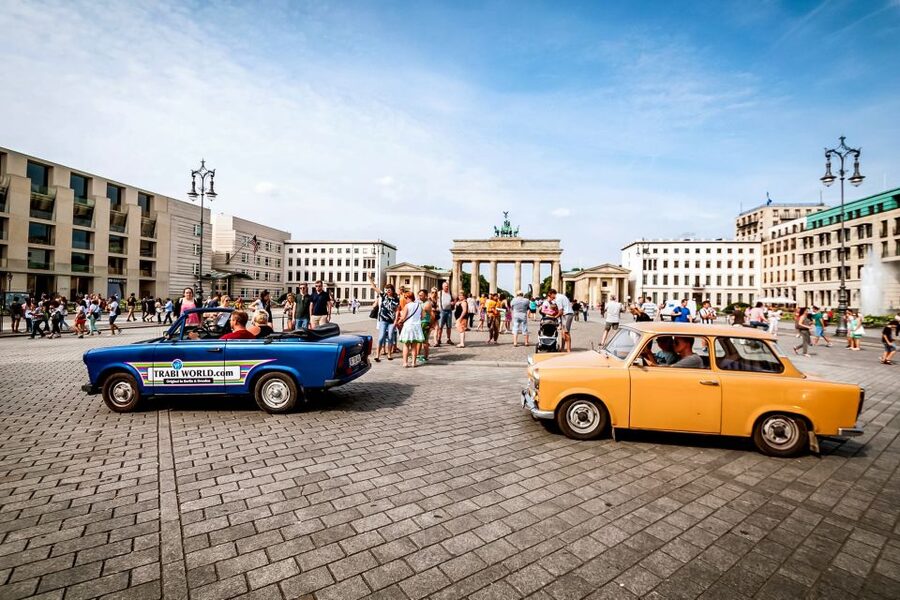
After a short adjustment period, the awkwardness becomes the entertainment. One moment you are concentrating on the clutch; the next, a cyclist or pedestrian is grinning at your little blue, pink, or white car. You become part of the street scene in a way you never do on a standard sightseeing coach.
More East Berlin and DDR history:
- Berlin: DDR Museum Tickets
★ 4.3 · 3,443 reviews - Berlin: East and West Hop-On Hop-Off Bus Tour
★ 4.2 · 2,195 reviews - Berlin Self-Drive Trabi Tour with Guide
★ 4.5 · 410 reviews
Starting at TrabiWorld on Zimmerstraße
The tour begins at TrabiWorld, Zimmerstraße 97 to 100, on the corner of Wilhelmstraße. This is a useful location for a Berlin history outing because it sits close to Checkpoint Charlie and the former Wall route.
Allow time to arrive before departure so you can handle registration and the driving briefing without rushing. You need your driving license. Every person in the car needs a ticket, including the driver, co-driver, passengers, and children, although children can receive a free ticket under the stated conditions.
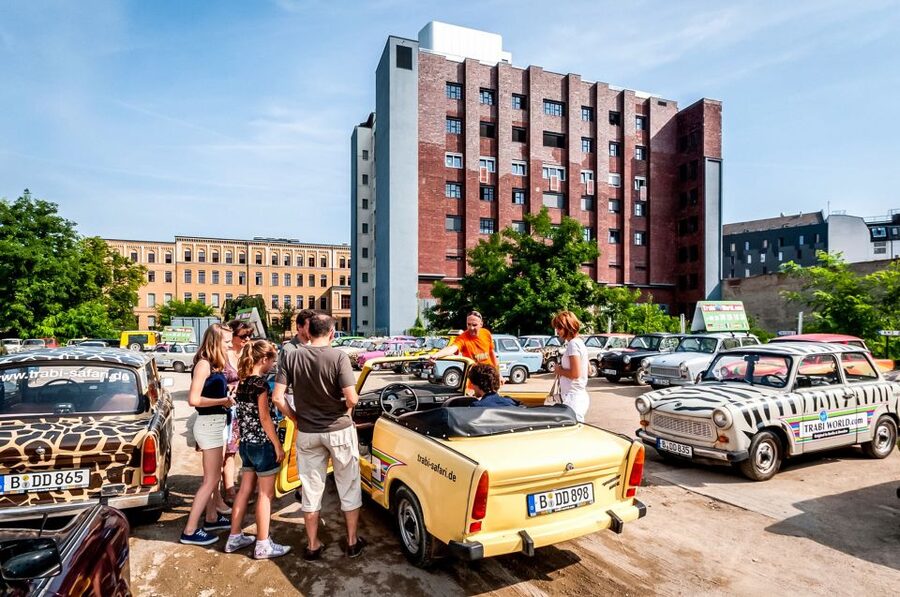
Each booking gets its own Trabi rather than sharing a car with another booking. That makes the experience more private, but it does not mean you drive alone. Other cars form the same convoy, and the guide leads the group through the city.
The staff explain the unusual controls and the basic rules of convoy driving. Pay close attention here. The fun depends on everyone moving together, and Berlin traffic lights can split the cars apart. The group waits around the next corner, and the lead guide keeps contact by radio, so you are not expected to navigate the route independently.
Getting used to the column shift and small engine
The first minutes are the hardest. You have a manual gearbox, an unfamiliar gear position, and a car with far less power than a modern city vehicle. Some participants get comfortable quickly. Others need a few corners before the clutch and gear change begin to make sense.
The guides are patient during this stage. Thomas is often singled out for clear explanations and humor, while Axel has been praised for calmly shepherding the convoy through traffic. Names and guides can vary, but the format remains the same: a guide in front, radio instructions in every car, and steady support when someone needs a little extra time.
Do not expect speed. The Trabant’s 25-horsepower engine is made for a gentle chug, not a fast getaway. You might reach fourth gear on a clear stretch, but much of the route is about managing city streets rather than racing between sights.
Some cars are available in electric or automatic form, according to the experience information and participant accounts. If you cannot drive a manual transmission, check the available vehicle type before booking rather than assuming one will be assigned.
The cars can be tight for tall adults. A person around 1.9 meters may find the cabin restrictive, and tall passengers in the back have reported needing to fold themselves around the front seats. Four people can fit only within the stated 330-kilogram weight limit, and comfort will depend heavily on everyone’s size.
Potsdamer Platz and the modern city
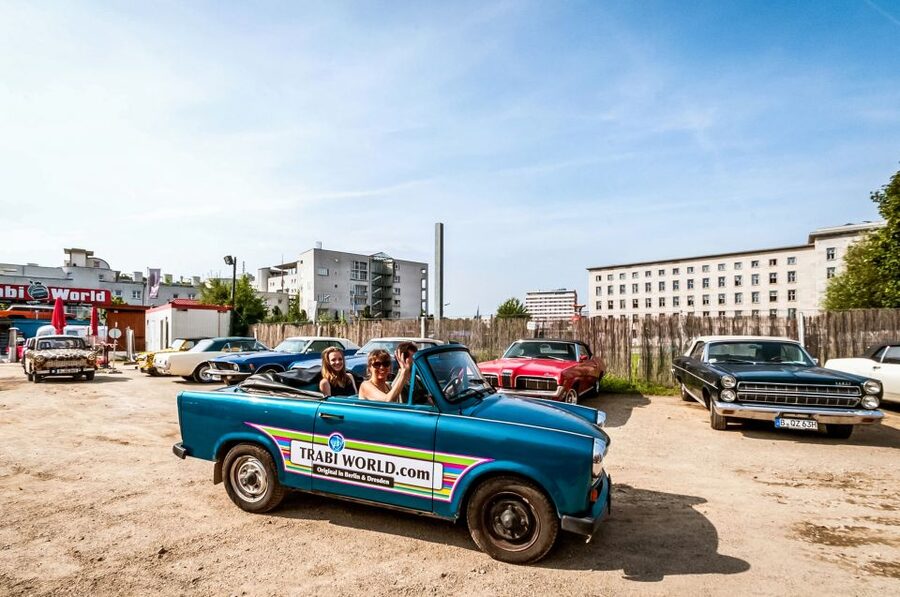
Once the convoy is moving, the route gives you a quick look at how Berlin mixes old divisions with new construction. Potsdamer Platz is a good early example. Once cut through by the Wall and left as a broad, empty zone, it was rebuilt after reunification with high-rise offices, shopping, and public spaces.
From a Trabi, the contrast is especially clear. You are sitting in a car associated with East Germany while passing through one of the city’s most modern districts. The tour does not stop long enough for a full visit, so think of this as an orientation pass rather than a replacement for exploring Potsdamer Platz on foot.
That is true of most sights on the route. You see them from the driver’s seat, hear a short explanation, and keep moving. The value is the broad sweep and the unusual point of view, not detailed monument-by-monument touring.
A different side of Berlin on the same trip:
- Berlin: Reichstag, Dome and Government District Guided Tour
★ 4.7 · 18,288 reviews - Berlin: 1-Hour City Tour by Boat with Guaranteed Seating
★ 4.3 · 16,993 reviews - Berlin: Boat Tour Along the River Spree
★ 4.4 · 11,252 reviews - Discover Berlin Half-Day Walking Tour
★ 5.0 · 9,624 reviews
Brandenburg Gate and Unter den Linden
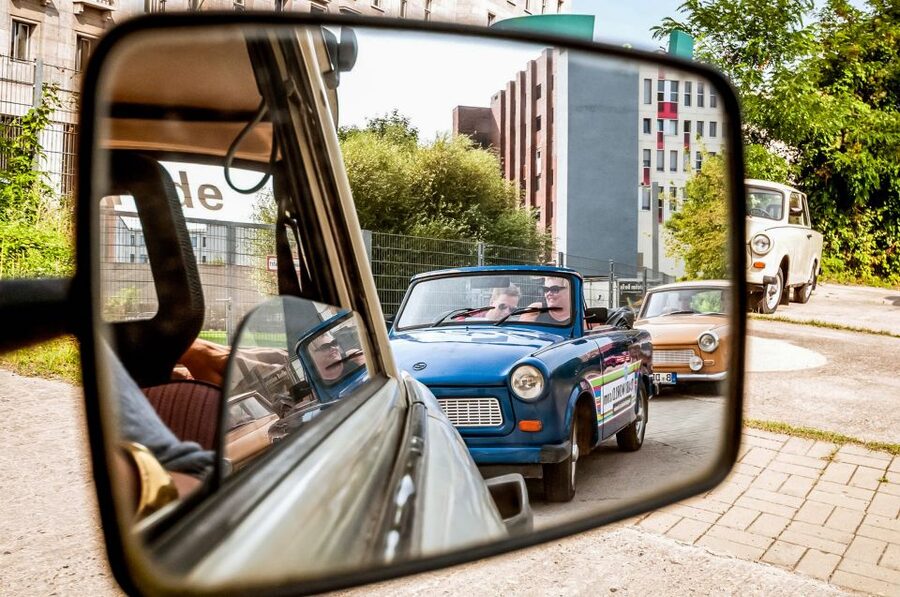
The Brandenburg Gate is one of Berlin’s essential sights, and passing it in a Trabant adds a nice bit of historical theater. The gate once sat near the Wall and symbolized a divided city. Today it is one of Berlin’s most familiar meeting points and a major symbol of reunification.
You will not get the long, quiet approach that a walking tour provides. Instead, you are managing the car, keeping an eye on the convoy, and listening to the guide while the gate comes into view. That can make the sight feel more immediate, but it also means you should return later if you want photographs without the traffic and group movement.
The route continues along Unter den Linden, Berlin’s grand central boulevard. From here, the city’s historic core opens up around you. It is a useful part of the ride for getting your bearings, particularly if this is your first day in Berlin.
One practical tip is to take the safari early in your visit. The route passes enough central landmarks to help you understand where areas sit in relation to one another. You will still need walking time for museums and interiors, but you may find the rest of your sightseeing easier to plan afterward.
Berlin Cathedral, Red City Hall, and the TV Tower
The tour continues past Berlin Cathedral, the Rotes Rathaus, and the TV Tower. These landmarks help you trace the old East Berlin center, where grand civic buildings and state-era architecture sit beside newer shops, restaurants, and public spaces.
The TV Tower is particularly useful as a visual reference. Its sphere and needle can be seen from many parts of the city, and passing near it helps you understand the shape of central Berlin. The route gives you a quick look rather than time to go inside, so book a separate visit if you want the tower view.
The Red City Hall provides another reminder that this is not only a Cold War tour. Berlin’s political center has older roots, and the ride moves through several layers of the city rather than treating the Wall as the only story.
The radio commentary is important in this section. A Trabant is not quiet, and the engine noise can compete with the guide. The equipment is reported to be loud and clear, but keep your volume up enough to catch the explanations without losing concentration on the road.
Checkpoint Charlie and the former Wall route
Checkpoint Charlie is one of Berlin’s best-known Cold War locations. The former crossing point between the American and Soviet sectors has become a busy city attraction, with museums, signs, and souvenir shops nearby. The tour passes through this area early or later in the route depending on the convoy pattern.
The stop is valuable for context, not solitude. You will see a heavily visited part of Berlin, and the Trabi itself can attract as much attention as the checkpoint. That is part of the fun, but it can also make the area feel more like a photo stop than a quiet historical site.
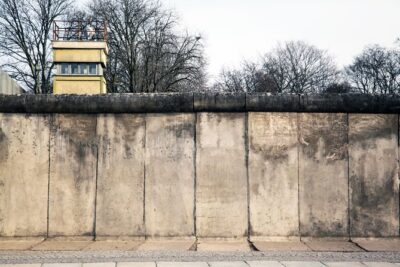
The Wall sections are more affecting. The route passes places where sections still survive, helping connect the car to the period when it was an everyday part of East German life. The guide’s comments about the waiting period for a new Trabant, which could reach ten years after ordering, give the car a human scale. This was not a novelty vehicle to its original owners. It was a hard-won family possession.
East Side Gallery and Oberbaum Bridge
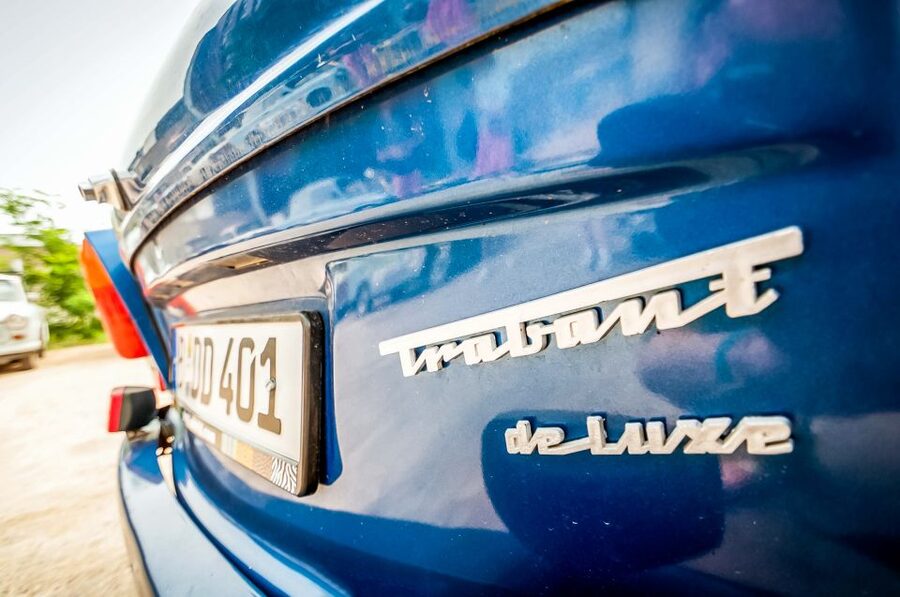
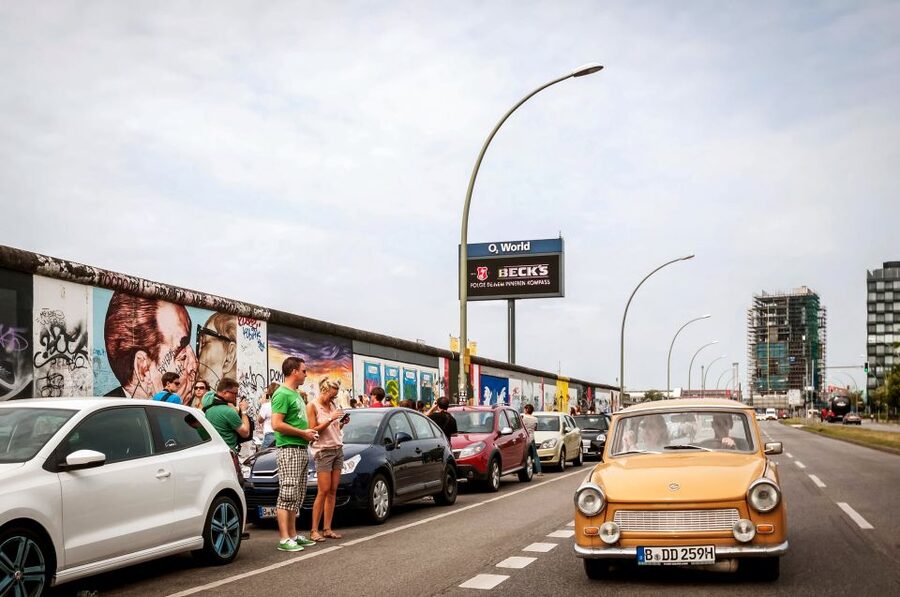
East Side Gallery is the most visually memorable part of the route. Artists painted a long remaining section of the Wall after the border opened, turning a barrier into an outdoor gallery. You pass colorful murals while driving a car made in the former East Germany, an almost too-perfect pairing of history and pop culture.
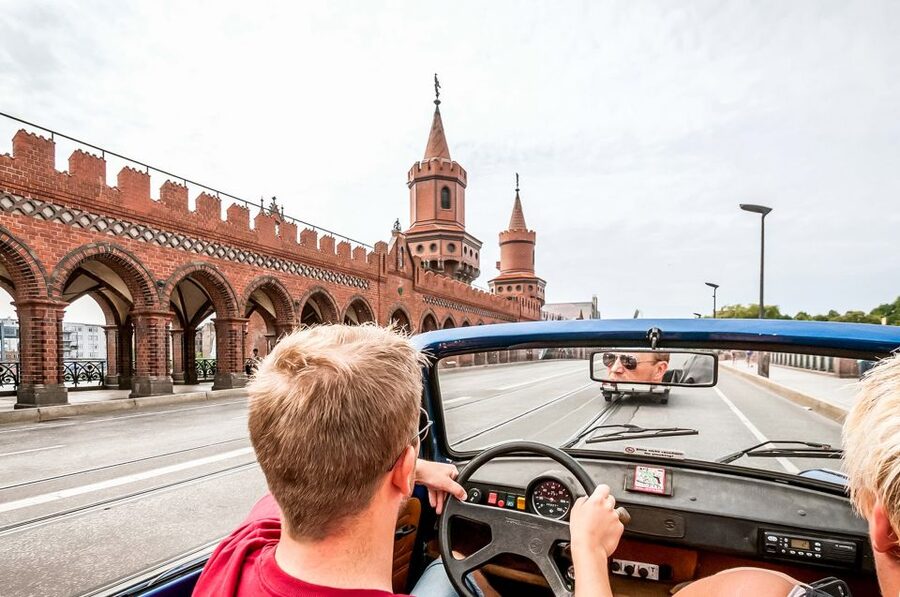
The route also includes Oberbaum Bridge, one of Berlin’s most recognizable bridges. Its brick towers and arches connect the former East and West Berlin districts of Friedrichshain and Kreuzberg. From the car, you get a moving view of the bridge and the river setting, though the tour does not provide the time of a dedicated photo walk.
The guide may stop or position the cars for pictures at selected points. Some guides, including Thomas, have taken photos of participants by Wall artwork and near the Brandenburg Gate. Do not count on a particular guide or exact photo routine, but it is worth having a camera ready.
What the 75-minute format really gives you
Seventy-five minutes is long enough to learn the car, settle into the convoy, and see a broad range of central Berlin. It is short enough that the experience remains funny rather than tiring.
You should expect a continuous drive with commentary, not a series of long walks and formal site visits. The exact pace depends on traffic, traffic lights, and the number of cars in the convoy. A Sunday can be a good choice because lighter traffic may let the group cover more ground.
If two people in your car want to drive, there is generally a chance to switch at a stop halfway through. That makes the tour better value for couples or friends, since both can experience the unusual steering and gear change. Confirm the changeover instructions at the briefing.
The convoy system works well for first-time Trabi drivers. The guide waits if cars are separated at lights, and the radio helps you know where the group is going. Still, you need to remain alert. This is real city driving, not a closed course, and the car’s controls can be demanding.
Price, insurance, and practical value
At $93 per person, the Trabi Safari is expensive for a 75-minute city tour. You can see many of the same major sights on foot, by public transport, or from a standard sightseeing bus for less.
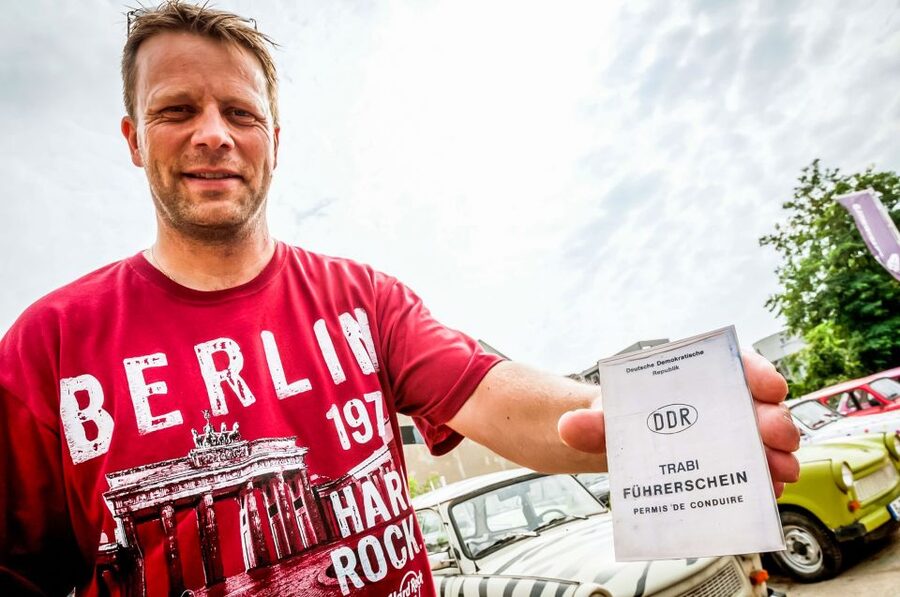
The price makes more sense if you see this as a driving experience with sightseeing added. You receive technical instruction, a guide at the front of the convoy, live radio commentary, fuel and mileage, and a Trabant driver’s license as a souvenir. Third-party vehicle damage insurance is included, but the deductible is 850 euros, so read the insurance terms carefully before taking the wheel.
The car is not shared with another booking, which adds value for a family or small group. Children can get a free ticket, but each child still needs to be included in the reservation, and the car cannot exceed four people or 330 kilograms.
The best value comes when you enjoy the process itself. If you love old cars, Cold War history, or hands-on activities, the price may feel fair. If you want a quiet, detailed history tour with lots of time at each sight, it will probably feel costly.
Who should drive, and who should ride
You should book this if driving is part of the appeal. The car is the attraction, not just the transport between monuments. It suits couples, families with older children, groups of friends, and solo visitors who want something more active than a walking route.
It can also help if long walking tours are difficult, since you see several central areas from the car. However, the experience still requires getting in and out of a small vehicle and being fit to drive. Mobility needs vary, so contact the provider before booking if you need specific assistance.
Tall passengers should consider booking fewer people in the car for more room. Four adults may fit within the rules but feel cramped. If you are sharing with three other people, decide in advance who will drive and whether you want to change seats.
The minimum driver age is 18, and you need a Class B license. You also need to feel comfortable driving in Berlin traffic. The guides offer help, but they cannot operate the car for you.
Extend the experience at Trabi Museum
If the safari leaves you curious about the car’s place in East German life, follow it with a visit to the Trabi Museum at Trabi World. The museum gives you a chance to look at the vehicle without traffic lights, gear changes, or a convoy to follow.
That pairing works well because the drive supplies the practical experience and the museum supplies more context. First you discover what the Trabant feels like, then you can look more closely at its design and history.
Should you book the Berlin Trabi Safari?
Book it if you want Berlin sightseeing with a steering wheel in your hands. The route covers major sights from Brandenburg Gate and Unter den Linden to Checkpoint Charlie, East Side Gallery, and Oberbaum Bridge. The guides are funny and reassuring, and the radio commentary keeps the convoy together.
Skip it if the price is your main concern, if you dislike manual driving, or if you need a spacious cabin. The Trabi is deliberately awkward, and the 850-euro insurance deductible deserves serious attention.
For most people who enjoy driving, the strange little car is worth the trouble. Start your Berlin visit with it to get your bearings, choose a Sunday for lighter traffic if possible, and consider an automatic or electric car if the manual gearbox is a problem. You may not learn every detail of Berlin in 75 minutes, but you will remember how the city felt from behind the wheel of an East German icon.
FAQ
How long is the Berlin Trabi Safari?
The tour lasts 75 minutes. Starting times vary, so you need to check availability for the date you want.
Where does the Trabi Safari start?
The meeting point is TrabiWorld, Zimmerstraße 97 to 100, at the corner of Wilhelmstraße in Berlin.
What sights does the route pass?
The route includes Potsdamer Platz, Brandenburg Gate, Unter den Linden, Berlin Cathedral, Rotes Rathaus, the TV Tower, East Side Gallery, Oberbaum Bridge, and Checkpoint Charlie.
Do I need a driving license?
Yes. Drivers must bring a driving license, be at least 18 years old, hold a Class B license, and be fit to drive.
Can more than one person drive the car?
Yes. If two people want to drive, you can usually switch at a stop halfway through the tour. Ask the guide about the changeover during the briefing.
How many people fit in one Trabant?
Each car holds a maximum of four people and has a total weight limit of 330 kilograms, or 727 pounds. Every participant needs a ticket, including drivers, co-drivers, passengers, and children. Children can get a free ticket.
Is insurance included?
Third-party vehicle damage insurance is included, with a deductible of 850 euros. Fuel and mileage are also included.
What languages are available?
The live guide and audio commentary are available in English and German.
Just added around Berlin
- Berlin Highlights in One Day★ 5.0 · 3 reviews
- Private Berlin One Day Tour with a Local: See the City Unscripted★ 3.5 · 3 reviews
- Individual city tour Berlin for max. 8 persons★ 5.0 · 3 reviews
- Transfer from Berlin Schönefeld Airport (SXF) to Berlin city Hotels – ROUND TRIP★ 4.0 · 3 reviews
- Berlin: Museum Island Tour★ 5.0 · 3 reviews
- Private Analogue Photography Experience in Berlin★ 5.0 · 3 reviews
- Berlin: Local Food Tour in Secrets Hidden Gems★ 4.0 · 3 reviews
- Berlin & The Third Reich Private Guided Tour★ 5.0 · 3 reviews
DDR & East Berlin Tours, compared.


East Berlin and the Berlin Wall 2-Hour Walking Tour
Read our review →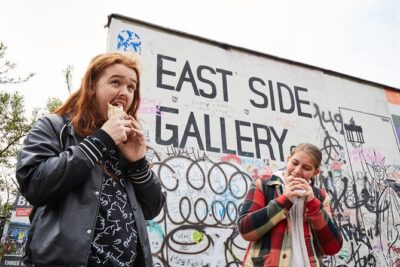
East Berlin Food & History Tour with Eating Europe
Read our review →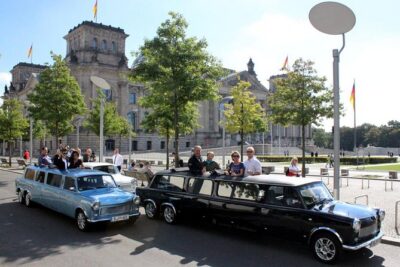
Browse the lists this tour appears in