
Review · DDR & EAST BERLIN TOURS
East Berlin Food & History Tour with Eating Europe
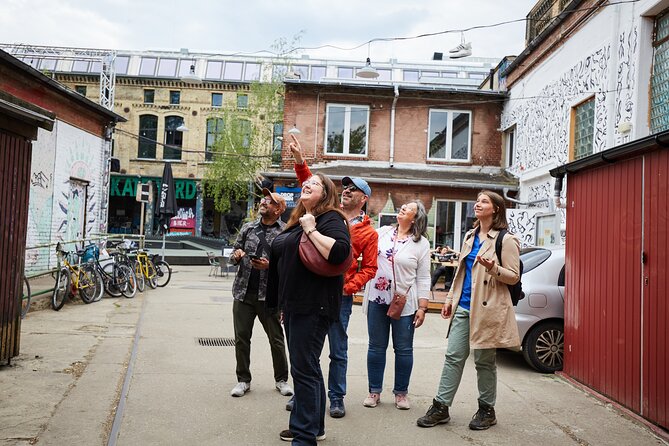
Berlin’s food story is really a people story, and this tour makes that clear from the first bite. Over about three and a half hours, you walk through Friedrichshain and former East Berlin, eating döner, Vietnamese tacos, currywurst, Syrian mezze, and other local favorites while your guide connects each dish to migration, politics, and daily life.
I like two things especially: the food is tied to place and history, rather than served as a series of unrelated snacks, and the small maximum of 12 people gives the guide room to answer questions. Guides including Clara, Jed, Lily, Eden, Laura, and Benjamin have been praised for humor and clear storytelling. The main drawback is that this is a substantial amount of food on foot, and the stops can change by season, so you should arrive hungry and flexible.
In This Review
- Key points to know before booking
- Why this tour works better than a standard food crawl
- Starting at Haroun with Berlin’s döner story
- Boxi Spatshop and a light German beer
- NYOM’s Vietnamese tacos and modern street food
- RAW-Gelände, rail yards turned arts district
- Currywurst at Warschauer Straße
- Schnitzel burger and late East Berlin
- East Side Gallery and Berlin Wall art
- Syrian mezze and Berlin’s present-day food culture
- The squat house and Berlin’s alternative side
- What the $107.68 price buys you
- Timing, walking, and group size
- Dietary needs and what can change
- Who should book this East Berlin tour
- Should you book the Eating Europe experience?
- FAQ
- Where does the East Berlin Food and History Tour start?
- Where does the tour end?
- How long does the tour last?
- What food and drinks are included?
- Are extra drinks included?
- Can vegetarians or gluten-free guests join?
- What is the cancellation policy?
Key points to know before booking
- Seven or more tasting moments: Expect döner, Vietnamese street food, currywurst, schnitzel burger, Syrian mezze, beer, and a Turkish treat, though the exact menu can change.
- History through food: The tour explains how Turkish, Middle Eastern, Vietnamese, Syrian, and other communities helped shape Berlin’s present-day eating habits.
- Former East Berlin setting: RAW-Gelände, Warschauer Straße, the East Side Gallery, and a former squat house add political and cultural context.
- Small-group format: The maximum is 12 people, with a minimum of two required for the tour to run.
- Come hungry: The tastings can cover much of a lunch and dinner, and extra drinks are not included.
- Useful for first-time Berlin visits: You get food, neighborhood orientation, local eating tips, and several important East Berlin sights in one outing.
Why this tour works better than a standard food crawl
A typical food tour can feel like a string of restaurant visits. This one has a clearer idea behind it: Berlin’s modern food scene grew from movement across borders, political change, and the city’s rough-edged neighborhoods.
You are not simply tasting German classics. You are seeing how döner became central to Berlin’s street food culture, how Vietnamese cooking found a place in the city, and how Syrian and Levantine food now belongs to Berlin’s everyday dining scene. Currywurst and beer are here too, but they share the stage with food brought by immigrant communities.
That mix is important. If you expect a parade of sausages, pretzels, and schnitzel, the menu may surprise you. If you want to understand what people actually eat in present-day Berlin, the wider selection makes much more sense.
The tour also keeps moving through places that matter. Food stops are paired with RAW-Gelände, Warschauer Straße, the East Side Gallery, and remnants of Berlin’s alternative political culture. The result is part walking tour, part meal, and part introduction to a section of the city that can feel far removed from Berlin’s grand museum district.
More East Berlin and DDR history:
- Berlin: DDR Museum Tickets
★ 4.3 · 3,443 reviews - Berlin: 75-minute Trabi Safari
★ 4.8 · 2,854 reviews - Berlin: East and West Hop-On Hop-Off Bus Tour
★ 4.2 · 2,195 reviews
Starting at Haroun with Berlin’s döner story
The meeting point is Haroun at Neue Bahnhofstraße 28. This is a practical start in Friedrichshain, close to public transportation, and the first tasting is a shawarma-style döner.
Döner is one of the best foods through which to explain Berlin. It reflects the Turkish and Middle Eastern communities that helped shape the city’s street food culture, especially after immigration changed Berlin’s neighborhoods and dining habits. Your guide uses the sandwich or wrap as a doorway into that larger story.
The food itself is filling, so pace yourself. This is not a tiny sample designed to disappear in one bite. It gives you a proper first taste and sets the tone for the rest of the afternoon.
This stop can also be useful if you have never tried Berlin-style döner. You get context before forming an opinion, and the guide can explain why this food is treated as a local staple even though its roots are outside Germany.
Boxi Spatshop and a light German beer
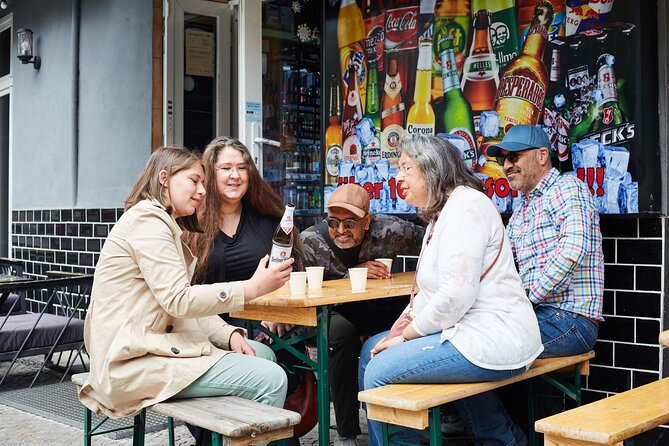
At Boxi Spatshop on Boxhagener Straße, the group pauses at a small liquor store for a Berliner Kindl light beer. The tasting takes about 15 minutes, and admission is free because the included item is the drink itself.
The stop has a casual, everyday feel. A Späti is part convenience store, part neighborhood institution, and these shops are closely tied to Berlin’s informal social life. Here, the beer is not presented as a formal brewery visit. It is a chance to learn about a popular German beer while standing in the sort of local shop many Berlin residents use.
If you are not a beer drinker, tell your guide about your preference. The supplied information says drinking preferences can be discussed, but extra drinks are not included. The advertised beer inclusion is useful for the budget, since you are not paying separately at every stop.
NYOM’s Vietnamese tacos and modern street food
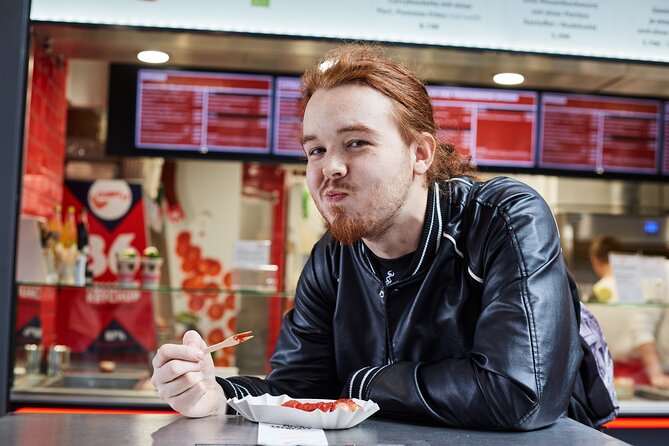
NYOM is a neon-lit Vietnamese restaurant where you try TyTy Tacos, an inventive street food item that has become one of the tour’s most talked-about bites. The stop lasts around 30 minutes, giving you more time than a quick counter pickup.
This is one of the clearest examples of the tour’s main theme. The food is Vietnamese in influence but presented in a modern Berlin setting. It shows that the city’s food culture is not frozen in traditional recipes. It keeps changing as new residents, cooks, and ideas become part of local life.
The tacos may appeal most to adventurous eaters, but the point is not novelty for its own sake. Your guide explains how immigrant food traditions take root, adapt, and become part of the city’s own identity. Several guides have been praised for making those connections easy to follow without turning the walk into a lecture.
A practical note: food offerings can change by day or season. The named dishes are examples of what is often served, not an absolute promise of every item on every departure.
More history walks in Berlin:
- Berlin: Natural History Museum Entrance Ticket
★ 4.6 · 3,382 reviews - Berlin: World Heritage Cruise to Potsdam
★ 4.5 · 1,435 reviews - Berlin Historical Highlights Walking Tour
★ 4.9 · 657 reviews - Berlin Private Complete History All Day Walking Tour
★ 5.0 · 474 reviews
RAW-Gelände, rail yards turned arts district
After eating, you visit RAW-Gelände, a former imperial rail repair yard that later served as a Soviet factory and a Deutsche Bahn warehouse. Today the site contains art galleries, independent record companies, nightclubs, beer gardens, a bouldering hall, and Berlin’s largest indoor skate park.
The stop is free and lasts about 20 minutes. It gives your legs a break from eating and adds a useful layer to the tour: East Berlin is not only about Cold War monuments. It is also about reuse, alternative culture, music, street art, and spaces that took on new lives after political and economic change.
The site is rough around the edges, which is part of its appeal. Do not expect a polished museum complex with a neat narrative at every corner. You are seeing a working cultural area with many overlapping uses. The guide’s explanation helps you understand what you are looking at and why this kind of place matters to Berlin.
Currywurst at Warschauer Straße
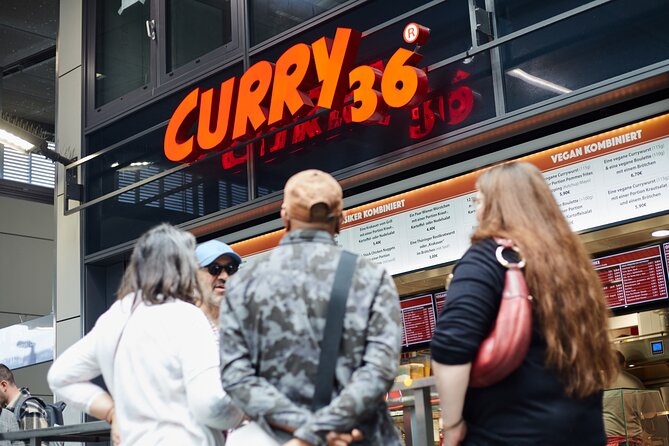
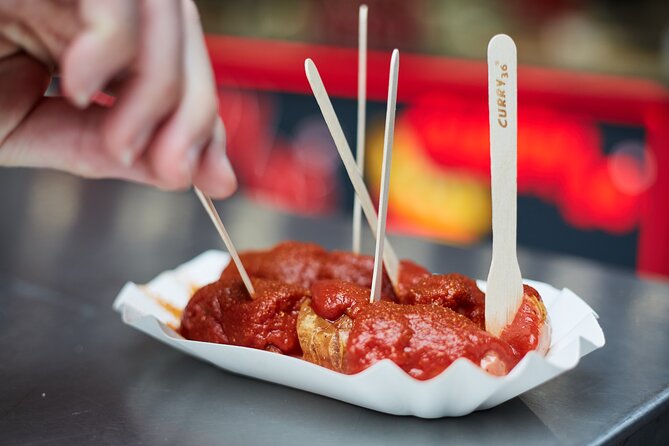
At Warschauer Straße, you stop for currywurst, one of Berlin’s signature street foods. The tasting takes about 15 minutes and comes with beer according to the tour’s included offerings.
The guide explains how currywurst was created and why it became such a powerful Berlin symbol. This is the tour’s most direct encounter with traditional local food, but it also fits the larger theme. Currywurst is simple, fast, inexpensive, and closely tied to the city’s postwar identity.
Taste is personal here. One person may find the sauce and sausage comforting, while another may not care for currywurst at all. Do not book this tour solely because you expect the dish to be the highlight. The wider food selection is its strength, and the guide gives the dish more meaning than it would have as a quick snack on its own.
The setting matters too. Eating currywurst at a train station is part of the local rhythm. This is not a formal restaurant meal, and that makes the stop feel more connected to ordinary city life.
Schnitzel burger and late East Berlin
The next stop is a compact schnitzel burger restaurant and club, also in the Warschauer Straße area. You get a schnitzel burger and Berliner Pilsner beer while discussing life near the end of East Berlin and the events that led to the Berlin Wall’s fall.
This is where the route shifts from food history to personal and political history. A schnitzel burger is a playful, modern take on familiar German food, while the conversation turns toward a serious period of change. The contrast works because Berlin often puts the casual and the political side by side.
The setting is small, so the group limit matters. With no more than 12 people, you can generally hear the guide and ask questions without competing with a large crowd. Guides such as Clara and Benjamin have been praised for explaining complex events in a clear, engaging way.
The tasting is another substantial item. If you have already eaten the döner, tacos, and currywurst, you may need to slow down. This is why skipping breakfast, or having only a light one, is sensible advice.
East Side Gallery and Berlin Wall art
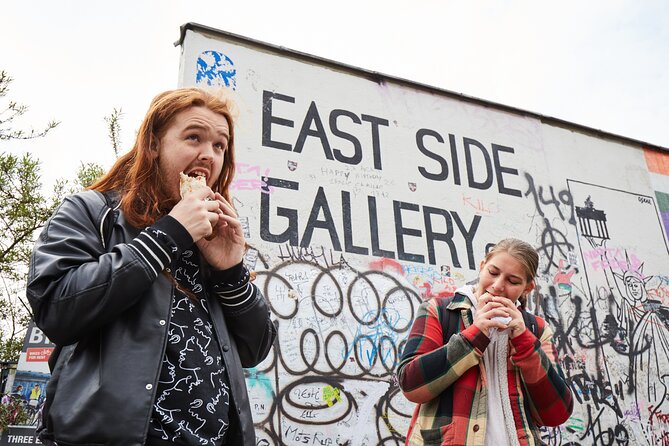
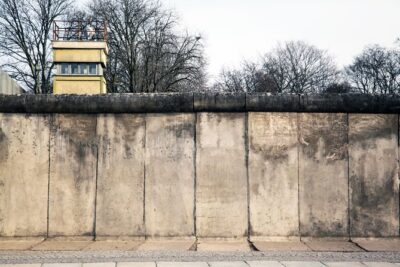
The tour then reaches the East Side Gallery, an open-air art gallery painted across one of the longest surviving sections of the Berlin Wall. The preserved stretch runs a little over 1.3 miles from end to end, though the tour’s visit is listed at about 10 minutes.
That time is enough for an introduction and a few photographs, but not for a full walk of the wall section. Keep your expectations realistic. This is a brief stop within a food tour, not a dedicated Berlin Wall visit.
Still, it is a strong closing sight. The murals are colorful and often political, and they turn a former barrier into public art. After hearing about the end of East Berlin at the schnitzel burger stop, you can see how the wall’s meaning has shifted from division to memory, protest, and expression.
The ending point is Mühlenstraße 78, 10243 Berlin. Since the tour finishes at a different place from the start, you can continue exploring the East Side Gallery area afterward or use public transportation nearby.
Syrian mezze and Berlin’s present-day food culture
At Aleppo Supper Club, you try a traditional mezze dish from Syrian and Levantine cuisine. The stop lasts about 20 minutes and adds another important chapter to the food story.
Mezze is naturally suited to a group tasting. Small shared dishes let you try something unfamiliar without committing to a full meal, and the guide can explain the ingredients and traditions as you eat. The stop also shows how newer immigrant communities are shaping Berlin’s restaurant culture today.
This is not a tour that treats immigration as a footnote. Turkish, Middle Eastern, Vietnamese, and Syrian food appear as central parts of the route. That makes the historical discussion more human. You are learning about communities through food that people cook, sell, and eat now.
The included food ends on a Turkish note, with a sweet treat mentioned among the tour’s regular offerings. Since the exact selections may change, ask the guide what is being served that day if you have a particular concern.
The squat house and Berlin’s alternative side
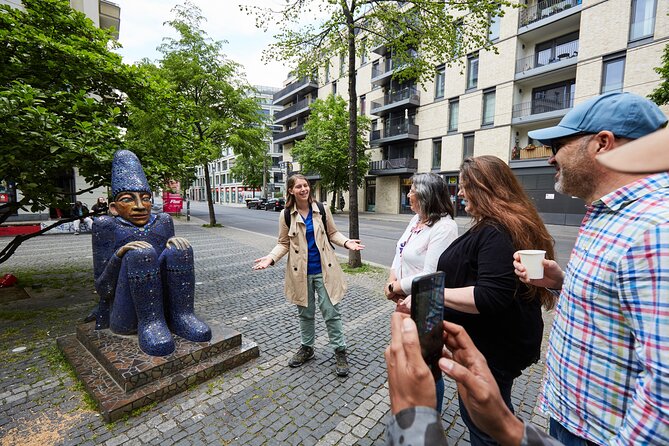
The route also includes one of Berlin’s remaining squat houses, a place that has hosted political and educational events, activities, and live concerts for nearly a decade.
The supplied details do not give a precise address or a fixed time for this stop, and it may be viewed as part of the walking route rather than a formal indoor visit. That distinction matters. You should expect an exterior or neighborhood explanation, not a guaranteed tour inside a private or active building.
Even so, it helps explain a side of Berlin that is easy to miss if you only visit major sights. The city’s alternative spaces have played a role in political discussion, music, education, and community life. This stop adds texture to the story of how former East Berlin areas continue to change.
What the $107.68 price buys you
At $107.68 per person, the price is not a bargain if you are measuring only the amount of food. It becomes better value when you count the guide, several included tastings, beer, a small group, neighborhood walking, and historical interpretation.
You are effectively combining a half-day food outing with a focused introduction to East Berlin. Paying separately for a döner, Vietnamese dish, currywurst, schnitzel burger, mezze, sweets, and beer could add up quickly, though the portions and exact selection vary.
The strongest value is the guide’s role. Clara, Jed, Lily, Eden, Laura, and Benjamin have been praised for humor, clear explanations, and the ability to connect food with Berlin’s past and present. A good guide turns a series of snacks into a coherent experience.
The price makes less sense if you want a formal German meal, a brewery tour, or a deep visit inside Berlin Wall sites. It makes more sense if you want many tastes, a manageable introduction to the city, and a route that reaches places you might not choose on your own.
Timing, walking, and group size
The experience lasts about three hours and 30 minutes. You walk between stops, with food breaks along the way, so comfortable shoes are a sensible choice.
The route begins at Haroun, Neue Bahnhofstraße 28, and ends at Mühlenstraße 78. Hotel pickup and drop-off are not included. The start and finish are in different locations, so check the route before booking if you need to return to a hotel at a set time.
The maximum group size is 12. That is small enough for personal questions and easier coordination at compact food venues. The tour requires at least two participants, and if that minimum is not reached, the company will offer another date or a full refund.
Children under four can join free, but no food is included for them. Paid tickets with food are available from age four. Most people can take part, service animals are allowed, and the route is near public transportation.
Dietary needs and what can change
Vegetarian and gluten-free guests should email the company or add a note when booking. The company will try to accommodate dietary needs where possible, and one tasting specifically notes that restaurants were accommodating.
The tour is not suitable for people with severe or life-threatening allergies to ingredients found along the route. The provider cannot take responsibility for food allergies or intolerances, so you should not rely on last-minute changes if your safety depends on avoiding a particular ingredient.
The listed dishes are a typical selection, not a fixed contract. Stops and offerings can vary by day or season. That flexibility is useful for a living food scene, but it means you should book for the overall idea rather than for one guaranteed taco, beer, or dessert.
Free cancellation is available up to 24 hours before the start time for a full refund. Changes or cancellations inside 24 hours are not accepted for a refund, based on local time.
Who should book this East Berlin tour
I would choose this for first-time visitors who want more than Berlin’s famous central sights. It is also a good fit if you have already seen the Brandenburg Gate and museums and now want a neighborhood-based afternoon.
Food-focused visitors should enjoy the range, especially if they like trying several small portions instead of sitting down for one long meal. The tour is also well suited to people who want to understand Berlin’s immigrant communities through everyday food rather than through a formal cultural presentation.
History fans should note the balance. You get useful discussion of East Berlin, the Cold War period, the Berlin Wall, and social change, but the tour is not a substitute for a dedicated history walk. The food remains the engine of the experience.
I would hesitate if you dislike beer, cannot eat a range of foods, have severe allergies, or prefer a slow single-cuisine meal. I would also avoid booking it immediately after a large breakfast. The simplest advice is to arrive hungry, wear comfortable shoes, and leave room for the unexpected.
Should you book the Eating Europe experience?
Book it if you want Berlin explained through the food people eat now, with currywurst and beer included but not treated as the whole story. The small group, varied tastings, and stops around RAW-Gelände, Warschauer Straße, the East Side Gallery, and alternative Berlin make it a useful use of half a day.
The key tradeoff is flexibility. The exact food stops can change, the walk includes several casual venues, and the historical portions are woven between tastings rather than delivered as a long formal lecture. For most visitors, that is the appeal.
If your ideal Berlin outing includes food, street art, migration stories, and a clear look at former East Berlin, this tour earns its place on your schedule. If you want only classic German dishes or a full Berlin Wall tour, choose something more narrowly focused.
FAQ
Where does the East Berlin Food and History Tour start?
The tour starts at Haroun, Neue Bahnhofstraße 28, 10245 Berlin, Germany.
Where does the tour end?
The tour ends at Mühlenstraße 78, 10243 Berlin, Germany.
How long does the tour last?
The tour lasts approximately three hours and 30 minutes.
What food and drinks are included?
Typical inclusions include döner, Vietnamese TyTy Tacos, currywurst, a schnitzel burger, Syrian mezze, a Turkish sweet treat, and beer. Food stops and offerings can change by day or season.
Are extra drinks included?
No. The listed tastings and included beer are covered, but additional drinks are not included.
Can vegetarians or gluten-free guests join?
You can note vegetarian, gluten-free, or other dietary requirements when booking or email the company. The provider will try to accommodate these needs where possible.
What is the cancellation policy?
You can cancel up to 24 hours before the experience start time for a full refund. Cancellations or changes made less than 24 hours before the start time are not accepted for a refund.
More Food Tours in Berlin
- Berlin Center Food Tour with 8+ Authentic Local Tastings
★ 5.0 · 1,227 reviews - Berlin City Bike Tour with Beer Garden Stop
★ 5.0 · 917 reviews - Kreuzberg: Culinary Food Tour
★ 4.5 · 770 reviews - Berlin: BRLO BRWHOUSE Tour and Craft Beer Tasting
★ 4.4 · 654 reviews
Just added around Berlin
- Berlin Highlights in One Day★ 5.0 · 3 reviews
- Private Berlin One Day Tour with a Local: See the City Unscripted★ 3.5 · 3 reviews
- Individual city tour Berlin for max. 8 persons★ 5.0 · 3 reviews
- Transfer from Berlin Schönefeld Airport (SXF) to Berlin city Hotels – ROUND TRIP★ 4.0 · 3 reviews
- Berlin: Museum Island Tour★ 5.0 · 3 reviews
- Private Analogue Photography Experience in Berlin★ 5.0 · 3 reviews
- Berlin: Local Food Tour in Secrets Hidden Gems★ 4.0 · 3 reviews
- Berlin & The Third Reich Private Guided Tour★ 5.0 · 3 reviews
DDR & East Berlin Tours, compared.



East Berlin and the Berlin Wall 2-Hour Walking Tour
Read our review →
Browse the lists this tour appears in