
Review · MUSEUMS
Berlin: Natural History Museum Entrance Ticket
Berlin’s Museum für Naturkunde makes its biggest impression in the Dinosaur Hall, where a towering Giraffatitan brancai skeleton reaches above you and Tristan Otto, an original Tyrannosaurus rex skeleton, waits nearby. Then comes Archaeopteryx, a small fossil with enormous importance to the story of evolution.
I like the mix of crowd-pleasing fossils and serious science. I also like the Biodiversity Wall, which packs 3,000 species into one arresting display, and the chance to see part of a working research collection rather than a hall devoted only to extinct animals.
The main caution is scale. This is a substantial museum, but not every room is equally polished or interactive, and some people finish the main exhibits in about 30 to 60 minutes. English information is available in many places, but you may still need your phone for translations and audio.
In This Review
- Key things to know before you go
- What the $12 ticket really buys you
- Finding the museum on Invalidenstraße
- Starting with the Dinosaur Hall
- Meeting Tristan Otto, the T. rex
- Pausing for Archaeopteryx
- The East Wing and its million preserved animals
- The Biodiversity Wall and the cost of extinction
- Minerals, Earth, and other collections
- Using the audio content well
- Is it good for children?
- Who should book this experience?
- FAQ
- Where is the Museum für Naturkunde Berlin?
- How long does the museum visit take?
- Is Tristan Otto a real T. rex skeleton?
- Is an audio guide included?
- Which languages are available for the audio content?
- Is the museum wheelchair accessible?
Key things to know before you go
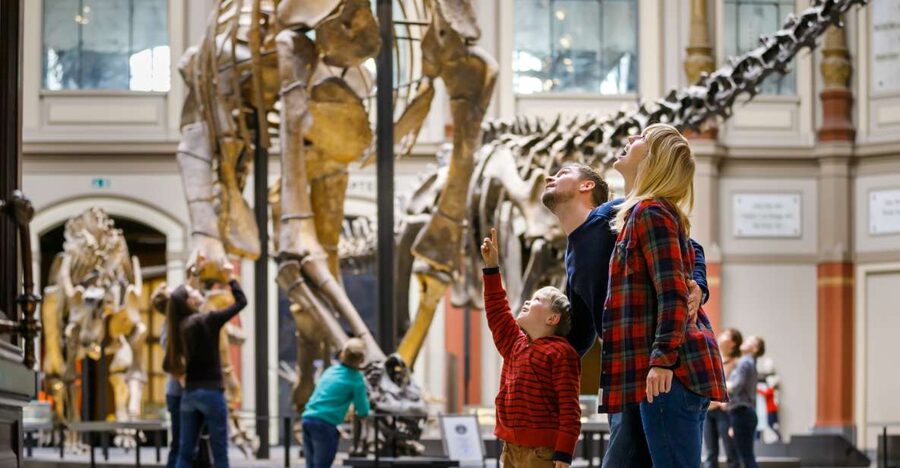
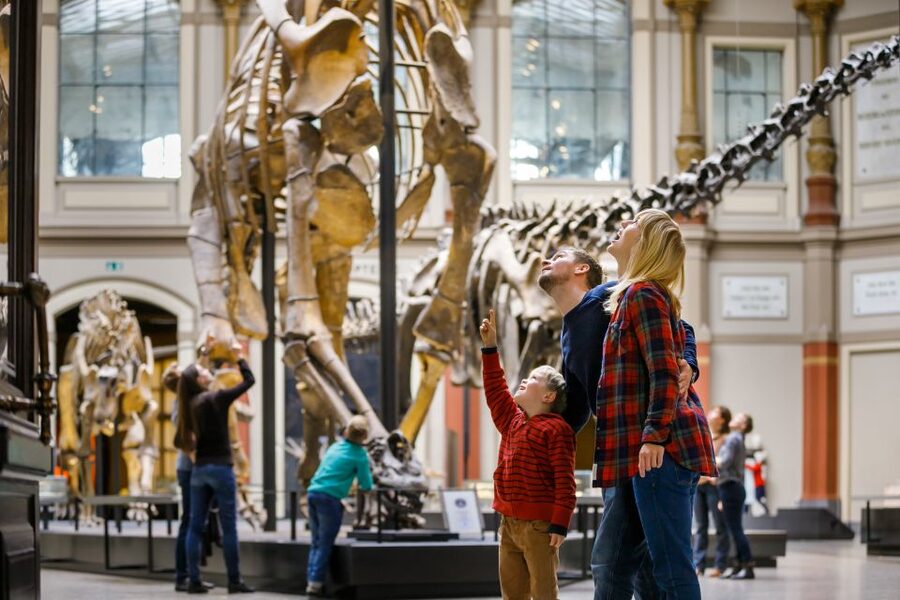
- Giraffatitan brancai: See the world’s tallest mounted dinosaur skeleton rising in the center of the Dinosaur Hall.
- Tristan Otto: Meet one of the few original T. rex skeletons on public display in Europe.
- Archaeopteryx: Study the precious fossil often called the Mona Lisa of natural history.
- The wet collection: Look into a scientific collection containing about one million animals preserved in 80 tonnes of alcohol.
- Biodiversity Wall: View more than 3,000 species at once while considering the loss of biodiversity.
- Phone audio: Download the free audio content online, and bring headphones if you want to use it comfortably.
What the $12 ticket really buys you
At about $12 per person, this is an easy Berlin museum choice to add to a morning or afternoon. The price feels fair if you care about dinosaurs, fossils, zoology, or science. It is less compelling if you expect a huge, fully interactive attraction that takes an entire day.
You receive museum admission, cloakroom use, and access to downloadable audio content in English, French, German, Italian, Japanese, Polish, Portuguese, Russian, Spanish, and Turkish. This is not a guided tour, so you set your own pace and decide how much explanation you want.
The stated visit length is 30 minutes to one hour, but that is best understood as a minimum for the main highlights. I would allow extra time if you want to read labels, listen to the audio, study the minerals, or move slowly through the biological collections. Some people report spending many hours here, while others find the open areas manageable in a short visit.
The ticket also lets you skip the ticket line, which matters at busy times. A reserved mobile ticket can make entry quick, though you should keep the voucher ready on your phone and carry the identification requested for your booking. If you have a reduced ticket, bring proof of age or status.
More history walks in Berlin:
- Berlin: World Heritage Cruise to Potsdam
★ 4.5 · 1,435 reviews - Berlin Historical Highlights Walking Tour
★ 4.9 · 657 reviews - Berlin Private Complete History All Day Walking Tour
★ 5.0 · 474 reviews
Finding the museum on Invalidenstraße
The museum is at Invalidenstraße 43, 10115 Berlin. You enter through the main entrance.
The practical advantage of booking ahead is simple: you avoid joining the longer purchase line when the museum is busy. Capacity can also matter. One visitor had to wait because the building was full, so a timed reservation is useful on crowded days.
Once inside, use the cloakroom before you start. You will want both hands free for looking up at the dinosaurs and checking your phone for the audio material. The museum is wheelchair accessible, which makes the broad exhibition areas easier to manage for many visitors.
I would download or open the audio content before you get absorbed in the displays. Free Wi-Fi is available, but depending on the phone connection or website at the moment, it is better not to leave setup until you are standing beside the first dinosaur.
Starting with the Dinosaur Hall
The Dinosaur Hall is the clear star of the museum. It reconstructs life as it might have appeared in the Upper Jurassic period, about 150 million years ago, and gives you an immediate sense of size and time.
In the middle of the hall, Giraffatitan brancai rises above the room. It is described as the world’s tallest mounted dinosaur skeleton, and that claim is easy to understand when you stand beneath its long neck. This is the exhibit that gives the museum its visual punch, especially for children who may not yet have the patience for dense scientific displays.
Look beyond the sheer height. The fossils are not just decoration. They continue to raise questions for scientists, and the museum connects its public displays with current research. That link gives the hall more substance than a simple collection of dinosaur replicas.
The hall can be exciting without being overwhelming, but sound and crowd levels may rise when school groups are present. If you are visiting with a small child, the large skeletons provide an instant focus. If you are visiting as an adult, use the audio content or labels to turn the spectacle into a lesson in anatomy, fossil evidence, and reconstruction.
Meeting Tristan Otto, the T. rex
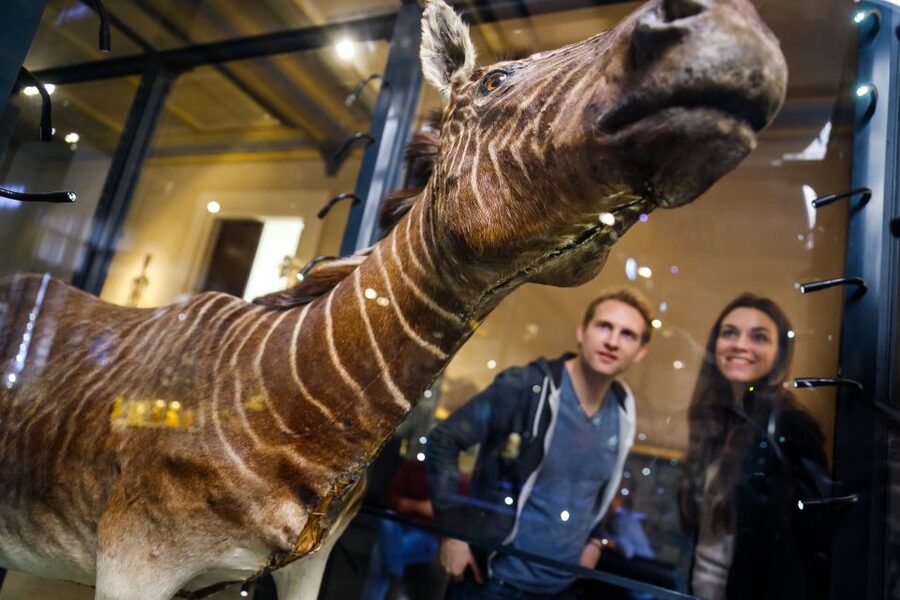
Tristan Otto is likely to be your second major stop. The museum presents him as one of the few original Tyrannosaurus rex skeletons in Europe, which makes this more than a large dinosaur model.
The appeal is partly emotional. A T. rex is familiar from films and children’s books, but seeing an actual skeleton brings the animal back to bones, joints, teeth, and scale. The display gives you a chance to compare the famous predator with the long-necked Giraffatitan nearby.
The T. rex display has been especially popular with families, but it works for adults too. I would give yourself a few minutes here rather than taking only a quick photograph. Notice how the skeleton is arranged and how the museum uses lighting and space to focus attention on the animal.
This is also where expectations matter. If your main reason for coming is Tristan Otto, the ticket is easy to justify. If you expect several halls packed with equally dramatic dinosaurs, the collection may feel smaller than the name of the museum suggests.
More museums in Berlin:
- Berlin: Jewish Museum Berlin Entrance Ticket
★ 4.5 · 8,393 reviews - Berlin: DDR Museum Tickets
★ 4.3 · 3,443 reviews - Berlin: Neues Museum Entry Ticket
★ 4.6 · 3,261 reviews - Skip-the-Line: Berlin Wall Museum at Checkpoint Charlie
★ 4.1 · 2,041 reviews
Pausing for Archaeopteryx
At the back of the Dinosaur Hall, a protected display holds Archaeopteryx lithographica. The museum treats this fossil as a star, and rightly so. It is often described as the Mona Lisa of natural history because of its importance and rarity.
Archaeopteryx matters because it helps tell the story of the relationship between dinosaurs and birds. The fossil is not large in the way Giraffatitan is large, so you need to slow down and look carefully. This is one place where the audio content can help you understand why a comparatively small fossil receives such careful protection.
I like the contrast. The giant skeletons grab your attention from across the room, while Archaeopteryx rewards a closer look. You get both kinds of museum experience in one hall: the instant drama of prehistoric giants and the quiet force of a single scientific object.
If you have children with you, explain the fossil’s importance in simple terms before moving on. It gives them a reason to look closely rather than rushing from one large skeleton to the next.
The East Wing and its million preserved animals
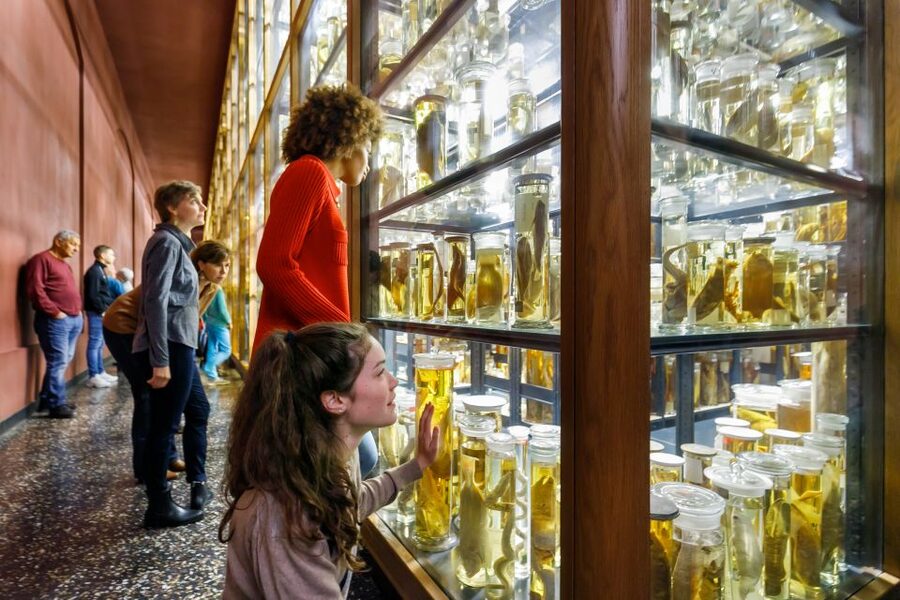
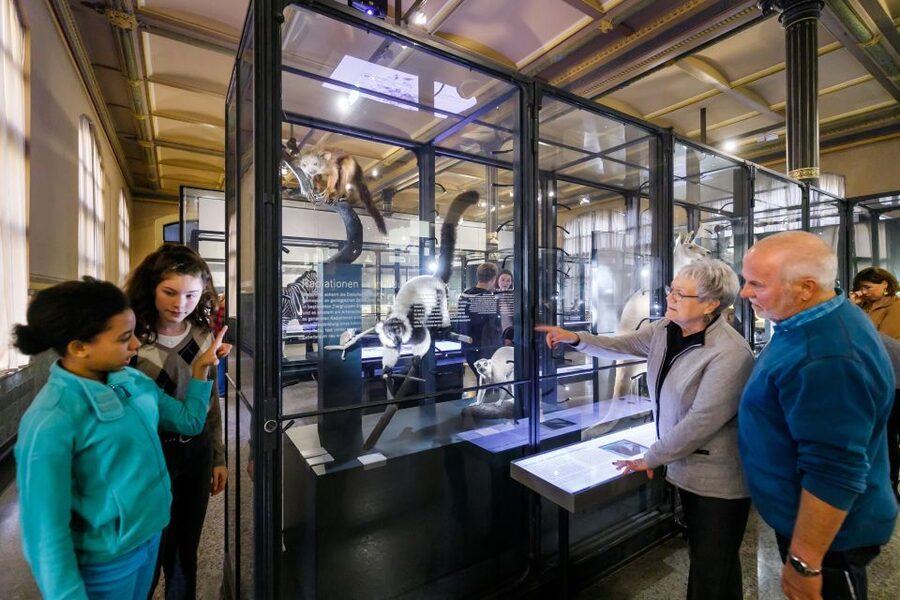
The museum’s East Wing shifts the mood from prehistoric display to scientific collection. Here you can see a wet collection containing about one million animals preserved in alcohol, weighing roughly 80 tonnes altogether.
That number is hard to picture, which is part of the point. The collection shows how scientists study life in its many forms. Instead of presenting only a few famous animals, it suggests the vast range of specimens needed to understand biology.
Some people will find this room fascinating. Others may find the preserved animals unsettling, especially if they prefer fossils and minerals. The museum does not hide the fact that scientific collections involve real specimens, and that directness gives the display a different character from the Dinosaur Hall.
I would not skip it simply because the dinosaurs are more famous. The East Wing explains what a natural history museum does behind the scenes. It also helps connect the public exhibitions with the work of about 200 scientists who study the museum’s collections of more than 30 million items.
The Biodiversity Wall and the cost of extinction
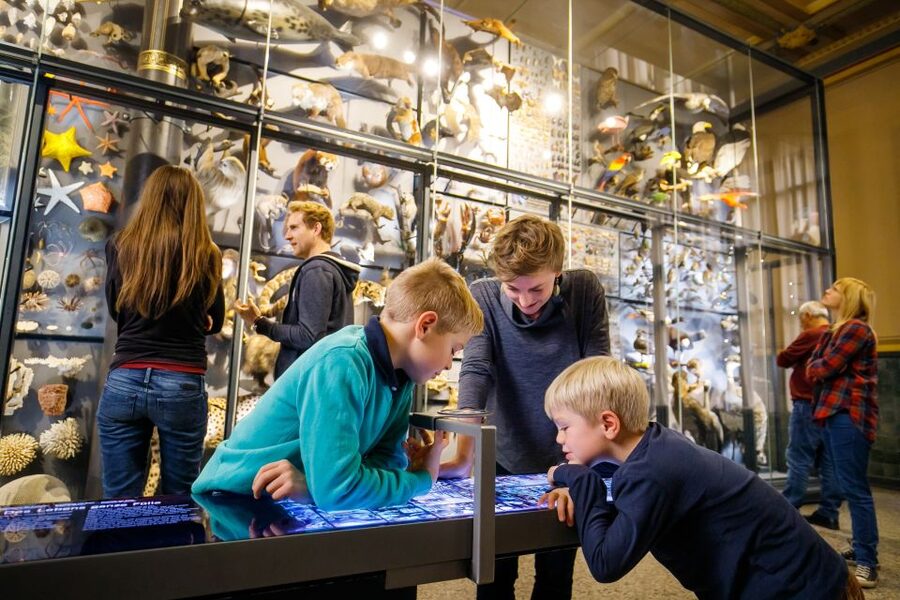
The Biodiversity Wall is one of the museum’s most effective displays. It presents more than 3,000 different species in one view, creating a dense picture of life on Earth.
The wall is visually impressive, but its purpose goes beyond showing variety. It asks you to consider how much life exists, how researchers classify it, and what is lost when species disappear. That makes it a useful counterpoint to the dinosaur exhibits, where extinction happened long ago, and to today’s research concerns, where biodiversity loss remains a current issue.
I find this section valuable because it changes the visit from a look at dead creatures into a question about living systems. You do not need a science background to understand the basic idea. The sheer number of forms makes the point before you have read every explanation.
This may be one of the quieter parts of the museum, and it can be easier to appreciate after the big dinosaur hall. Give it time if your interest extends beyond fossils.
Minerals, Earth, and other collections
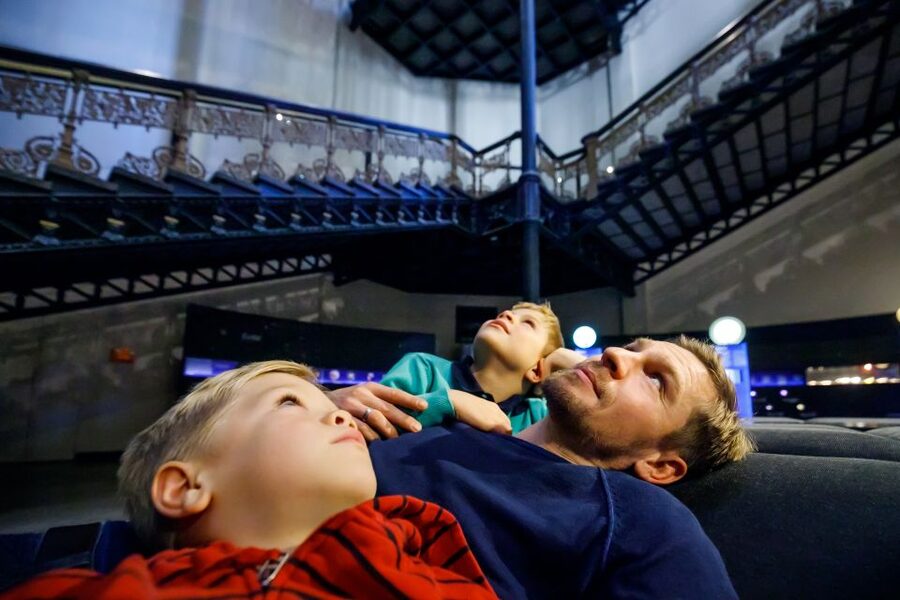
The museum covers more than dinosaurs and animals. You can also find minerals and displays connected with Earth, geology, geography, biology, and the solar system.
The mineral collection gives the visit a welcome change of texture. After bones and preserved specimens, crystals and rocks show another side of natural history, one based on the physical structure of the planet rather than animal life.
The Earth section has also been described as especially striking, with material that broadens the visit beyond the headline fossils. I would use the room-by-room layout to choose your priorities. You may find one room fascinating and another less memorable, so there is no need to give every case equal time.
Some parts of the museum can feel older or less tightly organized. Maps help, but the route is not always obvious, and you may need to pause to work out where you are. That is a minor problem if you have an hour, but it matters more if you are trying to see everything before a fixed dinner reservation.
Using the audio content well
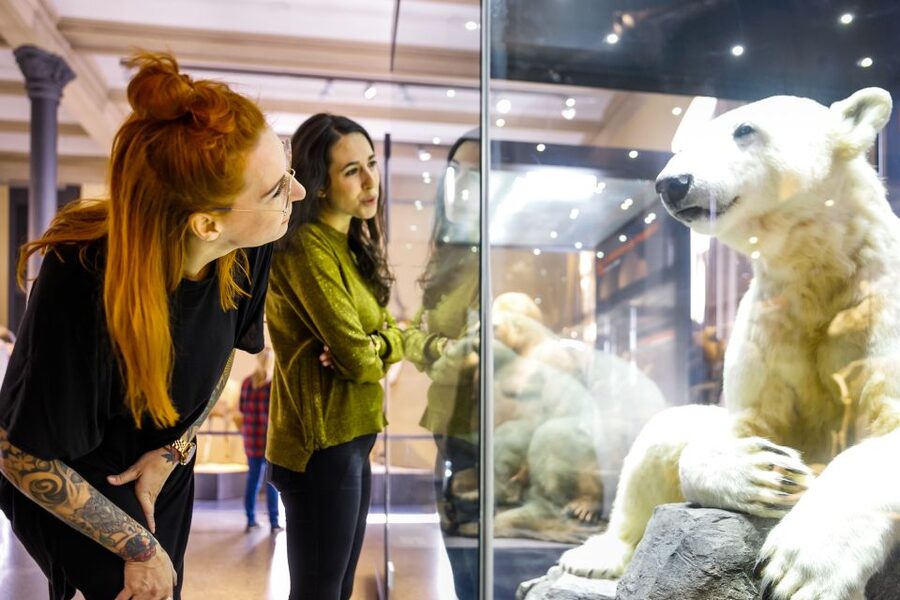
The free audio content is available through a website rather than as a physical audio guide. It covers several languages, including English, French, German, Italian, Japanese, Polish, Portuguese, Russian, Spanish, and Turkish.
Bring your own phone and headphones. This is the most practical tip for the visit. Without headphones, you may need to hold your phone near you and listen in a noisy room, which is awkward for adults and harder with children.
The audio can add useful context to objects that otherwise seem self-explanatory. It is especially helpful for Archaeopteryx, the scientific collections, and the biodiversity displays, where the reason behind an object matters as much as its appearance.
Do not assume every written panel will be equally easy in English. Much of the display information has English translation, but some explanations may direct you to a QR code or online material. If a code fails, you may need to rely on the available label or audio instead.
Is it good for children?
Yes, particularly for children who respond to large animals and visual displays. A four-and-a-half-year-old can find plenty to watch without needing to read every panel, and the museum’s big skeletons provide natural stopping points.
The visit can also work well for older children who ask questions about extinction, evolution, fossils, and animal classification. The museum gives you real objects and specimens to discuss rather than only screens and activities.
The limits are worth noting. The museum is not packed with hands-on play stations, and some parents expect more interactive features than they find. School groups can also make the building noisy, especially at busy times.
I would plan a short route for younger children: Giraffatitan, Tristan Otto, Archaeopteryx, then one or two additional rooms. If everyone is still interested, continue to the Biodiversity Wall and minerals. That approach prevents the visit from becoming a march through every case.
Who should book this experience?
I would book this ticket if you want a reasonably priced museum with genuine fossils, a famous T. rex, major dinosaur skeletons, and a clear connection to scientific research. It is also a strong rainy-day choice for families.
It suits first-time Berlin visitors who want an attraction that works for different ages. A child can enjoy the dinosaur scale, while an adult can spend more time with Archaeopteryx, the wet collection, minerals, or the biodiversity display.
You may want to skip it if you are looking for a very large museum with nonstop interactive exhibits. The collection is impressive, but some rooms feel dated, the route can be confusing, and the full experience may be shorter than expected. If Tristan Otto and Giraffatitan are enough to make you happy, the $12 price is sensible. If you need a full-day attraction, choose your expectations carefully.
FAQ
Where is the Museum für Naturkunde Berlin?
The museum is at Invalidenstraße 43, 10115 Berlin. Entry is through the main entrance.
How long does the museum visit take?
The listed activity duration is 30 minutes to one hour. You can spend longer if you want to examine the collections, use the audio content, and see the temporary or additional displays.
Is Tristan Otto a real T. rex skeleton?
Yes. Tristan Otto is presented as one of the few original Tyrannosaurus rex skeletons in Europe.
Is an audio guide included?
Downloadable audio content is included through a website. A physical audio guide is not included, so bring your phone and headphones.
Which languages are available for the audio content?
Audio content is available in English, French, German, Italian, Japanese, Polish, Portuguese, Russian, Spanish, and Turkish.
Is the museum wheelchair accessible?
Yes, the museum is wheelchair accessible. Reduced-ticket holders should also bring proof of age or status, and all ticket holders should carry the requested passport or identification.
Just added around Berlin
- Berlin Highlights in One Day★ 5.0 · 3 reviews
- Private Berlin One Day Tour with a Local: See the City Unscripted★ 3.5 · 3 reviews
- Individual city tour Berlin for max. 8 persons★ 5.0 · 3 reviews
- Transfer from Berlin Schönefeld Airport (SXF) to Berlin city Hotels – ROUND TRIP★ 4.0 · 3 reviews
- Berlin: Museum Island Tour★ 5.0 · 3 reviews
- Private Analogue Photography Experience in Berlin★ 5.0 · 3 reviews
- Berlin: Local Food Tour in Secrets Hidden Gems★ 4.0 · 3 reviews
- Berlin & The Third Reich Private Guided Tour★ 5.0 · 3 reviews
Museums, compared.



Skip-the-Line: Berlin Wall Museum at Checkpoint Charlie
Read our review →

“Pergamonmuseum. The Panorama” Exhibition Tickets
Read our review →
Browse the lists this tour appears in