
Review · MUSEUMS
Berlin: Tickets for the BODY WORLDS Museum in Berlin
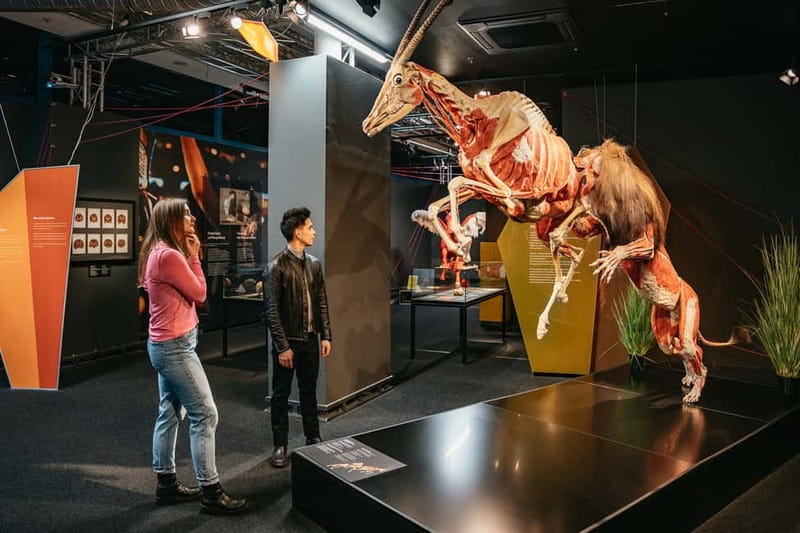
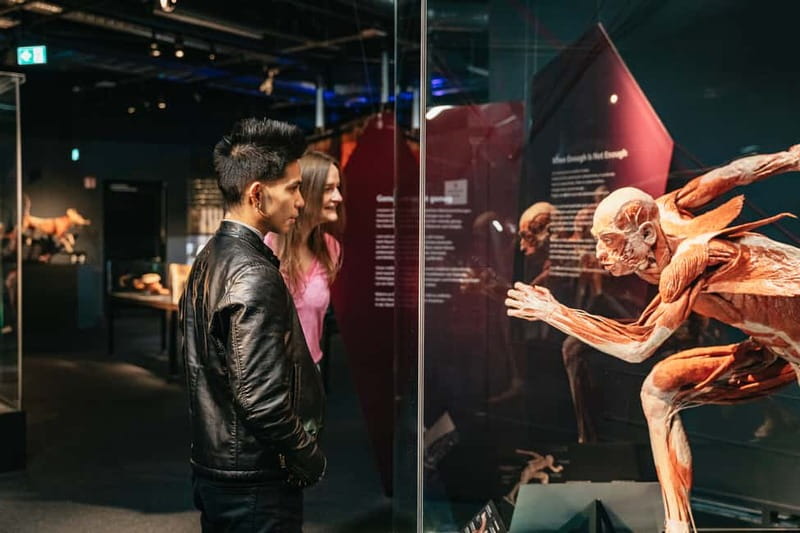
The most striking thing about BODY WORLDS Berlin is simple: you are looking at real human bodies prepared through plastination, not plastic models or textbook drawings. Whole-body plastinates and individual organs show how muscles, bones, nerves, blood vessels, and diseases fit together in three dimensions. It is unusual, serious, and far more memorable than a standard science display.
I like the way the museum connects anatomy with daily life, especially in its sections on stress, happiness, and long-term health. I also like the clear progression from the skeleton and muscles to digestion, breathing, the nervous system, and the cardiovascular system. The main consideration is that the exhibition can feel emotionally intense, and some people may find the presentation too direct. A few displays may also look tired, and the museum can be less satisfying if you rush through it.
In This Review
- Key points to know before you go
- What makes BODY WORLDS Berlin different
- Starting with bones, muscles, and movement
- The digestive system and the body’s hidden work
- Embryo development and the beginning of life
- The heart, blood vessels, and circulation
- Breathing and the nervous system
- Stress, happiness, and the question of healthy living
- How long should you spend inside?
- Price, value, and what is included
- Location and practical details at Panoramastraße 1a
- Who will get the most from this museum?
- Is BODY WORLDS Berlin worth booking?
- FAQ
- Where is BODY WORLDS Berlin located?
- How much does admission cost?
- What are the opening hours?
- What is the latest admission time?
- Is the ticket valid for a full day?
- Is the museum wheelchair accessible?
- Is an audio guide included?
- Can I cancel my booking?
Key points to know before you go
- Real human plastinates: Whole bodies and individual organs show anatomy in a way diagrams cannot.
- A logical body tour: You move through the skeleton, muscles, digestion, embryo development, circulation, breathing, and the nervous system.
- More than anatomy: Displays also address stress, happiness, moderation, and what supports a long life.
- Useful for families and students: The visual approach makes complex body systems easier to grasp, though younger children may need help understanding the exhibits.
- Allow enough time: The ticket is valid for one day, but rushing can reduce the impact of the exhibition.
- Central Berlin location: The museum is at Panoramastraße 1a, with admission available from 10 AM to 6 PM daily.
What makes BODY WORLDS Berlin different
BODY WORLDS was created by Dr. Gunther von Hagens and uses plastination to preserve human bodies and organs. The process lets the museum present the body as a physical structure rather than a flat picture. You can see the position of organs, the shape of muscles, and the paths taken by blood vessels and nerves.
That matters because anatomy is hard to understand from words alone. A diagram may show the heart, lungs, and major arteries, but a full-body specimen places those parts in relation to the rest of you. You begin to see how much depends on balance. A problem in one system can affect several others.
The exhibition also changes the way you think about your own body. You are not just looking at separate parts in glass cases. You are looking at the machinery that lets you breathe, move, digest food, feel stress, and recover from ordinary daily demands.
This directness is also the museum’s main challenge. BODY WORLDS is not a light entertainment stop. It deals with death, disease, and the physical reality of being human. If you prefer science museums that use models, animations, or gentle displays, this may feel confronting.
More museums in Berlin:
- Berlin: Jewish Museum Berlin Entrance Ticket
★ 4.5 · 8,393 reviews - Berlin: DDR Museum Tickets
★ 4.3 · 3,443 reviews - Berlin: Natural History Museum Entrance Ticket
★ 4.6 · 3,382 reviews
Starting with bones, muscles, and movement
The early sections focus on the human skeleton and muscular system. This gives you a useful foundation for everything that follows. Bones provide the frame, while muscles create movement and support posture. Seeing these systems presented together helps you understand that movement is a team effort rather than the work of one isolated body part.
The displays are especially useful if you have struggled to picture what lies beneath the skin. You can see how muscles wrap around bones and how the body is arranged for balance and motion. The full-body specimens are the strongest part here because they show structure at human scale.
Take your time with these exhibits. The temptation is to walk quickly from one dramatic specimen to the next, but the best value comes from noticing relationships between parts. Look at the spine, joints, limbs, and muscle groups as one connected system.
This section should work well for teenagers and adults who enjoy visual learning. It can also help parents explain basic anatomy to older children, although the subject matter is more suitable for children who can handle frank discussions about the human body.
The digestive system and the body’s hidden work
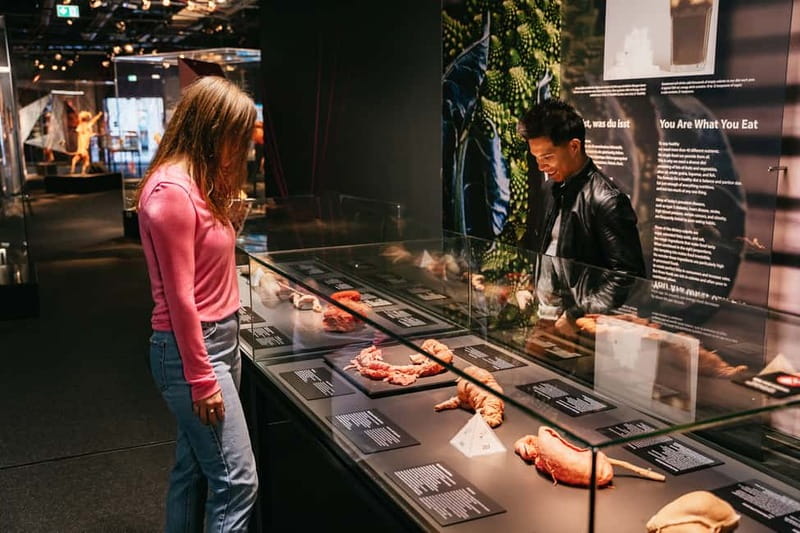
The digestive system section shifts attention from movement to the quiet work that keeps you alive. Food must be processed, nutrients absorbed, and waste removed. These steps are familiar in theory, but preserved organs make the process far more concrete.
You may find this section particularly helpful if you like practical science. It links ordinary habits with physical systems inside the body. The exhibition does not present anatomy as a collection of trivia. It asks you to think about how daily behavior affects organs over time.
The displays also help explain why the body is both sturdy and fragile. It can perform complicated tasks hour after hour, yet disease or long-term strain can disrupt the balance. That idea runs through much of BODY WORLDS Berlin.
Some information is written in English, and the English translations are generally helpful. The optional audio guide adds another layer, though not every audio exhibit may be working at a given time. If you want to use it, check the available guide points as you go rather than assuming every station will be easy to find.
Embryo development and the beginning of life
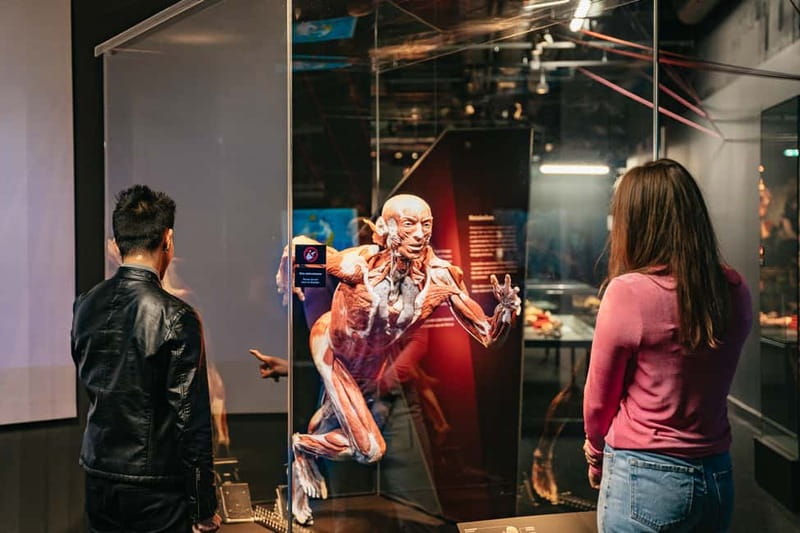
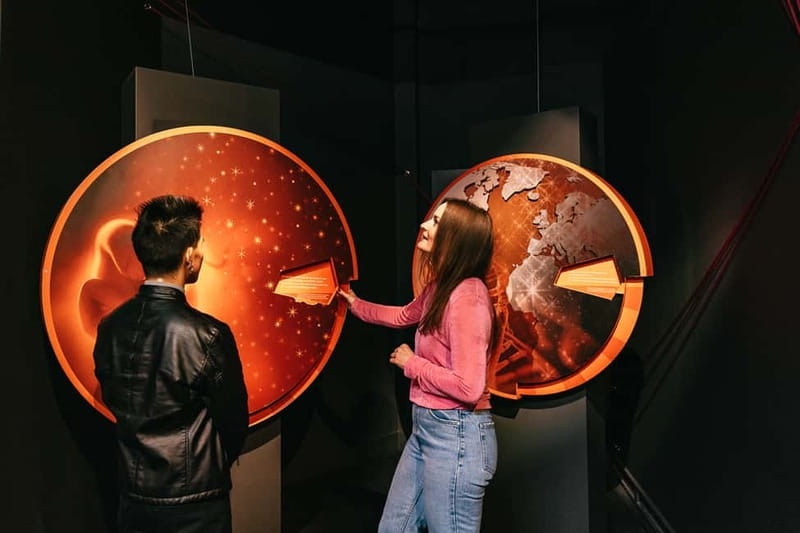
The section on embryo development offers a change of scale. After seeing adult bodies and organs, you are shown the stages of development in the womb. This part adds a sense of time to the exhibition. The body is not a finished object. It begins as a developing arrangement of cells and gradually takes shape.
The subject can be fascinating because it connects anatomy with human development. It also gives the exhibition a more reflective tone. You are not only learning what the body contains, but how it begins to form.
As with the rest of the museum, the presentation is visual and direct. The details may be more effective for older children, students, and adults than for very young visitors. You can move at your own pace, so there is no need to linger over any section that feels uncomfortable.
A few more Berlin tours worth weighing up
- Berlin: Berlin Story Bunker Entry Ticket
★ 4.6 · 6,759 reviews - Berlin: Illuseum Berlin Entrance Ticket
★ 4.1 · 3,970 reviews - Berlin: Madame Tussauds Admission Ticket
★ 4.6 · 3,941 reviews - Berlin: Neues Museum Entry Ticket
★ 4.6 · 3,261 reviews
The heart, blood vessels, and circulation
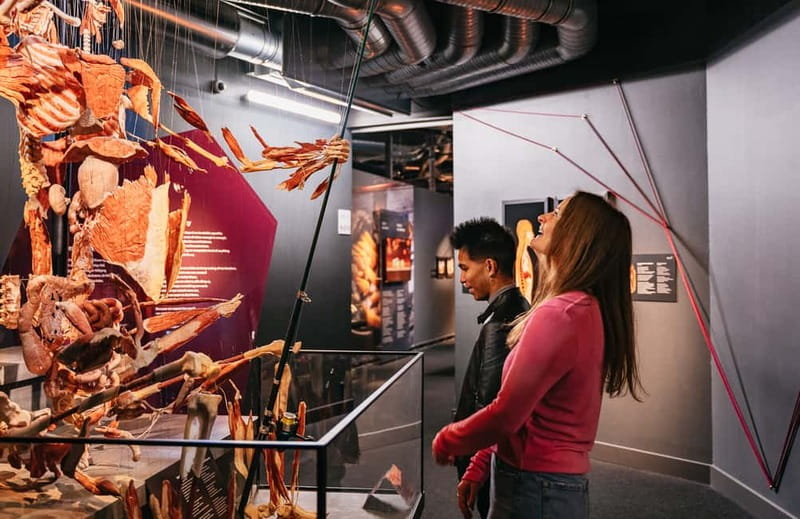
The cardiovascular section is one of the clearest examples of why real specimens can be so effective. The heart is familiar to everyone, but its size, structure, and relationship to the vessels become easier to understand when shown in three dimensions.
You can see the cardiovascular system as a network rather than a single organ. Blood vessels extend throughout the body, carrying oxygen and nutrients and removing waste. That broad view helps explain why circulation is central to almost every other system in the exhibition.
This is also where disease becomes easier to discuss. The museum presents common illnesses and organ changes in an accessible way, showing how the body can be affected by damage or poor function. The aim is not simply to shock you. It is to make the consequences visible.
If you are studying biology, medicine, or health, this section may be worth extra time. If you are visiting casually, it still gives you a useful reason to pause and look closely at how much of the body depends on healthy circulation.
Breathing and the nervous system
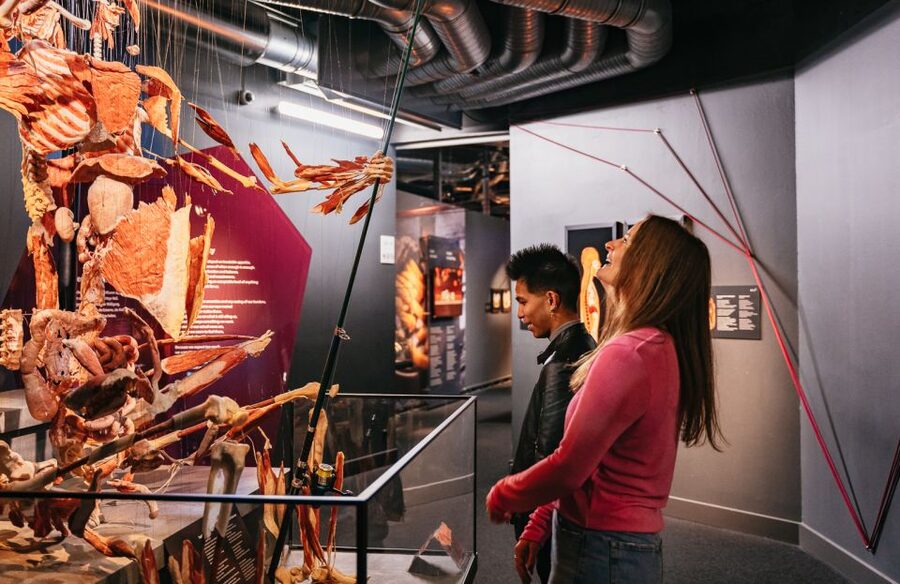
The respiratory section shows the organs that let you breathe and exchange gases. It works well beside the cardiovascular displays because the two systems are closely linked. The lungs bring oxygen into the body, while the circulatory system carries it where it is needed.
The nervous system then takes you into the body’s communication network. Nerves help control movement, sensation, and many automatic functions. Seeing the nervous system presented as part of the whole body can make its reach easier to grasp.
These displays reinforce one of the museum’s best lessons: body systems do not work alone. Muscles depend on nerves. Organs depend on blood flow. Breathing supports circulation. The exhibition keeps returning to this web of connections without requiring a medical background.
Interactive features are present, including an interactive guide available by phone, but the exhibition is still more display-based than hands-on. If you want a science center packed with buttons and experiments, you may wish for more interaction. Here, the plastinates are the main event.
Stress, happiness, and the question of healthy living
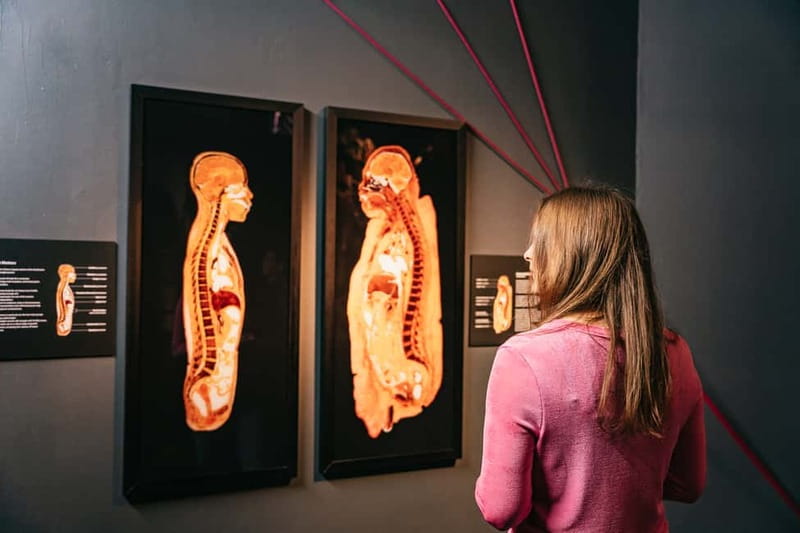
BODY WORLDS Berlin goes beyond physical anatomy. Later displays look at what shapes happiness, how the body handles stress, and the balance between excess and moderation. This gives the museum a more human focus.
The subject of stress is especially relevant because it connects an invisible experience with physical reactions. You may begin to think about how the body responds to pressure, not just how it looks on a display stand. The sections on long life also encourage practical reflection on habits and balance.
This material makes the exhibition feel less like a medical cabinet and more like a lesson in self-awareness. It does not turn the visit into a health consultation, but it does ask you to consider what your body needs and how your choices affect it.
I find this broader approach useful because it gives the museum a reason to exist beyond anatomical spectacle. You leave with more than a list of organs. You are encouraged to think about the body as a living system shaped by behavior, stress, and time.
How long should you spend inside?
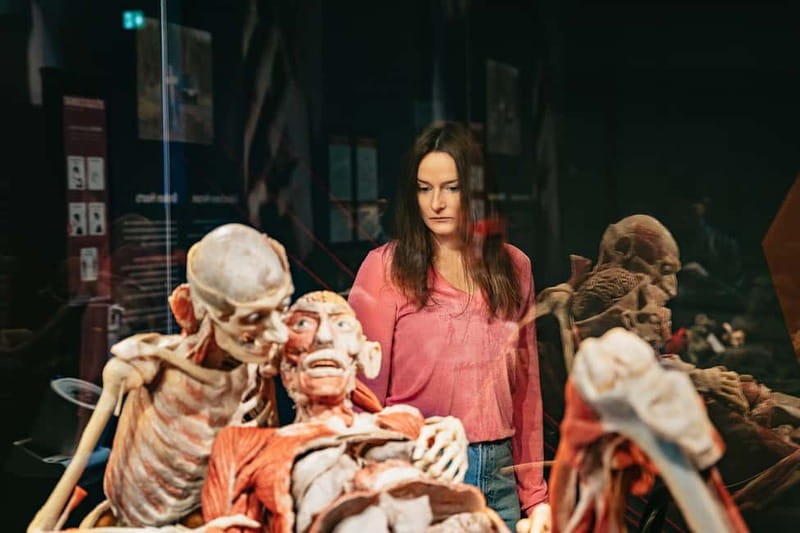
The admission is valid for one day, and opening hours run from 10 AM to 7 PM, with last admission at 6 PM. The ticket does not set a fixed visit length, so you have flexibility to read carefully or move through the displays at a faster pace.
I would avoid treating BODY WORLDS as a quick photo stop. The museum contains several body systems and wider themes, and a rushed visit can make the exhibition feel smaller than it is. One of the weaker experiences comes from whipping around the displays without enough time to understand them.
At the same time, you do not need to spend an entire day. Your ideal length depends on how closely you read the text, use the audio guide, and discuss the specimens. Students and anatomy enthusiasts may want a longer visit. Casual visitors may find a shorter, focused visit enough.
School groups can affect the atmosphere. Children sometimes run between displays or hide around the exhibition, which can be distracting. If quiet concentration matters to you, try to visit at a less crowded time within the daily opening window.
Price, value, and what is included
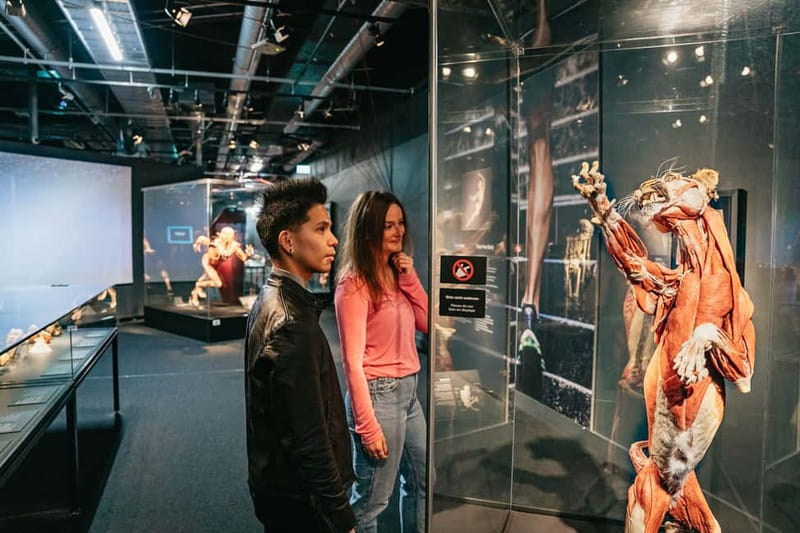
At $22 per person, admission is not the cheapest museum ticket in Berlin, but it is reasonable for a specialized exhibition built around real human specimens. You are paying for access to an unusual collection that would be difficult to understand through ordinary museum models.
The value is strongest if you enjoy science, anatomy, health, or visual learning. It is also a practical choice for a rainy day or for a family with older children who need something more engaging than a traditional art display.
Your ticket includes entry to the BODY WORLDS exhibition. A cloakroom is not included, lockers may carry a charge, and the audio guide is not included. Remember these small extras when planning your budget.
The museum has earned a strong overall score of 4.6 from 1,061 ratings, and the most consistent praise centers on how informative, fascinating, and unusual the exhibition feels. The main criticisms are practical: some audio points can be hard to locate, a few exhibits may look dusty or tired, and the layout may not always be immediately clear.
Location and practical details at Panoramastraße 1a
The meeting point and end point are both at Panoramastraße 1a, 10178 Berlin. Since this is a self-guided museum visit, you do not need to coordinate with a tour leader or keep up with a group.
The museum is open Monday through Sunday from 10 AM to 7 PM, except December 24. Last admission is at 6 PM, so do not arrive at the final minute if you want time to see the main sections.
The venue is wheelchair accessible. That is useful for visitors who need step-free access, though the supplied information does not specify details about every route, seating area, or restroom, so you may want to confirm those points directly if they are important to your visit.
Free cancellation is available up to 24 hours before the visit, and you can reserve now and pay later. Those options help if your Berlin schedule is still shifting.
Who will get the most from this museum?
I would recommend BODY WORLDS Berlin to:
- Adults who enjoy anatomy, medicine, or health topics
- Older children and teenagers studying the human body
- Families who prefer visual learning to long blocks of text
- Visitors curious about plastination and the work of Dr. Gunther von Hagens
- Anyone looking for an unusual museum experience in central Berlin
I would be more cautious if you dislike realistic medical displays or find human remains upsetting. The museum presents the body in a frank way, and no amount of clever wording changes that.
You should also lower your expectations for interactivity. There is an interactive phone guide and audio material, but the exhibition is built mainly around preserved specimens, explanations, and observation.
Is BODY WORLDS Berlin worth booking?
Book it if you want a serious, visual lesson in how the body works and you are comfortable seeing real human preparations. The museum explains muscles, organs, disease, circulation, breathing, the nervous system, and development in a way that can stay with you long after the visit.
Skip it if you want a playful science center, a guided walking tour, or a short attraction with lots of hands-on activities. For the best experience, give yourself enough time to read, bring a curious mind, and treat the plastinates with the respect the subject deserves. At $22, it offers good value for the right audience, especially students, families with older children, and anyone who wants to see the human body from a completely different angle.
FAQ
Where is BODY WORLDS Berlin located?
The museum is at Panoramastraße 1a, 10178 Berlin. The activity begins and ends at this location.
How much does admission cost?
The listed price is $22 per person. Admission to the BODY WORLDS exhibition is included.
What are the opening hours?
BODY WORLDS Berlin is open Monday through Sunday from 10 AM to 7 PM. It is closed on December 24.
What is the latest admission time?
Last admission is at 6 PM, one hour before closing.
Is the ticket valid for a full day?
Yes. The ticket is valid for one day. You should check availability for the starting times offered when booking.
Is the museum wheelchair accessible?
Yes, the activity is listed as wheelchair accessible.
Is an audio guide included?
No. The audio guide is not included in the admission price. Some audio exhibits may also be out of order or difficult to locate.
Can I cancel my booking?
Yes. You can cancel up to 24 hours in advance for a full refund. Reserve now and pay later is also available.
Just added around Berlin
- Berlin Highlights in One Day★ 5.0 · 3 reviews
- Private Berlin One Day Tour with a Local: See the City Unscripted★ 3.5 · 3 reviews
- Individual city tour Berlin for max. 8 persons★ 5.0 · 3 reviews
- Transfer from Berlin Schönefeld Airport (SXF) to Berlin city Hotels – ROUND TRIP★ 4.0 · 3 reviews
- Berlin: Museum Island Tour★ 5.0 · 3 reviews
- Private Analogue Photography Experience in Berlin★ 5.0 · 3 reviews
- Berlin: Local Food Tour in Secrets Hidden Gems★ 4.0 · 3 reviews
- Berlin & The Third Reich Private Guided Tour★ 5.0 · 3 reviews
Museums, compared.




Skip-the-Line: Berlin Wall Museum at Checkpoint Charlie
Read our review →

“Pergamonmuseum. The Panorama” Exhibition Tickets
Read our review →Browse the lists this tour appears in