
Review · JEWISH BERLIN & HOLOCAUST MEMORIALS
Berlin: Jewish Museum Berlin Entrance Ticket
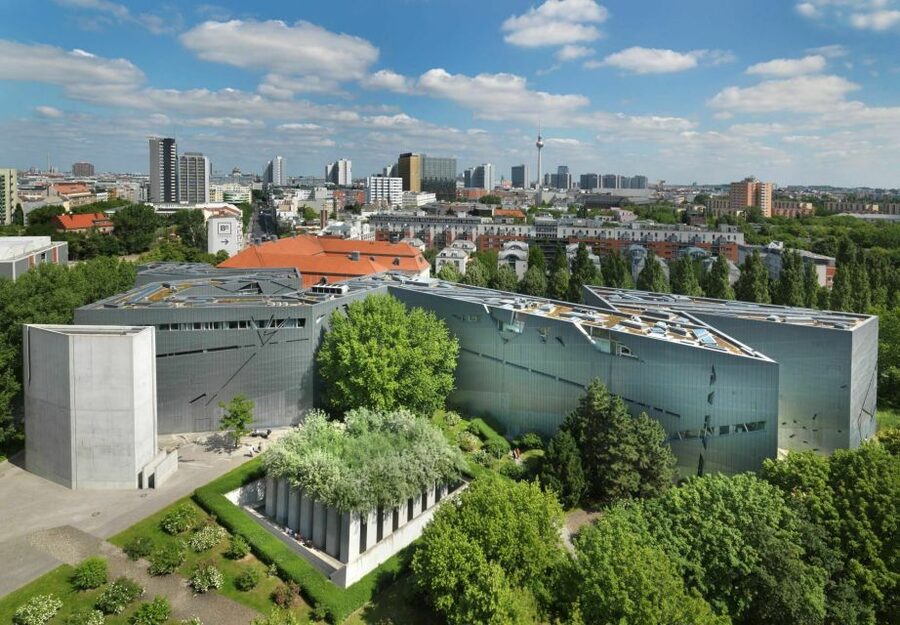
The first thing to understand about the Jewish Museum Berlin is that the building is part of the experience. Daniel Libeskind’s zigzag design, slanted walls, sharp corners, empty voids, and disorienting floors make Jewish German history feel physical rather than distant. The architecture is unforgettable, and the exhibitions give it human meaning.
I like that the museum presents Jewish life beyond the Holocaust, including food laws, Shabbat, holidays, family life, art, design, and modern achievements. I also like the free admission and the useful museum app, which offers audio tours if you bring your own headphones. The main drawback is that the layout can be confusing, and two hours may feel rushed if you read everything.
In This Review
- Key points to know before you go
- Why the building matters before you see the displays
- The permanent exhibition follows Jewish life across centuries
- Interactive displays make difficult subjects easier to approach
- Holocaust Tower and Memory Void are the emotional center
- The exhibitions add design, memory, and modern perspective
- A two-hour visit is possible, but do not hurry
- The free ticket offers exceptional value
- Getting there and handling the practical details
- Who will get the most from this museum
- Should you book the Jewish Museum Berlin?
- FAQ
- Is admission to the Jewish Museum Berlin free?
- How long does a visit take?
- What are the museum’s opening hours?
- Is a guided tour included?
- Should I bring headphones?
- Is the museum wheelchair accessible?
- What can I see at the museum?
- Can I get a discount at another museum?
Key points to know before you go
- Daniel Libeskind’s building is part of the museum: Expect angled corridors, stark voids, and spaces designed to create unease and reflection.
- The story reaches beyond Nazi Germany: Exhibits cover Jewish life in Germany from the Middle Ages to the present, including religion, culture, design, and daily customs.
- The Holocaust spaces are powerful: The Holocaust Tower and Memory Void, with its Shalekhet fallen-leaves installation, can be emotionally difficult.
- Admission is free: You still need a ticket, but the basic museum visit has no entry charge.
- Bring headphones: The free JMB app includes audio content, and your own headphones make it easier to use.
- Allow more than two hours if possible: Two hours covers a strong visit, but the collection and special exhibitions can easily take longer.
Why the building matters before you see the displays
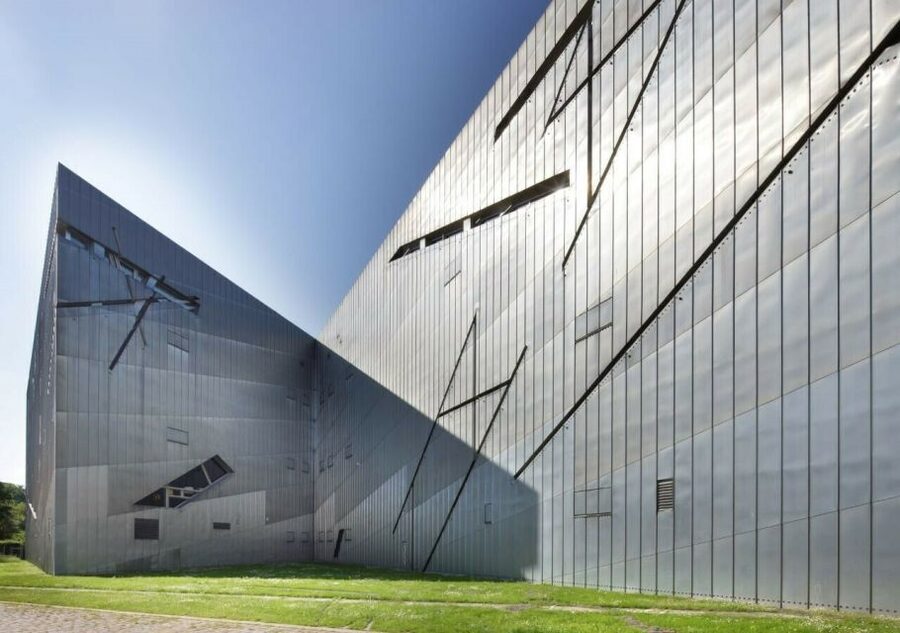
The Jewish Museum Berlin is not housed in a neutral white box. Libeskind’s architecture shapes how you move, what you notice, and how you feel.
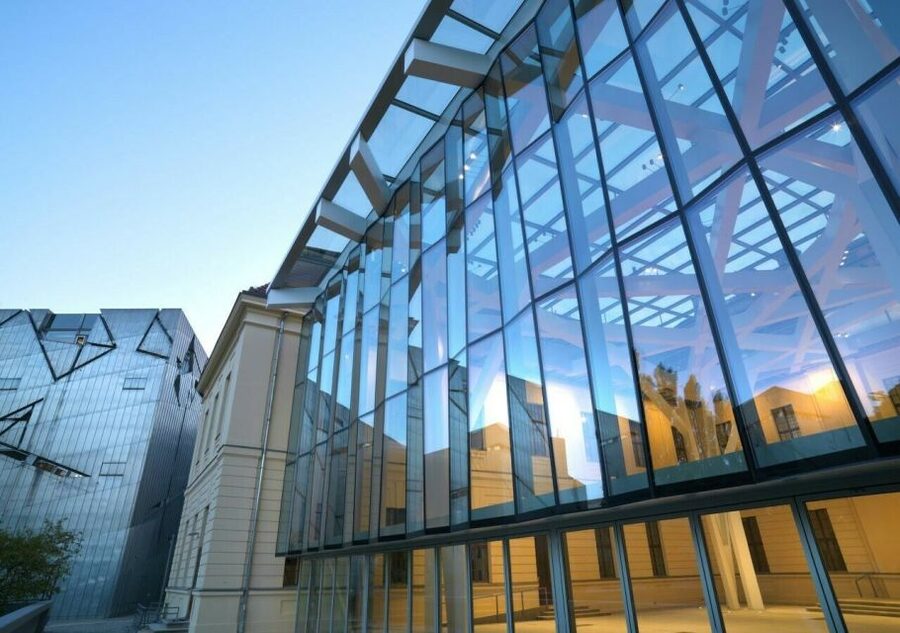
From the outside, the building looks like a sharp metal bolt or a broken zigzag. Inside, long corridors, sloping floors, narrow openings, and sudden empty spaces interrupt the usual museum rhythm. You do not simply walk from one neat gallery to the next. You turn, climb, pause, and sometimes lose your sense of direction.
That disorientation has a purpose. The building reflects breaks in Jewish life in Germany, especially the destruction caused by Nazi persecution and the loss of families, communities, and cultural institutions. I find the design most effective when it leaves room for silence instead of explaining every feeling for you.
You can appreciate the architecture even if you are not a museum regular. At the same time, the building may frustrate you. A clear route is not always obvious, and the angles can make it harder to know which room comes next. Follow the floor plan carefully and give yourself time to backtrack.
More Jewish Berlin and memorial walks:
- Nazi Berlin and the Jewish Community Tour
★ 4.8 · 55 reviews - Path of Resistance: Berlin’s Hidden Holocaust Stories
★ 5.0 · 33 reviews - Private Tour: Jewish Heritage Walking Tour of Berlin
★ 5.0 · 29 reviews
The permanent exhibition follows Jewish life across centuries
The museum’s main story begins long before the twentieth century. You encounter Jewish life in Germany from the Middle Ages onward, then move through changing social, religious, and political conditions.
This wider time frame is important. A visit focused only on the Holocaust would leave you with a distorted picture of Jewish life as nothing more than a story of persecution. Here, you also learn about religious practice, work, family, education, creativity, and the ways Jewish communities shaped German society.
Displays explain customs that may be unfamiliar to you, including dietary laws, Shabbat, and Jewish holidays. Everyday objects and artwork help turn abstract information into something concrete. You might spend time learning why certain foods are prepared in particular ways, how the weekly day of rest is observed, or how religious practice fits into family life.
The museum also looks at Jewish identity as something varied rather than fixed. That makes the visit useful for first-time learners, families, and anyone who wants more context before visiting Berlin’s Holocaust memorial sites.
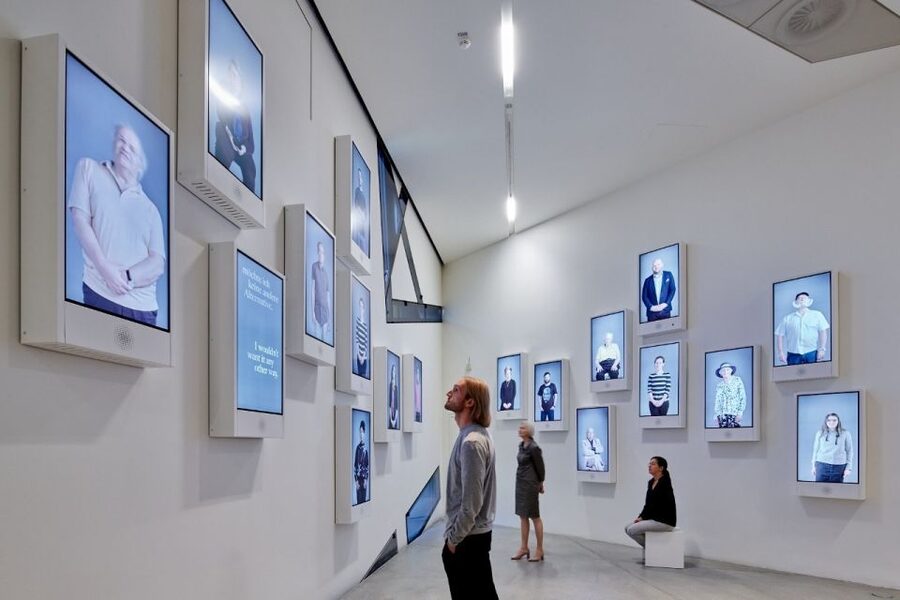
Interactive displays make difficult subjects easier to approach
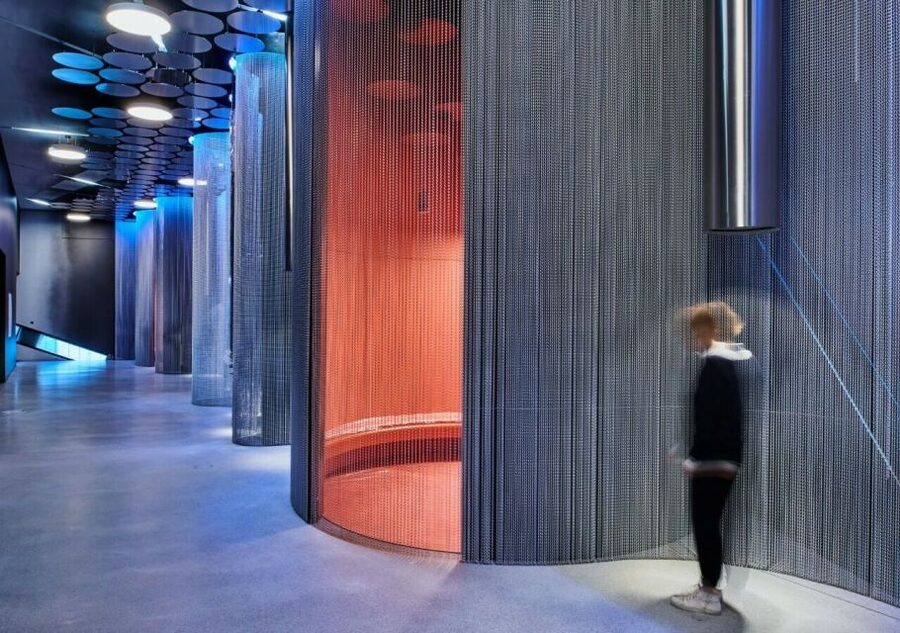
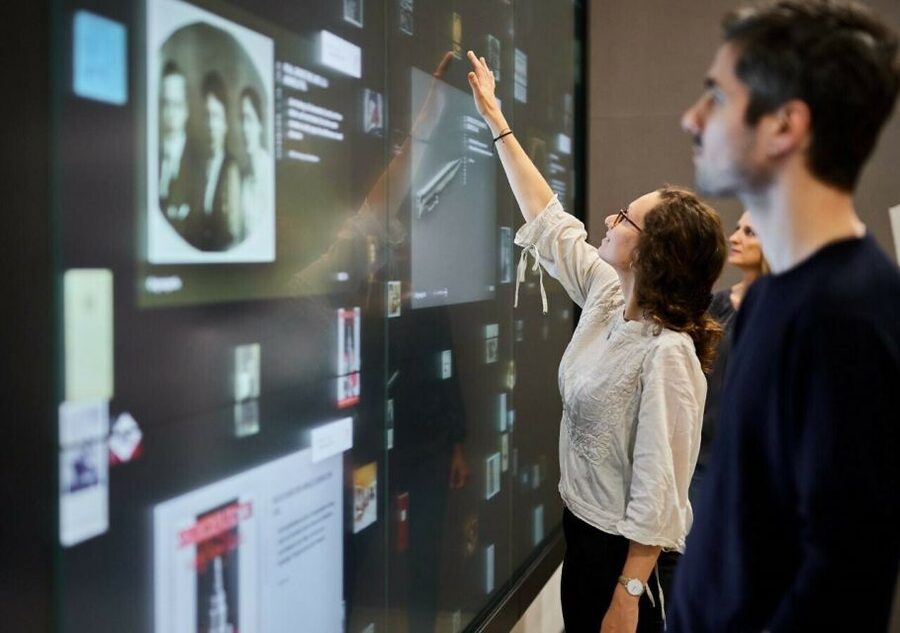
Alongside collection objects, you will find video and audio installations, interactive stations, photographs, and personal accounts. These elements keep the visit from feeling like a long line of glass cases.
The interactive material is especially useful when you are visiting with children or teenagers, though the subject matter remains serious. Some stations give you a direct way to think about food, ritual, language, or belonging. Others place individual lives within larger events.
The tone changes as you move toward the Nazi period and the Holocaust. Personal memoirs and family stories can be more affecting than a page of dates. Several parts of the museum are quiet and sobering, and you should not plan this as a light stop between shopping and sightseeing.
I appreciate the museum’s restraint. It does not treat tragedy as spectacle. Still, the emotional weight can catch you off guard, especially in the memorial spaces. Give yourself permission to slow down or take a break in the café if you need one.
Holocaust Tower and Memory Void are the emotional center
Two architectural areas receive particular attention: the Holocaust Tower and the Memory Void.
The Holocaust Tower is a tall, stark space with little comfort. Its cold atmosphere and limited light create a strong sense of isolation. There is not much to do in the conventional museum sense, but that is the point. The room asks you to stand, look, and consider absence.
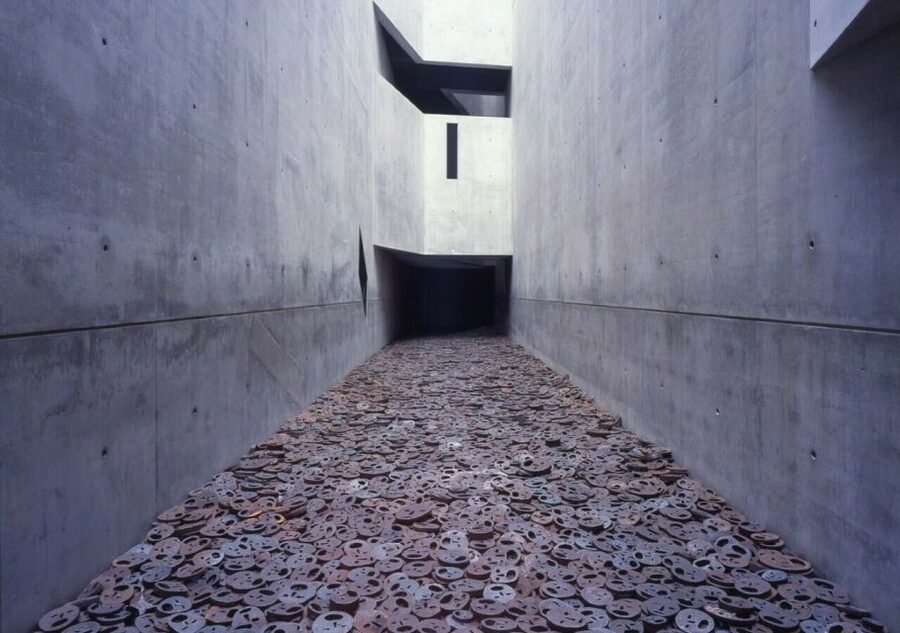
The Memory Void contains Shalekhet, an installation of iron faces spread across the floor. Walking across the faces produces sound, and the effect is unsettling. It is a simple physical action with a lasting emotional result. You may find this one of the hardest parts of the visit.
These spaces work because they do not replace historical information. The galleries give you names, dates, objects, and stories. The architecture then gives those facts a physical echo.
If you are visiting with young children, use your judgment. The museum is family-friendly in its access and presentation, but the memorial areas may be frightening or confusing for very young visitors.
More museums in Berlin:
- Berlin: DDR Museum Tickets
★ 4.3 · 3,443 reviews - Berlin: Natural History Museum Entrance Ticket
★ 4.6 · 3,382 reviews - Berlin: Neues Museum Entry Ticket
★ 4.6 · 3,261 reviews - Skip-the-Line: Berlin Wall Museum at Checkpoint Charlie
★ 4.1 · 2,041 reviews
The exhibitions add design, memory, and modern perspective
Special exhibitions change, so check the current schedule when planning your day.
From July 11 to November 23, 2025, Inventories: The Legacy of Salman Schocken invited US author Joshua Cohen to examine the cultural legacy of publisher and department-store entrepreneur Salman Schocken. Books and objects from the museum collection offered a way to think about publishing, department stores, museums, money, acquisition, and belonging.
Admission to that exhibition was free. Its appeal was less about a conventional life story and more about how objects can connect business, culture, collecting, and personal identity.
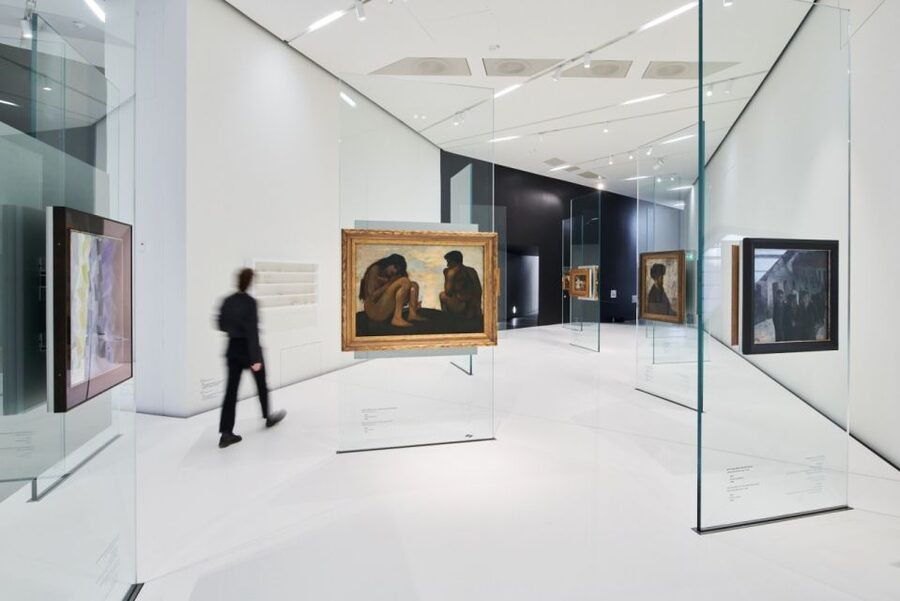
Defiance: Jewish Women and Design in the Modern Era examines Jewish women designers in Germany during the early twentieth century. More than sixty designers are represented across goldsmithing, textiles, ceramics, wood carving, fashion, and graphic design.
This exhibition corrects a major gap in the usual account of German modernism. These women faced barriers as women, Jews, and artists, then saw their careers and lives attacked under the Nazi regime. Some escaped and began again abroad, but many were left out of later accounts of German art and design.
Bring your own headphones for the best exhibition experience. Audio and video material add useful context, and your phone’s speaker is not a good choice in quiet gallery rooms.
A two-hour visit is possible, but do not hurry
The official average visit is about two hours, and that is a sensible minimum. You can see the major architectural spaces, visit the permanent exhibition, and spend time with the memorial areas in that period.
I would allow two and a half to three hours if you enjoy reading labels or want to see a special exhibition in full. One visitor found two hours barely enough, while another returned on a later day after running out of time before closing. That is easy to understand: the museum offers more material than its duration suggests.
A useful approach is to choose your priorities before entering:
- Spend time with the building and the Holocaust Tower.
- Follow the main historical route rather than trying to read every label.
- Use the app for selected objects or an audio route.
- Leave extra time for temporary exhibitions.
- Save a quiet moment for the café or courtyard area.
The museum closes at 6pm and opens from 10am to 6pm. Do not arrive near closing and expect a full visit.
The free ticket offers exceptional value
The price is the easiest part of the decision. Basic admission is free, which makes this one of Berlin’s strongest cultural values.
Free entry does not mean a thin or small display. You get a major museum building, permanent galleries, memorial architecture, interactive material, and changing exhibitions without paying an entry fee. A donation is encouraged, and it is a reasonable way to support the museum if the visit matters to you.
The free JMB app adds further value. It includes audio tours, with one route lasting about an hour and another taking at least an hour and a half. You can also select individual objects instead of following a set route.
Guided tours and audio tours are not included as part of the ticket. Some visitors have paid about €5 for headphones, but the clearest practical choice is to download the app and bring your own headphones.
Your ticket may also give you reduced-rate admission to the neighboring Berlinische Galerie on the same day and the following two days. The gallery is about a five-minute walk away, so the two museums can work well together if you have enough time.
Getting there and handling the practical details
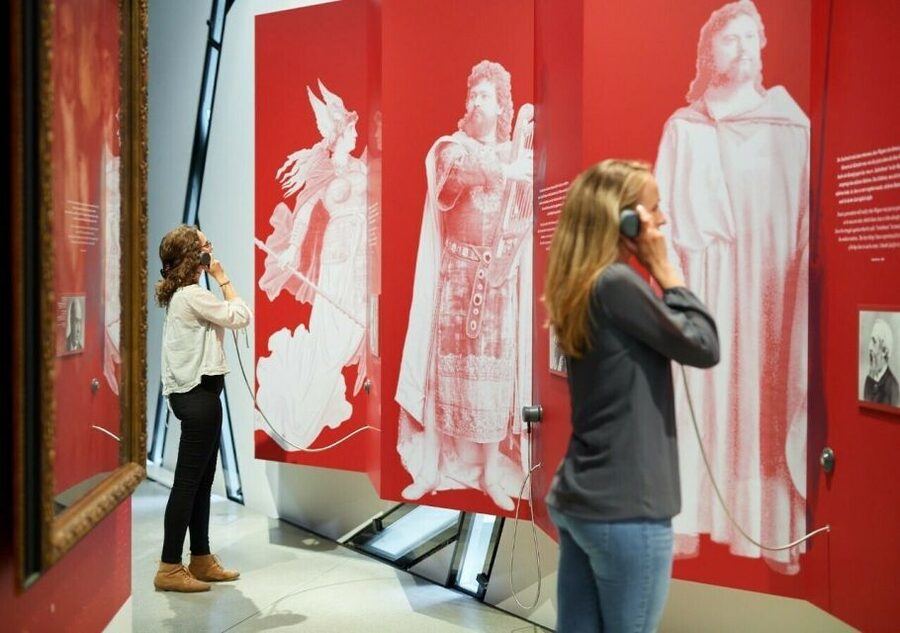
The museum is in central Kreuzberg, within walking distance of Checkpoint Charlie. Transportation to and from the museum is not included, and parking fees are also separate.
The meeting point can vary by booking option, so check the details on your ticket. The museum is wheelchair accessible, which makes the free admission useful for a broad range of visitors.
Large bags may need to go into lockers. One practical tip is to bring a euro coin for the locker system. A coin-compressing machine is also inside the museum, so spare change can be useful if you enjoy small museum souvenirs.
The café offers a comfortable pause, and the staff are described as friendly. Signage inside could be clearer, so do not assume the route will explain itself. Keep an eye on the floor plan and ask staff if you are unsure which section you have missed.
Who will get the most from this museum
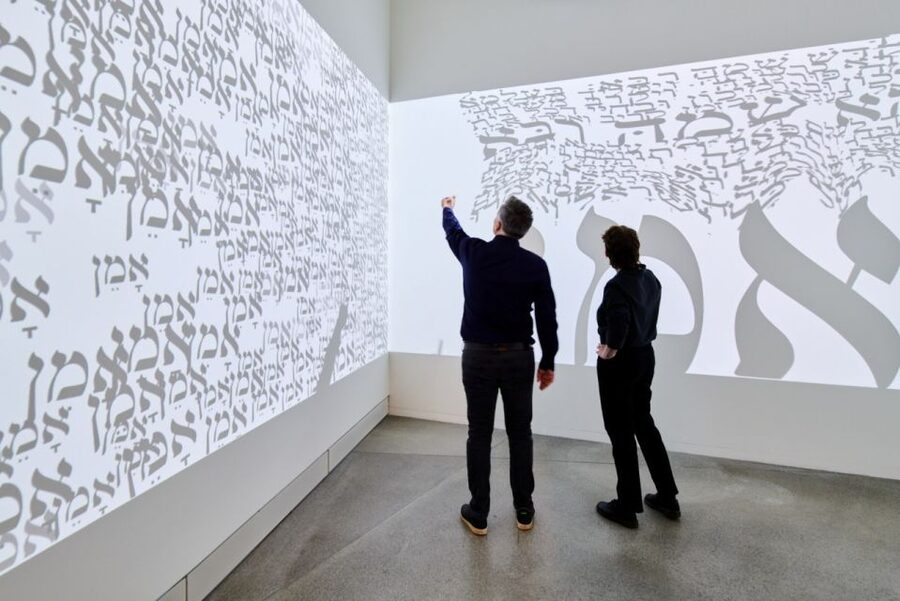
I would recommend the Jewish Museum Berlin to anyone interested in German history, religion, architecture, design, or modern European culture. It is especially useful if your Berlin plans include the Topography of Terror or other sites connected with Nazi Germany, since it places Jewish life before, during, and after that period in a wider setting.
It also suits visitors who want a museum that asks you to think rather than simply look. The building’s angles and empty spaces are not decoration. They shape the visit.
Families can use the interactive displays to keep younger minds involved, but the Holocaust material requires care. Visitors with limited time should focus on the architecture, the major memorial spaces, and selected permanent galleries instead of trying to absorb every label.
This may not be the right choice if you want a quick, cheerful museum stop. The subject is often painful, and the building can feel confusing or oppressive. That discomfort is part of its design, but you should plan your day with enough emotional and practical space around it.
Should you book the Jewish Museum Berlin?
Yes, I would book it if you want a serious, memorable Berlin museum visit and can spare at least two hours. The combination of free entry, Libeskind’s remarkable architecture, clear attention to Jewish life beyond the Holocaust, and strong memorial spaces makes the museum an unusually good value.
Book with realistic expectations. You are not signing up for a guided tour, and no guide is included. You are choosing a self-guided visit with an optional app, so bring headphones, download the app, and allow extra time if you want to read carefully.
For the best experience, arrive well before 6pm, follow the floor plan, and do not skip the areas on the lower level. If you have time afterward, use the reduced-rate offer at the Berlinische Galerie. This is one of those Berlin visits that can stay with you long after you have left the building.
FAQ
Is admission to the Jewish Museum Berlin free?
Yes. The basic museum admission is free, though donations are encouraged. A ticket is still required.
How long does a visit take?
The average visit takes about two hours. You may need two and a half to three hours if you want to read extensively or see temporary exhibitions.
What are the museum’s opening hours?
The museum is open from 10am to 6pm and closes at 6pm.
Is a guided tour included?
No. Guided and audio tours are not included. You can download the free JMB app, which offers audio routes and individual object information.
Should I bring headphones?
Yes. Headphones are recommended for the app and audio and video material in the exhibitions.
Is the museum wheelchair accessible?
Yes, the museum is wheelchair accessible.
What can I see at the museum?
You can explore Jewish life in Germany from the Middle Ages to today, including religion, food laws, Shabbat, holidays, art, design, daily life, and the Holocaust. The building also includes the Holocaust Tower and Memory Void.
Can I get a discount at another museum?
Yes. Your JMB ticket makes you eligible for reduced-rate admission to the neighboring Berlinische Galerie on the day of your visit and the following two days. The gallery is about a five-minute walk from the Jewish Museum Berlin.
Just added around Berlin
- Berlin Highlights in One Day★ 5.0 · 3 reviews
- Private Berlin One Day Tour with a Local: See the City Unscripted★ 3.5 · 3 reviews
- Individual city tour Berlin for max. 8 persons★ 5.0 · 3 reviews
- Transfer from Berlin Schönefeld Airport (SXF) to Berlin city Hotels – ROUND TRIP★ 4.0 · 3 reviews
- Berlin: Museum Island Tour★ 5.0 · 3 reviews
- Private Analogue Photography Experience in Berlin★ 5.0 · 3 reviews
- Berlin: Local Food Tour in Secrets Hidden Gems★ 4.0 · 3 reviews
- Potsdam Highlights – Private sightseeing tour by minibus★ 5.0 · 3 reviews
Jewish Berlin & Holocaust Memorials, compared.
Path of Resistance: Berlin’s Hidden Holocaust Stories
Read our review →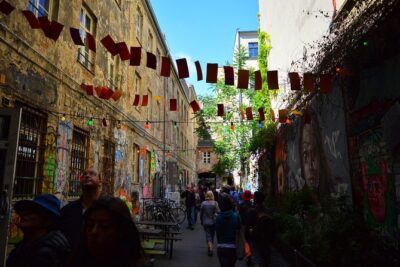
Private Tour: Jewish Heritage Walking Tour of Berlin
Read our review →
Jewish Berlin: Walking tour The Old Jewish Quarter (private 3 Hours tour)
Read our review →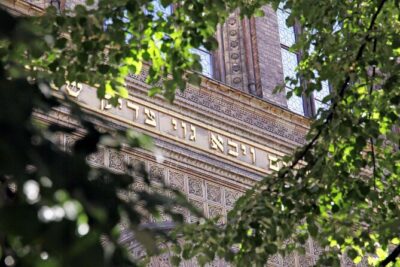
Path of Resistance: Berlin’s Hidden Holocaust Stories
Read our review →

Browse the lists this tour appears in