
Review · JEWISH BERLIN & HOLOCAUST MEMORIALS
Private Tour: Jewish Heritage Walking Tour of Berlin
Berlin’s Jewish story is best understood as a series of places, not a single museum visit. This private tour links former Jewish neighborhoods, a hidden workshop where workers were protected, a deportation platform, and major memorials across the city. Gleis 17 and the Otto Weidt Museum give the day its strongest emotional weight.
I like the private format, since your guide can adjust the pace, answer family-history questions, and explain difficult subjects without rushing. I also like the range of time periods, from Jewish life in the 19th century to the Holocaust and modern Berlin. The main drawback is that four hours covers a lot of ground, so some stops receive only 10 or 15 minutes.
In This Review
- Key points to know before booking
- A four-hour route through Jewish Berlin
- Hackesche Höfe and the Jewish life of old Berlin
- The New Synagogue and the memory of a lost community
- The Otto Weidt Museum, a small room with a powerful story
- Gleis 17 at Grunewald, confronting the machinery of deportation
- The Old Jewish Cemetery and the city’s earlier generations
- Rosenstraße and the courage of public protest
- The Holocaust Memorial and an open-ended final stop
- What the private format changes
- Walking, transport, weather, and timing
- Who will get the most from this tour
- Should you book the Jewish Heritage Walking Tour of Berlin?
- FAQ
- How long does the Jewish Heritage Walking Tour of Berlin last?
- Is this a private tour?
- What language is the tour offered in?
- Does the tour include hotel pickup?
- Is public transportation included in the price?
- Are food and drinks included?
- Are admission tickets included?
- How much walking is involved?
- Can I cancel for a full refund?
Key points to know before booking
- Hackesche Höfe links Jewish life with Berlin’s urban culture, offering a useful opening to the tour.
- The Otto Weidt Museum is the most intimate stop, set in the former workshop where Jewish workers received help and protection.
- Gleis 17 requires public transport, and the Berlin AB ticket costs an additional 2.70 euros.
- The tour is private, so only your group participates and the guide can respond to your interests.
- Guides vary, with Eran, Ioana, Nikolai, Zvika, Oren, Ariel, Asaf, Sarah, and others named in past tour experiences.
- The subject is serious, but the route also includes stories of courage, protest, survival, and present-day Jewish life.
A four-hour route through Jewish Berlin
This is not a tour built around one grand synagogue or a single Holocaust memorial. Instead, it connects scattered addresses that reveal how Jewish Berlin changed over several centuries.
You begin in central Berlin, then move through Mitte and onward to Grunewald for Gleis 17. Public transportation is part of the experience, not an optional extra. Your guide handles the route and uses the travel time to add context about Berlin’s neighborhoods and Jewish community.
The tour is conducted in English, though a multilingual guide may operate in English, German, or Hebrew. Past guides have included Eran, Ioana, Nikolai, Zvika, Oren, Ariel, Asaf, Sarah, Finn, and others. The strongest pattern is a guide who can explain dates and events clearly while also making room for personal questions.
More Jewish Berlin and memorial walks:
- Berlin: Jewish Museum Berlin Entrance Ticket
★ 4.5 · 8,393 reviews - Nazi Berlin and the Jewish Community Tour
★ 4.8 · 55 reviews - Path of Resistance: Berlin’s Hidden Holocaust Stories
★ 5.0 · 33 reviews
Hackesche Höfe and the Jewish life of old Berlin
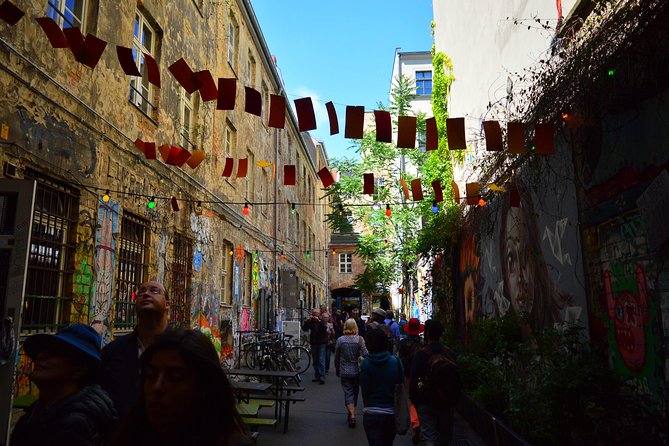
The Hackesche Höfe courtyards are an effective first stop because they do not feel like a conventional memorial. You see an attractive urban complex of interconnected courtyards on Rosenthaler Straße, then learn how Jewish artisans, merchants, and immigrants once worked and lived in this part of Berlin.
The stop lasts about 15 minutes and admission is free. That is enough time to understand the setting, but not enough for a long architectural visit. Think of it as an introduction to Jewish life before the Nazi period, when Berlin was home to artists, shopkeepers, craftspeople, business owners, and families who helped shape the city.
I like beginning here because it prevents the tour from treating Jewish history as only a story of persecution. You first encounter work, commerce, culture, and ordinary city life. That wider frame makes the later memorials more meaningful.
The courtyards can also be busy and active, so this is not a silent historical site. Your guide’s explanation is what turns the setting into a history lesson. Stay close and listen carefully, especially if the surrounding shops and pedestrian traffic are lively.
The New Synagogue and the memory of a lost community
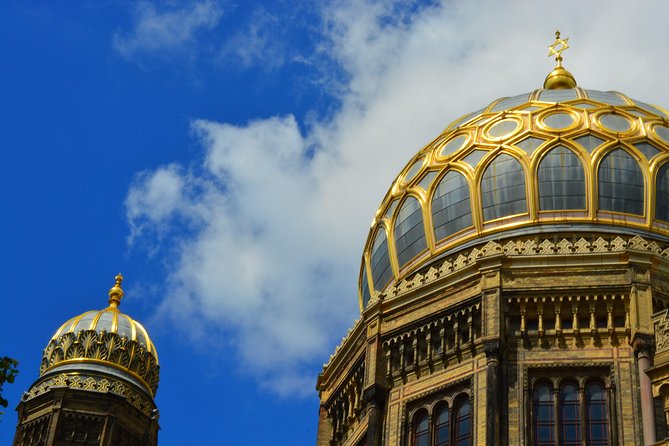
The next section focuses on the Stiftung Neue Synagoge Berlin, also known as the Centrum Judaicum. The building’s exterior is one of Berlin’s most recognizable Jewish landmarks, with a distinctive dome and carefully restored details.
The synagogue originally opened in 1866. Its scale and design reflect the confidence of Berlin’s Jewish community at that time. Today, the Centrum Judaicum preserves Jewish history and supports exhibitions, lectures, educational programs, and cultural events.
The scheduled stop is about 10 minutes and admission is free. That short time matters: you should expect a guided look at the building and its significance rather than a long museum visit. Depending on the day and the tour’s timing, you may spend most of the stop outside.
This is one of the places where a good guide makes a major difference. The restored exterior can look simply beautiful if you do not know what it represents. With context, it becomes a reminder of the scale of Jewish life in Berlin before the Second World War, and of the effort to preserve that memory now.
The Otto Weidt Museum, a small room with a powerful story
The Museum Blindenwerkstatt Otto Weidt is likely to be the most personal stop of the day. It occupies the former brush workshop of Otto Weidt, a blind brush maker who employed Jewish workers and tried to protect them under Nazi rule.
The museum is small, free to enter, and scheduled for about 25 minutes. Do not mistake its size for a lack of substance. The preserved workspaces and personal stories bring the period down from national history to individual decisions.
Weidt helped workers through employment, false papers, and other efforts to delay or prevent deportation. The point is not to turn him into a simple hero figure. The museum shows the danger faced by Jewish workers and the risks taken by someone trying to help them.
I would give this stop your full attention. It is easy to move quickly through large memorials, but a modest workshop can make the period feel more immediate. Several guides, including Ariel and Nikolai, have been praised for handling this part with care and for explaining the lives of the people connected to the workshop.
More walking tours in Berlin:
- Discover Berlin Half-Day Walking Tour
★ 5.0 · 9,624 reviews - Berlin: Third Reich and Cold War 2 Hour Walking Tour
★ 4.9 · 6,830 reviews - Berlin: Discover Berlin Walking Tour
★ 4.9 · 5,998 reviews - Berlin’s Best: 2 Hour Walking Tour Third Reich and the Cold War
★ 5.0 · 5,486 reviews
Gleis 17 at Grunewald, confronting the machinery of deportation
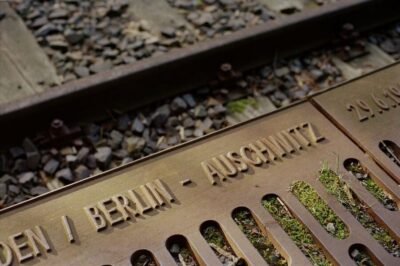
Gleis 17 is at Grunewald station, away from the central cluster of stops. Between 1941 and 1945, thousands of Jewish people were deported from this station to concentration camps and extermination sites across Europe.
The memorial uses metal plaques set into the ground. They record transport dates and the numbers of people deported, turning the railway track into a record of the deportation process. The setting is stark because it remains connected to an ordinary railway station rather than being enclosed in a traditional museum.
You spend about 15 minutes here, and there is no admission charge. The short stop can feel surprisingly intense. You are looking at a place used for routine transport, while the plaques force you to consider the scale and regularity of the crime.
A Berlin AB public transport ticket is not included. The stated cost is 2.70 euros, so budget for it when you book. The route’s exact order may vary, but Gleis 17 is the stop that makes clear why this tour is not a simple stroll through central Berlin.
If you prefer long periods of quiet reflection, 15 minutes may feel brief. Your guide may add background about the deportations, but the schedule also has to allow for the train ride and the other sites. Ask questions here if you want more detail.
The Old Jewish Cemetery and the city’s earlier generations
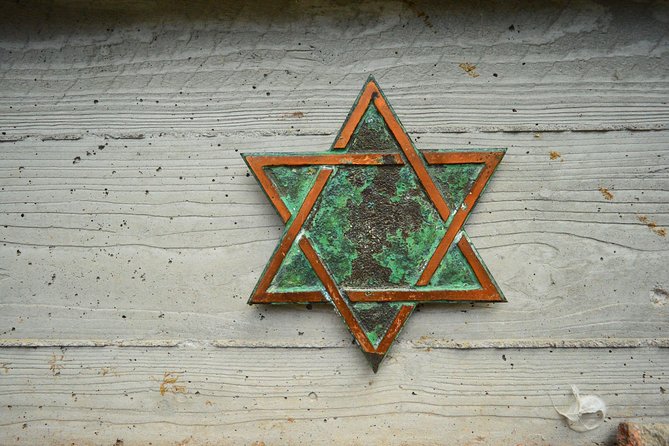
The Alter Jüdischer Friedhof offers a quieter change of pace. It recalls Jewish life in Berlin through graves, inscriptions, and memorials connected with scholars, philosophers, and community leaders.
The scheduled time is about 15 minutes, with free admission. You can expect an overview rather than a slow cemetery study. The value of the stop comes from seeing Jewish Berlin as a community with generations of internal life, leadership, learning, and family ties.
Cemeteries reward careful listening. Tombstones can seem silent when you pass them alone, but a guide can explain who is remembered and why the site matters. You might also find this stop less visually dramatic than the New Synagogue or Holocaust Memorial, yet it adds a needed sense of continuity to the route.
Because the tour covers several locations, ask your guide how much time you can spend looking at inscriptions or memorial details. The private arrangement gives you more flexibility than a large group would, although the four-hour limit still applies.
Rosenstraße and the courage of public protest
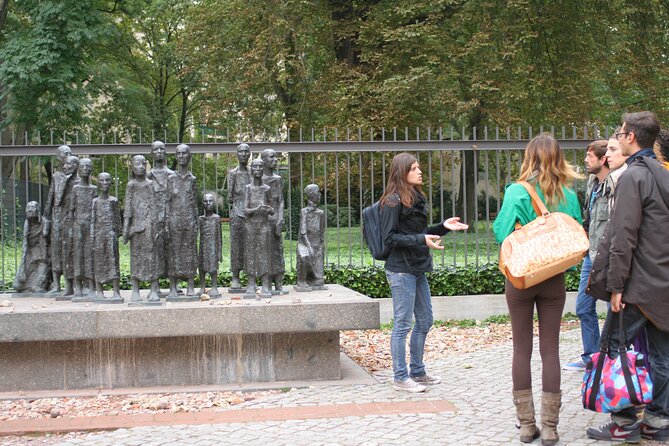
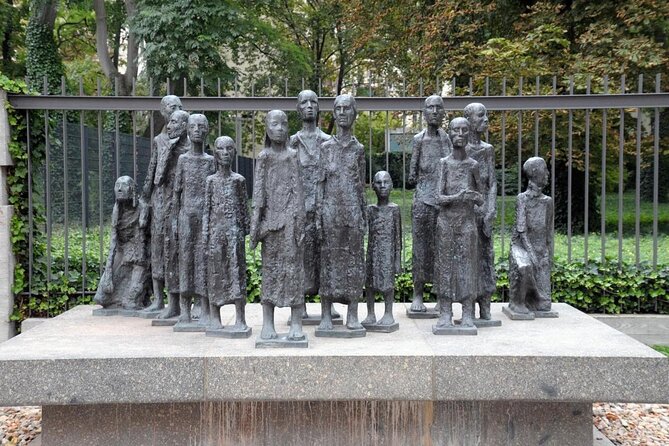
The Block der Frauen memorial on Rosenstraße tells one of the most striking stories on the route. In early 1943, women protested outside the police headquarters, demanding the release of their Jewish husbands who had been detained for deportation.
The protest lasted several days. The memorial records the event and honors the women who confronted the Nazi authorities on behalf of their families.
This is a valuable stop because it adds a story of resistance that is easy to overlook. It does not suggest that one protest ended Nazi persecution or changed the course of the Holocaust. It shows something more precise: people made choices under pressure, and public action could sometimes force the authorities to retreat in a particular situation.
The stop lasts about 15 minutes and admission is free. The site may appear modest, so the inscription and your guide’s explanation are central. I would pay close attention to the sequence of events, since the meaning lies in the historical circumstances rather than in a large structure.
The Holocaust Memorial and an open-ended final stop
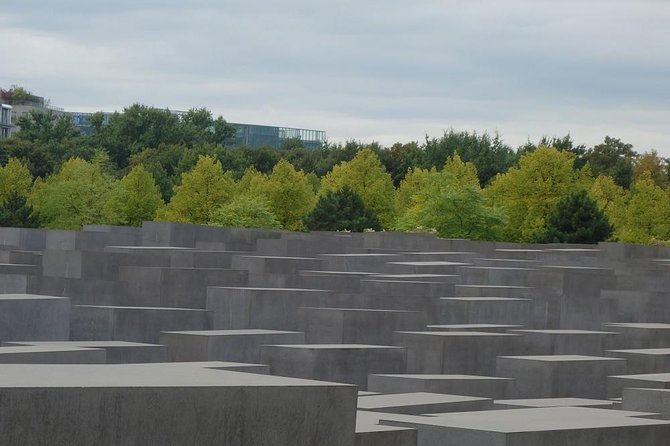
The Memorial to the Murdered Jews of Europe is usually the best-known place on this route. Designed by Peter Eisenman and opened in 2005, it contains 2,711 concrete slabs arranged in a grid over an uneven field.
You walk between the slabs, which rise and fall around you. The design offers no single viewpoint and no simple message. Instead, it creates a physical feeling of uncertainty and disorientation.
The planned visit lasts about 20 minutes and is free. That gives you time to walk through part of the memorial and hear the guide’s interpretation. It is not enough for an extended visit to the underground Information Centre, which is not listed as part of this experience, so do not book this tour expecting a full museum session there.
I like ending with this memorial because it leaves you with space to think. The route has already shown you homes, workplaces, railway deportations, protests, and graves. Here, the abstract design asks you to connect those specific stories with the scale of the murder of Europe’s Jews.
The memorial is in central Berlin, where foot traffic can be heavy. Treat it as a place for quiet reflection rather than a photo stop. Your guide can help explain the design, but you should also allow yourself a few minutes without conversation.
What the private format changes
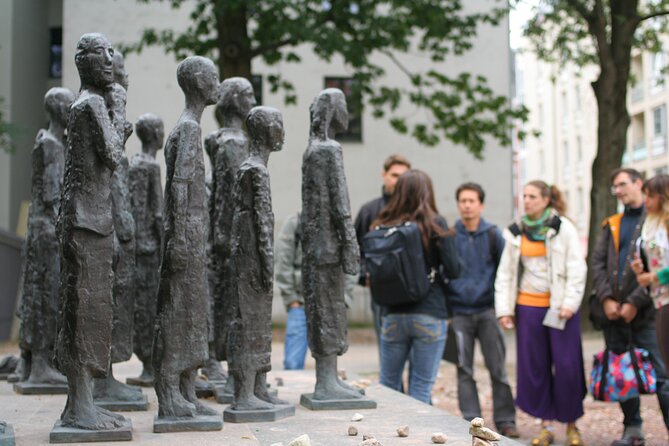
A private tour costs $191.62 per person. That is a serious price for four hours, especially before adding the 2.70 euro transport ticket and any food or drinks.
The value improves if you are traveling as a small family or group and care about discussion. You are not paying only for movement between landmarks. You are paying for a guide who can connect the sites, adjust explanations to your background, and respond to questions about family history, Jewish life, Nazi persecution, and modern Berlin.
Past guide experiences point to some useful differences between guides. Eran has been described as engaging and very well informed about both Berlin and Jewish Berlin. Ioana has been noted for discussing historical and modern Jewish life, while Nikolai has worked well with families and helped explain Berlin’s subway system. Zvika has taken interest in family connections to Germany, and Asaf has adjusted the route during rain.
Those details suggest that you should share your interests when booking or at the start. If you have family names, places, or questions, bring them up early. The guide may be able to give the tour a more personal direction, though you should not expect genealogical research as part of the service.
The private format also helps families with children. A guide has been praised for working patiently with 10 and 12 year olds, and another adjusted the tour for rain. Still, the subject includes deportation and mass murder. Parents should decide how much detail is suitable for their children.
Walking, transport, weather, and timing
The tour involves a moderate amount of walking and operates in all weather. Wear comfortable shoes and bring clothing suited to rain, cold, or heat. Berlin’s weather can change quickly, and waiting outdoors at memorials is part of the route.
You will also use public transportation, particularly because Gleis 17 is in Grunewald rather than near the central stops. The 2.70 euro Berlin AB ticket is not included. Food and drinks are also your responsibility, so eat before the tour or plan a break around the schedule.
Four hours sounds generous, but seven stops and transport make the day move quickly. Hackesche Höfe, the New Synagogue, Otto Weidt Museum, Gleis 17, the Old Jewish Cemetery, Rosenstraße, and the Holocaust Memorial each offer a different kind of history. You will get a strong overview, not an exhaustive museum-by-museum study.
The tour is offered in English, with possible multilingual operation in German or Hebrew. Most people can participate, but the amount of walking and the need to use public transit are worth considering before booking.
Free cancellation is available up to 24 hours before the start time. Changes or cancellations made inside that window are not accepted for a refund.
Who will get the most from this tour
I would recommend this experience to anyone who wants Jewish Berlin explained through real places rather than dates alone. It suits first-time visitors who want a serious introduction, as well as people with a family connection to Germany who want to ask focused questions.
It is also a good choice for non-Jewish visitors. The tour explains Jewish life as part of Berlin’s wider story, including work, culture, protest, persecution, survival, and the city’s efforts to remember.
You may prefer a different experience if you want long visits inside museums, a relaxed sightseeing pace, or a tour devoted only to architecture. The route is emotionally demanding and geographically spread out. Its strength is the connection between many places, not the amount of time spent at any one place.
Should you book the Jewish Heritage Walking Tour of Berlin?
Book it if you want a personal guide and a wide historical frame in a single half-day. The Otto Weidt Museum, Gleis 17, and Rosenstraße give the tour real substance, while Hackesche Höfe and the New Synagogue show the community that existed before the Holocaust.
The $191.62 price makes the most sense for a private group that will ask questions and use the guide’s flexibility. If you are traveling alone or mainly want to see Berlin’s major memorials from the outside, the cost may feel high.
For families, visitors with Jewish ancestry, and anyone seeking a thoughtful introduction to Jewish Berlin, this is a strong choice. Just bring good shoes, budget for public transport, and allow yourself time afterward to process what you have seen.
FAQ
How long does the Jewish Heritage Walking Tour of Berlin last?
The tour lasts approximately four hours.
Is this a private tour?
Yes. Only your group participates, and the experience includes a private guide.
What language is the tour offered in?
The tour is offered in English. Depending on availability, it may be operated by a guide speaking English, German, or Hebrew.
Does the tour include hotel pickup?
Pickup is offered. Confirm the pickup details when booking.
Is public transportation included in the price?
No. A Berlin AB Zone public transport ticket costs 2.70 euros and is not included.
Are food and drinks included?
No. Food and drinks are not included.
Are admission tickets included?
The listed stops have free admission. The private guide is included, while the Berlin AB transport ticket is not.
How much walking is involved?
A moderate amount of walking is involved. Comfortable walking shoes are recommended, and the tour operates in all weather.
Can I cancel for a full refund?
Yes, if you cancel at least 24 hours before the experience start time. Cancellations or changes made less than 24 hours before the start time are not refunded or accepted.
More History Walks in Berlin
- Berlin: Natural History Museum Entrance Ticket
★ 4.6 · 3,382 reviews - Berlin: World Heritage Cruise to Potsdam
★ 4.5 · 1,435 reviews - Berlin Historical Highlights Walking Tour
★ 4.9 · 657 reviews - Berlin Private Complete History All Day Walking Tour
★ 5.0 · 474 reviews
Just added around Berlin
- Berlin Highlights in One Day★ 5.0 · 3 reviews
- Private Berlin One Day Tour with a Local: See the City Unscripted★ 3.5 · 3 reviews
- Individual city tour Berlin for max. 8 persons★ 5.0 · 3 reviews
- Transfer from Berlin Schönefeld Airport (SXF) to Berlin city Hotels – ROUND TRIP★ 4.0 · 3 reviews
- Berlin: Museum Island Tour★ 5.0 · 3 reviews
- Private Analogue Photography Experience in Berlin★ 5.0 · 3 reviews
- Berlin: Local Food Tour in Secrets Hidden Gems★ 4.0 · 3 reviews
- Potsdam Highlights – Private sightseeing tour by minibus★ 5.0 · 3 reviews
Jewish Berlin & Holocaust Memorials, compared.

Path of Resistance: Berlin’s Hidden Holocaust Stories
Read our review →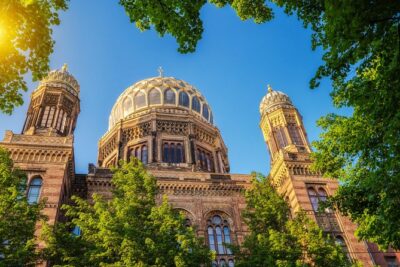
Jewish Berlin: Walking tour The Old Jewish Quarter (private 3 Hours tour)
Read our review →
Path of Resistance: Berlin’s Hidden Holocaust Stories
Read our review →

Browse the lists this tour appears in