
Review · JEWISH BERLIN & HOLOCAUST MEMORIALS
Path of Resistance: Berlin’s Hidden Holocaust Stories
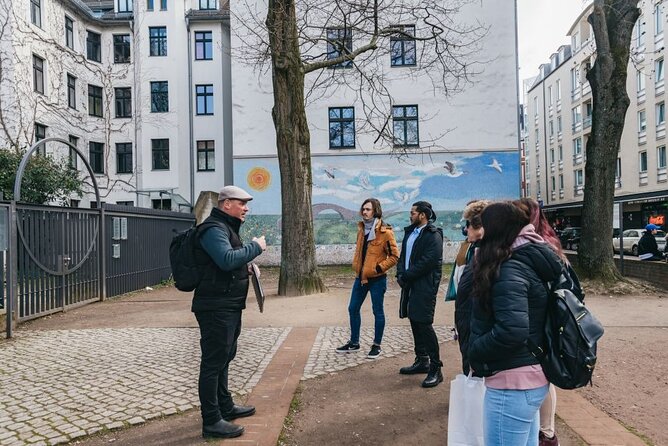
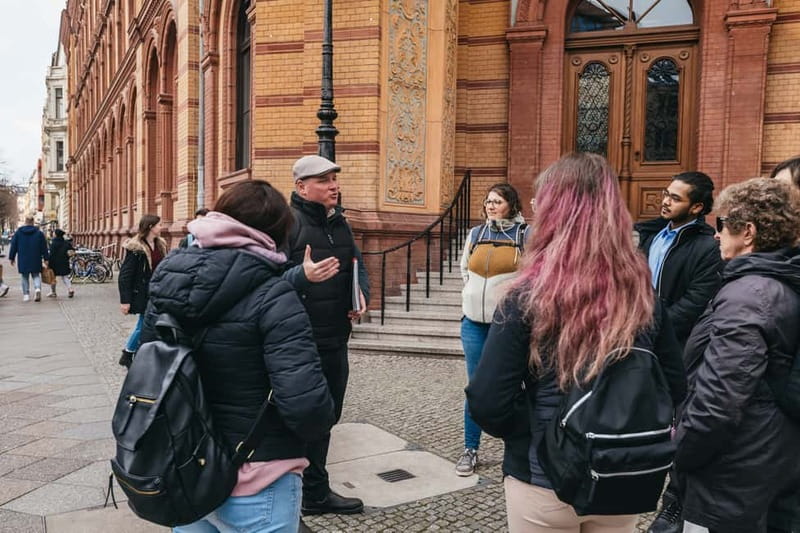
Berlin’s Nazi past is easy to encounter in grand memorials and famous museums. This walking tour takes a more personal route, tracing ordinary people who resisted through courtyards, plaques, workshops, and former deportation sites. You will hear how blind and deaf Jewish workers found protection, how women protested in Rosenstraße, and how quiet courage could take many forms.
I like the focus on lesser-known stories, especially Otto Weidt’s workshop and the Rosenstraße protest. I also like the small group, historical maps, and then-and-now photographs, which give the guide useful tools for explaining places that may otherwise look like ordinary Berlin streets. The main consideration is emotional weight: this is a serious tour, not a light city stroll, and the two-and-a-half-hour walk may feel demanding in bad weather.
In This Review
- Key points to know before you book
- Why this Berlin walk feels different
- Starting at the former Imperial Post Office
- New Synagogue and the Moses Mendelssohn school
- Grosse Hamburger Strasse Cemetery and Jewish memory
- Otto Weidt’s workshop, one of the tour’s strongest stops
- Rosenstraße and the Block of Women
- Museum Island and Neue Wache
- Bebelplatz and the May 10, 1933 book burning
- Trains to Life, Trains to Death
- What the $56 price includes
- Who should book this walk
- Useful booking details
- Should you book Path of Resistance?
- FAQ
- How long does the Path of Resistance tour last?
- What language is the tour conducted in?
- Where does the tour start?
- Where does the tour finish?
- Does the tour include museum and memorial entry?
- Is the walking tour wheelchair accessible?
- What should I bring?
- Can I cancel the tour?
Key points to know before you book
- The route links Jewish Berlin with Nazi resistance: You move from the New Synagogue and Jewish cemetery to deportation sites, memorials, and Bebelplatz.
- Otto Weidt’s workshop is a central human story: Learn how a brushmaker helped protect blind and deaf Jewish workers.
- Rosenstraße shows public protest in action: The women’s demonstration offers a rare example of German civilians confronting Nazi power.
- Bebelplatz connects culture with persecution: The 1933 book burning site shows how attacks on free thought began before the mass killings.
- Small groups make discussion possible: The advertised group limit is 10, while the included details also mention a maximum of 15, so confirm the exact size when booking.
- The tour is practical as well as serious: It runs in all weather, uses no public transport, and includes recommendations for further exploration.
Why this Berlin walk feels different
The tour is built around resistance, but not only the dramatic kind. You will hear about people who protested openly, people who hid or protected others, and people who used their jobs or family ties to help those marked for persecution.
That matters because Nazi rule did not depend on one type of cruelty. It relied on antisemitic laws, racial categories, social pressure, propaganda, forced removal, and the silence of many people. The guide explains the Nazi belief in Aryan superiority and the way the regime classified people into supposed racial sub-groups. These ideas were not harmless theory. They became government policy, then imprisonment, deportation, and genocide.
The route also asks a difficult question: why did some people resist while others did not? You will not get a simple answer, and that is one of the tour’s strengths. The stories show courage, fear, compromise, and the limits of individual action under dictatorship.
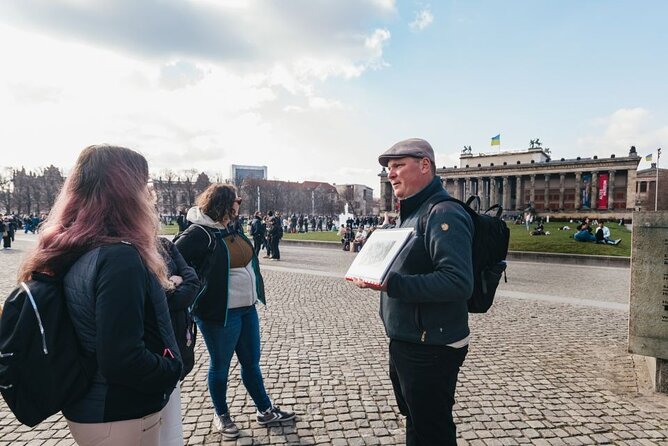
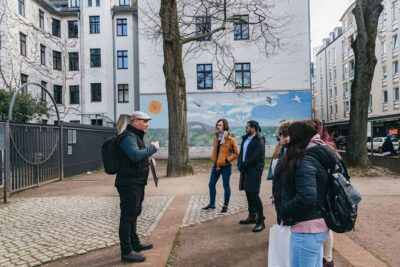
This is an English-language experience led by a local historian with a World War II focus. The guide uses maps, photographs, and discussion rather than simply reciting dates. Past guides have included Tom, praised for handling sensitive subjects with care, and Hannah, whose passion and focus on less-known heroes made the time pass quickly. Guide assignments can change, so do not book on the assumption that one particular guide will lead your walk.
More Jewish Berlin and memorial walks:
- Berlin: Jewish Museum Berlin Entrance Ticket
★ 4.5 · 8,393 reviews - Nazi Berlin and the Jewish Community Tour
★ 4.8 · 55 reviews - Private Tour: Jewish Heritage Walking Tour of Berlin
★ 5.0 · 29 reviews
Starting at the former Imperial Post Office
You meet at the main entrance of the former Imperial Post Office. Arrive 10 minutes early and look for the guide holding a blue umbrella.
This opening point is useful because it places you near Berlin’s historic center without sending you straight into a large museum. The experience begins on foot, and you do not need a public transport ticket for the route. Wear shoes you can walk in for two and a half hours, and bring water, an umbrella, and sun protection as needed.
The tour runs in all weather. That is good news for a tight Berlin schedule, but it also means you should take the forecast seriously. Rain can make long stops outdoors tiring, while strong sun can be uncomfortable around open squares with little shade.
New Synagogue and the Moses Mendelssohn school
The first major stop is the New Synagogue Berlin, also known as the Jewish Centre. You spend about 15 minutes here with the guide, learning how this part of Berlin once served as a center of Jewish life and how Nazi persecution changed the area.
The nearby Jüdisches Gymnasium Moses Mendelssohn adds a school and community perspective. You have about 10 minutes here. This stop helps move the subject away from statistics and toward families, education, and the everyday institutions that persecution aimed to destroy.
Do not expect long museum visits at each stop. The tour is a walking narrative, with brief guided visits and outdoor explanations. If you want to study the New Synagogue in detail, plan separate time before or after the walk.
Grosse Hamburger Strasse Cemetery and Jewish memory
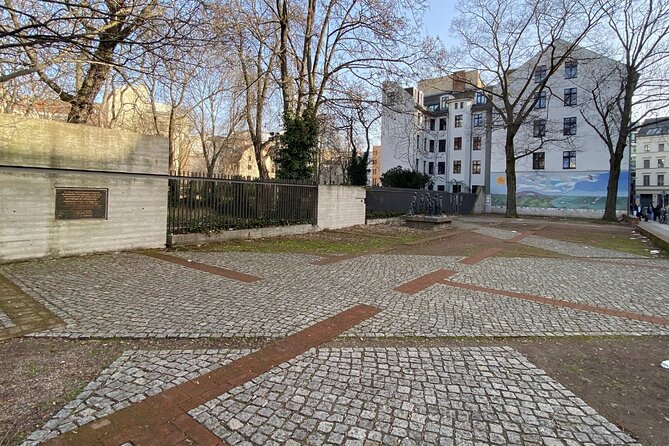
At Grosse Hamburger Strasse Cemetery, the group spends roughly 15 minutes. This is one of the places where the city’s Jewish past is felt through the site itself rather than through a large display.
The value here is the connection between place and absence. Berlin’s Jewish quarter is not only a collection of surviving buildings. It is also a district shaped by people who were removed, deported, or killed. A guide can help you read the plaques, memorials, and remaining traces without treating them as background scenery.
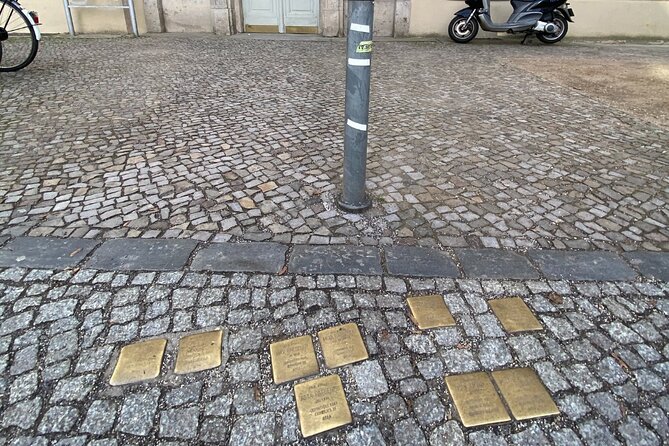
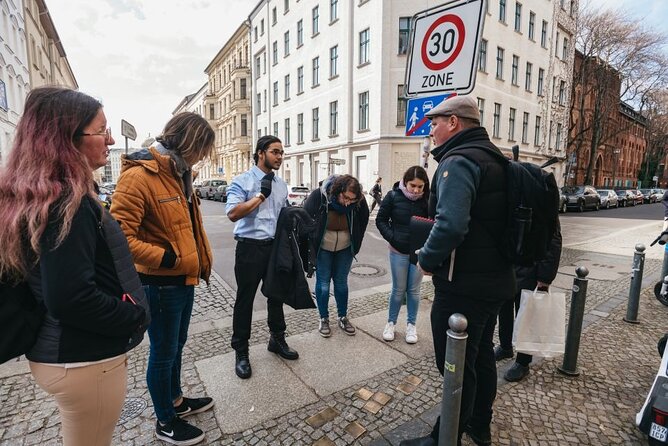
You will also encounter hidden Jewish memorials and Stolpersteine, the small memorial stones set into pavements for people persecuted by the Nazis. These can be easy to miss when you walk alone. They are modest by design, and the tour gives you a way to understand what they record.
A different side of Berlin on the same trip:
- Berlin: Reichstag, Dome and Government District Guided Tour
★ 4.7 · 18,288 reviews - Berlin: 1-Hour City Tour by Boat with Guaranteed Seating
★ 4.3 · 16,993 reviews - Berlin: Boat Tour Along the River Spree
★ 4.4 · 11,252 reviews - Discover Berlin Half-Day Walking Tour
★ 5.0 · 9,624 reviews
Otto Weidt’s workshop, one of the tour’s strongest stops
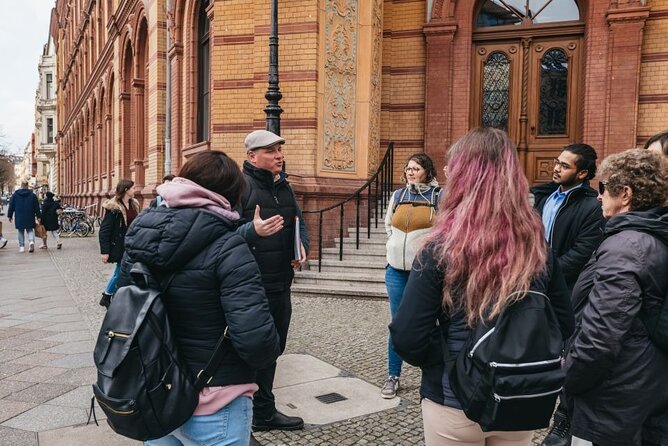
The visit to Otto Weidt’s Workshop for the Blind is likely to be the emotional center of the walk. You spend about 15 minutes here, learning how Weidt used his workshop to employ and shield blind and deaf Jewish workers.
This story is especially effective because it shows resistance through work, concealment, and personal risk. Weidt was not a military leader or public politician. His actions grew from a workplace and from his decision to protect people the Nazi system had targeted.
The stop also helps explain why resistance could be hard to see. A hidden act of help might never appear in a public record. A person might forge a document, hide someone briefly, argue with an official, or use a business relationship to delay deportation. Those acts could save lives, but they also placed the helper in danger.
The workshop is a real site with a modest setting, not a grand monument. That is part of its effect. You get a close look at the human scale of resistance, though the short stop means you may want to return independently if the subject interests you.
Rosenstraße and the Block of Women
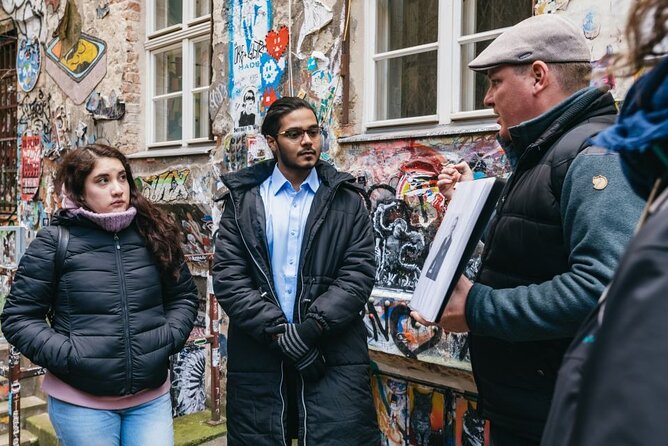
At the Block of Women, the guide explains the Rosenstraße Protest. In this important episode, German women demanded the release of their Jewish husbands who had been detained by the Nazi authorities.
This stop adds a form of collective resistance to the individual story of Otto Weidt. The women were not operating in secret. They gathered and insisted on action, despite the threat of a regime known for violence and intimidation.
The visit lasts about 15 minutes. That is enough for the guide to outline what happened and discuss why this protest matters, but it is not enough for every detail of the political background. Listen closely and ask questions. The tour includes interactive discussion and Q&A, and this is one of the places where a question can help connect the event to the broader theme of civilian resistance.
The story also complicates the idea that German society was uniformly passive. It does not erase the many people who supported, tolerated, or failed to oppose Nazi persecution. Instead, it shows that resistance existed, even when it was limited and dangerous.
Museum Island and Neue Wache
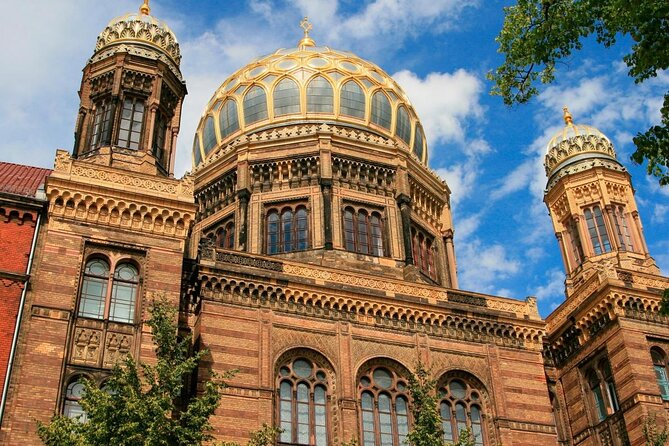
The walk continues across Museum Island for about 20 minutes, the longest listed stop. Here the guide connects the area’s major public buildings and memorial spaces to the wider story of German power, memory, and national identity.
Museum Island can be crowded and visually distracting, especially during a busy day in central Berlin. The guide’s role is important because the tour is not asking you to admire the architecture alone. You are being asked to consider what a city chooses to remember, what it once celebrated, and how public spaces can carry several layers of history.
At Neue Wache, you spend around 15 minutes. This memorial is dedicated to victims of war and dictatorship. It offers a quieter pause in the route and a chance to think about the difference between a national memorial and the smaller, personal memorials found in the Jewish quarter.
The change of pace is useful. After several specific stories of resistance and persecution, Neue Wache gives you room to consider the wider destruction caused by dictatorship and war. It can also be a busy stop, so stay close enough to hear the guide.
Bebelplatz and the May 10, 1933 book burning
Bebelplatz is the tour’s clearest link between attacks on ideas and attacks on people. The guide explains the Nazi book burning of May 10, 1933, when books associated with Jewish writers, political opponents, and unwanted intellectual thought were destroyed.
The memorial is set into the square, and its understated design rewards careful attention. The space can look open and ordinary, which makes the event easier to underestimate. The tour gives you the context needed to understand why book burning was more than a symbolic spectacle. It signalled a campaign against free thought, scholarship, literature, and public debate.
This is also where the tour’s discussion of Aryan superiority and Nazi sub-racial categories becomes especially important. The regime did not separate cultural censorship from racial persecution. Both were parts of an effort to control who could speak, belong, teach, publish, and live safely.
You spend about 10 minutes here. That brief stop is enough to explain the memorial and its meaning, though you may want to return later when the square is quieter.
Trains to Life, Trains to Death
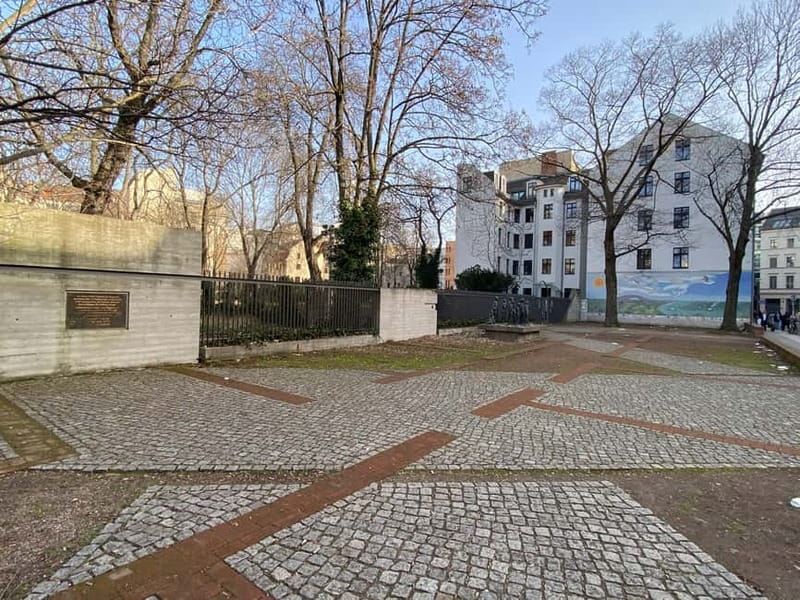
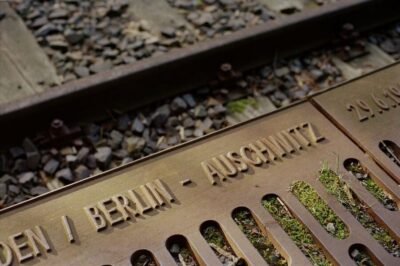
The final part of the route includes the Trains to Life, Trains to Death memorial and a former deportation centre. These locations bring the tour back to the machinery of removal and the choices available to people trying to save others.
The story of Nicholas Winton, sometimes called the British Schindler, is included here. Winton helped hundreds of Jewish children escape the Holocaust. His story adds an international connection and shows how rescue networks could cross borders, even as the Nazi system tightened its grip.
The former deportation centre is a harder stop because it marks the point where forced removal became organized and physical. You will stand in places connected to families being torn from their homes and sent away. The guide’s use of then-and-now photographs can help show what has changed and what traces remain.
The route is scheduled to finish at Berlin Friedrichstraße station. The meeting information also says the activity ends back at the meeting point, so confirm the final location when you book. Either way, finishing near Friedrichstraße makes it easy to continue through central Berlin, but you should not plan a rushed appointment immediately afterward.
What the $56 price includes
At $56 per person, this is not the cheapest way to spend a morning in Berlin. You are paying for a specialist guide, a carefully linked route, small-group discussion, historical maps, then-and-now images, and entry to the museums and memorials included in the walk.
The value depends on how much interpretation you want. You can visit Bebelplatz, Neue Wache, Museum Island, and many memorials without paying for a guide. What you cannot easily recreate is the connection among the sites, the personal stories, and the explanation of how antisemitism became state policy.
The group is described as limited to 10 participants, while another detail gives a maximum of 15. Ask for the current group limit if this matters to you. Either number is smaller than a large coach tour, and a smaller group is useful for sensitive subjects because you can hear the guide and ask questions.
Food and drinks are not included, but that is not a problem for most visitors. This is a walking experience, not a meal-based tour. Bring water, and plan a café stop before or after.
Who should book this walk
I would recommend it to anyone who wants more than a list of Nazi-era dates and famous memorials. It suits history enthusiasts, first-time Berlin visitors seeking context, and people interested in the moral choices faced by civilians under dictatorship.
It is also a good choice if you have already visited major sites such as the Holocaust Memorial and want a more local, street-level account. The emphasis on Jewish Berlin, resistance, and personal stories gives the tour a different focus from a general Third Reich sightseeing walk.
You should think twice if you want a cheerful introduction to Berlin or dislike long discussions of deportation and genocide. The subject is painful, and the tour does not soften it with entertainment. Comfortable shoes matter, and the all-weather policy means you need proper clothing.
The route is wheelchair accessible, though the tour includes cobblestones, outdoor stops, and a substantial amount of walking. If you need specific information about surfaces or indoor access, ask before booking.
Useful booking details
The tour lasts 2.5 hours and is conducted in English with a live guide. Starting times vary, so check availability for your date.
You can cancel up to 24 hours before the activity for a full refund, and the reserve-now, pay-later option can help if your Berlin plans are still changing. Arrive 10 minutes early at the former Imperial Post Office and look for the blue umbrella.
Because the tour runs in rain or sunshine, carry rain protection and water. Alcohol and drugs are not allowed. The route does not require public transport.
Should you book Path of Resistance?
Book it if you want Berlin’s Holocaust history told through specific places and individual choices, not only through national monuments. The strongest parts are Otto Weidt’s workshop, the Rosenstraße protest, the book burning site, and the use of maps and photographs to connect past and present.
At $56, the price makes sense when you value expert interpretation and a small group. It is less appealing if you prefer to explore independently or want extensive time inside museums. For most visitors, the main question is not whether the history is important. It is whether you are ready to give two and a half focused hours to difficult stories of courage, fear, and responsibility.
FAQ
How long does the Path of Resistance tour last?
The walking tour lasts 2.5 hours. Check availability for the starting times offered on your chosen date.
What language is the tour conducted in?
The live tour guide speaks English.
Where does the tour start?
The meeting point is the main entrance of the former Imperial Post Office. Arrive 10 minutes early and look for the guide holding a blue umbrella.
Where does the tour finish?
The route information gives Berlin Friedrichstraße station as the finish. The meeting details also state that the activity ends back at the meeting point, so confirm the final location when booking.
Does the tour include museum and memorial entry?
Entry to the museums and memorials included in the route is covered. Food, drinks, and public transport tickets are not included.
Is the walking tour wheelchair accessible?
Yes, the activity is described as wheelchair accessible.
What should I bring?
Bring comfortable shoes, water, and an umbrella. Since the tour runs in all weather, also bring rain protection or sun coverage as appropriate.
Can I cancel the tour?
Yes. You can cancel up to 24 hours in advance for a full refund. A reserve-now, pay-later option is also available.
Just added around Berlin
- Berlin Highlights in One Day★ 5.0 · 3 reviews
- Private Berlin One Day Tour with a Local: See the City Unscripted★ 3.5 · 3 reviews
- Individual city tour Berlin for max. 8 persons★ 5.0 · 3 reviews
- Transfer from Berlin Schönefeld Airport (SXF) to Berlin city Hotels – ROUND TRIP★ 4.0 · 3 reviews
- Berlin: Museum Island Tour★ 5.0 · 3 reviews
- Private Analogue Photography Experience in Berlin★ 5.0 · 3 reviews
- Berlin: Local Food Tour in Secrets Hidden Gems★ 4.0 · 3 reviews
- Berlin & The Third Reich Private Guided Tour★ 5.0 · 3 reviews
Jewish Berlin & Holocaust Memorials, compared.

Private Tour: Jewish Heritage Walking Tour of Berlin
Read our review →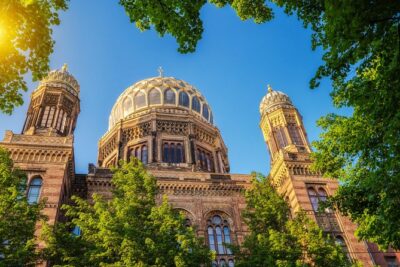
Jewish Berlin: Walking tour The Old Jewish Quarter (private 3 Hours tour)
Read our review →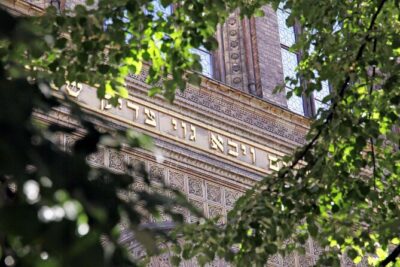
Path of Resistance: Berlin’s Hidden Holocaust Stories
Read our review →

Browse the lists this tour appears in