
Review · JEWISH BERLIN & HOLOCAUST MEMORIALS
Path of Resistance: Berlin’s Hidden Holocaust Stories
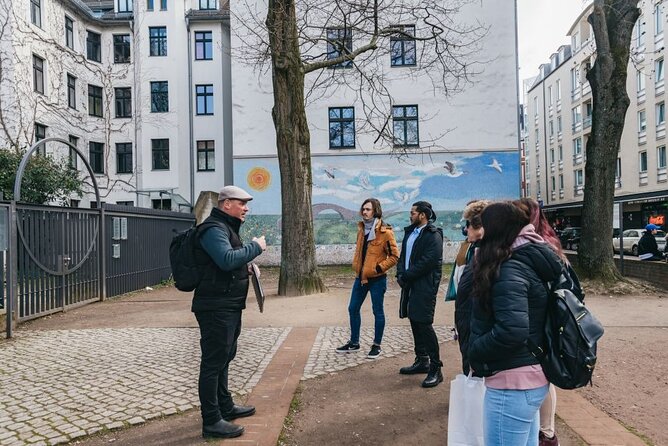
Berlin’s resistance story becomes personal on this walking tour. Instead of treating Nazi history as a list of dates, you follow the people who hid workers, protested arrests, saved children, and risked their lives to oppose Hitler. The route links the New Synagogue, a former Jewish transit camp, Otto Weidt’s workshop, Rosenstraße, and major memorials in central Berlin.
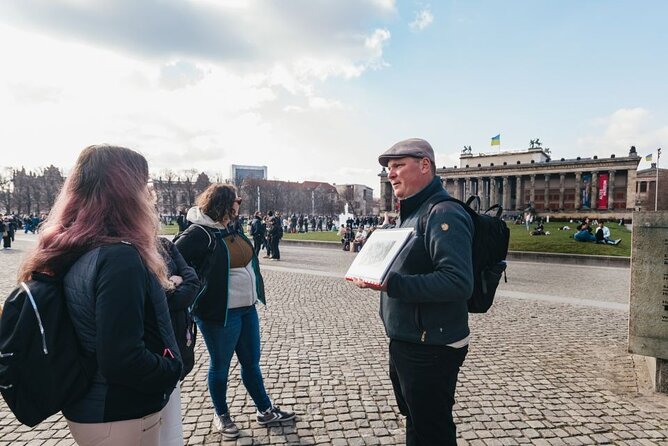
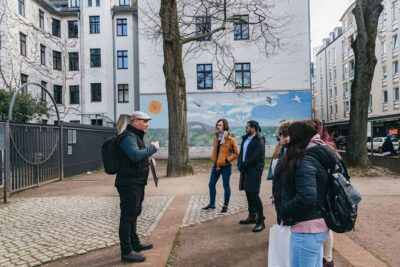
I like two things right away: the small group of no more than 15 people, which gives you a better chance to ask questions, and the use of Then & Now photographs and maps to show how these places looked during the Nazi period. The tour also has a clear human focus, from Otto Weidt’s desperate rescue efforts to the women who protested for their Jewish husbands.
The main drawback is that this is a serious, outdoor walking tour with plenty of standing. The distance is not presented as a major challenge, but the emotional weight and roughly two and a half hours on foot can be tiring, especially for children or anyone who needs frequent seated breaks.
In This Review
- Key points to know before you book
- Why this Berlin resistance walk feels different
- The New Synagogue and the lost Jewish community
- Moses Mendelssohn School and the machinery of deportation
- The Jewish Cemetery and a memorial to wartime victims
- Otto Weidt’s workshop, rescue in a hidden courtyard
- Rosenstraße and the power of public protest
- Lustgarten, when a public square became a propaganda stage
- The Zeughaus and a daring plan to kill Hitler
- Neue Wache and Bebelplatz’s empty library
- Trains to Life, Trains to Death
- What $48.01 gets you
- Who should book this walk
- Should you book Path of Resistance?
- FAQ
- How long does the Path of Resistance tour last?
- Where does the tour begin?
- Where does the tour end?
- How many people can join the tour?
- Is the tour offered in English?
- Are admission tickets included?
- Is hotel pickup available?
- What happens if the weather is poor?
- Can I cancel for a full refund?
Key points to know before you book
- Follow resistance stories, not just famous monuments: The route focuses on Jewish survival and German opposition to National Socialism.
- See ten central Berlin locations: The New Synagogue, Rosenstraße, Bebelplatz, Neue Wache, Zeughaus, and several lesser-known sites all fit into one walk.
- Expect a personal guide-led experience: Guides including Scott, Jochen, Johan, Jorg, and Benjamin have led this route, with time for questions and discussion.
- Plan for outdoor standing: Admission is free at the listed stops, but the experience takes place mainly in streets, squares, courtyards, and memorial areas.
- The tour ends at Friedrichstraße station: You finish near S+U Friedrichstraße, a useful transport hub for continuing across Berlin.
- At $48.01, the value is in interpretation: You are paying for a focused guide, a small group, and connections between sites that are easy to miss on your own.
Why this Berlin resistance walk feels different
Berlin has no shortage of Nazi-era monuments. The challenge is knowing what happened at each place and how the sites connect. This tour gives you that structure by moving from Jewish life before the war to persecution, deportation, protest, military resistance, and rescue.
The route also avoids presenting resistance as a simple story of heroes and villains. You hear about organized military plots, ordinary women confronting the Gestapo, and people who used their jobs, marriages, documents, or personal courage to protect others. That range gives you a more honest picture of life under dictatorship.
The starting point near Oranienburger Straße is especially useful. From here, the walk moves through central Berlin without relying on a bus or train between stops. You see the city at street level, where memorials sit beside normal shops, offices, museums, and transport routes. That contrast can be unsettling, but it helps explain how remembrance fits into present-day Berlin.
The guides are a major part of the experience. Scott has led tours for seven years, according to the supplied information, while Jochen, Johan, Jorg, and Benjamin are also named in the tour feedback. The strongest praise centers on clear explanations, strong subject knowledge, friendly conversation, and the ability to answer detailed questions. One participant with a degree in Holocaust studies found Jochen’s command of the subject impressive, so the tour appears suitable for people who already know the basics as well as those starting from scratch.
More Jewish Berlin and memorial walks:
- Berlin: Jewish Museum Berlin Entrance Ticket
★ 4.5 · 8,393 reviews - Nazi Berlin and the Jewish Community Tour
★ 4.8 · 55 reviews - Path of Resistance: Berlin’s Hidden Holocaust Stories
★ 5.0 · 33 reviews
The New Synagogue and the lost Jewish community
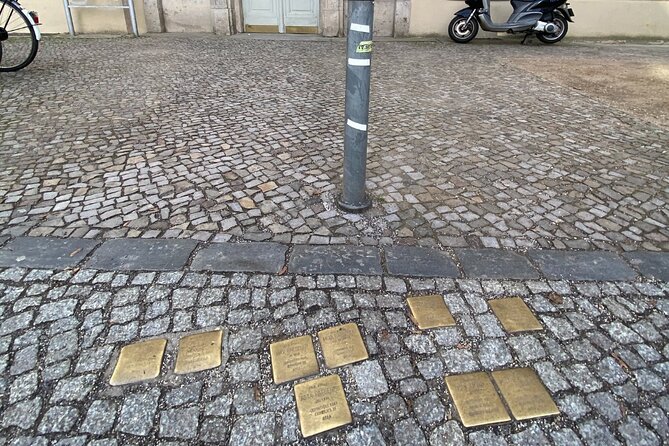
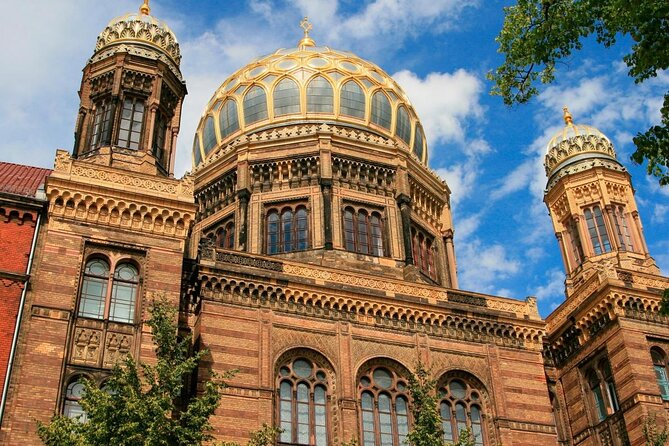
The Neue Synagogue is a powerful place to begin. Built in 1866, it was the largest and most magnificent synagogue in Berlin, reflecting the size and confidence of a Jewish community that counted about 160,000 members.
Its story also shows the limits of simple labels such as destroyed or saved. During Kristallnacht, vandals did not succeed in destroying the building. The synagogue continued operating until 1940, when the Army confiscated it and used it to store military uniforms.
An Allied bombing raid in November 1943 caused severe damage. The main hall was later torn down in 1958, then partly rebuilt in 1988. The building officially reopened in 1995 and now houses the Centrum Judaicum, which preserves Jewish memory and tradition.
You spend about ten minutes here, with free admission to the listed stop. Do not expect a long museum visit as part of this walk. The value comes from the guide’s explanation of what the building represented before the Nazi period, what happened to it during the war, and why its partial reconstruction matters today.
Moses Mendelssohn School and the machinery of deportation
The next stop, the Jüdisches Gymnasium Moses Mendelssohn, takes only about five minutes but carries a grim change in tone. Founded in 1779, it was Germany’s first Jewish school without fees. Although Jewish in character, it welcomed students of all faiths and promoted liberal Jewish thought. Female students were admitted in 1931.
That openness makes the school’s wartime history even harder to absorb. In autumn 1941, Jewish schools were banned as deportations began. In 1942, the SS Reich Main Security Office turned this school into a transit camp. Windows were barred, and Jewish people were packed inside while waiting to be deported east.
This is one of the tour’s useful choices. You are not only taken to grand memorials. You also stop at a place whose original purpose was education and community life, then learn how the Nazi state turned it into part of the deportation system. The short visit works best when you listen closely and let the guide supply the context.
The Jewish Cemetery and a memorial to wartime victims
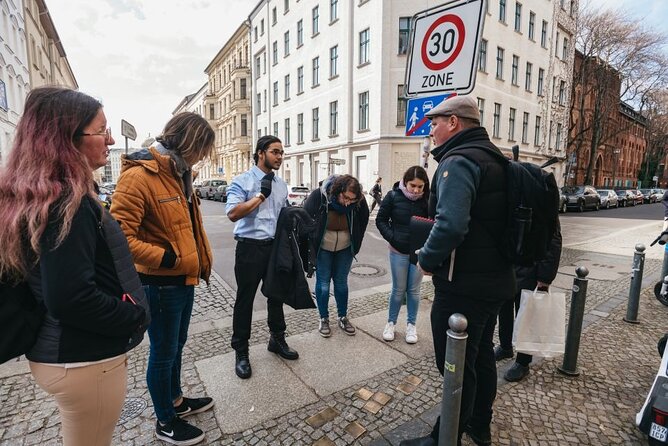
The Jewish Cemetery and Holocaust Memorial introduces both the destruction of Jewish memory and the violence of the war’s final days. About 12,000 members of Berlin’s Jewish community were buried here between 1672 and 1827.
In 1943, the Gestapo ordered the cemetery destroyed. Thousands of gravestones were smashed, remains were thrown away, and the site was treated with shocking disrespect. The destruction was not only an attack on the living. It was also an attempt to erase the physical record of Jewish life in Berlin.
Burials resumed in April 1945. Mass graves here contain almost 2,500 German soldiers and Berlin civilians killed during the fighting, including people shot by the SS for hanging white flags from their windows.
You spend about 15 minutes at this stop, the longest of the early cemetery visits. It requires a willingness to consider several kinds of victims and the violence inflicted by both the Nazi regime and the war itself. The subject is difficult, but the site helps you see how memory in Berlin often carries several layers at once.
A different side of Berlin on the same trip:
- Berlin: Reichstag, Dome and Government District Guided Tour
★ 4.7 · 18,288 reviews - Berlin: 1-Hour City Tour by Boat with Guaranteed Seating
★ 4.3 · 16,993 reviews - Berlin: Boat Tour Along the River Spree
★ 4.4 · 11,252 reviews - Discover Berlin Half-Day Walking Tour
★ 5.0 · 9,624 reviews
Otto Weidt’s workshop, rescue in a hidden courtyard
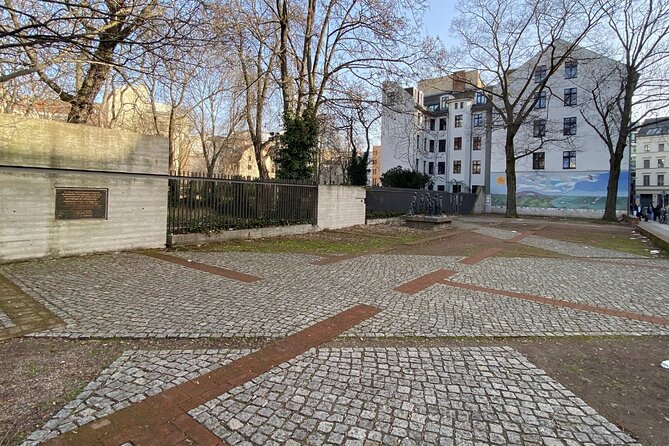
The Museum Blindenwerkstatt Otto Weidt is one of the tour’s most memorable stops. The workshop sits in a hidden courtyard, a setting that makes the story feel close and specific rather than abstract.
Otto Weidt and his wife Else employed more than 30 blind and deaf Jewish workers between 1940 and 1945. Weidt tried to shield them from persecution and deportation by bribing Gestapo officers and falsifying documents. His actions went beyond quiet rule breaking. He even traveled to Auschwitz in an attempt to get one of his workers out.
You spend about ten minutes here. The stop is valuable because it shows how resistance could take place through daily work and personal risk, not only through military plots. Weidt had no army behind him and no public platform. He used his workshop, money, nerve, and relationships to protect people who were especially vulnerable.
The tour includes free admission at the listed stops, but you should not assume every museum room is covered as a full independent visit. This experience is built around the guide’s walk and interpretation, so ask at the start if you want clarification about what you can enter during the tour.
Rosenstraße and the power of public protest
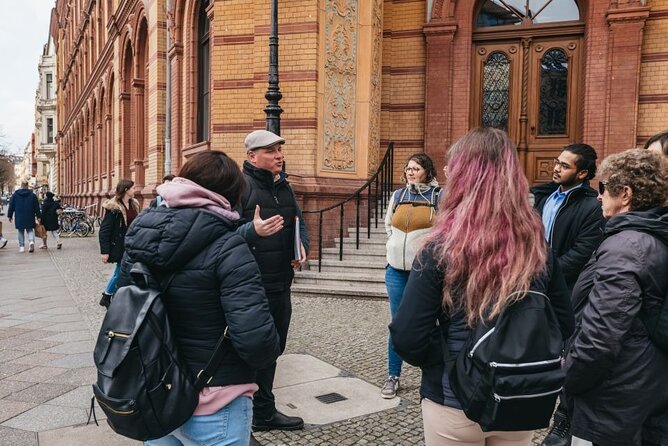
At the Rosenstraße Memorial, the story shifts to a rare instance in which public protest forced the Nazi government to retreat. On February 27, 1943, the Gestapo, Waffen SS, and Berlin Police arrested about 2,000 Jewish men married to non-Jewish German women.
The wives gathered outside the detention site. Hundreds protested, even after being threatened with being shot. They scattered briefly when pressure rose, then returned in larger numbers. Eventually, Goebbels authorized the prisoners’ release.
This is a short ten-minute stop, but it may be one of the tour’s most important lessons. Dictatorships depend on fear, yet fear does not always produce silence. The women at Rosenstraße had very little formal power, but their repeated presence created a problem the Nazi authorities chose to solve by releasing the men.
The story also gives the tour a useful balance. Resistance was not limited to famous conspirators or people with access to weapons. It could involve a group of women refusing to leave a street.
Lustgarten, when a public square became a propaganda stage
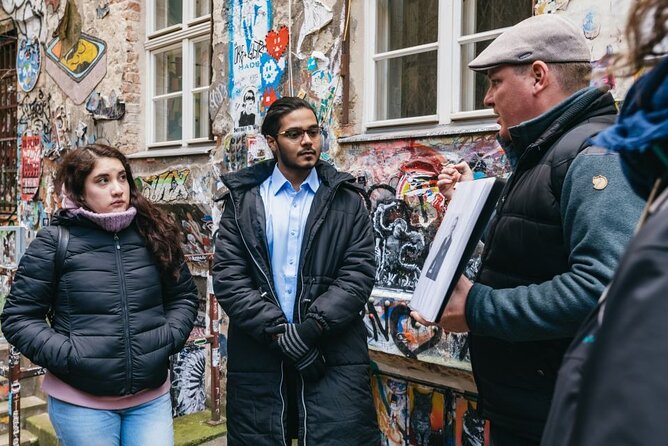
Lustgarten is framed by the Berlin Cathedral, Altes Museum, and Zeughaus. Before the Nazis took control, it was a favored place for speeches and demonstrations. One week after Hitler became Chancellor, about 200,000 Berliners protested the new government here.
The right to protest quickly disappeared. Nazi regulations, heavy fines, and arrests made opposition dangerous. In 1934, the square was paved over and used for Nazi propaganda rallies, military parades, and swearing-in ceremonies.
The stop lasts about ten minutes. You may find the setting surprisingly open and attractive compared with the darker stories connected to it. That is exactly why the explanation matters. A civic square can support public debate, mass control, or political theater depending on who controls it.
The Zeughaus and a daring plan to kill Hitler
The Zeughaus, built in 1730 as an artillery arsenal, is the oldest building along Unter den Linden. During the tour, it becomes the setting for one of the most dramatic resistance stories on the route.
On March 21, 1943, the building hosted an exhibition of captured Soviet weapons. Major General Rudolf Christoph Freiherr von Gersdorff, part of the Wehrmacht resistance, was selected to guide the display. He had seen repeated attempts to kill Hitler fail, yet agreed to make another attempt.
Gersdorff planned to use two concealed British mines and detonate them while embracing Hitler. A wider coup plan was ready in case the assassination worked. The story ends with a suspenseful question about what happened next, and the guide provides the answer on site.
This ten-minute stop is particularly effective for visitors interested in German military resistance. It also complicates the idea of resistance. Opposition inside the Wehrmacht involved people who had served the regime, recognized its crimes or catastrophic policies, and eventually risked everything against Hitler.
Neue Wache and Bebelplatz’s empty library
Neue Wache is a compact memorial in the middle of a busy Berlin street. It serves as Germany’s central memorial for victims of war and tyranny. The brief ten-minute stop lets the guide explain how a national memorial can gather many forms of suffering into one place.
At Bebelplatz, the focus turns to cultural destruction. On May 10, 1933, Nazi students and professors from the nearby Humboldt University gathered to burn books judged hostile to the German spirit. More than 25,000 volumes were destroyed in the nationwide action.
The Book Burning Memorial gives you a clear reminder that persecution began with ideas, labels, and public acts before it reached many of the later crimes associated with the Holocaust. Bebelplatz is an active city square, so the memorial can be easy to miss without someone pointing it out and explaining its meaning.
Trains to Life, Trains to Death
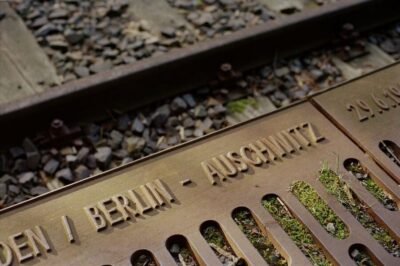
The final listed memorial is the sculpture Trains to Life, Trains to Death. Nearly life-size figures of Jewish children look in opposite directions, representing two sharply different fates during the Nazi period.
One group recalls children saved by the Kindertransport to England. The other represents children deported to concentration camps. The sculpture’s creator, Frank Meisler, was himself rescued by a Kindertransport from this location to England in 1939.
This is a fitting final stop because it brings the tour back to individual lives. You have heard about laws, institutions, military plots, and mass protest. Here, the focus narrows again to children facing two possible futures.
The tour ends at Friedrichstraße and Georgenstraße, near S+U Friedrichstraße station. That makes it easy to continue to another part of Berlin, and the guide can help if you need directions.
What $48.01 gets you
At $48.01 per person, this is not a cheap casual stroll, but the price is reasonable if you want a structured history lesson delivered at ten carefully chosen sites. Every listed stop has free admission, so the cost is mainly for the guide, the small group, the route planning, and the photographs and maps that connect past and present.
The group limit of 15 matters. You are less likely to be lost in a crowd, and the guides can adapt the pace and answer questions. The supplied feedback repeatedly praises the explanations, with particular approval for Scott, Jochen, Johan, Jorg, and Benjamin.
The tour lasts about two and a half hours. Wear comfortable shoes, check the weather, and prepare to stand at most stops. Food and drinks are not included, and there is no hotel pickup or drop-off.
The experience is accessible, service animals are allowed, and it operates near public transportation. Still, accessible does not mean effortless. If you need regular seating, contact the provider before booking to confirm that the walking and standing pattern suits you.
Who should book this walk
I would choose this tour if you want a focused introduction to Berlin’s Jewish history and German resistance, especially if you prefer people and personal choices over a broad military timeline. It also works well for repeat visitors who have seen the major monuments but want the stories behind less obvious sites.
Families can take part, and the supplied feedback includes children enjoying the experience. Even so, the subject is painful and the standing can wear young children down. Teenagers with an interest in history are likely to get more from it than very young children.
It is also a good fit for well informed history students. Jochen’s detailed answers were strong enough for someone with a degree in Holocaust studies, while other guides have been praised for making the subject understandable in only a few hours.
The tour is offered in English. It requires good weather and a minimum number of participants. You can cancel for a full refund up to 24 hours before the start time, but late cancellations and changes are not accepted. If poor weather or low enrollment cancels the experience, you are offered another date, another experience, or a full refund.
Should you book Path of Resistance?
Book it if you want Berlin’s Nazi history explained through specific people and places, and if you are comfortable spending two and a half hours walking and standing outdoors. The strongest reason to go is the range of stories: Jewish education, rescue work, public protest, military conspiracy, book burning, and children saved or deported.
Skip it if you want a museum-heavy tour, a relaxed sightseeing walk, or a short route with frequent sitting. For everyone else, the small group, central route, strong guide roster, and $48.01 price make this a worthwhile way to understand how resistance appeared in Berlin, sometimes through grand plans and sometimes through one person refusing to give up.
FAQ
How long does the Path of Resistance tour last?
The tour lasts approximately two hours and 30 minutes.
Where does the tour begin?
It begins at Oranienburger Str. 36, 10117 Berlin, Germany.
Where does the tour end?
The tour ends at Friedrichstraße and Georgenstraße, near S+U Friedrichstraße station.
How many people can join the tour?
The maximum group size is 15 people.
Is the tour offered in English?
Yes. The tour is offered in English.
Are admission tickets included?
The listed stops have free admission. The experience includes an expert guide, a small group, Then & Now photographs and maps, and an accessible tour. Food and drinks are not included.
Is hotel pickup available?
No. Hotel pickup and drop-off are not included.
What happens if the weather is poor?
The experience requires good weather. If poor weather causes a cancellation, you are offered a different date or a full refund.
Can I cancel for a full refund?
Yes. You must cancel at least 24 hours before the experience start time for a full refund. Cancellations and changes made less than 24 hours before the start time are not accepted.
Just added around Berlin
- Berlin Highlights in One Day★ 5.0 · 3 reviews
- Transfer from Berlin Schönefeld Airport (SXF) to Berlin city Hotels – ROUND TRIP★ 4.0 · 3 reviews
- Private Berlin One Day Tour with a Local: See the City Unscripted★ 3.5 · 3 reviews
- Individual city tour Berlin for max. 8 persons★ 5.0 · 3 reviews
- Berlin: Museum Island Tour★ 5.0 · 3 reviews
- Private Analogue Photography Experience in Berlin★ 5.0 · 3 reviews
- Berlin: Local Food Tour in Secrets Hidden Gems★ 4.0 · 3 reviews
- Berlin & The Third Reich Private Guided Tour★ 5.0 · 3 reviews
Jewish Berlin & Holocaust Memorials, compared.

Path of Resistance: Berlin’s Hidden Holocaust Stories
Read our review →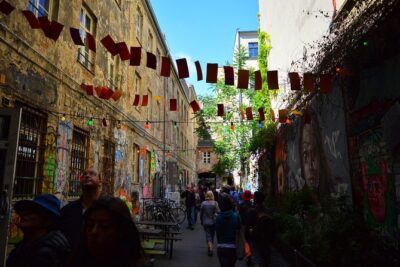
Private Tour: Jewish Heritage Walking Tour of Berlin
Read our review →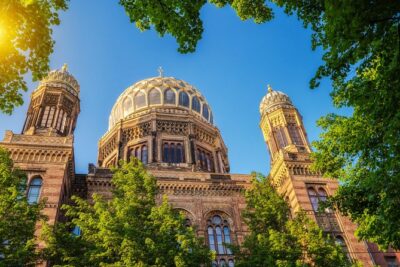
Jewish Berlin: Walking tour The Old Jewish Quarter (private 3 Hours tour)
Read our review →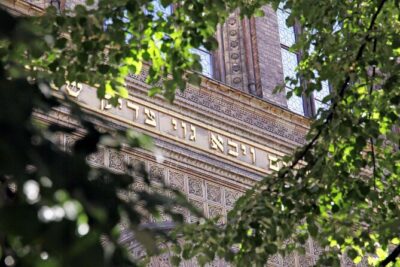


Browse the lists this tour appears in