
Review · BERLIN WALL TOURS
Skip-the-Line: Berlin Wall Museum at Checkpoint Charlie
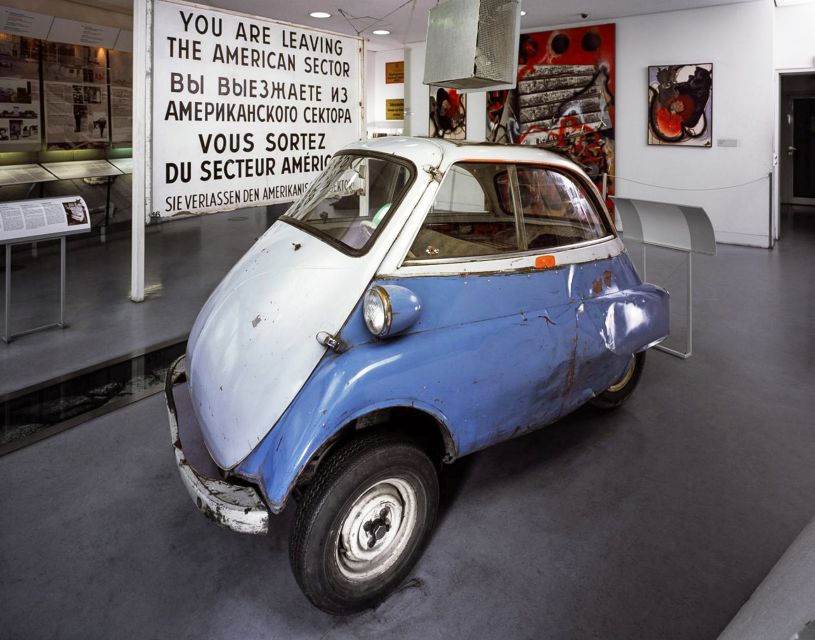
The most striking part of this museum is its collection of real escape equipment: a hot-air balloon, mini-submarine, cars, and aircraft once used to help East Germans reach the West. The stories are not just about the Wall as a concrete barrier. They show the clever, risky ways people tried to get around it, under it, and over it. I especially like the original escape artifacts and the museum’s location directly beside Checkpoint Charlie. My main caution is that the museum is much larger and more text-heavy than its street frontage suggests, so a quick visit can leave you feeling rushed.
I also like that the museum began in 1962, soon after the Wall went up, as an active protest and help center rather than a later institution looking back at history from a safe distance. You get a serious account of flight, resistance, and human rights, but the presentation can feel crowded and uneven. Some displays are old-fashioned, some interactive features may not work, and there is a great deal to read.
In This Review
- Key things to know before you go
- Why this museum matters at Checkpoint Charlie
- Entering a museum that is bigger than it looks
- The escape stories are the museum’s heart
- Expect a lot of reading and an uneven route
- What to see first if your time is short
- How the setting changes the experience
- Audio guides, tours, and the best way to visit
- Is $21 good value?
- Who will appreciate this museum most
- Should you book the Berlin Wall Museum at Checkpoint Charlie?
- FAQ
- Where is the Berlin Wall Museum at Checkpoint Charlie?
- How much does admission cost?
- How long is the ticket valid?
- What does the ticket include?
- Is a guided tour included?
- Is an audio guide included?
- Can I skip the ticket line?
- Is the museum wheelchair accessible?
- Can I cancel the booking?
- Can I reserve now and pay later?
Key things to know before you go
- Real escape machines: See a hot-air balloon, mini-submarine, cars, and airplanes connected with successful escapes.
- Checkpoint Charlie setting: The museum is at Friedrichstraße 43-45, right beside one of Berlin’s best-known Cold War landmarks.
- Plan two hours or more: The museum is larger than it looks, and careful readers can spend nearly half a day inside.
- Self-guided admission: The $21 ticket covers entry only. A guided tour and audio guide are not included.
- A serious human-rights story: The displays go beyond the Wall’s construction and fall to examine repression, resistance, and later conflicts.
- Skip the ticket line: Online admission can save time at busy periods, though buying ahead may cost more than paying at the door.
Why this museum matters at Checkpoint Charlie
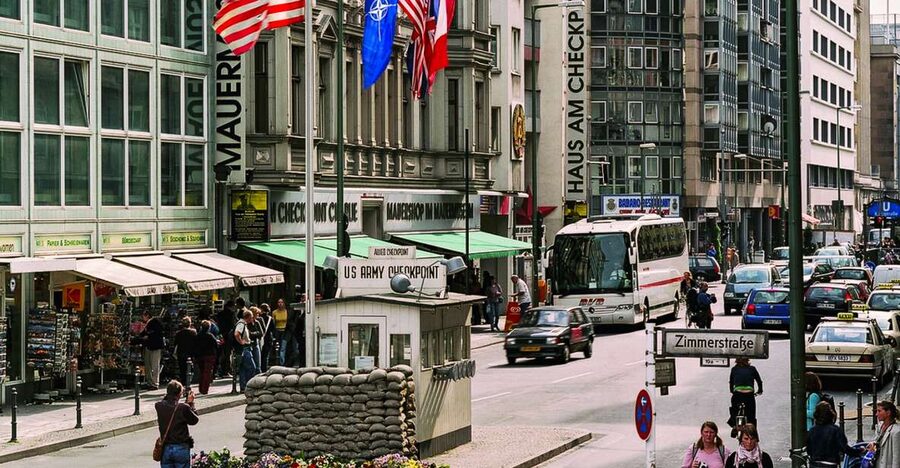
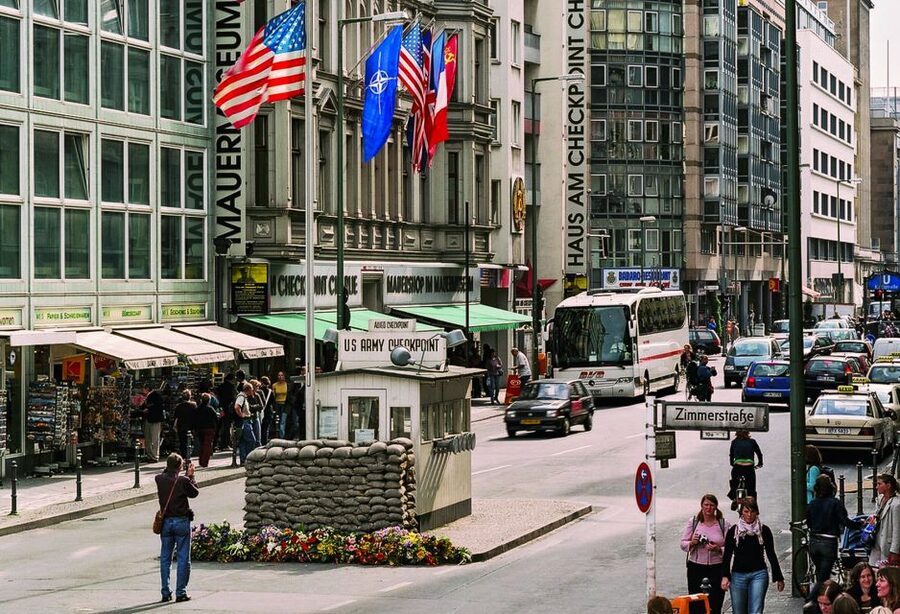
Checkpoint Charlie is one of Berlin’s most famous Cold War sites, but the street scene alone can be misleading. The checkpoint booth and photo opportunities give you a quick image of divided Berlin. The Berlin Wall Museum supplies the difficult detail: who was trapped, who tried to escape, who helped, and what those attempts cost.
The museum was founded on October 19, 1962, only a little more than a year after the Berlin Wall was built. Its first purpose was protest. It also offered help to people seeking freedom and became a place where escape plans and resistance efforts could be organized.
That origin gives the museum a different tone from a standard historical attraction. You are not simply looking at a vanished border. You are seeing material gathered by people involved in the struggle while the Wall was still in place.
After successful escapes, refugees and their helpers donated vehicles, equipment, and other objects. These donations explain why the museum’s strongest displays are so physical. A photograph of an escape can be moving, but a car modified for concealment or a small submarine used in a desperate crossing makes the planning feel immediate.
I find this especially useful if you know the broad outline of the Cold War but have never considered the practical problem of leaving East Germany. The museum turns a political system into a series of human decisions: where to hide, whom to trust, how to cross, and how to keep a plan secret.
More of the Berlin Wall, end to end:
- Berlin: East Side Gallery Spree Cruise in a Solar Catamaran
★ 4.0 · 1,039 reviews - Cold War, Berlin Wall, Spies and the East Side Gallery
★ 5.0 · 1,024 reviews - THE WALL: asisi Panorama Berlin Ticket
★ 4.5 · 580 reviews
Entering a museum that is bigger than it looks
The entrance is at Friedrichstraße 43-45, 10969 Berlin. From outside, you may expect a compact exhibit you can finish in 45 minutes. That is a mistake. The interior holds a large amount of material, and the route includes far more than a few Wall fragments and photographs.
Allow at least one to two hours for a brisk but attentive visit. If you read most of the panels, stop for the escape stories, and examine the objects carefully, two and a half hours is more realistic. Some people could spend much longer, particularly if they want to follow the political background and later human-rights sections.
The museum is wheelchair accessible, which is useful when planning a longer visit. If you carry a bag, an older practical detail is worth knowing: a locker deposit may require a 2 euro coin. The information supplied for this experience does not confirm current locker arrangements, so check at the entrance.
The skip-the-line ticket is most useful when a queue has formed. At quieter times, you may find little or no line, so the $21 price needs to be judged against convenience rather than guaranteed hours saved. Some advance bookings have cost more than paying at the museum, with one family estimating an extra £3 to £4 per ticket. Check the direct admission price before committing if your budget is tight.
The escape stories are the museum’s heart
The museum’s central subject is how East Germans tried to flee the GDR regime. The displays cover successful escapes and the methods used by the people who helped them.
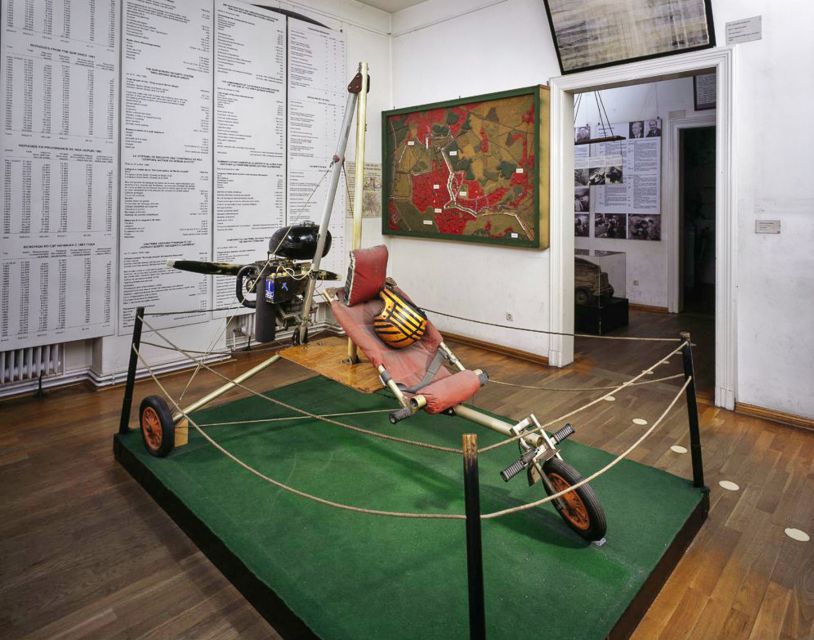
You may see equipment connected with escapes by air, land, and water. The hot-air balloon is an obvious attention grabber, but the mini-submarine is just as revealing. Both show how much planning and technical skill went into an attempt that could end in arrest, injury, or death.
Cars and aircraft help tell the same story from another angle. A vehicle could become a hiding place, a transport tool, or part of a carefully arranged crossing. The point is not simply that these objects are unusual. Each one records a decision to risk almost everything for the chance to live outside the GDR.
I like the way these artifacts put personal ingenuity beside political history. The Wall was an enormous state project, backed by guards and surveillance. Escape attempts were often small, improvised operations involving a few people. That contrast gives the museum its emotional force.
The displays also show the role of helpers. Friends, relatives, and organized supporters used the museum as a base for escape planning and resistance. Their work reminds you that the story is not only about people fleeing. It is also about people who accepted danger to help them.
Expect a lot of reading and an uneven route
This is a reading museum. You will find photographs, documents, explanatory panels, and long accounts of political events. Many explanations are available in several languages, making the museum more accessible if English is not your first language.
That detail matters because the sheer amount of text can be both its strength and its weakness. You receive a thorough account, with facts that are often absent from a basic school treatment of the Berlin Wall. You also need patience.
The route is not always easy to follow. The material can feel packed into rooms, and the narrative does not always move in a clean line from the Wall’s construction to its fall. Some sections reach beyond the Berlin Wall and Cold War timeline into other international conflicts and current human-rights concerns.
I see that broader approach as worthwhile, but it may surprise you. If you want only the history of Checkpoint Charlie from 1961 to 1989, parts of the museum may seem off topic. If you want the Wall placed within a larger argument about political repression and human rights, the later material gives the visit more relevance.
Several interactive displays have reportedly been out of order at times. Do not plan your visit around hands-on features. You should expect photographs and written explanations to do most of the work.
The museum’s presentation could use a modern redesign. Some displays feel dated, and a few sections are visually crowded. Still, the age of the museum is part of its character. It began as a protest site during the Wall era, not as a polished attraction built decades later.
More museums in Berlin:
- Berlin: Jewish Museum Berlin Entrance Ticket
★ 4.5 · 8,393 reviews - Berlin: DDR Museum Tickets
★ 4.3 · 3,443 reviews - Berlin: Natural History Museum Entrance Ticket
★ 4.6 · 3,382 reviews - Berlin: Neues Museum Entry Ticket
★ 4.6 · 3,261 reviews
What to see first if your time is short
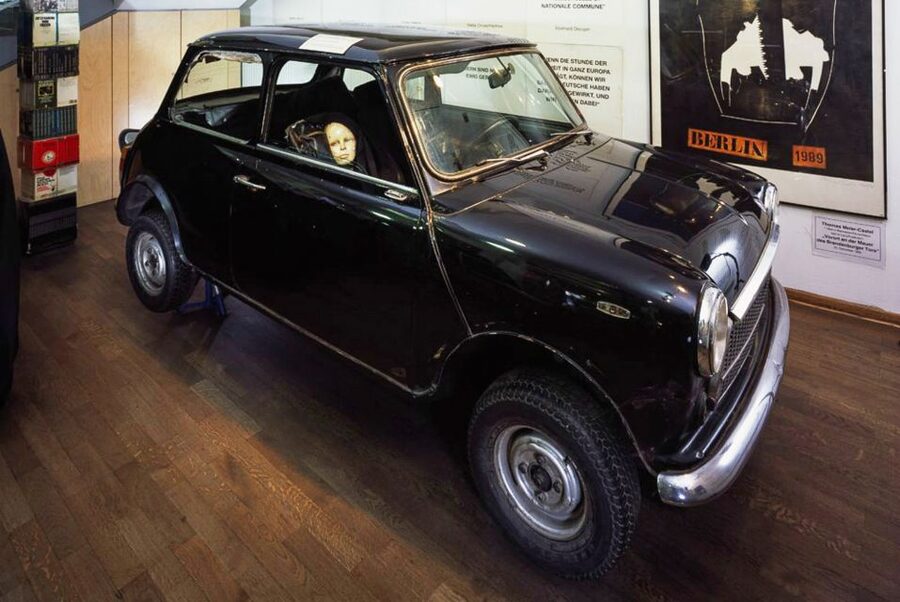
If you have only an hour, head first to the escape artifacts. Look for the hot-air balloon, mini-submarine, cars, and aircraft, then read the stories connected to them. These objects give you the clearest sense of what made this museum different from a general Berlin Wall exhibition.
Next, focus on the sections explaining life in East and West Berlin and the political division of Germany. This context helps make the escape attempts understandable. Without it, the vehicles can seem like clever curiosities rather than tools used against a closed border.
Save the upper sections for the end if you have enough time. The museum continues beyond Checkpoint Charlie and the Wall’s fall, with material about protests, nonviolent movements, peace, and human rights. One upper-floor presentation has been praised for its treatment of protest and the desire for world peace.
If you are visiting with teenagers, be realistic. The amount of text may test their patience, especially if they are expecting an interactive museum. I would give younger members of your group a simple mission: find the strangest escape vehicle, choose one story to read fully, and look for evidence of how ordinary people challenged the state.
How the setting changes the experience
The museum sits at the former Checkpoint Charlie, so you can connect what you read with the place outside. The setting is not a preserved border crossing in the complete sense, and the area around it can feel more commercial than solemn. Still, standing at the location helps anchor the information.
I recommend looking at the checkpoint area before entering, then returning outside afterward. First, you get the familiar image of the crossing. After the museum, you will understand more about the fear and control behind that image.
The museum also offers an overhead view of Checkpoint Charlie from inside. That is a useful detail because it lets you examine the site while thinking about the border as a working system rather than a photo backdrop.
Do not confuse the ticket with a full walking tour of Berlin’s Wall sites. Admission gives you the museum only. You will need a separate guided tour or your own route if you want to visit other Wall remains, memorials, or Cold War locations.
Audio guides, tours, and the best way to visit
The $21 admission includes the entrance ticket. It does not include an audio guide or guided tour.
Because the museum is so text-heavy, an audio guide might sound helpful. However, the written material is extensive, and some people find that the extra device is not essential. If you learn best by listening, ask about current audio options at the desk. If you prefer to read, allow enough time and move at your own pace.
A guided visit can help with the museum’s loose structure. Names connected with guided visits include Peter, Steve, and Louisa, but you should not assume a guide is part of this standard admission. The ticket described here is self-guided, so confirm the exact product if a named guide is important to you.
For the best experience, avoid treating this as a quick stop between other appointments. The museum is easy to underestimate, and several sections reward slow reading. If you have a fixed afternoon booking, allow extra time rather than trying to squeeze everything in.
Photography rules may also affect your plans. At least one recent visit did not allow photographs, so ask at the entrance before taking out your camera. Policies can change, and you should not assume that every display may be photographed.
Is $21 good value?
At $21 per person, this is not Berlin’s cheapest museum visit. The value depends on how much time you give it.
For a 45-minute walk-through, the price feels high. For two or three hours of original artifacts, escape accounts, political background, and human-rights material, it becomes more reasonable. The museum is also unusually specific: it combines the Checkpoint Charlie setting with objects donated by people involved in escapes.
The skip-the-line feature adds convenience, not necessarily a major saving. At busy times, avoiding a queue can help you fit the museum into a packed Berlin schedule. At quiet times, especially in low season, you may walk straight in anyway.
I would compare the online price with the door price before booking. Advance admission offers flexibility and may prevent waiting, but one family found that booking ahead added several pounds per person. The booking terms do offer free cancellation up to 24 hours before the visit and reserve-now, pay-later availability, which can matter if your schedule is unsettled.
Who will appreciate this museum most
I recommend it most strongly if you want human stories behind Cold War politics. The museum explains the system, but it keeps returning to individuals who planned escapes, took risks, and helped others.
It is also a good choice for first-time visitors to Berlin who want a direct introduction to the Wall and East/West German history. You will leave with more than the usual picture of a concrete barrier and a famous checkpoint.
History students, adults, and patient older children will find plenty to work with. People who dislike long written displays may prefer a guided walking tour or a smaller, more modern museum.
The museum can also be meaningful if you are interested in current events. Its later sections connect the Wall’s story with ongoing questions about borders, political power, protest, and human rights. That link is one reason the visit can feel relevant rather than sealed in the past.
Should you book the Berlin Wall Museum at Checkpoint Charlie?
Book it if you want the unusual escape artifacts, a large amount of historical detail, and a museum that treats the Berlin Wall as a human-rights issue rather than only a Cold War photo opportunity. Give yourself at least two hours, and arrive ready to read.
Skip it if you want a short, polished, highly interactive attraction or if your Berlin schedule leaves only 30 minutes. Also compare the advance price with the door price, since the skip-the-line ticket may include an upcharge when there is no queue.
For most people with a serious interest in Berlin’s divided past, I would make the visit. The displays can feel old and crowded, but the objects and stories are hard to dismiss. At Checkpoint Charlie, that direct connection between place, evidence, and personal courage is worth your time.
FAQ
Where is the Berlin Wall Museum at Checkpoint Charlie?
The museum is at Friedrichstraße 43-45, 10969 Berlin, beside Checkpoint Charlie.
How much does admission cost?
The listed price is $21 per person.
How long is the ticket valid?
The ticket is valid for one day.
What does the ticket include?
It includes entrance to the Berlin Wall Museum.
Is a guided tour included?
No. A guided tour is not included with the entrance ticket.
Is an audio guide included?
No. The audio guide is not included.
Can I skip the ticket line?
Yes. The activity includes skip-the-ticket-line admission.
Is the museum wheelchair accessible?
Yes. The museum is listed as wheelchair accessible.
Can I cancel the booking?
Yes. You can cancel up to 24 hours in advance for a full refund.
Can I reserve now and pay later?
Yes. The booking option allows you to reserve your place and pay later.
More Skip the Line in Berlin
- Berlin: Panoramapunkt Skip-the-Line Elevator Ticket
★ 4.4 · 1,219 reviews - Skip-the-line Charlottenburg Palace Private Tour & Transfers
★ 5.0 · 6 reviews - Stasi Museum GDR History Skip-the-line Private Tour Berlin
★ 5.0 · 5 reviews - Skip-the-line Berlin Cathedral and Old Town Private Tour
★ 4.7 · 4 reviews
Just added around Berlin
- Berlin Highlights in One Day★ 5.0 · 3 reviews
- Private Berlin One Day Tour with a Local: See the City Unscripted★ 3.5 · 3 reviews
- Individual city tour Berlin for max. 8 persons★ 5.0 · 3 reviews
- Transfer from Berlin Schönefeld Airport (SXF) to Berlin city Hotels – ROUND TRIP★ 4.0 · 3 reviews
- Berlin: Museum Island Tour★ 5.0 · 3 reviews
- Private Analogue Photography Experience in Berlin★ 5.0 · 3 reviews
- Berlin: Local Food Tour in Secrets Hidden Gems★ 4.0 · 3 reviews
- Berlin & The Third Reich Private Guided Tour★ 5.0 · 3 reviews
Berlin Wall Tours, compared.

East Side Gallery Spree Cruise in a Solar Catamaran
Read our review →
Cold War, Berlin Wall, Spies and the East Side Gallery
Read our review →

Guided Bike Tour of the Berlin Wall and Third Reich
Read our review →

Browse the lists this tour appears in