
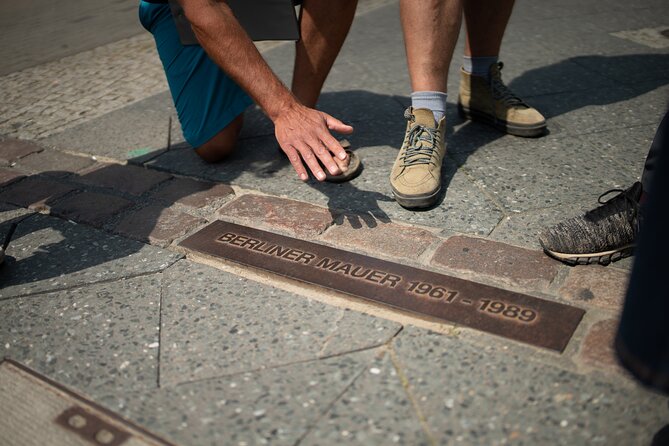
Review · BERLIN WALL TOURS
Cold War, Berlin Wall, Spies and the East Side Gallery
Berlin’s Cold War story becomes most powerful when you stand in the places where ordinary people faced impossible choices. This tour links the Palace of Tears, former border crossings, Wall remains, escape sites, and the East Side Gallery into one moving three-hour route. Guides such as Klaus, Nikolai, Paul, and Xavier are praised for turning hard history into clear, memorable stories.
I like two things right away: the tour connects grand political events with daily life in East Germany, and it uses public transport to reach places spread across the city. The glimpse through the former death strip is especially sobering, as is seeing the Wall from the eastern side. The main drawback is that you cover a lot of ground, and one poor guide or a large, noisy group could make the history harder to follow.
In This Review
- Key points to know before booking
- Why Cold War Berlin works best on foot
- Friedrichstrasse Station and the Palace of Tears
- Admiralspalast and the birth of East Germany’s ruling party
- Alexanderplatz and the public face of East Berlin
- Karl-Marx-Allee and socialist showpiece architecture
- The death strip, escape attempts, and the Wall Memorial
- Brandenburg Gate and the meaning of reunification
- East Side Gallery: from border barrier to public art
- The guides make or break the experience
- Timing, walking, and public transport
- Who should book this Cold War tour?
- Should you book it?
- FAQ
- How long does the Cold War Berlin tour last?
- Where does the tour begin?
- Where does the tour finish?
- Is public transportation included?
- What is included in the price?
- How far in advance can I cancel?
Key points to know before booking
- The route begins at a former Cold War border point: Friedrichstrasse Station and the Palace of Tears set the emotional tone before you head farther into East Berlin.
- The tour uses Berlin public transport: You need a Berlin AB ticket, listed at €10 per person, in addition to the tour price.
- You see several sides of the Wall story: Expect Wall remains, escape sites, death strip traces, former Stasi locations, and the murals of the East Side Gallery.
- Personal stories are a major strength: Guides including Nikolai and Tobi have used family or firsthand experiences to explain life under communist rule.
- The group is limited to 22 people: That is a manageable size, though staying close matters during the U-Bahn portions.
- The finish is at the East Side Gallery: You end near many transport choices, with time to continue exploring the Wall on your own.
Why Cold War Berlin works best on foot
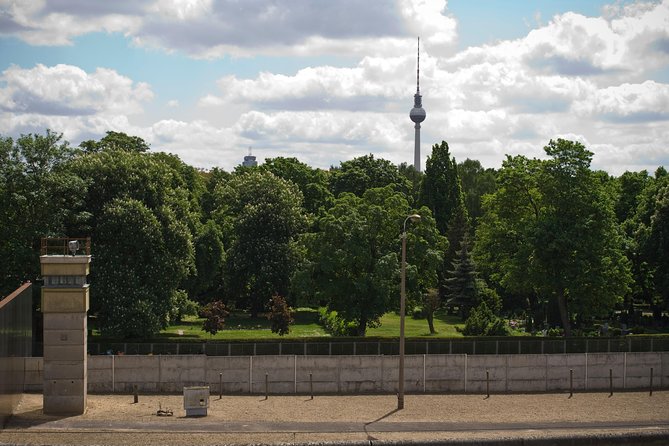
Berlin’s Cold War past is scattered. A border crossing sits beside a railway station. A socialist boulevard lies far from the Wall. A former death strip can look like an ordinary urban space until someone explains what happened there.
That is why this guided route has real value. You are not simply looking at isolated monuments. You are connecting the machinery of division with the lives it controlled. The guide explains the clash between the United States and its NATO partners and the Soviet Union and its allies, then brings the story down to questions that mattered to Berlin residents: Could you cross the border? Who was watching? What happened if you tried to escape?
The price is listed at $18.04 per person, which is low for a three-hour guided tour. You also need to budget for the Berlin AB transportation ticket, listed at €10. That still makes the experience good value if you want a clear introduction to the city’s divided past without paying museum admission fees at every stop.
The tour is offered in English and normally begins at 10 a.m. Be at the meeting point 15 minutes early. The information identifies the meeting area as outside Friedrichstrasse Station and gives Reichstagufer 17, 10117 Berlin, as the starting address. I would check the exact pin carefully before setting out, since one customer missed the tour after being dropped at the wrong place by a ride service.
More of the Berlin Wall, end to end:
- Skip-the-Line: Berlin Wall Museum at Checkpoint Charlie
★ 4.1 · 2,041 reviews - Berlin: East Side Gallery Spree Cruise in a Solar Catamaran
★ 4.0 · 1,039 reviews - THE WALL: asisi Panorama Berlin Ticket
★ 4.5 · 580 reviews
Friedrichstrasse Station and the Palace of Tears
Friedrichstrasse Station is a smart place to begin. During the Cold War, this was not just a railway and U-Bahn station. It was a controlled crossing point between East and West Berlin, with strict checks and painful separations.
The tour starts with an overview of Berlin after World War II. The city changed from the capital of Nazi Germany into the main pressure point in the struggle between the Soviet Union and the Western powers. That opening matters because the Wall did not appear as an isolated act. It grew from the wider division of Germany, Berlin, and Europe.
You also hear about the underground route sometimes called the ghost train. It once connected parts of East and West Berlin, though trains passed through closed or heavily guarded stations. This is a useful early lesson in how division could reshape even a simple journey across town.
The nearby Palace of Tears, or Tränenpalast, gives the political story a human face. This former border crossing was where people said goodbye under the watch of the East German state. Families could be separated after a visit, and the design of the place reflected that control.
The museum entry is free, and the stop lasts about 20 minutes. Exhibits cover escape attempts, separation, and reunification. You will not need to spend extra money to enter, but the stop can feel short if you want to examine every display in detail.
Admiralspalast and the birth of East Germany’s ruling party
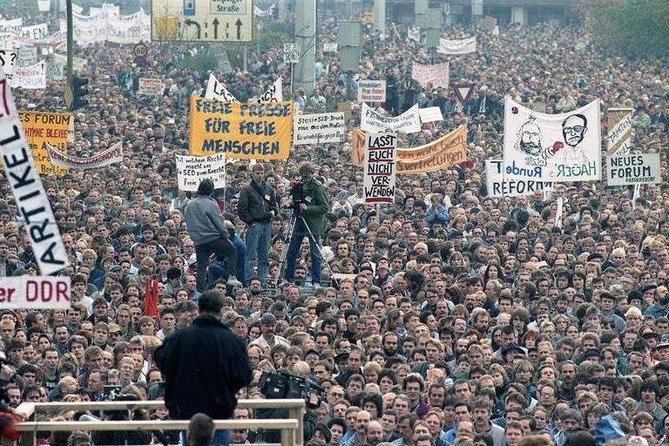
The brief stop at Admiralspalast lasts about five minutes, so treat it as a historical marker rather than a full visit. The site is linked to the founding of the Socialist Unity Party of Germany, or SED, in 1946.
That party became the ruling force in East Germany. Understanding its formation helps explain the political system you will hear about later: a state built around one dominant party, tight control of public life, and close links with Moscow.
The stop is not a major visual highlight, and no admission is included. Its value comes from the guide’s explanation. A strong guide can make a simple address meaningful by showing how the party’s rise shaped work, housing, education, travel, and policing for decades.
Alexanderplatz and the public face of East Berlin
Alexanderplatz was the center of East Berlin’s public life. It hosted official gatherings, communist rallies, shopping, transport, and ordinary errands. The square shows how ideology was presented in daily life, not just in government offices.
Here, the tour shifts from border drama to the experience of living inside East Germany. You learn about a state where the Stasi, the East German secret police, monitored citizens and built networks of informants. The guide also explains surveillance methods associated with the Stasi, CIA, and KGB, placing local control within the larger spy conflict.
Alexanderplatz is now a busy city square, so it can be difficult to create a quiet atmosphere. Stay close to your guide and listen carefully. The best part of this stop is not a single monument. It is the contrast between the open public space you see today and the pressure that once shaped behavior there.
The stop lasts about 15 minutes. That is enough for orientation, but not enough for a detailed look at every building or the surrounding museums. If the period interests you, you may want to return later with more time.
More Cold War Berlin:
- Berlin: Third Reich and Cold War 2 Hour Walking Tour
★ 4.9 · 6,830 reviews - Berlin’s Best: 2 Hour Walking Tour Third Reich and the Cold War
★ 5.0 · 5,486 reviews - Berlin: Cold War Walking Tour on Berlin Wall Route
★ 4.8 · 437 reviews - Berlin: Cold War Era History Guided Bike Tour
★ 4.8 · 413 reviews
Karl-Marx-Allee and socialist showpiece architecture
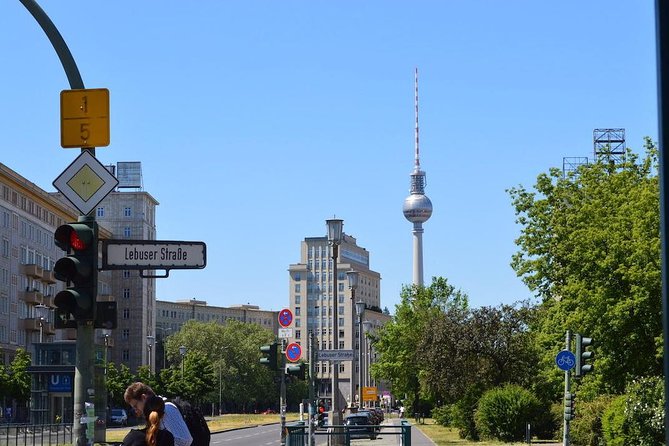
Karl-Marx-Allee offers one of the clearest visual reminders of East Germany’s ambitions. The wide boulevard was built as a showcase of socialist power, with monumental architecture intended to project order, strength, and modernity.
Your guide explains how the avenue worked as propaganda. Its scale suggested that the state could build a grand future for workers. Yet the impressive facades also hid the limits and frustrations of everyday life behind the Iron Curtain.
This stop lasts about 20 minutes. It is a good place to look beyond the Wall itself and understand how architecture carried political messages. You are seeing a city designed to make a statement, not merely a collection of apartment blocks and public buildings.
There is no included admission here, and the tour does not turn the boulevard into a full architecture walk. The focus remains the Cold War. If you enjoy buildings, pay attention to the proportions, repeated forms, and monumental scale, then consider returning independently.
The death strip, escape attempts, and the Wall Memorial
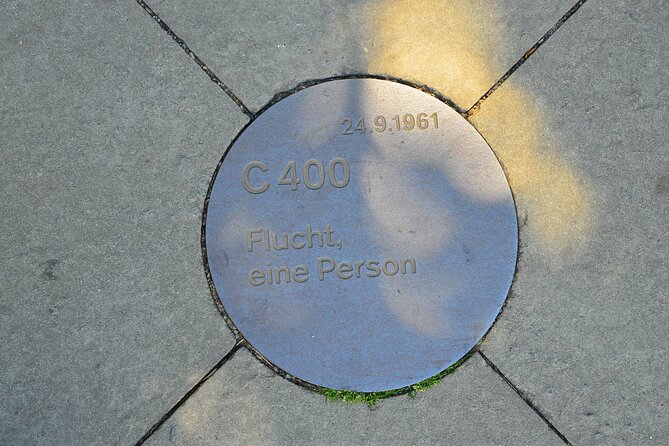
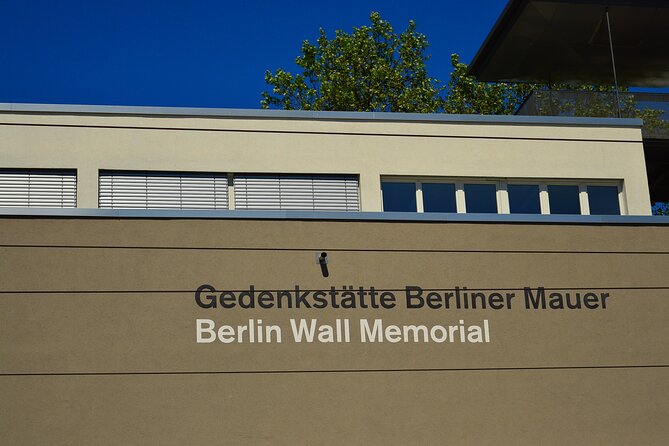
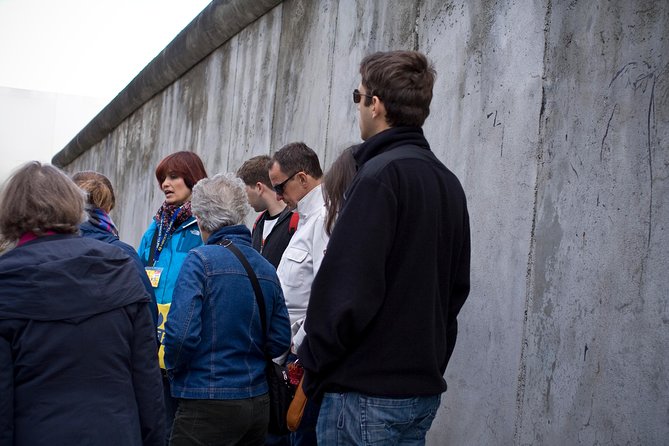
The most sobering section comes when the route reaches Wall remains and traces of the former death strip. At the Berlin Wall Memorial and related Wall sites, the guide explains how the barrier worked as a system rather than a single concrete wall.
The border could include fences, patrol paths, lighting, watchtowers, armed guards, and open areas designed to expose anyone trying to cross. Escape attempts involved tunnels, hidden compartments, forged documents, and dangerous runs across controlled ground. The stories are gripping, but they should not be treated as adventure tales. The risks were real, and many people were killed or imprisoned.
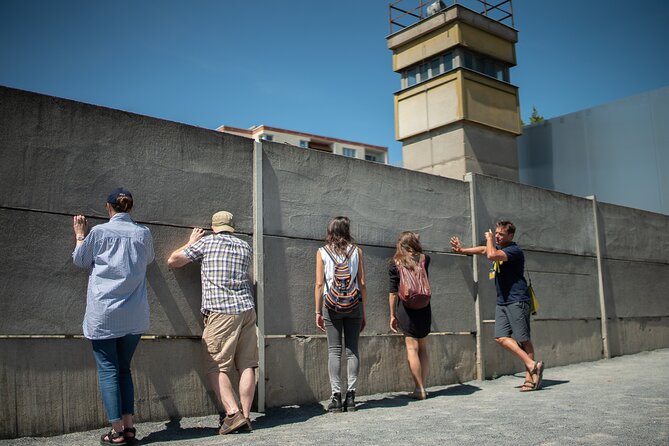
One particularly effective viewing point lets you look at the western side of the Wall through a crack from the eastern side, across the former death zone. That small act of looking helps you understand the psychological force of the border. The Wall was meant to block more than movement. It controlled what people could see, where they could stand, and how they imagined the world beyond it.
The route also refers to the former Stasi, or DDR secret police. The tour does not replace a full visit to the Stasi Museum, but it gives you the context to understand why that museum matters. If you have another half-day, adding the museum after this tour would make a sensible follow-up.
Brandenburg Gate and the meaning of reunification
Brandenburg Gate connects the Cold War to Berlin’s longer story. It was built long before the division of the city, yet during the Cold War it became one of the clearest symbols of separation between East and West.
You pass beneath the gate as the story moves toward reunification. Its meaning changed after the Wall fell. What once represented a closed frontier now serves as a national symbol of peace and unity.
This is one of the tour’s most familiar sights, so the historical explanation is more valuable than the photograph. Your guide helps you see why the gate mattered politically and emotionally, rather than treating it as another stop on a city sightseeing route.
The information supplied for the tour places Brandenburg Gate on the route, although the detailed stop list gives more time to Friedrichstrasse, Alexanderplatz, Karl-Marx-Allee, and the East Side Gallery. Do not expect a long formal visit here. Think of it as an important link in the story.
East Side Gallery: from border barrier to public art
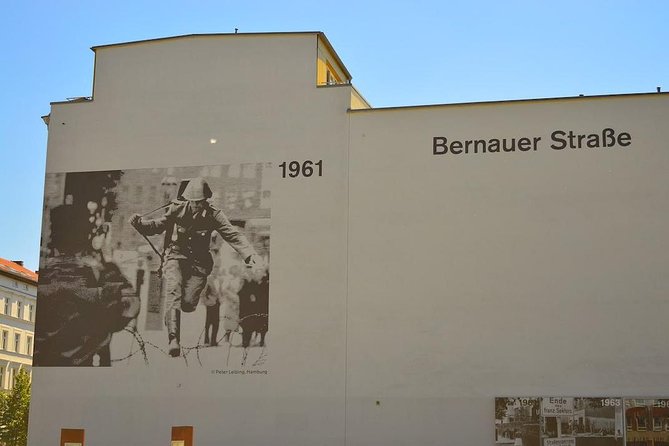
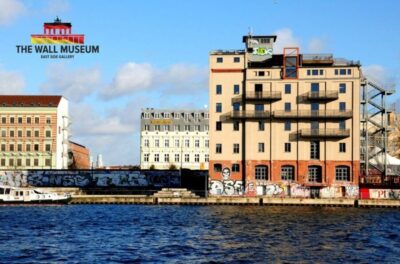
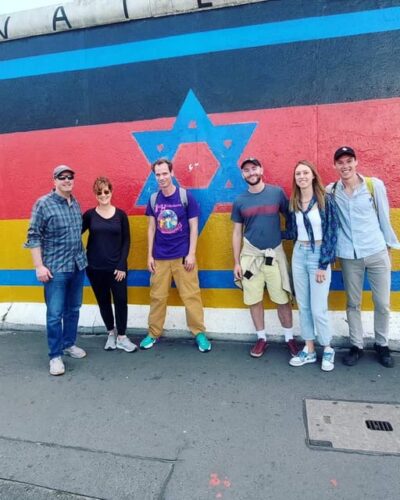
The tour ends at the East Side Gallery, where a long surviving section of the Wall carries murals by artists from around the world. The paintings turned a former instrument of repression into a public statement about freedom, hope, and political change.
The art is the most colorful part of the route, but the setting can also be the most crowded and distracting. Give yourself time after the tour to walk along the Wall at your own pace. The guided visit lasts about 25 minutes, which is enough to understand its role but not enough to study every mural.
This ending works because it does not pretend the past vanished when the Wall fell. The concrete remains, but its meaning changed. The East Side Gallery lets you consider both facts at once: this was a deadly border, and it is now an open-air place for art and memory.
The finish is practical, too. Mühlenstraße is surrounded by transport options, so you can continue to another part of Berlin without retracing the route.
The guides make or break the experience
The strongest part of this tour is the guide’s ability to explain difficult material in plain language. Klaus is praised for combining a wide command of the period with easy-to-follow storytelling and patient answers. Xavier is noted for his energy and willingness to handle many questions.
Nikolai brings a personal connection to the Iron Curtain through his family story, while Tobi has firsthand memories of growing up in communist East Germany. Paul has used photographs on an iPad to show how places looked during the divided years. Other highly regarded guides include Ariel, Jasper, Grayson, James, Tina, Rohan, Lewis, Aran, Cameron, Glen, and Eran.
That range matters because the experience can feel different depending on who leads it. Some guides rely on personal stories. Others focus more on political structure, photographs, or escape accounts. The common strength is clear explanation and enthusiasm for the subject.
There has also been at least one poor experience involving weak historical structure, missed sites, difficulty hearing, and too much time spent on guessing games. That is a useful warning. If your guide is hard to hear, move closer early and ask questions when the group stops. A three-hour outdoor tour depends heavily on clear delivery and good group control.
Timing, walking, and public transport
The tour lasts about three hours, but one guide has occasionally continued beyond the scheduled length to answer questions. That can be welcome if you have no immediate plans, but do not schedule a tight museum reservation right afterward.
You will walk between several sites and use Berlin’s U-Bahn or other public transport. One description characterizes the walking as moderate, enough to keep the route active without making it an exhausting march. Still, wear comfortable shoes and prepare for weather. The tour runs outdoors, and Berlin can feel cold even when the calendar suggests otherwise.
Bring or buy the required Berlin AB ticket. The supplied information lists a day pass at €10 per person from the meeting point. Transport is not included in the $18.04 tour price, and hotel pickup and drop-off are not provided.
With a maximum of 22 people, the group should remain workable. The main challenge comes during station changes and boarding. Keep the guide in sight, especially if you stop to take photographs.
Who should book this Cold War tour?
I would choose this tour if you want a strong first look at divided Berlin, especially if you prefer places and stories over a long museum visit. It suits adults, families with school-age children, and anyone who knows the Wall mainly from photographs but wants to understand how it affected real lives.
The personal stories can help younger visitors grasp the subject. Nikolai’s account of the Iron Curtain’s effect on his family and Tobi’s memories of East Berlin show that this is not ancient history. It is close enough to touch, and some people who lived in Berlin in the 1990s have still found the tour added facts they had never learned.
You may want a different option if you dislike group walking tours, need a fully accessible route with no public transport, or want a slow study of every museum display. The tour gives you breadth and context, not hours inside a single collection.
Confirmation is provided at booking. Service animals are allowed, the route is near public transportation, and most people can participate. Free cancellation is available up to 24 hours before the start time. After that point, the amount paid is not refunded.
Should you book it?
Book this tour if you want the Berlin Wall explained as part of a larger Cold War story. The Palace of Tears, death strip viewpoints, Alexanderplatz, Karl-Marx-Allee, Brandenburg Gate, and East Side Gallery create a useful arc from division to reunification.
At $18.04, it is a strong value, even after adding the Berlin AB transport ticket. Go in with comfortable shoes, an open schedule after the tour, and realistic expectations about group guiding. Check the meeting location carefully, arrive 15 minutes early, and stay close during the transit sections.
I would especially recommend it for a first visit to Berlin or for families who want history presented through real places. If the subject becomes a major interest, continue with the Stasi Museum and return to the East Side Gallery on your own. That combination gives you the guided overview and the extra time needed for closer study.
FAQ
How long does the Cold War Berlin tour last?
The tour lasts approximately three hours. It may run a little longer if the guide takes time to answer questions.
Where does the tour begin?
The meeting area is outside Friedrichstrasse train station. The supplied starting address is Reichstagufer 17, 10117 Berlin. Arrive 15 minutes before the 10 a.m. start time and check the exact meeting point when booking.
Where does the tour finish?
The tour ends at the East Side Gallery on Mühlenstraße, 10243 Berlin. The area has several transport options for continuing your day.
Is public transportation included?
No. You need a Berlin AB transportation ticket, listed at €10 per person. The route uses Berlin public transport to reach some of the Cold War sites.
What is included in the price?
A local expert guide is included. Food, drinks, hotel pickup, hotel drop-off, and the Berlin transport ticket are not included.
How far in advance can I cancel?
You can cancel for a full refund up to 24 hours before the experience start time. Cancellations or changes made less than 24 hours before the start are not accepted for a refund.
More Museums in Berlin
- Berlin: Jewish Museum Berlin Entrance Ticket
★ 4.5 · 8,393 reviews - Berlin: DDR Museum Tickets
★ 4.3 · 3,443 reviews - Berlin: Natural History Museum Entrance Ticket
★ 4.6 · 3,382 reviews - Berlin: Neues Museum Entry Ticket
★ 4.6 · 3,261 reviews
Just added around Berlin
- Berlin Highlights in One Day★ 5.0 · 3 reviews
- Private Berlin One Day Tour with a Local: See the City Unscripted★ 3.5 · 3 reviews
- Individual city tour Berlin for max. 8 persons★ 5.0 · 3 reviews
- Transfer from Berlin Schönefeld Airport (SXF) to Berlin city Hotels – ROUND TRIP★ 4.0 · 3 reviews
- Berlin: Museum Island Tour★ 5.0 · 3 reviews
- Private Analogue Photography Experience in Berlin★ 5.0 · 3 reviews
- Berlin: Local Food Tour in Secrets Hidden Gems★ 4.0 · 3 reviews
- Berlin & The Third Reich Private Guided Tour★ 5.0 · 3 reviews
Berlin Wall Tours, compared.

Skip-the-Line: Berlin Wall Museum at Checkpoint Charlie
Read our review →
East Side Gallery Spree Cruise in a Solar Catamaran
Read our review →

Guided Bike Tour of the Berlin Wall and Third Reich
Read our review →

Browse the lists this tour appears in