
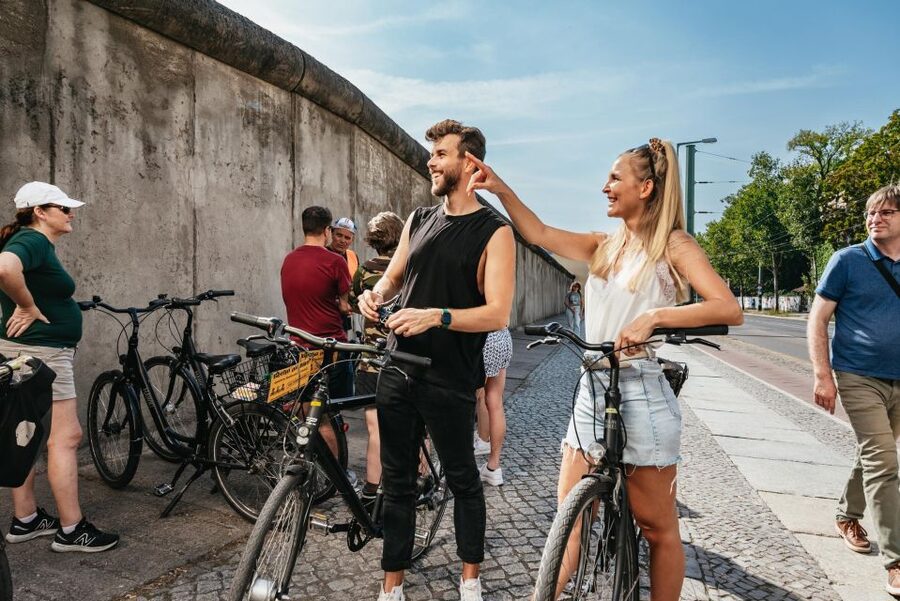
Review · COLD WAR BERLIN TOURS
Berlin: Cold War Era History Guided Bike Tour
Berlin’s Cold War story makes more sense when you follow the old border by bike. This tour links Checkpoint Charlie, Bernauerstraße, Mauerpark, and Brandenburg Gate, while your guide explains what happened at each place and how the Wall changed daily life.
I like the relaxed pace and the access to bike paths and lesser-seen Wall remains. I also like the strong storytelling from guides such as Paul, Lauren, Oleg, Ana, and James. The one drawback is the length: 15 kilometers over three to three and a half hours may feel long if you rarely cycle or if city traffic makes you uneasy.
In This Review
- Key points to know before you ride
- Why Berlin’s Wall story works so well by bicycle
- Starting at Kulturbrauerei in Prenzlauer Berg
- Bornholmerstraße and the first border stories
- Mauerpark and Bernauerstraße: where the border cut through daily life
- Checkpoint Charlie and the symbols of a divided city
- Escape attempts and the Wall’s sudden collapse
- Riding to Brandenburg Gate
- What the 15-kilometer ride feels like
- Guide style and group experience
- Is $35 a fair price?
- Who should book this bike tour?
- Should you book it?
- FAQ
- How long does the Cold War bike tour last?
- How far will I cycle?
- Where does the tour start?
- How do I reach the meeting point from Alexanderplatz?
- Where does the tour end?
- Is a bicycle included?
- Are helmets and gloves provided?
- Which languages are offered?
- Can children join the tour?
- Can I cancel for a refund?
Key points to know before you ride

- Follow the former Wall border: Cover about 15 kilometers between Prenzlauer Berg, Bernauerstraße, Checkpoint Charlie, and Brandenburg Gate.
- See more than the famous photo stops: The route includes Bornholmerstraße, Mauerpark, Wall fragments, a remaining watchtower, and the former crossings.
- Expect a relaxed cycling pace: The tour is built around frequent stops for explanations, questions, and photos rather than speed.
- Choose your own bicycle: A large fleet lets you select a bike that suits you, though you should ask about the braking system before setting off.
- Meet at the Kulturbrauerei: The Berlin on Bike depot is three U2 stops from Alexanderplatz, inside a former 19th-century brewery complex.
- Best for children eight and older: Comfortable clothes and shoes matter, and helmets, gloves, sunscreen, trouser clips, and rain ponchos are available.
Why Berlin’s Wall story works so well by bicycle
The former Berlin Wall cut through neighborhoods, streets, parks, and railway lines. Seeing those places from a bicycle gives you a useful sense of distance and connection. You do not visit one isolated memorial and then move on. You trace a line that once divided homes, families, workplaces, and the city itself.
That physical movement is the tour’s main strength. You ride from one chapter to the next, often using paths that are easy to miss when you travel on foot. The pace is gentle enough for your guide to stop and explain the setting, while the bicycle lets you cover ground without spending the day on public transport.
The tour also avoids treating the Wall as a single monument. You see former crossings, Wall fragments, a watchtower, memorial areas, and major Berlin landmarks. The result is a broader picture of the Cold War and its effect on ordinary Berliners.
At $35 per person, the value is good if you want both transport and interpretation. A three to three and a half hour city tour covers a wide area, includes a bicycle, and gives you a guide who can connect the physical remains to the events that took place there. You are paying for context as much as for the ride.
More Cold War Berlin:
- Berlin: Third Reich and Cold War 2 Hour Walking Tour
★ 4.9 · 6,830 reviews - Berlin’s Best: 2 Hour Walking Tour Third Reich and the Cold War
★ 5.0 · 5,486 reviews - Cold War, Berlin Wall, Spies and the East Side Gallery
★ 5.0 · 1,024 reviews
Starting at Kulturbrauerei in Prenzlauer Berg
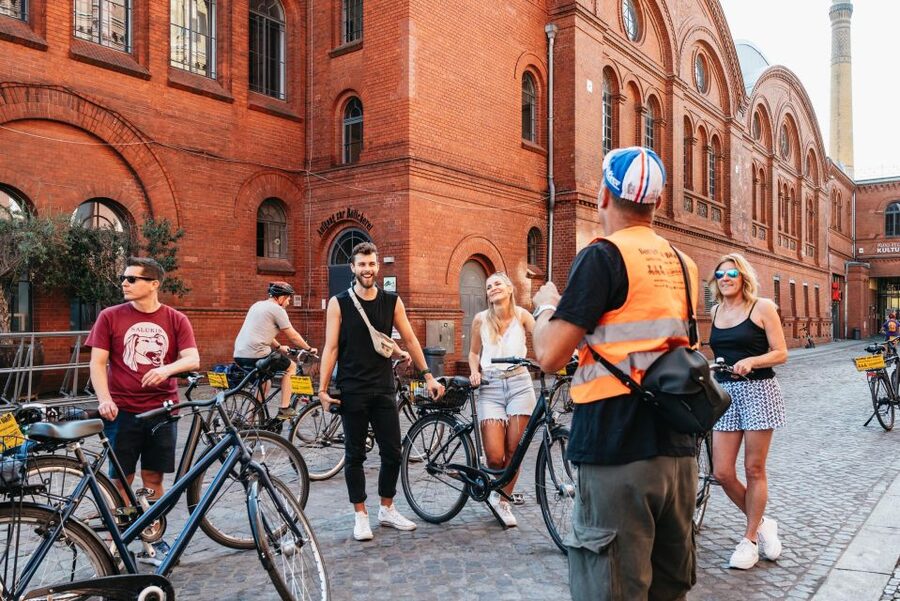
The meeting point is the Berlin on Bike depot at Kulturbrauerei, a large 19th-century brewery complex in Prenzlauer Berg. It is an appealing place to begin, since the old brick buildings give you a sense of Berlin’s industrial past before the tour turns toward Cold War history.
From Alexanderplatz, take the red U2 line toward Pankow and leave the train at Eberswalder Straße after three stops. Use the exit marked for Kulturbrauerei, then walk along Danziger Straße for about 150 meters before turning onto Knaackstraße. Go through the large entrance into the complex and follow the yellow signs to the bicycle depot.
Allow enough time to find the shop. The directions are clear, but Kulturbrauerei is a sizable complex, and you do not want to arrive while rushing. The tour ends at the same depot, which makes the start and finish simple to manage.
At the shop, you can choose from a large selection of bicycles. That is useful for mixed groups, since one person may prefer a different frame or riding position than another. Ask the staff to explain the brakes before you leave. One rider specifically found a coaster-brake bike less comfortable without prior experience, so do not simply grab the first bicycle available.
Bornholmerstraße and the first border stories
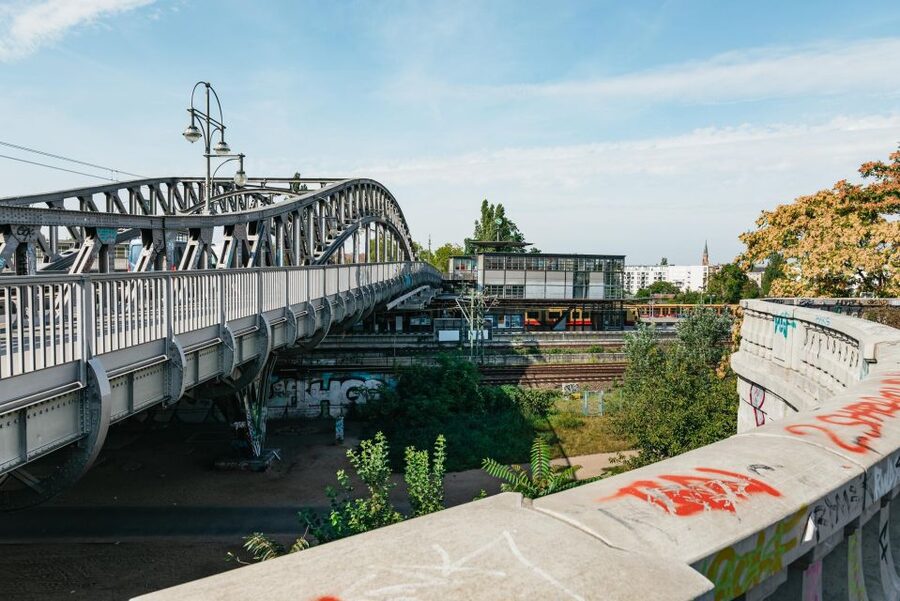
The route follows parts of the former boundary between East and West Berlin, including Bornholmerstraße. This area is closely tied to the opening of the border in 1989, and it helps set up the story of how the Wall finally came down after nearly 30 years.
Your guide supplies the meaning that a bare section of pavement or remaining barrier cannot provide on its own. The Wall was not only a concrete structure. It was a system of checkpoints, patrol areas, watchtowers, restricted zones, and rules that controlled movement through the city.
This is also where the bike format begins to pay off. You can move between sites without repeatedly working out train connections or long walks. The guide can keep the group together and adjust the route when needed, although major city events can affect the ride. One group found that the Berlin half marathon disrupted part of its outing, and the guide adapted as well as possible.
Mauerpark and Bernauerstraße: where the border cut through daily life
Mauerpark is one of the route’s most recognizable stops. Its name reflects the former Wall area, and the park helps you see how a place once associated with division has taken on a new public life.
From there, the ride continues through Bernauerstraße, one of Berlin’s most important Wall locations. Here, the border ran directly through a lived-in neighborhood. Buildings, sidewalks, and entrances became part of the division, making the Wall feel less like a distant political symbol and more like a force imposed on ordinary streets.
This section is especially useful if you want to understand the human side of the Cold War. Your guide discusses escape attempts, including both successful and tragic efforts. The stories give a sharper sense of the risks people took to cross from East to West, and why the border was so feared.
You should expect stops for explanation rather than a nonstop ride. That means the tour may feel slower than a normal city cycling trip, but the pauses are the point. You have time to look at Wall remains, ask questions, and connect one location with the next.
More bike days around Berlin:
- Berlin: Sights and Highlights Bike Tour with a Local Guide
★ 4.8 · 2,698 reviews - Berlin Highlights 3-Hour Bike Tour
★ 5.0 · 948 reviews - Berlin City Bike Tour with Beer Garden Stop
★ 5.0 · 917 reviews - Berlin Highlights: 3-Hour Bike Tour
★ 4.9 · 809 reviews
Checkpoint Charlie and the symbols of a divided city
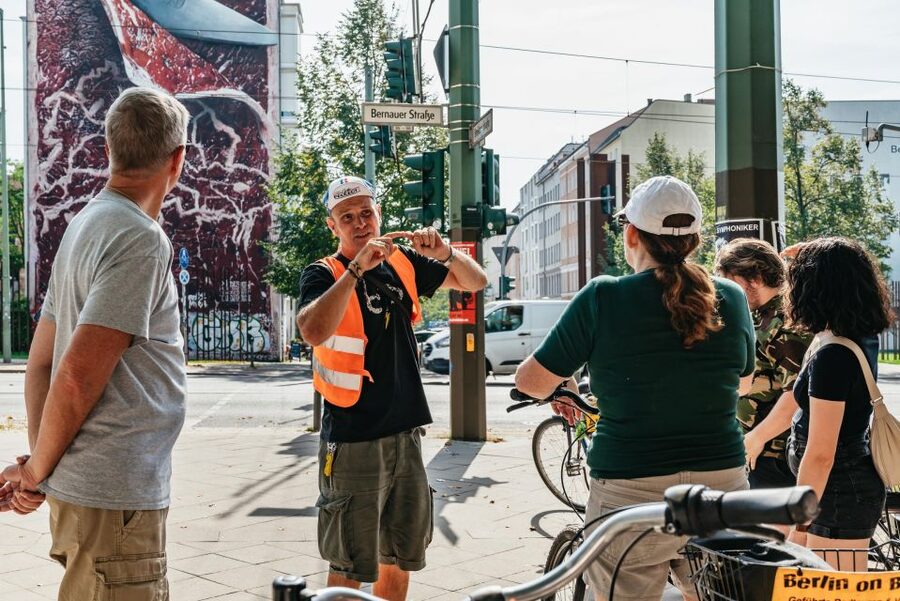
Checkpoint Charlie is one of Berlin’s best-known Cold War sites. Today, it is a powerful reminder of the former crossing, but it can also feel more staged and crowded than quieter Wall locations. Seeing it as one stop within a longer route helps put it in proportion.
The guide explains why the crossing mattered and how it functioned as a symbol of the confrontation between East and West. You then have a better basis for judging the site yourself, rather than treating the guardhouse and sign as the entire story.
The tour also visits one of the last remaining watchtowers. That is an important contrast to Checkpoint Charlie. Instead of seeing only a famous symbol, you get a physical reminder of the surveillance system that controlled the border.
For me, this combination is one of the route’s strongest features. Checkpoint Charlie gives you the famous name, while the watchtower and less familiar border points show how the system worked beyond the postcard view.
Escape attempts and the Wall’s sudden collapse
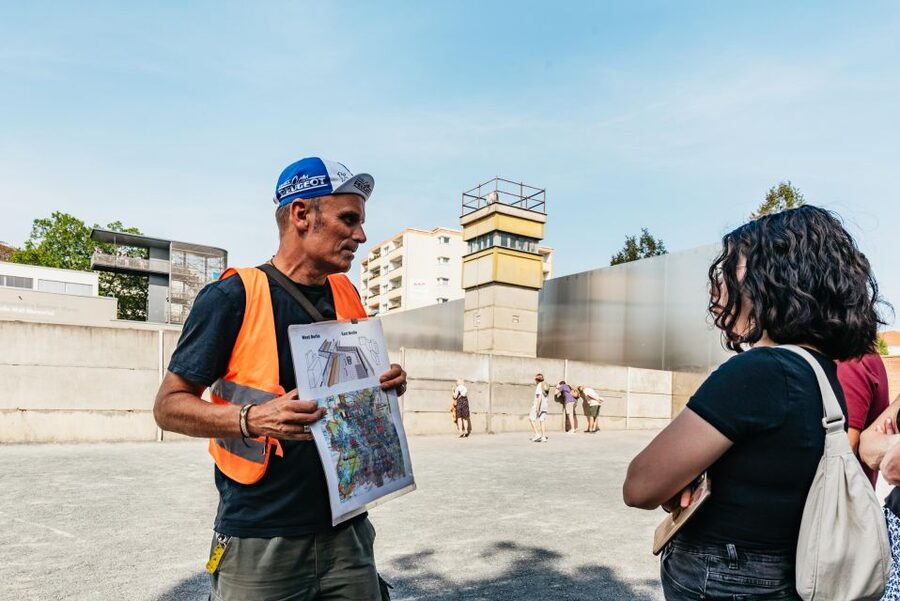
The human stories are central to the experience. Your guide explains escape attempts and the consequences for people who tried to cross. Some stories end in freedom, while others show the deadly risks built into the border.
You also learn how the Wall opened almost overnight after almost three decades. That detail can be difficult to grasp when you see only preserved sections today. The bicycle route helps by showing how many different parts of Berlin were tied to that event.
The best guides add humor without making light of the subject. Guides named Paul, Lauren, Oleg, Ana, Andy, Almar, Geoff, and James have been praised for clear explanations, engaging delivery, patience, and a good sense of humor. Your assigned guide will vary, but the tour is designed around live guiding rather than an audio recording.
Several guides use photos or diagrams to explain places as they looked during the division. That can be especially helpful when modern streets have changed and the original border is no longer obvious.
Riding to Brandenburg Gate
The route continues from Mauerpark and Bernauerstraße toward Brandenburg Gate. This gives you a change of scale. After tracing the border through neighborhoods, you arrive at one of the capital’s grandest landmarks.
Brandenburg Gate began as an 18th-century city gate and later became a major symbol of Berlin. During the Cold War, its position near the divided zone gave it added political weight. Your guide explains its origins and place in the city’s story, so the stop is not just a quick photograph.
The route covers a lot of Berlin, but it does so at an easy pace. You get a broad view of the city rather than spending the entire tour in one memorial area. That makes this a good choice if you want Wall history plus several major sights in one morning or afternoon.
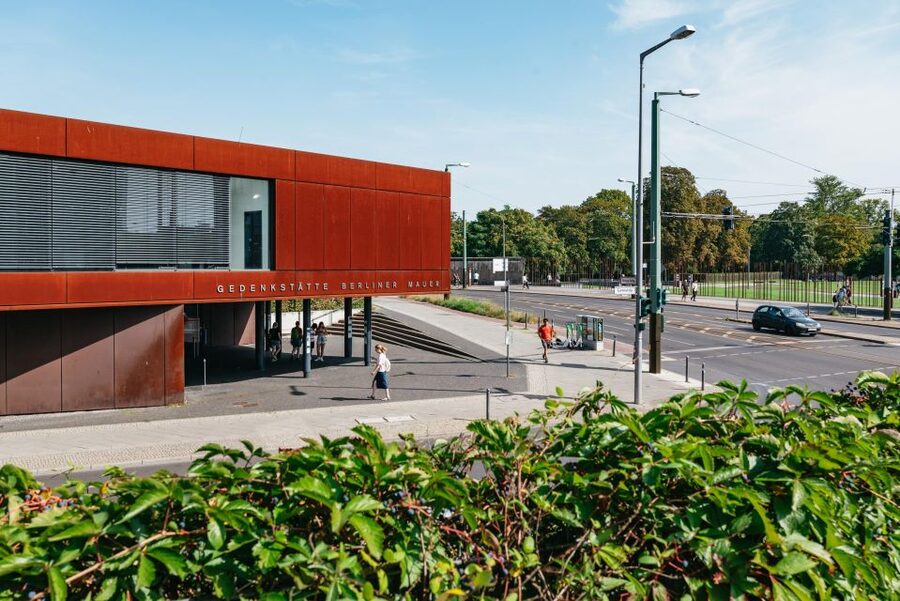
The tradeoff is that you will not spend a long time inside each site. This is a moving overview, not a museum tour. If you want a detailed indoor visit at the Berlin Wall Memorial or another historical museum, plan that separately.
What the 15-kilometer ride feels like
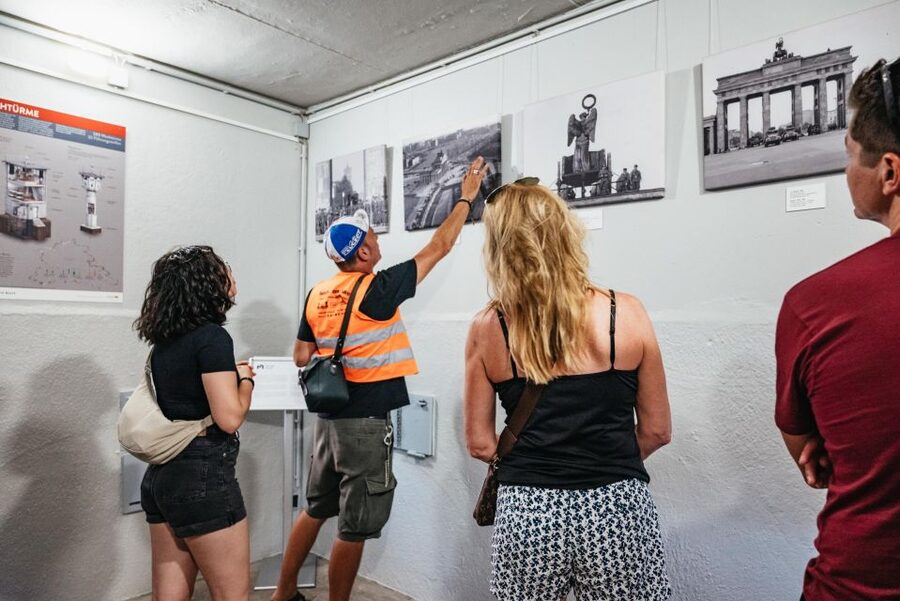
The total distance is about 15 kilometers, covered over three to three and a half hours. The pace is described as relaxed, with time to stop and listen. You do not need to be a serious cyclist, but you should be comfortable riding for several hours with breaks.
Berlin is a large city, and the bicycle saves time between the Wall locations. You also reach bike paths and routes you might not find by walking from one famous site to another. The ride is not simply a vehicle for moving around. It helps you understand how far the former border extended.
Wear comfortable shoes and clothes. Helmets and gloves are available on request, along with sunscreen, trouser clips, and rain ponchos in bad weather. The weather supplies are a practical touch, but you should still check the forecast and dress for a long period outdoors.
The activity is not suitable for children under eight. A private group is available, which may suit families with older children, friends, or anyone who wants a more personal pace and more room for questions.
Guide style and group experience
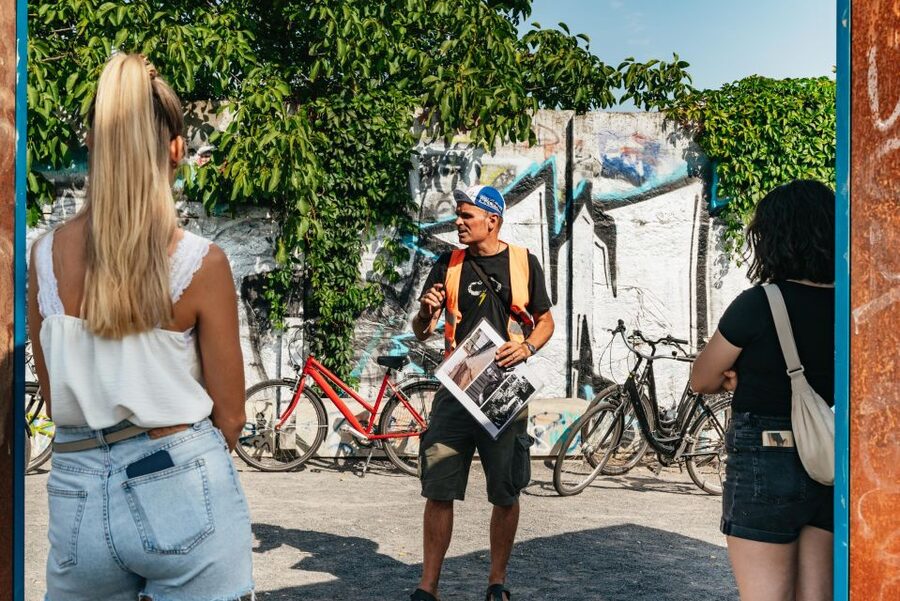
The guide can make a large difference on a history tour. The strongest guides on this route keep the facts clear, answer questions, and use stories to connect the sites. Paul has been praised for managing a large group safely and adjusting the route when people arrived late. Other guides, including Lauren, Oleg, Ana, and James, have been praised for their warmth, humor, and ability to explain difficult subjects.
You can book the tour in English, German, French, or Dutch. The language choice matters because the tour contains many details about political events, escape attempts, and changing borders. Choose the language in which you can follow a long spoken explanation most comfortably.
A mid-tour stop may allow time for coffee, sandwiches, and restrooms. This is useful because three hours on a bicycle can feel longer than the distance suggests. The available break also lets you reset before continuing toward Brandenburg Gate and the depot.
The route is generally easy to follow, but city conditions can change. A major event such as a half marathon may force a detour or make part of the ride less smooth. The guide can adapt, but no city cycling tour can control road closures or crowded streets.
Is $35 a fair price?
For $35, you receive the bicycle and a live guide for a substantial half-day outing. Helmet and gloves are available on request, and the operator provides sunscreen, trouser clips, and rain ponchos when needed. That keeps the extra-cost list short.
The value is strongest for first-time visitors who want to understand the Wall without arranging several separate sites. You cover major landmarks and less obvious remains in one route, while the guide gives you the background needed to make sense of what you see.
The price is less compelling if you already know Berlin’s Cold War story well or prefer to read at your own speed. You may want more time at each memorial than a cycling itinerary allows. Still, the combination of distance, equipment, and live explanation makes the fee reasonable for most visitors.
Free cancellation is available up to 24 hours before the activity for a full refund. You can also reserve and pay later, which helps if your Berlin schedule is still changing.
Who should book this bike tour?
I would choose this tour if you want history, outdoor movement, and a broad look at Berlin in one outing. It suits couples, groups of friends, older families with children over eight, and visitors who find a full day of museum interiors tiring.
It is also a good first or second day activity. The route gives you a mental map of the city and points out places you may want to revisit on foot. The guide can explain what you are seeing before you spend time at a museum or memorial.
You should think twice if you dislike cycling, have difficulty riding for several hours, or want an in-depth visit at a single Wall memorial. The relaxed pace helps, but the tour still covers 15 kilometers.
Should you book it?
Book this tour if you want the Berlin Wall explained through real places rather than a list of dates. The route connects Mauerpark, Bernauerstraße, Bornholmerstraße, Checkpoint Charlie, a remaining watchtower, and Brandenburg Gate in a way that makes the city’s division easier to picture.
At $35, it offers a lot of ground, practical equipment, and live interpretation. Choose a comfortable bicycle, ask about the brakes, arrive early enough to find the depot, and bring clothes suited to several hours outside. For a clear, active introduction to Berlin’s Cold War past, this is a strong choice.
FAQ
How long does the Cold War bike tour last?
The tour lasts about three to three and a half hours. Check the available dates for the specific starting times.
How far will I cycle?
You will cover approximately 15 kilometers at a relaxed pace.
Where does the tour start?
The tour starts at the Berlin on Bike depot inside the Kulturbrauerei complex in Prenzlauer Berg.
How do I reach the meeting point from Alexanderplatz?
Take the red U2 line toward Pankow and get off at Eberswalder Straße after three stops. Use the exit marked Kulturbrauerei, walk along Danziger Straße for about 150 meters, turn onto Knaackstraße, and follow the yellow signs inside the complex.
Where does the tour end?
The activity ends back at the Berlin on Bike depot where it starts.
Is a bicycle included?
Yes. A bicycle is included, and you can choose from a large fleet of bicycles.
Are helmets and gloves provided?
Helmets and gloves are available upon request.
Which languages are offered?
The live tour guide can conduct the tour in English, German, French, or Dutch.
Can children join the tour?
The tour is not suitable for children under eight years old.
Can I cancel for a refund?
You can cancel up to 24 hours in advance for a full refund. You can also reserve your place and pay later.
More History Walks in Berlin
- Berlin: Natural History Museum Entrance Ticket
★ 4.6 · 3,382 reviews - Berlin: World Heritage Cruise to Potsdam
★ 4.5 · 1,435 reviews - Berlin Historical Highlights Walking Tour
★ 4.9 · 657 reviews - Berlin Private Complete History All Day Walking Tour
★ 5.0 · 474 reviews
Just added around Berlin
- Berlin Highlights in One Day★ 5.0 · 3 reviews
- Private Berlin One Day Tour with a Local: See the City Unscripted★ 3.5 · 3 reviews
- Individual city tour Berlin for max. 8 persons★ 5.0 · 3 reviews
- Transfer from Berlin Schönefeld Airport (SXF) to Berlin city Hotels – ROUND TRIP★ 4.0 · 3 reviews
- Berlin: Museum Island Tour★ 5.0 · 3 reviews
- Private Analogue Photography Experience in Berlin★ 5.0 · 3 reviews
- Berlin: Local Food Tour in Secrets Hidden Gems★ 4.0 · 3 reviews
- Potsdam Highlights – Private sightseeing tour by minibus★ 5.0 · 3 reviews
Cold War Berlin Tours, compared.


Berlin’s Best: 2 Hour Walking Tour Third Reich and the Cold War
Read our review →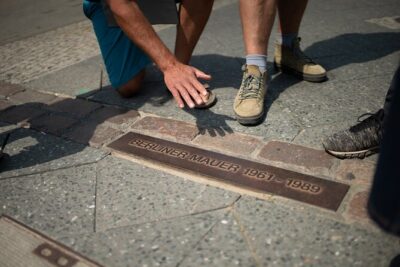
Cold War, Berlin Wall, Spies and the East Side Gallery
Read our review →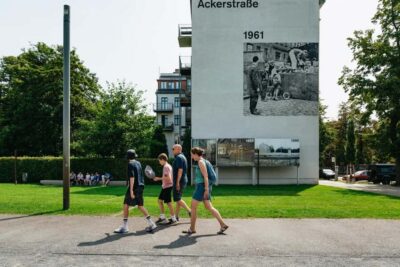
Cold War, Berlin Wall, Spies and the East Side Gallery
Read our review →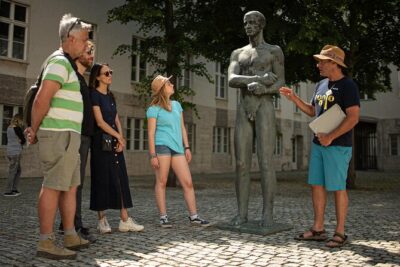
Private Walking Tour: World War 2 and Cold War Sites in Berlin
Read our review →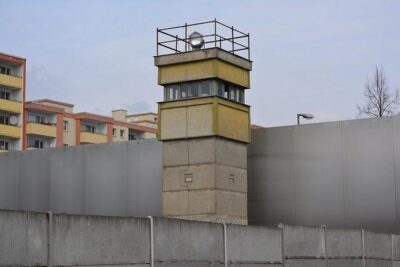
Explore The Berlin Wall: Cold War Berlin and Behind the Berlin Wall
Read our review →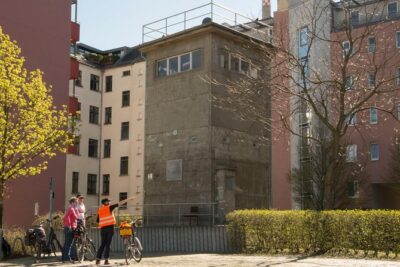
Berlin Wall and Cold War Bike Tour in Small Groups
Read our review →Browse the lists this tour appears in