
Review · BERLIN WALL TOURS
Berlin Wall and Cold War Bike Tour in Small Groups
Berlin’s Cold War story makes far more sense from a bicycle seat. The former border cut across the city in a long, uneven line, and this tour lets you follow that line from the Brandenburg Gate to Checkpoint Charlie, the Wall Memorial, Mauerpark, and other less obvious sites. I like the mix of famous landmarks and overlooked corners, plus the way guides such as Giovanni, Pete, Gilles, and Monti bring dates and personal stories together.
I also like that the riding is described as easy, with enough distance to see a broad slice of Berlin in about three and a half hours. The main drawback is practical: you are outside for the full tour, and a wet day can make the ride less comfortable. Bring suitable clothing, and allow for the possibility of a weather-related change.
In This Review
- Key points to know before booking
- Why a bicycle works so well for Berlin’s divided past
- Starting at Kulturbrauerei in Prenzlauer Berg
- Brandenburg Gate, a symbol caught between two Berlins
- The Berlin Wall Memorial gives the clearest physical sense of the border
- Mauerpark shows how a former border can become everyday Berlin
- Kulturbrauerei and the route’s quieter corners
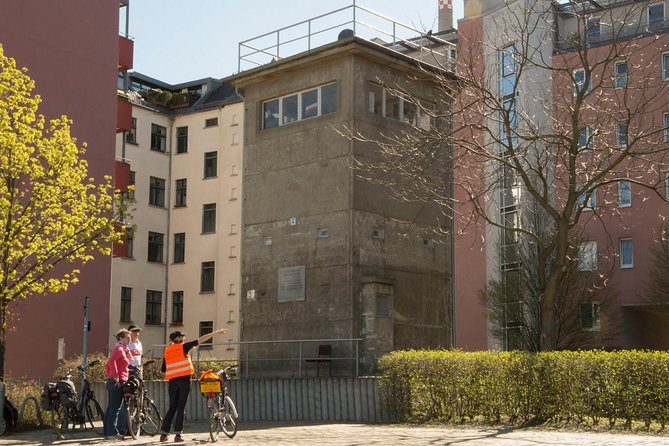
- The GDR watchtower at Kieler Eck
- Checkpoint Charlie, famous but best understood with context
- The Palace of Tears brings the human cost into focus
- Guides who make a serious subject easier to follow
- Price, pace, and who gets the best value
- Weather, group size, and simple planning tips
- Should you book this Berlin Wall bike tour?
- FAQ
- How long does the Berlin Wall bike tour last?
- How much does the tour cost?
- What is included in the price?
- Is the tour offered in English?
- Where does the tour start?
- Where does the tour finish?
- How large is the group?
- Which Berlin sights are included?
- Are food and drinks included?
- Can I cancel the tour for a full refund?
Key points to know before booking
- About 20 kilometers by bike: A French-language review described the route as 20 kilometers, giving you a useful sense of its reach across Berlin.
- Small groups capped at 15: The group is intimate enough for questions, though it may feel less personal when fully booked.
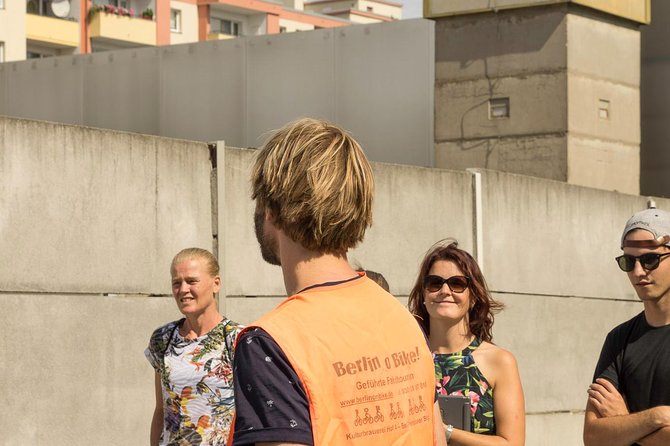
- Guides make the difference: Giovanni focuses on clear dates and facts, while Pete is praised for connecting the past to human stories and offering lunch suggestions.
- A broad Wall route: You visit major places such as Brandenburg Gate and Checkpoint Charlie, along with Mauerpark, a GDR watchtower, and the Palace of Tears.
- Bike and helmet included: You do not need to arrange equipment separately.
- Plan for outdoor conditions: The tour may operate in poor conditions, but it can also be canceled if weather is judged unsuitable.
Why a bicycle works so well for Berlin’s divided past
The Berlin Wall was not one single monument. It ran through streets, parks, railway areas, and former border crossings. Much of it disappeared after 1989, so walking between the surviving markers can sometimes feel disjointed.
A bike tour fixes that problem. You can cover several parts of the old border in one outing, and your guide can explain how the sites fit together. Instead of seeing one preserved section and then taking public transport across town, you follow a larger route through the city.
The ride lasts about three hours and 30 minutes. One detailed account put the distance at around 20 kilometers, though the exact route may vary. That is a useful point to consider. This is not a short spin around one neighborhood, but the cycling is generally described as easy, and the group stops along the way.
The ride also gives you a break from Berlin’s museums and indoor sights. You will need to listen while standing beside the bike, then pedal to the next location. For many people, that rhythm helps the story stay clear.
More of the Berlin Wall, end to end:
- Skip-the-Line: Berlin Wall Museum at Checkpoint Charlie
★ 4.1 · 2,041 reviews - Berlin: East Side Gallery Spree Cruise in a Solar Catamaran
★ 4.0 · 1,039 reviews - Cold War, Berlin Wall, Spies and the East Side Gallery
★ 5.0 · 1,024 reviews
Starting at Kulturbrauerei in Prenzlauer Berg
The tour begins and ends at Berlin on Bike, at Knaackstraße 97 in the Kulturbrauerei complex. The depot is in Prenzlauer Berg and is close to public transport, which makes the start fairly practical.
Kulturbrauerei is worth a look before you set off. This large former industrial complex covers about 25,000 square meters and is known for its courtyards and late 19th-century architecture. It has been protected since 1974 and is one of Berlin’s better-preserved industrial building groups from that period.
This starting point gives the tour a useful local setting. You are not simply meeting beside a modern hotel or a generic rental kiosk. You begin in a former industrial quarter, then move toward the places where Berlin’s postwar division shaped daily life.
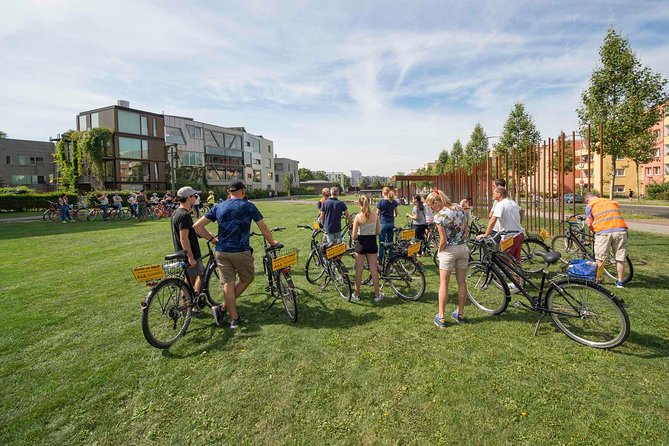
Bikes and helmets are included. The group limit is 15 people, which is small enough to keep the ride manageable. Still, a full group is not the same as a private tour. If you want long one-to-one conversations with the guide, ask about group size on your chosen date.
Brandenburg Gate, a symbol caught between two Berlins
The Brandenburg Gate is one of Berlin’s best-known sights, but its role in the divided city gives it extra weight on this route. The early classicist gate sits on the western side of Pariser Platz in Mitte.
You can expect a short stop here, listed at about 10 minutes. That is enough to orient yourself and hear why this landmark mattered during the Wall era, but not enough for an extended architectural visit.
I like beginning with a place you may already recognize from photographs. The guide can use the familiar gate as a starting point, then shift your attention from its grand design to the political geography around it. Berlin’s Cold War story was not confined to a distant border. It passed through the city center.
The stop is free, and there is no separate admission to organize. Keep your camera ready, but listen closely. The value here is the explanation, not simply another photograph of the gate.
The Berlin Wall Memorial gives the clearest physical sense of the border
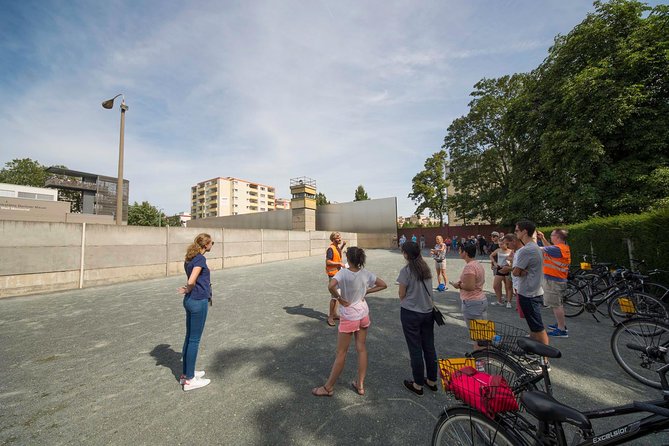
The Berlin Wall Memorial is one of the most important stops because it preserves more than a painted section of concrete. It commemorates the division of Berlin and the people who died at the Wall.
The scheduled stop is about 10 minutes, though the guide may use the area to explain more than the clock suggests. The memorial helps you see how the border worked as a system, rather than imagining a single wall that could be crossed with ease.
This is where a good guide matters most. Giovanni is praised for handling dates and facts clearly, while another guide, Pete, is described as connecting those facts to the struggles of people on both sides. The subject is serious, and a calm, compassionate presentation is more useful than a string of dramatic slogans.
You should expect the guide to discuss life in East and West Berlin from more than one angle. That balanced approach is one of the tour’s strongest features. The Wall was a political structure, but it also affected families, work, movement, and ordinary routines.
More Cold War Berlin:
- Berlin: Third Reich and Cold War 2 Hour Walking Tour
★ 4.9 · 6,830 reviews - Berlin’s Best: 2 Hour Walking Tour Third Reich and the Cold War
★ 5.0 · 5,486 reviews - Berlin: Cold War Walking Tour on Berlin Wall Route
★ 4.8 · 437 reviews - Berlin: Cold War Era History Guided Bike Tour
★ 4.8 · 413 reviews
Mauerpark shows how a former border can become everyday Berlin
Mauerpark takes its name from the Wall that once ran through the area. The park now lies between the districts of Prenzlauer Berg and Gesundbrunnen, along the former boundary between Prenzlauer Berg and Wedding.
The stop is brief, about five minutes. That means you should not expect a long park visit or free time to explore every path. Instead, the guide uses the location to show how a former border zone has changed purpose.
This is one of the more useful stops for understanding Berlin after reunification. A place once defined by separation is now part of ordinary city life. The contrast can be striking even without a large surviving Wall section.
Mauerpark also gives the ride a change of pace. After solemn memorial sites and formal landmarks, you reach a public green space with a more everyday feel. I like that range. It keeps the tour from treating the Wall only as a museum object.
Kulturbrauerei and the route’s quieter corners
Kulturbrauerei appears both as the starting point and as one of the route’s points of interest. The complex’s courtyards and brick industrial buildings offer a different kind of historical setting from the Wall itself.
The listed stop is about five minutes. You will not get a full architecture tour, but the guide can tie the area to Berlin’s changing neighborhoods and the city’s layers of 19th-century industry, postwar division, and modern use.
The tour’s strength is the movement between major names and smaller places. A guide can point out locations you might never choose on your own, which is especially valuable in Berlin. The route does not depend only on the best-known Cold War sights.
That broad approach also explains the high recommendation rate and 4.9 rating attached to the experience. The strongest praise centers on the full view of Berlin, not just the Wall itself. The ride gives you an outline of the city’s divided geography, then fills it with stories.
The GDR watchtower at Kieler Eck
The old GDR watchtower at Kieler Eck is a short but memorable stop. The tower is listed with admission included, unlike the free outdoor sites.
You may find this site more revealing than a large memorial because it is a physical reminder of surveillance and border control. A guide can explain the function of such a structure and place it within the wider network that controlled movement through divided Berlin.
The stop is scheduled for about five minutes. That is enough to see the tower and hear its role, but not enough for a long visit inside or a detailed exhibition. If this is a major reason for booking, keep your expectations measured.
Still, small remains such as this help fill in the gaps between famous landmarks. They show how the border was watched and enforced, not simply where the concrete barrier once stood.
Checkpoint Charlie, famous but best understood with context
Checkpoint Charlie was a crossing between the Soviet and American sectors from 1961 to 1990. It linked the East Berlin district of Mitte with West Berlin’s Kreuzberg along Friedrichstraße, between Zimmerstraße and Kochstraße.
The name is famous, and the modern area can feel crowded with commercial displays and photo opportunities. The real value of stopping here is the guide’s explanation of what the crossing meant during the Wall period.
This is a good example of why a guided route helps. On your own, you might see the checkpoint, take a picture, and move on. With context, you can place it within the larger division between the Soviet and American sectors and understand why the location became such a powerful Cold War symbol.
The supplied route does not list a separate admission fee here. Treat it as an outdoor stop, not a museum visit. You will likely get more from the historical explanation than from the present-day streetscape.
The Palace of Tears brings the human cost into focus
The Palace of Tears is the informal Berlin name for the former exit hall of the border crossing at Bahnhof Friedrichstraße. It served divided Berlin between 1961 and 1989.
The name alone hints at the emotional weight of the place. This was a point where people said goodbye under the restrictions of the divided city. The tour uses it to move the story beyond political leaders and border guards, toward separation and departure.
The stop is not given a precise duration in the supplied schedule, so allow the guide to set the pace. As with the other sites, the main experience is the explanation you receive on location.
I consider this one of the most valuable parts of the route because it adds another human layer to the Wall story. Brandenburg Gate gives you the national symbol. The Wall Memorial gives you the border system and its victims. The Palace of Tears helps you think about the personal moments created by that system.
Guides who make a serious subject easier to follow
The experience depends heavily on the person leading your group. Several guides are named in the available information, including Giovanni, Pete, Gilles, George, and Monti.
Giovanni is described as clear with historical dates and facts, while also bringing the struggles of East and West Berlin to life. Pete, known as Liverpool Pete, is noted for his compassion, broad knowledge of the subject, and ability to encourage different viewpoints. He also gives lunch suggestions, a useful extra at the end of a long ride.
Gilles is associated with an enthusiastic presentation and a route of about 20 kilometers. George is described as kind and helpful, even assisting with a video. Monti receives praise for leading a tour people would repeat.
You cannot choose the guide with certainty unless the operator confirms it. That is normal for a scheduled group activity. What you can expect is a guide-led history lesson delivered while moving between sites, rather than a silent rental ride.
The best guides for this subject do more than list dates. They explain how the Wall affected ordinary people and keep the political story from becoming a blur of names and years.
Price, pace, and who gets the best value
At $43.54 per person, the tour is reasonably priced for three and a half hours when the bicycle, helmet, and local guide are included. You are paying for equipment, route planning, and the ability to connect sites spread across Berlin without arranging each transfer yourself.
The value is strongest if you want a broad introduction to the Wall and Cold War period. In one morning or afternoon, you can see major landmarks, memorial areas, a former watchtower, a border crossing, and a railway exit hall.
The price is less compelling if you already know the Wall sites well and prefer to explore each one at length. The stops are often short, and the tour is designed for coverage rather than long museum visits.
Food and drinks are not included. A bathroom or refreshment stop may be arranged, but do not count on frequent breaks. One useful criticism is that the available break was fast-food style and that more options would help. Plan ahead, especially if you are riding with children.
Most people can take part, but you should be comfortable cycling for several hours and covering a route that may reach 20 kilometers. The tour is offered in English.
Weather, group size, and simple planning tips
The activity is capped at 15 people and requires a minimum number to operate. Confirmation arrives when you book, and the tour is near public transport.
The weather information needs a little care. The general details say the tour operates in all weather, with suitable clothing required. The cancellation terms also say poor weather can lead to cancellation, with a new date or full refund offered. In practice, check the operator’s message if conditions look doubtful.
Free cancellation is available up to 24 hours before the start time. Inside that window, changes and refunds are not accepted unless the provider cancels the tour.
Wear clothing you can cycle in and bring protection from rain or wind. Since food and drinks are not included, carry what you need for the ride. These are small preparations, but they can make a large difference on an outdoor history tour.
Should you book this Berlin Wall bike tour?
Book it if you want to understand how the Wall cut through Berlin, rather than seeing only one preserved section. The route covers the city well, the cycling is described as easy, and the guides bring together political facts, personal stories, and places you might miss on your own.
It is especially suitable for families, first-time visitors, and anyone who finds a walking lecture dull. A 12-year-old has enjoyed the format, and the moving route gives younger minds regular changes of scene.
Skip it if you want long, quiet visits at each memorial or museum. Also think twice if wet weather would ruin your day or if a 20-kilometer ride feels too long.
For the price, the combination of bicycle, helmet, small group, and local guide is a good deal. You finish where you began at Kulturbrauerei, with a much clearer sense of how Berlin’s divided past shaped the streets you are riding through.
FAQ
How long does the Berlin Wall bike tour last?
The tour lasts approximately three hours and 30 minutes.
How much does the tour cost?
The listed price is $43.54 per person.
What is included in the price?
A local English-speaking guide, bicycle, and helmet are included.
Is the tour offered in English?
Yes. The tour is offered in English.
Where does the tour start?
It starts at Berlin on Bike, Knaackstraße 97, 10435 Berlin, Germany, at the Kulturbrauerei.
Where does the tour finish?
The activity ends back at the starting meeting point.
How large is the group?
The group has a maximum of 15 participants.
Which Berlin sights are included?
The route includes Brandenburg Gate, the Berlin Wall Memorial, Mauerpark, Kulturbrauerei, the GDR watchtower at Kieler Eck, Checkpoint Charlie, and the Palace of Tears.
Are food and drinks included?
No. Food and drinks are not included.
Can I cancel the tour for a full refund?
Yes, if you cancel at least 24 hours before the experience start time. If the provider cancels because of poor weather or because the minimum number of participants is not reached, you will be offered another date or experience, or a full refund.
More Bike Days Around Berlin
- Berlin: Sights and Highlights Bike Tour with a Local Guide
★ 4.8 · 2,698 reviews - Berlin Highlights 3-Hour Bike Tour
★ 5.0 · 948 reviews - Berlin City Bike Tour with Beer Garden Stop
★ 5.0 · 917 reviews - Berlin Highlights: 3-Hour Bike Tour
★ 4.9 · 809 reviews
Just added around Berlin
- Berlin Highlights in One Day★ 5.0 · 3 reviews
- Transfer from Berlin Schönefeld Airport (SXF) to Berlin city Hotels – ROUND TRIP★ 4.0 · 3 reviews
- Private Berlin One Day Tour with a Local: See the City Unscripted★ 3.5 · 3 reviews
- Individual city tour Berlin for max. 8 persons★ 5.0 · 3 reviews
- Berlin: Museum Island Tour★ 5.0 · 3 reviews
- Private Analogue Photography Experience in Berlin★ 5.0 · 3 reviews
- Berlin: Local Food Tour in Secrets Hidden Gems★ 4.0 · 3 reviews
- Berlin & The Third Reich Private Guided Tour★ 5.0 · 3 reviews
Berlin Wall Tours, compared.

Skip-the-Line: Berlin Wall Museum at Checkpoint Charlie
Read our review →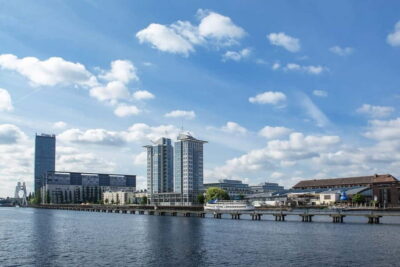
East Side Gallery Spree Cruise in a Solar Catamaran
Read our review →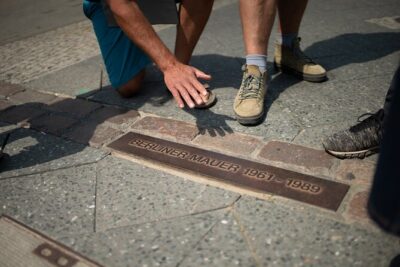
Cold War, Berlin Wall, Spies and the East Side Gallery
Read our review →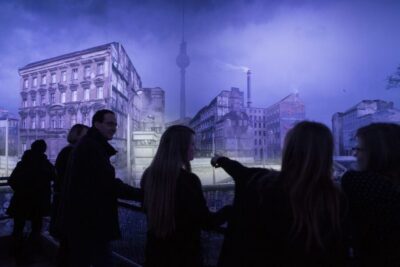

Guided Bike Tour of the Berlin Wall and Third Reich
Read our review →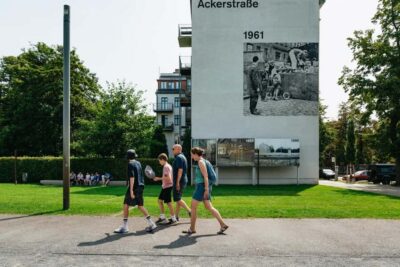

Browse the lists this tour appears in