
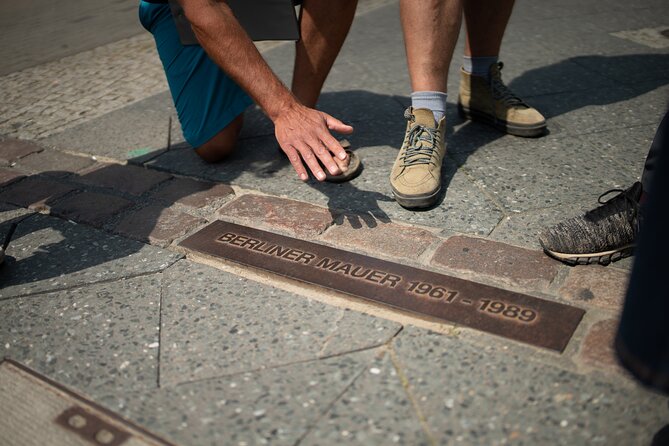
Review · BERLIN WALL TOURS
Cold War, Berlin Wall, Spies and the East Side Gallery
Berlin’s Cold War story becomes far more powerful when you move through the actual places where it happened. This three-hour tour links the Palace of Tears, Alexanderplatz, Karl-Marx-Allee, the former death strip, and the painted remains of the Wall at East Side Gallery.
I like the way the tour mixes big political events with ordinary lives, including escape attempts, surveillance, family separations, and the 1953 workers’ uprising. I also like the use of public transport, which helps you understand how Berlin’s divided geography still shapes the city. The main drawback is its brisk pace: you cover a lot of ground, and some stops receive only 20 minutes.
In This Review
- Key points to know
- Why this Cold War tour works in Berlin
- Meeting beside the Palace of Tears
- Alexanderplatz and the public face of East Berlin
- Karl-Marx-Allee and the 1953 uprising
- Friedrichshain and the Wall’s former security zone
- Seeing the former death strip
- East Side Gallery, from barrier to open-air art
- What the guides add to the experience
- The $18 price and the transport catch
- Who should book this tour?
- Should you book it?
- FAQ
- How long does the Cold War Berlin tour last?
- How much does the tour cost?
- Is public transportation included?
- Where does the tour begin?
- How do I identify the guide?
- Which languages are available?
- Which places does the tour visit?
- Does the tour include hotel pickup?
- Is the tour wheelchair accessible?
- What should I bring?
Key points to know
- The tour begins at the Palace of Tears: Meet beside Friedrichstrasse station, next to the former border crossing.
- You visit several parts of former East Berlin: Alexanderplatz, Karl-Marx-Allee, Friedrichshain, and East Side Gallery each show a different side of life under the GDR.
- The guide is central to the experience: Guides including Paul, Xavier, Tina, Nikolai, Klaus, Jamie, and Eran have been praised for clear explanations, personal stories, and a lively delivery.
- You need an AB day pass: Public transport connects the sites, and the pass is not included in the $18 price.
- The tour is mostly outdoors: Wear good shoes and bring weather-ready clothing. The tour runs in rain or shine.
- The ending is flexible: The stated drop-off points are Bernauer Straße and, for some pickup options, Brandenburg Gate.
Why this Cold War tour works in Berlin
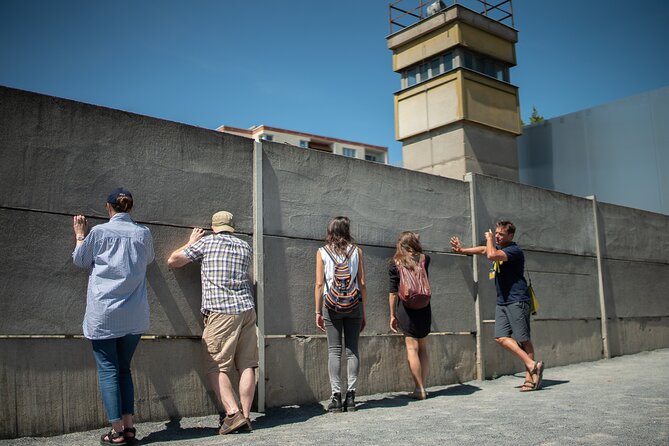
Berlin can make the Cold War feel oddly invisible. Traffic rolls over former border lines, new buildings fill old gaps, and only a few stretches of concrete remain. That is why this tour’s route matters. It gives you a timeline, but it also gives you places to attach the story.
You begin with the mechanics of division, then move into the political heart of East Berlin, continue along the grand socialist boulevard of Karl-Marx-Allee, and finish with the Wall as both barrier and artwork. The route is not just a parade of monuments. It shows how a government tried to shape daily life through buildings, police power, transport controls, and propaganda.
I would choose this tour if you want more than a quick photo at the East Side Gallery. The guide connects the surviving sites with stories about people who lived under surveillance, tried to escape, or found ways to resist. That human scale is the strongest part of the experience.
The tour has earned a 4.8 rating from 254 bookings, and the praise is remarkably consistent about the guides. Paul is repeatedly described as a strong storyteller, while Xavier is noted for his patience, humor, and care for the group. Nikolai and Tina are also praised for making the subject personal and easy to follow. Guide quality can vary on any scheduled tour, but the repeated focus on storytelling is encouraging.
More of the Berlin Wall, end to end:
- Skip-the-Line: Berlin Wall Museum at Checkpoint Charlie
★ 4.1 · 2,041 reviews - Berlin: East Side Gallery Spree Cruise in a Solar Catamaran
★ 4.0 · 1,039 reviews - Cold War, Berlin Wall, Spies and the East Side Gallery
★ 5.0 · 1,024 reviews
Meeting beside the Palace of Tears
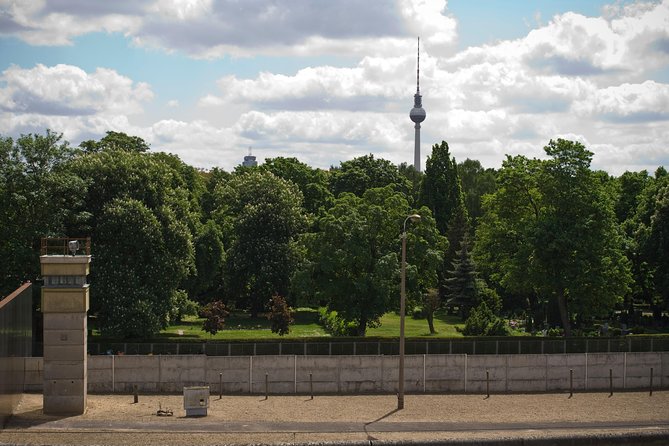
The usual meeting point is outside Friedrichstrasse train station, on the square beside the Tränenpalast, or Palace of Tears. Look for a guide with a yellow name badge and yellow umbrella.
The nickname is grim but memorable. This building was a departure hall at a border crossing between East and West Berlin. People said goodbye here under harsh conditions, often unsure when they would meet again. The short visit helps you understand that the Wall was not only a line of concrete. It was a system of permits, inspections, controlled movement, and painful separations.
Allow extra time to find the meeting point inside the busy Friedrichstrasse area. If you select an accommodation pickup option, the instructions are different: wait in your hotel lobby five minutes before departure. The route later ends at one of two stated drop-off locations, including Bernauer Straße.
Alexanderplatz and the public face of East Berlin
After the Palace of Tears, the group takes a short train ride of about five minutes to Alexanderplatz. You spend roughly 20 minutes here with the guide.
Alexanderplatz was the public center of East Berlin, and its broad open spaces and GDR-era buildings still give it a different feel from the older streets around Friedrichstrasse. The stop is useful because it shows how the East German state presented itself to its own population and to official visitors.
This is also where the tour shifts from border controls to the wider idea of socialist city planning. Look beyond the modern shops and traffic. The remaining architecture helps explain how the government wanted East Berlin to look: orderly, monumental, modern, and proudly separate from the West.
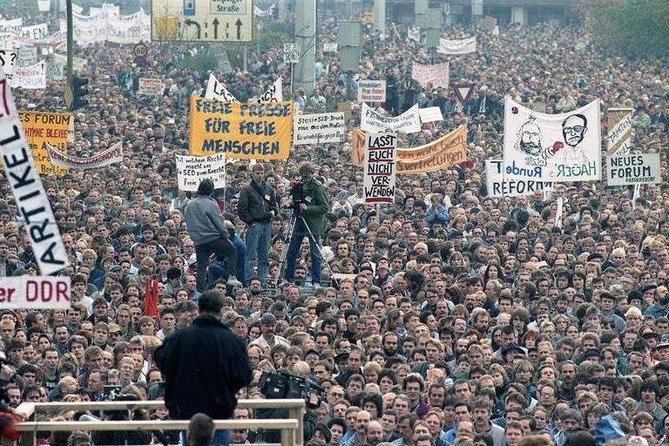
Your guide may also place Alexanderplatz in the context of protest and political change. The location became important during the final years of the GDR, when public demonstrations challenged the regime. You will not have long to wander, so listen closely and save independent exploration for another visit.
Karl-Marx-Allee and the 1953 uprising
From Alexanderplatz, the tour continues down Karl-Marx-Allee for around 20 minutes. This is one of the most striking sections of the route.
The boulevard was built as a showcase of socialist ambition. Its scale is enormous, with monumental apartment blocks and a formal layout designed to project power. The buildings were meant to represent a better future for working people, but the avenue also served as political theater. Architecture here was propaganda in stone and tile.
The guide explains how to read the boulevard rather than simply admire it. You will hear about the ideals the buildings were meant to express, as well as the reality of life behind the public image.
Karl-Marx-Allee also connects to the workers’ uprising of June 1953. Construction workers objected to increased work demands, and protests spread. The revolt shook the East German government and required Soviet military force to suppress it.
This is one of the tour’s most valuable stops because it complicates the usual picture of East Germany as a silent, obedient state. People did resist. The uprising also showed how little room the government had for independent labor action, even when its public language claimed to represent workers.
More Cold War Berlin:
- Berlin: Third Reich and Cold War 2 Hour Walking Tour
★ 4.9 · 6,830 reviews - Berlin’s Best: 2 Hour Walking Tour Third Reich and the Cold War
★ 5.0 · 5,486 reviews - Berlin: Cold War Walking Tour on Berlin Wall Route
★ 4.8 · 437 reviews - Berlin: Cold War Era History Guided Bike Tour
★ 4.8 · 413 reviews
Friedrichshain and the Wall’s former security zone
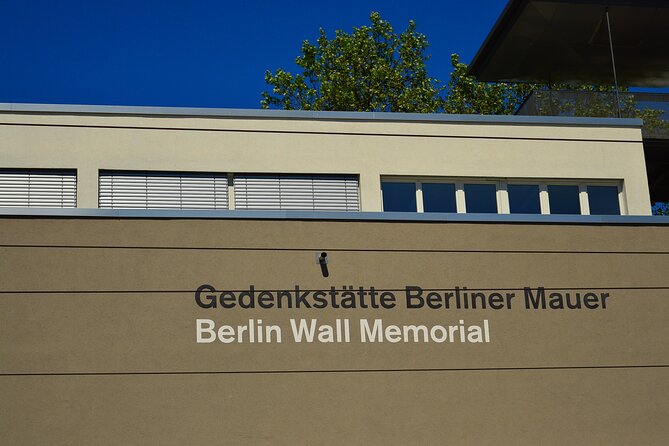
A second train ride, listed at about six minutes, takes the group toward Friedrichshain. You spend about 20 minutes walking and listening in this area.
Friedrichshain helps bridge the distance between political monuments and the physical border. Here, the guide develops the story of surveillance, escape, and the security machinery that protected the Wall. The focus includes the Stasi, East Germany’s secret police, and the informants who reported on friends, relatives, and colleagues.
The tour also covers escape attempts. People tried tunnels, rooftops, and other dangerous routes across the border system. The important point is not just how inventive these plans were. It is what the risks tell you about the pressures of everyday life in a country where leaving could mean prison, separation from family, or death.
This section depends heavily on the guide’s delivery. Names, dates, and political terms can blur together when you are walking outdoors. Guides such as Jamie G, Maria, Klaus, and Eran have been praised for keeping the story clear and for explaining how reunification affected people who had lived through the division.
Seeing the former death strip
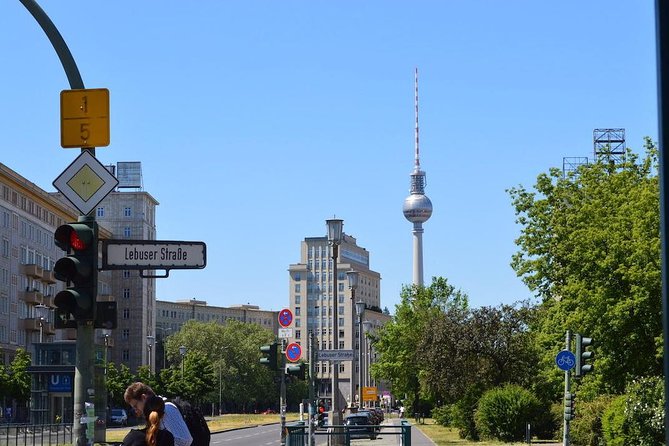
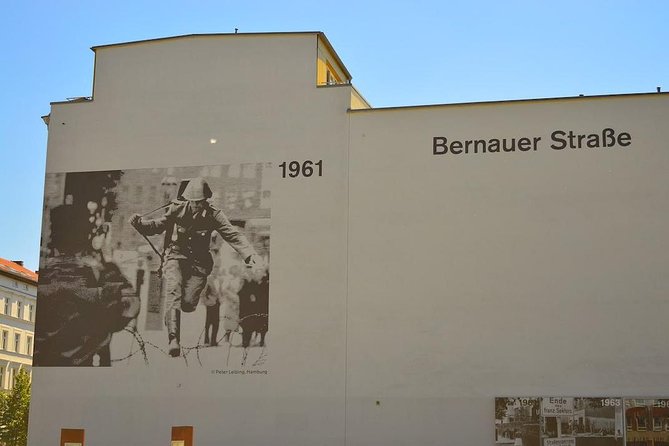
The route includes a section of the Berlin Wall and the original death strip area, with about 16 minutes of guided explanation. This is a short stop, but it carries the heaviest emotional weight.
The death strip was the controlled zone between parts of the border barrier. Guards watched this area closely, and escapees faced searchlights, patrols, fences, and the risk of being shot. Today, parts of the Wall and border layout can be difficult to read without help. The guide’s photographs and explanations make the missing structures easier to picture.
I especially value this part of the tour because it prevents the Wall from becoming a simple art backdrop. At East Side Gallery, the concrete is colorful and crowded with cameras. Here, you confront its original purpose: to stop people from leaving.
The pace can feel quick. Sixteen minutes does not allow for a long memorial visit or quiet reflection, and the exact surviving features vary by route. If you want a slower study of the border system, plan a separate visit to a dedicated memorial after the tour.
East Side Gallery, from barrier to open-air art
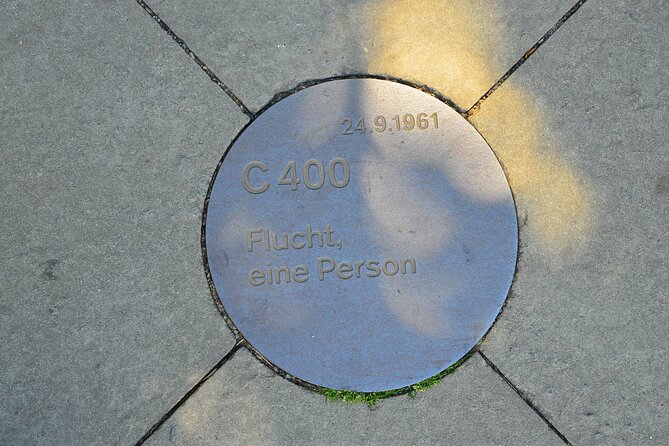
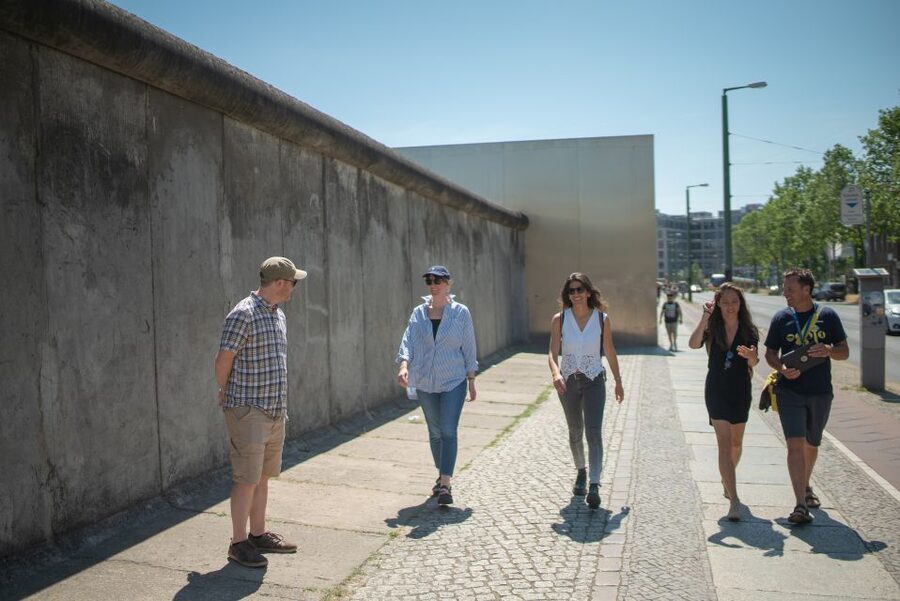
The final major stop is East Side Gallery, where the group walks along a long surviving section of the Wall for about 20 minutes.
This is the tour’s most familiar sight, but the earlier stops make it more meaningful. You arrive knowing why the Wall was built, how it was enforced, and what it meant to families. The murals then become part of the story of what happened after the border opened.
The gallery turned a symbol of fear into a public art space. The famous paintings are worth seeing, but the larger point is the change in meaning. The same kind of barrier that once divided Berlin now draws people together to look, photograph, and discuss the past.
Do not expect a quiet art walk. The gallery is open to the public, and your time with the guide is limited. Use the 20 minutes to understand the main works and the site’s role. You can return later if you want unhurried photographs or a closer look at individual paintings.
The tour ends after this section, with Bernauer Straße listed as one drop-off point. Depending on the option booked, another ending point may be in front of the Tourist Information office at Brandenburg Gate.
What the guides add to the experience
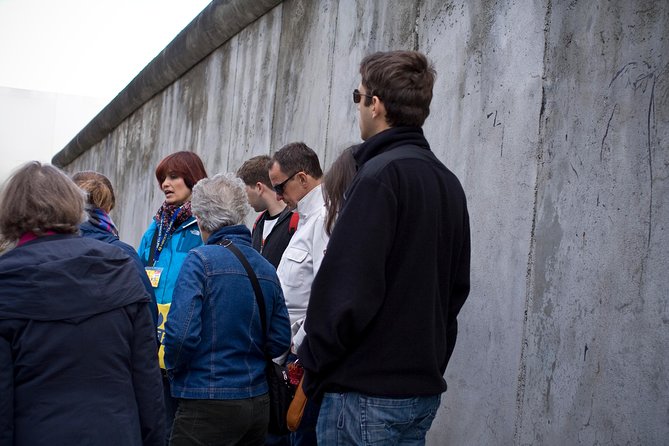
The strongest praise is aimed at the people leading the walks. Paul is described as passionate and able to explain the subject to someone starting with little background. Xavier is praised for using photographs, answering questions, checking on the group, and handling rain with care. Tina is noted for telling so many stories that the group wanted more time.
Several guides have personal connections to the former East Germany or lived close to the events. Nikolai, for example, has been praised for firsthand insight into life behind the Iron Curtain. Klaus has also shared personal stories, which can add a human voice to political events.
That does not mean every guide will have the same background. The tour is offered in English or German, and guide assignments can change. Still, the repeated emphasis on clear storytelling, patience, humor, and real-life examples suggests that the experience is built around explanation rather than simply moving from one photo stop to another.
Ask questions as you go. One past group had a large head count and found that a microphone would have helped. If your group is large, stay close to the guide and position yourself where you can hear clearly.
The $18 price and the transport catch
At $18 per person, this is a strong value if you want a guided introduction to Cold War Berlin. You are getting three hours with an English or German-speaking guide, several widely separated sites, and the benefit of a route that would take more planning on your own.
The catch is the required AB public transport day pass. It is not included in the tour price. Staff can help you buy one on the day, but you should budget for it and arrive prepared to use Berlin’s trains during the route.
The transport is not wasted time. It shows you how quickly Berlin’s districts connect today, while also reminding you that the city’s former division cut through ordinary routes and neighborhoods. Still, some people may prefer a single-location museum visit, especially if they dislike changing trains or walking between stops.
Food and drinks are not included, and there is no standard hotel pickup or drop-off unless you choose a pickup option. Three hours is enough for an introduction, not a full study of the Cold War.
Who should book this tour?
I would recommend it to first-time visitors who want a clear story of the Berlin Wall and East Germany. It also suits history fans, families with older children, and anyone who wants to understand why East Side Gallery matters beyond its famous murals.
You do not need prior knowledge. The guide-led structure gives beginners a usable timeline, while the stories of escape attempts, informants, and divided families add detail for people who already know the main dates.
You should think twice if your main interest is military strategy or high-level superpower politics. One past participant wanted more war and politics and less focus on the Wall. This route is strongest on the border, East German society, public space, resistance, and the human cost of division.
Bring comfortable shoes, a camera, and clothing suited to the weather. The tour runs regardless of rain, and much of it takes place outside. Wheelchair access is available, and private or small-group options can be selected.
Should you book it?
Book this tour if you want Berlin’s Cold War story explained across the city rather than reduced to one remaining stretch of concrete. At $18, plus the AB day pass, it offers good value for a well-organized introduction with strong guide-led storytelling.
I would especially choose it early in a Berlin visit. The route gives you useful context for later visits to the Wall memorials, museums, and East Side Gallery. Just expect a brisk walk, short stops, public transport, and a focus on lived experience more than grand military strategy.
FAQ
How long does the Cold War Berlin tour last?
The tour lasts three hours.
How much does the tour cost?
The listed price is $18 per person.
Is public transportation included?
No. You need an AB public transport day pass, which is not included. On-site staff can help you purchase it on the day.
Where does the tour begin?
The standard meeting point is outside Friedrichstrasse train station, on the square beside the Palace of Tears.
How do I identify the guide?
Look for a guide wearing a yellow name badge and holding a yellow umbrella.
Which languages are available?
The tour is offered in English and German.
Which places does the tour visit?
The route includes the Palace of Tears, Alexanderplatz, Karl-Marx-Allee, Friedrichshain, a Berlin Wall and former death strip area, and East Side Gallery.
Does the tour include hotel pickup?
Hotel pickup is optional for selected tour options. Standard hotel drop-off is not included.
Is the tour wheelchair accessible?
Yes, the activity is listed as wheelchair accessible.
What should I bring?
Bring comfortable shoes, a camera, comfortable clothing, and weather-appropriate clothing. The tour operates in all weather.
More Museums in Berlin
- Berlin: Jewish Museum Berlin Entrance Ticket
★ 4.5 · 8,393 reviews - Berlin: DDR Museum Tickets
★ 4.3 · 3,443 reviews - Berlin: Natural History Museum Entrance Ticket
★ 4.6 · 3,382 reviews - Berlin: Neues Museum Entry Ticket
★ 4.6 · 3,261 reviews
Just added around Berlin
- Berlin Highlights in One Day★ 5.0 · 3 reviews
- Private Berlin One Day Tour with a Local: See the City Unscripted★ 3.5 · 3 reviews
- Individual city tour Berlin for max. 8 persons★ 5.0 · 3 reviews
- Transfer from Berlin Schönefeld Airport (SXF) to Berlin city Hotels – ROUND TRIP★ 4.0 · 3 reviews
- Berlin: Museum Island Tour★ 5.0 · 3 reviews
- Private Analogue Photography Experience in Berlin★ 5.0 · 3 reviews
- Berlin: Local Food Tour in Secrets Hidden Gems★ 4.0 · 3 reviews
- Potsdam Highlights – Private sightseeing tour by minibus★ 5.0 · 3 reviews
Berlin Wall Tours, compared.

Skip-the-Line: Berlin Wall Museum at Checkpoint Charlie
Read our review →
East Side Gallery Spree Cruise in a Solar Catamaran
Read our review →
Cold War, Berlin Wall, Spies and the East Side Gallery
Read our review →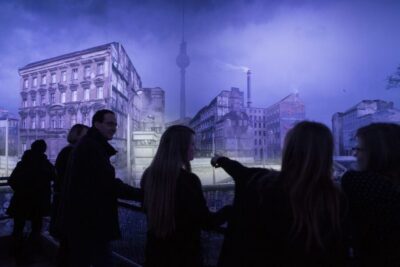

Guided Bike Tour of the Berlin Wall and Third Reich
Read our review →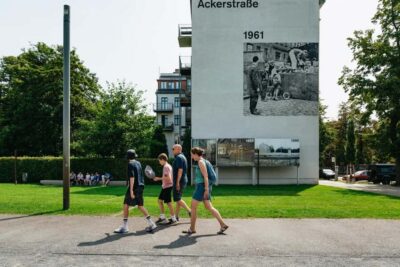

Browse the lists this tour appears in