

Review · KREUZBERG TOURS
Kreuzberg: Culinary Food Tour
Kreuzberg is best understood one bite and one street corner at a time. This three-hour tour links five food stops with stories about working-class Berlin, left-wing protests, GDR escape attempts, immigration, nightlife, and the neighborhood’s changing style. You move through streets, courtyards, and restaurants rather than sitting down for one large meal.
I especially like the five distinct tastings, since they let you sample Berlin classics, international food, and modern crossover dishes without committing to a full plate at every stop. I also like the way the route connects food with places such as SO36, Oranienplatz, and Oranienstraße. The main drawback is that drinks are not included, and the food may occasionally be served outdoors, where you may need to eat standing up.
In This Review
- Key points to know before you book
- Starting at Kotti, Kreuzberg’s noisy front door
- Oranienstraße and the cost of old city life
- SO36, Rio-Reiser-Platz, and Kreuzberg’s cultural memory
- Mariannenstraße and the five-stop tasting format
- Oranienplatz and Dresdener Straße
- Admiralstraße and the walk toward Grimmstraße
- What the food is really like
- Is $589 a fair price for up to 10 people?
- Who will enjoy this Kreuzberg walk?
- Should you book it?
- FAQ
- How long is the Kreuzberg Culinary Food Tour?
- Where does the tour begin?
- Where does the tour finish?
- How many food tastings are included?
- What kinds of food might be served?
- Is vegetarian food available?
- Is a vegan option available?
- Are drinks included?
- What languages are offered?
- Can I book a private group?
Key points to know before you book

- Five food stops in three hours: Expect small servings at five different restaurants rather than one long restaurant meal.
- Kreuzberg beyond the postcard view: The route covers Kottbusser Tor, Oranienstraße, SO36, Mariannenstraße, Oranienplatz, Dresdener Straße, and Admiralstraße.
- Stories carry the tour: Your guide discusses working-class housing, May Day protests, GDR escape attempts, Martin Luther King’s 1964 visit, and Berlin’s Jack the Ripper case.
- A useful group price: The cost is $589 for up to 10 people, which works out to $58.90 each if your group is full.
- Vegetarian but not vegan: A vegetarian option is available, but a vegan option is not.
- A private-group choice: You can book a private group, with tours offered in English or German.
Starting at Kotti, Kreuzberg’s noisy front door
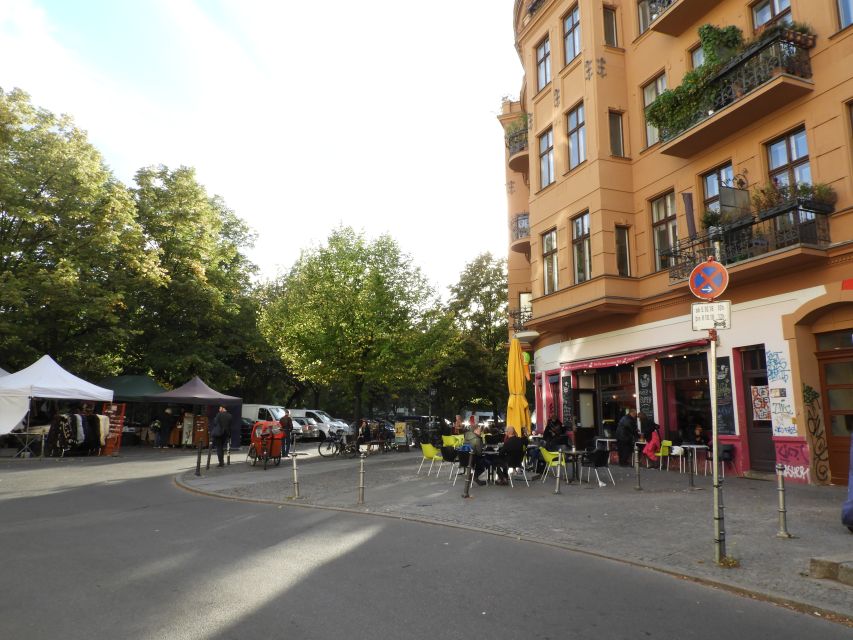
The tour begins at Kotti, the familiar short name for Kottbusser Tor. The exact meeting point can vary by booking option, so check your confirmation carefully. One listed starting option is FightClub Casino.
Kotti is a fitting place to begin. It puts you in the middle of Kreuzberg’s modern daily life, where traffic, housing, food businesses, and different communities meet. After a short introduction, your guide lays out how Kreuzberg developed as a working-class district in the mid-19th century.
That opening context matters. Kreuzberg is not simply a district known for bars and street art. Its present-day character grew from crowded housing, low rents, political activism, migration, and decades of social change. The tour aims to show you those connections before you start tasting your way through the neighborhood.
The first major stop is the Neues Kreuzberger Zentrum at Kottbusser Tor. You spend about 40 minutes here with a guided walk, sightseeing, a photo stop, and food tasting. This is a generous portion of the route, so expect the guide to spend real time explaining the area rather than rushing you toward the next snack.
More Kreuzberg on foot and by bike:
- Berlin: Kreuzberg Guided Walking Evening Tour
★ 4.7 · 555 reviews - Berlin: Alternative Bike Tour of Kreuzberg & Friedrichshain
★ 4.7 · 548 reviews - Berlin: 2.5-Hour Walking Tour through Kreuzberg 61
★ 4.9 · 525 reviews
Oranienstraße and the cost of old city life
From Kottbusser Tor, the route continues to Oranienstraße, one of Kreuzberg’s best-known streets. You spend about an hour here, making it the longest section of the tour. There is time for walking, photographs, stories, and another food stop.
Your guide explains how people once lived in crowded working-class conditions. One memorable detail is the old practice of renting an eight-hour stay on a mattress instead of renting a whole room or flat. It is a stark reminder that housing pressure is not a new Berlin problem.
Oranienstraße also helps explain Kreuzberg’s political identity. You hear about its working-class roots, left-wing groups, demonstrations, and the May Day marches linked to SO36. The tour does not treat protest as a museum subject. It connects those events to the district’s current mix of opinions, incomes, lifestyles, sexualities, and national backgrounds.
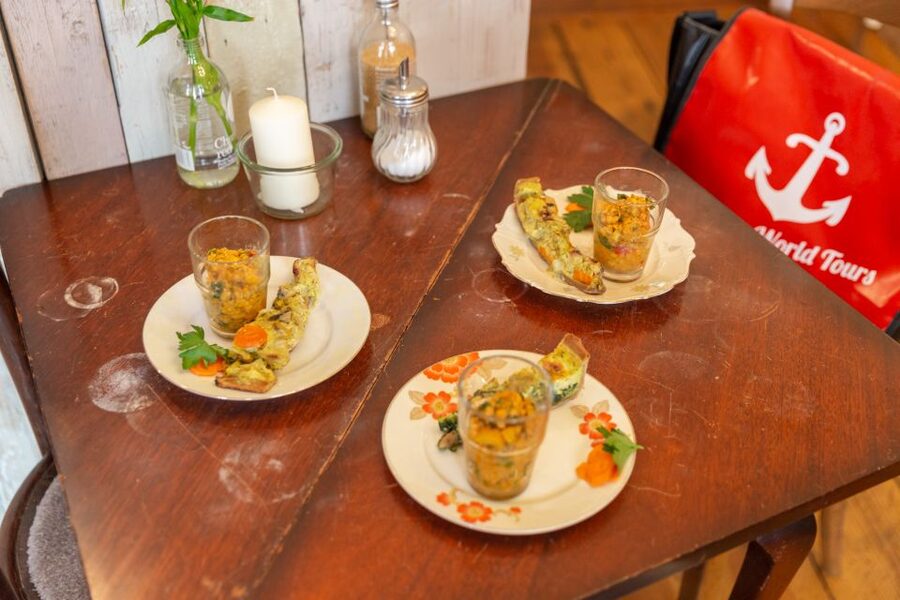
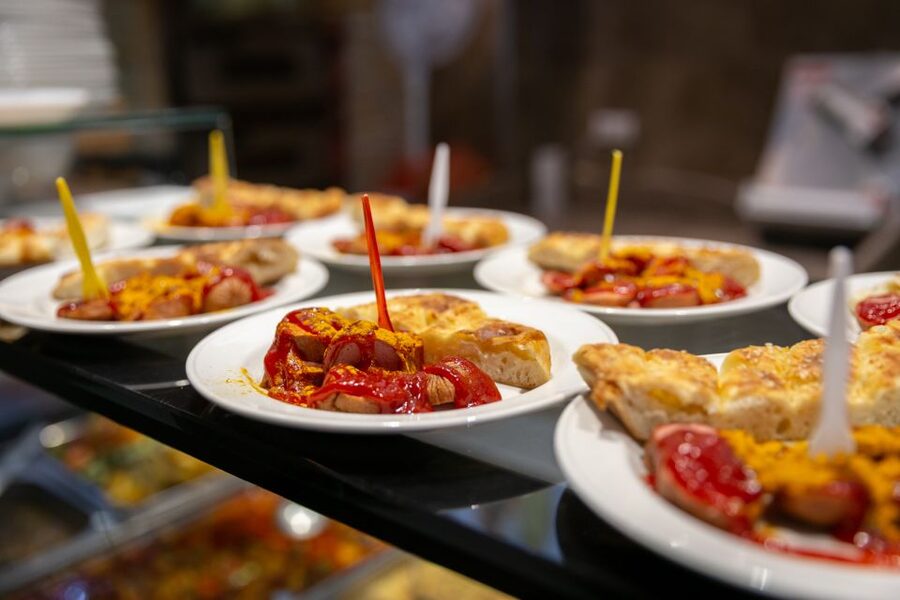
The food here is meant to reflect that mix. You might be served a traditional Berlin recipe, an international delicacy, or a dish that crosses culinary traditions. The supplied food examples include döner or dürüm, currywurst, flammkuchen, baklava, vegetarian sushi, and roasted nuts in sweet and savory styles. The exact selection can vary, but the idea is clear: you are sampling Kreuzberg’s range, not following a single national menu.
SO36, Rio-Reiser-Platz, and Kreuzberg’s cultural memory
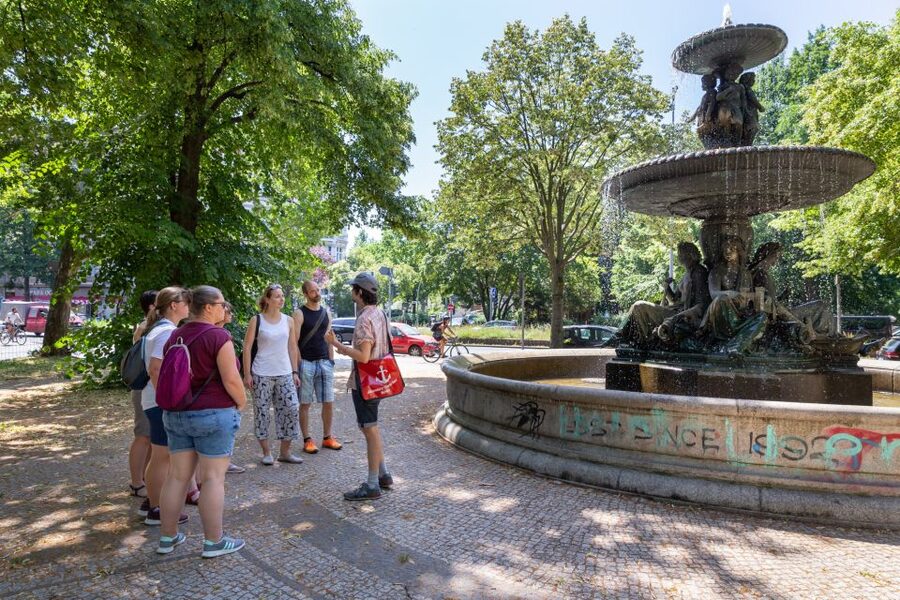
The route then reaches Rio-Reiser-Platz, with about 15 minutes for a photo stop, a short walk, a guided explanation, and food tasting. This is one of the quicker sections, so it is best viewed as a compact historical and cultural pause rather than a long visit.
The tour also takes you to SO36, a name closely tied to Kreuzberg’s alternative culture and May Day demonstrations. The supplied route lists several landmarks in and around the district rather than promising museum entry, so you should expect to hear stories from the street and view the locations from outside.
At this point, your guide may also bring in the former GDR traffic-light men, known in German as Ampelmännchen. You will hear dramatic accounts of attempts to escape East Germany, along with the story of Martin Luther King’s visit to Berlin in 1964. These subjects widen the tour beyond food and give the walk a strong Berlin-wide frame.
There is also a darker story in the mix: Berlin’s Jack the Ripper. The information provided does not spell out the full case, so you should expect a brief anecdote rather than a dedicated crime-history tour. It is one of several surprising threads your guide uses to keep the walk moving.
Mariannenstraße and the five-stop tasting format
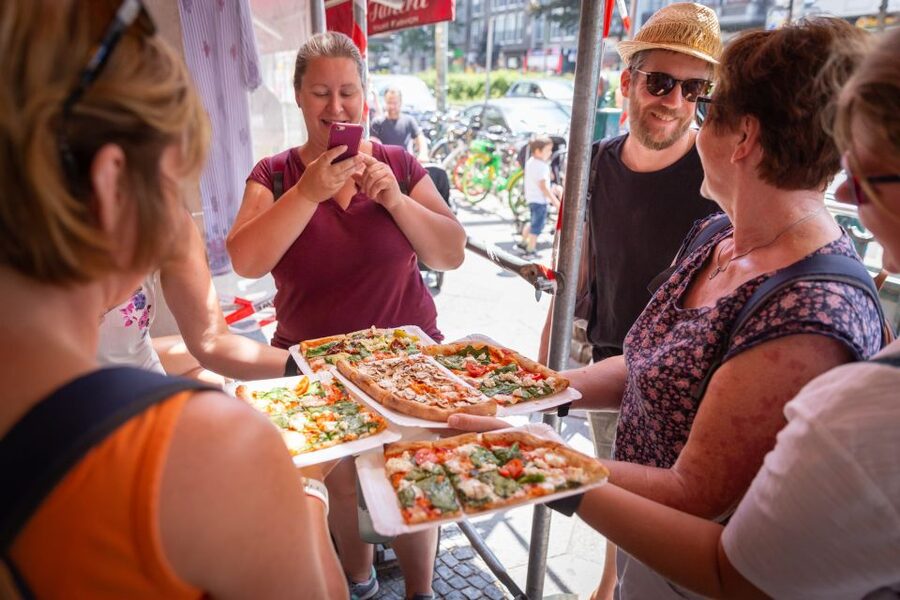
Mariannenstraße 4 receives about 20 minutes for sightseeing, a photo stop, walking, and food tasting. By now, you will have had several small portions, but not necessarily a full meal. That distinction is important when planning your day.
I like this tasting format for people who want variety. A single restaurant meal gives you one kitchen and one sitting. Five stops give you a broader feel for Kreuzberg’s food culture, with local recipes beside food shaped by migration and international influences.
The tradeoff is pace. Three hours sounds generous, but five food stops plus a walking tour leave limited time at each place. You will need to keep up with the group and stay ready to eat when the guide reaches the next stop.
The food can also be served outside the restaurants in exceptional cases. You may need to eat standing up. That is not a major problem for a casual street-food outing, but it matters if you prefer a seated meal, have mobility concerns, or want a slow restaurant experience.
More food tours in Berlin:
- Berlin Center Food Tour with 8+ Authentic Local Tastings
★ 5.0 · 1,227 reviews - Berlin City Bike Tour with Beer Garden Stop
★ 5.0 · 917 reviews - Berlin: BRLO BRWHOUSE Tour and Craft Beer Tasting
★ 4.4 · 654 reviews - Berlin: Mitte Culinary Food Tour
★ 4.5 · 447 reviews
Oranienplatz and Dresdener Straße
Oranienplatz is a brief five-minute stop for a photo, guided sightseeing, and a walk. It is not presented as a food stop, so treat it as a quick link between the tasting locations and the district’s stories.
The route continues along Dresdener Straße for around 10 minutes. Again, this is a short guided walking segment. These brief stops help create a connected neighborhood walk, but they are not separate attractions with long visits.
This is where a good guide makes a real difference. The tour covers many themes in a short time, and the route has several quick transitions. Recent guides named Niclas and Nike have been associated with especially lively and well-prepared tours. Another guide received more mixed praise for having good food choices but offering information that was not always fully clear. That is useful to keep in mind: the strongest part of the experience is likely the combination of food, personality, and place, but the historical storytelling may vary by guide.
Admiralstraße and the walk toward Grimmstraße
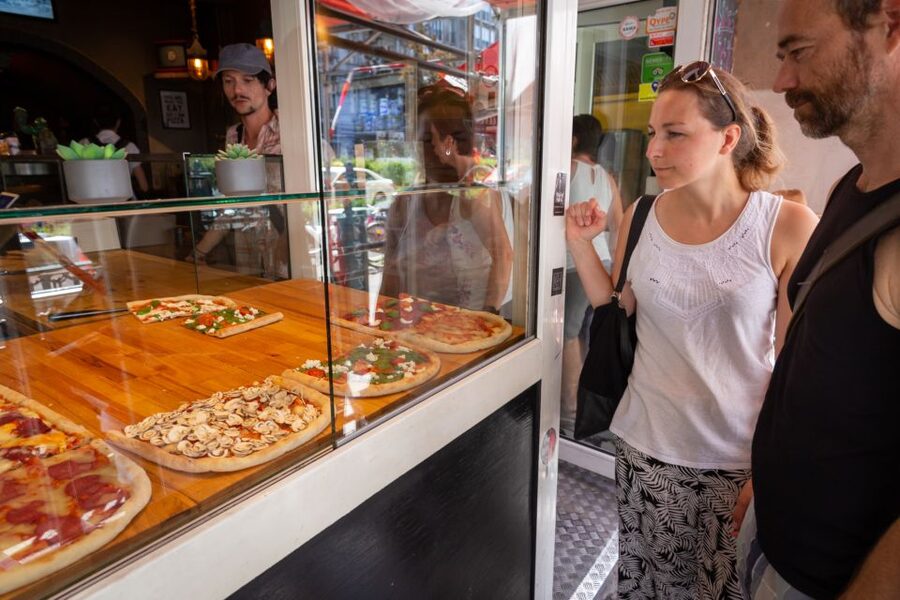
Admiralstraße receives about 40 minutes, including a photo stop, guided sightseeing, walking, and food tasting. This is another substantial part of the route, giving you time to look around and enjoy one of the later samples without the entire experience feeling like a series of hurried bites.
The tour finishes at Grimmstraße 23, 10967 Berlin. Since the start and end are different, you should allow a little time to orient yourself after the final stop. The finish also places you in a useful part of Kreuzberg for continuing your evening, although the tour does not include nightlife activities.
That final point is part of the appeal. The guide introduces Kreuzberg as a place that can lead naturally into an evening of bars, clubs, and late-night food. You are not promised entry to nightlife venues, but you finish with a better sense of where the district’s social energy comes from.
What the food is really like
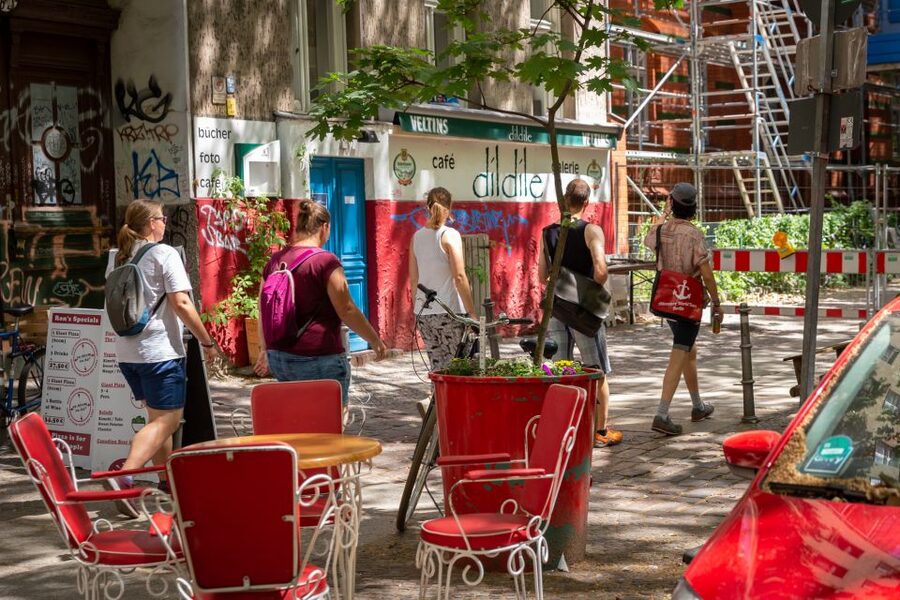
The strongest food feature is variety. You may try original Berlin recipes, intercultural crossover dishes, and international food in the same afternoon. The examples provided range from döner and currywurst to flammkuchen, baklava, vegetarian sushi, and roasted nuts.
That mix is more useful than a tour built around five versions of the same dish. Kreuzberg’s food identity is not easy to reduce to one cuisine. Its restaurants reflect Berlin traditions alongside Turkish, Middle Eastern, Asian, and other international influences.
The tastings are described as exquisite snacks, not complete restaurant courses. If you arrive hungry, they may add up to a satisfying light meal, but I would not book this as your only food plan for the day. Have a proper meal later if you need a large portion.
Drinks cost extra. This is a small but important point when judging the price, especially if you expect a drink with every tasting. Vegetarian food is available, and the food examples include excellent vegetarian sushi. A vegan option is unavailable, so strict vegans should choose a different tour.
Is $589 a fair price for up to 10 people?
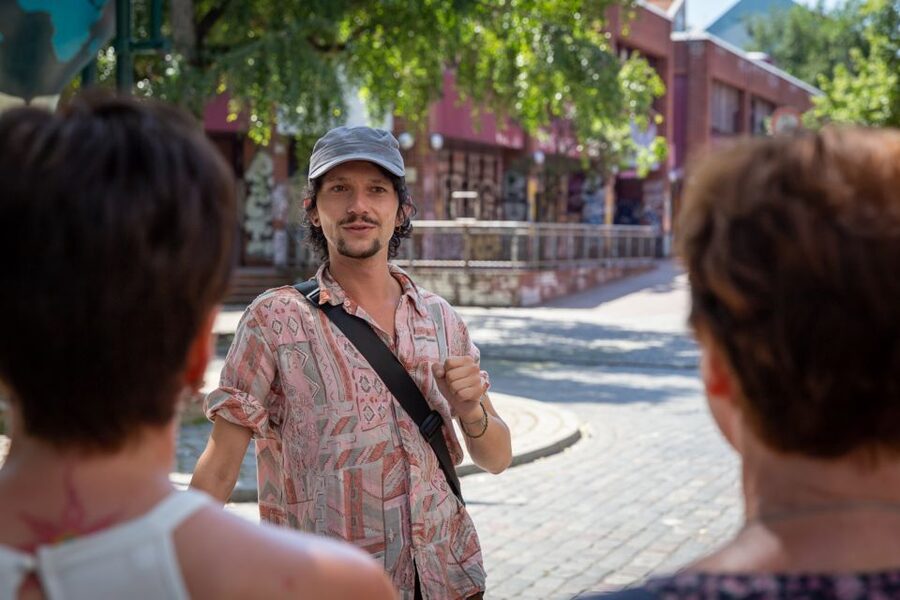
The price is $589 per group of up to 10 people. With 10 participants, that is $58.90 per person. For a private group, that can be reasonable because you are paying for a three-hour guided walk, five food tastings, and a guide who can shape the pace around your group.
The value drops if only two or three people book at that total price. In that case, you are paying for privacy and a dedicated guide more than for the food itself. The tour makes the most financial sense for a family group, a group of friends, or a small private gathering that can share the cost.
You also need to budget for drinks. Since they are excluded, the advertised price is not the final amount if you want beverages at the food stops. Still, five tastings plus three hours of guiding can compare well with paying separately for several small meals and a private local guide.
The tour includes free cancellation up to 24 hours before the start, with a full refund, and you can reserve now and pay later. Those policies give you some flexibility, though the main question remains group size and how much you value a private format.
Who will enjoy this Kreuzberg walk?
I would recommend it to you if you want food and local context in equal measure. It suits first-time Berlin visitors who want an introduction to Kreuzberg, as well as repeat visitors who have eaten here but want the stories behind the streets.
It is also a good fit for people who prefer tasting several small dishes to choosing one restaurant. The English and German language options make it practical for international groups, and a private booking can work well for families or friends who want to move at their own pace.
You should think twice if you need vegan food, dislike walking, or want long seated meals. The tour lasts three hours and includes several walking sections. In exceptional cases, food may be eaten outdoors while standing.
Guide style matters here. Some guides bring strong preparation and a large supply of anecdotes. You may hear about Niclas or Nike as examples of guides who make the information lively and engaging, but the exact guide is not guaranteed. Go for the mix of neighborhood stories and food, not for a single named personality.
Should you book it?
Book this tour if you want a clear introduction to Kreuzberg through five varied tastings and street-level stories. The best parts are the range of food, the explanation of the district’s working-class and protest roots, and the way the route moves through places that are easy to pass without understanding.
For a full group of 10, the price is easier to justify. For a small group, compare the cost with a regular shared food tour. Bring an appetite for snacks, comfortable shoes, and a willingness to eat outside if needed. Skip it if you require vegan food or want a calm, seated culinary event.
FAQ
How long is the Kreuzberg Culinary Food Tour?
The tour lasts three hours and combines guided walking, sightseeing, historical stories, and five food tastings.
Where does the tour begin?
The meeting point can vary according to the option booked. Kotti, at Kottbusser Tor, is the stated central meeting area, and FightClub Casino is one listed starting option.
Where does the tour finish?
The tour finishes at Grimmstraße 23, 10967 Berlin, Germany.
How many food tastings are included?
You receive five different food tastings at five distinct restaurants.
What kinds of food might be served?
The tour can include original Berlin recipes, crossover dishes, and international delicatessen. Examples include döner or dürüm, currywurst, flammkuchen, baklava, vegetarian sushi, and roasted nuts.
Is vegetarian food available?
Yes. A vegetarian option is available.
Is a vegan option available?
No. The tour does not offer a vegan option.
Are drinks included?
No. Drinks are not included in the tour price.
What languages are offered?
The tour is available with a live guide in English or German.
Can I book a private group?
Yes. A private-group option is available, and the price is $589 for a group of up to 10 people.
Just added around Berlin
- Berlin Highlights in One Day★ 5.0 · 3 reviews
- Private Berlin One Day Tour with a Local: See the City Unscripted★ 3.5 · 3 reviews
- Individual city tour Berlin for max. 8 persons★ 5.0 · 3 reviews
- Transfer from Berlin Schönefeld Airport (SXF) to Berlin city Hotels – ROUND TRIP★ 4.0 · 3 reviews
- Berlin: Museum Island Tour★ 5.0 · 3 reviews
- Private Analogue Photography Experience in Berlin★ 5.0 · 3 reviews
- Berlin: Local Food Tour in Secrets Hidden Gems★ 4.0 · 3 reviews
- Potsdam Highlights – Private sightseeing tour by minibus★ 5.0 · 3 reviews
Kreuzberg Tours, compared.
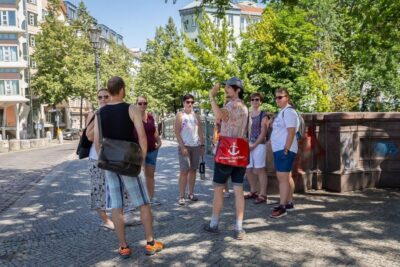

Alternative Bike Tour of Kreuzberg & Friedrichshain
Read our review →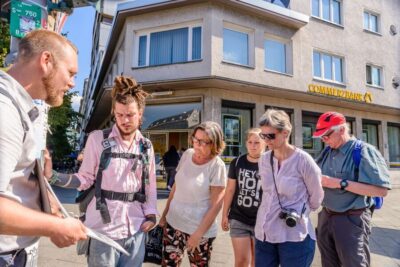

Berlin Off-the-Beaten-Path Walking Tour: Kreuzberg, Mitte and Friedrichshain
Read our review →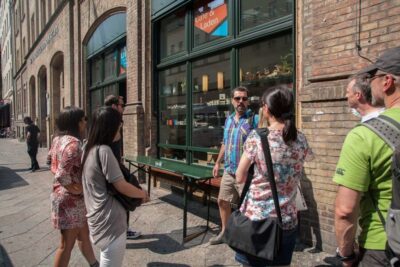
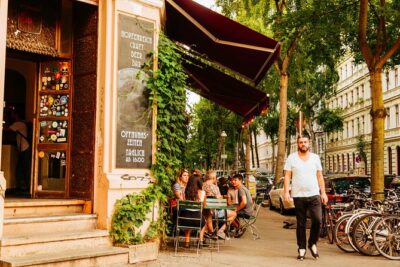
Kreuzberg Berlin: Off the Beaten Track PRIVATE Walking Tour
Read our review →
Experience the Alternative Kreuzberg on a Bike Tour
Read our review →
Browse the lists this tour appears in