

Review · KREUZBERG TOURS
Berlin Off-the-Beaten-Path Walking Tour: Kreuzberg, Mitte and Friedrichshain
Berlin’s best stories are not all found beside the Brandenburg Gate. This four-and-a-half-hour walk follows the city’s less polished side, through Turkish Kreuzberg, former East Berlin neighborhoods, street art alleys, alternative culture and places tied to punk, protest and music. Guides such as Reese, Jake, Jason, Lee and Ben have led this route, so the personality and exact storytelling style can vary.
I like the mix of food and social history, especially the chance to hear why currywurst and döner belong to Berlin’s modern identity. I also like the public transport connections, since tram, train or U-Bahn rides let you cover more ground than a purely local walk. The main drawback is simple: much of the tour is outdoors, and cold or wet weather can make four hours feel long.
In This Review
- Key points before you book
- Why this Berlin walk feels different
- Starting at Alexanderplatz and heading west
- Kreuzberg’s Turkish and Jewish stories
- Gardens, galleries and Berlin’s unfinished spaces
- Prater Garten and the pleasures of a pause
- From student protest to punk and May 1
- Public transport makes the route broader
- Pace, weather and what to bring
- Who will get the most from this tour
- Should you book the Berlin off-the-beaten-path walk?
- FAQ
- Where does the tour start?
- What time does the tour begin?
- Where does the tour end?
- How long does the tour last?
- Is public transport included?
- Is food included?
- Is the tour offered in English?
Key points before you book
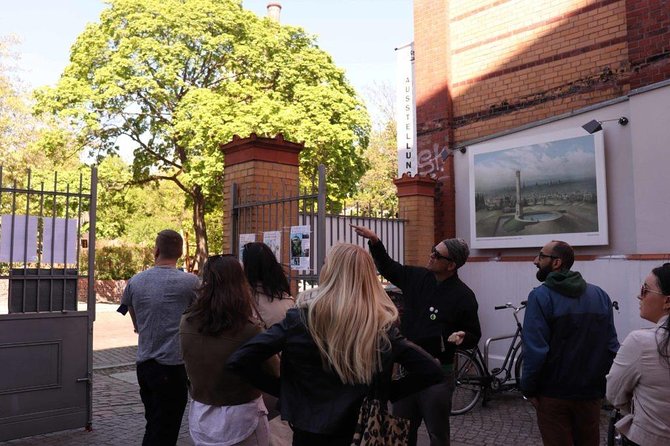
- Kreuzberg beyond the postcard: See Turkish Berlin, Jewish history, guerrilla gardens, urban farms and alternative galleries.
- A moving history lesson: Connect student protests, the Baader-Meinhof era, punk, May 1 riots and the Love Parade.
- Food is part of the story: Currywurst and döner are discussed, with food purchased separately.
- Public transport is built into the route: Bring an AB ticket, and a day pass is recommended.
- A strong guide can make the afternoon: Reese, Jake, Jason, Lee and Ben have each been praised for humor, warmth and personal insight.
- The finish is at Yaam Beach: The route ends at Stralauer Allee 34, near Friedrichshain’s music and arts scene.
Why this Berlin walk feels different
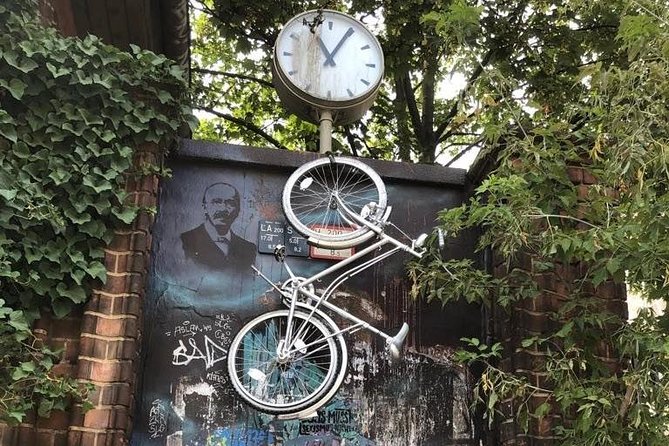
Most first visits to Berlin focus on war, the Wall and the major government buildings. Those subjects matter, but this tour shifts your attention to the people who reshaped the city after the war, especially artists, squatters, musicians, immigrants and political activists.
That change in focus is the tour’s main value. You are not simply looking at old buildings. You are hearing how neighborhoods changed, who moved into them, and why certain streets became centers of resistance or creativity.
The route is also social rather than purely architectural. You learn how Berlin’s Turkish community influenced local food, how punk and reggae helped define districts, and how vacant buildings and unused spaces became places for art, gardens and communal life.
The tour costs $30.25 per person, before food and transport. For four and a half hours with a local English-speaking guide, that is a fair price, particularly if you want a broad introduction to several districts instead of paying for separate neighborhood tours. You also get practical ideas for what to explore afterward.
More Kreuzberg on foot and by bike:
- Kreuzberg: Culinary Food Tour
★ 4.5 · 770 reviews - Berlin: Kreuzberg Guided Walking Evening Tour
★ 4.7 · 555 reviews - Berlin: Alternative Bike Tour of Kreuzberg & Friedrichshain
★ 4.7 · 548 reviews
Starting at Alexanderplatz and heading west
The meeting point is Vapiano am Alex at Rathausstraße 6, near Alexanderplatz. The start time is 12:00 pm. You should arrive ready to walk, with comfortable shoes and clothing suited to the forecast.
The opening portion places modern Berlin in context. The city’s districts do not tell one single story, and the route uses different neighborhoods to show how Berlin’s former East and West developed in contrasting ways. One particularly useful part of the walk is the comparison between districts shaped by different political systems before reunification.
Do not expect a museum-style presentation. Guides bring their own rhythm and opinions. Reese, for example, has been described as energetic, humorous and deeply connected to Berlin’s alternative culture. Jake has a lively storytelling style, while Jason has been praised for mixing personal anecdotes with city history. The guide on your date may be someone else, but this is clearly a tour where the person leading it matters.
The group can include up to 20 people. That is small enough for questions, though it is not a private walk. If you enjoy conversation and a guide with a strong point of view, the format should suit you. If you prefer quiet sightseeing at your own pace, this may feel too structured.
Kreuzberg’s Turkish and Jewish stories
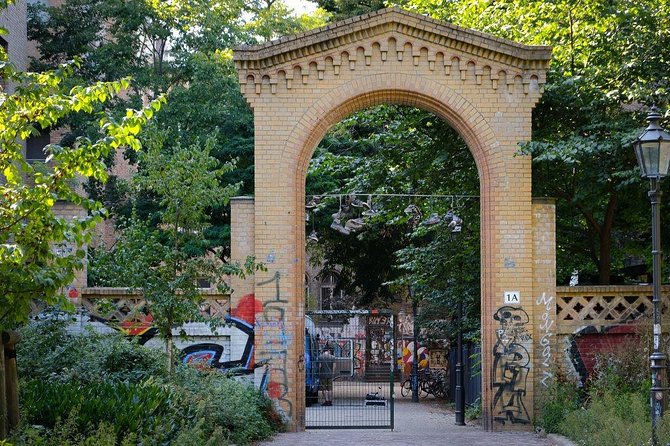
Kreuzberg is one of the most rewarding parts of the route because it shows Berlin as a city shaped by migration and reinvention. You learn about the Turkish community that has made the district famous for its restaurants, markets and neighborhood life.
This is where the food discussion becomes useful rather than decorative. Döner kebab is not simply something you eat after a night out. It is part of Berlin’s Turkish-German story and one of the city’s clearest examples of cultures meeting in everyday life.
Currywurst offers a different angle. The dish is a fried sausage covered with curry-flavored ketchup, and you may have time to buy one during a lunch stop. Food and drinks are not included, so keep some cash or a payment card ready. The lunch break is roughly 20 to 30 minutes, according to the tour experience described by past participants, giving you a chance to eat without turning the afternoon into a restaurant visit.
The route also touches Berlin’s Jewish quarter. That portion adds an important layer to Kreuzberg and Mitte, since the city’s cultural life cannot be understood without facing the destruction and displacement caused by the Nazi period.
What makes this section effective is the contrast between formal history and present-day life. One street may bring up persecution and war, while the next introduces a market, a garden or a wall covered in new art. Berlin often places difficult history beside ordinary daily life, and this walk gives you a way to read that contrast.
Gardens, galleries and Berlin’s unfinished spaces
Kreuzberg and the surrounding districts are known for projects that grew outside traditional city planning. You may see urban farms, guerrilla gardens, organic markets and alternative art galleries.
These are not just colorful stops. They help explain why certain parts of Berlin became magnets for people looking for cheaper space, artistic freedom or a different way to live. The city’s empty lots and abandoned buildings created room for experiments that would be harder to start in a more tightly controlled urban setting.
Street art is another major part of the walk. You will see murals, graffiti and smaller pieces in alleys and on building walls. The guide’s role is important here. Without context, graffiti can blur into background noise. With a good explanation, it becomes a record of political anger, neighborhood identity, artistic ambition and changing property values.
You should keep in mind that street art changes quickly. A work described by one guide may be painted over, damaged or replaced by the time you visit. That is not a flaw in the tour. It is part of the medium, and it reinforces the sense that these neighborhoods are still changing.
Some outings have also included an unusual children’s playground built largely by children from ages 6 to 16, with parts periodically burned down and rebuilt. This kind of stop captures Berlin’s willingness to let public spaces remain experimental. It may not appear on every outing, since routes and guide choices can change, but it shows the sort of local detail that separates this walk from a standard city circuit.
More of Mitte:
- Berlin: Mitte Culinary Food Tour
★ 4.5 · 447 reviews - Gruseltour Berlin Haunted Ghost Walk 90-minute at Berlin Mitte city center
★ 5.0 · 75 reviews - Berlin: E-Bike Tour of the Berlin Wall and Mitte Highlights
★ 4.7 · 60 reviews - Small-Group Berlin Sightseeing and Food Tour of Prenzlauer Berg and Mitte
★ 5.0 · 25 reviews
Prater Garten and the pleasures of a pause
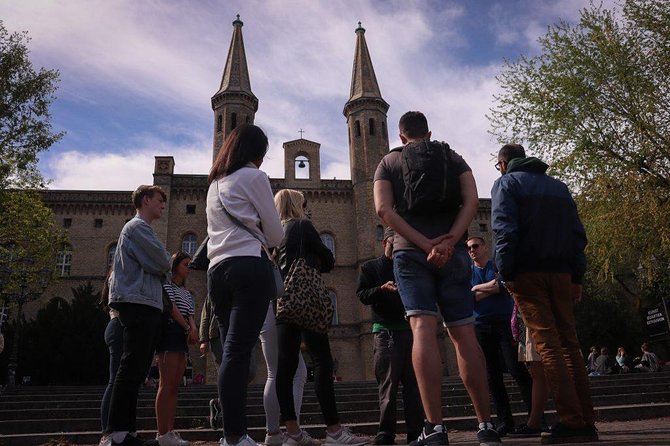
The tour includes a stop at Prater Garten, known as Berlin’s oldest beer garden. It is a useful pause in a long afternoon and a chance to discuss Berlin’s outdoor drinking culture.
Do not assume that every stop means a long sit-down visit. The tour still has ground to cover, and food and drinks are not included. Think of Prater Garten as both a place and a cultural reference point, part of the explanation of how Berliners use public space in warm weather.
The break also matters physically. Four and a half hours is a long time to remain on your feet, even with public transport sections. Comfortable shoes are essential, and a snack or drink may be wise if you do not plan to buy lunch along the way.
From student protest to punk and May 1
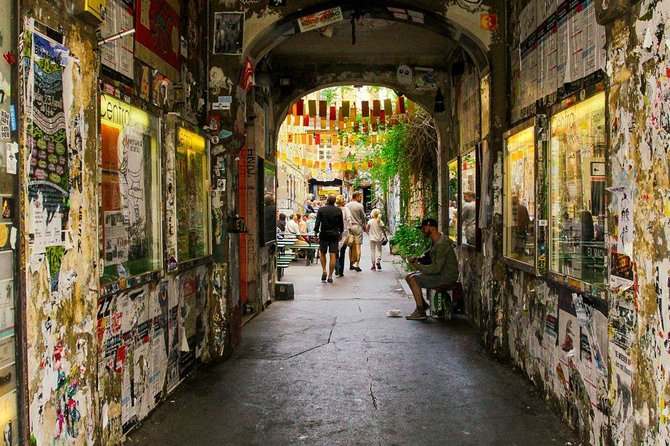
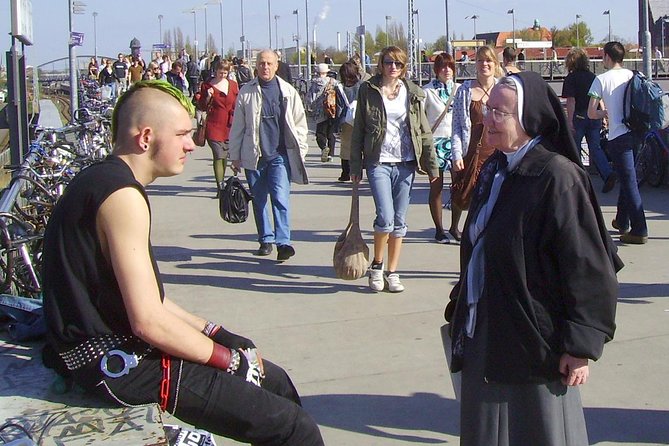
The strongest part of the tour is its account of Berlin’s counterculture. You hear about the 1960s student protest movement, the Baader-Meinhof group in the 1970s, and punk culture and the May 1 riots of the 1980s.
This is not the usual polished version of Berlin’s past. The route focuses on individuals and movements that challenged authority, fought oppression or claimed space outside official institutions. It gives you a better sense of why Berlin developed its reputation for rebellion.
The Baader-Meinhof material can be politically and historically heavy, while the punk and protest stories are often more lively. A good guide keeps the distinctions clear instead of treating every form of rebellion as the same thing. The most useful takeaway is how political anger, housing struggles, art and music overlapped in particular districts.
The walk also covers the Love Parade, once one of Europe’s best-known electronic music festivals. That story shows another side of Berlin’s transformation after reunification, when the city became a major center for club culture and electronic music.
At Yaam Beach, the focus shifts toward reggae, hip-hop and Rastafarian culture. This venue helps show that Berlin’s alternative identity is not only German or European. It has been shaped by international music, immigrant communities and creative exchange.
Public transport makes the route broader
The tour is advertised as a walking excursion, but you will not walk every mile between neighborhoods. Two or three sections may use tram, train or U-Bahn, and those rides are included in the total tour time.
You need an AB public transport ticket. A day pass is recommended because it is simpler and may be better value if you plan to continue using Berlin’s transport system afterward. The tour price does not include this ticket.
This detail is easy to overlook, but it affects the experience in a good way. Without public transport, the route would need to stay within one or two districts. By riding between areas, the guide can compare former East and West Berlin and show how the city’s alternative culture appears in more than one neighborhood.
You should allow some flexibility after the tour. The published endpoint is Yaam Beach at Stralauer Allee 34, 10245 Berlin, but the exact finishing point may vary slightly with the day’s route. If you have a train, dinner reservation or ticketed event immediately afterward, leave extra time.
Pace, weather and what to bring
The pace is described as relaxed, but this remains an active half-day outing. You will walk through several districts, stand while listening and use public transport. The route is manageable for most people, but it is not suited to someone seeking a short stroll.
Weather is the biggest practical concern. On a cold, wet or windy day, the outdoor sections can become uncomfortable. Check the forecast and bring a rain layer, warm clothing or sun protection as needed. The tour is offered in English only.
Service animals are allowed, the route is near public transportation, and most people can participate. Still, the length and changing surfaces make sturdy walking shoes a sensible choice. Bring water, and budget separately for lunch, snacks and transport.
Who will get the most from this tour
I would choose this walk after seeing Berlin’s major memorials and Cold War sights. It works especially well as a second-day activity because it gives you a different way to understand the city.
You are likely to enjoy it if you:
- Like street art, music, food and local politics.
- Want neighborhood stories instead of only famous monuments.
- Enjoy guides who talk freely and add personal anecdotes.
- Are curious about immigrant communities and Berlin’s alternative scenes.
- Want an introduction to Kreuzberg, Friedrichshain and nearby districts before exploring them on your own.
It may be less suitable if your main goal is medieval architecture, royal history or a tightly timed list of major sights. The tour is conversational and interpretive. You will leave with ideas and context, not a checklist of attractions.
The high rating of 4.8 from 412 ratings, with 96 percent recommending it, fits the tour’s strongest feature: guide quality. The most praised leaders are Reese, Jake, Jason, Lee and Ben, all noted for warmth, humor, enthusiasm and personal connection to Berlin. Since guides change, you should book for the route and subject matter first, then treat a particularly engaging guide as a welcome bonus.
Should you book the Berlin off-the-beaten-path walk?
Yes, if you want modern Berlin rather than another pass through its official monuments. At $30.25, the combination of local storytelling, several neighborhoods, public transport and four-plus hours makes good value, especially for a first visit or a return trip focused on culture.
Book it on a reasonably mild day, carry an AB ticket, wear good shoes and keep your afternoon open. Skip it if you dislike long outdoor walks, need a guaranteed finish at an exact minute, or want a purely conventional history tour.
For many people, the payoff is the change in viewpoint. You begin near central Berlin and finish at Yaam Beach with a clearer sense of how migration, protest, music, art and ordinary neighborhood life helped shape the city you see today.
FAQ
Where does the tour start?
The tour starts at Vapiano am Alex, Rathausstraße 6, 10178 Berlin, Germany.
What time does the tour begin?
The start time is 12:00 pm.
Where does the tour end?
The planned endpoint is Yaam Beach at Stralauer Allee 34, 10245 Berlin.
How long does the tour last?
The tour lasts approximately 4 hours and 30 minutes.
Is public transport included?
Public transport is used during parts of the tour, but your AB transport ticket is not included. A day pass is recommended.
Is food included?
No. Food and drinks are not included. You may have an opportunity to buy currywurst or eat during a short lunch break.
Is the tour offered in English?
Yes. The tour includes an English-speaking local guide and is offered in English only.
More Walking Tours in Berlin
- Discover Berlin Half-Day Walking Tour
★ 5.0 · 9,624 reviews - Berlin: Third Reich and Cold War 2 Hour Walking Tour
★ 4.9 · 6,830 reviews - Berlin: Discover Berlin Walking Tour
★ 4.9 · 5,998 reviews - Berlin’s Best: 2 Hour Walking Tour Third Reich and the Cold War
★ 5.0 · 5,486 reviews
Just added around Berlin
- Berlin Highlights in One Day★ 5.0 · 3 reviews
- Private Berlin One Day Tour with a Local: See the City Unscripted★ 3.5 · 3 reviews
- Individual city tour Berlin for max. 8 persons★ 5.0 · 3 reviews
- Transfer from Berlin Schönefeld Airport (SXF) to Berlin city Hotels – ROUND TRIP★ 4.0 · 3 reviews
- Berlin: Museum Island Tour★ 5.0 · 3 reviews
- Private Analogue Photography Experience in Berlin★ 5.0 · 3 reviews
- Berlin: Local Food Tour in Secrets Hidden Gems★ 4.0 · 3 reviews
- Berlin & The Third Reich Private Guided Tour★ 5.0 · 3 reviews
Kreuzberg Tours, compared.

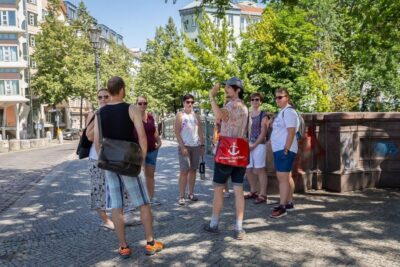

Alternative Bike Tour of Kreuzberg & Friedrichshain
Read our review →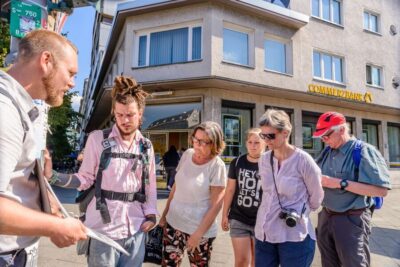
Kreuzberg Berlin: Off the Beaten Track PRIVATE Walking Tour
Read our review →
Experience the Alternative Kreuzberg on a Bike Tour
Read our review →
Browse the lists this tour appears in