
Review · KREUZBERG TOURS
Small Group Tour: “Wild Kreuzberg”
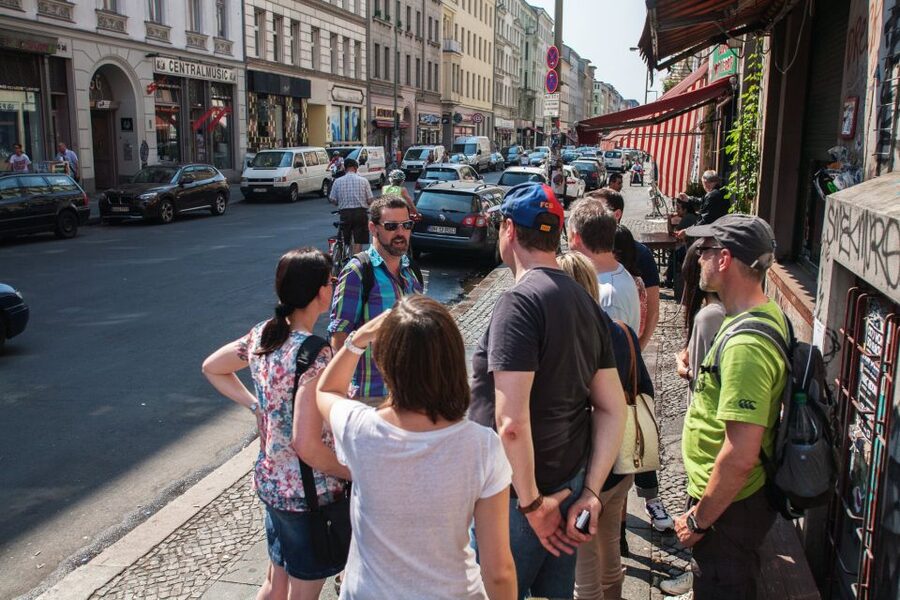
Kreuzberg’s story is written on its streets: Turkish markets beside Arabic restaurants, old tenements beside concrete towers, and former squats now sharing blocks with cafés and boutiques. This three-hour walk takes you through that mix, beginning at Kottbusser Tor and tracing the old SO36 district toward Bethanien, Görlitzer Park, and the Oberbaumbrücke.
I like the tour’s local, street-level focus and its small-group size, which is advertised at no more than 12 people. I also like the unusual stops, including the Home for the Blind, the Museum of Objects, and the old Fontane-Apotheke. The main consideration is that the tour is conducted in German, and the minimum group requirement is described differently in the booking information, so confirm the departure before making firm plans.
In This Review
- Key points at a glance
- Starting at Kottbusser Tor beneath the U1
- From old apartment houses to the Sozialpalast
- Oranienstraße and the old SO36 district
- The Museum of Objects and Kreuzberg’s everyday design
- Heinrich-Platz and Mariannenplatz
- Fontane-Apotheke and the details you could miss
- Görlitzer Park and the railway that came before
- Ending near the Oberbaumbrücke
- What $24 buys you in three hours
- Who will enjoy Wild Kreuzberg most
- Practical tips before you book
- Should you book this Kreuzberg walk?
- FAQ
- How long does the Wild Kreuzberg tour last?
- Where does the tour meet?
- Which U-Bahn station is closest?
- Where does the tour end?
- What language is the tour conducted in?
- How large is the group?
- Is food or drink included?
- What should I bring?
- Can I cancel for a full refund?
Key points at a glance
- Kottbusser Tor sets the tone: U-Bahn tracks, Turkish and Arabic food, cafés, bars, and alternative clubs meet in one noisy square.
- Oranienstraße reveals old SO36: The former postal district remains the heart of Kreuzberg’s punk-era identity, with shops, restaurants, comic stores, and unusual institutions.
- Bethanien connects protest and art: The former hospital and nearby Rauchhaus show how squatter spaces became part of Kreuzberg’s cultural story.
- Görlitzer Park has a railway past: You walk through a former station area, not simply an ordinary city park.
- The group stays manageable: The stated maximum is 12 people, a useful size for narrow streets and questions.
- German is the tour language: A solid choice if you can follow spoken German, but not ideal if you need English commentary.
Starting at Kottbusser Tor beneath the U1
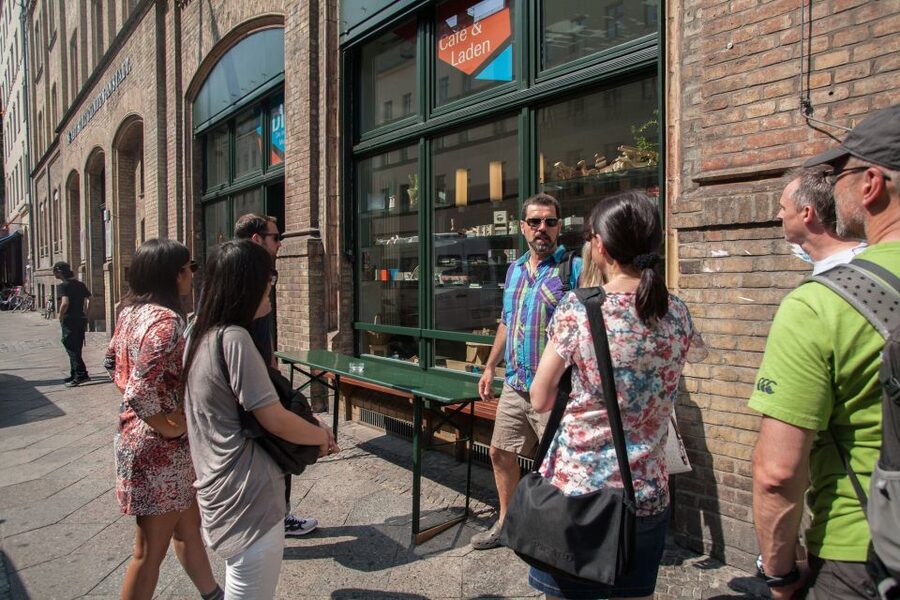
Meet at 137 Skalitzer Straße, in front of Gold Exchange and next to REWE. The nearest station is Kottbusser Tor, served by the U1 and U8. Use the Skalitzer Straße exit and look for a guide holding a sign with the tour operator’s logo.
That meeting point drops you into Kreuzberg without ceremony. Kottbusser Tor is divided by the elevated rails of the U1, and the space below is a crossroads of daily life and nightlife. Turkish market stalls, Arabic restaurants, small bistros, chic cafés, alternative bars, and clubs all sit close together.
I like beginning here because it gives you an immediate sense of Kreuzberg’s contrasts. This is not a polished introduction designed to make the district look tidy. It is a working urban square with traffic, rail noise, food smells, apartment blocks, and the constant movement that makes Kreuzberg feel unmistakably itself.
You will want comfortable shoes from the start. The walk lasts three hours, and the route moves through streets, public squares, and parks rather than staying on smooth museum floors. The tour runs in all weather. On rainy days, a poncho is provided, but waterproof shoes and a light rain layer will still make the experience more pleasant.
More Kreuzberg on foot and by bike:
- Kreuzberg: Culinary Food Tour
★ 4.5 · 770 reviews - Berlin: Kreuzberg Guided Walking Evening Tour
★ 4.7 · 555 reviews - Berlin: Alternative Bike Tour of Kreuzberg & Friedrichshain
★ 4.7 · 548 reviews
From old apartment houses to the Sozialpalast
Leaving Kottbusser Tor, the route passes imposing apartment buildings dating from the beginning of the last century. These blocks help explain the physical character of Kreuzberg: dense housing, inner courtyards, busy ground-floor businesses, and streets where different eras sit side by side.
The walk also includes the Sozialpalast, a large housing complex that adds a different chapter to the neighborhood. You do not see Kreuzberg only as a former punk district here. You get a look at the housing structures and urban pressures that shaped everyday life.
This part is most useful when you pay attention to scale. The elevated railway, old façades, large housing projects, and narrow commercial streets create a district that can feel compressed and energetic. A guide can connect those physical details to the social changes that followed, which is one reason a small group helps. With up to 12 people, you should have a better chance to hear the explanation than you would in a large crowd.
Oranienstraße and the old SO36 district
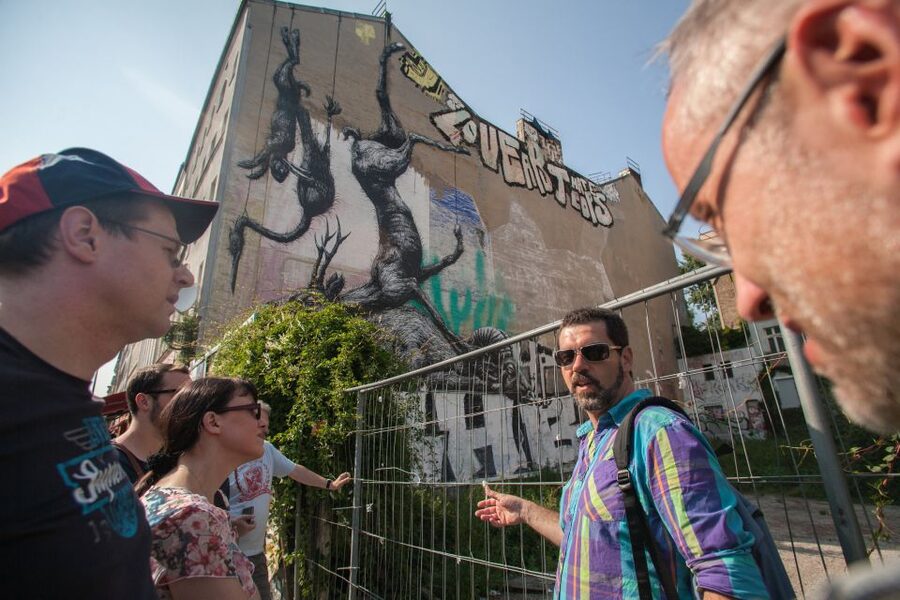
The route continues to Oranienstraße, the central street of the former SO36 postal district. The name still carries weight in Berlin’s alternative culture. This was known as a punk district, and the street retains much of that scruffy, independent character even as businesses and property values have changed.
Here you find restaurants, bars, shops, comic stores, boutiques, and the Berlin Home for the Blind. The mix is part of the point. Oranienstraße is not presented as a single historic monument. Its interest comes from how ordinary businesses, social institutions, and counterculture memories share the same few blocks.
The planned coffee stop at the Home for the Blind and the Oranienhöfen gives the tour a useful pause. You can sit down, take a breath, and watch the neighborhood rather than simply collecting landmarks. Food and drinks are not included, so bring money for your own coffee or snack.
I especially like this break for practical reasons. Three hours of walking can feel long if every minute is spent standing. A café stop also gives you a chance to ask the guide about places you may want to return to later.
The guide Ferenz is named in one particularly warm account of the tour. The description of his approach points to an individual, detailed walk rather than a standard script. Since the tour is in German, his style will matter most if you are comfortable listening and asking questions in that language.
The Museum of Objects and Kreuzberg’s everyday design
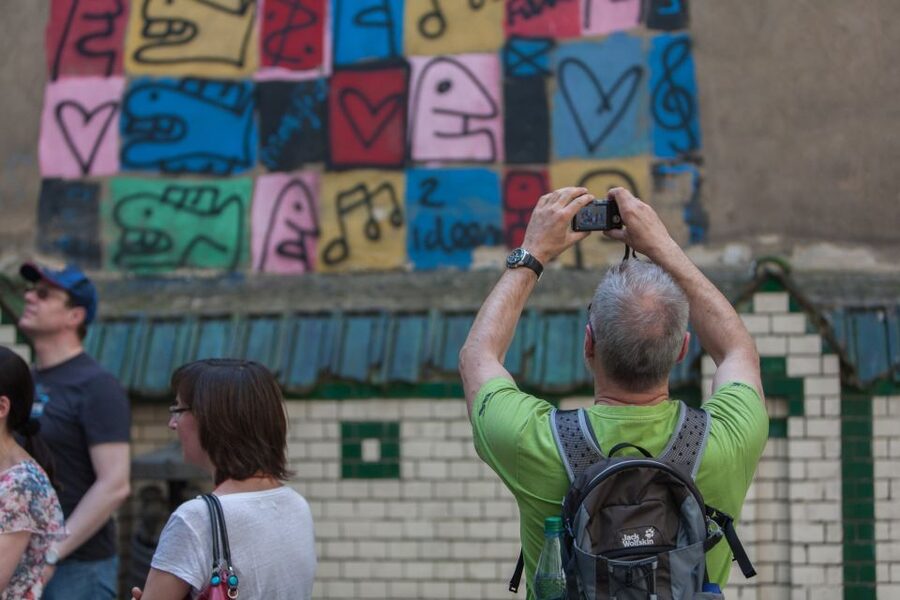
The Museum of Objects focuses on the history of mass production. That may sound less dramatic than a major art museum, but it fits Kreuzberg’s practical, streetwise character.
The subject lets you look at familiar manufactured things in a new way. Instead of focusing only on famous paintings or grand political events, the stop considers how objects made in large numbers shaped daily life. It adds some indoor cultural context to a walk otherwise centered on streets, buildings, and public spaces.
The tour also identifies the Kreuzberg Museum as an important stop. The supplied route details do not specify how long you spend inside or whether entry is included, so you should not assume a full museum visit. Treat it as a point of orientation within the district unless your guide confirms otherwise.
The same applies to the tour’s included services. A city guide and rain poncho, if needed, are included. Food, drink, and any separate admission charges are not listed as included. The $24 price is therefore mainly paying for the guided walk and local interpretation, not a package of museum tickets or refreshments.
A different side of Berlin on the same trip:
- Berlin: Reichstag, Dome and Government District Guided Tour
★ 4.7 · 18,288 reviews - Berlin: 1-Hour City Tour by Boat with Guaranteed Seating
★ 4.3 · 16,993 reviews - Berlin: Boat Tour Along the River Spree
★ 4.4 · 11,252 reviews - Discover Berlin Half-Day Walking Tour
★ 5.0 · 9,624 reviews
Heinrich-Platz and Mariannenplatz
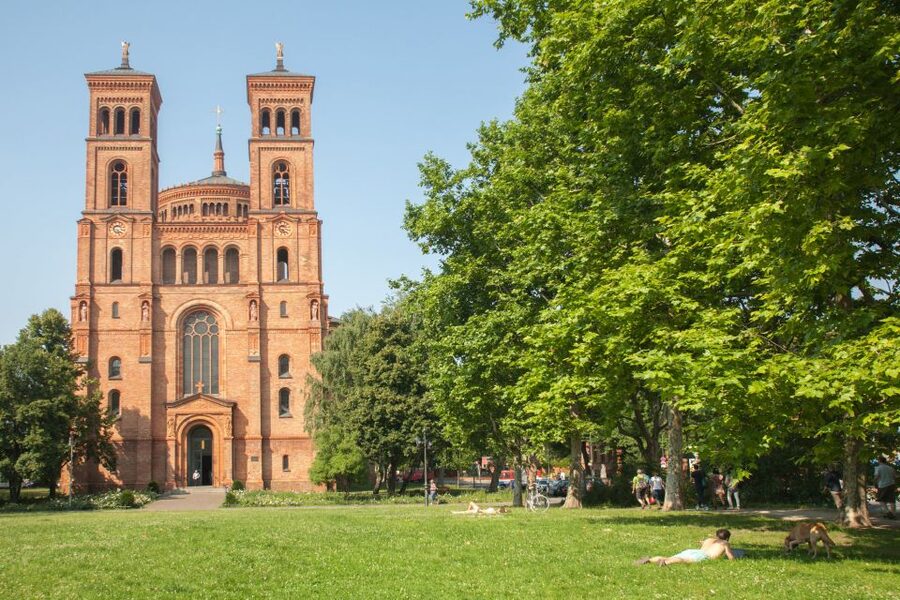
From Oranienstraße, the route goes over Heinrich-Platz toward Mariannenplatz. These open spaces provide a welcome change from the tight streets and crowded commercial blocks.
Mariannenplatz is home to Bethanien, a former hospital now associated with art and squatter culture. The art squat is one of the strongest stops on the route because it shows how buildings can change purpose without losing their political memory.
Bethanien also helps explain why Kreuzberg attracts people interested in alternative urban history. The tour is not just pointing out colorful businesses. It is showing you places where housing struggles, self-organized communities, and creative work became part of the district’s identity.
Next door, the Rauchhaus preserves more traces of the squatters’ life of earlier decades. This is a valuable pairing. Bethanien presents the former hospital as an art space, while Rauchhaus keeps the focus closer to the housing and community side of the story.
Do not expect a preserved historical village. Kreuzberg is a living district, and its former squats exist alongside newer uses and changing commercial life. That makes the route more honest, but it also means the experience is best for people who want context rather than a perfectly staged attraction.
Fontane-Apotheke and the details you could miss
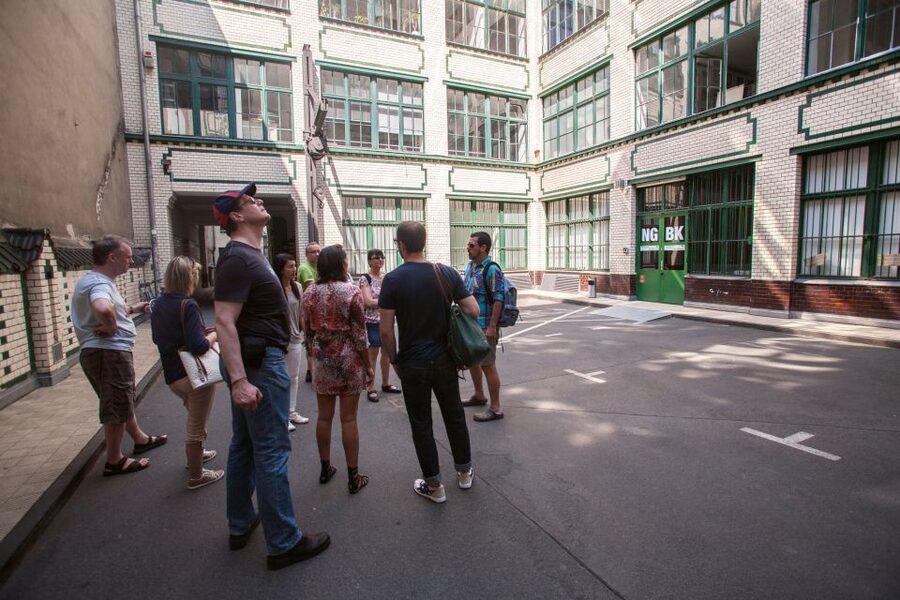
The well-known Fontane-Apotheke is another unusual stop. A pharmacy may not sound like a major sightseeing point, yet places like this are exactly what a local walking tour can reveal.
The value is in the detail. You might walk past it alone without knowing why it matters. With a guide, a familiar storefront becomes part of the neighborhood’s visual and social record.
That approach runs through the entire walk. The tour includes buildings, businesses, public squares, art spaces, and traces of earlier communities. It is less about checking off grand monuments and more about learning how a district tells its story through small, specific places.
If you prefer a tour built around major museums and famous landmarks, this may feel too informal. If you enjoy noticing the odd pharmacy, comic shop, old housing block, or reused building, you will get much more from it.
Görlitzer Park and the railway that came before
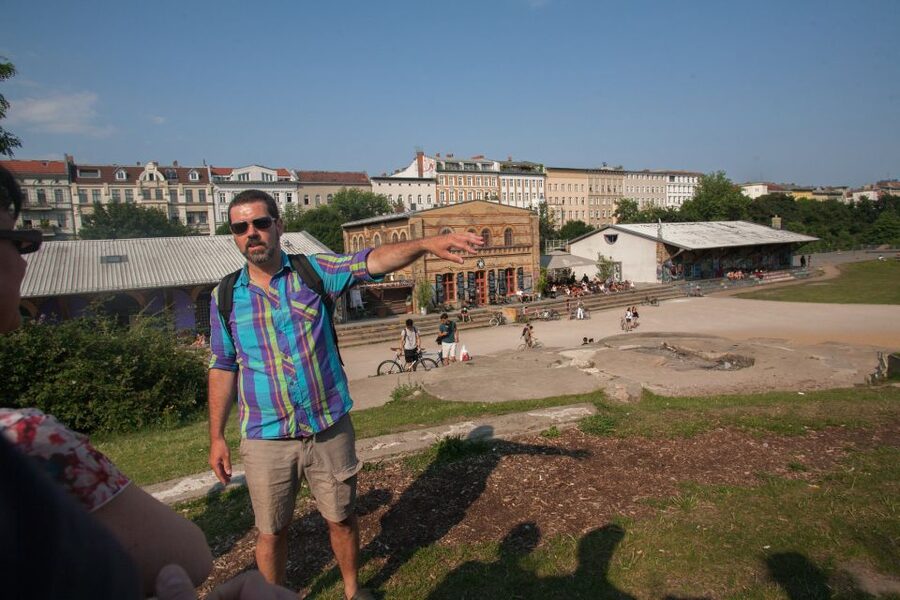
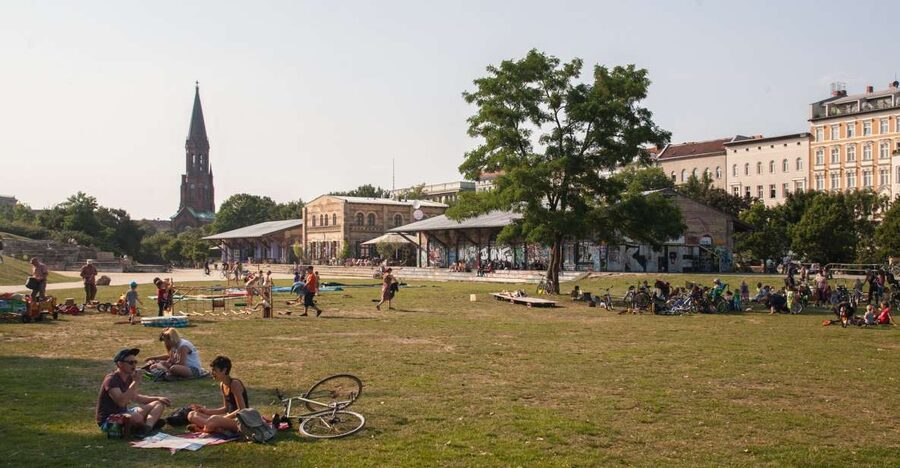
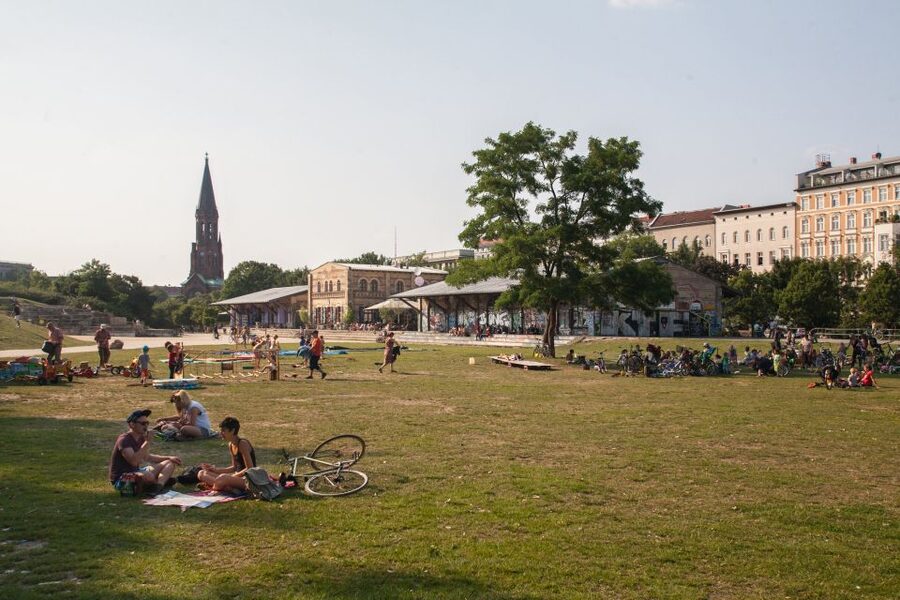
The walk continues through Görlitzer Park, which was previously a train station. That past gives the park a useful layer of meaning. You are walking through space shaped by transport and industry, not simply strolling through a green patch in the city.
The stop also gives your legs a break from the harder urban surfaces. Still, the park is part of Kreuzberg’s everyday public life, so do not expect a formal garden or a carefully arranged monument route. The attraction is the combination of open space, local use, and the remains of an earlier railway function.
The supplied details do not promise a long stop or a specific guided activity in the park. Think of it as part of the walking route and a chance to understand how Kreuzberg’s public spaces have changed over time.
Ending near the Oberbaumbrücke
The route reaches the Oberbaumbrücke, which symbolically links East and West Berlin. This is a fitting final point because the tour has already moved through several kinds of division and connection: the U1 splitting Kottbusser Tor, the old postal identity of SO36, the boundary between formal institutions and squats, and the changing line between East and West.
The activity information says the tour ends back at the meeting point, so the bridge functions as a route highlight rather than the final place where you are released. Plan on returning to 137 Skalitzer Straße after the walk.
That return matters when you plan the rest of your day. You are not finishing at a major transport hub on the opposite side of the city. You can use Kottbusser Tor again for the U1 or U8, or continue exploring Kreuzberg from the original meeting area.
What $24 buys you in three hours
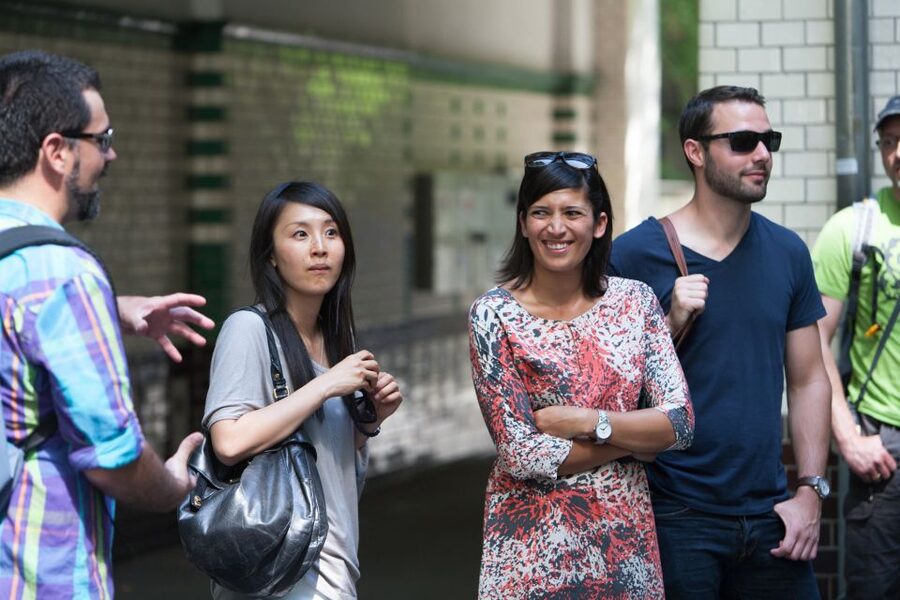
At $24 per person, the tour is reasonably priced for a three-hour guided walk, especially if you value explanation over admission tickets. You are paying for a city guide, a small group with a stated maximum of 12, and access to a route that would be hard to interpret fully on your own.
The value is strongest if you are curious about Berlin’s squatter scene, alternative clubs, migration stories, housing, and street-level culture. The route covers a lot of ground and includes several less obvious stops.
The value is weaker if you expect included meals, museum admissions, or a tour in English. Food and drink are extra, and the listed language is German. You should also check the current departure details before booking because the information gives two different minimum group figures: one place says a minimum of three, while another says two people are required. The advertised maximum is 12.
Cancellation information also needs a careful read. Free cancellation is given up to 24 hours before the activity, while the additional information says groups of three or more must cancel three days before the scheduled tour. If you are booking for a group, confirm which rule applies to your reservation.
The overall rating is 4.8 from 189 ratings, which supports the idea that the tour usually delivers a strong experience. Still, one serious complaint describes a cancellation caused by unclear communication about the German-language format and group size. I would confirm that you understand the language and receive a departure confirmation before setting your day around this walk.
Who will enjoy Wild Kreuzberg most
I would choose this tour if you want to understand Kreuzberg beyond the standard Berlin highlights. It suits you especially well if you enjoy:
- Urban history told through ordinary streets and reused buildings
- Berlin’s punk and squatter past
- Turkish and Arabic food culture alongside newer cafés
- Small museums, art spaces, comic shops, and independent businesses
- Walking tours with time for questions
- German-language guiding
You should think twice if you need English commentary, dislike walking in rain, or want a tour centered on major sights with guaranteed interior visits. The route is also not designed as a food tour, even though you pass plenty of places to eat.
Because the group is small, it can feel more personal than a standard city walk. That is a real advantage for questions and local detail, but it also means the tour depends heavily on the guide and on the group meeting the minimum number.
Practical tips before you book
Wear comfortable shoes and bring a waterproof layer even if the forecast looks uncertain. Rain ponchos are distributed when needed, but your own rain protection will be more comfortable for a three-hour walk.
Arrive at the exact meeting point, 137 Skalitzer Straße, in front of Gold Exchange next to REWE. Kottbusser Tor has both the U1 and U8, so use the Skalitzer Straße exit rather than relying on a general station arrival.
Set aside money for coffee, food, or drinks. None are included. You may also want to eat before starting if you prefer not to pause for a purchase during the route.
The tour is conducted in German. Do not book it on the assumption that a second language will be provided. If the booking system asks about your language ability, answer clearly, and confirm the tour is going ahead if your group is small.
Should you book this Kreuzberg walk?
Book it if you want a close look at Kreuzberg’s alternative past and present, and if German guiding works for you. The strongest parts are the route’s unusual details, the connections between squats and art spaces, the Oranienstraße stop, and the chance to see how everyday life shapes the district.
Skip it if you want English commentary, included refreshments, or a guaranteed museum-heavy schedule. For the right audience, $24 is a fair price for three hours of focused local context. Just confirm the language, minimum group size, and departure before you commit.
FAQ
How long does the Wild Kreuzberg tour last?
The walking tour lasts three hours. Check availability for the current starting times.
Where does the tour meet?
Meet at 137 Skalitzer Straße, in front of Gold Exchange and next to REWE.
Which U-Bahn station is closest?
Kottbusser Tor is the nearest station. It is served by the U1 and U8. Use the Skalitzer Straße exit.
Where does the tour end?
The activity ends back at the meeting point on Skalitzer Straße.
What language is the tour conducted in?
The live tour guide conducts the tour in German.
How large is the group?
The advertised group size is a minimum of three and a maximum of 12 people. The additional information says a minimum of two people is required, so confirm the current minimum when booking.
Is food or drink included?
No. Food and drink are not included. You can stop for a coffee during the route, but you pay for it yourself.
What should I bring?
Bring comfortable shoes. The tour operates in all weather, and a rain poncho is provided on rainy days.
Can I cancel for a full refund?
The activity information says you can cancel up to 24 hours in advance for a full refund. For groups of three or more, another condition gives a cancellation deadline of three days before the tour, so check the rule attached to your booking.
Just added around Berlin
- Berlin Highlights in One Day★ 5.0 · 3 reviews
- Transfer from Berlin Schönefeld Airport (SXF) to Berlin city Hotels – ROUND TRIP★ 4.0 · 3 reviews
- Private Berlin One Day Tour with a Local: See the City Unscripted★ 3.5 · 3 reviews
- Individual city tour Berlin for max. 8 persons★ 5.0 · 3 reviews
- Berlin: Museum Island Tour★ 5.0 · 3 reviews
- Private Analogue Photography Experience in Berlin★ 5.0 · 3 reviews
- Berlin: Local Food Tour in Secrets Hidden Gems★ 4.0 · 3 reviews
- Berlin & The Third Reich Private Guided Tour★ 5.0 · 3 reviews
Kreuzberg Tours, compared.


Alternative Bike Tour of Kreuzberg & Friedrichshain
Read our review →
Berlin Off-the-Beaten-Path Walking Tour: Kreuzberg, Mitte and Friedrichshain
Read our review →
Kreuzberg Berlin: Off the Beaten Track PRIVATE Walking Tour
Read our review →
Experience the Alternative Kreuzberg on a Bike Tour
Read our review →
Browse the lists this tour appears in