
Review · ALTERNATIVE BERLIN TOURS
Berlin: Experience the Alternative Kreuzberg on a Bike Tour
Berlin’s alternative side makes the most sense from a bicycle, and this tour gets you quickly from polished central streets into Kreuzberg’s rougher, more creative corners. You’ll see wall art, old squats, immigrant neighborhoods, riverfront hangouts, and the sharp contrasts that give Berlin its edge. Kreuzberg is the main event, but the ride also reaches Friedrichshain and the East Side Gallery.
I like the steady mix of Berlin Wall history and present-day street life. I also like that guides such as Jake, Bjorn, Karl, Rico, and Rufus bring their own stories and humor to the route rather than delivering a stiff script. The main drawback is that this is as much a guided city walk on two wheels as a bike ride. You stop often, so strong cyclists may wish for more time in the saddle.
In This Review
- Key points at a glance
- Why this route works for seeing Berlin
- Starting at Nikolaiviertel, then leaving the old city behind
- Kreuzberg: migration, protest, and a changing district
- Engelbecken and Das Baumhaus: quiet spaces with unusual stories
- Artists’ spaces, YAAM, and the Spree views
- East Side Gallery and Oberbaumbrücke
- Osthafen and the former border zone
- Falckensteinstraße and Görlitzer Park
- Liegnitzer Straße and the car loft
- Riverfront life, the Turkish market, and Admiralbrücke
- Kottbusser Tor: an abrupt final contrast
- How much cycling is involved?
- Price, group size, and overall value
- Who should book this bike tour?
- Practical details before you go
- Should you book it?
- FAQ
- How long does the bike tour last?
- Where does the tour start?
- Where does the tour end?
- What time does the tour start?
- Are bicycles and helmets included?
- Is the tour offered in English?
- Can children join the tour?
- What happens if the tour is canceled because too few people book?
- Can I cancel for a full refund?
Key points at a glance
- Three hours through alternative Berlin: The route covers Kreuzberg, Kreuzkölln, Friedrichshain, and the Spree waterfront.
- History beyond the postcard sights: You connect the Berlin Wall, GDR border controls, squatting, migration, and redevelopment.
- Many short stops: Expect regular pauses for stories, photos, and questions rather than a nonstop ride.
- Bike and helmet included: You do not need to arrange your own equipment.
- Small group size: The tour runs with at least four and no more than 15 people.
- Good for families: Children are welcome, and infant seats can be provided when requested.
Why this route works for seeing Berlin
The classic central Berlin circuit gives you grand museums, former royal buildings, memorials, and famous government sites. Those places matter, but they do not explain how Berlin became a city associated with counterculture, migrant communities, political activism, artists, and improvised urban life.
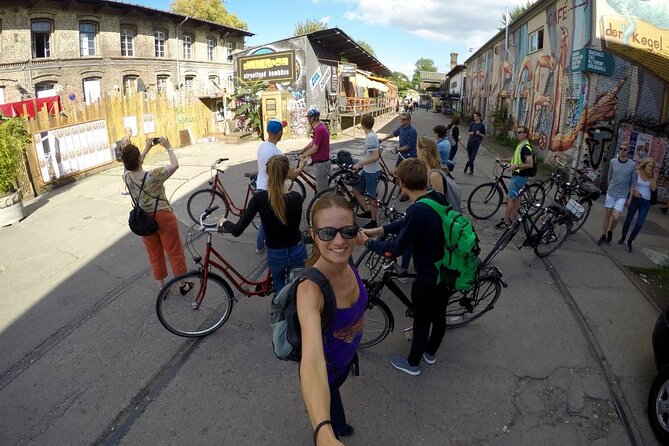
This ride takes a different line through the city. You begin near Nikolaiviertel, close to the old center, then move toward Kreuzberg and the districts along the Spree. The change is useful. You can feel the shift from reconstructed historic Berlin to neighborhoods shaped by postwar housing, the Wall, immigration, protest, music, and rapid redevelopment.
The route also makes clear that alternative Berlin is not one fixed thing. It includes quiet canals, Turkish markets, public parks, old industrial land, expensive new buildings, artists’ spaces, nightclubs, and some very hard urban problems. That range is one of the tour’s strengths.
The company’s Free Berlin concept lets each guide design a personal route. That means the exact emphasis can change, but it also gives the ride a local voice. Jake is praised for detailed explanations and personal stories. Bjorn brings strong insight into Kreuzberg and its culture, while Karl is lively and good at explaining unusual facts. Rico and Rufus are also noted for friendly, careful guiding.
More Kreuzberg on foot and by bike:
- Kreuzberg: Culinary Food Tour
★ 4.5 · 770 reviews - Berlin: Kreuzberg Guided Walking Evening Tour
★ 4.7 · 555 reviews - Berlin: Alternative Bike Tour of Kreuzberg & Friedrichshain
★ 4.7 · 548 reviews
Starting at Nikolaiviertel, then leaving the old city behind
The meeting point is Free Berlin Bike Tours & Rental at Poststraße 11, in central Berlin. The listed start time is 2:24 pm, and the tour returns to the same place after about three hours.
Nikolaiviertel is a brief opening stop. It represents the historic core and the version of Berlin most people first picture. The stop is only about five minutes, so do not expect a full tour of the quarter. Instead, use it to get your bearings before the ride moves into neighborhoods with a more everyday feel.
That transition gives the tour its shape. You are not simply collecting disconnected photo stops. You are moving from the old center into districts where Berlin’s recent past is easier to read in the streets, buildings, and public spaces.
Kreuzberg: migration, protest, and a changing district
Kreuzberg receives the first substantial pause, around 30 minutes. This is where the tour begins to explain the district as more than a fashionable nightlife address.
Kreuzberg has long been shaped by a mix of communities, including a large Turkish population, political groups, artists, squatters, and people looking for an alternative to conventional city life. The guide uses the neighborhood to explain how those forces came together and how the area has changed.
You should expect stories about people and urban politics as much as architecture. The tone is informal, and guides often add personal experiences. That helps make the area feel lived in rather than reduced to a collection of slogans.
The ride is not designed to settle every argument about gentrification or urban change. It gives you enough context to see the tension. Low-key streets, old apartment buildings, creative projects, and new investment all appear within a short distance. If you want the polished version of Berlin, this is not the focus. If you want to understand why Kreuzberg has such a strong identity, it is central to the experience.
Engelbecken and Das Baumhaus: quiet spaces with unusual stories
Engelbecken offers a short pause beside an unexpected pocket of calm. The water and open space sit among prefabricated buildings, older structures, and newer architecture. The contrast helps you see how different periods of Berlin’s development sit side by side.
This is a useful place for the guide to talk about the district’s variety. Kreuzberg is not simply gritty or rebellious. It also has peaceful corners, gardens, old churches, residential streets, and spaces where people escape the noise of the city.
Das Baumhaus, known as the Treehouse by the Wall, brings a more personal story. It concerns a guest worker who arrived in Berlin and claimed a small garden structure beside the Wall. The tale captures a particular Berlin attitude: practical, bold, unofficial, and willing to test the limits of what a city will tolerate.
You do not need a long stop here to understand the point. A small structure beside one of the twentieth century’s most heavily guarded borders says plenty about how ordinary people made room for themselves.
More alternative Berlin:
- Berlin: Alternative Berlin Walking Tour
★ 4.6 · 1,204 reviews - Berlin: Alternative Berlin Bike Tour
★ 4.8 · 359 reviews - Alternative Berlin Bike Tour – Off the Beaten Tracks in Small Groups
★ 5.0 · 99 reviews - Berlin: Street Art and Alternative Tour
★ 4.7 · 98 reviews
Artists’ spaces, YAAM, and the Spree views
The route includes an artists’ building formed through several squats. The place became a working space for artists during the scene’s growth in the 1980s and again in the early 2000s. Today, the story gives you a glimpse of how unused or contested buildings can become cultural spaces.
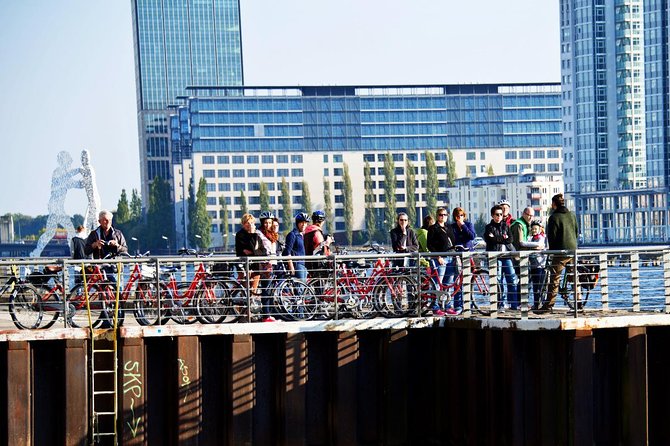
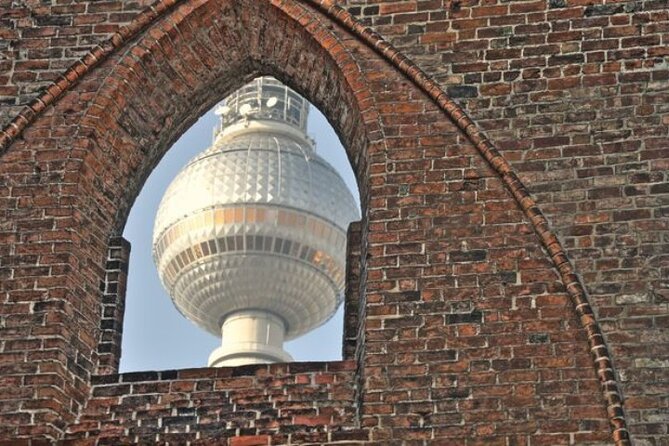
The tour then reaches the area around YAAM. YAAM is known as a club, but the view from here is the real reason to pause. You can take in the TV Tower, Holzmarkt, Oberbaumbrücke, and the Spree from one position.
This part of the ride is a good reminder that Berlin’s alternative culture is also tied to the river. Old industrial land and former border areas have become places for clubs, social projects, food, music, and new construction. The view can be especially appealing in the afternoon light, though the tour’s timing and weather will affect what you see.
One review describes a relaxing ride by the river with architecture, stories, and even a cold beer on board. That detail may relate to a particular guide or outing, so do not book expecting drinks to be included. Food and drinks are not part of the standard tour.
East Side Gallery and Oberbaumbrücke
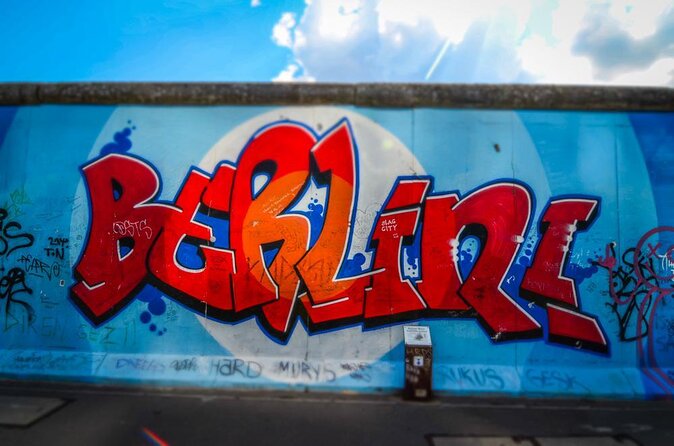
The East Side Gallery is one of the clearest historical anchors on the route. It is the longest remaining section of the Berlin Wall and is covered with large murals. The art is set beside a heavily redeveloped business area, creating one of Berlin’s sharpest visual contrasts.
You get only about ten minutes here, so this is not a full art tour. Still, a guided stop is valuable because the Wall is easy to treat as a backdrop for photos. The guide can connect the murals to the Wall’s former role, the division of Berlin, and the speed of change along the river.
Oberbaumbrücke follows with another short stop. The bridge is one of the district’s best-known landmarks, and its meaning goes beyond its red-brick appearance. It once marked a crossing between separated parts of Berlin and now links neighborhoods with very different identities.
The route’s theme of crossing borders appears here in a broad sense. Political borders, social borders, class differences, and cultural boundaries all meet around the bridge. It is also one of the more photogenic parts of the ride.
Osthafen and the former border zone
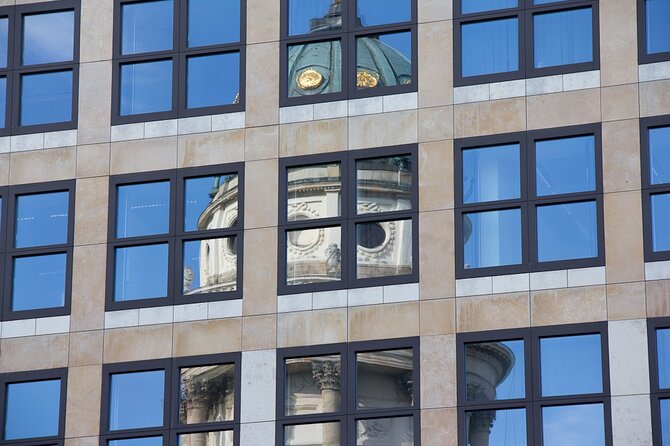
Osthafen was once restricted borderland. Now it is associated with young creative businesses, modern development, and river views. From the water’s edge, the former GDR obsession with walls, controls, and restricted movement becomes easier to grasp.
The stop is brief, around five minutes, but the location does a lot of work. A border that once blocked ordinary movement is now part of a public urban setting. At the same time, new buildings and commercial uses show how quickly Berlin has repurposed former no-go areas.
The tour also includes an unusual sculpture that has inspired several interpretations. The official explanation is presented as the least convincing one, according to the tour’s playful approach. This is a good example of the experience’s tone: history is taken seriously, but the guide is free to point out the odd, ambiguous, and slightly absurd parts of the city.
Falckensteinstraße and Görlitzer Park
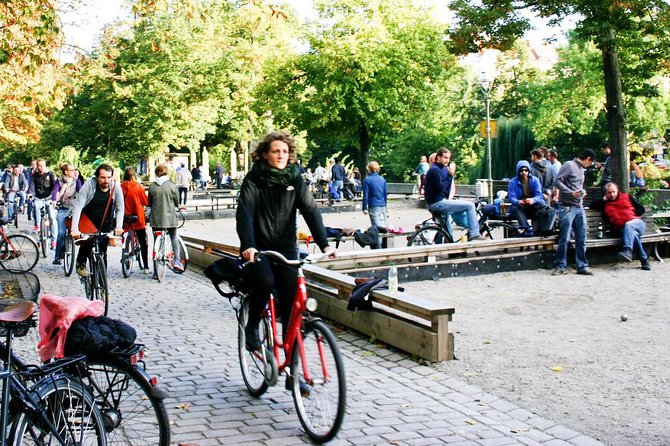
Falckensteinstraße is a strong stop for seeing Kreuzberg’s mix of buildings, residents, and social worlds. The street offers a close look at big-city life without losing the feeling of a local neighborhood.
The guide uses the area to challenge easy labels about Kreuzberg being only anarchist, untidy, or bohemian. You see a place where people seek community and independence, but also a place affected by traffic, business, housing pressure, and public disorder.
Görlitzer Park was created from a former railway station site. The park now represents the narrow space between alternative living and anarchy. That is a provocative way to frame it, but the stop is useful because it asks you to look at how public space is shared and contested.
This is not a tour that sanitizes the city. The route acknowledges rough edges and social problems. That may be uncomfortable at times, but it gives you a more honest sense of Berlin than a route made only of attractive façades.
Liegnitzer Straße and the car loft
Liegnitzer Straße contains one of the tour’s stranger contrasts. In an otherwise ordinary neighborhood associated with activism, alternative residents, and long-established Berlin life, you find the car loft, a building where residents can take their cars up to their balconies.
It is a compact illustration of modern wealth appearing inside an older urban setting. The point is not simply that the building is unusual. It shows how quickly different ideas about city living can occupy the same district.
This kind of stop is part of the tour’s appeal. You are not only looking at monuments. You are being asked to notice odd details and ask what they reveal about money, taste, status, and Berlin’s changing housing culture.
Riverfront life, the Turkish market, and Admiralbrücke
Another section of the route brings you to the waterfront and the Turkish market, held on Tuesdays and Fridays. The market adds a social and food-centered side to the tour, but food is not included, so bring money if you want to buy something during or after the ride.
The route also passes through an authentic, bohemian neighborhood where people gather to play boule and enjoy a slower pace. These stops soften the harder stories about the Wall, drugs, squats, and redevelopment. They show why many people value Kreuzberg as a place to live, not just a district to photograph.
Admiralbrücke is a popular place to begin an evening in a bar or watch the summer sunset with a crowd of strangers. The stop lasts only about five minutes, but it gives you a feel for the district’s social energy and its habit of turning ordinary public spaces into gathering places.
Kottbusser Tor: an abrupt final contrast
Kottbusser Tor, often called Kotti, changes the mood again. Its severe 1970s architecture, heavy traffic, and visible drug scene present a much tougher side of Kreuzberg.
This is not a scenic finale, and that is the point. After the riverfront, markets, gardens, and relaxed neighborhood stops, Kotti shows the pressures that sit beneath the district’s cool reputation. It is loud, hard-edged, and heavily used.
The short stop gives you context without pretending the area is simple. You may find it confronting, especially if you expected a tour focused only on murals and cafés. For me, that honesty adds value. Berlin’s alternative identity includes conflict and hardship as well as creativity.
How much cycling is involved?
The tour lasts about three hours, but the pace is moderate. You stop regularly, often for five to ten minutes, with a longer explanation in Kreuzberg. One French-language evaluation describes it as suitable for most people and not very demanding physically, while also noting that it involved more explanation and less cycling than expected.
That is the right expectation. This is not a training ride or a long-distance excursion. It is a moving history and neighborhood tour. You need to be comfortable riding in a city, but you do not need exceptional fitness.
The bicycles and helmets are supplied. Children can join when accompanied by an adult, and infant seats are available on request. The tour runs in most weather conditions, so dress for rain, wind, or changing temperatures. One practical warning is worth taking seriously: wear trousers that will not catch on the chain or get marked by it.
Price, group size, and overall value
At $42.33 per person, the tour sits in a reasonable range for a three-hour guided activity that includes a bicycle, helmet, and professional guide. The value is strongest if you want context. You are paying for the route design and interpretation, not simply for bicycle rental.
A self-guided ride would cost less if you already had a bike and knew where to go. But it would be harder to connect the Wall, squatting, migration, public art, redevelopment, and daily life into one clear story. You would also be more likely to miss places such as Das Baumhaus, the artists’ building, the car loft, and some of the less obvious riverfront viewpoints.
The group size is limited to 15, with a minimum of four. That is small enough for questions and personal stories without making the ride feel private. The minimum also matters in low season. If too few people book, the company may cancel or offer another date or experience.
The published rating is 4.8 from 126 ratings, with 97 percent recommending the activity. The strongest pattern is consistent: guides are praised for being friendly, funny, safe, and well informed, with Jake, Bjorn, Karl, Rico, Rufus, and Vincent each receiving specific praise. The one serious negative account concerns a cancellation and confusion about the replacement arrangement, so check your confirmation and meeting details carefully.
Who should book this bike tour?
You should consider it if you have already seen, or plan to see, Berlin’s main central monuments and want a better sense of the city’s recent social life. It is particularly useful early in your visit because it helps you identify districts you may want to revisit, including Kreuzberg, Görlitzer Park, the riverfront, and the East Side Gallery.
It suits curious adults, families with older children, and anyone who likes history explained through streets rather than museum labels. It also works for people who are not serious cyclists, since the route includes frequent breaks.
You may want another tour if your priority is fast cycling, formal art history, or a complete tour of Berlin’s major landmarks. The route can also feel uneven if you prefer a tidy, polished presentation. Kreuzberg is presented with its beauty, humor, social life, and difficult issues all together.
Practical details before you go
You receive confirmation when booking. The meeting point is close to public transportation, and the activity ends back at the same central location.
The selected language matters. The experience is offered in English, with German available depending on the option chosen. Children must be accompanied by an adult, and most people can take part.
Free cancellation is available up to 24 hours before the 2:24 pm start for a full refund. Changes or cancellations inside that window are not accepted for a refund. Since the tour requires a minimum group, keep an eye on any updates if you book during a quieter period.
Should you book it?
Book this tour if you want Berlin explained through counterculture, Wall history, migration, and everyday neighborhoods, and if you prefer a relaxed pace with frequent stops. The best reason to choose it is the guide-led context, especially if you can ride with someone like Jake, Bjorn, Karl, Rico, Rufus, or Vincent, whose styles have been singled out for humor, personal stories, and clear explanations.
Skip it if you want three hours of continuous cycling or a standard checklist of Berlin’s famous sights. For most people seeking a candid look at Kreuzberg and the former Wall zone, the $42.33 price is fair, the equipment makes planning easy, and the route offers far more substance than a basic bike rental.
FAQ
How long does the bike tour last?
The tour lasts approximately three hours.
Where does the tour start?
It starts at Free Berlin Bike Tours & Rental, Poststraße 11, 10178 Berlin, Germany.
Where does the tour end?
The activity ends back at the meeting point.
What time does the tour start?
The listed start time is 2:24 pm.
Are bicycles and helmets included?
Yes. Bicycle use and a helmet are included in the tour price.
Is the tour offered in English?
Yes. The activity is offered in English. German is also available depending on the option selected.
Can children join the tour?
Yes. Children are welcome, but they must be accompanied by an adult. Infant seats can be provided on request.
What happens if the tour is canceled because too few people book?
If the minimum number of participants is not met, you will be offered a different date or experience, or a full refund.
Can I cancel for a full refund?
Yes. You must cancel at least 24 hours before the experience start time for a full refund.
More Bike Days Around Berlin
- Berlin: Sights and Highlights Bike Tour with a Local Guide
★ 4.8 · 2,698 reviews - Berlin Highlights 3-Hour Bike Tour
★ 5.0 · 948 reviews - Berlin City Bike Tour with Beer Garden Stop
★ 5.0 · 917 reviews - Berlin Highlights: 3-Hour Bike Tour
★ 4.9 · 809 reviews
Just added around Berlin
- Berlin Highlights in One Day★ 5.0 · 3 reviews
- Private Berlin One Day Tour with a Local: See the City Unscripted★ 3.5 · 3 reviews
- Individual city tour Berlin for max. 8 persons★ 5.0 · 3 reviews
- Transfer from Berlin Schönefeld Airport (SXF) to Berlin city Hotels – ROUND TRIP★ 4.0 · 3 reviews
- Berlin: Museum Island Tour★ 5.0 · 3 reviews
- Private Analogue Photography Experience in Berlin★ 5.0 · 3 reviews
- Berlin: Local Food Tour in Secrets Hidden Gems★ 4.0 · 3 reviews
- Berlin & The Third Reich Private Guided Tour★ 5.0 · 3 reviews
Alternative Berlin Tours, compared.


Alternative Bike Tour of Kreuzberg & Friedrichshain
Read our review →
Alternative Berlin Bike Tour – Off the Beaten Tracks in Small Groups
Read our review →


Street Art and Alternative Tour of Berlin in French
Read our review →
Berlin’s Alternative Side: The Urban Jungle Tour
Read our review →Browse the lists this tour appears in