
Review · BERLIN WALL TOURS
Berlin: E-Bike Tour of the Berlin Wall and Mitte Highlights
Berlin’s Wall story makes the most sense when you move through the city itself. This three-and-a-half-hour e-bike tour links the former border at Bornholmer Strasse with Bernauer Strasse, the government quarter, Mitte, and Alexanderplatz, so you see how divided Berlin once worked and how it looks today.
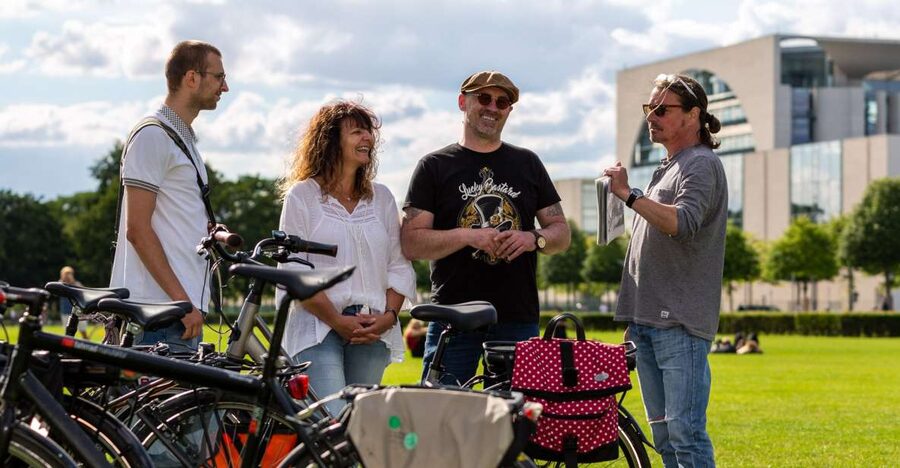
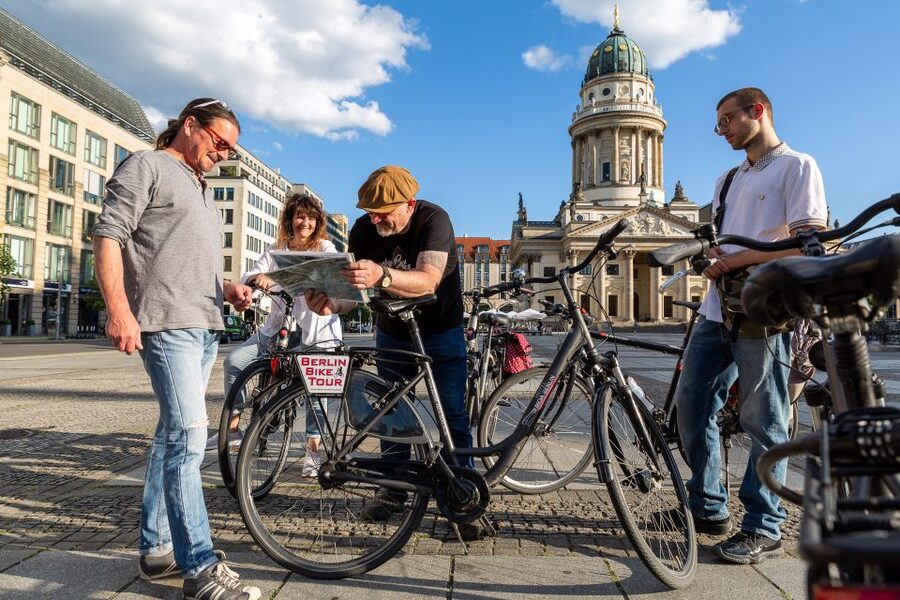
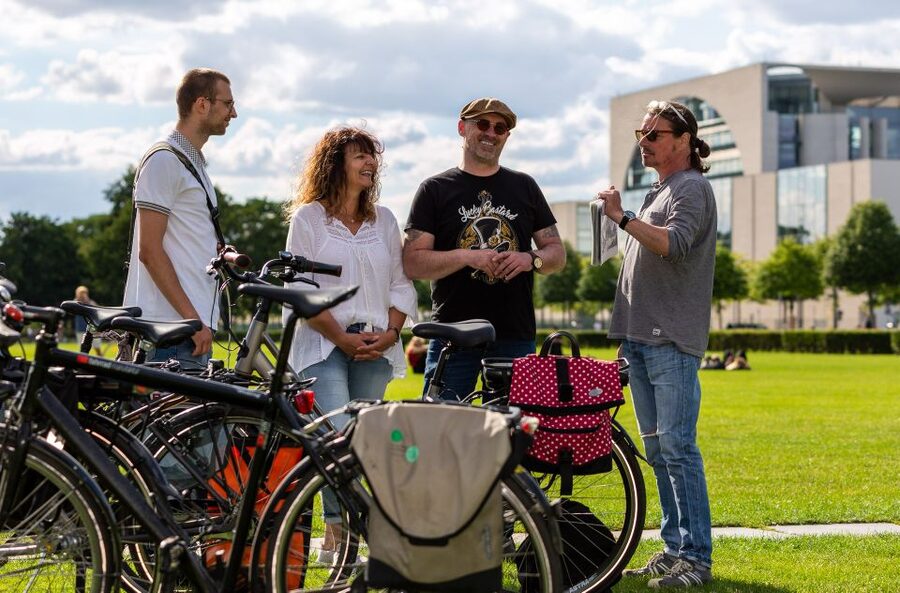
I like two things right away: the electric bikes make a long route manageable, and the small group of no more than eight people gives the German-speaking guide room to explain the sites. I also like the mix of serious history and everyday city scenes, from the Chapel of Reconciliation to the World Clock.
The main consideration is language. The tour is offered in German, so it is best for German speakers or anyone comfortable following a detailed spoken tour in that language. It also runs rain or shine, and the route includes several hours outdoors.
In This Review
- Key points to know before you book
- From the Wall’s opening night at Bornholmer Strasse
- Mauerpark and Bernauer Strasse: where the Wall cut through daily life
- Nordbahnhof and the traces beneath Berlin’s streets
- Charité and the move into central Mitte
- Reichstag, Brandenburg Gate, and the government quarter
- A quiet pause at the Holocaust Memorial
- Gendarmenmarkt and Bebelplatz
- Unter den Linden to Berlin Cathedral
- The modern finish at Rotes Rathaus and Alexanderplatz
- What the $48 price includes
- Who will get the most from this ride
- Practical advice for a smoother day
- Should you book this Berlin e-bike tour?
- FAQ
- How long does the Berlin e-bike tour last?
- Where does the tour begin?
- Where does the tour end?
- What language is the tour offered in?
- How many people are in the group?
- Is an e-bike included?
- Are food, drinks, and attraction tickets included?
Key points to know before you book
- Bornholmer Strasse begins the Wall story: You start at the former border crossing where the gates opened on November 9, 1989.
- The e-bike matters: You cover a wide stretch of Berlin without the effort of a conventional bicycle, though you still need to be comfortable riding in city conditions.
- The route mixes old and new Berlin: Mauerpark, Bernauer Strasse, the Reichstag, Unter den Linden, and Alexanderplatz all appear in one continuous outing.
- The group is limited to eight: That is a useful size for asking questions and keeping the ride together.
- The tour stays outside: Food, drinks, and entrance tickets are not included, so bring water and dress for the forecast.
- German is the listed tour language: Check this carefully before booking, especially if you want a full spoken explanation of Berlin’s past.
From the Wall’s opening night at Bornholmer Strasse
The tour starts outside Bornholmer Strasse 75, at one of Berlin’s most meaningful starting points. On November 9, 1989, East Berliners pushed through this crossing after the Wall gates opened. Beginning here gives the day a clear focus: you are not just pedaling past old Wall sites, you are following the places where the division of Berlin became visible and, finally, began to break apart.
The address is north of central Mitte, so the route first works south and west through former border areas before returning to the center. That is useful for understanding the city’s shape. Berlin’s division was not an abstract line on a map. It cut through neighborhoods, parks, railway routes, and ordinary streets.
I would arrive ready to ride rather than expecting a long introduction indoors. The supplied information gives no separate museum visit or extended stop at the meeting point. The experience is built around moving through the city, stopping at important places, and listening to the guide along the way.
More of the Berlin Wall, end to end:
- Skip-the-Line: Berlin Wall Museum at Checkpoint Charlie
★ 4.1 · 2,041 reviews - Berlin: East Side Gallery Spree Cruise in a Solar Catamaran
★ 4.0 · 1,039 reviews - Cold War, Berlin Wall, Spies and the East Side Gallery
★ 5.0 · 1,024 reviews
Mauerpark and Bernauer Strasse: where the Wall cut through daily life
Mauerpark is an especially effective early stop because the Wall once split the park between East and West Berlin. Today, the name suggests open space and city life, but the route helps you picture the barriers that once ran through it. Seeing the former division on a bicycle makes the scale easier to grasp than simply reading about it.
The tour continues along Bernauer Strasse to the Wall Memorial and the Chapel of Reconciliation. This section gives you some of the clearest surviving reminders of how the Wall affected residents. Bernauer Strasse was marked by escape attempts, demolitions, watch areas, and families separated by a barrier close to their homes.
The Chapel of Reconciliation adds a quieter note. It is a place to pause and consider the personal cost of the division rather than only its political story. The tour does not list an entry inside the chapel, so plan to experience this as an outdoor sightseeing stop unless your guide says otherwise.
This is also one of the parts where the guide’s storytelling matters most. Feedback about the tour repeatedly praises the explanations as vivid, informative, and emotional. Ference is named in several comments as a guide who brought the Wall’s construction and fall to life. Guide assignments can change, but that gives you a useful sense of the expected approach.
Nordbahnhof and the traces beneath Berlin’s streets
The route then reaches Nordbahnhof, a former ghost station. During the city’s division, some subway and railway stations in East Berlin were closed to trains passing between the western sectors. Trains went through without stopping, leaving dark, unused platforms behind.
You may not spend a long period inside a station here, since the tour description treats Nordbahnhof as a sightseeing stop along the cycling route. Even so, it helps connect political history with the practical systems of a city. A divided Berlin affected not only roads and families but also the way people moved underground.
I like this part because it prevents the tour from becoming a parade of famous buildings. You get the grand landmarks later, but first you see the less polished evidence of division. That balance gives the route more meaning.
Charité and the move into central Mitte
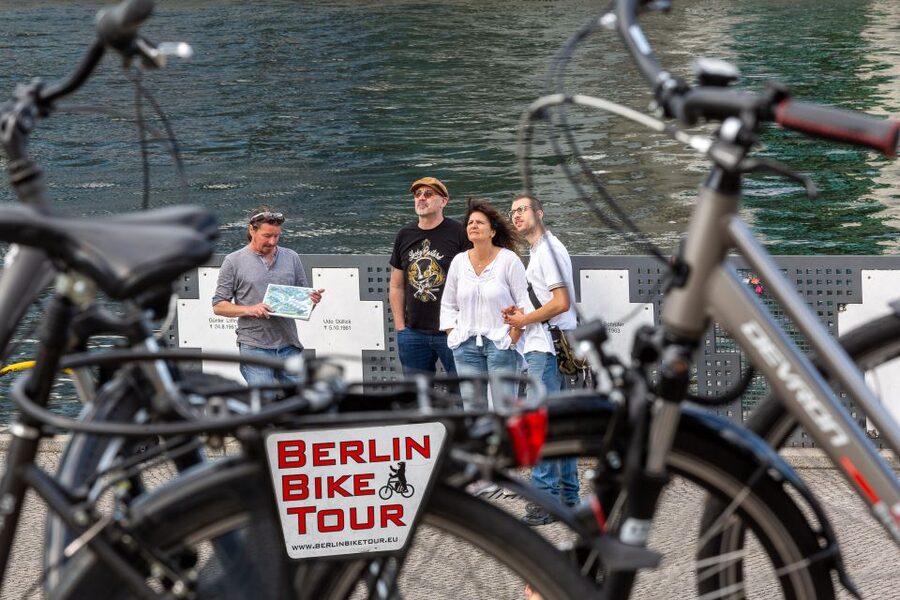
From the former Wall zone, you cycle into Mitte, Berlin’s central district. Charité, the long-established hospital, marks this transition. It is not presented as a museum visit or an interior stop. Instead, it is a city landmark that helps you read the neighborhood as a working part of Berlin, not only as a collection of monuments.
This change in scenery is one of the benefits of traveling by bike. You see the gaps between major sights rather than jumping from one attraction to the next by vehicle. The route lets you notice how quickly Berlin shifts from former border ground to government buildings, memorials, grand avenues, and busy public squares.
The e-bike is a practical choice here. The route is long enough that a standard bicycle could make the day feel more like exercise than sightseeing, especially with repeated starts and stops. Electric assistance does not remove the need to pedal, but it should make the distance less tiring. You still need to be alert and comfortable riding through the city.
More of Mitte:
- Berlin: Mitte Culinary Food Tour
★ 4.5 · 447 reviews - Berlin Off-the-Beaten-Path Walking Tour: Kreuzberg, Mitte and Friedrichshain
★ 5.0 · 412 reviews - Gruseltour Berlin Haunted Ghost Walk 90-minute at Berlin Mitte city center
★ 5.0 · 75 reviews - Small-Group Berlin Sightseeing and Food Tour of Prenzlauer Berg and Mitte
★ 5.0 · 25 reviews
Reichstag, Brandenburg Gate, and the government quarter
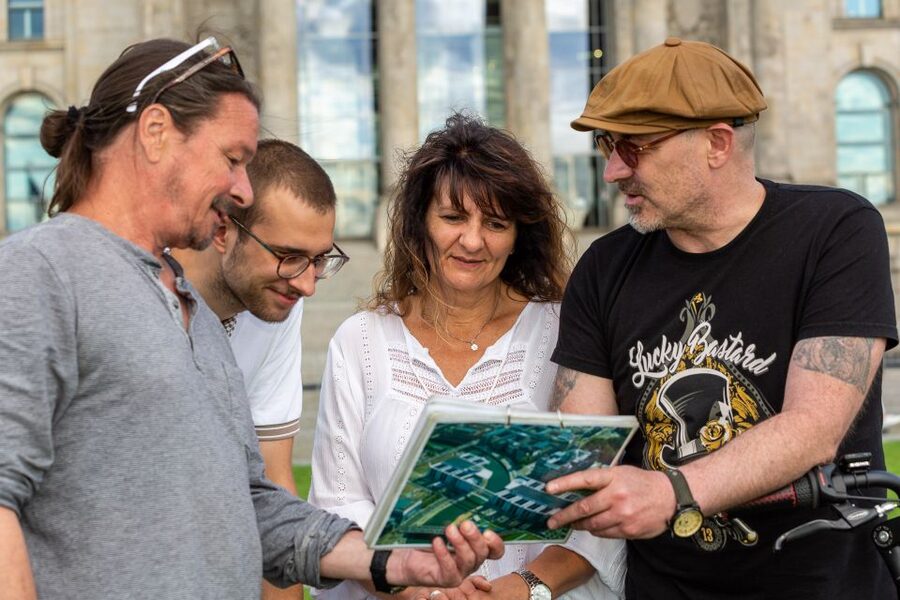
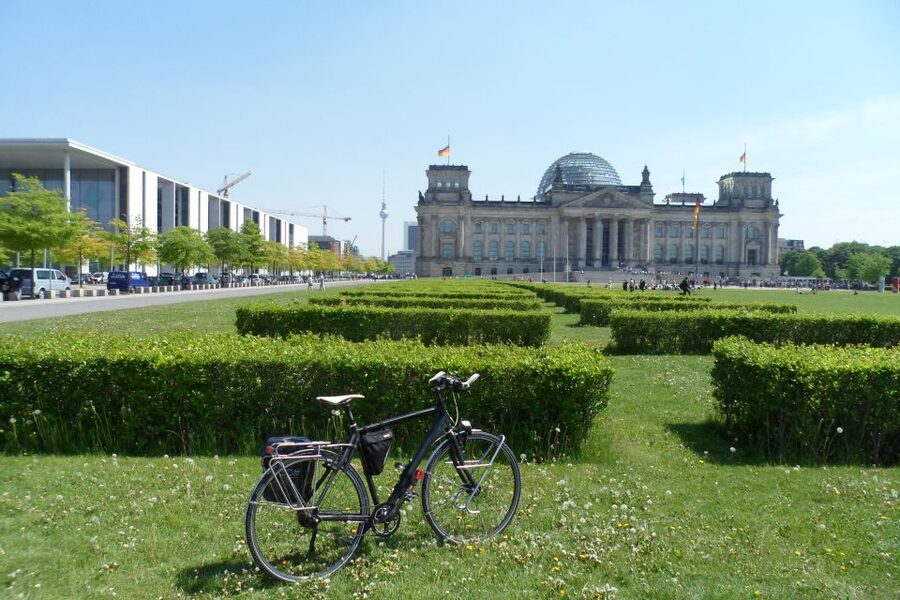
The Reichstag and Brandenburg Gate bring you into the part of Berlin most visitors recognize from photographs. The Reichstag is tied to the German parliament and the modern federal government. Brandenburg Gate once sat beside the Wall and became a powerful symbol of German reunification after 1989.
The tour treats both buildings as outdoor stops. Entrance tickets are not included, and the experience does not promise time inside either attraction. That keeps the ride moving, but it also means you should not book this as a substitute for a dedicated Reichstag visit or a museum tour.
I find the pairing useful because the buildings tell different parts of Berlin’s story. The Reichstag points to national politics and the twentieth century’s upheavals. Brandenburg Gate connects the old city, the divided city, and the reunified capital. Your guide can tie those threads together without requiring you to spend the day inside a single building.
The government quarter also gives you a chance to see Berlin’s present-day role. After the Wall sites, this section shows a capital functioning as a modern political center. It is a good reminder that Berlin’s past is still part of an active city, not a preserved set of ruins.
A quiet pause at the Holocaust Memorial
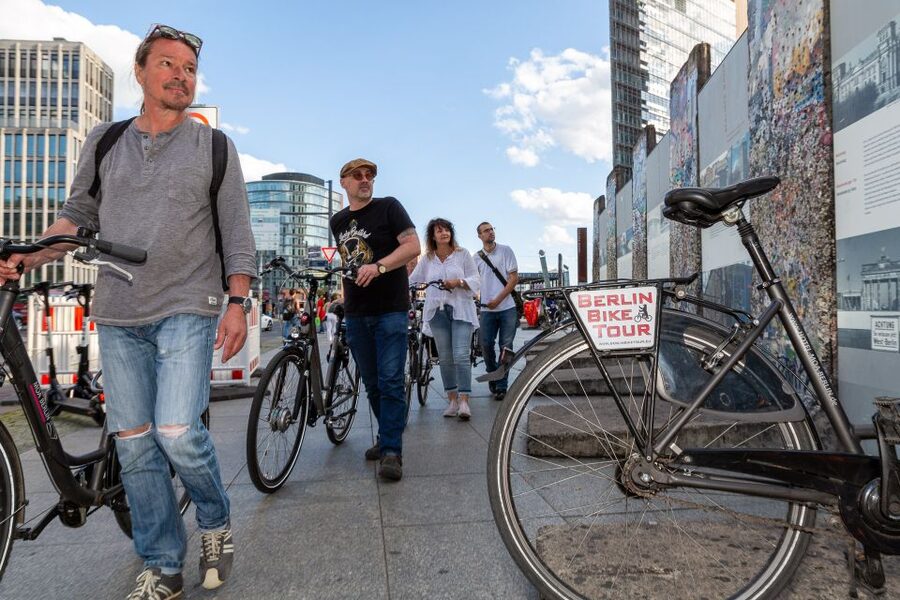
The Holocaust Memorial is one of the most serious stops on the route. The field of concrete stelae creates a stark public space in the center of Berlin, close to the Brandenburg Gate and government quarter. The tour allows you to pause and pay respects to Jewish victims of the Holocaust.
This is not a stop to rush through for a photograph. I would use the pause to listen and take in the setting. The tour information does not include an interior museum visit, so the focus here is the memorial itself and the guide’s explanation.
The sequence matters. After the Wall and reunification sites, the memorial turns the day toward an earlier and even darker chapter of German history. The route asks you to hold several periods together: Nazi persecution, wartime destruction, postwar division, and reunification. That is a lot for one bicycle outing, but the stops are connected by the city streets between them.
Gendarmenmarkt and Bebelplatz
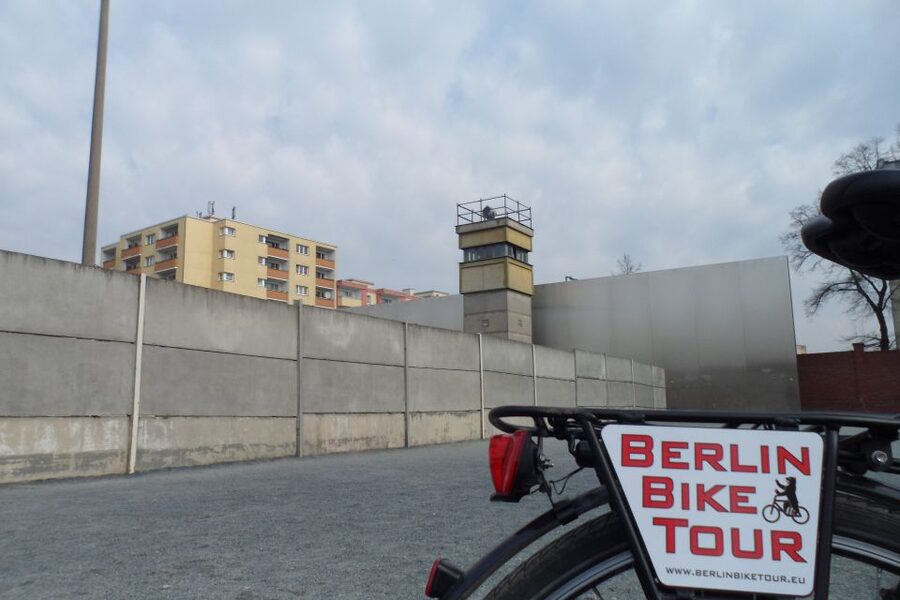
Gendarmenmarkt brings a different kind of Berlin into view. It is one of the city’s grand historic squares, framed by imposing architecture and a formal urban design. The stop gives the ride a change of pace after the heavy memorial sites and government quarter.
Nearby Bebelplatz carries its own painful history. It is associated with the Nazi book burning of 1933, making it another place where Berlin’s public spaces reveal events that are not always visible in the buildings themselves. A guide’s explanation is particularly useful here because the physical square alone may not tell you what happened.
I appreciate that the route does not treat these places as isolated photo stops. They follow the Holocaust Memorial and lead toward Unter den Linden, so you move through a central stretch where architecture, power, culture, and memory overlap. The history is serious, but the bicycle format keeps the experience active and varied.
Unter den Linden to Berlin Cathedral
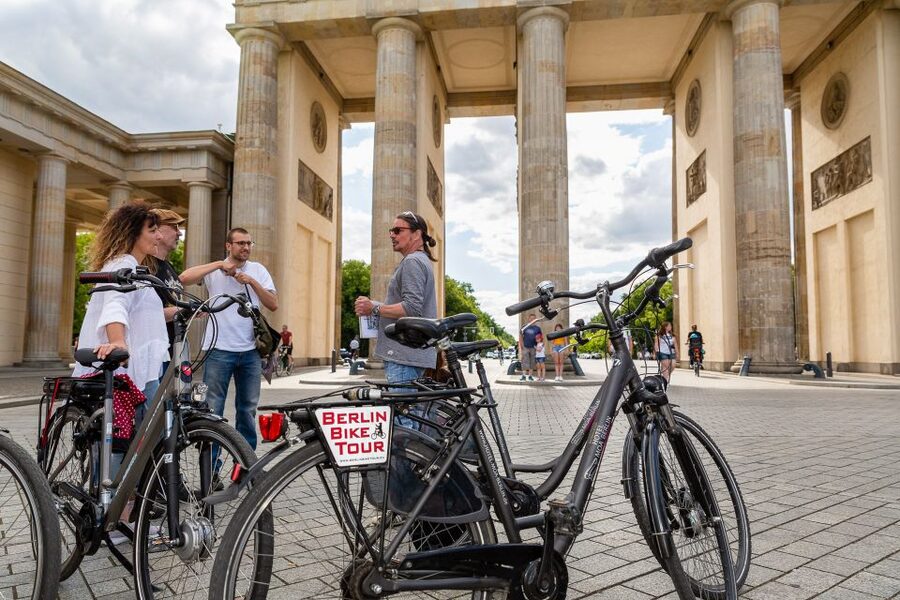
Unter den Linden is Berlin’s broad historic avenue, and cycling along it gives you a strong sense of the city’s formal center. The avenue connects several major landmarks, so this is one of the stretches where the ride feels most like a moving city tour.
You pass Berlin Cathedral and the renovated Berlin Palace. The route also reaches Nikolaiviertel, the charming area identified as the original village that formed Berlin. These stops offer a look at the city before the modern capital took shape.
The contrast is valuable. The Wall sections show a city split by force, while Nikolaiviertel points back to Berlin’s older beginnings. The palace and cathedral add the grand, ceremonial side of the capital. You will not have time for a full visit to each building during a 210-minute route, but you can see how the landmarks fit together and decide which ones deserve a separate return visit.
If you enjoy architecture, this part may be one of the tour’s strongest stretches. If you want long, quiet time inside museums or churches, it may feel too quick. The experience is designed to cover ground and provide context, not to offer extended interior touring.
The modern finish at Rotes Rathaus and Alexanderplatz
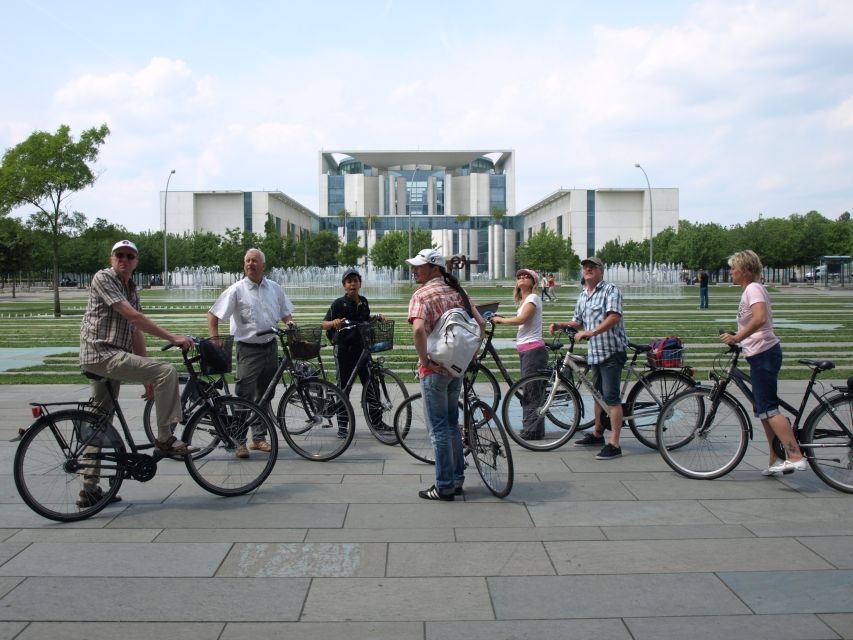
The final section shifts to Berlin’s modern central district. You see Rotes Rathaus, the red-brick town hall, then Alexanderplatz, the TV Tower, Marien Church, and the World Clock.
Alexanderplatz is a fitting ending because it captures the former East Berlin’s monumental public face and its current role as a major city center. The TV Tower remains one of Berlin’s most recognizable landmarks. Marien Church adds an older religious building to the square’s modern surroundings, while the World Clock gives the stop a distinctly twentieth-century East German character.
The route ends back at Bornholmer Strasse 75 rather than in the center. That return matters when you plan your afternoon. You are not dropped at Alexanderplatz to continue sightseeing there, so allow time for the ride back and consider what you want to do next.
I like ending with the TV Tower and World Clock after beginning at the Wall’s former crossing. You finish by seeing a city that has changed its public image, transport links, and central districts while retaining visible reminders of its divided past.
What the $48 price includes
At $48 per person, the tour offers a 210-minute guided ride, an e-bike, a bike lock, and the services of a live German-speaking guide. For a small group capped at eight, that is a fair price if you want one organized outing covering both Wall history and central landmarks.
The value comes from the route and the time saved planning it yourself. Bornholmer Strasse, Mauerpark, Bernauer Strasse, Nordbahnhof, the government quarter, Bebelplatz, Nikolaiviertel, and Alexanderplatz are spread across a large part of Berlin. A self-guided ride could cover some of them, but you would need to research the history and build the route yourself.
The price does not include food, drinks, or entry tickets. Since the route is outdoors and lasts three and a half hours, bring your own water. If you want to go inside the Reichstag, a museum, the TV Tower, or another attraction, treat that as a separate plan.
The e-bike also adds value for anyone who wants the reach of a bicycle without committing to a hard physical ride. You still need to ride for the full outing, and the tour takes place rain or shine, so the value depends partly on your comfort with changing weather.
Who will get the most from this ride
I would recommend this tour to you if you want a broad first look at Berlin and prefer moving through the city rather than sitting in a coach. It suits people who want Wall history, major landmarks, and a bit of exercise in one booking.
It is also a good fit if you enjoy stories tied to specific locations. The route includes places where the Wall opened, divided a park, closed railway stations, and shaped daily life. The guide’s explanations are central to the experience, especially at Bernauer Strasse, Nordbahnhof, Bebelplatz, and the Holocaust Memorial.
You should think twice if you want an English-language tour, long indoor visits, or a slow pace at every landmark. The listed language is German, the group keeps moving, and no admission tickets are included. Families and groups should also consider each rider’s confidence on an e-bike, since the activity is a cycling tour rather than a sightseeing bus ride.
The small group size is a real advantage. With up to eight participants, it should be easier to hear the guide and ask about places that catch your attention. The feedback also repeatedly singles out the bikes, route, and clear explanations as strengths. Words such as informative, lively, interesting, and emotional appear often in the German comments, which matches the tour’s design.
Practical advice for a smoother day
Wear clothing suited to the weather, since the tour runs in rain or sunshine. Bring a drink, and do not count on included refreshments. A light rain layer could make a major difference on a wet day, although the supplied details do not specify any equipment beyond the bicycle and lock.
Give yourself enough time to reach Bornholmer Strasse 75. It is both the meeting point and the end point, so you need to plan for the return to this address after the central Berlin portion.
I would also avoid packing too many other fixed plans immediately after the ride. The stated duration is 210 minutes, but outdoor tours can feel full even when they run on schedule. Since you finish back at the starting point, allow time for that final return before booking a timed attraction elsewhere.
Cancellation is flexible up to 24 hours before the start for a full refund, and you can reserve while paying later. Those policies are useful if Berlin weather or your wider schedule is still uncertain, but the key decision remains the German-language format and your willingness to ride outdoors.
Should you book this Berlin e-bike tour?
Book it if you want a wide-ranging, history-focused introduction to Berlin and the German tour language works for you. The route does more than connect famous buildings. It moves from the Wall’s opening at Bornholmer Strasse through divided neighborhoods, memorial sites, political landmarks, old Berlin, and the modern center.
At $48, the e-bike and small-group guide make the long route a sensible use of time. I would choose it early in a Berlin visit, when you want to understand how the city fits together before returning to the places that deserve a longer visit.
Skip it if you need English commentary, want interior access to major attractions, or dislike riding in uncertain weather. For everyone else, especially those interested in the Wall, this is an active and unusually broad way to see Berlin’s past and present in one afternoon.
FAQ
How long does the Berlin e-bike tour last?
The tour lasts 210 minutes, or three and a half hours.
Where does the tour begin?
You meet the guide outside Bornholmer Strasse 75.
Where does the tour end?
The tour returns to Bornholmer Strasse 75.
What language is the tour offered in?
The live tour guide speaks German.
How many people are in the group?
The group is limited to eight participants.
Is an e-bike included?
Yes. The tour includes an e-bike and a bike lock.
Are food, drinks, and attraction tickets included?
No. Food, drinks, and entrance tickets are not included. You should bring a drink and weather-appropriate clothing.
More Bike Days Around Berlin
- Berlin: Sights and Highlights Bike Tour with a Local Guide
★ 4.8 · 2,698 reviews - Berlin Highlights 3-Hour Bike Tour
★ 5.0 · 948 reviews - Berlin City Bike Tour with Beer Garden Stop
★ 5.0 · 917 reviews - Berlin Highlights: 3-Hour Bike Tour
★ 4.9 · 809 reviews
More E-Bikes in Berlin
- Best of Berlin E-Bike Tour
★ 5.0 · 77 reviews - Best of Berlin E-Bike Tour
★ 5.0 · 37 reviews - Berlin Bike and Electric Bike Rentals
★ 4.5 · 12 reviews - Ultimate E-Bike Tour of Berlin with Beer Garden Stop
★ 5.0 · 4 reviews
Just added around Berlin
- Berlin Highlights in One Day★ 5.0 · 3 reviews
- Private Berlin One Day Tour with a Local: See the City Unscripted★ 3.5 · 3 reviews
- Individual city tour Berlin for max. 8 persons★ 5.0 · 3 reviews
- Transfer from Berlin Schönefeld Airport (SXF) to Berlin city Hotels – ROUND TRIP★ 4.0 · 3 reviews
- Berlin: Museum Island Tour★ 5.0 · 3 reviews
- Private Analogue Photography Experience in Berlin★ 5.0 · 3 reviews
- Berlin: Local Food Tour in Secrets Hidden Gems★ 4.0 · 3 reviews
- Berlin & The Third Reich Private Guided Tour★ 5.0 · 3 reviews
Berlin Wall Tours, compared.

Skip-the-Line: Berlin Wall Museum at Checkpoint Charlie
Read our review →
East Side Gallery Spree Cruise in a Solar Catamaran
Read our review →
Cold War, Berlin Wall, Spies and the East Side Gallery
Read our review →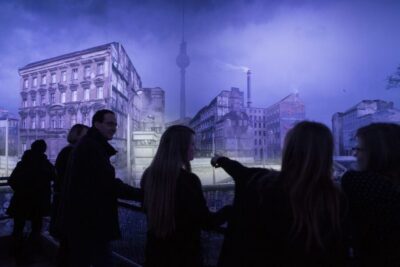

Guided Bike Tour of the Berlin Wall and Third Reich
Read our review →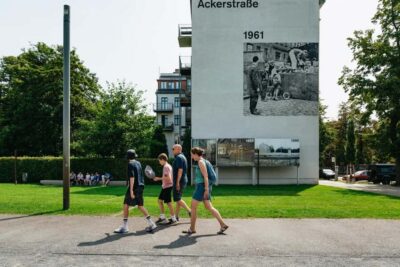

Browse the lists this tour appears in