

Review · BERLIN
Berlin: Classical Concert at Kaiser Wilhelm Memorial Church
The organ is the star of this 70-minute concert inside Berlin’s Kaiser Wilhelm Memorial Church. You’ll hear familiar works by Bach, Mozart, Beethoven, Vivaldi, and Schubert in a setting that adds a shadowy, emotional edge to even the gentlest music.
I like the program’s variety: strings, soprano, violin, and organ keep the hour moving. I also like the price, about $27 per person, which makes this a sensible evening choice when Berlin’s larger orchestras are not performing. The main caution is seating. The ensemble may be a small eight-member string group rather than a full symphony orchestra, and some seats offer a limited view or less satisfying acoustics.
In This Review
- Key points to know before you book
- Why this church changes the concert
- A 70-minute program built around familiar classics
- Vivaldi brings the evening to life
- Mozart adds the emotional center
- Bach and Widor make the organ worth hearing
- Schubert, Handel, Beethoven, and Mozart keep it accessible
- The musicians and what their roles add
- Seating and sound: the main thing to consider
- What the $27 ticket gives you
- Who will enjoy this concert most
- A practical plan for the evening
- Should you book the Kaiser Wilhelm Memorial Church concert?
- FAQ
- Where does the concert take place?
- How long does the concert last?
- How much does the ticket cost?
- What music is performed?
- Is the entire program guaranteed?
- Who are the named performers?
- Is this a full symphony orchestra?
- Is there a dress code?
- Is the church air-conditioned?
- Is the concert wheelchair accessible?
Key points to know before you book
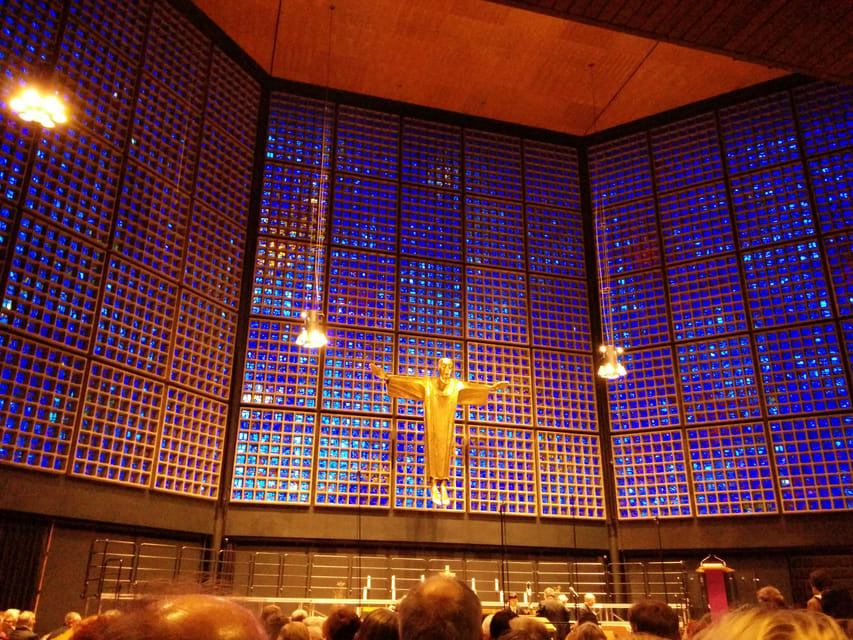
- The Kaiser Wilhelm Memorial Church supplies the atmosphere: Its striking interior gives the concert a solemn, memorable setting.
- The organ pieces are major highlights: Bach’s Toccata and Fugue and Widor’s Toccata can make the room shake with sound.
- Duangamorn Fu is the featured soprano: She trained in Vienna and Berlin and sings works such as Mozart’s Requiem and Schubert’s Ave Maria.
- Expect a compact ensemble, not a full orchestra: The string group keeps the ticket affordable but cannot produce the force of a large symphony.
- The familiar program suits first-time listeners: You do not need a background in classical music to recognize several melodies.
- Plan to arrive early: Confusing seat assignment procedures have caused delays at the entrance.
Why this church changes the concert
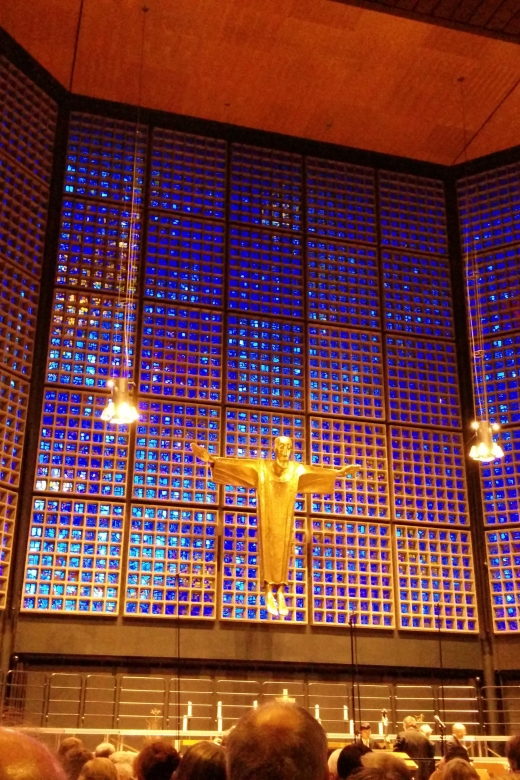
Kaiser Wilhelm Memorial Church is not a plain concert hall. Its unusual interior gives the evening a sense of place that a standard auditorium cannot match. You are hearing music in one of Berlin’s best-known churches, and the building’s serious mood fits Bach, Mozart’s Requiem, and the darker passages of Beethoven.
The setting is especially effective during the organ numbers. Bach’s Toccata and Fugue in D minor and Widor’s Toccata from Symphony No. 5 use the full weight of the instrument. If you enjoy low, rumbling tones and sudden bursts of sound, these may be the most memorable moments of the night.
The church’s acoustics can be a mixed blessing. Organ music benefits from the room’s size and resonance, while delicate string passages and vocal lines may not sound equally clear from every seat. One useful piece of advice is to choose your category carefully and arrive early enough to understand where you have been placed.
The venue is air-conditioned in summer, a small but welcome detail during a warm Berlin evening. There is no formal dress code, so you can come directly from sightseeing without packing special concert clothing.
A few more Berlin tours worth weighing up
- Berlin: Classical concerts at the Bode Museum Berlin
★ 4.3 · 26 reviews - Berlin: Classical concerts in Köpenick Palace – Aurora Hall
★ 4.1 · 5 reviews
A 70-minute program built around familiar classics
The program is designed for easy listening rather than a single long composition. You move from Vivaldi’s energetic seasons to Mozart’s mournful Lacrimosa, then through organ, voice, strings, and symphonic favorites.
The exact order can change, and the program itself is subject to change. Still, the advertised selection gives you a good sense of the evening:
- Antonio Vivaldi, The Four Seasons: Spring and Summer
- Wolfgang Amadeus Mozart, Requiem: Lacrimosa
- Johann Sebastian Bach, Toccata and Fugue in D minor
- Johann Sebastian Bach, Air on the G String
- Franz Schubert, Ave Maria
- Georg Friedrich Händel, Largo from Xerxes
- Ludwig van Beethoven, Symphony No. 5: Allegro
- Wolfgang Amadeus Mozart, Salzburg Symphony K136: Allegro
- Charles-Marie Jean Albert Widor, Toccata, Symphony No. 5
This is a smart selection for a short concert. You get instantly recognizable themes, a dramatic organ section, a soprano feature, a violin solo, and brisk orchestral movements. You will not spend the whole evening waiting for one piece to develop.
Vivaldi brings the evening to life
Vivaldi’s Spring and Summer is a natural opener for a casual concert audience. The music has motion and bright contrasts, and the violin writing gives the soloist a chance to take the lead.
With a small string group, you should expect a more intimate sound than the broad, layered effect of a large orchestra. That is not necessarily a problem. The reduced forces can make individual instruments easier to follow, though the music will not have the same power in its loudest moments.
Mozart adds the emotional center
The Lacrimosa from Mozart’s Requiem brings a darker tone. Its slow, grieving lines make strong use of the church setting, especially after the lighter movement of Vivaldi.
This is also where soprano Duangamorn Fu becomes a central part of the performance. Fu trained in Vienna and Berlin, won international competitions, and made her opera debut as Gretel in 2022. Her appearance at the Berlin Philharmonie in 2024 further marked her rise as a singer.
You should not expect a complete performance of Mozart’s Requiem. The advertised piece is Lacrimosa, a portion of the larger work. That is typical of a program built to give you many composers in one hour.
A different side of Berlin on the same trip:
- Berlin: Reichstag, Dome and Government District Guided Tour
★ 4.7 · 18,288 reviews - Berlin: 1-Hour City Tour by Boat with Guaranteed Seating
★ 4.3 · 16,993 reviews - Berlin: Boat Tour Along the River Spree
★ 4.4 · 11,252 reviews - Discover Berlin Half-Day Walking Tour
★ 5.0 · 9,624 reviews
Bach and Widor make the organ worth hearing
The organ selections are the clearest reason to choose this event over a basic string concert. Bach’s Toccata and Fugue in D minor is instantly recognizable, and Widor’s Toccata offers a bright, driving finish to the organ portion.
Organ music also gives you a different way to experience the church. You are not just listening to musicians in front of you. The sound seems to come from the building itself, with tones that reach into the upper spaces and heavy notes that fill the room.
The gentler Air on the G String provides a useful contrast. After the drama of the toccata, its smooth melody allows the string players to show control and warmth.
Schubert, Handel, Beethoven, and Mozart keep it accessible
Schubert’s Ave Maria and Handel’s Largo slow the pace and bring a calmer, more lyrical mood. These pieces work well for people who know classical music mainly through famous melodies rather than full concert programs.
Beethoven’s Fifth Symphony supplies the most familiar orchestral punch. The advertised selection is the first movement, Allegro, not the entire symphony. Mozart’s Salzburg Symphony K136 adds another quick, polished string piece before Widor’s organ music closes the program.
The result is a sampler. If you want a complete Beethoven symphony or a full Mozart Requiem, this is not the right format. If you want many recognizable works in one convenient sitting, the plan makes good sense.
The musicians and what their roles add

The concert features the Berlin Orchestra, with three named soloists: soprano Duangamorn Fu, organist Vladimir Magalashvili, and a violin soloist. The violinist’s name is not provided in the booking information, so you should not expect a specific featured violinist to be guaranteed beyond the event description.
Magalashvili’s organ playing is a major part of the appeal. The organ numbers received some of the strongest praise, and they also help the concert feel tied to the church rather than simply transferred into it.
Fu gives the program a human voice. Her training in Vienna and Berlin and her recent opera work suggest a performer suited to the vocal selections, though the event remains a mixed program rather than a full vocal recital.
One practical point matters here: the Berlin Orchestra may appear as a small string ensemble. A performance with about eight string players can be very good, but it is not the same as hearing a full symphonic orchestra. I would book this for the soloists, organ, repertoire, and setting, not for the scale of a major concert hall orchestra.
Seating and sound: the main thing to consider
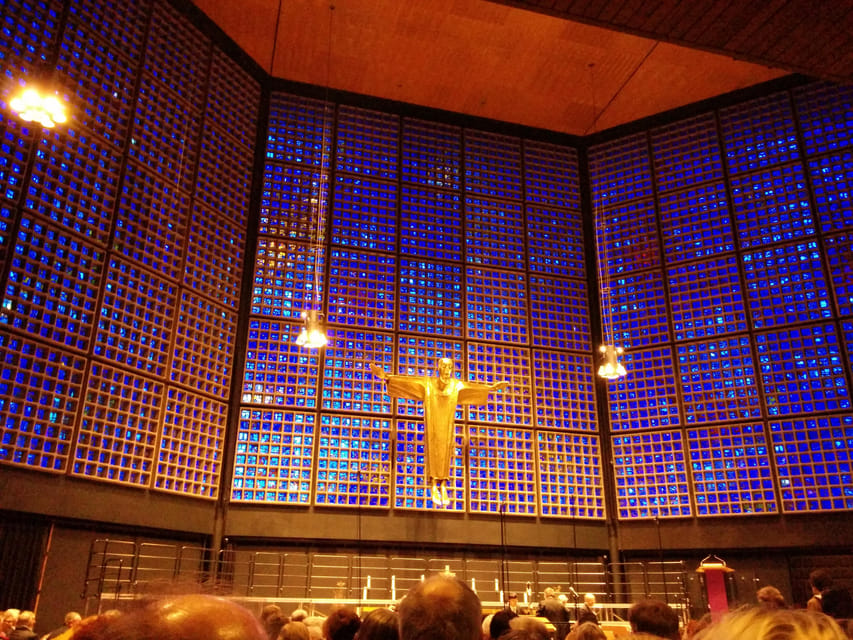
Your seat can shape the experience. Some ticket categories have not been clearly explained during booking, and the entrance process may involve receiving a paper ticket with a row and seat number after you arrive. That has caused confusion, including delays and uncertainty about whether the assigned place matches the category purchased.
Arrive well before the stated start time. The meeting point is the church itself, and you are asked to arrive in advance. Getting there early gives you time to find the entrance, deal with seat assignment, and settle before the first piece begins.
Visibility can also vary. From some positions, you may not see the players or organ well. This matters less if you mainly want to listen, but it matters a great deal if watching the soloists is part of your plan.
Acoustics have received both warm praise and criticism. The organ generally benefits from the church, while the strings and soprano may sound less even from certain locations. If you are sensitive to sound balance, treat your seat category as an important part of the purchase rather than a minor detail.
What the $27 ticket gives you

At about $27, this is a good-value cultural evening in central Berlin. The price includes entry to the concert and a printed program. Transportation, food, and drinks are not included.
The value comes from the combination of setting and repertoire. A ticket to a major orchestra can cost much more, while this event lets you hear a soprano, violinist, organist, and string ensemble in a famous church. The short running time also helps if you want to fit dinner or another evening activity around it.
The tradeoff is scale and polish at the entrance. You may not get the same seating clarity or orchestral force as at a top concert hall. Still, the price is fair if you see this as an atmospheric introduction to classical music rather than a substitute for a full Berlin Philharmonic program.
A printed program is useful because the concert moves quickly between composers. You can follow the names and pieces without needing to know the repertoire in advance.
Who will enjoy this concert most

I would recommend it to you if you want a simple, low-cost evening with famous classical works and a memorable setting. It is a particularly good fit for first-time concertgoers, couples looking for a quiet night out, and families with older children who can sit through about an hour.
You do not need to understand classical music to enjoy the program. The pieces are short, varied, and familiar enough to offer an easy entry point. Children are allowed when accompanied by an adult, and the event is not limited to serious concert specialists.
It also suits summer visits. Berlin’s larger orchestras may be on holiday, while this concert continues to offer live classical music in a central church.
I would think twice if your priority is a full orchestra, perfect sightlines, or a carefully managed premium concert experience. The eight-member string group may feel modest, and the seating process can be less clear than you expect. Your choice of category and willingness to focus on sound rather than visual detail will matter.
The venue is wheelchair accessible. Unaccompanied minors are not allowed. There is no official dress code, so neat sightseeing clothes are fine.
A practical plan for the evening
Start at Kaiser Wilhelm Memorial Church with time to spare. The event does not include transportation, so you are responsible for reaching the meeting point and returning afterward.
Do not count on buying food or drinks as part of the concert. Those costs are separate, and neither is included in the ticket.
Keep the 70-minute length in mind when planning dinner. The concert is long enough to feel like a real event, but short enough to pair with an evening meal before or after.
If your schedule changes, you can cancel up to 24 hours in advance for a full refund. You can also reserve now and pay later, which is useful if you are still arranging your Berlin plans.
Should you book the Kaiser Wilhelm Memorial Church concert?
Book it if you want recognizable classical music, organ power, and an atmospheric Berlin venue for a reasonable price. The program offers plenty of variety, and the hour-long format is friendly to newcomers.
Go in with the right expectations. This is not a full symphony concert, and seating information may be less clear than it should be. If you arrive early and care more about hearing Bach, Mozart, Beethoven, Vivaldi, Schubert, and Widor than seeing every player clearly, the concert is a strong choice for a Berlin evening.
FAQ
Where does the concert take place?
The concert takes place at Kaiser Wilhelm Memorial Church in Berlin.
How long does the concert last?
The stated duration is 70 minutes.
How much does the ticket cost?
The listed price is $27 per person.
What music is performed?
The program includes works by Vivaldi, Mozart, Bach, Schubert, Handel, Beethoven, and Widor. Listed pieces include selections from The Four Seasons, Requiem, Ave Maria, Beethoven’s Fifth Symphony, and two organ toccatas.
Is the entire program guaranteed?
No. The program is subject to change.
Who are the named performers?
The performers named for the event are soprano Duangamorn Fu and organist Vladimir Magalashvili, along with a violin soloist and musicians from the Berlin Orchestra.
Is this a full symphony orchestra?
The performance may use a small string group of about eight musicians rather than a full symphony orchestra.
Is there a dress code?
No. There is no official dress code for the event.
Is the church air-conditioned?
Yes. The venue is air-conditioned during the summer.
Is the concert wheelchair accessible?
Yes, the activity is listed as wheelchair accessible.
Just added around Berlin
- Berlin Highlights in One Day★ 5.0 · 3 reviews
- Private Berlin One Day Tour with a Local: See the City Unscripted★ 3.5 · 3 reviews
- Individual city tour Berlin for max. 8 persons★ 5.0 · 3 reviews
- Transfer from Berlin Schönefeld Airport (SXF) to Berlin city Hotels – ROUND TRIP★ 4.0 · 3 reviews
- Berlin: Museum Island Tour★ 5.0 · 3 reviews
- Private Analogue Photography Experience in Berlin★ 5.0 · 3 reviews
- Berlin: Local Food Tour in Secrets Hidden Gems★ 4.0 · 3 reviews
- Potsdam Highlights – Private sightseeing tour by minibus★ 5.0 · 3 reviews