Review · GUIDED
Berlin: Decolonial Berlin Castle/ Humboldt Forum Guided Tour
Berlin’s Humboldt Forum looks grand, but this tour asks you to look past the rebuilt palace facade. You’ll examine its colonial connections, the symbolism of the cross on the roof, and the way European museums have presented objects from other cultures.
I like the strong Afrocentric viewpoint, which gives you a clear lens rather than a general palace tour. I also like the shift from an outdoor discussion near the Sanchi Gate to the ethnological collection, where an audio walk helps you question what you see. The main drawback is that about an hour is spent outside, and one past booking problem shows that you should check the meeting point and activity name carefully.
In This Review
- Key points to know before you go
- Why this Humboldt Forum tour feels different
- Meeting near the reconstructed Sanchi Gate
- Berlin Palace and 500 years of changing meaning
- Missionaries and the machinery of colonial power
- The Humboldt brothers beyond the famous name
- Entering the ethnological collection
- An Afrocentric reading of museum objects
- How much museum time will you really get?
- Is $41 per person a fair price?
- Who should book this experience?
- Final verdict: book it for the questions, not the checklist
- FAQ
- How long is the Berlin Decolonial Berlin Castle tour?
- What language is the tour conducted in?
- Where does the tour meet?
- Is the tour entirely indoors?
- Is entry to the Humboldt Forum’s ethnological collection included?
- What perspective does the tour use?
- Does the tour discuss the Humboldt brothers?
- Is the tour wheelchair accessible?
- What should I bring?
- Can I bring food, drinks, luggage, or a large bag?
- Can I cancel the booking?
- Can I reserve now and pay later?
Key points to know before you go
- The tour starts outdoors: Meet near the reconstructed Sanchi Gate and expect to sit on white chairs for about an hour before entering the museum.
- The focus is decolonial: You’ll study Berlin Palace, the Humboldt Forum, missionaries, colonial structures, and museum collecting from an Afrocentric perspective.
- The museum visit is selective: The guide gives priority to historical context, so the time spent inside the Forum may feel short to visitors wanting a broad exhibition tour.
- The Humboldt brothers get special attention: You’ll learn why Alexander and Wilhelm von Humboldt matter in German scientific and cultural history.
- The price reflects a guided discussion: At $41 per person for two hours, the value depends on how much you want interpretation rather than a standard sightseeing visit.
- Practical planning matters: Bring weather-ready clothing and comfortable shoes. Food, drinks, luggage, and large bags are not allowed.
Why this Humboldt Forum tour feels different
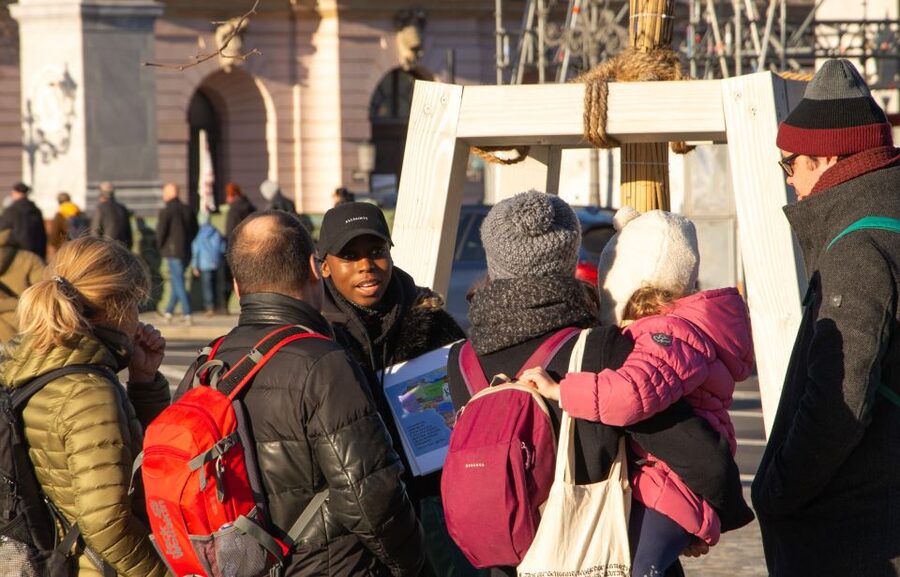
Many visits to the Humboldt Forum begin with architecture, royal history, and polished display cases. This one begins with questions. Who built the palace story being presented today? Who collected the objects inside? Which voices were recorded, and which were pushed aside?
That approach gives the two-hour visit a clear purpose. You are not simply being shown a museum. You are being asked to examine how museums create meaning.
The experience is led in English by a live guide from deSta, Dekoloniale Stadtführung. No individual guide name is provided, so you should not expect to request a particular person. The tour’s stated focus is Afrocentric, and that matters: the discussion is designed to bring African and Afro-diasporic viewpoints into a building often explained through German royal and academic history.
That focus will suit you if you want a direct conversation about colonial power and cultural ownership. It may be less comfortable if you prefer museum tours to stick to familiar national stories or avoid present-day debates about how history is interpreted.
A few more Berlin tours worth weighing up
- Berlin: Reichstag, Dome and Government District Guided Tour
★ 4.7 · 18,288 reviews - Berlin: Government District around the Reichstag Guided Tour
★ 4.7 · 8,447 reviews - Berlin: Hidden Backyards Guided Walking Tour
★ 4.8 · 5,360 reviews
Meeting near the reconstructed Sanchi Gate

The meeting point is near the reconstructed Sanchi Gate, where white chairs are available. This is not a quick hello followed by an immediate indoor visit. You’ll spend roughly one hour seated outside before the museum portion begins.
That outdoor opening is important to the shape of the tour. It gives the guide time to set out the main ideas before you confront the displays. You’ll want weather-appropriate clothing, since the first half can be affected by cold, rain, wind, or strong sun. Comfortable shoes still make sense, even though part of the opening discussion is seated.
The Sanchi Gate itself is a useful starting symbol for a tour about how objects and cultural references are placed in new settings. The supplied information does not specify that the guide offers a full interpretation of the gate, so I would treat it mainly as your meeting landmark rather than assume it is a separate stop with a long explanation.
Check the exact activity title and location when you book. One low rating came from a person who attended the wrong event after not noticing the actual provider. Another complaint described a guide who did not appear at the agreed time or place. These are isolated problems in a small set of ratings, but they make careful meeting-point checks sensible.
Berlin Palace and 500 years of changing meaning
The tour presents the Berlin Palace as a place with about 500 years of history, not simply as a pretty reconstructed building. You’ll look at the palace through a decolonial frame and consider how its royal identity connects with wider German power.
The building’s modern form can make history look settled. This tour pushes against that feeling. It asks you to consider how a palace becomes a national symbol, how reconstruction selects certain memories, and how the present building carries older political messages.
One of the most striking details is the cross on the museum roof. The guide explains its symbolic meaning and connects it to the larger question of how Christian and European authority appears in a building that also houses collections from outside Europe.
That does not make this a traditional architectural tour. If you want a detailed account of facades, royal rooms, or construction dates, this experience may leave you wanting more. The palace is used as evidence in a larger discussion about power, memory, and colonial history.
Missionaries and the machinery of colonial power
The tour also examines the role of missionaries in the creation of colonial structures. This is one of its most useful angles because colonialism was not built only by soldiers or government officials. Religious workers, scholars, collectors, and institutions could also shape how European powers described and controlled other societies.
You’ll consider how missionary activity related to systems of authority and how religious ideas could support wider colonial aims. The goal is not simply to list historical figures. It is to show how institutions worked together and how cultural descriptions could have practical political effects.
This part may be especially valuable if your previous museum visits treated missionary work as a separate religious topic. Here, it becomes part of a wider examination of collecting, classification, and power.
The discussion is likely to be more analytical than visual. You will spend time listening and thinking, rather than moving quickly from object to object. That makes the outdoor hour worthwhile for some people, but it also explains why visitors focused mainly on the Forum’s displays may feel that the indoor portion is brief.
A different side of Berlin on the same trip:
- Berlin: 1-Hour City Tour by Boat with Guaranteed Seating
★ 4.3 · 16,993 reviews - Berlin: Boat Tour Along the River Spree
★ 4.4 · 11,252 reviews - Discover Berlin Half-Day Walking Tour
★ 5.0 · 9,624 reviews - Berlin: Hop-on Hop-off Bus Tour with Live Commentary
★ 4.3 · 8,579 reviews
The Humboldt brothers beyond the famous name
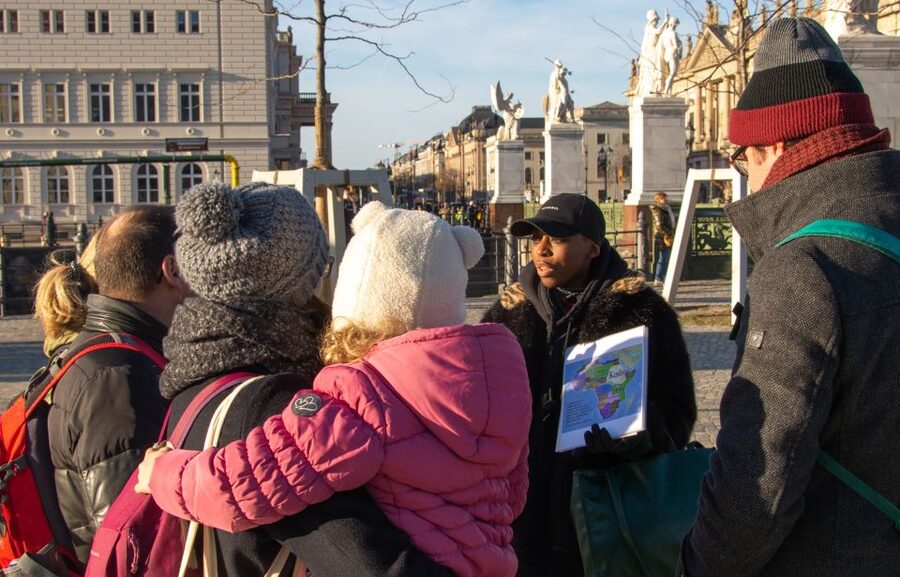
The Humboldt Forum takes its name from the Humboldt brothers, and the tour explains why they matter in German history. Alexander and Wilhelm von Humboldt are presented as scientists and major intellectual figures, rather than as names attached to a modern museum without context.
The supplied information does not specify which individual writings or expeditions the guide covers, so you should not expect a detailed biography of both men. Instead, the brothers help frame a discussion about science, knowledge, classification, and the institutions that gave European scholars authority.
That connection matters inside an ethnological museum. Scientific systems can appear neutral, but the way people and cultures are categorized may reflect the assumptions of the era in which those systems were created. The tour uses the Humboldt legacy to ask who had the power to describe the world and whose knowledge was treated as authoritative.
I like this part because it links the museum’s name to the larger debate. You leave with more than a royal building story. You begin to see how science, collection, and imperial power can overlap.
Entering the ethnological collection
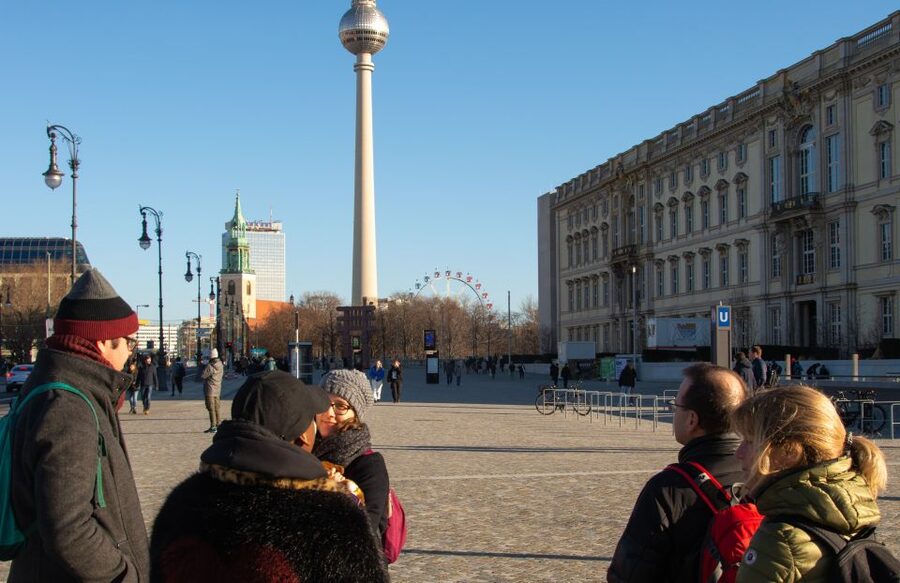
After the outdoor discussion, you head inside to the Humboldt Forum’s ethnological collection. Entry to this collection is included, and the guide leads you through it from a critical perspective.
Do not expect to see every display in the Forum. The stated plan gives you a guided museum visit within a two-hour session, and one assessment of the experience found that the historical discussion took priority over the time inside the Forum. That is not necessarily a flaw. It simply tells you what kind of visit this is.
The objects are treated as more than attractive or unusual things behind glass. You’ll be encouraged to ask how they reached Berlin, how they were labeled, what stories accompany them, and what may be missing from the official presentation.
The audio walk adds another layer. You’ll browse the ethnological collection while using audio material to analyze it critically. The available information does not state whether each participant receives a device or accesses the walk in another way, so ask the guide if you need help getting started.
This part will reward patience. A conventional museum tour often gives you names, dates, and short descriptions. Here, you’ll spend more time reading between the lines and testing the language used to describe cultural objects.
An Afrocentric reading of museum objects
The Afrocentric perspective is the heart of the experience. It changes the basic question from What is this object? to What happened when this object entered a European collection, and who controlled the story afterward?
That shift can be eye opening. It helps you notice that a museum display is never only about the object. It is also about the building, the label, the collection history, the choice of what to display, and the voice explaining it.
The tour aims to create new narratives, but you should understand that this means a firm reinterpretation of familiar material. One strongly negative rating came from a person who disliked the tour’s approach to changing historical meaning and felt that the presentation dismissed older generations. That reaction is useful warning: this is not a neutral, all-sides-at-equal-distance history talk.
At the same time, several high ratings describe the guide as very good, competent, interesting, and informative. One positive assessment specifically praised the way the guide encouraged participants to read between the lines. That is a good description of the tour’s value: it gives you questions you can keep using after you leave.
How much museum time will you really get?
Plan on about two hours total. The first hour is spent outside, and the remainder takes place inside the Humboldt Forum. Since the outdoor portion is built into the format, you should not book this expecting two full hours among the displays.
This timing creates a tradeoff. The guide can establish the political and historical background before showing the collection, which makes the objects easier to question. But if your main goal is to see the palace interiors or cover a large number of exhibits, the pace may feel too slow.
I would pair this tour with a separate, self-guided visit to other parts of the Humboldt Forum if you have the time. The decolonial tour gives you a particular lens, not a complete introduction to everything in the building.
No group size is provided, so I cannot tell you how intimate the discussion will be. The live English guide and seated opening suggest a conversation-led experience, but you should not assume a private tour or a small group.
Is $41 per person a fair price?

At $41 per person, this is not a bargain museum admission. You are paying for a two-hour guided interpretation, entry to the ethnological collection, and a structured way to approach difficult material.
The value is strongest if you want context and discussion. A standard visit may show you objects, but this tour helps you think about colonial collecting, missionary networks, the palace’s symbolism, and the Humboldt name. If those subjects are central to your Berlin plans, the fee can be reasonable.
The value is weaker if you mainly want architecture, royal rooms, or a broad look at the entire Forum. The outdoor hour and focused museum route mean you are buying a point of view rather than maximum sightseeing coverage.
You can reserve now and pay later, which helps if your Berlin schedule is still shifting. Free cancellation is available up to 24 hours before the start time for a full refund. Those terms reduce the risk, but they do not change the need to confirm the correct provider and meeting point.
Who should book this experience?
I would recommend it to you if you:
- Want to examine Berlin’s colonial past through an Afrocentric viewpoint
- Prefer discussion and interpretation over a quick list of dates
- Are curious about how ethnological collections were formed
- Want to connect missionaries, science, royal power, and museum displays
- Can sit outside for about an hour in suitable clothing
- Are comfortable with a tour that openly challenges familiar historical narratives
You may want another option if you:
- Need a fully indoor activity
- Want a detailed architectural tour of Berlin Palace
- Prefer to see many exhibits with only brief commentary
- Feel uncomfortable with a strongly stated interpretive position
- Have large luggage or bags with you
The experience is wheelchair accessible, and the language is English. Food and drinks are not allowed, and luggage or large bags are not permitted, so arrive prepared to travel light.
Final verdict: book it for the questions, not the checklist
Book this tour if you want the Humboldt Forum to become a place for serious questions about colonialism, collecting, and memory. The strongest features are the Afrocentric viewpoint, the explanation of missionary roles, the discussion of the Humboldt brothers, and the critical audio walk through the ethnological collection.
Skip it if your ideal palace visit means grand architecture, fast movement, and plenty of indoor exhibit time. At $41, the price makes sense for a focused guided conversation, not for a general museum overview.
For the right audience, this is a useful Berlin experience because it changes how you look at the building after the tour ends. Just wear clothing suited to the weather, confirm the Sanchi Gate meeting point, and arrive ready to listen carefully and question the labels.
FAQ
How long is the Berlin Decolonial Berlin Castle tour?
The tour lasts two hours.
What language is the tour conducted in?
The live guided tour is conducted in English.
Where does the tour meet?
Meet your guide near the reconstructed Sanchi Gate. White chairs are available there.
Is the tour entirely indoors?
No. You will be seated outside for approximately one hour before entering the museum.
Is entry to the Humboldt Forum’s ethnological collection included?
Yes. Entry to the ethnological collection is included in the tour price.
What perspective does the tour use?
The tour uses an Afrocentric and decolonial perspective to examine the Berlin Palace, colonial history, missionaries, museum collecting, and the ethnological collection.
Does the tour discuss the Humboldt brothers?
Yes. It explains why the Humboldt brothers are important figures in German history as scientists.
Is the tour wheelchair accessible?
Yes, the activity is listed as wheelchair accessible.
What should I bring?
Bring comfortable shoes and clothing suitable for the weather, since about an hour takes place outdoors.
Can I bring food, drinks, luggage, or a large bag?
Food and drinks are not allowed. Luggage and large bags are also not allowed.
Can I cancel the booking?
You can cancel up to 24 hours in advance for a full refund.
Can I reserve now and pay later?
Yes. The activity allows you to reserve your place and pay later.
Just added around Berlin
- Berlin Highlights in One Day★ 5.0 · 3 reviews
- Private Berlin One Day Tour with a Local: See the City Unscripted★ 3.5 · 3 reviews
- Individual city tour Berlin for max. 8 persons★ 5.0 · 3 reviews
- Transfer from Berlin Schönefeld Airport (SXF) to Berlin city Hotels – ROUND TRIP★ 4.0 · 3 reviews
- Berlin: Museum Island Tour★ 5.0 · 3 reviews
- Private Analogue Photography Experience in Berlin★ 5.0 · 3 reviews
- Berlin: Local Food Tour in Secrets Hidden Gems★ 4.0 · 3 reviews
- Potsdam Highlights – Private sightseeing tour by minibus★ 5.0 · 3 reviews
Guided, compared.
Reichstag, Dome and Government District Guided Tour
Read our review →
Sights and Highlights Bike Tour with a Local Guide
Read our review →
Solar Powered Sunset Catamaran Cruise & Audio Guide
Read our review →