
Review · BERLIN
Berlin: The Feuerle Collection Meditation Experience
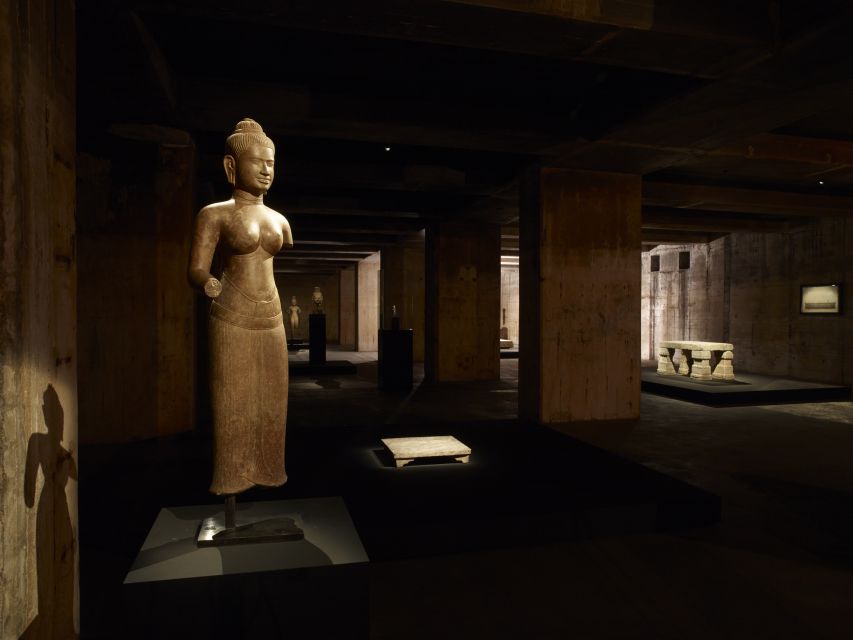
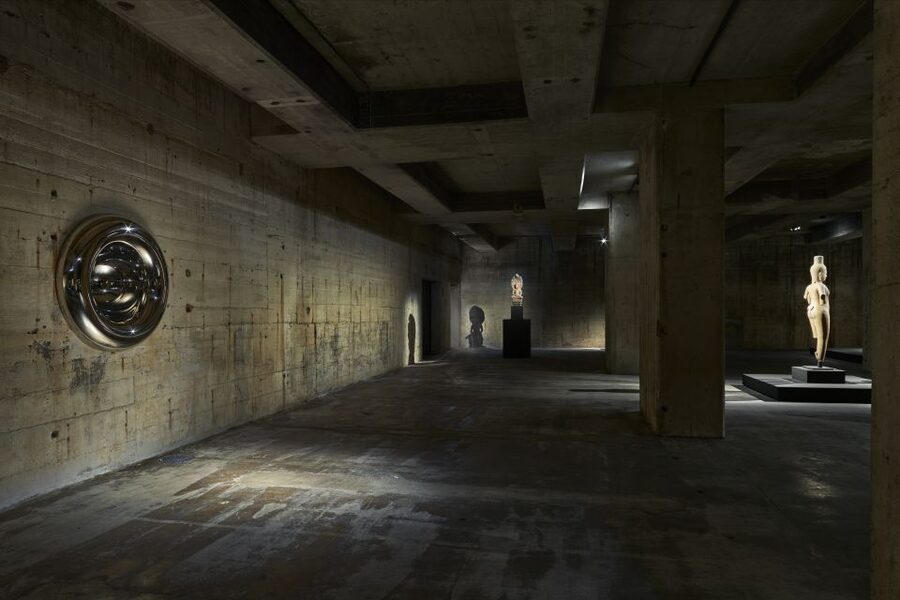
The Feuerle Collection turns an art visit into a silent mobile-detox hour. You pass through a Sound Room, enter an underground Lake Room, and pause among Khmer sculptures, Imperial Chinese furniture, and contemporary works rather than following a standard museum route.
I like the chance to see early Khmer art beside pieces by Anish Kapoor and Zeng Fanzhi, and I like that meditation is optional. You can sit on the provided mat, use a blanket, or simply walk quietly and look. The main drawback is clear: this is not a guided tour, so you need to be comfortable finding your own meaning in the collection.
- Khmer sculpture from the 7th to 13th centuries: See early Southeast Asian works in a setting designed for quiet attention.
- Imperial and Scholar Chinese furniture: Encounter pieces dating from the 2nd century B.C. through the 17th century A.D.
- A passage through the Sound Room: The visit begins with an unusual change in mood and pace.
- The underground Lake Room: Walk through one of the collection’s most distinctive spaces before stopping to meditate.
- Contemporary art beside historic objects: Works by Anish Kapoor, Cristina Iglesias, Adam Fuss, Zeng Fanzhi, James Lee Byars, and Nobuyoshi Araki add a modern counterpoint.
- One hour with no tour commentary: You receive a yoga mat and blanket, but the experience asks you to look, sit, and think for yourself.
In This Review
- A museum visit built around silence
- Moving through the Sound Room and Lake Room
- Khmer sculptures from the 7th to 13th centuries
- Imperial and Scholar Chinese furniture
- Contemporary works beside ancient objects
- Meditation is optional, not a test
- What the one-hour format means for your visit
- Who will get the most from the Feuerle Collection
- Practical details before you reserve
- Should you book this one-hour art experience?
- FAQ
- How long does the Feuerle Collection Meditation Experience last?
- Is meditation required?
- Is this a guided tour?
- What art can I see?
- Are a yoga mat and blanket provided?
- Is the experience wheelchair accessible?
- Can children attend?
- How much does it cost?
- Can I cancel my booking?
A museum visit built around silence
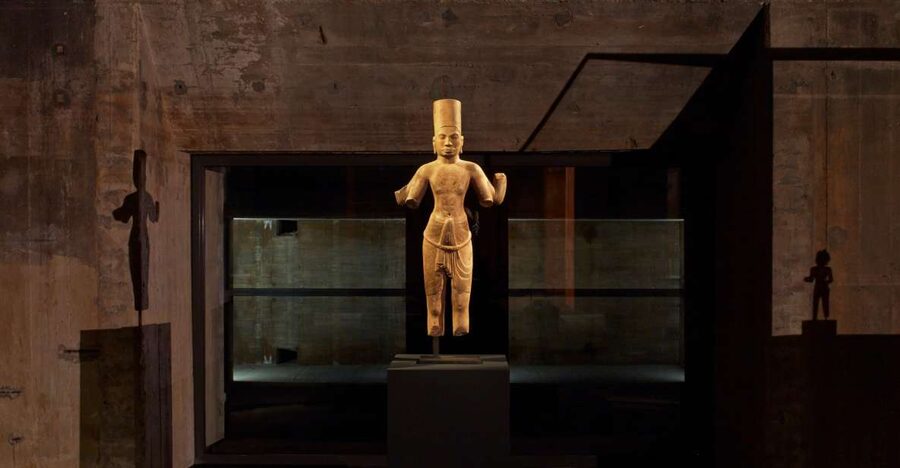
Most art visits ask you to read labels, follow a route, and keep moving. This one asks you to slow down. The Feuerle Collection is designed as a quiet encounter with objects from very different times and places, with the absence of phone use helping you pay attention to the room around you.
The central idea is simple: put the phone away and let the surroundings do the work. You do not need to be an experienced meditator. You can sit with your eyes closed, sit and look at the art, or walk slowly through the spaces without meditating at all.
That flexibility matters. A formal meditation class can feel demanding if you are new to it. Here, the hour is open. You decide how much time to give each work and how much time to spend simply noticing the room.
The quiet is also part of the art experience. Without a guide explaining every object, you may notice scale, texture, shadows, and the relationship between ancient and modern pieces. For some people, that creates a stronger connection than a quick explanation. For others, the lack of context may leave questions unanswered.
Moving through the Sound Room and Lake Room
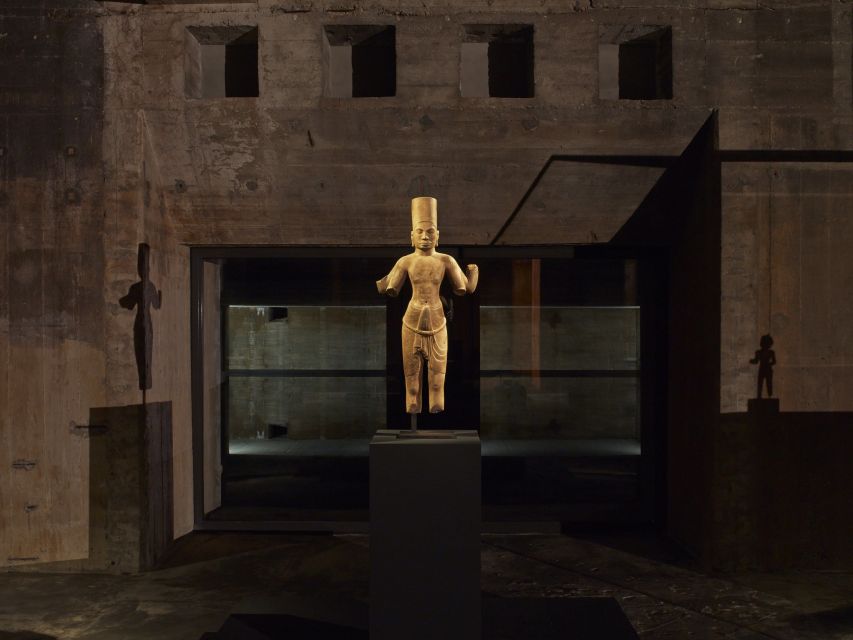
The visit includes a passage through the Sound Room and a walk in the underground Lake Room. These spaces are not just corridors between displays. They help create the unusual rhythm of the hour.
The Sound Room comes first in the stated route. Its role is to shift your attention away from the outside world and toward the collection. You are not moving through a busy public gallery with a long list of objects to check off. You are entering a slower, more controlled setting.
The underground Lake Room gives the visit its strongest sense of place. You walk through it before stopping to meditate among the artworks. The setting adds a physical change to the experience, and that change is useful: it marks the point where a normal museum outing gives way to something quieter and more inward-looking.
Do not expect a conventional tour of the architecture. The focus is not on a long explanation of the building or a narrated account of each room. Instead, the rooms provide a frame for contemplation.
Because the visit lasts only one hour, the route should feel manageable rather than tiring. You are not being asked to cover a large exhibition in a short time. The point is to give each space and object more attention than you normally would.
Other Berlin tours people book alongside this one:
- Berlin: Reichstag, Dome and Government District Guided Tour
★ 4.7 · 18,288 reviews - Berlin: 1-Hour City Tour by Boat with Guaranteed Seating
★ 4.3 · 16,993 reviews - Berlin: Boat Tour Along the River Spree
★ 4.4 · 11,252 reviews
Khmer sculptures from the 7th to 13th centuries
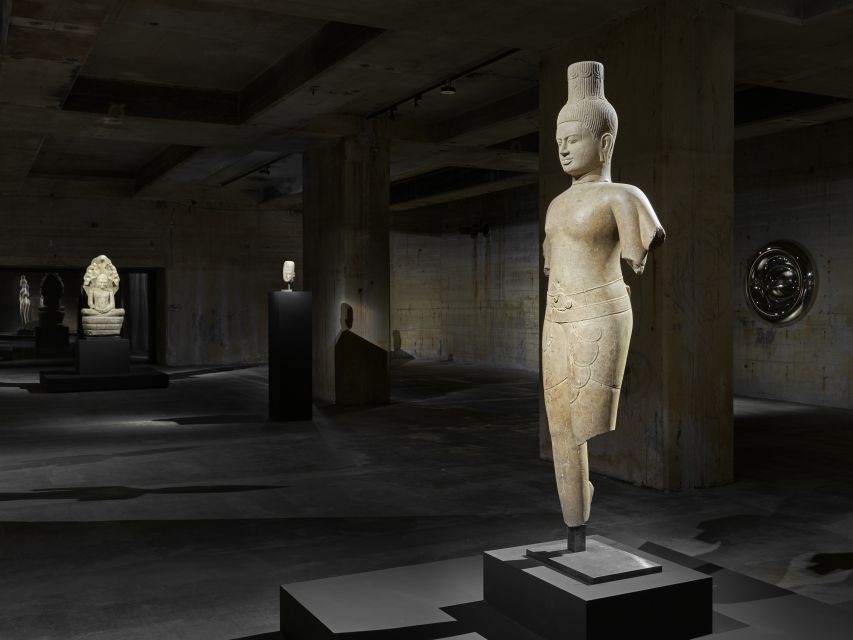
The collection includes early Khmer sculptures dating from the 7th through the 13th century A.D. These works bring a Southeast Asian historical layer to an exhibition that also includes Chinese furniture and modern art.
The quiet format can be especially useful with sculpture. You have time to look at the shape and surface of a piece without competing with a spoken presentation. Sitting in front of an object can change what you notice compared with a quick pass through a conventional museum.
At the same time, you should know what this format does not provide. There is no guided tour included, and the collection is open only for meditation during this experience. If you want detailed information about Khmer religious traditions, dates, symbols, or techniques, you may need to research beforehand or arrange a different museum visit.
That is not necessarily a weakness. The Feuerle experience is about observation more than instruction. I would see it as a companion to a traditional museum, not a replacement for one.
Imperial and Scholar Chinese furniture
The collection also includes Imperial and Scholar Chinese furniture, with dates ranging from the 2nd century B.C. to the 17th century A.D. This gives the hour a second historical focus, distinct from the Khmer sculptures.
Furniture can be easy to overlook in a busy gallery. You may glance at a cabinet, table, or chair and move on. A quiet setting gives these objects more weight. You can consider their proportions, materials, and presence without rushing to the next label.
The pairing with Khmer sculpture is one of the experience’s strongest ideas. These objects come from different cultural settings and periods, yet they share the room with contemporary works. The collection encourages you to compare rather than sort everything into separate historical boxes.
If you enjoy Chinese art, this part of the visit may be a major reason to book. One booking comment specifically described the experience as a good fit for people interested in Chinese and erotic art. The collection may include material that some visitors find sensual or provocative, so this is not an ideal choice if you want only conventional, family-oriented museum displays.
Contemporary works beside ancient objects
The Feuerle Collection adds contemporary pieces by Anish Kapoor, Cristina Iglesias, Adam Fuss, Zeng Fanzhi, James Lee Byars, and Nobuyoshi Araki. This modern group keeps the experience from becoming a straightforward survey of Asian antiques.
The contrast is deliberate. You may move from an object centuries old to a contemporary work that changes the mood of the room. That shift can make you question the way you look at both. Ancient objects may feel less remote, while modern pieces may gain a stronger sense of ritual or age.
The names also signal a broad range of approaches. The collection includes sculpture, photography, installation, and other contemporary forms, though the available information does not specify the exact arrangement of each artist’s work. You should come ready for an art experience based on atmosphere and personal response, not a full biographical presentation.
This is where the lack of a guide becomes most noticeable. A guide could explain why these artists appear together and how each piece relates to the historical works. Instead, you are given time and silence. That can feel liberating, but it also means the experience depends heavily on your own curiosity.
A different side of Berlin on the same trip:
- Discover Berlin Half-Day Walking Tour
★ 5.0 · 9,624 reviews - Berlin: Hop-on Hop-off Bus Tour with Live Commentary
★ 4.3 · 8,579 reviews - Berlin: Government District around the Reichstag Guided Tour
★ 4.7 · 8,447 reviews - Berlin: Reichstag, Plenary Chamber, Cupola & Government Tour
★ 4.6 · 8,422 reviews
Meditation is optional, not a test
The word meditation can make people hesitate. You may picture a formal class, strict instructions, or an expectation that you sit perfectly still. That is not how this experience is presented.
You may meditate, walk around quietly, or simply enjoy the art. The choice is yours. The collection is open for an hour of meditation, but nobody requires you to close your eyes or follow a particular method.
A yoga mat and blanket are included. Those details make the format more practical, especially if you plan to sit for part of the hour. You can use the mat for a seated pause and the blanket for comfort, though the information does not specify the exact seating arrangement or meditation instructions.
I would treat the hour as a quiet art session. Sit for ten minutes, look for ten minutes, and move through the rooms at a slow pace if that feels right. You do not need to force a profound moment. The benefit may simply be one hour without notifications, rushing, or the pressure to explain what you are seeing.
The mobile detox is likely to be the most valuable part for people who spend much of their trip checking maps, messages, and photographs. You will not be collecting a long series of snapshots during the experience. Instead, you give your attention to the space itself.
What the one-hour format means for your visit
At $25 per person, this is not the cheapest way to see art in Berlin. You are paying for a specialized format, a controlled silent setting, and access to a collection that combines historic Asian objects with contemporary art.
The price makes more sense if you value the experience rather than the number of objects you see. A traditional museum ticket may give you several hours of galleries and extensive interpretation. The Feuerle Collection gives you one focused hour, with a mat and blanket included and a clear break from ordinary sightseeing.
The short duration is also a practical benefit. You can fit the visit between other Berlin plans without losing half a day. It works well for a morning or afternoon pause when you want something quieter than another large museum.
Still, I would not book it simply because you want to see as much art as possible. The collection is meant to be experienced slowly, and the silent format may feel restrictive if you prefer lively discussion, detailed labels, or a guide leading the way.
A rating of 4.9 from 16 bookings suggests a very strong response so far, but the small number means you should judge the activity by its unusual format rather than by the number alone. The short comments attached to the experience include descriptions such as interesting, perfect, and an extraordinary, relaxing small-group experience. One German-language comment captured the intended approach well: the exhibition calls on the senses rather than the intellect.
Who will get the most from the Feuerle Collection
I would recommend this experience to you if you enjoy art that leaves room for personal interpretation. It suits people interested in Khmer sculpture, Chinese furniture, contemporary installation, photography, and the links between old and new art.
It is also a good fit if you want a quiet break from city sightseeing. Berlin can fill your day with museums, memorials, transport connections, and busy streets. One silent hour can reset your attention without requiring a long wellness program.
Meditators may appreciate the setting, but you do not need a meditation background. The activity is also suitable for people who simply want to look at art in peace.
I would think twice if you are under 16, since children under 16 are not permitted. I would also choose another activity if you need a full introduction to the collection, an art historian’s explanation, or a traditional guided route.
The setting may suit couples, solo visitors, and small groups who can agree to keep the hour quiet. It is less suitable for a group that wants to talk, take photographs, or compare reactions as it moves through the rooms.
Practical details before you reserve
The experience lasts one hour, and starting times depend on availability. Since the format is quiet and time-limited, arriving ready to put your phone away will help you get more from it.
The experience is wheelchair accessible. A yoga mat and blanket are included, while a guided tour is not. Meditation is the purpose of the visit, but it is not mandatory.
You can cancel up to 24 hours in advance for a full refund. A reserve-now-and-pay-later option is also available, which can help if your Berlin schedule is still changing.
The provider is The Feuerle Collection. The available information does not identify individual guides, and there is no guide-led commentary included, so you should not expect a named host to interpret the works during the hour.
Should you book this one-hour art experience?
Book it if you want a focused, silent encounter with art and like the idea of moving between Khmer sculpture, Chinese furniture, and contemporary works without a spoken tour. The Sound Room and underground Lake Room give the visit a memorable structure, while the mat and blanket make sitting practical.
Skip it if you want lots of historical explanation or a standard museum visit. At $25, the value comes from the quiet format and the setting, not from covering a large number of galleries.
For the right person, this is a rare chance to remove the phone, slow the pace, and let the collection speak without a lecture. You may meditate, walk, or simply look. That freedom is the main reason to reserve it.
FAQ
How long does the Feuerle Collection Meditation Experience last?
The open meditation experience lasts one hour.
Is meditation required?
No. You may meditate, walk around quietly, or simply enjoy the art.
Is this a guided tour?
No. A guided tour is not included, and the collection is open only for meditation during this experience.
What art can I see?
The collection includes Khmer sculptures from the 7th to the 13th century A.D., Imperial and Scholar Chinese furniture dating from the 2nd century B.C. to the 17th century A.D., and contemporary works by Anish Kapoor, Cristina Iglesias, Adam Fuss, Zeng Fanzhi, James Lee Byars, and Nobuyoshi Araki.
Are a yoga mat and blanket provided?
Yes. A yoga mat and blanket are included.
Is the experience wheelchair accessible?
Yes, the experience is wheelchair accessible.
Can children attend?
No. The experience is not suitable for children under 16.
How much does it cost?
The price is $25 per person.
Can I cancel my booking?
Yes. You can cancel up to 24 hours in advance for a full refund. A reserve-now-and-pay-later option is also available.
Just added around Berlin
- Berlin Highlights in One Day★ 5.0 · 3 reviews
- Private Berlin One Day Tour with a Local: See the City Unscripted★ 3.5 · 3 reviews
- Individual city tour Berlin for max. 8 persons★ 5.0 · 3 reviews
- Transfer from Berlin Schönefeld Airport (SXF) to Berlin city Hotels – ROUND TRIP★ 4.0 · 3 reviews
- Berlin: Museum Island Tour★ 5.0 · 3 reviews
- Private Analogue Photography Experience in Berlin★ 5.0 · 3 reviews
- Berlin: Local Food Tour in Secrets Hidden Gems★ 4.0 · 3 reviews
- Berlin & The Third Reich Private Guided Tour★ 5.0 · 3 reviews