
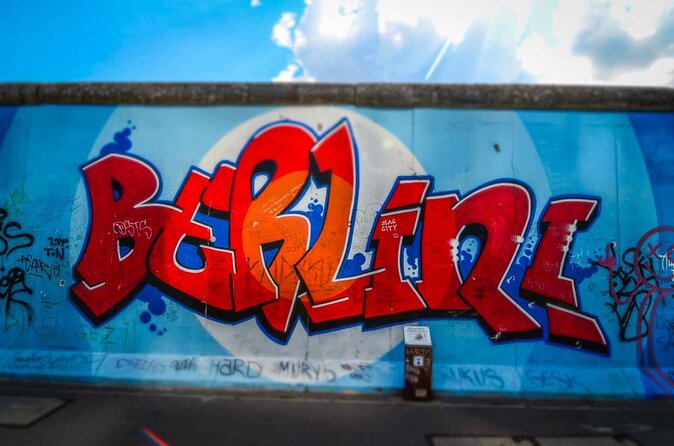
Review · CITY TOURS
Day trip through multicultural city landscapes & photo highlights
Berlin is a city built for connecting the dots, and this private rickshaw tour does that with unusual speed. In three to six hours, Leo can take you from the Brandenburg Gate and Reichstag to Kreuzberg streets, the Berlin Wall, Tempelhofer Feld, and leafy Tiergarten without making you walk across the whole city.
I like two things right away: private transportation keeps the pace flexible, and the rickshaw can use small lanes and pedestrian areas that cars cannot reach. I also like the mix of grand sights and everyday Berlin, from Gendarmenmarkt to Bergmannstraße cafés and Admiralbrücke.
The main trade-off is depth. With more than 25 stops, most visits are brief photo and orientation breaks rather than full museum visits. If you want long time inside the Reichstag dome, museums, or memorial exhibitions, plan those separately.
In This Review
- Key points at a glance
- Why a rickshaw works well in Berlin
- From Brandenburg Gate to the Reichstag
- Tiergarten and Potsdamer Platz show two Berlins
- Nazi sites, the Wall, and Checkpoint Charlie
- Gendarmenmarkt, Bebelplatz, and Museum Island
- Kreuzberg brings in everyday Berlin
- Tempelhofer Feld and Park am Gleisdreieck
- Is $140.77 a fair price?
- Who should book this Berlin ride?
- Should you book it?
- FAQ
- Where does the tour take place?
- How long does the tour last?
- What language is offered?
- Is pickup available?
- Is this a private tour?
- Who is the guide?
- What transportation is used?
- Are museum and building admission tickets included?
- Are drinks included?
- Can I cancel for a refund?
Key points at a glance
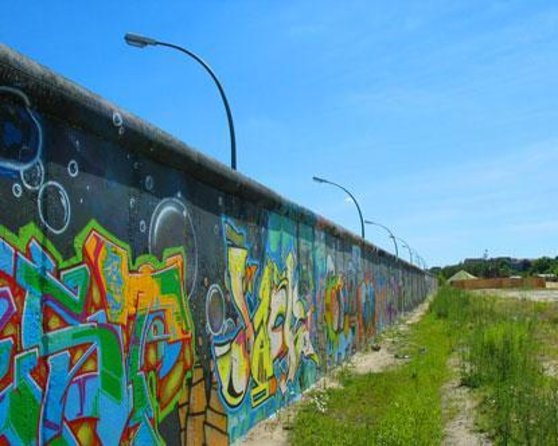
- A private rickshaw with Leo: You travel with only your own group, with pickup available from hotels, cafés, and Berlin Central Station.
- Major sights in one ride: The route covers Brandenburg Gate, the Reichstag, Checkpoint Charlie, Museum Island, Alexanderplatz, and the Berlin Wall.
- Berlin beyond the postcard: You also reach Bergmannstraße, Oranienstraße, Admiralbrücke, Görlitzer Bahnhof, and Tempelhofer Feld.
- Useful for a short stay: The three-hour option gives you a fast city orientation, while a longer outing allows more stops and photo pauses.
- A history-heavy route: Nazi Germany, the Cold War, Prussian Berlin, reunification, and modern city life all appear in the same day.
- Comfort extras included: Private transport, a photographer, a guide, coffee, tea, and alcoholic drinks are included, with music available on request.
Why a rickshaw works well in Berlin
Berlin spreads out. The Brandenburg Gate, Museum Island, Checkpoint Charlie, Kreuzberg, and Tempelhofer Feld are not a neat cluster of sights. You can cover them by public transport, but each change costs time, and some of the pleasure lies in moving through the spaces between major monuments.
A rickshaw offers a practical middle ground. You are not sealed inside a vehicle, yet you avoid a long day on foot. The format is especially useful for first-time visitors, anyone with limited energy, and people who want to get a broad sense of Berlin before choosing where to return.
The private setup matters. Your group does not have to follow another party’s pace, and the route can include small pedestrian passages and quieter corners. One particularly useful feature is the photographer. You can focus on the city while the guide helps record the day, though it is worth confirming how many finished photos are provided if that matters to you.
Leo is the guide named in the available information. The experience is offered in English, and music can be requested during the ride. Coffee, tea, and alcoholic beverages are included, but the drink service should be treated as a pleasant extra rather than the reason to book.
A few more Berlin tours worth weighing up
- Berlin Complete in one day
★ 5.0 · 222 reviews - From Berlin: Sachsenhausen Concentration Camp Day Trip
★ 4.7 · 52 reviews - Private Tour: Potsdam Day Trip from Berlin
★ 4.5 · 43 reviews
From Brandenburg Gate to the Reichstag
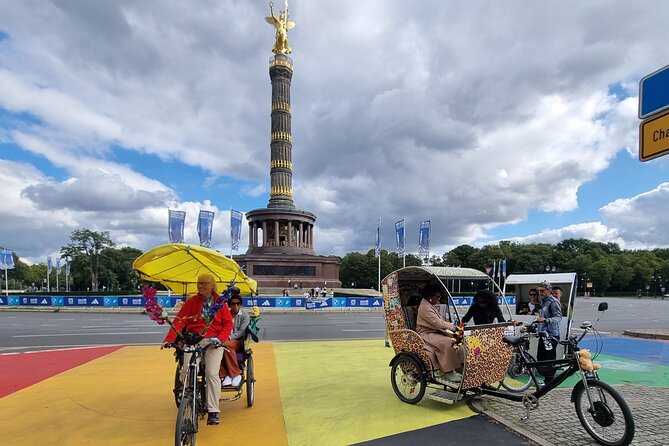
The tour begins with Berlin’s classic center. Brandenburg Gate is more than a handsome neoclassical photo stop. Built from 1788 to 1791 for King Friedrich Wilhelm II, it was designed by Carl Gotthard Langhans the Elder and modeled in part on the gateway buildings of the Acropolis in Athens.
The gate once marked the end of Unter den Linden, the grand boulevard leading east through historic Berlin. Its later role as a symbol of division and reunification gives the architecture extra weight. You receive a free admission stop here, though the visit is primarily outdoors.
The nearby Reichstag connects architecture with some of Germany’s most difficult political chapters. Philipp Scheidemann proclaimed the republic from its west portal balcony on November 9, 1918. The building was badly damaged by the Reichstag fire in 1933, and the Soviet flag raised there in April 1945 became a powerful image of Nazi Germany’s defeat.
The listed stop is only about five minutes, and entry is not included. That distinction is important. You should expect an outside look and explanation, not a full visit to the building or its glass dome. If the dome is a priority, arrange that on another visit.
You will also see the German Chancellery, a sharp contrast to the older monuments. Its 36-meter central building uses broad glass surfaces, tall concrete pillars, and large arches to create a feeling of openness. The side wings are more enclosed and office-like, built around glazed courtyards.
The Soviet War Memorial in Tiergarten adds another serious pause. A bronze Red Army soldier stands between two T-34 tanks, with the names of Soviet dead on the rear pillars and graves for about 2,500 soldiers behind the monument. Admission is free, but the stop is short, so a guide’s explanation helps you understand what you are seeing.
Tiergarten and Potsdamer Platz show two Berlins
Tiergarten gives the route breathing room. The roughly 200-hectare park began as a hunting ground and was turned into a public pleasure park in the late 17th century. Peter Joseph Lenné later reshaped it as an English-style public park between 1833 and 1838.
The park contains monuments, bridges, the Victory Column, the Federal President’s Office, the House of World Cultures, and an English Garden with a pond. You may not have time to explore all of them, but the ride shows why Berlin has such a generous amount of open space near its government quarter.
Potsdamer Platz offers the opposite scene. Once a major urban center before the Second World War and the Cold War division, it was rebuilt as a planned district with high-rise buildings, cafés, cinemas, shops, and the large Daimler City shopping arcade. The stop is brief, but it helps you see modern Berlin’s effort to reconnect a formerly divided center.
The contrast between Tiergarten’s trees and Potsdamer Platz’s towers is one of the tour’s strengths. Berlin is not a city with one fixed architectural mood. It changes block by block.
Nazi sites, the Wall, and Checkpoint Charlie
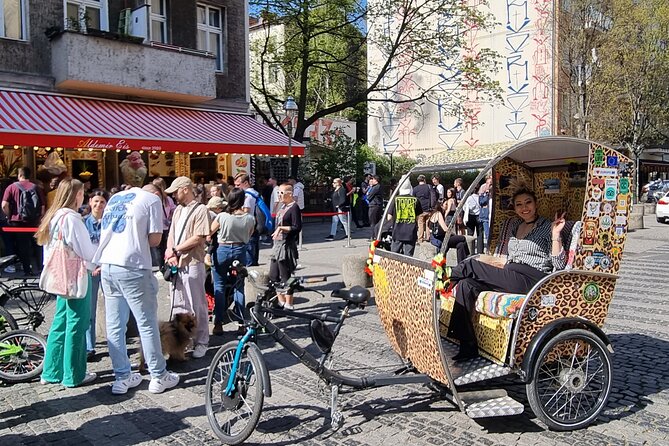
The Topography of Terror is among the most important history stops on the route. The site once held the central offices of the Nazi SS and police system, including the Secret State Police Office, the SS leadership, and the Reich Security Main Office.
The visit listed here is free and brief. You should think of it as an introduction to the site, not enough time for the full documentation center. The subject is grim, but the stop belongs on any serious Berlin route because it shows where the machinery of Nazi terror was planned and directed.
Nearby, the Gropius Bau is a major exhibition building devoted to cultural history, contemporary art, and photography. Admission is not included, and the stop lasts only a couple of minutes. Treat it as an architectural marker unless you return later for an exhibition.
The Berlin Wall Memorial stop is even shorter. That makes it a photo and orientation point rather than a full examination of the Wall’s construction, escape attempts, and human cost. The route then reaches Checkpoint Charlie, once the best-known American-controlled crossing between East and West Berlin.
Checkpoint Charlie could be disappointing if you expect a preserved border complex. Its value lies in the story. The crossing was used by foreigners, employees of West Germany’s permanent representation in East Germany, and East German officials. The ride gives you the setting and context, but you may want extra time elsewhere for a more substantial Wall visit.
The East Side Gallery provides that larger visual reminder. A 1.3-kilometer section of the former Wall carries more than 100 original paintings and functions as the longest open-air gallery in the world. It is one of the better places to see how the Wall shifted from a barrier into a public canvas, though this is an outdoor stop and conditions depend on the weather.
A different side of Berlin on the same trip:
- Berlin: Reichstag, Dome and Government District Guided Tour
★ 4.7 · 18,288 reviews - Berlin: 1-Hour City Tour by Boat with Guaranteed Seating
★ 4.3 · 16,993 reviews - Berlin: Boat Tour Along the River Spree
★ 4.4 · 11,252 reviews - Discover Berlin Half-Day Walking Tour
★ 5.0 · 9,624 reviews
Gendarmenmarkt, Bebelplatz, and Museum Island
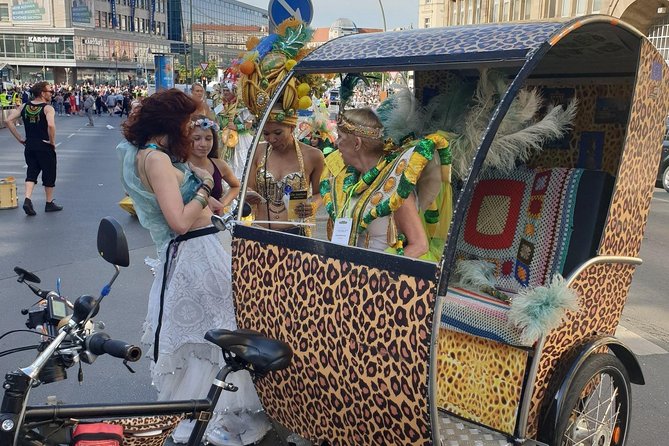
Friedrichstraße runs north to south through central Berlin and now serves as a popular shopping street, especially between Checkpoint Charlie and Friedrichstraße station. It is a useful link between the Cold War sites and the elegant historic center.
Gendarmenmarkt is one of Berlin’s finest squares. Its origins go back to the late 17th century, when French Huguenots settled in the area. The square changed names several times before taking its current name in 1799, linked to the Gens d’armes regiment that had its guardhouse and stables here.
The Deutscher Dom holds a permanent exhibition on the development of liberal parliamentary democracy in Germany, spread across five floors. Admission is not included, and the tour allows only a short look. I would return separately if modern German politics interests you.
The Konzerthaus is another architectural highlight. Its classicist design is one of Karl Friedrich Schinkel’s major works. The site first held a small comedy theater opened in 1776 under Frederick the Great, and it became the Royal National Theater in 1787.
Bebelplatz looks graceful, but its memorial recalls the Nazi book burning of May 10, 1933. More than 20,000 books were burned there, including works by Erich Kästner, the Mann family, Magnus Hirschfeld, Lion Feuchtwanger, Karl Marx, and Else Lasker-Schüler. The memorial’s underground empty library is easy to miss, which is another reason a guide is useful.
Museum Island follows. This UNESCO-listed museum district on the Spree began as a century-long project involving five architects. Its five museums form one of Europe’s great cultural centers, but the tour does not provide museum admission and allows only about five minutes.
You will also pass the Berlin Cathedral, rebuilt between 1894 and 1905 as the former court and cathedral church of the Hohenzollerns. Its dome dominates the riverfront. Alexanderplatz then shifts the mood again, with its major transport hub and broad central square, before the route reaches Nikolaiviertel.
Nikolaiviertel is a reconstructed version of old Berlin, created for the city’s 750th anniversary in 1987. It works as an open-air reminder of the prewar city, with Nikolaikirche at its center. Nearby, Neptune Fountain sits in front of the Red City Hall. The four female figures around Neptune represent the Elbe, Rhine, Oder, and Vistula rivers.
Kreuzberg brings in everyday Berlin
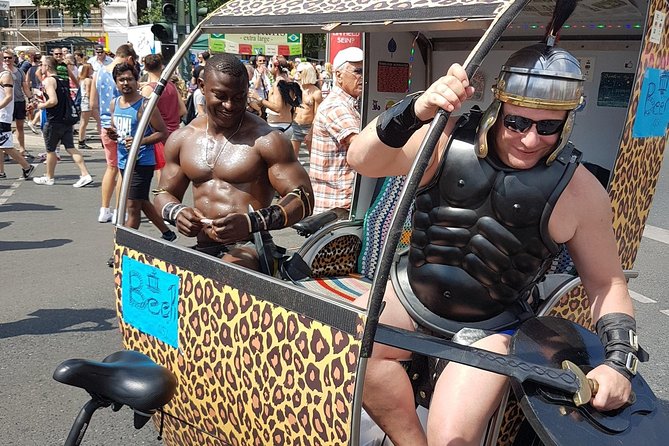
The route becomes more local in Kreuzberg. Bergmannstraße runs through an area of old buildings, small businesses, and international food. It offers a calmer side of Kreuzberg than the district’s better-known club streets, while still showing its multicultural character.
The Landwehr Canal runs through several Berlin districts, including Treptow, Kreuzberg, Neukölln, Tiergarten, and Charlottenburg. Built between 1845 and 1850 to support transport during industrial growth, it later helped move building materials during Berlin’s rapid 19th-century expansion.
Admiralbrücke is a popular summer meeting place along the canal. Its cobblestones and old gas lamps give it a romantic city feel, but local residents have also dealt with late-night noise. Police help clear the bridge at 10 p.m. each evening. That detail matters if you are hoping to linger late, and it shows the real tension between popular public space and neighborhood life.
Oranienstraße is louder and more food-focused, lined with small shops, bars, and restaurants with international character. The area stays lively at night and gives you a much better feel for present-day Kreuzberg than a quick pass by a famous monument.
Görlitzer Bahnhof refers to the former railway station site, now the setting of Görlitzer Park. The station opened in 1866 after the area was filled, fitted with tracks, and developed for passenger and freight traffic. Today, the park has lawns, sports fields, playgrounds, and a children’s farm.
Tempelhofer Feld and Park am Gleisdreieck
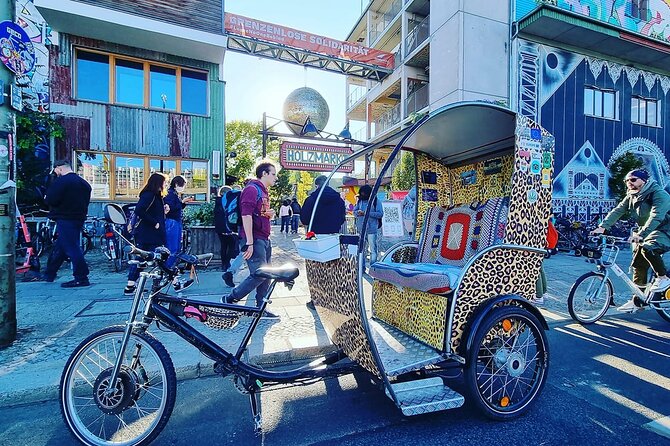
Tempelhofer Feld is one of the route’s most distinctive stops. The former airport, including its huge check-in hall and airfield of more than 300 hectares, opened to the public in 2010 after flights ended.
The site is planned as a park with public involvement, and a 2014 referendum led to the Tempelhof Field Law. The scale is the point here. You get a sense of how much open ground Berlin retains inside the city, and why this former airport has become a key part of local life.
Park am Gleisdreieck offers a different kind of urban open space. The railway land sat unused after the Second World War, allowing plants and wildlife to develop. Local residents organized to preserve the area as a permanent park, which now mixes recreation with traces of its railway past.
These final stops show Berlin’s talent for giving abandoned infrastructure a second life. They also make clear why a rickshaw is useful: you can reach several far-flung districts in one outing without spending the day walking between them.
Is $140.77 a fair price?
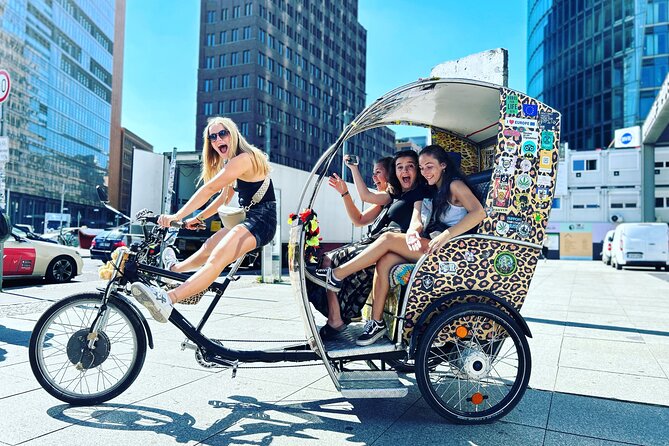
At $140.77 per person, this is not a budget sightseeing ride. The value depends on how many people are in your private group, how long you choose to ride, and how useful you find the included guide, photographer, drinks, and pickup.
For one person or a couple, the cost is easier to justify if you want a private orientation and efficient coverage. For a larger group, private transport may offer better value than buying several separate tours or paying for multiple taxis. The three-hour option is enough for a rapid overview, while six hours gives the route more breathing room.
The price is less attractive if your main goal is museum entry. Most indoor admissions are not included, and several stops last only one to five minutes. You are paying for movement, local explanation, access to smaller routes, and a very broad introduction to Berlin.
Pickup is offered from hotels, cafés, and the central station. The tour returns to the meeting point. Confirmation arrives at booking, service animals are allowed, public transport is nearby, and most people can participate.
Free cancellation is available up to 24 hours before the start time. The experience requires good weather, so a weather cancellation brings the choice of another date or a full refund.
Who should book this Berlin ride?
I would recommend it most strongly to first-time visitors with limited time, people who do not want a full day of walking, and anyone who wants both famous monuments and less formal city districts.
It also suits families, small private groups, and photographers who value many quick stops. The included photographer adds appeal, especially when you want pictures of your group rather than only pictures of Berlin.
I would be more cautious if you prefer slow museum visits, long time at each memorial, or a detailed historical walking tour. The route is broad by design. Use it to get your bearings, then return to the Reichstag, Topography of Terror, East Side Gallery, Museum Island, or Tempelhofer Feld for a longer visit.
Should you book it?
Book this tour if you want to see a large slice of Berlin in one private outing, with Leo guiding you through both famous sites and everyday Kreuzberg. The best feature is not any single monument. It is the range, from Prussian squares and Nazi history to canal bridges, former airports, shopping streets, and public parks.
Skip it if you want included access to major museums or prefer to spend an hour at each stop. For an efficient first look at a sprawling city, though, the rickshaw format offers a smart mix of comfort, speed, and local texture.
FAQ
Where does the tour take place?
The experience takes place in Berlin, Germany, and covers central Berlin, Tiergarten, Potsdamer Platz, Kreuzberg, Tempelhofer Feld, and other city districts.
How long does the tour last?
The tour lasts approximately three to six hours.
What language is offered?
The tour is offered in English.
Is pickup available?
Yes. Pickup is offered from hotels, cafés, and Berlin Central Station.
Is this a private tour?
Yes. Only your own group participates in the private activity.
Who is the guide?
The guide named in the experience information is Leo.
What transportation is used?
Private transportation is included, and the tour is described through guest feedback as a rickshaw experience.
Are museum and building admission tickets included?
Many listed stops are outdoor or free, but admission is not included for places such as the Reichstag, Gropius Bau, Deutscher Dom, Konzerthaus, the Berlin Wall Memorial, and Berlin Cathedral.
Are drinks included?
Coffee, tea, and alcoholic beverages are included. Music is available on request.
Can I cancel for a refund?
You can cancel at least 24 hours before the start time for a full refund. Cancellations or changes made less than 24 hours before the start time are not accepted for a refund. If poor weather cancels the experience, you can choose another date or receive a full refund.
Just added around Berlin
- Berlin Highlights in One Day★ 5.0 · 3 reviews
- Individual city tour Berlin for max. 8 persons★ 5.0 · 3 reviews
- Transfer from Berlin Schönefeld Airport (SXF) to Berlin city Hotels – ROUND TRIP★ 4.0 · 3 reviews
- Private Berlin One Day Tour with a Local: See the City Unscripted★ 3.5 · 3 reviews
- Berlin: Museum Island Tour★ 5.0 · 3 reviews
- Private Analogue Photography Experience in Berlin★ 5.0 · 3 reviews
- Berlin: Local Food Tour in Secrets Hidden Gems★ 4.0 · 3 reviews
- Berlin & The Third Reich Private Guided Tour★ 5.0 · 3 reviews
City Tours, compared.
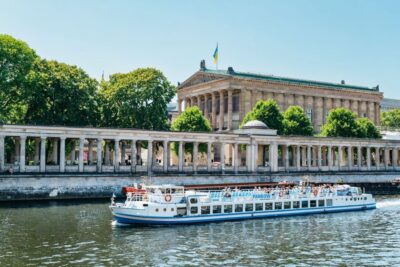
1-Hour City Tour by Boat with Guaranteed Seating
Read our review →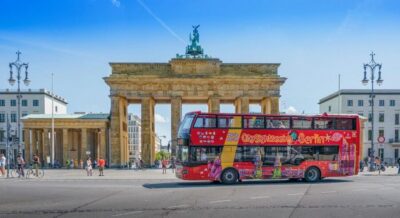
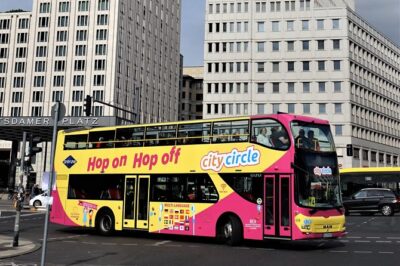
Berlin City Hop-on Hop-off Tour with Optional Cruise
Read our review →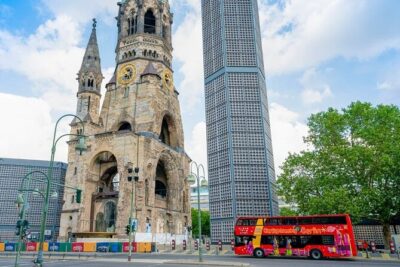
Browse the lists this tour appears in