

Review · BERLIN BRUNCH & BREAKFAST EXPERIENCES
Delicious Deutsch: Learn German while creating German Breakfast
The best part of this Berlin experience is that German lessons come with something useful to do. You are not sitting at a desk repeating phrases. You are handling produce, reading recipes, discussing ingredients, and preparing a proper Frühstück, the German breakfast that can be a small meal or a full morning affair. Host Kit also brings food traditions, Berlin culture, and local market knowledge into the conversation.
I like the hands-on format and the private setting. Touching, smelling, cooking, and tasting food gives new words a place in your memory. I also like the personal touch: Kit has welcomed families, helped children join in, and adjusted food choices for dietary needs.
The main drawback is the price, $110 per person, for about three hours. That is fair if you want a private language lesson tied to food, but it is not the right pick if you only want a cheap breakfast or a standard cooking demonstration. Also, the listed start time says 9:30 p.m., which does not fit a breakfast class, so confirm the time before paying.
In This Review
- Key points at a glance
- Why German breakfast makes a good language class
- Meeting Kit in Schöneberg
- Shopping and choosing fresh ingredients
- Preparing a full German Frühstück
- Learning through cooking instead of worksheets
- Berlin food, culture, and conversation
- How much time to allow
- Who will get the most from the $110 price
- Booking details worth checking
- Should you book Delicious Deutsch?
- FAQ
- Where does the experience start?
- Where does the activity end?
- How long does the experience last?
- What time does it start?
- What language levels are suitable?
- Is breakfast included?
- Is transportation included?
- Is the activity private?
- Can I cancel for a refund?
Key points at a glance
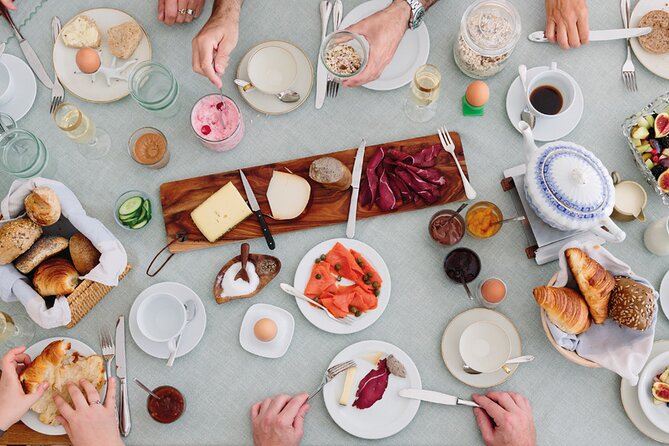
- Breakfast becomes the lesson: You learn German through ingredients, recipes, cooking actions, and table conversation.
- Kit leads a personal class: The host, Kit, has experience including families, food preferences, market visits, and Berlin culture in the experience.
- A private activity: Only your group takes part, giving you more chances to speak than in a large class.
- Beginner-friendly: The program is designed for beginner to intermediate German levels.
- Food is included: Your prepared breakfast is part of the experience, while private transportation is not.
- Check the time carefully: The information lists a 9:30 p.m. start despite describing a morning breakfast.
Why German breakfast makes a good language class

German breakfast is a useful subject because it touches many parts of everyday life. You can learn the names of foods, kitchen tools, measurements, flavors, and actions such as cutting, mixing, washing, heating, and serving. These are words you can use again in a market, bakery, restaurant, or rented apartment.
The lesson also gives you a reason to speak. Instead of memorizing isolated vocabulary, you might need to identify an ingredient, follow a cooking instruction, or explain what you like to eat. That practical link is valuable for beginners, since a new word is easier to recall when you have seen it, handled it, and tasted it.
The class is aimed at beginner and intermediate speakers. You do not need fluent German to benefit, but you should be ready to participate. If you already know basic greetings and food words, you may get more out of the recipe explanations and cultural discussion. If you are starting from zero, the cooking tasks give you a natural setting for simple phrases.
More brunch and breakfast in Berlin:
- Berlin: Rooftop Breakfast at Käfer Restaurant Reichstag
★ 4.6 · 1,828 reviews - suprise-brunch at adventure restaurant Knutschfleck Berlin
★ 4.3 · 235 reviews - Berlin: Breakfast at Café Wintergarten
★ 4.5 · 145 reviews
Meeting Kit in Schöneberg
The meeting point is Goltzstraße 36, 10781 Berlin, in the Schöneberg district. The activity ends back at the same meeting point, so you do not need to arrange a separate ride from the class.
Kit is the named host associated with this experience. Her approach is personal rather than classroom-like. She has welcomed a child into the cooking process, taken time to explain German food and Berlin culture, and adapted food choices for dietary restrictions. Those details matter if you want a host who can adjust the pace instead of delivering a fixed talk.
The activity is private, meaning only your own group participates. That is a real advantage for language practice. You can make mistakes without an audience, ask for a word to be repeated, or pause over a tricky phrase. A private format also works better for a family or a small group with different German levels.
The meeting point is near public transportation, but transportation to and from the activity is not included. A mobile ticket is accepted, and booking confirmation is issued at the time of reservation.
Shopping and choosing fresh ingredients

The central description focuses on creating breakfast, while the format connected with Kit also includes time around fresh produce and local food. At the market, you may see, touch, and discuss the ingredients before cooking. This is where vocabulary becomes especially concrete: you can point to an item, hear its German name, compare choices, and ask how it is used.
A market stop also adds a useful piece of Berlin life. You are not only learning food words from a printed list. You are looking at the kind of produce used in local cooking and hearing how choices relate to season, quality, and personal taste. Kit has relationships with market vendors and can point out ingredients she likes, along with seasonal treats.
Do not expect a major sightseeing tour of Berlin at this stage. The market is here to support the food and language lesson. Still, the connection to local buying habits gives the class more meaning than a recipe copied from a book.
If your group follows the longer market and cooking format associated with Kit, shopping can take more time than the advertised three-hour breakfast session. The published duration for this experience is approximately three hours, so ask what is included on your date. The food-focused class and the longer lunch-style format may not follow exactly the same schedule.
Preparing a full German Frühstück
Once you begin preparing the meal, the kitchen becomes your vocabulary sheet. You can learn how German recipes are written, how instructions are explained, and how ingredients are handled. The lesson is designed to use sight, sound, touch, smell, and taste, which gives each new term several ways to stick.
The cooking is not just a show. You are expected to see, handle, prepare, cook, and taste fresh produce. That makes the experience active and keeps the morning moving. You may learn a word while holding the ingredient it describes, then use it again when discussing the finished dish.
The exact breakfast menu is not specified, so do not book expecting a particular sausage, bread, spread, pastry, or hot dish. The meal is described as an elaborate breakfast, but the final dishes can depend on the available produce, the season, and dietary needs. If a specific food matters to you, ask before arrival.
Food is included in the price. The value is therefore more than a language lesson alone, but it depends on what you want from the outing. A visitor who would otherwise pay for a private German class and a separate food experience may find $110 reasonable. Someone who mainly wants to eat will likely find it expensive.
A different side of Berlin on the same trip:
- Berlin: Reichstag, Dome and Government District Guided Tour
★ 4.7 · 18,288 reviews - Berlin: 1-Hour City Tour by Boat with Guaranteed Seating
★ 4.3 · 16,993 reviews - Berlin: Boat Tour Along the River Spree
★ 4.4 · 11,252 reviews - Discover Berlin Half-Day Walking Tour
★ 5.0 · 9,624 reviews
Learning through cooking instead of worksheets
The strongest idea behind the experience is simple: physical action can help language memory. When you hear a term while washing, cutting, tasting, or serving, you connect the sound to an action. That can be more memorable than copying a word into a notebook.
This approach should suit you if you learn best by doing. It is also helpful if ordinary language classes feel dry or intimidating. The kitchen gives you a steady stream of simple topics, and the host can explain recipes, techniques, and ingredients as you work.
There is still a limit. A three-hour food session is not a complete German course. You will not cover every grammar point, and the information does not promise a formal written lesson, certificate, or follow-up materials. Think of it as a practical language boost with breakfast, not a replacement for regular study.
The private setting helps balance that limitation. You can ask Kit to slow down, repeat a phrase, or explain a word in another way. Your group can also focus on food vocabulary instead of spending time on topics that do not interest you.
Berlin food, culture, and conversation
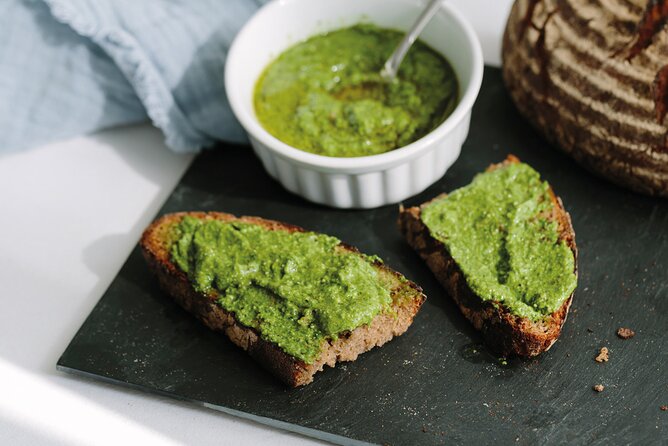
The experience reaches beyond ingredients. Food gives Kit a way to talk about German habits and Berlin culture, with some historical context included in the broader format. That may mean learning how breakfast fits into daily life, why fresh and local ingredients matter, or how cooking choices reflect personal values.
This cultural layer is one of the better reasons to choose the class over a basic language app. A food word becomes more useful when you understand how it fits into a meal and how people talk about it. You are learning not only what something is called, but also how it appears in a German household or market.
The host has also connected food choices with fresh, local, and sustainable produce and meat. These discussions are not the same as a formal lecture on German food history, but they can give you a clearer sense of how modern Berliners think about what they buy and cook.
For families, the format has another benefit. A child does not need to keep up with every German phrase to take part. Helping with food, choosing ingredients, or tasting the finished breakfast gives younger participants a role. Adults can focus on the language while children remain part of the activity.
How much time to allow
The advertised duration is about three hours. That is long enough for a focused lesson, food preparation, and breakfast, but short enough to fit into a busy Berlin itinerary.
The timing deserves special attention. The experience is described as breakfast, yet the listed start time is 9:30 p.m. That appears inconsistent. Contact the provider and verify the correct start time before booking, especially if you are arranging a morning market visit or planning other activities afterward.
Some descriptions connected with Kit’s cooking format have run much longer, including market shopping, cooking, and lunch. That does not mean your three-hour breakfast will last six hours. It does mean you should confirm whether your booking covers only the breakfast class or also includes a market component.
The end point is the original meeting point. Since private transportation is not included, plan your own route to Goltzstraße 36 and allow enough time to find the address.
Who will get the most from the $110 price
I would choose this for a visitor who wants a small, personal activity and is willing to pay for direct attention. It is particularly suitable for:
- Beginner and intermediate German students
- Couples or families who want to cook together
- People who prefer practical lessons to classroom study
- Visitors interested in German food and daily habits
- Anyone with dietary restrictions who wants to discuss food needs in advance
- Small private groups looking for a calm cultural activity
I would be less likely to recommend it to someone seeking a large social cooking class, a formal language course, or a low-cost breakfast. The private arrangement raises the price, and the experience is built around participation rather than sightseeing.
The five available ratings are all top marks, but the small number of ratings means you should treat that score as encouraging rather than final proof for every type of visitor. The strongest pattern is the personal hosting: Kit’s warmth, flexibility, food knowledge, and ability to include children are central to the experience.
Booking details worth checking
The activity is non-refundable and cannot be changed for any reason after booking. If you cancel or request an amendment, you will not receive your payment back. Read that rule carefully before committing.
A minimum number of participants is required. If the provider cancels because that minimum is not reached, you will be offered another date or experience, or you will receive a full refund.
Service animals are allowed, and the meeting point is near public transportation. The activity is private, but private transportation is not part of the package. Confirmation arrives when you book, and you can use a mobile ticket.
Most important, confirm the start time and ask what menu or market elements are planned. Those two questions will clear up the unusual 9:30 p.m. listing and help you understand exactly what your $110 covers.
Should you book Delicious Deutsch?
Book it if you want German practice that feels useful right away. The private class, fresh ingredients, breakfast, and personal guidance from Kit make a strong combination for beginners and intermediate speakers. Families and people with dietary needs may also appreciate the flexible approach.
Skip it if you only want a quick meal, a broad Berlin tour, or a structured academic lesson. The price is not small, the cancellation terms are strict, and the start time needs confirmation. For the right person, though, this is a pleasant way to put German words to work while making something you can eat.
FAQ
Where does the experience start?
It starts at Goltzstraße 36, 10781 Berlin, Germany.
Where does the activity end?
It ends back at the meeting point.
How long does the experience last?
The advertised duration is approximately three hours.
What time does it start?
The listed start time is 9:30 p.m. Since the activity is described as a German breakfast, confirm the correct start time with the provider before booking.
What language levels are suitable?
The program is designed for beginner to intermediate German levels.
Is breakfast included?
Yes. Breakfast is included.
Is transportation included?
No. Private transportation is not included. The meeting point is near public transportation.
Is the activity private?
Yes. Only your group will participate.
Can I cancel for a refund?
No. The experience is non-refundable and cannot be changed for any reason. If the provider cancels because the minimum number of participants is not met, you will be offered another date or experience, or a full refund.
Just added around Berlin
- Berlin Highlights in One Day★ 5.0 · 3 reviews
- Private Berlin One Day Tour with a Local: See the City Unscripted★ 3.5 · 3 reviews
- Individual city tour Berlin for max. 8 persons★ 5.0 · 3 reviews
- Transfer from Berlin Schönefeld Airport (SXF) to Berlin city Hotels – ROUND TRIP★ 4.0 · 3 reviews
- Berlin: Museum Island Tour★ 5.0 · 3 reviews
- Private Analogue Photography Experience in Berlin★ 5.0 · 3 reviews
- Berlin: Local Food Tour in Secrets Hidden Gems★ 4.0 · 3 reviews
- Berlin & The Third Reich Private Guided Tour★ 5.0 · 3 reviews
Berlin Brunch & Breakfast Experiences, compared.
Rooftop Breakfast at Käfer Restaurant Reichstag
Read our review →
suprise-brunch at adventure restaurant Knutschfleck Berlin
Read our review →
Fine Dining Breakfast with Champagne in Schoneberg
Read our review →
Browse the lists this tour appears in