
Review · BERLIN RICKSHAW TOURS
Individual City Tour – Rickshaw Sightseeing in Berlin
Berlin is spread out, and a private rickshaw lets you cover a remarkable amount of ground without turning your first day into a forced march. You roll from Alexanderplatz to Brandenburg Gate, with time for photos, short walks, and clear explanations at each stop. Guide Leo is especially praised for his history stories, patient driving, and willingness to adjust the route.
I like the private format, since your party gets the driver’s full attention and can ask questions about Berlin’s divided past, Prussian monuments, or whatever catches your eye. I also like the rickshaw’s small size: it can use cycle lanes and reach courtyards and narrow places that a bus or car cannot.
The main consideration is the weather. A blanket is supplied, and Leo has provided hot water bottles on bitterly cold days, but an open-air ride is still more exposed than a bus. The itinerary also moves quickly, so treat it as a smart city overview rather than a substitute for visiting Berlin’s museums and memorials at length.
In This Review
- Key points at a glance
- Why a Berlin rickshaw works so well
- Alexanderplatz to Museum Island: Berlin’s early chapters
- Courtyards, crossings, and the weight of Berlin’s past
- Monumental Berlin at Gendarmenmarkt and Checkpoint Charlie
- Potsdamer Platz and the city rebuilt from the ruins
- Thirty minutes through Tiergarten
- Brandenburg Gate, the final landmark
- How the timing and route affect the experience
- Comfort, access, and cold-weather planning
- Price, pickup, and overall value
- Who should book this ride
- Should you book the Berlin rickshaw tour?
- FAQ
- How much does the private Berlin rickshaw tour cost?
- How long does the tour last?
- Where does the tour start and finish?
- Is hotel pickup available?
- Is the tour private?
- Is the tour suitable for cold weather?
- Is admission to the attractions included?
Key points at a glance
- A private ride for your own party: You are not sharing the rickshaw with strangers, and the route can be adjusted to suit your interests.
- A fast first look at Berlin: In two or three hours, you can reach major sights from Alexanderplatz to Brandenburg Gate.
- Personal guiding from Leo or Jakob: Expect history, old photographs, answers to questions, and a guide who can change plans when needed.
- Useful in cold weather: Blankets are included, and hot water bottles have been supplied on especially cold outings.
- Helpful for limited mobility: The ride reduces walking, and the guide can assist with getting on and off. One passenger was also able to bring a walker.
- Free pickup within 2 kilometers of Museum Island: Hotel pickup farther away can be arranged for an extra charge.
Why a Berlin rickshaw works so well
The best reason to book this tour is simple: Berlin’s major sights are not packed into one compact old town. Alexanderplatz, Museum Island, the former Wall sites, Potsdamer Platz, Tiergarten, and Brandenburg Gate all sit within central Berlin, but walking between them takes time and energy.
A rickshaw gives you a moving view between stops. You are close enough to notice buildings, memorials, bridges, and street details, while the driver handles the route. It is quicker than walking and more personal than a large sightseeing bus.
The private setup matters. If you are traveling with parents, children, or a small family group, you can pause for photos or ask for more explanation without holding up a coach full of people. The guide can also avoid places you plan to visit later. One three-hour group explained that its route was changed to prevent repeating the next day’s plans.
Leo is the guide most often named in the supplied feedback, with Jakob also mentioned as part of the guiding team. Leo uses old photographs on some tours to show how Berlin changed, and he has been praised for answering detailed questions about the Nazi period and the former East Germany. The style sounds conversational rather than scripted.
More rickshaw rides in Berlin:
- Berlin: Private Guided E-Rickshaw Tour
★ 4.9 · 157 reviews - Berlin Express: Private 1-Hour E-Rickshaw Ride
★ 5.0 · 116 reviews - Rickshaw Tours Berlin – Groups of up to 16 people with several rickshaws
★ 4.0 · 97 reviews
Alexanderplatz to Museum Island: Berlin’s early chapters
The meeting point is the World Time Clock at Alexanderplatz. This is a practical place to begin because it is easy to recognize and sits near public transportation.
Alexanderplatz carries several layers of Berlin’s story. It began near the medieval edge of the city and later became a major center of East Berlin, then the capital of the German Democratic Republic. The clock itself is a familiar meeting point for Berliners and visitors, so you should have little trouble finding the start.
The rickshaw then heads to Nikolaiviertel, the oldest settlement area of the Berlin-Cölln twin city. Much of this quarter was destroyed in the Second World War and rebuilt for Berlin’s 750th anniversary. You get a quick look at the city’s medieval roots, though five minutes is enough for orientation and photos, not a full visit.
Museum Island follows. The group of museums was commissioned by Prussian kings and has been protected as a UNESCO World Heritage site since 1999. Berlin Cathedral and the new Berlin Palace are close by, giving you a concentrated view of royal, religious, and museum architecture.
Admission to Museum Island is not part of the ride. That is not a flaw, but it is important to understand the format. You see the setting and hear the context, then return later if you want to spend hours inside the museums.
Courtyards, crossings, and the weight of Berlin’s past
At Hackesche Höfe, the rickshaw brings you to a very different side of central Berlin. The connected courtyards belong to the old Spandauer Vorstadt district and are often described as the largest enclosed courtyard complex in Germany.
This is one of the places where the rickshaw has an advantage over a bus. You can reach spaces close to the pedestrian flow and look into the courtyards, where decorative facades and smaller backyards create a more intimate city scene. The stop is brief, so return on foot later if you want time for shops, cafes, or a closer look.
The Palace of Tears at Friedrichstraße is a small but powerful reminder of the divided city. It was once the exit hall for a border crossing, and the control counters remain. The name refers to the tearful goodbyes that took place there when people crossed between East and West Berlin.
Bebelplatz shifts the focus to culture and repression. The square is surrounded by grand buildings linked with Berlin’s intellectual and political life, but the most difficult memory is the Nazi book burning on May 10, 1933. An underground empty library memorial marks what was lost.
Your guide can give these places a human scale. You are not simply checking off a square and a former border building. You are moving through the choices and conflicts that shaped modern Germany.
Monumental Berlin at Gendarmenmarkt and Checkpoint Charlie
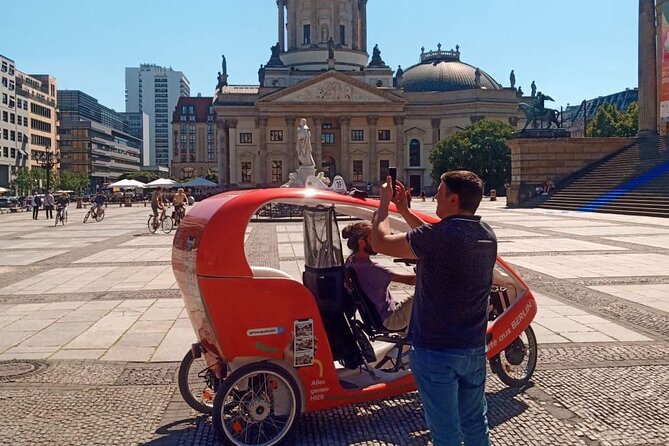
Gendarmenmarkt is one of the city’s most impressive squares, framed by the concert hall and churches with matching towers. The architecture reflects the formal Berlin that developed under Prussian rulers.
A short stop is enough to understand the arrangement and take photos, but it cannot replace a slow walk around the square. If you care about architecture, note it as a place to revisit after the tour.
Checkpoint Charlie brings you back to the Cold War. The former border crossing became one of the best-known symbols of divided Berlin and the site of tragic escape attempts. Today, it is a busy central stop with a complicated history, so a guide’s explanation helps separate the real border story from the later tourist display.
The Topography of Terror adds another layer. Here, the longest remaining section of the Berlin Wall is preserved in its original state. The site also connects the Wall’s later history with the Nazi institutions that once operated nearby, making it one of the city’s most serious stops.
You should expect short explanations and photo opportunities rather than a long memorial visit. If you want detailed exhibits, plan extra time here after the rickshaw ride.
A few more Berlin tours worth weighing up
- Berlin: 1-Hour City Tour by Boat with Guaranteed Seating
★ 4.3 · 16,993 reviews - Berlin: City Sightseeing Hop-On Hop-Off Bus Tour
★ 4.1 · 4,233 reviews - Potsdam: City and Castles Tour
★ 4.7 · 3,721 reviews - Berlin: 1-Hour City Sightseeing Cruise
★ 4.4 · 2,210 reviews
Potsdamer Platz and the city rebuilt from the ruins

Potsdamer Platz is a sharp change from the older squares. It was a major traffic junction before the Second World War, was damaged by war and division, and later became a showcase for modern construction.
The contrast is the point. Berlin’s old center was not simply preserved and polished. Large parts were destroyed, divided, rebuilt, or left empty for decades. Potsdamer Platz lets you see how the city filled one of those gaps with modern buildings, while traces of the earlier square remain less obvious.
This is another stop where the rickshaw saves time. You can grasp the broad story without walking across a large urban district. Your guide may also point out details you would miss while trying to navigate the area alone.
Thirty minutes through Tiergarten
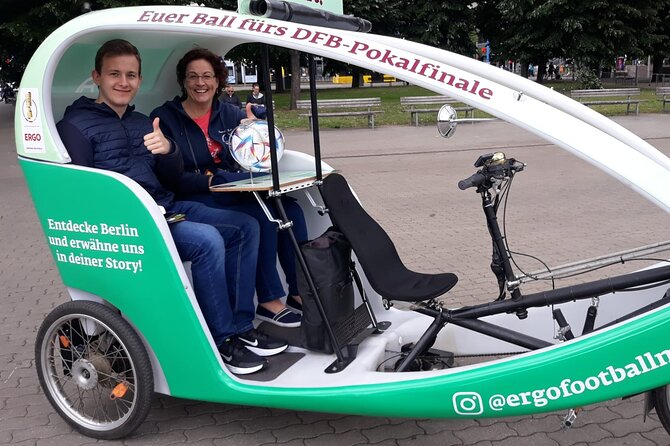
The longest scheduled section is the 30-minute ride through Tiergarten, Berlin’s central park and its green heart. This gives the rickshaw a chance to slow down after the dense run of historic squares and former border sites.
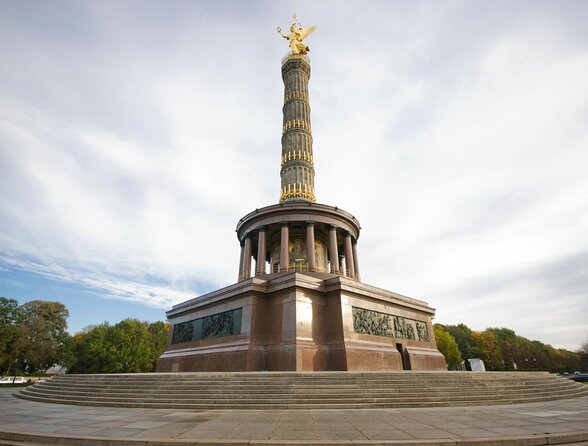
The route passes the Victory Column, Bellevue Palace, the House of World Cultures, the Carillon, the Soviet Memorial, and several bridges. You also ride through the park itself, so this is not only a parade of monuments. It is a change of pace, with trees, open paths, and broad views.
The Victory Column commemorates three Prussian victories and is topped by the gilded figure of Victoria. Details such as the gilded cannons are easier to appreciate from close range than from a passing bus. Entry is not included, so this tour does not cover a climb to the viewing platform.
Bellevue Palace began as a prince’s residence and has served as the German Federal President’s official residence since 1994. You view it from outside. The same is true of the government district, built largely around the year 2000 along the Spreebogen near the historic Reichstag.
The park section is especially useful for families and older visitors because it offers a calmer stretch of riding. It also helps prevent the tour from feeling like a nonstop list of political landmarks.
Brandenburg Gate, the final landmark
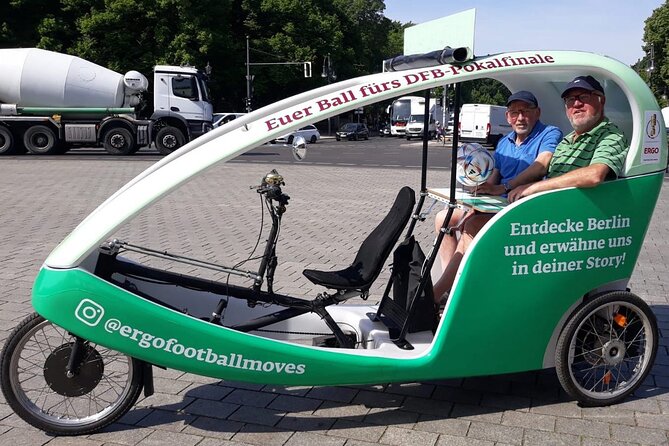
The ride ends at Brandenburg Gate, Berlin’s most famous symbol. It was once one of the city gates at the end of Unter den Linden and is now the only surviving gate of its kind in Berlin.
The gate has carried several meanings. It became linked with division during the Cold War and later with German unity. Today, it is a national symbol and a fitting final stop after seeing the Wall, Checkpoint Charlie, the government district, and the former East Berlin center.
The activity returns to the meeting point at Alexanderplatz, even though Brandenburg Gate is the visual high point of the route. If you are picked up at a hotel within the free pickup area, confirm the return arrangement clearly, since the published end point is the original meeting place.
How the timing and route affect the experience
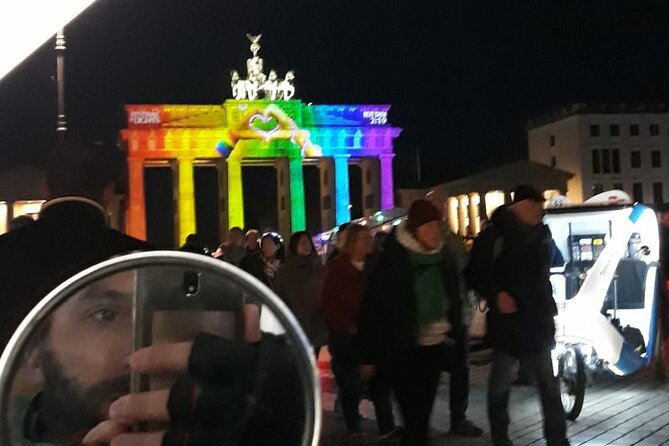
The tour lasts approximately one to three hours. A one-hour ride should be treated as a compact introduction, while two or three hours allow more time for explanations, photos, and route changes.
The listed stops are generally scheduled for about five minutes each, with 30 minutes devoted to Tiergarten. That tells you what this experience does best: it gives you a broad first picture of Berlin. It does not give you enough time to enter several museums, read every memorial panel, or linger in each courtyard.
I would book it early in your Berlin stay. The ride can show you where the major sites are, helping you choose what deserves a return visit. It is also useful on a first full day, when you want orientation without spending hours underground or trying to decode the city’s wide avenues.
Evening departures can produce attractive photos, especially around major landmarks. If you dislike cold air or want clearer daytime views, an afternoon ride may suit you better. The supplied details do not promise a specific departure time, so confirm the available slot before booking.
Comfort, access, and cold-weather planning
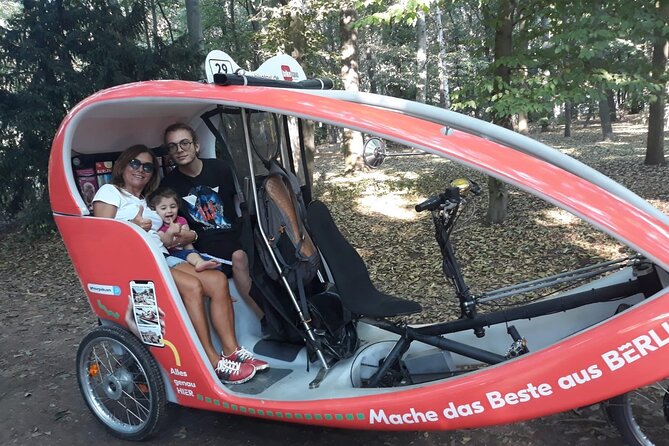
The rickshaw is covered, and a warm blanket is included in cold weather. Leo has also supplied hot water bottles on freezing days, which is a thoughtful extra for anyone sensitive to the cold.
Still, dress as if you will be outdoors. The blanket helps, but it does not turn the rickshaw into an enclosed vehicle. Cold-weather clothing will make the ride much more pleasant.
The activity can work well for people who cannot manage long walks. A passenger with bad knees found the ride useful, and another person with bad legs received help getting on and off and was able to bring a walker. Service animals are allowed, and most people can participate.
That said, the provided details do not give exact rickshaw dimensions or a formal wheelchair policy. If you use a wheelchair, contact the provider before booking. The same advice applies if you need a particular seating arrangement.
The ride is offered in English. Music can be requested, and drinks can be ordered separately. Those extras are minor, but they help make a private ride feel less rigid than a standard group excursion.
Price, pickup, and overall value
At $53.21 per person, the price is reasonable if you value private guiding and want to cover a lot of central Berlin quickly. For a solo visitor or a couple, it costs more than public transport and a self-guided walk, but you are paying for the driver, route planning, personal attention, and the ability to ask questions as the city passes by.
For a family or small group, the value improves because the price is attached to a private experience rather than a seat on a large coach. You also avoid the energy cost of walking between far-flung sights. The experience is particularly useful if someone in your party has sore knees, limited stamina, or young children.
Pickup is free from hotels or other locations within 2 kilometers of Museum Island. Farther pickup locations cost 5 euros per kilometer. One hotel pickup was arranged for an additional 15 euros, so ask for the exact cost rather than assuming all hotel pickups are included.
The tour has a five-star average from 120 ratings, with 100 percent recommendation shown in the supplied details. The strongest pattern is not simply satisfaction with the route. It is the praise for Leo’s clear explanations, flexible planning, careful driving, help with mobility, and effort to keep people warm.
Who should book this ride
I would choose this for:
- First-time visitors who want a quick map of central Berlin
- Families with children who may tire on a long walking tour
- Older visitors or anyone with knee and leg problems
- History fans who want to ask direct questions
- Small private groups with different interests
- People who want to see major landmarks before deciding which to revisit
I would not make it your only Berlin history experience. The ride gives you a useful framework, but the five-minute stops are short. Plan separate visits to Museum Island, the Topography of Terror, the Palace of Tears, or any other site where you want a fuller look.
Should you book the Berlin rickshaw tour?
Book it if you want an efficient, personal introduction to Berlin and prefer sitting close to the city rather than viewing it through a bus window. The route covers the essential central landmarks, and the private format lets you slow down, ask questions, and avoid repeating plans for later days.
The best fit is a two or three-hour ride with Leo or Jakob early in your stay. Bring warm clothing in winter, use the blanket when needed, and tell the guide what you most want to see. If you need detailed museum time or a slow memorial visit, use this tour as your orientation, not your complete Berlin program.
FAQ
How much does the private Berlin rickshaw tour cost?
The listed price is $53.21 per person. Additional charges may apply for pickup beyond 2 kilometers from Museum Island.
How long does the tour last?
The activity lasts approximately one to three hours, depending on the option booked.
Where does the tour start and finish?
It starts at the World Time Clock at Alexanderplatz. The listed end point is back at the meeting point.
Is hotel pickup available?
Yes. Pickup from hotels or other locations within 2 kilometers of Museum Island is free. Further distances are charged at 5 euros per kilometer.
Is the tour private?
Yes. Only your own party participates in the activity.
Is the tour suitable for cold weather?
Yes. A warm blanket is included in cold weather. Hot water bottles have also been provided on particularly cold rides.
Is admission to the attractions included?
Admission is not included for Museum Island or the Victory Column. The other listed stops have free admission or are viewed from outside.
Just added around Berlin
- Berlin Highlights in One Day★ 5.0 · 3 reviews
- Private Berlin One Day Tour with a Local: See the City Unscripted★ 3.5 · 3 reviews
- Individual city tour Berlin for max. 8 persons★ 5.0 · 3 reviews
- Transfer from Berlin Schönefeld Airport (SXF) to Berlin city Hotels – ROUND TRIP★ 4.0 · 3 reviews
- Berlin: Museum Island Tour★ 5.0 · 3 reviews
- Private Analogue Photography Experience in Berlin★ 5.0 · 3 reviews
- Berlin: Local Food Tour in Secrets Hidden Gems★ 4.0 · 3 reviews
- Potsdam Highlights – Private sightseeing tour by minibus★ 5.0 · 3 reviews
Berlin Rickshaw Tours, compared.
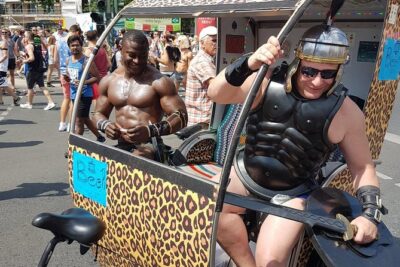
Rickshaw Tours Berlin – Groups of up to 16 people with several rickshaws
Read our review →
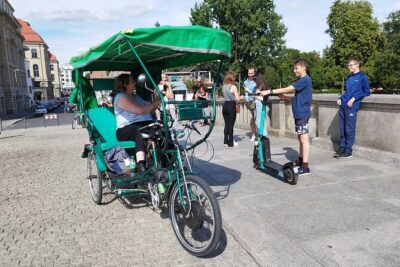
One Up to 3 Rickshaws(6 GUESTS)-Taylor Made Rickshaw Berlin Tour
Read our review →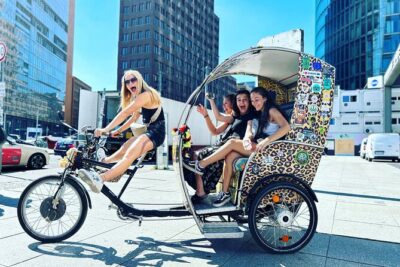
Berlin Rickshaw Tours Historical & Photo City Tour 120min – Sightseeing
Read our review →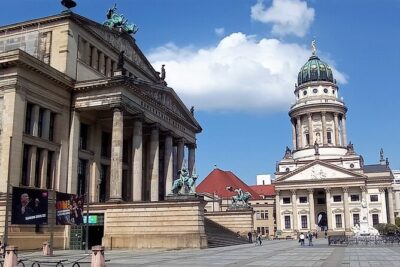
Daily First Rickshaw promotion in Combi Vehicle public Group 90€
Read our review →Browse the lists this tour appears in