

Review · BERLIN RICKSHAW TOURS
Rickshaw Sightseeing City Tours Berlin – Rikscha Tours
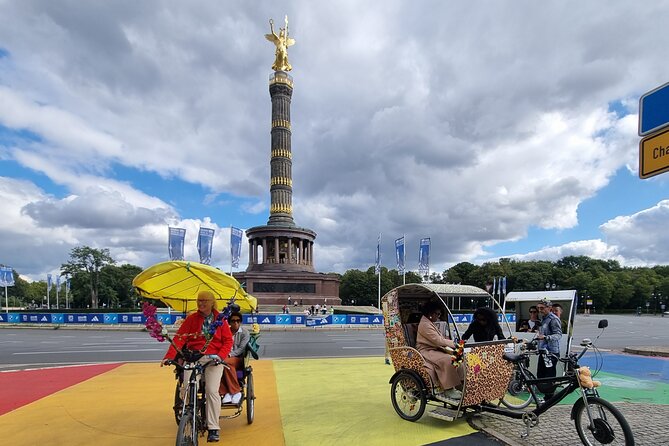
Berlin is wonderfully well suited to a rickshaw. You can slip along narrow streets, pause beside memorials, and get close to major sights without climbing onto a tour bus. This ride links famous landmarks from Brandenburg Gate to Museum Island, with guide Leo often adding jokes, stories, and help with photos.
I like the small private format, which lets you shape the route around what you have already seen. I also like the practical touches: Wi-Fi, music on request, and a warm blanket when Berlin’s evening air turns sharp. The main concern is reliability. Several bookings have reportedly ended in a no-show or poor communication, so you should confirm the meeting details and keep a backup plan.
In This Review
- Key points to know before booking
- Why a rickshaw works so well in Berlin
- Brandenburg Gate to the government quarter
- Tiergarten and Potsdamer Platz
- Nazi history at the Topography of Terror
- Checkpoint Charlie and the old divided city
- Gendarmenmarkt, Bebelplatz, and Schinkel’s Berlin
- Museum Island and Berlin’s oldest center
- Alexanderplatz and the Berlin Wall
- What the price and timing really mean
- Cold weather, comfort, and practical concerns
- Who should book the Berlin rickshaw ride
- FAQ
- How many people can join the rickshaw tour?
- Where does the tour start and finish?
- Is hotel pickup available?
- How long does the experience last?
- Are museum and building entrance fees included?
- What happens if the weather is poor?
- Should you book it?
Key points to know before booking
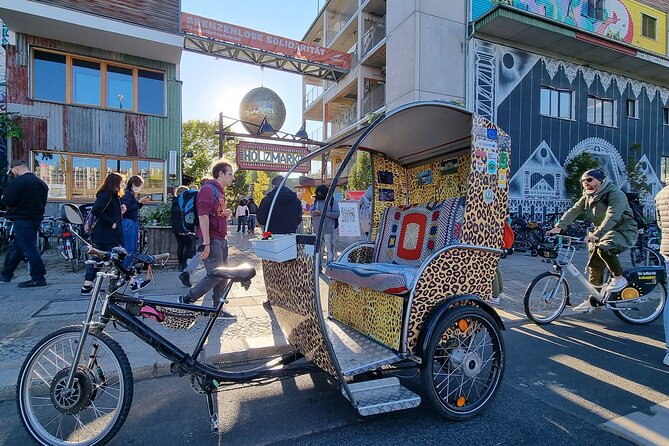
- A private ride for up to two people: The listed price is per group, not per person.
- A fast way to cover central Berlin: The route connects government buildings, Nazi-era sites, Cold War landmarks, museums, and Berlin Wall remains.
- Leo is the named guide: He is described as funny, interactive, helpful with photos, and willing to adjust the route.
- You stay outside at most stops: Entrance fees are not included, and many pauses last only one to five minutes.
- Pickup has a strict limit: Pickup is included within 2 kilometers of Brandenburg Gate. Beyond that, the charge is €10 per kilometer.
- Reliability needs attention: The experience has a 4.1 out of 5 score from 55 ratings, but several serious no-show complaints appear alongside strong praise.
Why a rickshaw works so well in Berlin
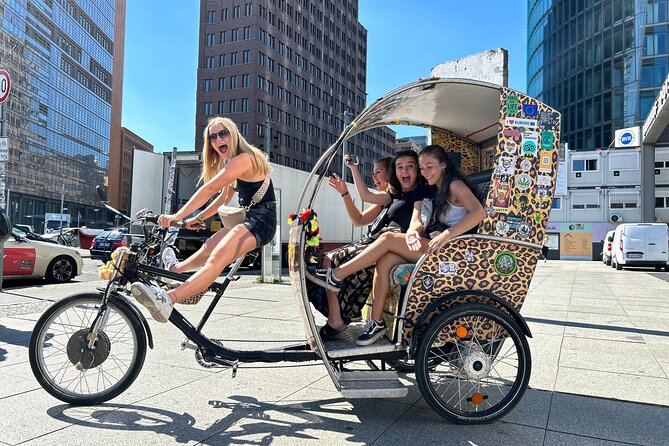
Berlin’s sights are spread across a wide area. The Brandenburg Gate, Checkpoint Charlie, Museum Island, and East Side Gallery are not a pleasant short walk from one another, especially if you have only an afternoon.
A rickshaw gives you the middle ground between walking and a full-size vehicle. You cover more ground than on foot, but you still move slowly enough to see street details and stop near the action. Leo has also been praised for guiding through narrow paths and pulling over when something catches your eye.
This is best understood as a mobile introduction to Berlin, not a series of long museum visits. The stop times are short. You will see the exterior of the Reichstag, pause at Bebelplatz, look across Gendarmenmarkt, and pass the Berlin Cathedral. If you want to go inside the German Cathedral, Martin-Gropius-Bau, or another museum, plan that for later.
The private setup matters. With only your group of up to two, you can tell Leo what you have already visited and ask him to focus on particular periods, such as Nazi Berlin, the Cold War, or the city’s older royal center. One 90-minute ride was adjusted around sights already seen, which is exactly the sort of flexibility that makes a private tour useful.
More rickshaw rides in Berlin:
- Berlin: Private Guided E-Rickshaw Tour
★ 4.9 · 157 reviews - Individual City Tour – Rickshaw Sightseeing in Berlin
★ 5.0 · 120 reviews - Berlin Express: Private 1-Hour E-Rickshaw Ride
★ 5.0 · 116 reviews
Brandenburg Gate to the government quarter
The ride begins at Brandenburg Gate, at 10117 Berlin. This grand sandstone gateway was built between 1788 and 1791 for King Friedrich Wilhelm II, with a design inspired by the entrance buildings of the Acropolis in Athens. It was intended to form a fitting end to Unter den Linden, Berlin’s famous east-west boulevard.
The gate is more than a handsome neoclassical monument. It has witnessed royal Berlin, the Nazi era, the division of the city, and reunification. Starting here gives you a quick sense of how much political meaning Berlin packs into its buildings.
The Reichstag comes next. The building is tied to several major turning points in German history. Philipp Scheidemann proclaimed the republic from its west portal in 1918. The 1933 fire destroyed the plenary hall and dome, and the building was badly damaged during the final battle for Berlin in 1945.
You should expect an exterior stop of about five minutes, not a visit to the dome or parliamentary interior. No admission ticket is included. If the glass dome is important to you, arrange that separately and check its entry rules before your ride.
The German Chancellery offers a sharp change in style. Its tall central section rises between two lower administrative wings, with broad glass surfaces, concrete pillars, atriums, and large arches. From a rickshaw, you get a close look at its unusual mix of openness and heavy modern form.
The Soviet War Memorial in the Tiergarten is a brief but meaningful pause. Two T-34 tanks flank a bronze Red Army soldier, while the rear section contains the graves of around 2,500 Soviet soldiers. The memorial is free to view, and the stop is listed at about three minutes.
Tiergarten and Potsdamer Platz
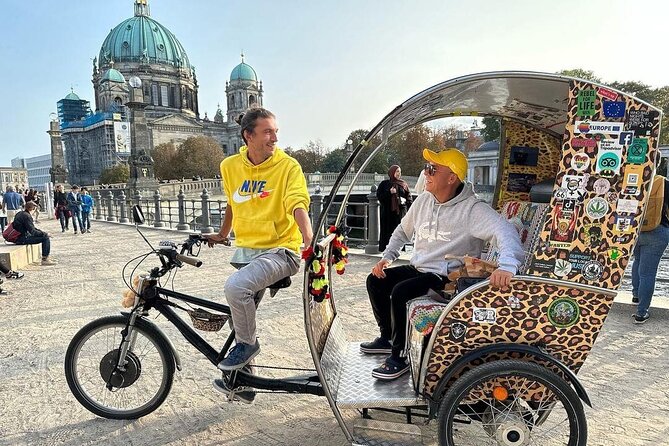
The Tiergarten is not simply a patch of greenery beside the government district. It began as a hunting ground and was later opened as a public pleasure park. Peter Joseph Lenné reshaped it into an English-style public park between 1833 and 1838.
The park covers about 200 hectares and contains monuments, bridges, the Victory Column, the Federal President’s Office, the House of World Cultures, and an English Garden around a pond. A rickshaw lets you sample this broad park without giving up much of your limited sightseeing time.
Potsdamer Platz shows another side of Berlin. Once divided and heavily damaged, it was rebuilt as a planned district of high-rise buildings, cinemas, cafés, shops, and a large shopping arcade. The modern architecture can feel polished beside the city’s older monuments, but that contrast is part of Berlin’s appeal.
The listed stop here is only about two minutes, so think of it as a quick orientation point. If you want time for shopping, coffee, or architecture photos, ask for a longer pause when choosing the tour length.
Nazi history at the Topography of Terror
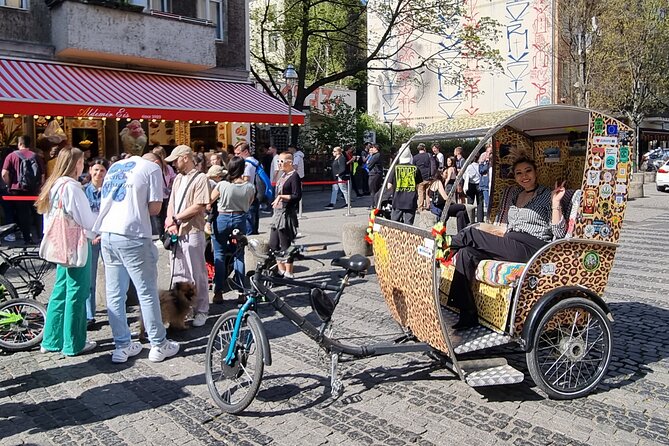
The Topography of Terror is one of the most important historical stops on the route. The site once held the main institutions that planned and directed much of the Nazi terror system, including the Secret State Police, the SS leadership, and the Reich Security Main Office.
The open-air remains and documentation center make this a place for serious reflection, not a quick photo stop. The route allows about five minutes, which is enough to identify the site and hear its importance but not enough for a full visit.
That short timing is one of the tour’s limits. If Nazi history is your main reason for booking, tell Leo before departure and consider choosing the longer option. The same applies to the Berlin Wall Memorial and museums along the route. You can use the rickshaw for orientation, then return on foot or by public transport for a proper visit.
Nearby, the Martin-Gropius-Bau hosts exhibitions on cultural history, modern art, and photography. The building itself is worth noticing, but admission is not included and the planned stop is only about two minutes.
A few more Berlin tours worth weighing up
- Berlin: 1-Hour City Tour by Boat with Guaranteed Seating
★ 4.3 · 16,993 reviews - Berlin: City Sightseeing Hop-On Hop-Off Bus Tour
★ 4.1 · 4,233 reviews - Potsdam: City and Castles Tour
★ 4.7 · 3,721 reviews - Berlin: 1-Hour City Sightseeing Cruise
★ 4.4 · 2,210 reviews
Checkpoint Charlie and the old divided city
Checkpoint Charlie was the best-known American-controlled crossing in divided Berlin. It was used by foreigners, West German officials connected with the permanent representation, and East German officials. The checkpoint’s present-day setting is crowded with shops and photo opportunities, but the site still helps explain how tightly controlled movement through Berlin once was.
The stop is listed at two minutes and admission is free. That is enough for a quick look, but not a detailed Cold War lesson. Ask for more explanation if this period interests you.
From here, Friedrichstrasse runs north toward Friedrichstrasse station. After the Wall fell, the stretch between Checkpoint Charlie and the station became a major shopping route. The ride gives you a compact view of how political borders were replaced by commercial streets.
Gendarmenmarkt, Bebelplatz, and Schinkel’s Berlin
Gendarmenmarkt is one of central Berlin’s most graceful squares. Its origins reach back to the late seventeenth century, when French Protestant immigrants settled in the area. The square changed names several times before taking its current name in 1799, after the Gens d’armes regiment.
The German Cathedral, French Cathedral, and Konzerthaus frame the square. The German Cathedral contains a permanent exhibition on the development of liberal parliamentary democracy in Germany, but entrance is not included. The Konzerthaus is a major work by architect Karl Friedrich Schinkel, built on the site of an earlier theater commissioned under Frederick the Great.
The five-minute stop at Gendarmenmarkt gives you time to look around and take pictures. Still, restoration work or events can affect what you see on the day, so treat the stop as a view from outside rather than a guaranteed interior visit.
Bebelplatz carries a darker lesson. On May 10, 1933, Nazi groups burned more than 20,000 books there, targeting authors they labeled enemies of German culture. A memorial beneath the square recalls the empty shelves and the danger of suppressing ideas.
The stop is only about two minutes, but the site rewards a slower look. If you want to understand the memorial, ask Leo to explain where it is and allow extra time afterward.
Museum Island and Berlin’s oldest center
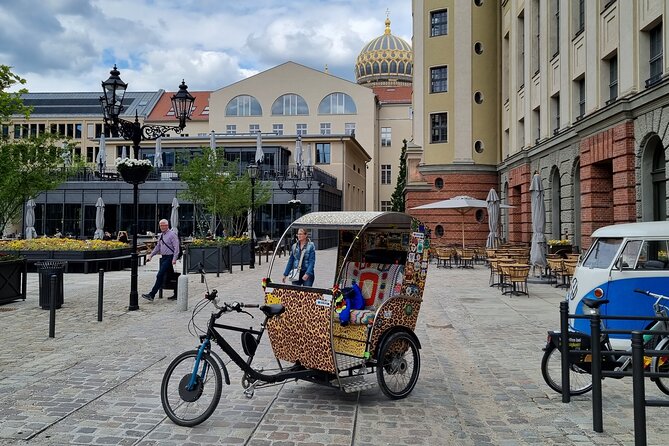
Neue Wache sits beside the former Zeughaus, now home to the German Historical Museum. Karl Friedrich Schinkel designed the small neoclassical building between 1816 and 1818. Since 1993, it has served as Germany’s central memorial to victims of war and tyranny.
Museum Island follows. This UNESCO World Heritage Site contains one of Europe’s most important museum groups. The ride gives you a useful first look at the complex, but it does not include museum admission. Five minutes is enough to get oriented, not enough to see the collections.
Nearby Berlin Cathedral is hard to miss, with its large dome and elaborate design. The Lustgarten in front of it was once part of the Berlin City Palace and is now a popular open square. These adjoining sights make Museum Island one of the strongest parts of the route for first-time visitors.
The ride then reaches the New Synagogue on Oranienburger Strasse. Its striking design recalls its former importance as Germany’s largest and most significant synagogue. What survives today carries the marks of Berlin’s violent twentieth century, and the exterior gives you a clear reason to return for a fuller visit.
Nikolaiviertel offers a different mood. It is Berlin’s oldest residential quarter, centered on St. Nicholas Church, with historic-looking houses, cafés, and restaurants. The area is compact, so a rickshaw can bring you close without the long approach required by a bus.
Alexanderplatz and the Berlin Wall
Alexanderplatz has been one of Berlin’s busiest public spaces for generations. It has changed through the 1920s, the East German period, and the present day, but it remains a useful place to see the city’s shifting identity.
The East Side Gallery is one of the most recognizable remnants of the Berlin Wall. Artists painted sections of the remaining structure, turning it into a long open-air gallery. You can see the art from close range, though a longer stop is useful if you want to study several murals or take careful photos.
The route’s final sections give you a quick sweep through Berlin’s older center, East German legacy, and reunified city. That range is the real strength of the ride. In a single outing, you move from Prussian architecture to Nazi crime sites, Cold War borders, modern government buildings, and public art on the Wall.
What the price and timing really mean
The advertised cost is $105.72 per group of up to two people. For a couple, that is about $52.86 each before any extra pickup charge. The value depends on how much you want personal attention and how little time you have.
A one-hour ride is a brisk introduction. The route contains many stops, and the short pauses mean you will mostly look, listen, and photograph. Ninety minutes gives the experience more breathing room, while two to four hours makes sense if you want a slower pace or a route shaped around specific subjects.
The price includes a warm blanket, Wi-Fi, music on request, and a photographer. The photographer detail is especially useful if you are carrying your own camera or phone and would like pictures of both people in the rickshaw. Alcoholic drinks, coffee, and tea are not included.
Pickup is available within a 2-kilometer radius of Brandenburg Gate. Beyond that boundary, the stated charge is €10 per kilometer. The tour ends back at the meeting point, so do not assume a distant hotel drop-off is included unless you have confirmed the cost.
Cold weather, comfort, and practical concerns
The blanket is more than a decorative extra. You are sitting in an open vehicle, and Berlin evenings can feel cold even when the forecast looks mild. Dress warmly, especially for a one-hour ride or longer.
Wi-Fi is included, which can help you check maps, send photos, or stay in touch during the ride. Music is available on request, but the main benefit of the tour is the guide’s narration and your ability to ask for changes.
Service animals are allowed, public transport is nearby, and most people can participate. The vehicle is private for your group, but the supplied information does not specify wheelchair access, child seating, or luggage capacity. Ask before booking if any of those points affect your plans.
The biggest practical warning is the record of missed appointments. Several customers describe waiting at Brandenburg Gate while the operator did not appear or answer calls. Explanations given afterward included illness, an accident, family emergencies, lost equipment, and cold-weather battery problems.
That does not erase the many strong accounts of punctual, funny, flexible guiding. It does mean you should not build an airport connection, special event, or once-only evening around this ride without a backup. The tour is often booked about 39 days ahead, so reserve early if you want a particular time, then confirm close to the date.
Free cancellation is available up to 24 hours before the start time. A cancellation within 24 hours is not refundable under the stated terms. Poor weather can lead to a new date or a full refund.
Who should book the Berlin rickshaw ride
I would choose this for a couple who wants a private overview rather than a long indoor tour. It also suits you if walking is tiring, your time in Berlin is short, or you want a guide to connect sights that are too far apart on foot.
It is a good fit for people who enjoy conversation and small details. Leo has been praised for humor, personal stories, flexible routing, and taking photos. Tell him what you have already seen and name any priority sites before the ride begins.
I would hesitate if reliability is your top concern or if you need a tightly timed departure. The no-show reports are too serious to ignore. Book only if you can confirm the arrangement and accept the need for a fallback plan.
FAQ
How many people can join the rickshaw tour?
The private tour is for up to two people per group.
Where does the tour start and finish?
It starts at Brandenburg Gate in Berlin and ends back at the meeting point.
Is hotel pickup available?
Pickup is included within 2 kilometers of Brandenburg Gate. Pickup farther away costs €10 per kilometer.
How long does the experience last?
The available duration is approximately one to four hours.
Are museum and building entrance fees included?
No. Admission is not included for places such as the Reichstag, German Cathedral, Martin-Gropius-Bau, the Berlin Wall Memorial, and Konzerthaus. Several outdoor stops are free.
What happens if the weather is poor?
The experience requires good weather. If it is canceled because of poor weather, you will be offered another date or a full refund.
Should you book it?
Book this rickshaw ride for close-up sightseeing, private routing, and a quick sweep of Berlin’s main historical districts. It can show you far more than a walking tour in the same amount of time, and the blanket, Wi-Fi, music, and photo help make the open vehicle more comfortable.
But take the reliability warning seriously. Confirm the appointment, keep the provider’s contact details handy, and avoid placing an important evening plan directly after the ride. If those precautions suit you, this is a lively and personal way to get your bearings in Berlin.
Just added around Berlin
- Berlin Highlights in One Day★ 5.0 · 3 reviews
- Private Berlin One Day Tour with a Local: See the City Unscripted★ 3.5 · 3 reviews
- Individual city tour Berlin for max. 8 persons★ 5.0 · 3 reviews
- Transfer from Berlin Schönefeld Airport (SXF) to Berlin city Hotels – ROUND TRIP★ 4.0 · 3 reviews
- Berlin: Museum Island Tour★ 5.0 · 3 reviews
- Private Analogue Photography Experience in Berlin★ 5.0 · 3 reviews
- Berlin: Local Food Tour in Secrets Hidden Gems★ 4.0 · 3 reviews
- Potsdam Highlights – Private sightseeing tour by minibus★ 5.0 · 3 reviews
Berlin Rickshaw Tours, compared.
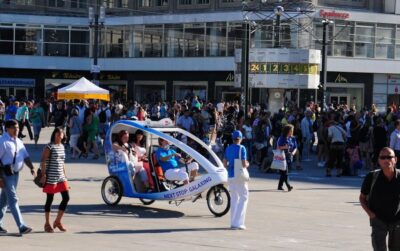
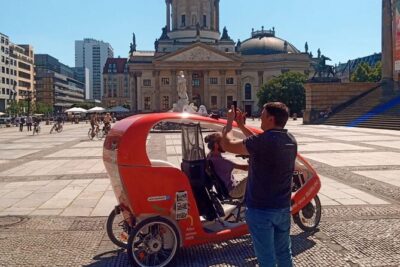
Individual City Tour – Rickshaw Sightseeing in Berlin
Read our review →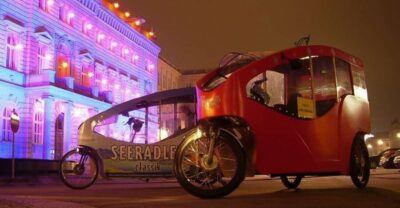
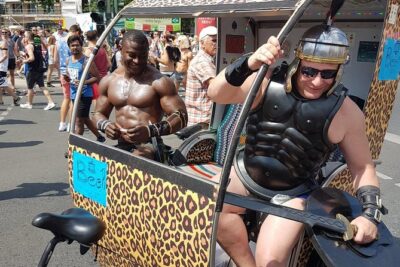
Rickshaw Tours Berlin – Groups of up to 16 people with several rickshaws
Read our review →
One Up to 3 Rickshaws(6 GUESTS)-Taylor Made Rickshaw Berlin Tour
Read our review →
Berlin Rickshaw Tours Historical & Photo City Tour 120min – Sightseeing
Read our review →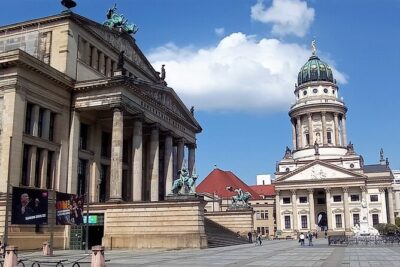
Daily First Rickshaw promotion in Combi Vehicle public Group 90€
Read our review →Browse the lists this tour appears in