
Review · CITY TOURS
Night magic city tour in Berlin
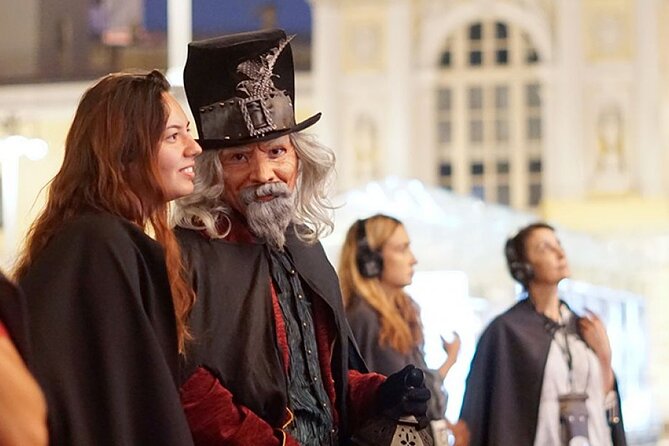
Berlin’s old center takes on a different character after sunset. This 90-minute night walk through Mitte links grand monuments with the narrow streets of Nikolaiviertel, using actors, costumes, audio-guide sections, and visual effects to turn a history lesson into a small street performance. The route includes the Neptune Fountain, Red City Hall, the Ampelmännchen, St. Nikolai-Kirche, Humboldt Forum, and Mühlendamm.
I like two things right away: the compact route gives you a useful introduction without eating an entire evening, and the mix of live performance with recorded sound helps cut through city traffic. The small maximum of 20 people should also make the experience easier to follow than a large walking tour.
The main caution is reliability in bad conditions. This is an outdoor activity, and one serious complaint reports that the guide did not appear at the meeting point on a cold, icy evening. Check the weather and meeting details carefully, and leave enough time to reach St. Marienkirche.
In This Review
- Key points at a glance
- Starting beside St. Marienkirche
- Neptune, rivers, and Prussian symbolism
- Red City Hall and the city’s working center
- Spotting the Ampelmännchen
- Nikolaiviertel, Berlin’s reconstructed old quarter
- St. Nikolai-Kirche and Berlin’s earliest center
- Humboldt Forum and a changing Museum Island
- Mühlendamm and the Spree crossing
- How the theatrical format changes the experience
- Price, group size, and overall value
- Who should book this night walk?
- Booking and cancellation tips
- Should you book the Night Magic City Tour?
- FAQ
- How long does the Night Magic City Tour last?
- Where does the tour begin?
- Where does the tour end?
- What language is the tour offered in?
- What sights are included?
- How many people can join?
- Is a mobile ticket available?
- Can most people participate?
- Can I cancel for a full refund?
- What happens if the tour is canceled because of weather or low enrollment?
Key points at a glance
- A theatrical route through old Berlin: You move from St. Marienkirche toward Nikolaiviertel, where restored buildings and historic lanes create the right setting for a night story.
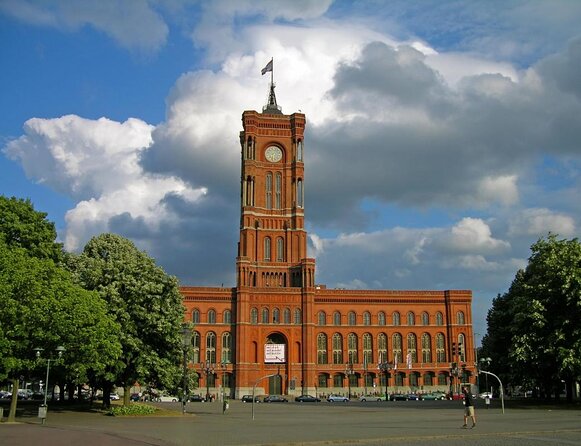
- Several layers of entertainment: Audio sections, actors, costumes, and visual effects work together rather than relying only on a standard spoken lecture.
- Major sights in a short time: The tour covers the Neptune Fountain, Red City Hall, Humboldt Forum, St. Nikolai-Kirche, and Mühlendamm in about 90 minutes.
- A small group limit: No more than 20 people can join, a useful size for a performance-led walk.
- A few thoughtful extras: The experience may include coffee, chocolate, and a schnapps at the end, based on the advertised tour experience.
- Weather matters: Poor weather can lead to a new date or a full refund, and cancellation by you is free up to 24 hours before departure.
Starting beside St. Marienkirche
The meeting point is St. Marienkirche on Karl-Liebknecht-Strasse 8, near Alexanderplatz. This places you in central Berlin, close to several major sights, but you should still allow time to find the precise starting spot. The listed end point is Ephraim’s at Spreeufer 1, also in the 10178 postal area.
The route is offered in English and uses a mobile ticket. The group is capped at 20 people, which is especially useful here because a theatrical walk works best when you can see the performers and hear the audio cues. A smaller group also makes it easier to keep moving through narrow streets without blocking the way.
The tour lasts about one hour and 30 minutes. That is long enough to cover a meaningful slice of central Berlin, but short enough to fit before dinner, after a museum visit, or during a first evening in town. You should think of it as an atmospheric orientation, not a full survey of Berlin.
A few more Berlin tours worth weighing up
- Berlin: Solar Powered Sunset Catamaran Cruise & Audio Guide
★ 4.6 · 1,043 reviews - Berlin: Live-Guided Evening Sightseeing Tour by Open-top Bus
★ 4.1 · 783 reviews - Berlin: Bus Tour by Night with Live Commentary
★ 4.2 · 687 reviews
Neptune, rivers, and Prussian symbolism
One of the first important sights is the Neptune Fountain, built in 1891 and designed by Reinhold Begas. Roman god Neptune sits at the center, surrounded by four female figures representing the main rivers of Prussia at the time: the Elbe, Rhine, Vistula, and Oder.
The figures are easy to remember because each carries or displays different symbols. The Elbe is linked with fruit and ears of corn. The Rhine has a fishnet and grapes. The Vistula is shown with wooden blocks, pointing to forestry. The Oder is associated with goats and animal skins.
This is a good example of what the walk does well. You are not simply told that a fountain is old. You get a quick key to its sculpture, along with a reminder that political borders and regional identities have changed. The Vistula now lies entirely in Poland, while the Oder forms part of the border between Germany and Poland.
At night, the fountain’s sculptural details may not be as easy to inspect as they would be in daylight. That is the trade-off. You gain atmosphere and theatrical framing, but you may want to return during the day if you care about studying every figure.
Red City Hall and the city’s working center
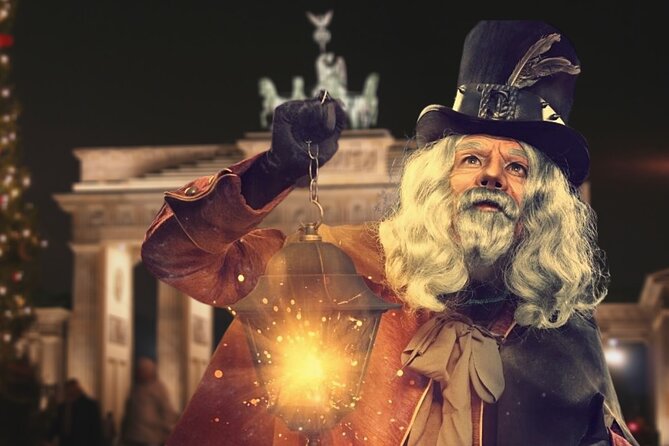
The Rotes Rathaus, or Red City Hall, is one of Berlin’s most recognizable civic buildings. It sits in Mitte on Rathausstrasse near Alexanderplatz and serves as the home of Berlin’s governing mayor and the state government, known as the Senate of Berlin.
Its name comes from the red clinker bricks used on the façade. That simple detail is worth knowing because it gives the building an identity beyond its official role. The tour’s route connects the symbolic and working sides of the city: fountains and churches tell older stories, while the town hall remains tied to Berlin’s current government.
You will see the exterior rather than take part in a formal building visit. That keeps the pace moving and suits the tour’s short format. If you want interiors, political history, or a detailed architectural study, you would need a separate visit.
Spotting the Ampelmännchen
The Ampelmännchen is the little traffic-light man used on pedestrian signals in Germany. Berlin’s version is particularly memorable because the figure wears a hat and comes from the former East German design tradition.
Before reunification in 1990, East and West Germany used different pedestrian figures. West Germany had a more generic human shape, while East Germany used the generally male figure with a hat. The design survived reunification and became a familiar symbol of Berlin.
This stop adds a lighter touch to the route. Not every useful piece of city history involves a palace or a medieval church. The Ampelmännchen connects everyday street life with the political division of Germany, and it gives you something to notice on later walks around town.
The stop is likely brief, so do not expect a museum-style explanation of traffic signals. Its value comes from the context and from learning why a simple crossing symbol has such a strong connection with Berlin’s divided past.
A different side of Berlin on the same trip:
- Berlin: Reichstag, Dome and Government District Guided Tour
★ 4.7 · 18,288 reviews - Berlin: 1-Hour City Tour by Boat with Guaranteed Seating
★ 4.3 · 16,993 reviews - Berlin: Boat Tour Along the River Spree
★ 4.4 · 11,252 reviews - Discover Berlin Half-Day Walking Tour
★ 5.0 · 9,624 reviews
Nikolaiviertel, Berlin’s reconstructed old quarter
The walk then reaches Nikolaiviertel, or Nicholas’ Quarter, about five minutes from Alexanderplatz. This area, together with nearby Cölln, forms the reconstructed historic heart of Berlin. The quarter was founded around 1200 and is one of the few parts of central Berlin where you can get a sense of the city’s medieval beginnings.
The setting is especially suited to a night performance. The area around St. Nikolai-Kirche is bounded by Spandauer Strasse, Rathausstrasse, the Spree, and Mühlendamm. Its restored medieval-style buildings create a more intimate feel than the broad avenues and large government buildings nearby.
Keep the word reconstructed in mind. Much of what you see is restored or recreated rather than untouched medieval fabric. That does not make the quarter uninteresting. It simply means you should appreciate it as a carefully rebuilt version of old Berlin, not as a perfectly preserved medieval village.
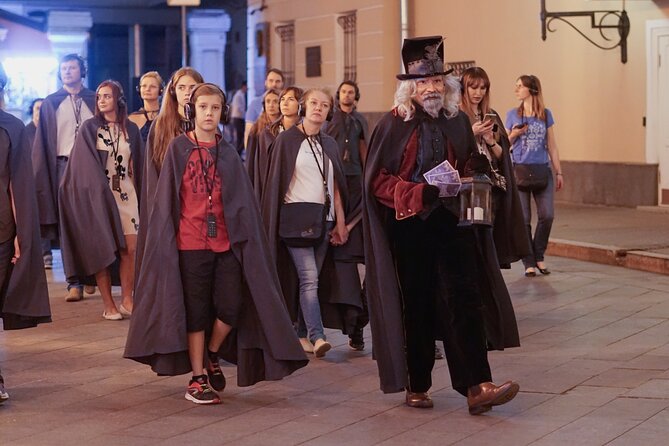
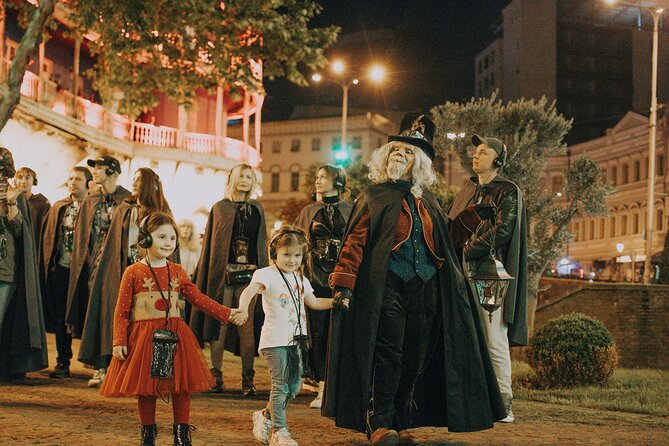
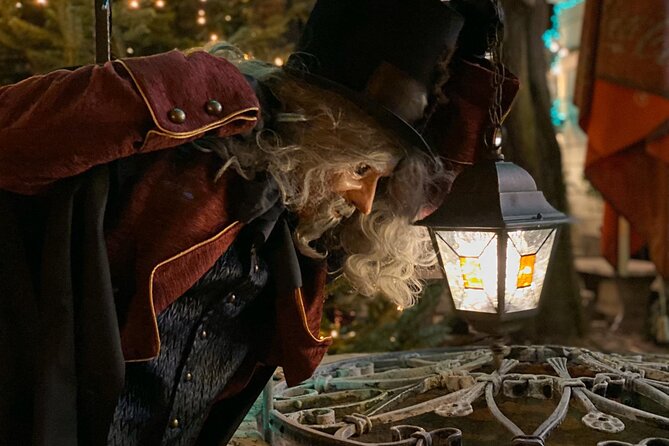
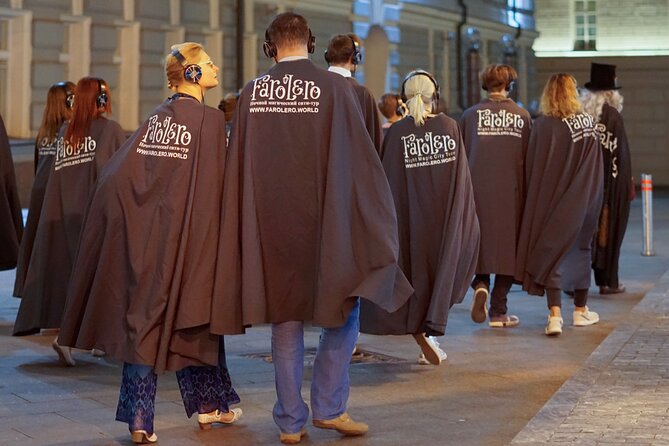
The theatrical parts of the experience are most likely to work here. Costumes, actors, sound, and lighting effects have a natural setting among the lanes and older-looking façades. One especially positive description of the tour notes that the audience may be dressed at the beginning, then guided through corners and lanes where Berlin’s past is brought to life with short performances involving both the team and the group.
St. Nikolai-Kirche and Berlin’s earliest center
St. Nikolai-Kirche is identified as Berlin’s oldest church. Construction began between 1220 and 1230, making it, along with the Church of Our Lady near Alexanderplatz, one of the oldest churches in the city.
The church anchors Nikolaiviertel. Its age helps explain why this small area matters: Berlin was not first defined by the grand avenues, museums, and monuments that many visitors see today. Its early center grew around churches, water, trade routes, and crossings.
The walk gives you the church as part of a larger story rather than as an isolated stop. That is useful if this is your first evening in Berlin because the sequence links the quarter, the church, the Spree, and the old city routes. You leave with a clearer sense of how central Berlin developed.
Again, night has both benefits and limits. The church’s outline and setting can be atmospheric after dark, but architectural details will be harder to inspect. Treat this as a contextual introduction, then return in daylight if the church is high on your list.
Humboldt Forum and a changing Museum Island
The Humboldt Forum brings the route into a very different kind of Berlin. It is a museum of non-European art on Museum Island, named for the Prussian scholars Wilhelm and Alexander von Humboldt.
The building combines three rebuilt Baroque façades from the former Royal Palace with a contemporary exterior facing the Spree. Inside, the design is modern and associated with architect Franco Stella. The result is a building that deliberately places old-looking façades beside modern spaces.
The forum is intended to house non-European collections from the Berlin State Museums, along with temporary exhibitions and public events. It has often been described as a German counterpart to the British Museum, though that comparison is only a quick way to explain its broad purpose.
On this night tour, you should expect an exterior stop and a short explanation, not museum admission or a collection visit. That is still valuable because the building raises questions about reconstruction, imperial history, and how Berlin presents its past. If you want to see the galleries, plan a separate visit during opening hours.
Mühlendamm and the Spree crossing
The final section includes Mühlendamm, or Mill Dam, a major thoroughfare in central Mitte. It runs from the old Cölln and Fischerinsel areas toward Molkenmarkt, crossing the Spree by the Mühlendammbrücke.
The name comes from watermills that once operated here. A causeway was first laid out around 1200, and this crossing helped form the center of the late medieval city. That makes Mühlendamm more than a modern road. It points to the practical foundations of Berlin: water, mills, movement, and trade.
Ending near the Spree gives the tour a natural finish. You have moved from civic buildings and sculpture to an old church quarter, then back to the river routes that helped the city grow. The endpoint at Ephraim’s, Spreeufer 1, keeps you close to central Berlin, though the activity does not include onward transportation.
How the theatrical format changes the experience
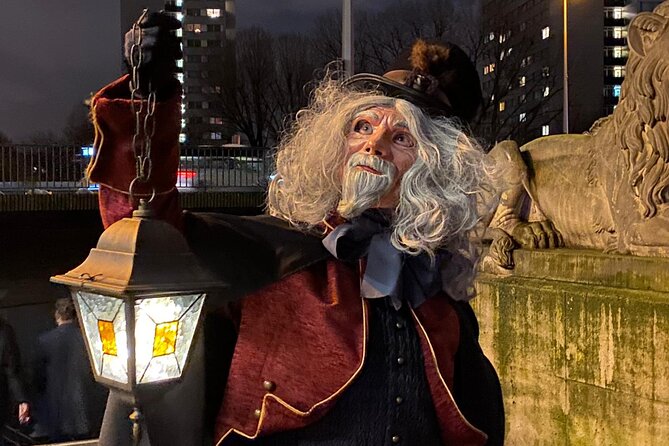
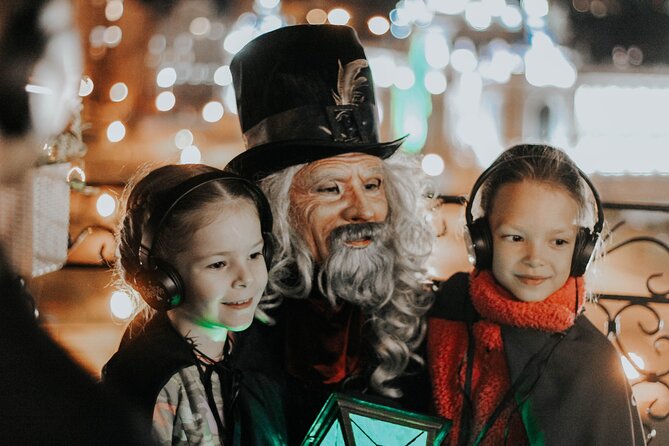
This is not simply a guide walking ahead and listing dates. The experience combines an audio-guide format with actors and visual effects. Costumes may be part of the welcome, and short interactive sections can involve the group.
That approach has clear strengths. Sound and performance can make a historical point easier to remember, especially for children, first-time visitors, and anyone who finds traditional monument tours dry. The audio layer also helps reduce the effect of traffic noise and other distractions, at least when the technology and surroundings cooperate.
There is a possible downside. If you prefer a flexible walk where you can stop for photographs, ask many detailed questions, or linger at each monument, the staged format may feel more controlled. The route has to keep its timing, and the group needs to stay together for the effects and performances to work.
The tone appears warm and playful rather than academic. That may include shared activities, small jokes, and brief audience participation. You should book it for a memorable introduction to Berlin, not as a specialist course in architecture or political history.
Price, group size, and overall value
At $46.99 per person, this is not the cheapest way to walk around central Berlin. You can see several of these sights from the street at no cost. The price makes more sense if you value the performance elements, the prepared route, the audio design, and the effort involved in staging a small-group evening experience.
The maximum group size of 20 helps support that value. A group this size is still large enough to create energy during interactive scenes, but smaller than a typical mass-market city walk. You are paying partly for the presentation, not only for the distance covered.
The tour has a 4.7 rating from 25 ratings, with 92 percent recommending it. The strongest praise focuses on the interactive format, the friendly welcome, the way actors and audio work together, and the sense of seeing Berlin through its lanes rather than only from major roads. One particularly appealing detail is the possibility of coffee, chocolate, and a schnapps at the end.
There is also a serious warning. One booking ended with the guide not appearing at the stated time and place, with cold weather and icy pavement making a second attempt unattractive. That appears to be an isolated but important service failure. Confirm your plans, arrive at the correct point, and keep the provider’s contact details available.
Who should book this night walk?
I would recommend it most strongly to:
- First-time visitors who want a quick orientation to Berlin’s oldest central areas.
- Families and mixed-age groups who may respond better to actors and effects than to a long lecture.
- Couples and casual culture seekers looking for something atmospheric after museums close.
- People with limited time who want several central landmarks in 90 minutes.
- Visitors staying near Alexanderplatz or Mitte who can reach the start and continue on foot afterward.
You may want a different format if your priorities are museum interiors, detailed architectural analysis, or a long historical discussion. The tour is also less appealing if the forecast is cold, wet, or icy, since the entire experience takes place outdoors.
Most people can participate, and the tour is offered in English. The supplied details do not identify individual guides by name, so you should not book expecting a particular performer. The atmosphere comes from the team format rather than a named personality.
Booking and cancellation tips
Confirmation normally arrives at booking. If you book within two days of departure, confirmation may take up to 48 hours and remains subject to availability. This matters if you are arranging the tour at the last minute.
You can cancel for a full refund up to 24 hours before the start time. Changes or cancellations inside that 24-hour window are not accepted for a refund. The cut-off follows Berlin local time.
The activity requires suitable weather and a minimum number of participants. If poor weather or low enrollment causes cancellation, you should be offered another date or experience, or a full refund. Since the route is outdoors, check the forecast before committing to a late winter evening.
Should you book the Night Magic City Tour?
Book it if you want a short, playful introduction to old Berlin and like the idea of history delivered through actors, sound, costumes, and visual effects. The route is well chosen: Neptune and Red City Hall show Berlin’s public face, Nikolaiviertel and St. Nikolai-Kirche provide the old-town setting, and Humboldt Forum and Mühlendamm connect the past with the modern city.
At $46.99, the value depends on the format. You are not paying for entry to a museum or a long list of included transport. You are paying for a staged evening walk with a small group and a prepared presentation. For that kind of experience, the price is reasonable if the theatrical side appeals to you.
I would skip it if you need guaranteed indoor shelter, want extended time at each monument, or prefer a quiet, question-led walk. For everyone else, this is a sensible way to get your bearings fast while seeing a less formal side of Berlin’s center.
FAQ
How long does the Night Magic City Tour last?
The tour lasts approximately one hour and 30 minutes.
Where does the tour begin?
It begins at St. Marienkirche, Karl-Liebknecht-Strasse 8, 10178 Berlin, Germany.
Where does the tour end?
The tour ends at Ephraim’s, Spreeufer 1, 10178 Berlin, Germany.
What language is the tour offered in?
The experience is offered in English.
What sights are included?
The route includes the Neptune Fountain, Rotes Rathaus, the Ampelmännchen, Nikolaiviertel, St. Nikolai-Kirche, Humboldt Forum, and Mühlendamm.
How many people can join?
The activity has a maximum of 20 participants.
Is a mobile ticket available?
Yes. The experience includes a mobile ticket.
Can most people participate?
Yes. The additional information states that most participants can take part.
Can I cancel for a full refund?
Yes. You can cancel at least 24 hours before the start time for a full refund. Cancellations or changes made less than 24 hours before the start are not accepted for a refund.
What happens if the tour is canceled because of weather or low enrollment?
You will be offered a different date or experience, or a full refund.
Just added around Berlin
- Berlin Highlights in One Day★ 5.0 · 3 reviews
- Private Berlin One Day Tour with a Local: See the City Unscripted★ 3.5 · 3 reviews
- Individual city tour Berlin for max. 8 persons★ 5.0 · 3 reviews
- Transfer from Berlin Schönefeld Airport (SXF) to Berlin city Hotels – ROUND TRIP★ 4.0 · 3 reviews
- Berlin: Museum Island Tour★ 5.0 · 3 reviews
- Private Analogue Photography Experience in Berlin★ 5.0 · 3 reviews
- Berlin: Local Food Tour in Secrets Hidden Gems★ 4.0 · 3 reviews
- Berlin & The Third Reich Private Guided Tour★ 5.0 · 3 reviews
City Tours, compared.
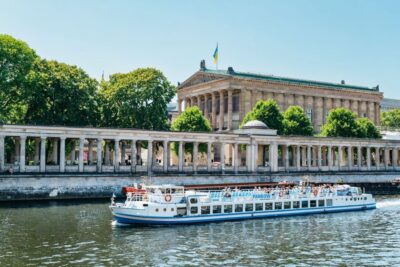
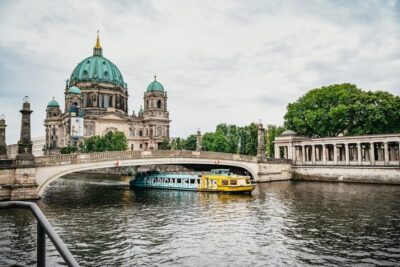
1-Hour City Tour by Boat with Guaranteed Seating
Read our review →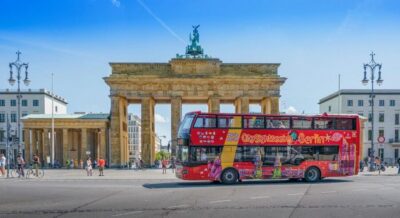
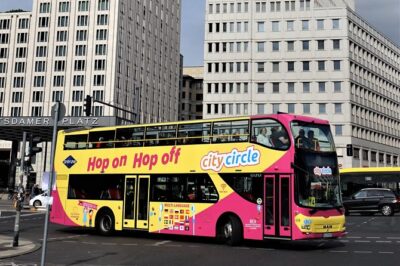
Berlin City Hop-on Hop-off Tour with Optional Cruise
Read our review →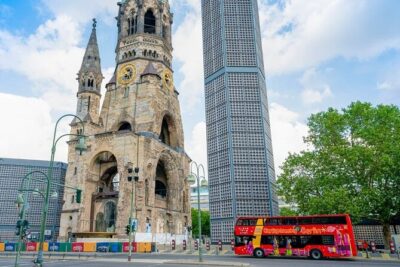

Browse the lists this tour appears in