Review · GUIDED
Berlin: 4-Hour Guided Highlights Tour in Spanish
Berlin’s story comes into focus on this four-hour Spanish walking tour, which links grand Prussian buildings, Nazi-era sites, Cold War landmarks, and the modern city in one long walk. You begin at Alexanderplatz and finish at the Brandenburg Gate, so the route works well as a first look at central Berlin.
I like two things here: the guide explains how ordinary people lived on both sides of the Wall, and the route covers famous sights without losing the human story. Guides such as Evelyn, Celia, and Constantino have been singled out for clear explanations, patience, and thoughtful discussion. The main drawback is simple: four hours on foot can feel long, especially in winter, rain, or snow.
In This Review
- Key points to know before you book
- Starting beside the TV Tower at Alexanderplatz
- Berlin’s beginnings in the San Nicolas neighborhood
- Museum Island and the Berliner Dom
- Unter den Linden and Berlin’s royal avenue
- Gendarmenmarkt and the value of a proper pause
- Nazi Berlin at the Gestapo headquarters remains
- The Holocaust memorial and a quiet moment
- How the Berlin Wall shaped everyday life
- Potsdamer Platz and the rebuilt modern city
- Finishing at the Brandenburg Gate
- What the $29 price really gives you
- Who will get the most from this walk
- Practical details that affect your day
- Should you book the Berlin Spanish walking tour?
- FAQ
- What language is the tour offered in?
- How long does the tour last?
- Where does the tour begin?
- What time does the tour start?
- Where does the tour finish?
- Which major sights are included?
- Is the tour accessible for wheelchair users?
- Can I book a private group?
- Can I cancel for a refund?
Key points to know before you book
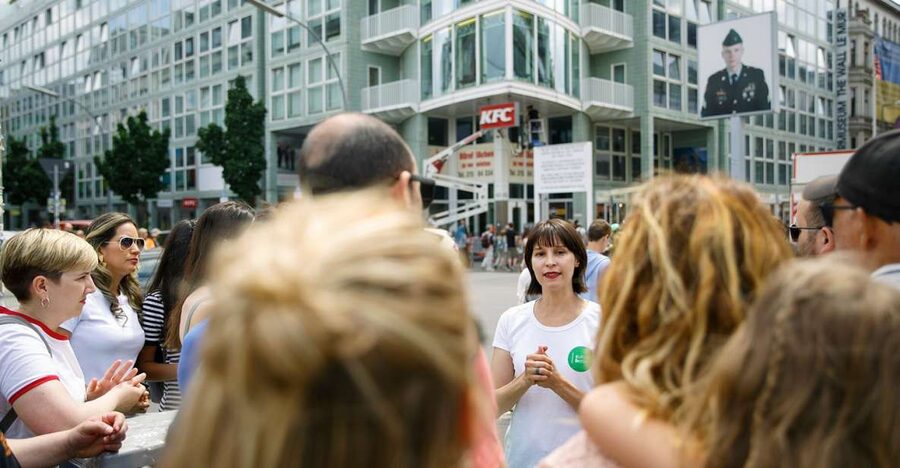
- A Spanish-only tour from Alexanderplatz to the Brandenburg Gate: You cover a broad stretch of central Berlin without changing transport.
- Cold War history is given a human face: Learn why the Wall was built, how East Germans tried to cross it, and what daily life felt like in a divided city.
- Major sights arrive one after another: Museum Island, Berliner Dom, Gendarmenmarkt, the Holocaust memorial, Potsdamer Platz, and the Brandenburg Gate all fit into the route.
- A good first-day orientation: The walk connects Berlin’s older roots with its Nazi, divided, and modern chapters.
- Guides bring different strengths: Evelyn has been praised for patience with slower walkers, while Celia is noted for encouraging debate and reflection.
- Good flexibility for uncertain plans: You can cancel up to 24 hours before the start for a full refund, and reserve now while paying later.
Starting beside the TV Tower at Alexanderplatz
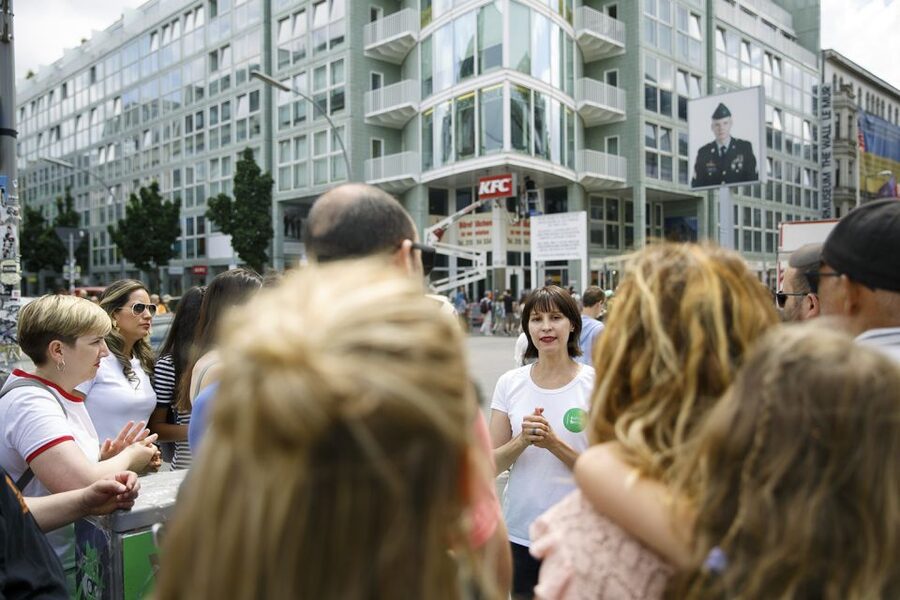
Your meeting point is easy to identify once you know what to look for: a green flag marked tours en español, beside the only entrance to the TV Tower. It is between the Fernsehturm and Alexanderplatz train station, near Espresso House.
The tour begins daily at 10:00, rain or shine. That early start is useful because you get your bearings before spending the rest of the day exploring Berlin on your own. Alexanderplatz also gives the guide a natural place to explain how Berlin grew from a medieval settlement into a major European capital.
I would arrive a little early. Alexanderplatz is a large public square, and the train station has several exits and busy foot traffic. Look for the green flag rather than relying only on a street address.
This is a walking tour, not a coach ride. Wear comfortable clothes and shoes, and bring clothing suited to the forecast. A February walk in snow can still be rewarding, but you will appreciate warm layers. There is an approximate half-hour pause during the route for coffee, a bathroom break, and a rest, according to the tour details provided.
A few more Berlin tours worth weighing up
- Berlin: Reichstag, Dome and Government District Guided Tour
★ 4.7 · 18,288 reviews - Berlin: Government District around the Reichstag Guided Tour
★ 4.7 · 8,447 reviews - Berlin: Hidden Backyards Guided Walking Tour
★ 4.8 · 5,360 reviews
Berlin’s beginnings in the San Nicolas neighborhood
The first historical stop is the San Nicolas neighborhood, where the guide introduces Berlin’s origins. This gives the rest of the walk a useful starting point. Instead of treating Berlin as only a city of war and division, you begin with its older identity.
That order matters. Berlin can feel like a collection of grand avenues, memorials, rebuilt blocks, and exposed scars. The opening explanation helps you see the city as a place that existed long before Hitler, the Wall, or the modern skyline.
You should expect storytelling rather than formal museum visits. The tour focuses on outdoor sights and explanations, so it is a good choice if you want context before choosing which museums to enter later.
Museum Island and the Berliner Dom
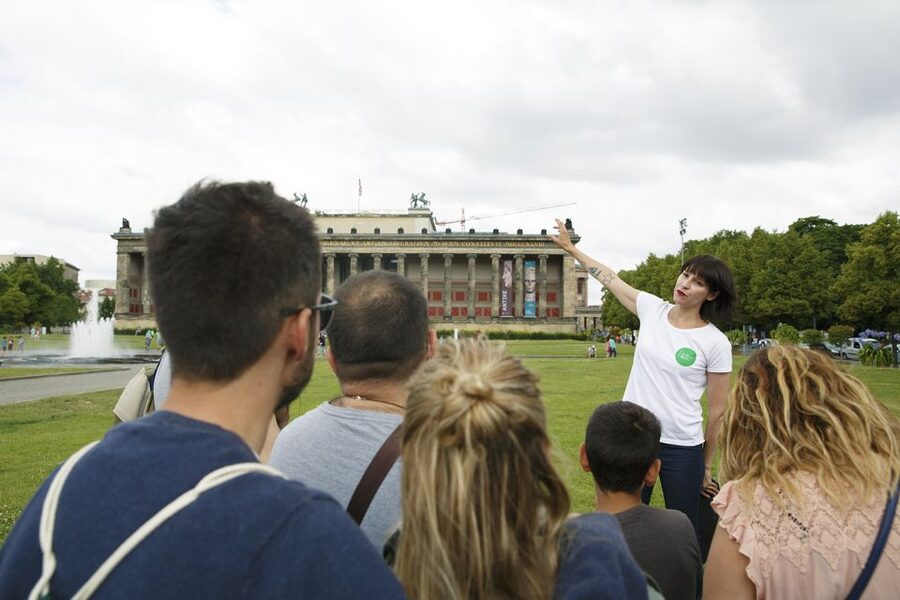
From there, the route crosses Museum Island, a UNESCO World Heritage Site. This is one of Berlin’s most impressive concentrations of museums, and even a walk through the area gives you a clear sense of the city’s cultural ambitions.
The Berliner Dom is the visual centerpiece. Its large dome and formal setting make an excellent photo stop, but the guide’s explanation adds more value than a quick look alone. You learn how the buildings fit into Berlin’s royal and intellectual center.
I like this section because it gives you time to notice the contrast between Berlin’s monumental architecture and the events that later damaged or reshaped it. The tour does not appear to include museum entry, so do not expect to tour the collections inside. Instead, use this walk to mark down places you may wish to revisit.
Unter den Linden and Berlin’s royal avenue
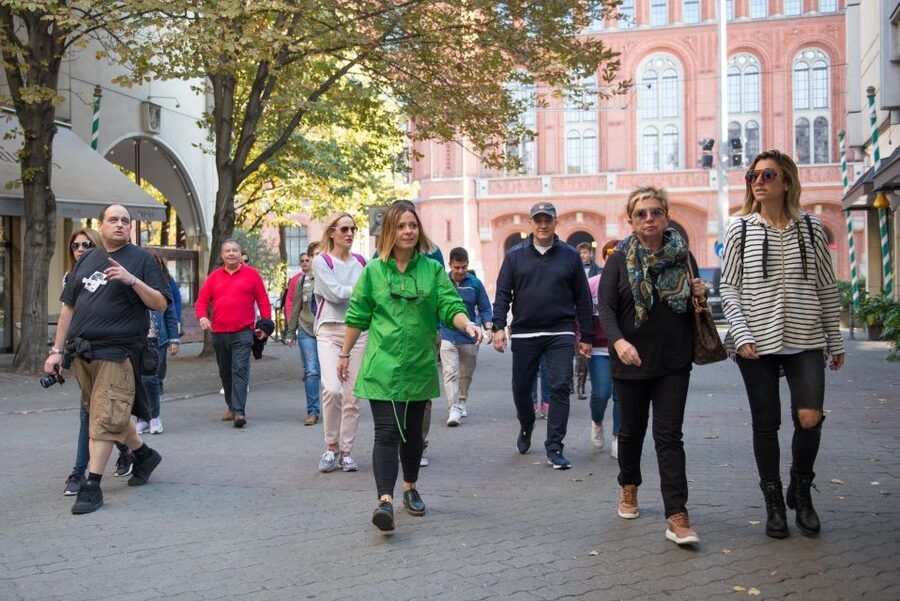
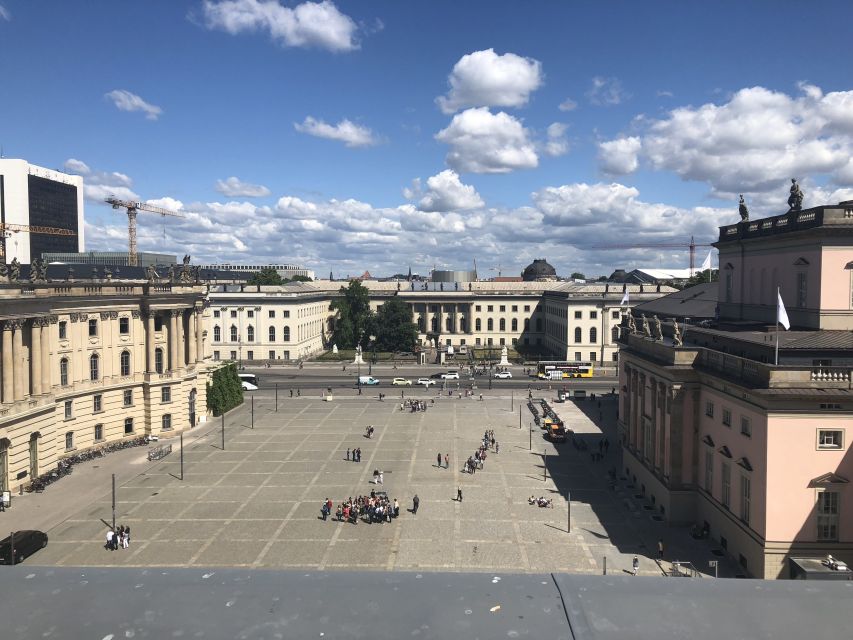
The tour continues along Unter den Linden, the grand avenue once known as Kaisers Avenue. Along the way, you pass Humboldt University, the Royal Library, and the State Opera.
This stretch is especially helpful for understanding Berlin’s old center. The buildings reflect education, royal power, books, music, and public life, all arranged along one important route. A guide can point out how these institutions fit together, rather than leaving you to see only handsome façades.
The walk also gives you a sense of scale. Berlin’s central sights are close enough to connect on foot, but the distance adds up. If your pace is slow, you should be prepared for a full four hours rather than treating this as a brief stroll.
A different side of Berlin on the same trip:
- Berlin: 1-Hour City Tour by Boat with Guaranteed Seating
★ 4.3 · 16,993 reviews - Berlin: Boat Tour Along the River Spree
★ 4.4 · 11,252 reviews - Discover Berlin Half-Day Walking Tour
★ 5.0 · 9,624 reviews - Berlin: Hop-on Hop-off Bus Tour with Live Commentary
★ 4.3 · 8,579 reviews
Gendarmenmarkt and the value of a proper pause
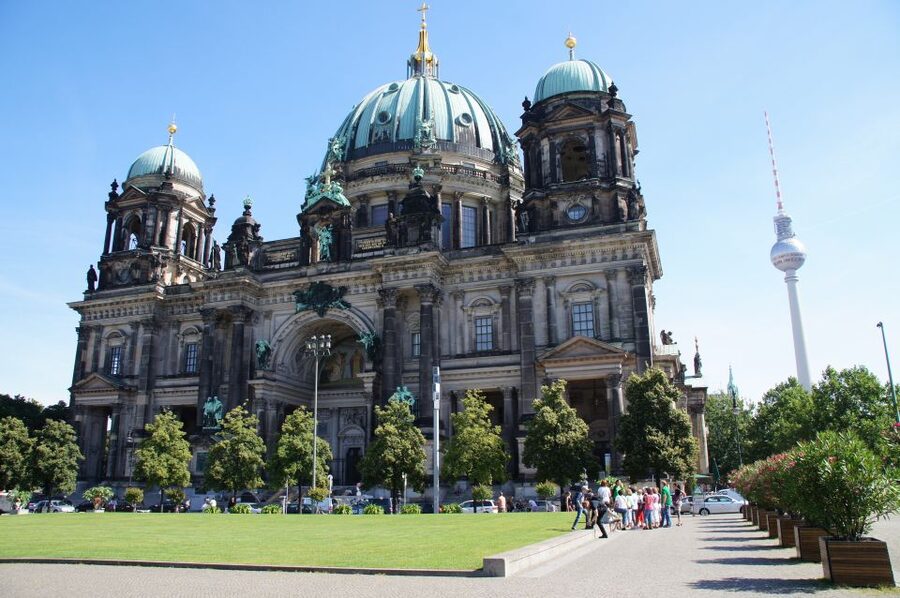
Gendarmenmarkt is one of the prettiest squares on the route and a planned photo stop. Its open space and formal buildings offer a welcome change after the long avenue.
This is a place where the guide can help you read the square instead of simply snapping a picture. You get a visual break from the heavier subjects that come later, while still seeing how Berlin’s public spaces were designed to project order and status.
A photo stop is not the same as free time for a long visit. If you want detailed interior visits or extended photography, you will need to return independently. The tour’s strength is its broad story, not lengthy stops at every landmark.
Nazi Berlin at the Gestapo headquarters remains
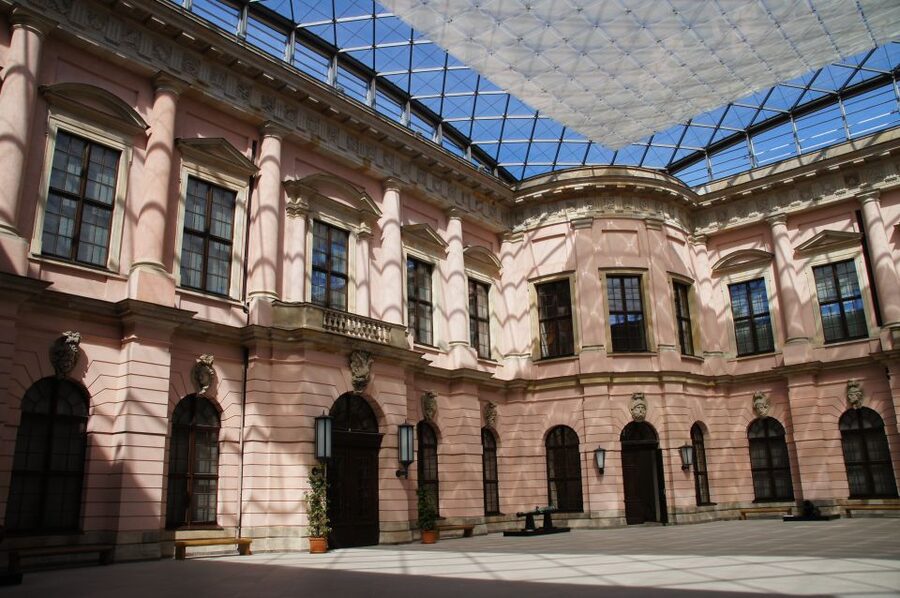
The mood changes sharply when the group reaches the remains of the Gestapo Headquarters. Here, the guide explains Hitler’s rise to power and the machinery of Nazi rule.
This part of the route matters because it places political history in a real location. You are not hearing about events as distant dates. You are seeing the physical remains connected with one of the most feared institutions of the period.
The stop is not presented as a simple list of crimes or leaders. The strongest guides connect the political changes to the city and to the people who lived through them. Celia, one of the named guides, has been praised for making room for debate and human reflection, which suits this serious section of the tour.
Allow the subject some attention. This is not a light sightseeing walk, and the route asks you to move from Berlin’s grand architecture into the evidence of dictatorship and persecution.
The Holocaust memorial and a quiet moment
The Memorial to the Murdered Jews of Europe provides another major stop. The field of concrete slabs is difficult to understand from a single angle, and walking beside it gives you time to consider the memorial’s scale and uneasy design.
The guide’s role here is to provide historical context and encourage respectful attention. You will want to avoid treating the site as a quick photo backdrop. The memorial is close to other central landmarks, but its emotional weight makes it one of the places where the tour slows down in spirit, even if the walking continues.
This section is valuable for first-time visitors because it helps you connect Berlin’s present-day public spaces with the choices and consequences of its past. It also prepares you for the later discussion of the Wall, since the city’s division grew from the destruction and political collapse that followed the Nazi era.
How the Berlin Wall shaped everyday life
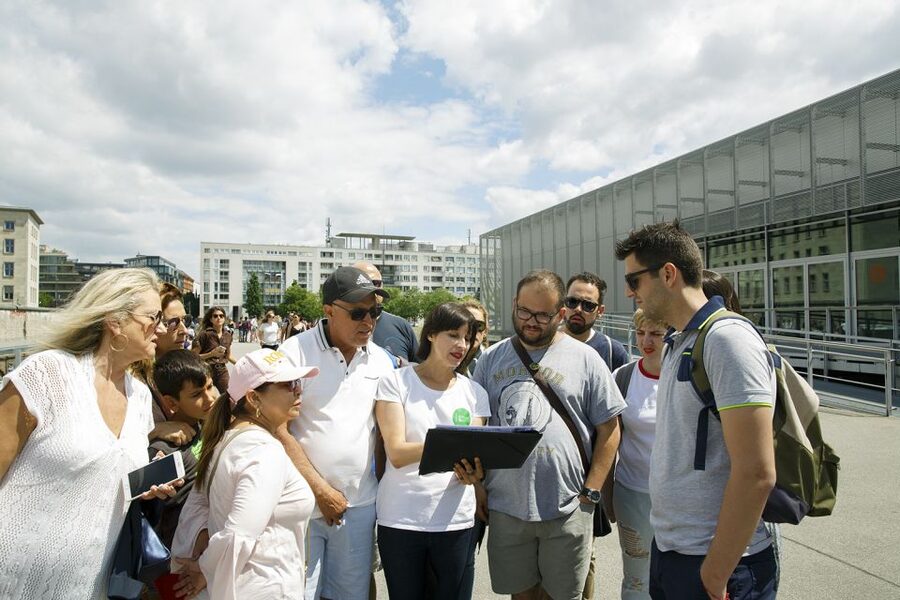
The Cold War portion is the heart of this tour. You learn why the Berlin Wall was constructed, how it fell, and how people lived with the barrier dividing East and West Berlin.
The most useful detail is the focus on daily life. The story is not limited to dates and political speeches. You hear about families, neighborhoods, restrictions, and the East Germans who risked their lives trying to reach West Berlin.
That human scale makes the subject easier to grasp. A visitor can understand that the Wall was not only a concrete structure. It cut through streets, separated people, and turned ordinary movement into a dangerous political act.
The guide also explains Berlin before and after the Wall fell. That comparison helps you notice why parts of the city look newly rebuilt, why open areas can feel unusually large, and why Berlin’s modern center does not resemble a single continuous historic district.
I would pay close attention during this portion, even if you already know the basic story. The best explanations connect the Wall to local routines, not only to famous escape attempts. Celia’s discussion style, with questions and reflection, sounds particularly suited to this topic. Evelyn has also been praised for explaining history clearly and patiently, including for groups with slower walkers.
Potsdamer Platz and the rebuilt modern city
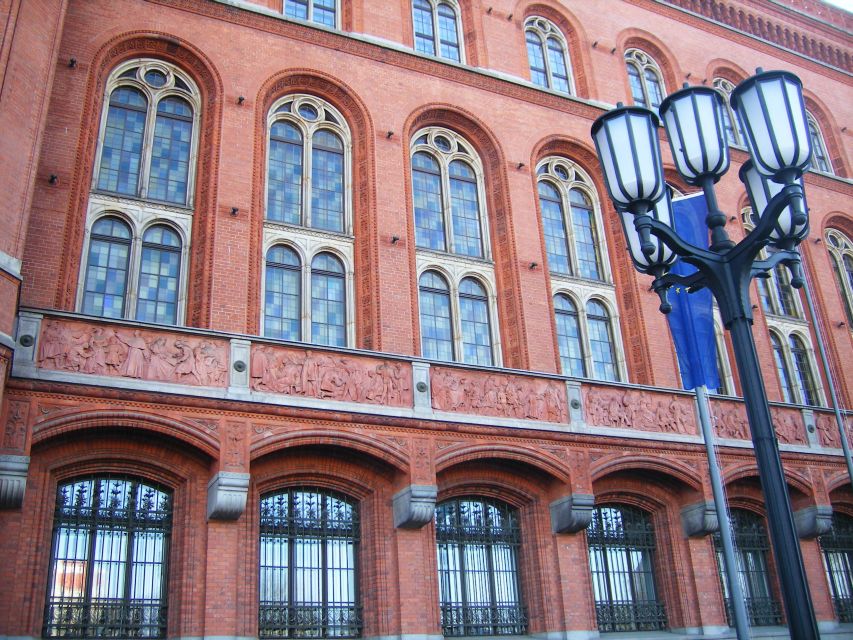
Potsdamer Platz offers a sharp visual change. After historic avenues, royal buildings, memorials, and Cold War division, you see a modern part of Berlin shaped by reconstruction and new architecture.
The square is useful as a final chapter in the city’s story. It shows how Berlin moved from destruction and separation toward a new urban center. The contrast is the point: Berlin does not hide its different eras behind one consistent style.
I like having Potsdamer Platz near the end because it gives you a forward-looking pause before the final landmark. It also helps explain why Berlin can feel both historic and unfinished. The route presents the city as something still being reshaped.
Finishing at the Brandenburg Gate
The walk ends at the Brandenburg Gate, Berlin’s best-known symbol. Ending here gives the tour a satisfying geographical and historical finish. You begin at Alexanderplatz, where the city’s eastern side and modern public life are prominent, and end at the monument long associated with Berlin’s political identity.
The gate has carried several meanings over time. On this tour, it follows the explanations of Prussian Berlin, Nazi power, divided Berlin, and reunification. That sequence makes the landmark more than a stop for a photograph.
It is also a practical ending point. From here, you can continue exploring central Berlin, visit nearby attractions, or stop for food. One guide’s recommendations led a group to Rausch for a chocolate fondue, so you may want to ask your guide for current suggestions at the end.
What the $29 price really gives you
At $29 per person, the tour offers strong value if you want a broad introduction to Berlin with a Spanish-speaking guide. Four hours of guided walking across this many major sites would be difficult to organize efficiently on your own, especially if you are still learning the city’s layout.
The value comes mainly from the connections between places. You are not paying for entry into the Berliner Dom, Museum Island museums, or other indoor attractions. You are paying for a guide who links the sights into one understandable story.
That distinction matters. If your goal is to spend hours inside museums, this is not the right product by itself. If your goal is to understand where Berlin’s main sights are and why they matter, the price is modest for a half-day introduction.
A private group is available if you want a more personal format. Hotel-lobby pickup can also be requested as an option. The standard meeting point, however, is at Alexanderplatz beside the TV Tower.
Who will get the most from this walk
I would choose this tour if you are visiting Berlin for the first time, prefer Spanish, and want history explained in a clear, human way. It also suits families and mixed-age groups because the route covers famous sights while guides such as Evelyn are noted for patience with slower walkers.
It is useful for returning visitors too. One participant who had lived in Berlin before still learned new things, which suggests the guide’s local explanations can add value beyond a basic introduction.
The tour is wheelchair accessible, but you should still consider the length and the outdoor setting. Four hours on foot, in changing weather, requires stamina and suitable clothing. Since the tour runs in all weather, rain and snow are not reasons to expect a shorter route.
It is not ideal if you want a relaxed café crawl, a museum visit, or a short sightseeing loop. The route is substantial, and the historical subjects become serious. You should also be comfortable listening in Spanish for the entire experience, since no other tour language is offered.
Practical details that affect your day
The tour starts at 10:00 every day in front of the TV Tower. Check the available date and starting time when booking, and allow extra time to locate the green Spanish-tour flag at Alexanderplatz.
Bring comfortable clothes, with enough protection for the forecast. A half-day walking tour in Berlin can feel quite different in summer sunshine than in February snow. The experience runs rain or shine.
You can cancel up to 24 hours in advance for a full refund. The reserve-now, pay-later option is useful if your schedule is still changing. A private group and optional hotel pickup are also available, but you should confirm those choices when you reserve.
The tour has a 4.8 rating from 164 reviews, and the most consistent praise centers on clear explanations, professional presentation, patience, and the ability to make difficult history feel approachable. Evelyn, Celia, and Constantino are among the guides named in the available feedback.
Should you book the Berlin Spanish walking tour?
Book it if you want a well-priced first introduction to Berlin, especially if Spanish is your preferred language. The route covers an unusually broad range of landmarks, from the San Nicolas neighborhood and Museum Island to Nazi-era sites, the Wall story, Potsdamer Platz, and the Brandenburg Gate.
I would be especially likely to recommend it for first-time visitors, families, and anyone who wants the city’s history explained rather than simply photographed. Just plan for four hours outside, wear good shoes, and remember that the tour provides exterior sightseeing rather than museum entry.
Skip it if you want a short, unhurried walk or a tour in English. For the right audience, though, $29 buys a useful map of Berlin, a clear historical framework, and several ideas for what to explore next.
FAQ
What language is the tour offered in?
The tour is offered only in Spanish, with a live Spanish-speaking guide.
How long does the tour last?
The walking tour lasts four hours.
Where does the tour begin?
It begins beside the TV Tower at Alexanderplatz, between the Fernsehturm and Alexanderplatz train station, near Espresso House. Look for a green flag marked tours en español.
What time does the tour start?
Tours run every day beginning at 10:00. Check availability for the exact starting time on your chosen date.
Where does the tour finish?
The tour ends at the Brandenburg Gate.
Which major sights are included?
The route includes the San Nicolas neighborhood, Museum Island, the Berliner Dom, Unter den Linden, Humboldt University, the Royal Library, State Opera, Gendarmenmarkt, the Gestapo Headquarters remains, the Memorial to the Murdered Jews of Europe, Potsdamer Platz, and the Brandenburg Gate.
Is the tour accessible for wheelchair users?
Yes, the activity is listed as wheelchair accessible.
Can I book a private group?
Yes, a private group option is available.
Can I cancel for a refund?
Yes. You can cancel up to 24 hours in advance for a full refund. A reserve-now, pay-later option is also available.
Just added around Berlin
- Berlin Highlights in One Day★ 5.0 · 3 reviews
- Private Berlin One Day Tour with a Local: See the City Unscripted★ 3.5 · 3 reviews
- Individual city tour Berlin for max. 8 persons★ 5.0 · 3 reviews
- Transfer from Berlin Schönefeld Airport (SXF) to Berlin city Hotels – ROUND TRIP★ 4.0 · 3 reviews
- Berlin: Museum Island Tour★ 5.0 · 3 reviews
- Private Analogue Photography Experience in Berlin★ 5.0 · 3 reviews
- Berlin: Local Food Tour in Secrets Hidden Gems★ 4.0 · 3 reviews
- Berlin & The Third Reich Private Guided Tour★ 5.0 · 3 reviews
Guided, compared.
Reichstag, Dome and Government District Guided Tour
Read our review →

Sights and Highlights Bike Tour with a Local Guide
Read our review →
Solar Powered Sunset Catamaran Cruise & Audio Guide
Read our review →