
Review · CITY TOURS
Berlin: City Center Walking Tour
Berlin’s center makes the most sense on foot, where old royal squares, wartime scars, and modern city life sit within a few blocks. This three-hour walk from Alexanderplatz to Brandenburg Gate links the essential sights in a clear route, rather than leaving you to piece them together on your own.
I like the small group limit of 12 people and the easy meeting point beside the World Clock. I also like the built-in coffee break at Gendarmenmarkt. The main consideration is language: the guide speaks German, and the minimum group requirement is described differently in the booking details, so confirm the current rule before you reserve.
In This Review
- Key points at a glance
- Starting beside the World Clock at Alexanderplatz
- Nikolaiviertel and the older Berlin beside the Spree
- Crossing Schlossplatz toward Berlin Cathedral
- Unter den Linden, Berlin’s grand central avenue
- Bebelplatz and the Prinzessinnenpalais gardens
- A coffee break at Gendarmenmarkt
- The Holocaust Memorial and Brandenburg Gate
- Group size, weather, and what to bring
- Is $24 a fair price for three hours?
- Who should book this Berlin walking tour?
- Should you book it?
- FAQ
- Where does the tour start?
- Where does the tour end?
- How early should I arrive?
- How will I identify the guide?
- How long does the walking tour last?
- What language is the tour conducted in?
- What sights are included?
- Is food or coffee included in the price?
- Does the tour run when it rains?
- Is hotel pickup included?
Key points at a glance

- Start at Alexanderplatz: Meet beside the World Clock, one minute from the S-Bahn and U-Bahn station.
- See Berlin’s changing face: The route moves from the socialist-era Alexanderplatz to royal squares, museums, memorials, and the Brandenburg Gate.
- Walk historic Unter den Linden: Berlin’s best-known boulevard connects several major sights in one steady stretch.
- Pause at Gendarmenmarkt: The coffee break gives your feet a rest and adds time for the square’s grand architecture.
- Keep the group personal: The stated maximum is 12 people, though the tour requires a minimum number to operate.
- Plan for any weather: The walk runs in rain, with ponchos supplied when needed.
Starting beside the World Clock at Alexanderplatz
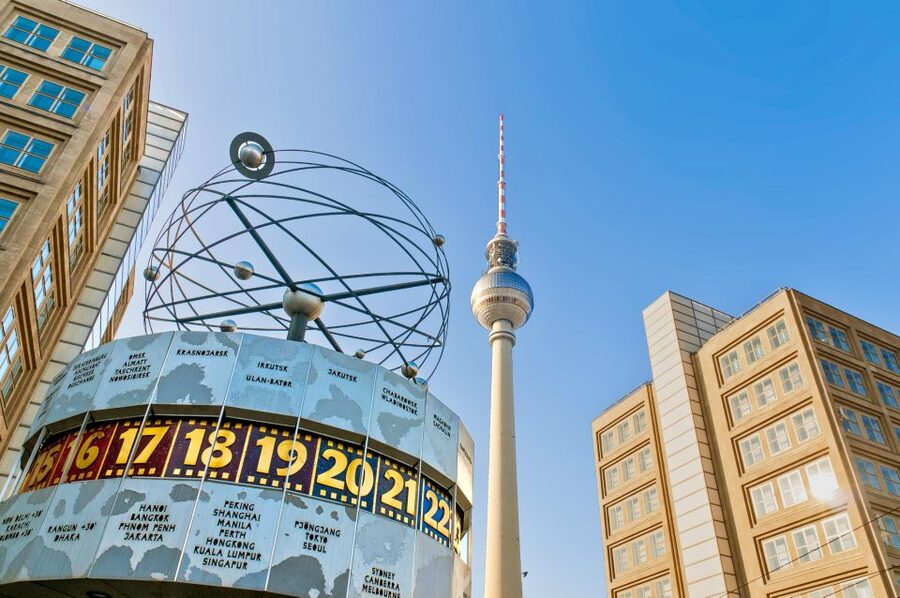
Your meeting point is the World Clock on Alexanderplatz, an easy one-minute walk from the Alexanderplatz S-Bahn and U-Bahn station. Arrive 15 minutes early and look for a guide carrying a sign with the local partner’s logo. This is useful in a large open square where several tour groups may gather.
Alexanderplatz is a fitting place to begin. It is one of Berlin’s main meeting places, but it also gives you a quick lesson in the city’s postwar identity. The broad open space, the World Clock, and the tall Fernsehturm reflect East Berlin’s former socialist planning. The TV Tower still dominates the view, rising above the city like a giant needle.
Your guide can point out the Red Town Hall as well. Its red-brick exterior gives it a strong civic presence, and the contrast between the historic-looking building, the modern tower, and the open square helps you read Berlin at a glance. You are not simply looking at separate sights. You are seeing several eras placed side by side.
The square itself is not one of Berlin’s prettiest spaces. Expect broad paving, traffic, shops, and a steady flow of people. That is part of its value. Alexanderplatz shows the practical, working side of central Berlin before the route moves toward its more formal streets and monuments.
More walking tours in Berlin:
- Discover Berlin Half-Day Walking Tour
★ 5.0 · 9,624 reviews - Berlin: Third Reich and Cold War 2 Hour Walking Tour
★ 4.9 · 6,830 reviews - Berlin: Discover Berlin Walking Tour
★ 4.9 · 5,998 reviews
Nikolaiviertel and the older Berlin beside the Spree
From Alexanderplatz, the walk continues into Nikolaiviertel. This area offers a more intimate change of pace, with narrower streets and a stronger sense of old Berlin than you find on the open square.
The name refers to the quarter around St. Nicholas Church, and the area connects to Berlin’s early urban story. It is worth paying attention here because the city center is not only a parade of monumental buildings. Small lanes and compact blocks help you picture how different the medieval core was from the broad avenues created in later centuries.
Do not expect an untouched old town. Much of Berlin was destroyed during the Second World War, and central districts were rebuilt in different periods and styles. Nikolaiviertel reflects that complicated process. That makes a guide especially useful, since the visual clues alone do not always explain what is original, reconstructed, or shaped by later planning.
This is one reason the tour works better than a simple checklist walk. You move from a large modern square into a smaller historic quarter, then onward to the royal center. The changes are close enough together to feel connected, yet different enough to keep the three hours moving.
Crossing Schlossplatz toward Berlin Cathedral
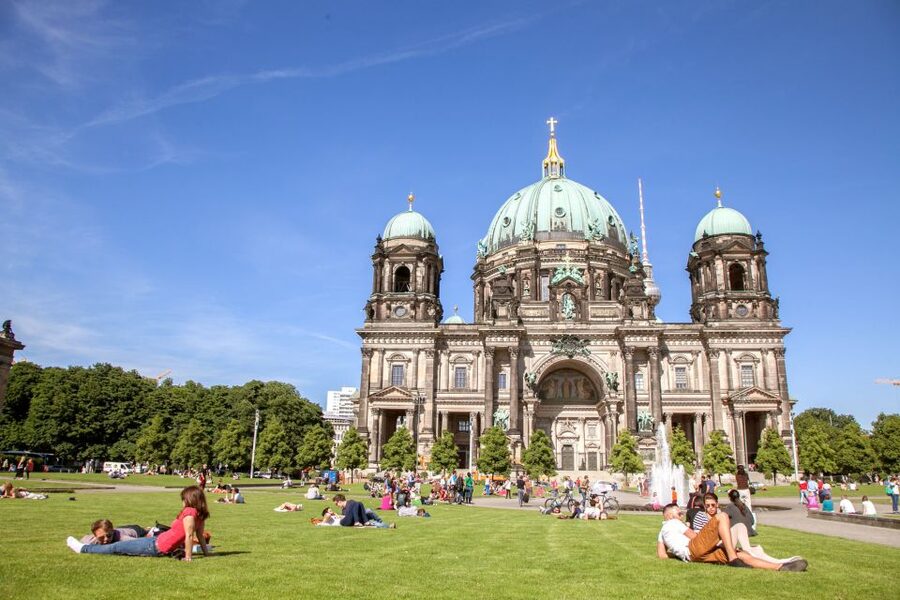
The route then crosses Schlossplatz, one of the key open spaces in central Berlin. The square sits at the center of the old royal district and leads toward Berlin Cathedral, one of the city’s most recognizable buildings.
From here, you begin to see how much of Berlin’s ceremonial center was shaped by rulers, state power, and grand public design. The scale is impressive, but the area also carries a complicated past. Buildings and public spaces have been altered, removed, rebuilt, and reinterpreted over time.
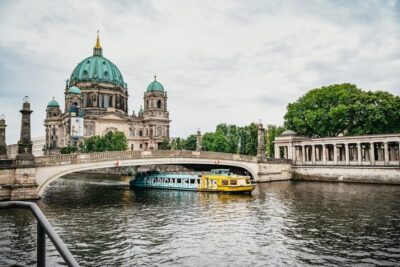
Berlin Cathedral gives the route a strong visual landmark. Its large dome and ornate exterior are hard to miss, and the building anchors the view as you cross the square. The tour focuses on seeing the cathedral from the outside rather than entering it, so you should not book this walk expecting an interior visit or a climb to the dome.
That limitation is also practical. By keeping the tour outdoors, the guide can cover more of the historic center in three hours. If the cathedral interior is high on your list, plan a separate visit before or after the walk.
Unter den Linden, Berlin’s grand central avenue
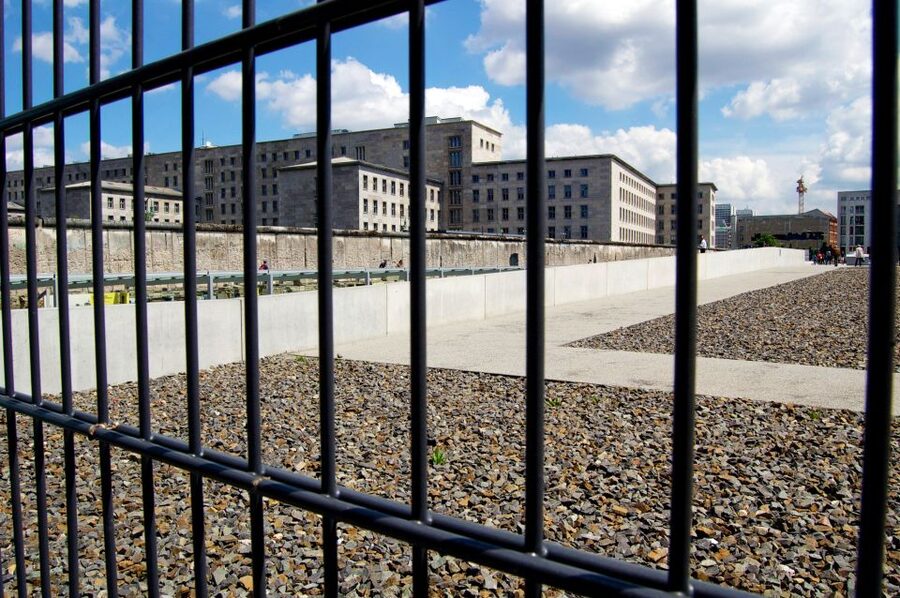
Unter den Linden is the backbone of the middle section of the tour. This broad historic street runs through the city center and gathers several major sights along its route.
Walking its length gives you a useful sense of Berlin’s scale and planning. Instead of viewing landmarks as isolated stops, you see how they face one another along a central axis. The route also allows the guide to explain why this avenue has mattered so much to Berlin’s political and cultural life.
The walk is described as easy-going, but you should still wear comfortable shoes. Three hours on city pavement is not difficult for most people, yet the tour includes several open squares and a substantial amount of walking. There is no hotel pickup, so you handle your own transport to Alexanderplatz and back from the ending point.
The guide speaks German. That is the most important practical point for international visitors. If you understand German, the tour offers a direct way to hear about the sights as you see them. If you do not, this is not the right choice unless you are comfortable joining a German-language tour.
A few more Berlin tours worth weighing up
- Berlin: 1-Hour City Tour by Boat with Guaranteed Seating
★ 4.3 · 16,993 reviews - Berlin: City Sightseeing Hop-On Hop-Off Bus Tour
★ 4.1 · 4,233 reviews - Potsdam: City and Castles Tour
★ 4.7 · 3,721 reviews - Berlin: 1-Hour City Sightseeing Cruise
★ 4.4 · 2,210 reviews
Bebelplatz and the Prinzessinnenpalais gardens
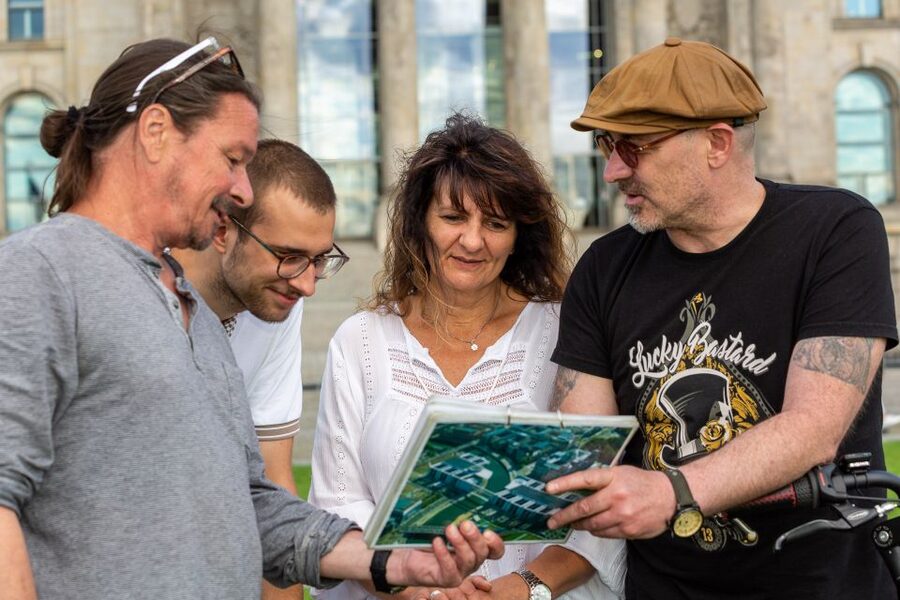
Bebelplatz brings the route into one of Berlin’s most striking historic squares. The space is surrounded by important buildings and is known for the memorial connected to the Nazi book burning of 1933.
The tour also points out the gardens of the Prinzessinnenpalais, or princesses’ palace. This smaller garden setting offers a welcome visual pause from the formal avenues and large public squares. It is an intimately beautiful detail that could easily be missed if you were rushing from one famous monument to the next.
Bebelplatz rewards a slower look. The buildings around the square are grand, but the square’s meaning is not only architectural. Berlin often asks you to hold beauty and painful memory in the same view. A good guide helps you understand that contrast without reducing the place to a quick photo stop.
The garden visit is a look at the grounds rather than a promise of an indoor palace tour. Keep your expectations focused on the outdoor route and the stories connected with the square.
A coffee break at Gendarmenmarkt
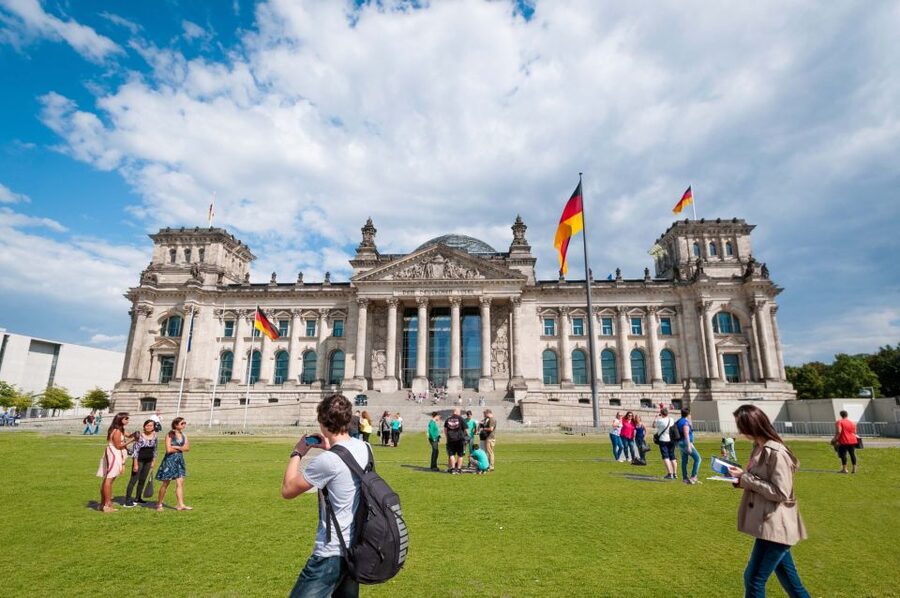
Gendarmenmarkt is the planned rest point, and the coffee break is one of the tour’s most useful touches. By this stage, you have crossed several large spaces and walked a long section of Unter den Linden, so a short pause makes the rest of the route easier.
The square is known for its formal design and grand buildings. It gives you time to look around without trying to keep pace with a guide. You can use the stop to take photographs, listen, and reset before the final sights.
Food and drinks are not included, so budget separately for your coffee. The price of $24 per person is reasonable if you value a live explanation and a carefully arranged route, but it does not cover refreshments or transport.
Gendarmenmarkt is also a good test of what you want from a city walk. If you prefer to move quickly and cover ground, the coffee stop may feel like a delay. I see it as a sensible break, especially for a first morning in Berlin when you want orientation more than a race through monuments.
The Holocaust Memorial and Brandenburg Gate
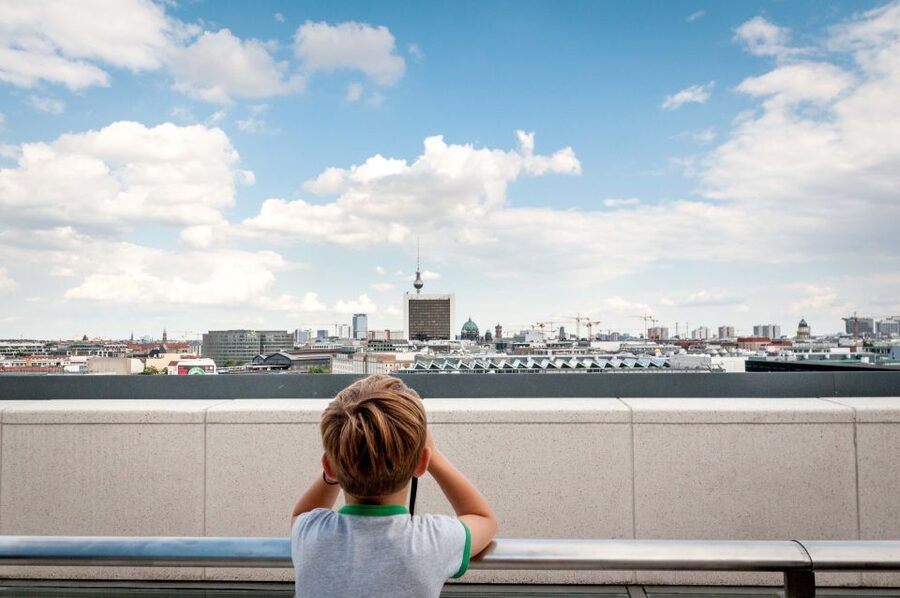
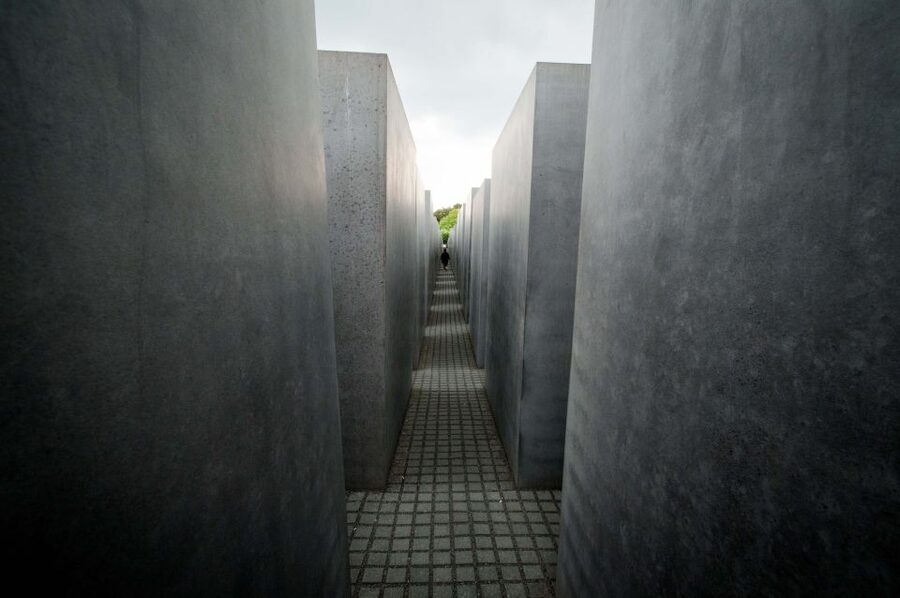
The final section brings you to two of Berlin’s most important public sites: the Memorial to the Murdered Jews of Europe, commonly called the Holocaust Memorial, and the Brandenburg Gate.
The Holocaust Memorial is powerful because it avoids a simple heroic story about the city. Its field of concrete blocks creates an unsettling, uneven experience as you walk among them. The tour presents it as a place steeped in history, and you should give it the quiet attention it deserves.
The information provided for this walk does not promise an interior visit to the memorial’s underground information center. Expect to see and discuss the outdoor memorial. If you want the full documentation center, arrange that separately and allow extra time.
Brandenburg Gate provides the route’s natural finish. It is one of Berlin’s defining symbols and a clear point at which to pause and take stock of the city you have just crossed. The contrast between the gate’s monumental design and the nearby Holocaust Memorial captures much of Berlin’s character: beauty, power, destruction, memory, and rebuilding close together.
The activity ends back at the original meeting point at Alexanderplatz, so the walk is not a one-way transfer. That return matters when planning your day. You will need to allow time for the walk back after the final sights, and you should not schedule a tight appointment immediately afterward unless you know the exact route and timing.
Group size, weather, and what to bring
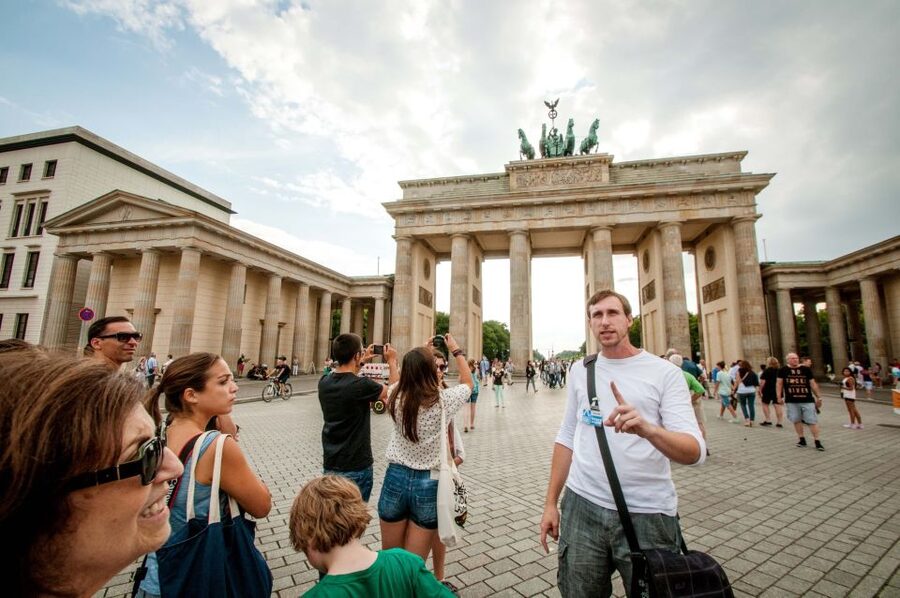
The stated group maximum is 12 people. That is small enough for a guide to keep the group together and answer occasional questions without shouting across a crowd. The tour is also listed as requiring a minimum number to operate. One part of the information says a minimum of two people is required, while the overview says a minimum of three participants. Check the booking conditions for your date.
The tour runs in all weather. Rain ponchos are provided when necessary, but you should still bring sensible shoes and clothing suited to the forecast. Berlin’s central squares can feel exposed in poor weather, and the route offers no promise of indoor shelter at every stop.
The walk is in German, with no hotel pickup or drop-off. Meet at the World Clock 15 minutes early, then return to Alexanderplatz when the activity ends. These details make the tour simple to fit into a day built around public transport.
Cancellation terms need a careful look. The general booking information allows cancellation up to 24 hours before the activity for a full refund, while the special information says tours for groups of three or more have a cancellation deadline of three days before the scheduled tour. If your plans are uncertain, confirm which rule applies to your booking rather than assuming the shorter deadline.
Is $24 a fair price for three hours?
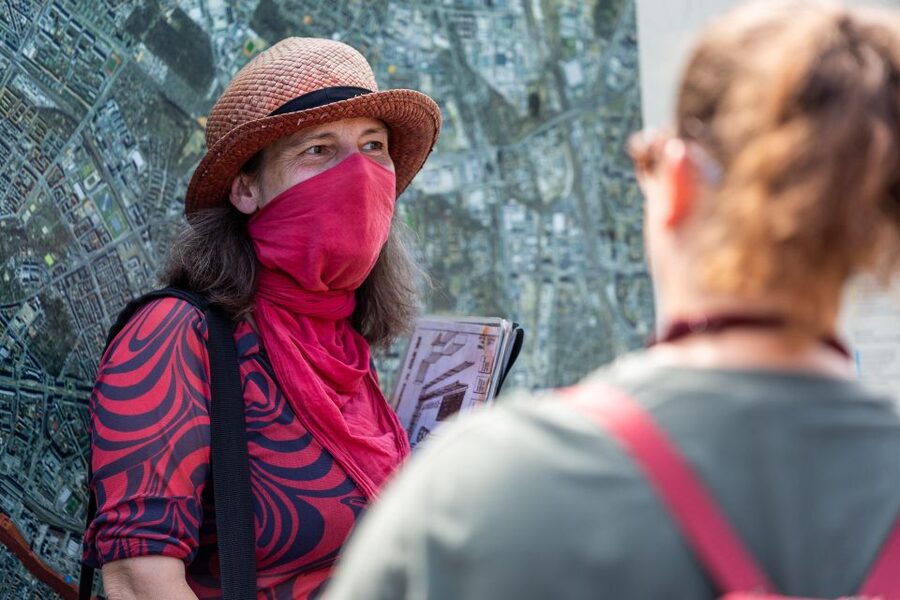
At $24 per person, this is a modest price for a three-hour guided introduction to Berlin-Mitte. You are paying for a live guide, a planned route, and context at sights that can otherwise seem disconnected. The value is strongest if you are visiting Berlin for the first time or want a quick sense of how the central districts fit together.
The price is less attractive if you already know the center well, speak little or no German, or prefer to enter buildings rather than view them from outside. Food, drinks, transport, and hotel transfers cost extra, and the walk does not replace separate visits to Berlin Cathedral or the memorial’s information center.
The 4.7 rating from 45 ratings fits the experience’s main strength: it is organized around the essentials and described as good, interesting, and entertaining. One German-language assessment specifically notes that the guide showed and explained the essential sights on a Berlin-Mitte tour. That is the promise you should judge here: clear coverage and useful explanation, not an exhaustive examination of every landmark.
Who should book this Berlin walking tour?
I would choose this tour for a first visit, a short stay, or the first full day of a Berlin trip. It gives you a map in your head, introduces the major central sights, and helps you decide which places deserve a longer return visit.
It also suits you if you enjoy history presented while standing in the actual places where events unfolded. Alexanderplatz, Bebelplatz, the Holocaust Memorial, and Brandenburg Gate each tell a different part of Berlin’s story, and the walking route makes their relationship easier to understand.
I would hesitate if you need an English-language guide, require step-free planning, or want a relaxed visit inside several buildings. The supplied information does not specify accessibility arrangements, and it confirms only German as the tour language. Ask the operator before booking if either issue affects you.
For most suitable participants, the mix is well judged: major sights, smaller urban details, a coffee pause, and a manageable three-hour length. The walk gives you enough history to make the center meaningful without using up your whole day.
Should you book it?
Book this tour if you want a reasonably priced, German-language introduction to Berlin’s central sights, with a small group and a route that includes both grand monuments and quieter corners. The World Clock meeting point is easy to find, and the itinerary covers a lot without requiring complicated transport.
Skip it if you want an English tour, extensive indoor sightseeing, or a fully flexible cancellation rule without checking the group condition. Also confirm the minimum participant requirement before paying, since the supplied details give two different minimums.
For the right visitor, this is a useful first look at Berlin: practical, focused, and honest about the city’s difficult past as well as its famous architecture.
FAQ
Where does the tour start?
The tour starts at the World Clock on Alexanderplatz, about one minute on foot from the Alexanderplatz S-Bahn and U-Bahn station.
Where does the tour end?
The activity ends back at the World Clock on Alexanderplatz, the original meeting point.
How early should I arrive?
You should arrive 15 minutes before the scheduled start time.
How will I identify the guide?
The guide will be carrying a sign with the local partner’s logo.
How long does the walking tour last?
The tour lasts three hours.
What language is the tour conducted in?
The live tour guide speaks German.
What sights are included?
The route includes Alexanderplatz, the World Clock, the Red Town Hall, the Fernsehturm, Nikolaiviertel, Schlossplatz, Berlin Cathedral, Unter den Linden, Bebelplatz, the Prinzessinnenpalais gardens, Gendarmenmarkt, the Holocaust Memorial, and Brandenburg Gate.
Is food or coffee included in the price?
No. Food and drinks are not included, including the coffee break at Gendarmenmarkt.
Does the tour run when it rains?
Yes. The tour operates in all weather, and rain ponchos are provided when necessary.
Is hotel pickup included?
No. You must make your own way to Alexanderplatz, and hotel drop-off is not included.
Just added around Berlin
- Berlin Highlights in One Day★ 5.0 · 3 reviews
- Private Berlin One Day Tour with a Local: See the City Unscripted★ 3.5 · 3 reviews
- Individual city tour Berlin for max. 8 persons★ 5.0 · 3 reviews
- Transfer from Berlin Schönefeld Airport (SXF) to Berlin city Hotels – ROUND TRIP★ 4.0 · 3 reviews
- Berlin: Museum Island Tour★ 5.0 · 3 reviews
- Private Analogue Photography Experience in Berlin★ 5.0 · 3 reviews
- Berlin: Local Food Tour in Secrets Hidden Gems★ 4.0 · 3 reviews
- Potsdam Highlights – Private sightseeing tour by minibus★ 5.0 · 3 reviews
City Tours, compared.
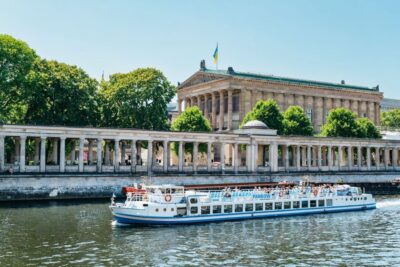
1-Hour City Tour by Boat with Guaranteed Seating
Read our review →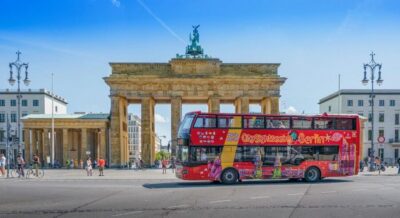
Berlin City Hop-on Hop-off Tour with Optional Cruise
Read our review →

Browse the lists this tour appears in