
Review · MUSEUM ISLAND TOURS
Berlin: Entry to Alte Nationalgalerie
Berlin’s Alte Nationalgalerie brings you face to face with some of the 19th century’s most important art, all inside a grand building on Museum Island. You’ll move from Caspar David Friedrich’s The Monk by the Sea to French Impressionist works by Manet, Monet, and Renoir, with sculpture and early Modernist pieces along the way.
I like the wide range of styles and the included audio guide, which lets you set your own pace. I also like the building itself, including Shadow’s marble tomb for Count Alexander von der Mark and the striking Sleeping Beauty sculpture. The main caution is simple: rooms or floors may close temporarily, so a booked ticket does not guarantee that every favorite work will be on view.
In This Review
- Key points to know
- Why the Alte Nationalgalerie belongs on your Museum Island plan
- The building comes before the paintings
- Start with Romanticism and Friedrich’s lonely monk
- The Group of Princesses and the world of Goethe
- From polished Classicism to Biedermeier observation
- Menzel’s Eisenwalzwerk gives industry a human scale
- French Impressionism brings a lighter, looser touch
- Sculpture adds a different kind of drama
- Early Modernity and the museum’s final rooms
- How to use the audio guide and your time
- Is the $14 ticket good value?
- Who should book the Alte Nationalgalerie?
- Practical details before you go
- Should you book it?
- FAQ
- Where is the Alte Nationalgalerie located?
- How long is the ticket valid?
- Do I need to enter at a specific time?
- Is an audio guide included?
- Does the ticket include other Museum Island museums?
- Is transportation included?
- Can I bring a backpack?
- Is the museum wheelchair accessible?
Key points to know
- Friedrich’s The Monk by the Sea: One of the gallery’s best-known Romantic paintings, and a quiet highlight worth seeking out.
- A full century of art: The collection moves through Classicism, Romanticism, Biedermeier, Impressionism, and early Modernity.
- French Impressionist highlights: Look for works by Manet, Monet, and Renoir.
- A grand Museum Island setting: The gallery is part of Berlin’s UNESCO World Heritage Site.
- One-day entry with audio guide: You can explore independently rather than follow a fixed tour.
- Plan around your timeslot: Enter within 15 minutes of the booked time, and leave backpacks behind.
Why the Alte Nationalgalerie belongs on your Museum Island plan
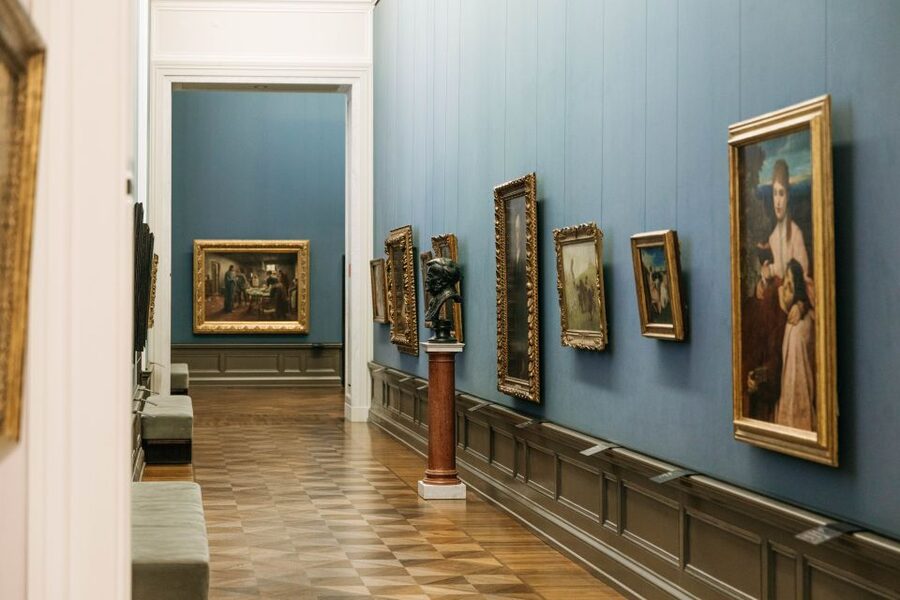
The Alte Nationalgalerie is not simply a room full of famous paintings. It is a walk through the changing taste of 19th century Germany and Europe, housed in one of Berlin’s most important museum buildings.
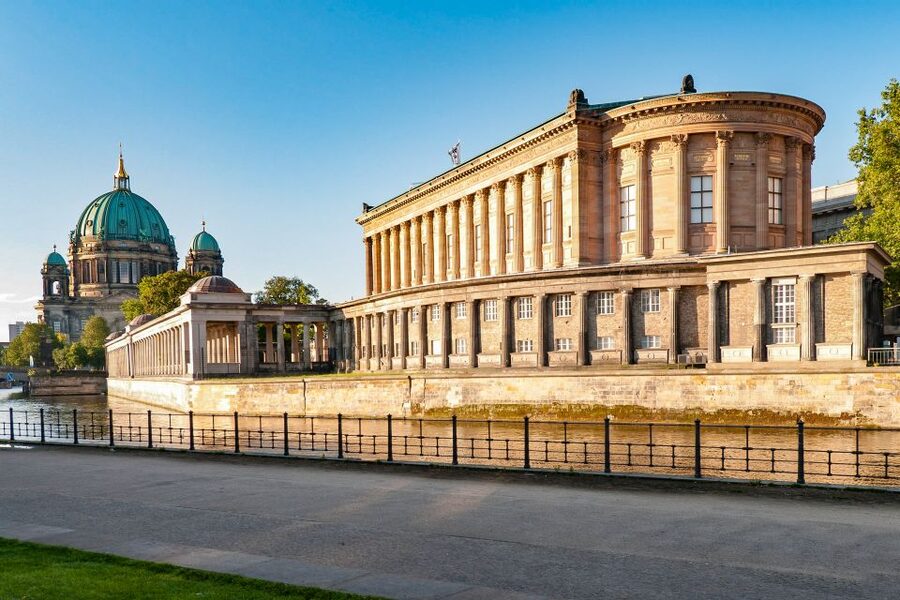
The idea for this sanctuary for art and science goes back to Friedrich Wilhelm IV. The collection grew from the donation of banker Joachim Heinrich Wilhelm Wagener, whose bequest included works by artists from the Düsseldorf school and Belgian history painters. The National Gallery opened in 1876 as the third museum on Berlin’s Spree Island.
That setting matters. You are not visiting a modern white-box gallery built for quick viewing. You enter a monumental institution designed to give art a serious civic home. After the Berlin Wall fell, the building became known as the Alte Nationalgalerie, with its focus on 19th century art.
I like this sense of progression. The museum lets you see how artists moved from formal Classicism toward Romantic feeling, everyday Biedermeier subjects, Impressionist light, and the experiments of early Modernity. Even if you arrive for one famous painting, you get a useful picture of the period around it.
More of Museum Island:
- Berlin: Neues Museum Entry Ticket
★ 4.6 · 3,261 reviews - Berlin: Museum Island Multiple Museum Entry Ticket
★ 4.4 · 2,007 reviews - Berlin: Museum Island Guided Walking Tour
★ 4.9 · 38 reviews
The building comes before the paintings
Your visit begins at the visitor entrance on Bodestraße, on Museum Island. The ticket provides skip-the-ticket-line entry, though you still need to arrive within 15 minutes of your selected timeslot. That small window makes it wise to allow extra time for reaching the island, especially if you are combining this museum with other sights.
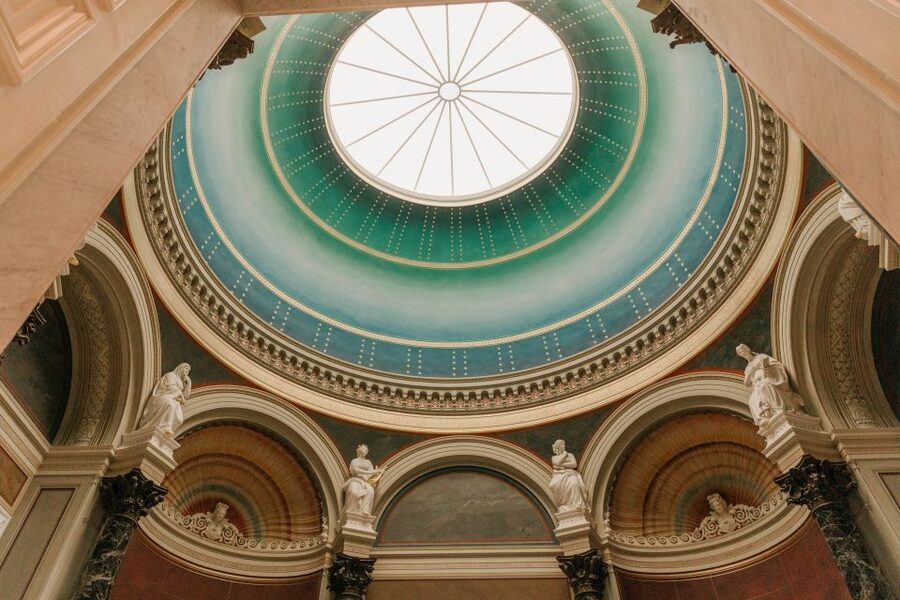
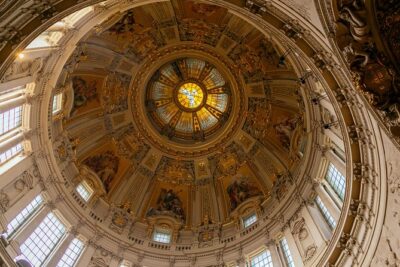
Once inside, take a moment to look at the setting before rushing toward the famous paintings. The building has the ceremonial feel you would expect from a national collection. It frames the art as part of Berlin’s public story, not as a random collection of separate objects.
The museum is fully wheelchair accessible, which makes the grand interior easier to enjoy for visitors with mobility needs. Backpacks are not allowed, so pack lightly. The ticket covers only the Alte Nationalgalerie, not the other museums on Museum Island.
Start with Romanticism and Friedrich’s lonely monk
For many people, the main reason to visit is Friedrich’s The Monk by the Sea. It is one of those paintings that can look simple in reproduction but gains force when you stand in front of it.
The composition is famously spare: a small figure facing a large expanse of sea and sky. The effect is quiet rather than theatrical. You are given very little narrative, so your attention turns to scale, silence, and the relationship between the person and nature.
Nearby Romantic works help place Friedrich’s painting in context. Gothic Cathedral at the Water brings a more architectural form of mystery, with the medieval cathedral acting as a powerful focal point. Together, these works show how Romantic artists used nature, ruins, and distant views to suggest feelings that a straightforward historical scene could not express.
I recommend not treating The Monk by the Sea as a quick photograph stop. Give it a few minutes. The painting rewards slow looking, especially after you have seen the more crowded, more detailed works elsewhere in the museum.
The Group of Princesses and the world of Goethe
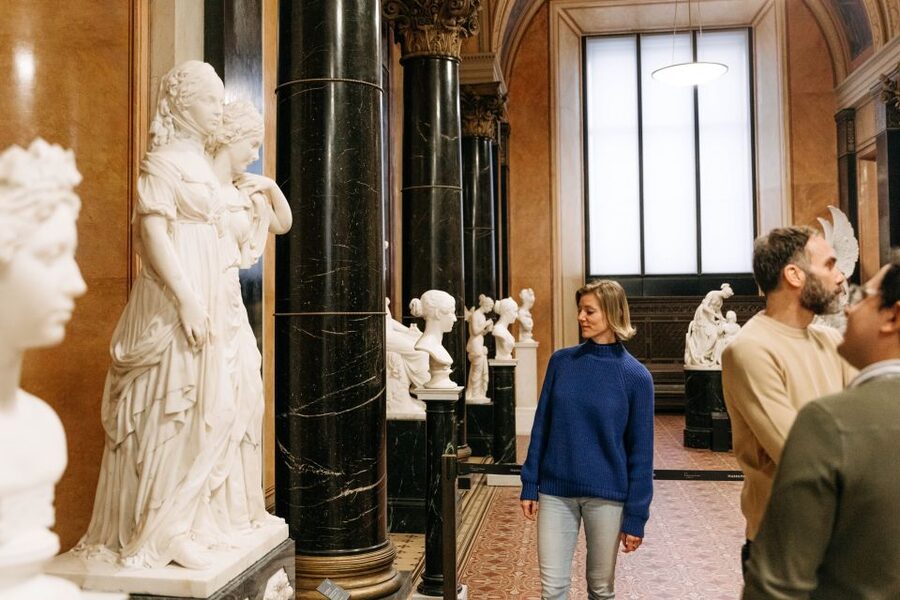
The gallery’s Romantic and Goethe-era works also include the so-called Group of Princesses. This is a useful change of mood after Friedrich’s open, almost empty seascape.
Where The Monk by the Sea turns inward, the princess portraits bring you back to people, dress, status, and social identity. Look at how the figures are presented and how much information is carried through posture and clothing. These are not just decorative portraits. They show how portraiture could express rank, character, and the public image of a court.
This section helps prevent the collection from becoming a parade of famous names. You see not only great landscapes and symbolic scenes, but also the social world in which these artists worked.
The Romantic rooms are especially helpful if you are new to 19th century art. The museum makes it possible to compare artists who respond to the same broad period in very different ways. One looks to nature and solitude, another to architecture, another to portraiture and human relationships.
A different side of Berlin on the same trip:
- Berlin: Reichstag, Dome and Government District Guided Tour
★ 4.7 · 18,288 reviews - Berlin: 1-Hour City Tour by Boat with Guaranteed Seating
★ 4.3 · 16,993 reviews - Berlin: Boat Tour Along the River Spree
★ 4.4 · 11,252 reviews - Discover Berlin Half-Day Walking Tour
★ 5.0 · 9,624 reviews
From polished Classicism to Biedermeier observation
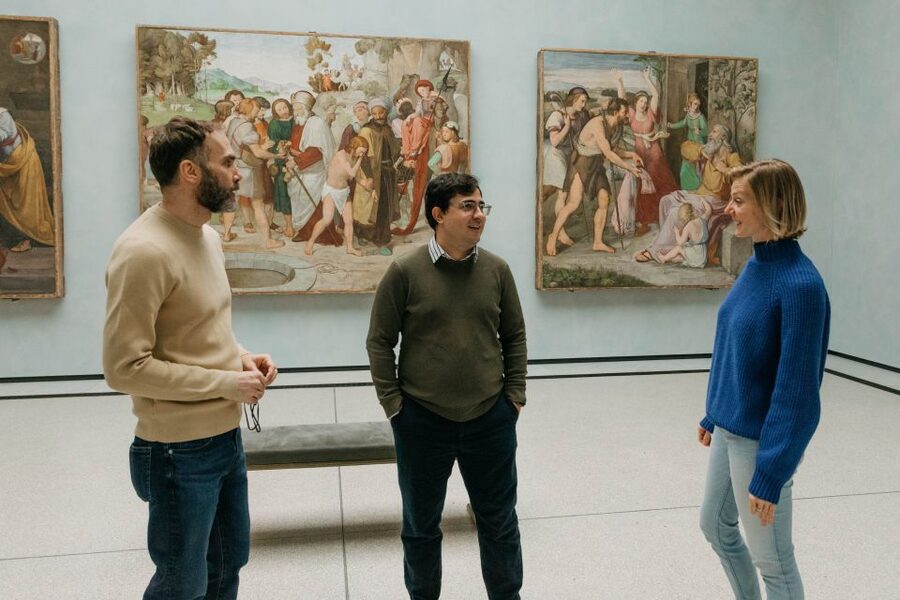
The collection begins with earlier 19th century approaches, including Classicism and Biedermeier. The contrast is worth your attention.
Classicist works tend to favor order, balance, and clear artistic ideals. They can feel formal compared with the emotional weather of Romantic painting. That difference is part of the story. You are seeing artists and patrons negotiate between inherited rules and a growing interest in personal feeling, national identity, and everyday experience.
Biedermeier works bring a more domestic and intimate tone. They are linked to a period when interiors, family life, and ordinary social settings became important subjects. Rather than treating this material as a minor bridge between grand movements, I find it useful for understanding how art moved closer to daily life.
The museum’s value comes from these comparisons. You can see the changes rather than simply read about them on a wall label. The period feels less like a list of movements and more like a conversation between competing ideas about what art should do.
Menzel’s Eisenwalzwerk gives industry a human scale
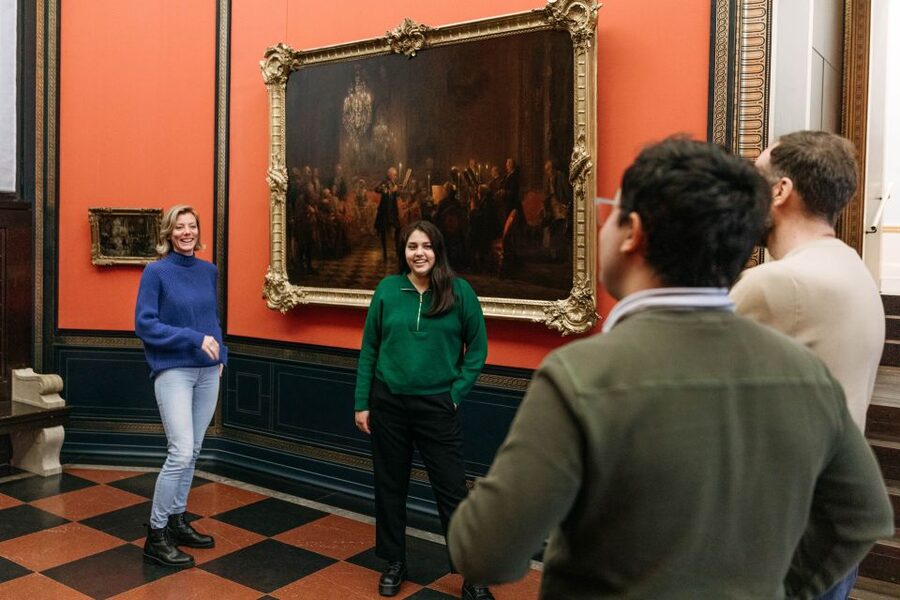
Adolph Menzel’s Eisenwalzwerk is another major work to seek out. Its subject is industrial labor, a sharp turn from the solitary Romantic figure or aristocratic portrait.
The painting brings you into a workplace shaped by heat, machinery, and physical effort. It shows the 19th century as a period of industrial change, not only of elegant salons and beautiful landscapes. Menzel’s attention to labor gives the collection a social edge.
This is one of the places where the museum’s historical range becomes especially useful. You can compare the idealized worlds of Classicism with a modern industrial environment. The change is not only in subject matter. It is also in the way artists looked at work, technology, and the people affected by economic change.
Allow time for this painting rather than passing it as simply another large historical canvas. Its scale and subject make it one of the gallery’s important anchors.
French Impressionism brings a lighter, looser touch
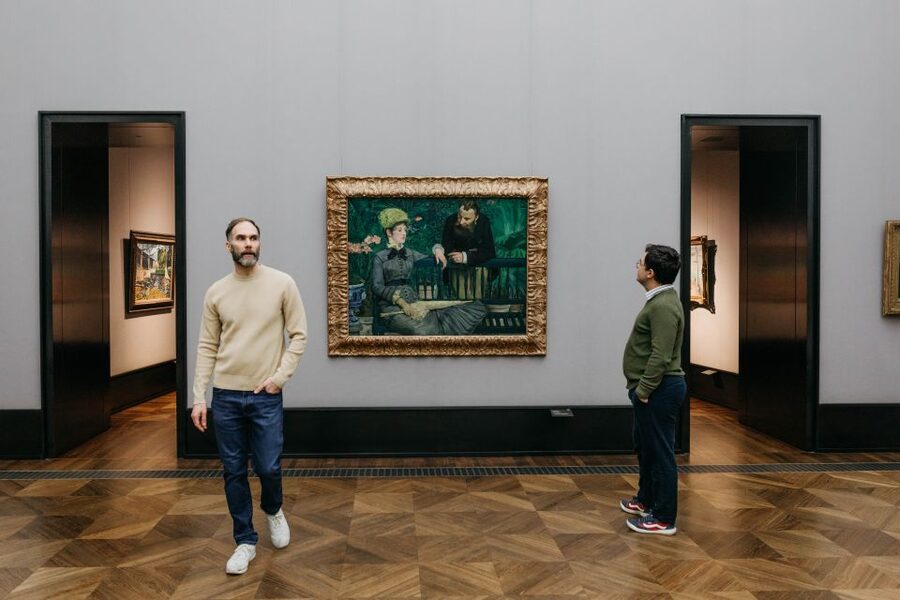
The Impressionist paintings by Manet, Monet, and Renoir offer a clear shift in color, brushwork, and subject. If you are mainly visiting for Impressionism, check current room access before booking if possible. A floor or section can be closed, and a temporary closure may matter more to you than the ticket price.
When the Impressionist rooms are open, they provide a welcome change after the darker, more solemn Romantic works. Look for the way paint handles light and atmosphere rather than expecting every object to be outlined with precision. The paintings ask you to look at the overall effect and then notice how quickly the surface has been built.
The presence of Manet, Monet, and Renoir also gives the museum a broader European reach. This is not only a survey of German art. You can place German 19th century painting beside major French developments and see how artistic ideas crossed borders.
The Impressionist section is one of the most popular parts of the visit, but do not let it crowd out the earlier rooms. The museum is at its best when you see the Impressionists as part of a longer change in European art.
Sculpture adds a different kind of drama
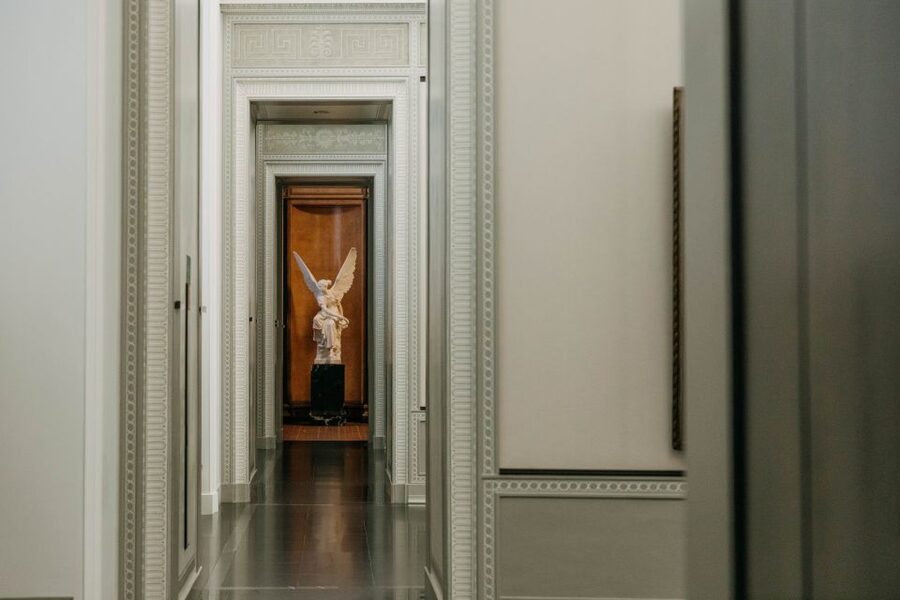
Paintings receive much of the attention, but the sculptures deserve a slower look. Sleeping Beauty is described as a breathtaking work, and its subject gives the gallery a chance to show how marble can suggest softness, sleep, and vulnerability.
Sculpture changes the rhythm of your visit. After studying flat surfaces and painted light, you have to move around a three-dimensional object. Look from more than one angle if space allows. The experience is physical in a way that painting is not.
Another important work is Shadow’s marble tomb for Count Alexander von der Mark, dated 1790. This early piece helps connect the museum’s 19th century focus with the artistic traditions that came before it. It is also a reminder that sculpture in a national gallery can carry political, social, and personal meaning at the same time.
These works reward patience. You do not need a specialist art background to appreciate them. Notice the treatment of fabric, skin, hair, and facial expression, then consider how marble is being made to imitate materials it cannot literally reproduce.
Early Modernity and the museum’s final rooms
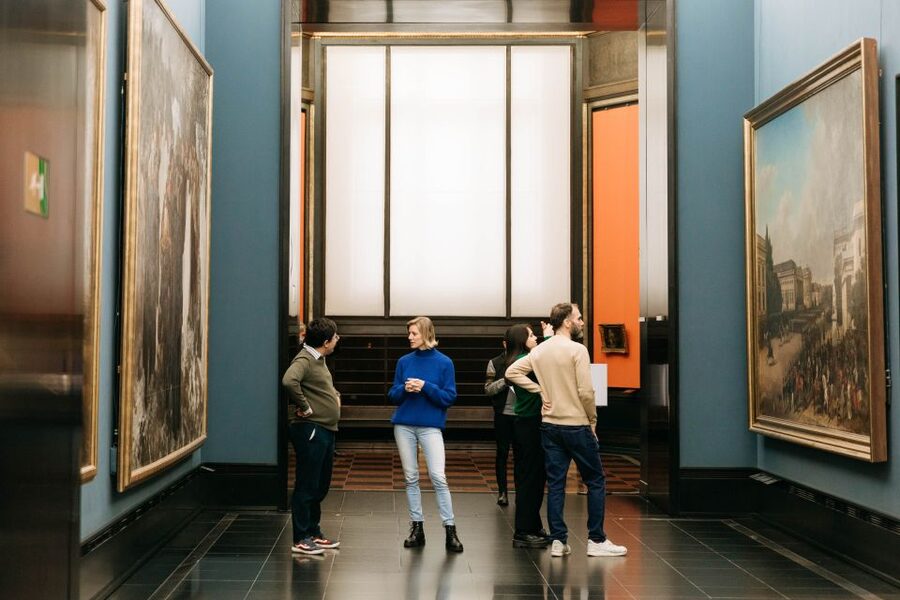
As you move toward early Modernity, the collection becomes more restless. The clean categories of Classicism and Romanticism begin to give way to new ideas about design, identity, public display, and the role of the artist.
Works associated with the Berlin Secession period include pieces by Max Liebermann, Franz von Stuck, and Gustav Klimt. The display can include paintings, drawings, and sculptures, giving you a broader view of how artists worked across several forms.
A particularly enjoyable feature is a series of self-portraits near the end of the visit. They function almost like closing credits, bringing individual artists back into focus after the larger movements and themes. You may also find a series of exhibition posters, an unexpected record of how art was presented to the public in its own time.
This final stretch gives the visit a satisfying sense of movement. You begin with established artistic ideals and finish closer to the experimental culture of the modern age. The museum does not need a single dramatic finale because the changing styles provide the story.
How to use the audio guide and your time
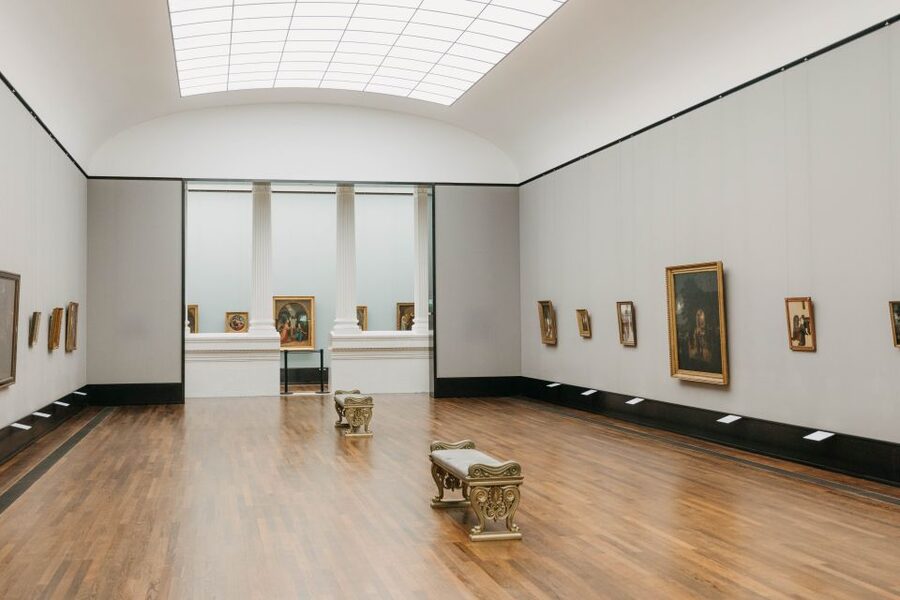
The included audio guide is useful if you want more than labels but do not want a scheduled live tour. You can pause, move ahead, and spend extra time with the works that matter most to you.
I would use it selectively rather than listen to every explanation. Start with the major works, including The Monk by the Sea, Eisenwalzwerk, the Group of Princesses, and the sculptures. Then follow your own interests through the rooms.
Your ticket is valid for one day, not just a brief timed entry. The booked time controls when you enter, but once inside, you have room to shape the visit around your energy and attention. That is helpful on Museum Island, where you may already have spent time in another museum.
Exhibition talks and guided tours are also offered on different themes for children and adults. The ticket information does not establish that these are included in this admission, so treat the audio guide as the dependable included option and check the day’s program if a talk interests you.
Is the $14 ticket good value?
At $14 per person, this is a sensible buy if you want a focused look at Berlin’s 19th century art. The audio guide adds value, and skip-the-ticket-line entry can save time during a busy Museum Island day.
The price is less compelling if you are visiting only for one room and that room may be closed. A temporary closure of the Impressionist section, for example, can change the whole balance for someone who booked mainly to see Monet or Renoir.
The ticket also does not include transportation or entry to other museums on the island. Think of it as one museum admission, not a Museum Island pass. If you plan to visit several collections, compare the total cost before you book.
Discounted tickets require appropriate identification. If you are using a reduced fare, bring the required proof so the saving does not become a problem at the entrance.
Who should book the Alte Nationalgalerie?
I would recommend this museum to you if you enjoy seeing art develop across time rather than chasing one isolated masterpiece. It is especially good for anyone interested in Romanticism, 19th century German painting, Impressionism, sculpture, or the early roots of modern art.
It also suits families and mixed-interest groups because the collection changes mood and subject often. Children may respond to the sculpture and dramatic scenes, while adults can spend longer with Friedrich, Menzel, or the Secession works. Talks and tours for children and adults may add another layer if scheduled during your visit.
You may want to reconsider if your plans are extremely tight or if your main goal is a specific floor. The visit is most rewarding when you can give the collection time to unfold. A closure of the third floor or Impressionist rooms can also affect your plans, so check current access before setting your expectations.
Practical details before you go
The entrance is at the visitor entrance of the Alte Nationalgalerie on Bodestraße, 10178 Berlin. The activity ends at the same meeting point.
Your ticket is valid for one day, with entry tied to a booked timeslot. Arrive in time to enter within 15 minutes of that slot. Backpacks are not allowed, so carry only what the museum permits.
The entire building is wheelchair accessible. Transportation is not included, and admission to the other museums on Museum Island requires separate tickets.
The activity is non-refundable, so check your date and timeslot carefully before booking. Most important, confirm that the sections you care about are open. The building and collection remain worthwhile, but an unavailable floor can change the visit for you.
Should you book it?
Book the Alte Nationalgalerie if you want a well-paced museum visit that links Friedrich’s Romantic solitude, Menzel’s industrial power, French Impressionist light, and early Modernist experiments. The $14 admission with audio guide is good value for a focused half-day or a substantial stop during a Museum Island visit.
I would book with one condition: check for temporary closures first, especially if Impressionism is your main reason for coming. If the key rooms are open, this is one of Berlin’s strongest choices for seeing how 19th century art changed, one gallery at a time.
FAQ
Where is the Alte Nationalgalerie located?
The visitor entrance is on Bodestraße, 10178 Berlin, on Museum Island.
How long is the ticket valid?
The ticket is valid for one day.
Do I need to enter at a specific time?
Yes. You should enter the museum within 15 minutes of the booked timeslot.
Is an audio guide included?
Yes. An audio guide is included with the Alte Nationalgalerie ticket.
Does the ticket include other Museum Island museums?
No. Tickets to the other museums on the island are not included.
Is transportation included?
No. Transportation to and from the museum is not included.
Can I bring a backpack?
No. Backpacks are not allowed.
Is the museum wheelchair accessible?
Yes. The entire building is wheelchair accessible.
Just added around Berlin
- Berlin Highlights in One Day★ 5.0 · 3 reviews
- Transfer from Berlin Schönefeld Airport (SXF) to Berlin city Hotels – ROUND TRIP★ 4.0 · 3 reviews
- Private Berlin One Day Tour with a Local: See the City Unscripted★ 3.5 · 3 reviews
- Individual city tour Berlin for max. 8 persons★ 5.0 · 3 reviews
- Berlin: Museum Island Tour★ 5.0 · 3 reviews
- Private Analogue Photography Experience in Berlin★ 5.0 · 3 reviews
- Berlin: Local Food Tour in Secrets Hidden Gems★ 4.0 · 3 reviews
- Berlin & The Third Reich Private Guided Tour★ 5.0 · 3 reviews
Museum Island Tours, compared.
Berlin Museum Island & City PRIVATE TOUR with Dom Ticket Included
Read our review →Browse the lists this tour appears in