
Review · CYCLING TOURS
Berlin: Guided Bike Tour to Explore the Highlights
Berlin makes sense from a bicycle. In three hours, you can move from the medieval Nikolaiviertel to the Brandenburg Gate, Reichstag, Holocaust Memorial, Potsdamer Platz, and Museum Island without spending half your day underground. This is a fast, useful first look at a city that is too spread out for a walking tour.
I like the comfortable pace and the chance to see Berlin as a working city, not just a string of monuments. I also like the Free Berlin format, where each guide shapes the route and brings personal stories to the stops. Guides such as Jake, Simone, Simon, Marius, Reiko, and Rufus have been praised for humor, clear explanations, and practical tips.
The main consideration is the history-heavy focus. That suits you if Berlin’s politics, war, division, and reunification interest you. If you want more art, cafés, or neighborhood life, the route may feel less balanced, and one English-language tour was difficult to follow because of the guide’s command of English.
In This Review
- Five things to know before you book
- Why a bike is the right way to meet Berlin
- Nikolaiviertel and the first Berlin
- Bebelplatz and Berlin’s difficult memory
- Checkpoint Charlie and the Cold War city
- Potsdamer Platz and the city rebuilt
- The Holocaust Memorial and the cost of remembering
- Tiergarten and the Brandenburg Gate
- The Reichstag and the modern government quarter
- Museum Island and the Spree Athens
- Guides, group size, and the Free Berlin approach
- Who will get the most from this ride?
- Booking value and practical details
- Should you book this Berlin bike tour?
- FAQ
- How long is the Berlin guided bike tour?
- Where does the tour start and finish?
- Is a bicycle provided?
- Which sights are included?
- Can children join the tour?
- What happens if I need to cancel?
Five things to know before you book
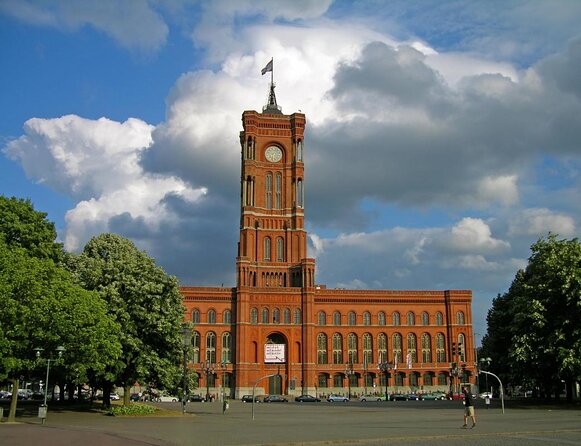
- Berlin’s big sights fit into three hours: You see the Brandenburg Gate, Reichstag, Holocaust Memorial, Potsdamer Platz, Checkpoint Charlie, Museum Island, and more.
- The English route includes Checkpoint Charlie: Prenzlauer Berg is listed for the German version instead, so check your language option carefully.
- Your guide shapes the experience: The route follows a Free Berlin concept, giving guides room to add stories, answer questions, and sometimes include an extra stop.
- The ride is active but not punishing: The bicycles are described as light and sturdy, and the pace is generally relaxed.
- The tour is family-friendly, with limits: Children are welcome, infant seats can be requested, and children must ride with an adult. A long stop at each monument may suit older children better than very young ones.
Why a bike is the right way to meet Berlin
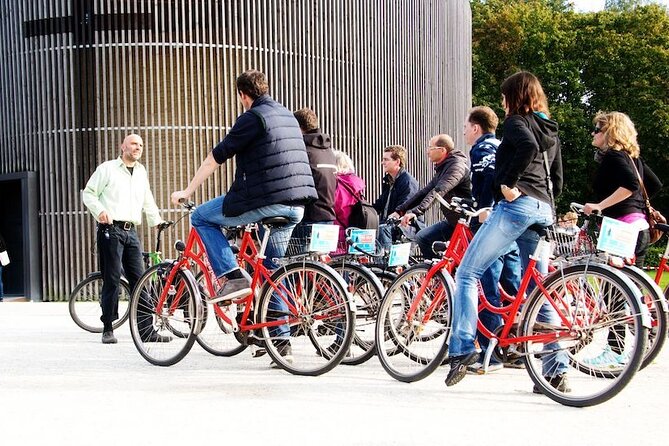
Berlin is not a compact old town. Its major sights are scattered across former East and West Berlin, along broad avenues, parks, and rebuilt districts. On foot, you can spend a great deal of time simply moving between places. By bike, you cover more ground while still seeing the streets between the headline sights.
The tour lasts about three hours and starts and ends at Free Berlin Bike Tours & Rental on Poststraße 11, near Nikolaiviertel. The group size ranges from four to 15 people. That is small enough for a guide to manage, though a full group may feel less personal than a private ride.
You receive a bicycle, helmet, and professional guide. Food and drinks are not included, so bring water. The tour runs in all weather, and Berlin’s weather can change quickly. Dress for the forecast rather than assuming a sunny start will last.
At $42.34 per person, this is not the cheapest way to look at Berlin, but it offers solid value if you have only a few days or want to get your bearings at the start of your stay. You are paying for the bicycle, equipment, guide, and the time saved between sights. The real value is knowing which places deserve a longer return visit.
More bike days around Berlin:
- Berlin: Sights and Highlights Bike Tour with a Local Guide
★ 4.8 · 2,698 reviews - Berlin Highlights 3-Hour Bike Tour
★ 5.0 · 948 reviews - Berlin City Bike Tour with Beer Garden Stop
★ 5.0 · 917 reviews
Nikolaiviertel and the first Berlin
The ride begins in Nikolaiviertel, the area often presented as the place where Berlin began. Its old-town feel is unusual in a city shaped by war, division, and large-scale rebuilding. Much of the character you see today was created in the late 1980s, so it is not an untouched medieval quarter.
That detail matters. Berlin often mixes original fragments with carefully reconstructed streets, and Nikolaiviertel introduces you to that habit right away. Expect about 10 minutes here, enough to set the scene without turning the tour into a long architectural lecture.
From here, you also get a view of the Berlin TV Tower. At its opening in 1969, it was the second-tallest tower in the world. The tower is one of the clearest symbols of former East Berlin, and seeing it early helps you read the city’s skyline as a record of its political past.
Bebelplatz and Berlin’s difficult memory
The stop at Bebelplatz brings together several impressive buildings in a tight central setting. You see Berlin’s oldest university, the old opera house, a Catholic cathedral, a former bank turned hotel, and a guardhouse with a temple-like appearance.
The square also carries one of the city’s most painful reminders of Nazi rule. In 1933, thousands of books were burned here in public. The memorial beneath the square is deliberately restrained, asking you to think rather than offering a grand display.
The tour usually gives this stop about 10 minutes. That is enough for a clear explanation and a look at the setting, but not enough for a full museum visit. I would treat it as a starting point, then return later if the subject matters to you.
The nearby university has been home to more than 25 Nobel Prize winners, including Albert Einstein. Marx also studied here. Some guides have studied at the university themselves, which can give this part of the route a more personal connection.
Checkpoint Charlie and the Cold War city
For the English version, Checkpoint Charlie is included as a 10-minute stop. It was the most famous border crossing between East and West Berlin, and its name still carries the drama of the Cold War.
Today, the setting can feel theatrical and crowded compared with the tense border post of the past. That is part of the lesson. Berlin’s most famous Cold War locations have become places for photographs, while the wall, guards, controls, and fear that shaped daily life are gone.
A guide is especially useful here because the physical site alone cannot explain what happened. You need the political context and the story of a divided city to understand why this ordinary-looking intersection mattered so much.
If you choose the English tour, make sure Checkpoint Charlie is part of your option. The supplied route specifically marks it for English, while Prenzlauer Berg is marked for German. French is also available depending on the option selected, but the route details are not specified in the tour information.
A few more Berlin tours worth weighing up
- Berlin: Reichstag, Dome and Government District Guided Tour
★ 4.7 · 18,288 reviews - Berlin: Government District around the Reichstag Guided Tour
★ 4.7 · 8,447 reviews - Berlin: Hidden Backyards Guided Walking Tour
★ 4.8 · 5,360 reviews - Berlin: 1-Hour Boat Tour with Bilingual Live Guide
★ 4.7 · 3,629 reviews
Potsdamer Platz and the city rebuilt
Potsdamer Platz offers one of Berlin’s clearest before-and-after stories. Before the Second World War, it was a major traffic junction and a fashionable place during the Roaring Twenties. During Berlin’s division, it became part of the empty zone between East and West.
After reunification, the area turned into one of Europe’s largest construction sites. Modern offices, shops, and public spaces replaced the former no-man’s land. In only a few minutes, your guide can connect imperial Berlin, wartime destruction, the divided city, and reunification.
This is one of the tour’s best stops for understanding how quickly Berlin can change. It may not have the emotional force of the Holocaust Memorial or the instant recognition of the Brandenburg Gate, but it explains modern Berlin better than a postcard does.
The Holocaust Memorial and the cost of remembering
The Memorial to the Murdered Jews of Europe is made up of concrete slabs arranged across an open field near the Brandenburg Gate. The design is simple, severe, and difficult to absorb quickly.
The guide’s role here is not to make the site comfortable. Germany’s approach is to keep its crimes visible and use them as a warning for the future. Expect the commentary to address Nazi persecution and the Holocaust directly.
The stop is listed at about 10 minutes, which gives you a first encounter but not much time to walk through the full memorial. You may want to return on your own when you can move at your own pace and think quietly. The subject matter also makes this a less suitable tour section for very young children, even though children are allowed on the ride.
Tiergarten and the Brandenburg Gate
Between the central monuments, the route passes through Tiergarten, one of Berlin’s largest parks. Its name translates roughly as Garden of the Animals, a reminder that the name does not describe its current role as a city park.
This stretch gives your legs a break from monument stops and lets you experience Berlin’s open scale. You are not simply jumping from one historic address to another. You are crossing the green space that helps make central Berlin feel spacious.
Then comes the Brandenburg Gate, the city’s most recognizable symbol. It has represented royal power, military triumph, division, and reunification at different points in its history. The gate is especially useful as a visual marker because so many major events in Berlin’s modern story connect to this area.
The tour allows about 10 minutes here. That is enough for photographs and a short explanation, but it is not a private visit or a long architectural study. The best pictures may require patience, since this is one of Berlin’s busiest meeting points.
The Reichstag and the modern government quarter
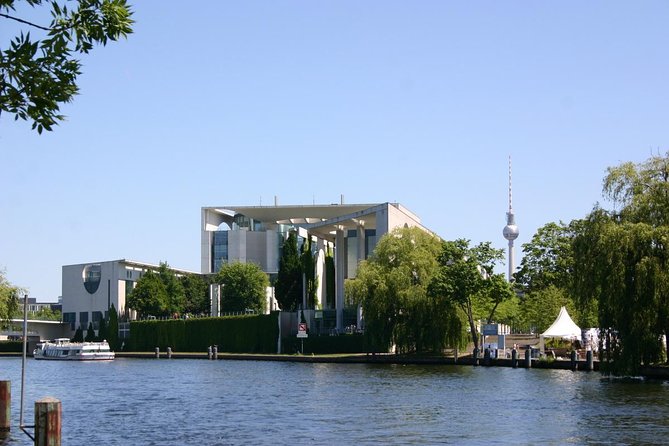
The Reichstag is Germany’s parliament and one of the most memorable buildings on the route. Its glass dome represents transparency in government, at least in architectural form, and the building is surrounded by the modern government quarter.
This stop works well after the Brandenburg Gate because the two sites show old and new Germany side by side. The gate carries centuries of symbolism, while the Reichstag presents a modern democratic state built around public access and openness.
You should not expect entry into the building or dome as part of this bike tour. The stop is an exterior visit of about 10 minutes. If you want to see the dome from inside, plan that separately and check the required arrangements before your visit.
The guide may also share stories about the building sometimes compared with the White House. The humor can be lively, though one person found that a guide’s use of strong language was unnecessary. Guide style varies, so families and visitors sensitive to language should keep that in mind.
Museum Island and the Spree Athens
The final major stop is Museum Island, a group of grand cultural buildings along the River Spree. The architecture explains the nickname Spree Athens, and the area gives you a strong sense of Berlin’s ambition as a European capital.
The tour allows around 10 minutes here, which is enough to admire the exteriors and get advice on which museums deserve your time. It is not enough to visit the collections. If you want to enter the museums, make this a return stop rather than trying to combine a full museum visit with the bike ride.
Museum Island is also a good place to end the sightseeing portion because it connects architecture, art, royal power, and the riverfront. After covering so much ground, you will have a clearer idea of how Berlin’s central districts fit together.
Guides, group size, and the Free Berlin approach
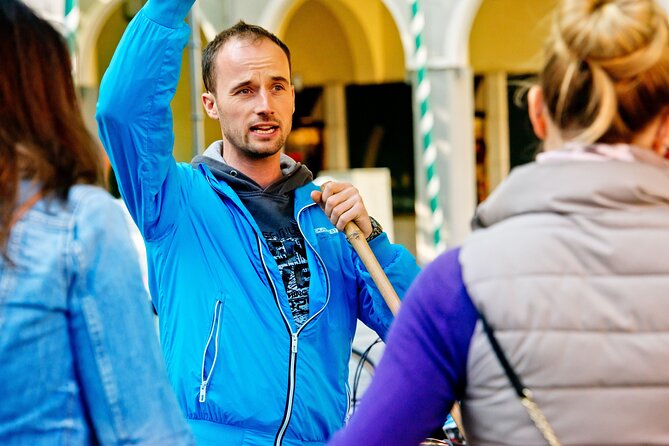
The guide is the biggest variable in this experience. The strongest guiding styles combine facts with stories and leave room for questions. Rufus was praised for linking political science to Berlin’s past, while Jake was repeatedly described as funny, approachable, and good at offering suggestions for the rest of a first visit.
Simone and Simon were also praised for clear, enthusiastic explanations and strong English. Marius, Reiko, Luka, and Giuletta received similar praise for bringing energy and personal insight to the route. One guide added an extra stop based on the group’s interests, which shows how the Free Berlin format can work at its best.
There are a few cautions. One English-language experience was hard to follow because the guide’s English was not strong enough. Another guide was still new and appeared less sure of the information. These cases seem to be exceptions rather than the general pattern, but they are worth remembering because the tour depends heavily on the person leading it.
The company advertises groups of four to 15. A smaller group can make it easier to hear, ask questions, and keep the pace comfortable. With 15 people, the guide must balance safety, traffic, photographs, and explanations. The tour is designed for most participants, but you should be comfortable riding a bicycle in city conditions.
Who will get the most from this ride?
I would book this tour early in a Berlin stay, especially if you have never been to the city. It gives you a map in your head, shows you the major central sights, and helps you decide where to return for a longer visit.
It is a good match for:
- First-time visitors with limited time
- Adults and older children interested in Berlin’s political history
- People who prefer seeing a city actively rather than sitting on a bus
- Visitors who want practical tips from a local guide
- Families who can manage a three-hour ride and several serious history stops
I would think twice if you want a tour centered on art, food, music, or local neighborhoods. The English route focuses heavily on the Nazi era, the Holocaust, the Cold War, and reunification. The German version includes Prenzlauer Berg, a former East Berlin district known for its bohemian and highly livable character, but that stop is not listed for the English option.
The pace is generally relaxed, and several people found the ride comfortable rather than strenuous. Still, cycling means you need to dress for the weather and remain alert around city streets. Helmets are included, and infant seats can be provided on request.
Booking value and practical details
At $42.34, the tour is fairly priced for a three-hour guided introduction that includes the bicycle and helmet. You are not paying admission fees because the stops are outdoor viewpoints. The price makes the most sense when you value a guide’s interpretation and the time saved between monuments.
The tour is offered in English, German, and French, depending on the option chosen. Confirmation arrives at booking, and free cancellation is available until 24 hours before the start time. If the minimum group size is not reached and the operator cancels, you are offered another date or experience, or a full refund.
The activity starts and ends at Poststraße 11 in Berlin’s 10178 postal district. Since food and drinks are not included, bring water and consider eating before or after. The tour runs in all weather, so a light waterproof layer is sensible even when the morning looks clear.
Should you book this Berlin bike tour?
Book it if you want a brisk, well-organized introduction to central Berlin and you are interested in the forces that shaped the city. The combination of bicycle travel, major landmarks, and serious historical commentary gives you far more context than simply ticking off monuments from a sightseeing bus.
I would choose the English option for Checkpoint Charlie, then use the tour’s advice to return to Museum Island, the Holocaust Memorial, or the Reichstag area at greater length. If you want Prenzlauer Berg and a more neighborhood-focused feel, check the German version instead.
This is not the tour for a lighthearted ride through cafés and galleries. It is a history-led look at Berlin, delivered at a manageable pace by guides who are often funny, personal, and eager to answer questions. For a first visit, that is a useful way to begin.
FAQ
How long is the Berlin guided bike tour?
The tour lasts approximately three hours.
Where does the tour start and finish?
It starts at Free Berlin Bike Tours & Rental, Poststraße 11, 10178 Berlin, Germany, and returns to the same meeting point.
Is a bicycle provided?
Yes. The tour includes use of a bicycle and a helmet.
Which sights are included?
The route includes Nikolaiviertel, the Berlin TV Tower area, Bebelplatz and its book-burning memorial, Potsdamer Platz, the Holocaust Memorial, Tiergarten, Brandenburg Gate, the Reichstag, and Museum Island. Checkpoint Charlie is included in the English version, while Prenzlauer Berg is listed for the German version.
Can children join the tour?
Yes. Children are welcome, but they must be accompanied by an adult. Infant seats can be provided on request.
What happens if I need to cancel?
You can cancel at least 24 hours before the start time for a full refund. Cancellations or changes made less than 24 hours before the start time are not accepted for a refund.
Just added around Berlin
- Berlin Highlights in One Day★ 5.0 · 3 reviews
- Private Berlin One Day Tour with a Local: See the City Unscripted★ 3.5 · 3 reviews
- Individual city tour Berlin for max. 8 persons★ 5.0 · 3 reviews
- Transfer from Berlin Schönefeld Airport (SXF) to Berlin city Hotels – ROUND TRIP★ 4.0 · 3 reviews
- Berlin: Museum Island Tour★ 5.0 · 3 reviews
- Private Analogue Photography Experience in Berlin★ 5.0 · 3 reviews
- Berlin: Local Food Tour in Secrets Hidden Gems★ 4.0 · 3 reviews
- Berlin & The Third Reich Private Guided Tour★ 5.0 · 3 reviews
Cycling Tours, compared.
Sights and Highlights Bike Tour with a Local Guide
Read our review →
Berlin Highlights Sightseeing Bike Tour in Small Groups
Read our review →
Alternative Bike Tour of Kreuzberg & Friedrichshain
Read our review →
Guided Bike Tour of the Berlin Wall and Third Reich
Read our review →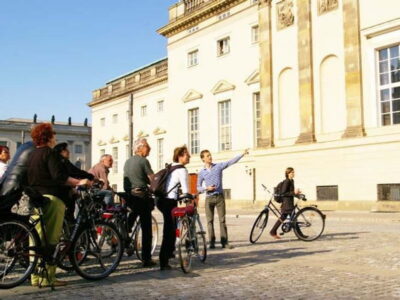
Browse the lists this tour appears in