
Review · CITY TOURS
Berlin: Hansaviertel “The City of Tomorrow” Guided Tour
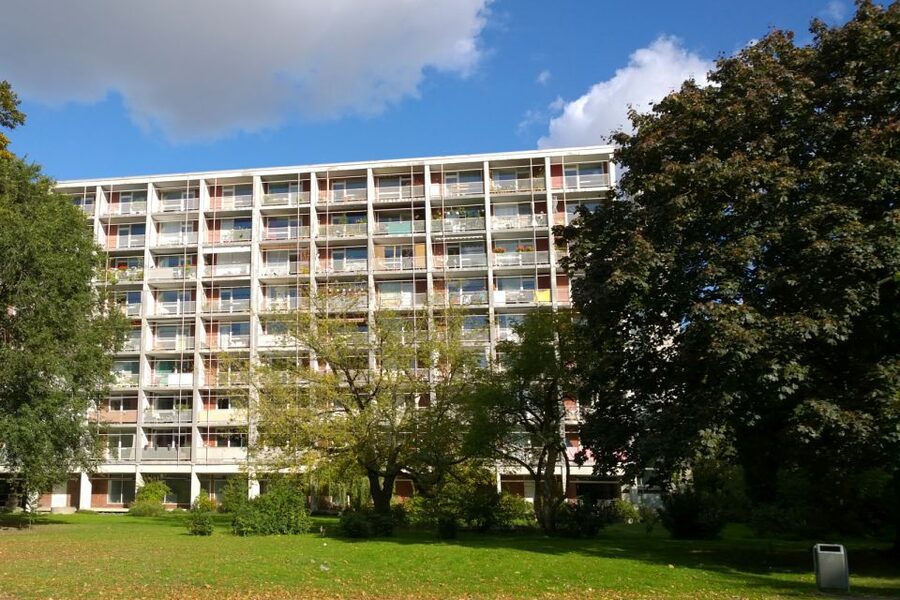
Berlin’s Hansaviertel is a time capsule built in concrete, glass, open lawns, and bold postwar ideas. The district was redesigned for the 1957 International Building Exhibition, which aimed to create a spacious, structured city of tomorrow. I like the way this tour turns that planning project into a story about Berlin’s divided past, not just a parade of famous buildings.
I also like the carefully chosen architecture, from the Müller-Rehm/Siegmann House to the Gropius-Haus, and the chance to see a part of Berlin many visitors skip. Guides such as Tobias and Mr. Schwabe are praised for clear explanations, humor, and patience with questions. The main drawback is simple: if you want medieval streets, grand palaces, or Berlin’s best-known Cold War sights, this specialist walk may feel too narrow. Winter timing can also mean a later finish in fading light.
In This Review
- Key points to know before you book
- Why Hansaviertel tells Berlin’s postwar story so well
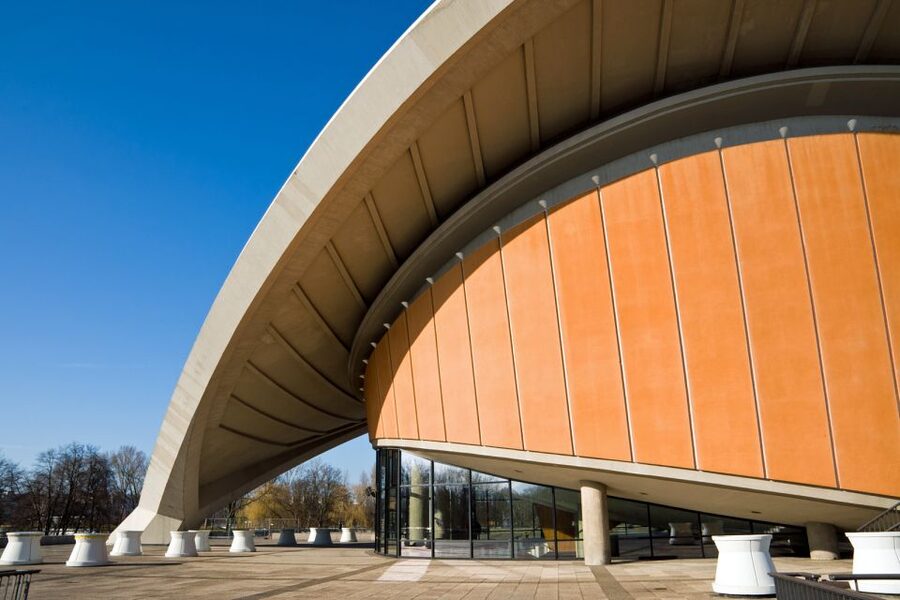
- Starting with the Berlin Pavilion and Müller-Rehm/Siegmann House
- Gropius-Haus and the meaning of an architectural showcase
- The Kaiser-Friedrich Memorial Church and Swedish House
- Hansaplatz station, library, and hospital
- Van den Broek House and Schwippert House
- The Academy of Art and a broader cultural view
- What the two-hour pace feels like
- Guide style and language options
- Is $23 a fair price?
- Who should book this Hansaviertel walk?
- Should you book it?
- FAQ
- How long is the Hansaviertel tour?
- How much does the tour cost?
- Which languages are available?
- Who guides the tour?
- What buildings are included?
- Does the tour visit Hansaplatz station?
- Does the walk include public facilities?
- Is the tour wheelchair accessible?
- Can I cancel for a refund?
- Do I have to pay when I book?
Key points to know before you book
- 1957 modernism is the main event: Hansaviertel was rebuilt for the International Building Exhibition as a showcase for new urban planning.
- The route covers more than apartment blocks: You see the Berlin Pavilion, Gropius-Haus, Kaiser-Friedrich Memorial Church, Hansaplatz station, the library, hospital, landmark homes, and the Academy of Art.
- Tobias is a recurring guide name: He is praised for his humor, patience, strong architectural knowledge, and ability to connect buildings with Berlin’s past.
- It takes two hours on foot: The pace is described as leisurely, but you should still expect a walking tour rather than an indoor museum visit.
- It works especially well for architecture fans: The tour gives context to postwar design instead of asking you to admire concrete shapes without explanation.
- English and German tours are available: The activity is wheelchair accessible, and some options can begin from specific points at particular times.
Why Hansaviertel tells Berlin’s postwar story so well
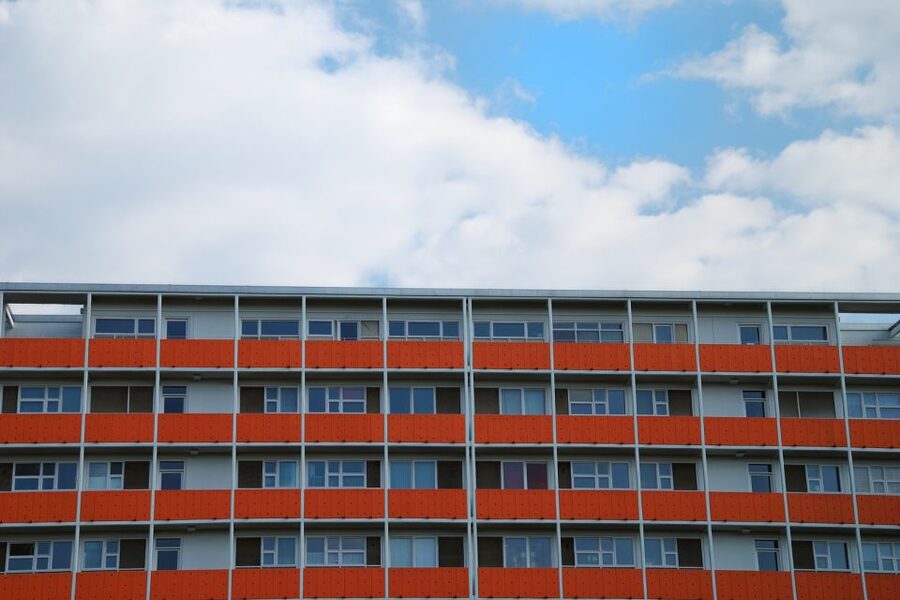
Hansaviertel was not simply repaired after the Second World War. It was newly planned for the International Building Exhibition of 1957, a major design event that presented modern housing and city planning as part of Berlin’s future.
That goal matters because Berlin was split politically and physically during the Cold War. Hansaviertel became West Berlin’s answer to the large-scale housing projects rising elsewhere in the divided city. Its planners favored open space, separated buildings, modern apartments, and a looser arrangement than the traditional closed blocks found in older Berlin neighborhoods.
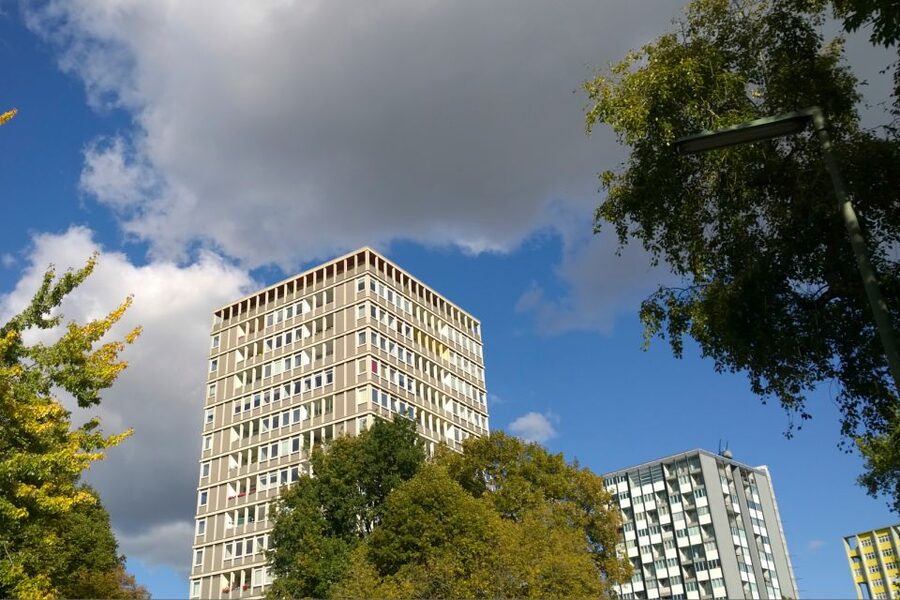
You will hear how this district was intended to be a structured, spacious city. The phrase captures both its promise and its limits. The wide gaps between buildings give the area air and light, yet the result can feel less intimate than central Berlin. I find that contrast useful: the tour does not just show you attractive buildings, it asks what modern city life was supposed to look like in the 1950s.
This is also why the walk rewards attention. Without a guide, you might see a set of unusual towers and apartment buildings. With the background, you can read Hansaviertel as a public statement about democracy, rebuilding, architecture, and competition between different models of urban life.
A few more Berlin tours worth weighing up
- Berlin: Reichstag, Dome and Government District Guided Tour
★ 4.7 · 18,288 reviews - Berlin: Government District around the Reichstag Guided Tour
★ 4.7 · 8,447 reviews - Berlin: Hidden Backyards Guided Walking Tour
★ 4.8 · 5,360 reviews
Starting with the Berlin Pavilion and Müller-Rehm/Siegmann House
The Berlin Pavilion is one of the early architectural stops. It helps introduce the exhibition’s purpose and gives you a way to think about Hansaviertel as a planned showcase rather than an accidental collection of buildings.
From there, the Müller-Rehm/Siegmann House brings the discussion down to a more personal scale. Private or semi-private homes can reveal how modern ideas were meant to work in everyday life. Look for the relationship between the house, its windows, its structure, and the surrounding open areas. The interest is not only in the exterior. It is in how architects tried to reshape ordinary domestic living.
You should expect exterior viewing to be central to the walk. The supplied details do not promise interior access to each building, so do not book this expecting a series of indoor visits. The value comes from seeing the buildings in relation to one another and hearing why particular architects and designs were included in the 1957 exhibition.
Gropius-Haus and the meaning of an architectural showcase

The Gropius-Haus is one of the tour’s major design highlights. Its name connects the route with Walter Gropius and the modern movement’s emphasis on function, clean lines, and new ways of organizing space.
A guide can help you separate genuine design choices from vague claims about modernism. Pay attention to the building’s shape, materials, windows, and placement. Hansaviertel was built to show that a modern neighborhood could be open, healthy, and forward-looking, not just practical.
I like this part of the walk because it gives you a chance to compare buildings rather than treat each one as an isolated sight. National and international architects contributed to the district, so the area has an eclectic quality even though it follows a shared planning idea. Some designs may appeal to you immediately. Others may seem severe or impersonal. That is part of the point.
The guide’s role matters here. Tobias is repeatedly praised for explaining the architecture in an engaging way and for answering questions patiently. Several people also describe him as funny and personable, which is useful on a subject that can become technical if presented as a list of architects and dates.
The Kaiser-Friedrich Memorial Church and Swedish House
The Kaiser-Friedrich Memorial Church adds a different visual and historical note to the route. Its inclusion reminds you that Hansaviertel was not planned as a purely residential machine. Churches, public services, transport, libraries, and cultural spaces were all part of the proposed neighborhood.
The Swedish House adds another national connection. Hansaviertel brought together architects from Germany and other countries, and this building helps make that international aspect visible. You are not just looking at one Berlin architect’s idea. You are seeing a group of design responses to the same postwar question: how should a city be rebuilt for modern life?
This variety keeps the two-hour walk from feeling repetitive. You move between homes, public buildings, religious architecture, and transport infrastructure. The tour’s subject remains focused, but the buildings give it several different angles.
A different side of Berlin on the same trip:
- Berlin: 1-Hour City Tour by Boat with Guaranteed Seating
★ 4.3 · 16,993 reviews - Berlin: Boat Tour Along the River Spree
★ 4.4 · 11,252 reviews - Discover Berlin Half-Day Walking Tour
★ 5.0 · 9,624 reviews - Berlin: Hop-on Hop-off Bus Tour with Live Commentary
★ 4.3 · 8,579 reviews
Hansaplatz station, library, and hospital
The Hansaplatz U-Bahn station is an important stop because transportation is central to city planning. A modern neighborhood needs more than attractive buildings. It needs ways for people to reach work, shops, schools, and cultural venues.
Seeing the station in the context of the district helps you understand Hansaviertel as a functioning urban plan. The tour also passes the Hansaviertel Library and Hansaviertel Hospital, two buildings that point to the practical services expected in the city of tomorrow.
These stops may not have the immediate visual impact of a famous church or architect-designed home. I would still pay attention. They show whether the grand planning ideas reached daily life. Housing exhibitions often focus on dramatic façades, but libraries, hospitals, and transit stations reveal how a neighborhood was meant to operate.
The route’s mix of buildings is one reason I would suggest this experience to anyone who has already seen Berlin’s headline attractions. It adds texture to the city rather than repeating the Brandenburg Gate, Museum Island, or Berlin Wall circuit.
Van den Broek House and Schwippert House
The Van den Broek House and Schwippert House continue the tour’s look at individual architectural solutions within the wider Hansaviertel plan. Their names may mean little before the walk, but that is exactly where a specialist guide earns the fee.
You will learn how separate architects approached similar needs: housing, privacy, light, circulation, and a connection to outdoor space. The comparison is more useful than memorizing names. Notice how one house may feel more enclosed, while another favors openness or a stronger relationship with the surrounding grounds.
The supplied information does not give a detailed interior program for these homes, so the experience is best understood as an architectural walk through the district. You will see the buildings from public routes and hear their place in the exhibition and the neighborhood’s development.
If you enjoy comparing styles, this may be one of the strongest parts of the tour. If you prefer entering historic houses and examining original rooms, you may want to pair the walk with an indoor museum visit elsewhere in Berlin.
The Academy of Art and a broader cultural view
The Academy of Art brings culture into the story. Hansaviertel was meant to support more than private apartments, and the Academy shows how art and public life fit into the district’s plans.
This is also a useful point for thinking about the relationship between architecture and politics. In postwar Berlin, new buildings carried symbolic weight. A modern district could signal renewal, openness, and confidence in the future. At the same time, its very existence reflected the city’s division and the competing visions of East and West.
The tour does not appear to be a political history walk alone. Its strength is the way architecture provides the evidence. Buildings, streets, transport, and open spaces become clues to Berlin’s turbulent twentieth century.
That approach suits me better than a tour that simply recites historical events. You can connect the dates to a physical place and see how design became part of Berlin’s public argument.
What the two-hour pace feels like
The advertised duration is two hours, with a leisurely walking pace. That gives the guide enough time to explain the district without turning the experience into a rushed checklist.
Still, two hours is not a full architectural study of every building. Expect a guided introduction to the key sites rather than a technical lecture on every floor plan, architect, and construction detail. The guide will help you see the main pattern of the neighborhood and understand why the featured buildings matter.
Wear comfortable shoes and dress for the weather. The tour takes place outdoors, and Berlin can be cold, wet, or dim in winter. One visitor specifically wished the tour could begin and finish earlier during the winter months, a sensible point if you prefer daylight and warmth.
The meeting point can change with the option you book. Check the exact starting place before setting out, especially if you are fitting this walk between other appointments. Some tours can also be arranged to begin from specific points at specific times, but that needs to be organized in advance.
Guide style and language options
The strongest human element is the guide. Tobias receives repeated praise for his friendly, funny, engaging manner and for his ability to explain both architecture and Berlin history. Mr. Schwabe is also described as kind, personable, and exceptionally strong in presenting information.
That does not mean every departure will have the same person. Guide availability can vary, so treat Tobias and Mr. Schwabe as names associated with the experience, not a guaranteed assignment unless your booking confirms it.
Tours are offered in English and German. This matters because architectural terms can become dense quickly. A good guide makes the ideas clear without flattening them, and the available comments suggest that the tour leaders are comfortable handling questions and adding historical context.
I would choose the language in which you can ask detailed questions. Hansaviertel rewards curiosity. You may want to ask why buildings were placed apart, how the exhibition shaped the neighborhood, or how the district relates to Berlin’s wider postwar development.
Is $23 a fair price?
At $23 per person, this is a reasonable price for a two-hour specialist walking tour, especially if architecture and twentieth-century Berlin interest you. You are paying for interpretation, not admission to a major museum or a long list of included attractions.
That distinction helps set expectations. If you want famous interiors, transport, or a full-day city tour, the price may not feel like a bargain. If you would otherwise walk through Hansaviertel without understanding what you were seeing, the guide adds real value.
I consider the cost particularly fair for visitors who have already covered central Berlin. The district is easy to overlook, and its importance is not always obvious from street level. A focused explanation can turn an ordinary walk into a clear lesson in urban planning and Cold War-era Berlin.
Free cancellation up to 24 hours before the start and a reserve-now, pay-later option make the booking less rigid. The tour is also listed as wheelchair accessible, though you should confirm the exact route and meeting point for your chosen departure.
Who should book this Hansaviertel walk?
I would recommend it most strongly to:
- Architecture students and design fans
- Visitors interested in 1950s modernism
- People curious about Berlin’s divided history
- Repeat Berlin visitors seeking a quieter, less familiar district
- Residents who have lived in Berlin but never explored Hansaviertel
- Anyone who enjoys a guide-led walk with time for questions
Families can join if children are interested in buildings and city design, but the subject is more specialized than a general sightseeing tour. The two-hour length helps, yet younger children may not find architectural comparisons compelling.
You should also know what this is not. It is not a general introduction to all of Berlin, a museum tour, or a walk focused mainly on the Wall, Nazi history, or royal Berlin. Its appeal comes from a narrow subject treated with care.
Should you book it?
Book this tour if you want to understand why Hansaviertel looks the way it does and how architecture became part of postwar Berlin’s political and cultural story. The Berlin Pavilion, Gropius-Haus, landmark homes, church, station, library, hospital, and Academy of Art give you plenty to see, while the guide supplies the connections.
Skip it if your time in Berlin is very short and you have not yet visited the city’s essential historic sights. Also think twice if modernist architecture leaves you cold.
For the right audience, this is a smart $23 addition to a Berlin itinerary. You leave with a clearer sense of how a neighborhood can express an era, a political system, and a vision of everyday life. That is much more useful than simply taking photographs of unusual buildings.
FAQ
How long is the Hansaviertel tour?
The walking tour lasts two hours.
How much does the tour cost?
The listed price is $23 per person.
Which languages are available?
The tour is available in English and German.
Who guides the tour?
Guides associated with the experience include Tobias and Mr. Schwabe. The specific guide may depend on the departure you book.
What buildings are included?
The route includes the Berlin Pavilion, Müller-Rehm/Siegmann House, Gropius-Haus, Kaiser-Friedrich Memorial Church, Swedish House, Van den Broek House, Schwippert House, and Academy of Art.
Does the tour visit Hansaplatz station?
Yes. The route passes the Hansaplatz U-Bahn station.
Does the walk include public facilities?
Yes. The route includes the Hansaviertel Library and Hansaviertel Hospital.
Is the tour wheelchair accessible?
Yes, the activity is listed as wheelchair accessible.
Can I cancel for a refund?
You can cancel up to 24 hours in advance for a full refund.
Do I have to pay when I book?
A reserve-now, pay-later option is available, so you can hold a place without paying immediately.
Just added around Berlin
- Berlin Highlights in One Day★ 5.0 · 3 reviews
- Private Berlin One Day Tour with a Local: See the City Unscripted★ 3.5 · 3 reviews
- Individual city tour Berlin for max. 8 persons★ 5.0 · 3 reviews
- Transfer from Berlin Schönefeld Airport (SXF) to Berlin city Hotels – ROUND TRIP★ 4.0 · 3 reviews
- Berlin: Museum Island Tour★ 5.0 · 3 reviews
- Private Analogue Photography Experience in Berlin★ 5.0 · 3 reviews
- Berlin: Local Food Tour in Secrets Hidden Gems★ 4.0 · 3 reviews
- Berlin & The Third Reich Private Guided Tour★ 5.0 · 3 reviews
City Tours, compared.

1-Hour City Tour by Boat with Guaranteed Seating
Read our review →

Berlin City Hop-on Hop-off Tour with Optional Cruise
Read our review →


Browse the lists this tour appears in