
Review · TOURS
Berlin: Modernist Architecture Tour in the Hansaviertel
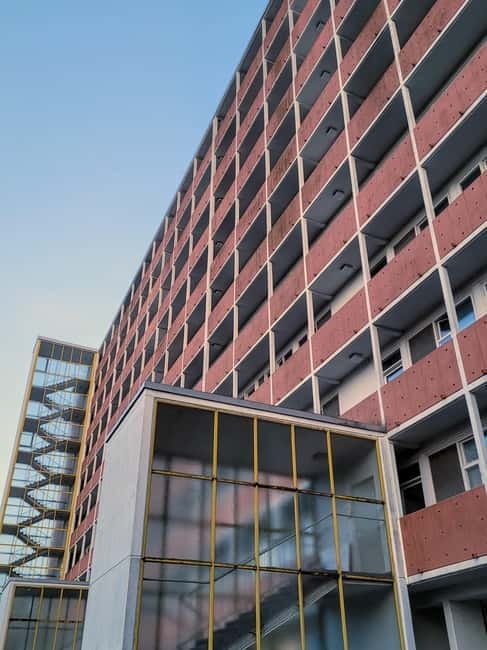
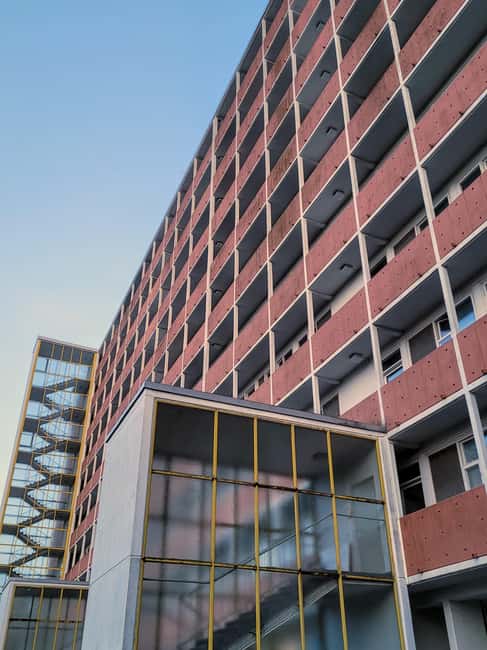
Hansaviertel is one of Berlin’s best places to see architecture doing political work. Between the Spree and Tiergarten, a leafy district became West Berlin’s answer to the future, filled with daring buildings by Walter Gropius, Oscar Niemeyer, and Alvar Aalto. Before that, it was a 19th-century residential quarter, and before that story ends, you’ll pause at a memorial to Jewish life destroyed by Nazi persecution and war.
I like this tour for two clear reasons: it connects beautiful buildings to Cold War politics, and it does not skip the people who lived in the district before 1957. Guide Morgan is praised for telling the story with energy, detail, and an ability to handle questions. The main drawback is that two hours on foot, with plenty of standing, may feel long if architecture or Berlin history is not your thing.
In This Review
- Key points worth knowing
- Why Hansaviertel tells Berlin’s story so well
- Starting beside Tiergarten station
- Villas, gardens, and the old Hansaviertel
- A quiet memorial to Jewish life
- Interbau 1957 and West Berlin’s answer to the future
- Meeting Gropius, Niemeyer, Aalto, and others
- A lively guide can make or break this walk
- What the $23 price really buys you
- Walking comfort, route length, and the finish
- Who should book the Hansaviertel tour
- Should you book it?
- FAQ
- Where does the Hansaviertel tour start?
- Where does the tour finish?
- How long does the tour last?
- What languages are available?
- How much does the tour cost?
- Is the tour wheelchair accessible?
- What should I bring?
- Is the tour suitable for children?
- Can I cancel the booking?
Key points worth knowing
- Interbau 1957: See the international building exhibition that turned a bomb-damaged area into a West Berlin showcase.
- Architectural all-stars: Look for work linked to Gropius, Niemeyer, Aalto, and other major modernists.
- More than concrete: The route begins with villas, gardens, famous residents, and the lost Jewish community of the old Hansaviertel.
- A quieter Berlin: The walk leaves the city’s headline sights for a calm district between the Spree and Tiergarten.
- Useful timing: Plan on about two hours, including a 1.5-hour guided walk, and wear comfortable shoes.
- Good value at $23: You pay for an expert guide and a focused lesson in Berlin’s social and architectural past, not museum admission.
Why Hansaviertel tells Berlin’s story so well
You may know Berlin for the Brandenburg Gate, the Berlin Wall, or Museum Island. Hansaviertel offers a different kind of city story. Here, architecture reveals how Berlin tried to recover from war, compete during the Cold War, and imagine a better daily life.
The district sits between the Spree and Tiergarten in central Berlin. Its trees and open spaces can make it feel removed from the city, but that calm is part of the point. Hansaviertel was planned around the idea that modern housing could offer light, air, greenery, and room for ordinary life.
That ideal did not arrive on empty land. The area first grew in the late 19th century, when Berlin’s population was rising at a remarkable pace. Hansaviertel became a comfortable enclave for middle- and upper-class residents, with villas, gardens, and carefully finished façades.
The tour begins by bringing that earlier district back into view. I value this opening because it keeps the modernist buildings from becoming a parade of famous names. You first learn what was there, who lived there, and what was lost.
Other Berlin tours people book alongside this one:
- Berlin: Reichstag, Dome and Government District Guided Tour
★ 4.7 · 18,288 reviews - Berlin: 1-Hour City Tour by Boat with Guaranteed Seating
★ 4.3 · 16,993 reviews - Berlin: Boat Tour Along the River Spree
★ 4.4 · 11,252 reviews
Starting beside Tiergarten station
The meeting point is in front of the Berlin-Tiergarten S-Bahn station, at the Siegmunds Hof and Bachstraße exit, next to the beer garden called Biergarten der Tiergartenquelle. Look for the guide carrying an orange umbrella.
That detail matters. Large Berlin stations have several exits, and a clear landmark saves you from wandering along the tracks or searching through the park. Give yourself a little extra time to find the correct exit, especially if you are unfamiliar with the S-Bahn system.
The beer garden is a practical reference point, but food and drinks are not included. You can buy something separately if it is open, though the tour itself is focused on walking and interpretation rather than a meal stop.
The guide speaks German or English. The tour is also described as wheelchair accessible, but keep in mind that the experience involves walking and standing for roughly two hours. If you need a particular pace or have specific mobility concerns, ask before booking.
Villas, gardens, and the old Hansaviertel
The first historical layer is the original Hansaviertel. Before the postwar apartment blocks, this was a district of elegant residences and landscaped gardens. Its location near the Tiergarten and Spree helped give it a pleasant, prestigious character.
The guide uses this part of the walk to explain Berlin’s rapid growth in the 19th century. That context helps you understand why the city built residential quarters like this one, and why the district mattered to people with money and influence.
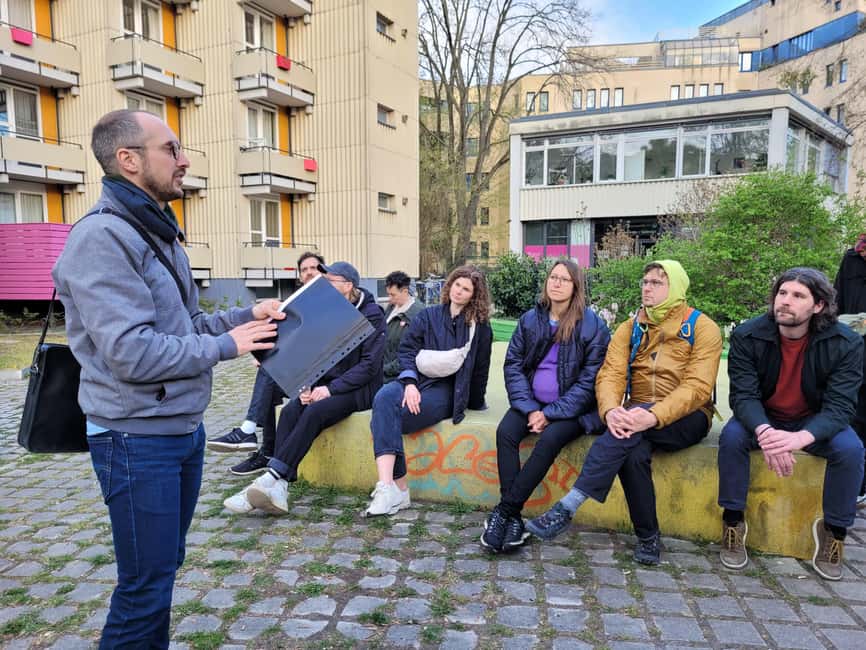
You’ll also hear about notable residents connected with Hansaviertel, including Rosa Luxemburg, Nelly Sachs, and Käthe Kollwitz. Their names point to the area’s cultural and political life, not just its architecture.
This is one of the tour’s strongest features. You are not asked to admire buildings in isolation. The route gives you a sense of the neighborhood as a place of homes, ideas, class, and conflict.
Do not expect every original structure to survive. The district was badly damaged during the Second World War, and the later rebuilding changed its character. That tension between what remains and what disappeared is central to the walk.
A quiet memorial to Jewish life
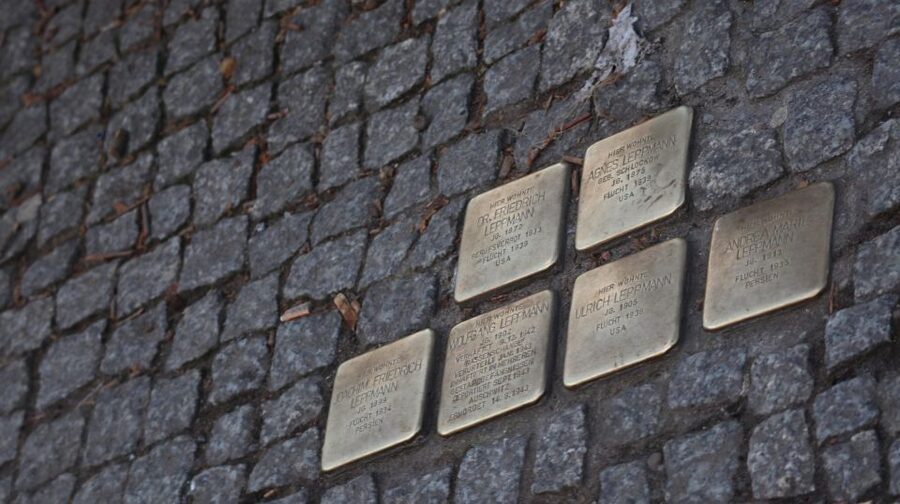
One of the most serious stops is a memorial marking the site of a major Jewish community in Berlin. The neighborhood was destroyed socially by Nazi persecution and physically through persecution, war, and Allied bombing.
The stop changes the mood of the tour. After the villas and cultural names, you are reminded that Hansaviertel was also shaped by forced removal and murder. The modern buildings that follow were not simply placed on a blank page. They rose amid the wreckage of a city and the absence of people who had once lived there.
This part may be especially meaningful if you want Berlin architecture explained alongside Berlin’s moral and political history. It also keeps the tour from treating postwar modernism as a clean break with the past.
The historical content is serious, so the recommended age is 14 and older. There is no strict age rule, but younger children may find two hours of architectural and political discussion difficult. All minors must be accompanied by an adult.
A different side of Berlin on the same trip:
- Discover Berlin Half-Day Walking Tour
★ 5.0 · 9,624 reviews - Berlin: Hop-on Hop-off Bus Tour with Live Commentary
★ 4.3 · 8,579 reviews - Berlin: Government District around the Reichstag Guided Tour
★ 4.7 · 8,447 reviews - Berlin: Reichstag, Plenary Chamber, Cupola & Government Tour
★ 4.6 · 8,422 reviews
Interbau 1957 and West Berlin’s answer to the future
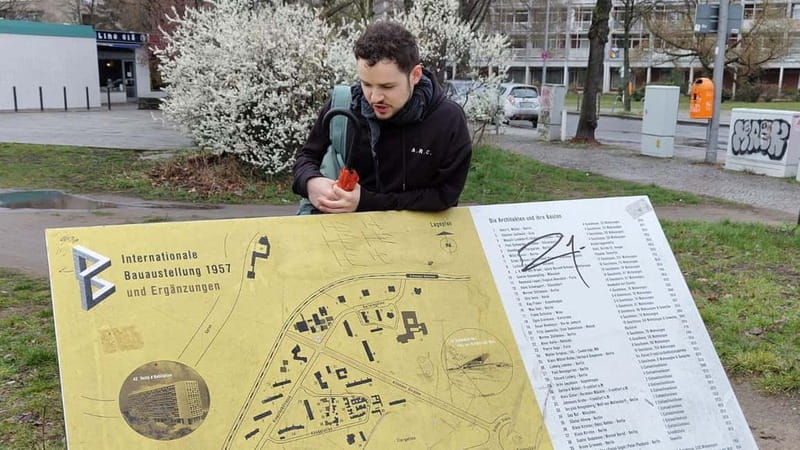
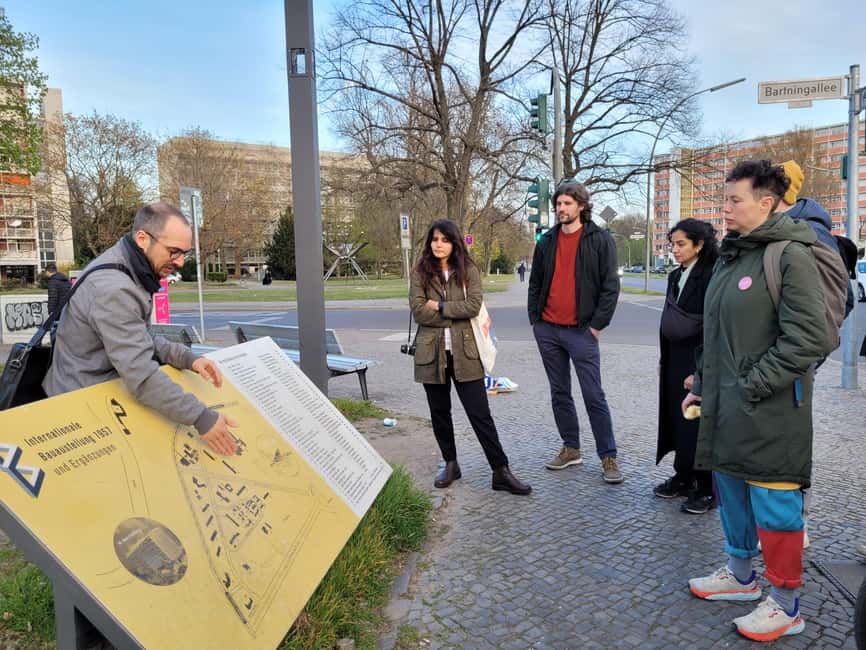
The tour’s central chapter begins in 1957 with Interbau, an international architecture exhibition. West Berlin used the event to present a new model of urban living on land damaged by the war.
This was architecture with a message. In the Cold War, West Berlin needed to show that its political and social system could produce a modern, attractive city. Buildings, open space, and new housing were part of that argument.
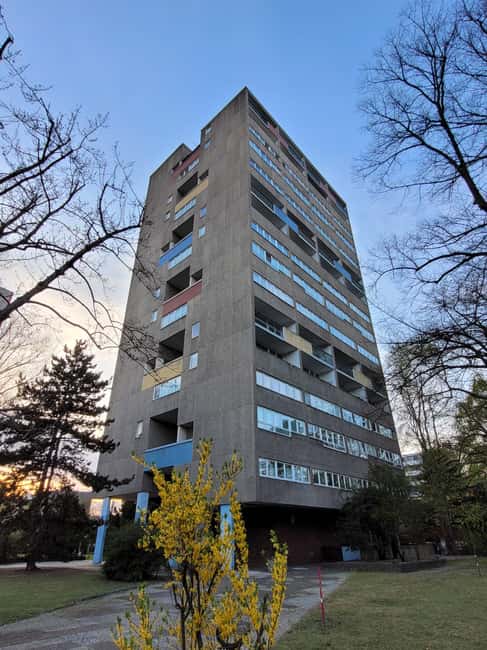
The result was not a single monumental block. Instead, Hansaviertel became a collection of different modernist experiments. Famous architects were invited to contribute, including Walter Gropius, Oscar Niemeyer, and Alvar Aalto.
You’ll see how their work differs in shape, materials, and ideas. Some buildings feel restrained and orderly. Others are more sculptural or unconventional. The point is not that one architect solved city living, but that the district let several visions compete in one place.
That makes Hansaviertel useful for understanding modernism beyond a textbook definition. You can ask practical questions: How much privacy does an apartment offer? How do residents move through shared space? Does a tower free up ground-level greenery? Does a striking design remain comfortable after decades of daily use?
The guide also explores the ideas behind the buildings. Modernist architects hoped to shape healthier, more rational cities. Light, air, open space, and efficient housing were not just design preferences. They were connected to a belief that the built environment could improve everyday life.
Meeting Gropius, Niemeyer, Aalto, and others

Architecture fans will get the most from the portion devoted to individual buildings. Gropius, Niemeyer, and Aalto are names you may already know, but seeing their work in a functioning neighborhood gives those names more meaning.
Gropius is associated with the Bauhaus and with a clean, functional approach to design. Niemeyer is known for expressive curves and sculptural forms. Aalto brought a more human, organic touch to modernism. Hansaviertel puts these different approaches close enough for comparison.
You may not love every building. Some postwar designs can appear severe, and some apartment blocks may look less revolutionary today than they did in 1957. That is not a weakness of the tour. It is one of the questions the guide asks: Does this architecture still feel modern?
I like that the walk examines the promises as well as the appearances. A building may look bold, but did it create a pleasant home? A neighborhood may offer greenery, but did it work equally well for everyone? The tour does not reduce Interbau to a list of famous architects.
The best experience comes from paying attention to the relationship between buildings and public space. Notice where the blocks sit, how much open ground surrounds them, and how the district differs from Berlin’s older streets of tightly packed façades.
A lively guide can make or break this walk
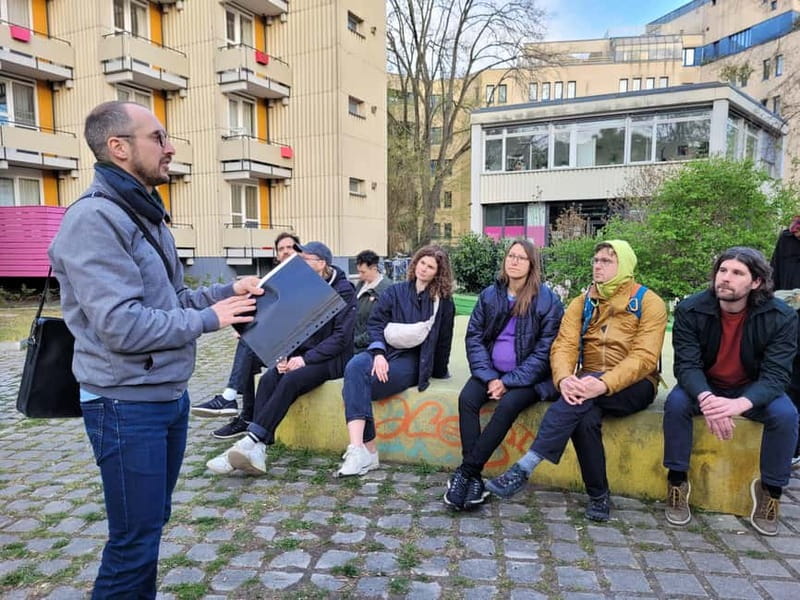
Architecture tours depend heavily on explanation. Without a guide, you might see unusual apartment blocks and move on. With the right guide, you begin to read the district as a series of choices about housing, politics, memory, and daily life.
Morgan is specifically praised for guiding people through the old and modern parts of Hansaviertel in a lively way. The available account also highlights the guide’s ability to answer a wide range of questions and add useful information when the conversation takes an unexpected turn.
That matters here because Hansaviertel can raise questions that are not easy to answer from a script. You may want to know why the area was rebuilt this way, how the Cold War shaped the exhibition, or how the buildings function today. A guide who can move beyond prepared facts adds real value.
The language options are German and English. Since the tour contains political and historical material, choose the language in which you can follow detailed explanations comfortably.
What the $23 price really buys you
At $23 per person, this is a reasonably priced specialist tour. You are not paying for a major attraction or a museum ticket. You are paying for access to a focused route and a guide who can explain what you are seeing.
I think the value is strongest if you would otherwise walk through Hansaviertel without understanding its purpose. The district’s buildings are free to view, but their connection to wartime destruction, Jewish life, West Berlin, and Interbau 1957 is much harder to grasp on your own.
The price also compares well with the tour’s two-hour length. It is long enough to build a story but short enough to fit into a busy Berlin schedule. You can pair it with other central sights without giving up an entire day.
There are limits. Food, drinks, and entry to museums or monuments are not included, though no specific paid admission is listed as part of the route. If you want an indoor architecture collection or a long visit inside individual buildings, this is not that kind of experience.
Free cancellation up to 24 hours before the start gives you some flexibility, and you can reserve now and pay later. Check the available start times before planning the rest of your day.
Walking comfort, route length, and the finish
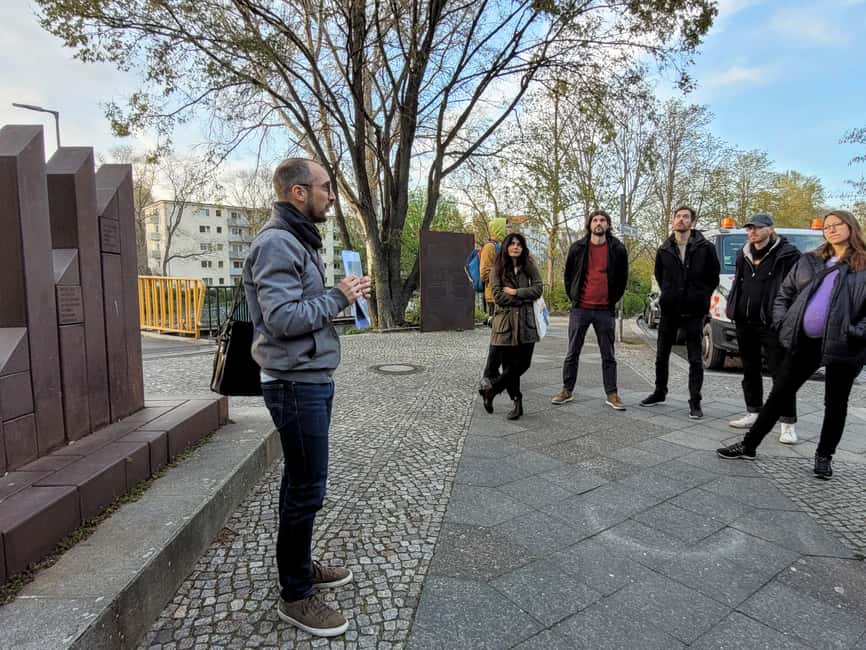
The activity lasts two hours, while the guided Hansaviertel portion is listed as 1.5 hours. You should plan for the full two-hour window, since meeting, walking, transitions, and the final portion may all take time.
The walk ends at Hansaplatz according to the route description. The meeting information also says the activity ends back at the meeting point, so confirm the exact finish arrangement when you book or meet the guide. Either way, Hansaplatz is a useful place to know because it is closely tied to the postwar district.
Wear comfortable shoes and bring water. This is not a strenuous hike, but standing on sidewalks and outdoor spaces for two hours can be tiring. Berlin weather can also change quickly, and there is no promise of indoor shelter during the walk.
The tour is listed as wheelchair accessible. Still, a participant who uses a wheelchair may want to confirm the exact route and surfaces in advance, since the experience takes place through public streets and outdoor areas.
Who should book the Hansaviertel tour
I would choose this tour if you have already seen Berlin’s main historic center and want a quieter, more unusual subject. It is also a good pick if you enjoy architecture but want to understand the politics behind it.
History-minded visitors will appreciate the route’s movement from 19th-century growth to Nazi persecution, wartime destruction, Cold War rivalry, and postwar rebuilding. Architecture students and design fans will get the clearest benefit from comparing Gropius, Niemeyer, Aalto, and their contemporaries in one district.
It suits adults and older teenagers better than young children. The recommended age is 14 and up because of the serious historical material and the amount of explanation.
I would think twice if you want a fast-moving sightseeing walk with famous photo stops. Hansaviertel is calmer and more reflective. Its appeal comes from noticing how buildings work together, listening to the story, and asking questions.
Should you book it?
Book this tour if you want Berlin explained through one neighborhood rather than a checklist of landmarks. For $23, you get a compact lesson in architecture, memory, politics, and urban planning, led in English or German by a local guide.
The strongest reason to go is the full arc: elegant villas, a memorial to destroyed Jewish life, and the striking modernist experiment of Interbau 1957. The main caution is simple: bring good shoes, allow two hours, and expect serious discussion rather than light sightseeing.
If that sounds like your kind of Berlin, Hansaviertel is worth the time.
FAQ
Where does the Hansaviertel tour start?
It starts in front of the Berlin-Tiergarten S-Bahn station at the Siegmunds Hof and Bachstraße exit, next to Biergarten der Tiergartenquelle. Look for the guide with an orange umbrella.
Where does the tour finish?
The route description lists Hansaplatz as the finish. The meeting information also says the activity ends back at the meeting point, so confirm the final arrangement when you book or meet the guide.
How long does the tour last?
The activity lasts two hours. The guided Hansaviertel portion is listed as 1.5 hours, so plan for the full two-hour period.
What languages are available?
The live guide can lead the tour in German or English.
How much does the tour cost?
The price is $23 per person.
Is the tour wheelchair accessible?
Yes, the activity is listed as wheelchair accessible. It is still a walking tour with approximately two hours of walking and standing, so confirm any specific access needs in advance.
What should I bring?
Bring comfortable shoes and water.
Is the tour suitable for children?
There is no strict age restriction, but it is recommended for ages 14 and up because of the historical content. All minors must be accompanied by an adult.
Can I cancel the booking?
Yes. You can cancel up to 24 hours in advance for a full refund. You can also reserve now and pay later.
Just added around Berlin
- Berlin Highlights in One Day★ 5.0 · 3 reviews
- Individual city tour Berlin for max. 8 persons★ 5.0 · 3 reviews
- Transfer from Berlin Schönefeld Airport (SXF) to Berlin city Hotels – ROUND TRIP★ 4.0 · 3 reviews
- Private Berlin One Day Tour with a Local: See the City Unscripted★ 3.5 · 3 reviews
- Berlin: Museum Island Tour★ 5.0 · 3 reviews
- Private Analogue Photography Experience in Berlin★ 5.0 · 3 reviews
- Berlin: Local Food Tour in Secrets Hidden Gems★ 4.0 · 3 reviews
- Berlin & The Third Reich Private Guided Tour★ 5.0 · 3 reviews
Tours, compared.
Reichstag, Dome and Government District Guided Tour
Read our review →
1-Hour City Tour by Boat with Guaranteed Seating
Read our review →


Reichstag, Plenary Chamber, Cupola & Government Tour
Read our review →