
Review · PHOTOGRAPHY SESSIONS
BERLIN PHOTO TOUR with a professional Photographer from Berlin
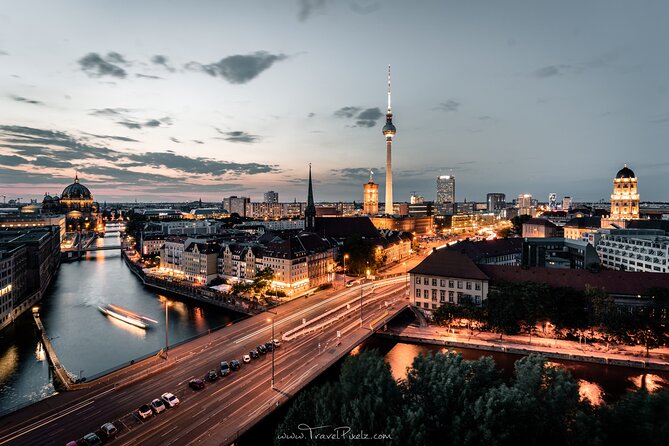
Berlin looks its best when daylight softens and the buildings begin to glow. This 90-minute photo walk with Fabian, a professional Berlin photographer, is built around that useful window of time, with practical help on composition, light, and camera settings rather than a quick checklist of monuments.
I like two things right away: the group is capped at five people, and Fabian adjusts his advice to your level. You can bring a full camera kit, a basic camera, or even an iPhone. The main consideration is pace. With several major sights near the route, the session can feel brisk, and the exact path may change between the government district and central Berlin.
In This Review
- Key points to know
- Starting at the Brandenburg Gate
- Choosing between two Berlin photo routes
- Reichstag Building: lines, glass, and political Berlin
- Marie-Elisabeth-Lueders-Haus and the government district
- The Federal Chancellery and Potsdamer Platz
- Unter den Linden, Berlin Cathedral, and Gendarmenmarkt
- Why blue hour is the right time to learn
- Instruction for cameras, phones, and mixed skill levels
- Price, group size, and practical value
- Who should book this photo walk
- Booking and cancellation details
- Should you book the Berlin Photo Tour?
- FAQ
- Where does the Berlin Photo Tour begin?
- Where does the activity end?
- How long does the photo walk last?
- How many people can join the tour?
- Do I need a professional camera?
- What happens if the weather is poor?
Key points to know
- Blue-hour timing: Learn how to work with the soft light just before and after sunset.
- Small group size: A maximum of five people allows for personal help without making the walk private.
- Fabian’s teaching style: Expect patient guidance tailored to your skill level and interests.
- Phone-friendly instruction: You do not need a professional camera to take part.
- Berlin’s modern face: The route pairs the Brandenburg Gate with striking government buildings and Potsdamer Platz.
- Tripods available: Two tripods can be provided if you do not have one or prefer not to carry yours.
Starting at the Brandenburg Gate
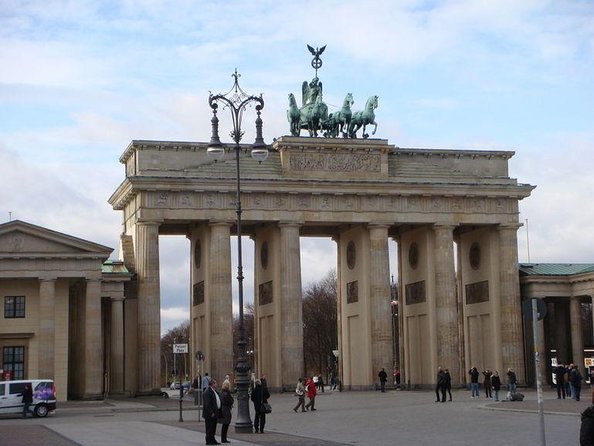
The meeting point is Pariser Platz 4, directly by the Brandenburg Gate. That puts you in the heart of central Berlin, with one of the city’s most recognizable subjects ready for your first frame.
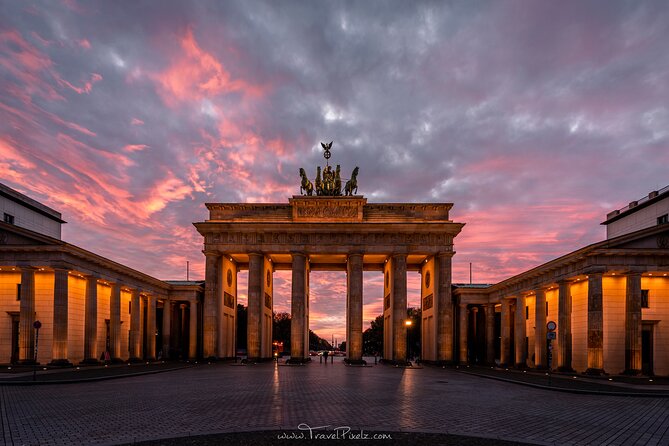
The gate is familiar, but it is not always easy to photograph well. Its broad neoclassical form, columns, and Quadriga sculpture create strong vertical lines, while the open square gives you room to work with symmetry and scale. Fabian’s role is useful here because he can help you move beyond simply pointing at the monument and pressing the shutter.
This is also a sensible place to begin a lesson. You can practice framing on a single landmark before moving into more difficult scenes with glass, steel, open plazas, and changing light.
The meeting point is easy to reach by public transportation, but private transportation is not included. You should plan to arrive ready to walk and carry your own camera equipment. The activity ends back at the meeting point, although the advertised route may take you through several nearby parts of central Berlin first.
A few more Berlin tours worth weighing up
- Berlin: Fotografiska Photography Exhibition Ticket
★ 4.6 · 168 reviews - Berlin Museum of Photography Entry Ticket
★ 4.5 · 88 reviews - 5hours: Guide, Chauffeur & Photographer in Berlin private Tour
★ 5.0 · 66 reviews
Choosing between two Berlin photo routes
The experience can continue toward the Reichstag and the government district, or head down Unter den Linden toward Berlin Cathedral and Gendarmenmarkt. The listed stops also include Potsdamer Platz, so you should treat the route as flexible rather than assume every location will receive equal time.
That flexibility is one of the better features of the tour. If you are keen on modern architecture, the government quarter gives you clean lines, reflective surfaces, unusual angles, and large open spaces. If you want classic Berlin sights, the Cathedral and Gendarmenmarkt offer more traditional subjects and familiar city views.
The tradeoff is simple: a 90-minute session cannot provide a full sightseeing tour of all these locations. You get a focused photography lesson with selected landmarks, not a detailed historical walk through every district. Ask Fabian at the start which route best matches your interests and the available light.
Reichstag Building: lines, glass, and political Berlin
The Reichstag is one of the strongest subjects on the government district route. Its historic stone exterior contrasts with modern glass, creating several ways to frame the building.
You can work on texture and symmetry around the older structure, then look for sharper geometric compositions in the newer architectural elements nearby. This makes the stop useful for anyone trying to improve more than basic exposure. You may find yourself working with repeating lines, reflections, negative space, and the balance between a solid building and open sky.
The Reichstag is also a good place to learn how light changes a subject. A bright afternoon can flatten pale stone, while the softer light around sunset can bring out shape and shadow. Fabian’s advice on the blue hour, the short period when the sky turns a deeper blue while city lights begin to glow, is especially relevant here.
Do not expect an interior visit. The experience is an outdoor photo walk, and the information provided focuses on photographing the building and nearby architecture.
Marie-Elisabeth-Lueders-Haus and the government district
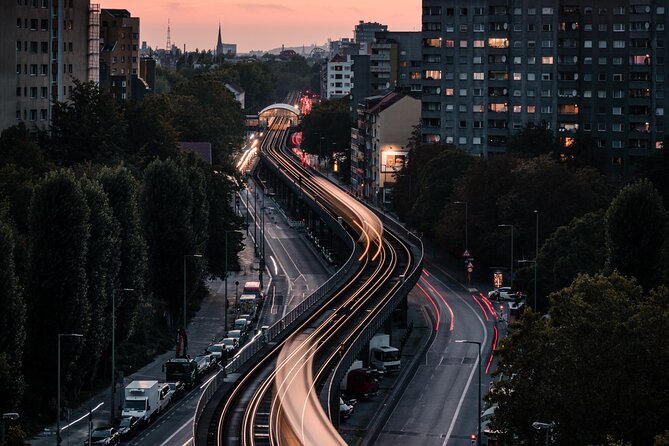
The Marie-Elisabeth-Lueders-Haus brings a more contemporary architectural feel to the walk. Its clean forms and large glass surfaces give you something very different from the Brandenburg Gate.
This is the sort of location where a guide who understands photography can save you time. You might find an interesting angle on your own, but you may also walk past it without noticing how the structure can be used as a frame or leading line. Fabian can help you look for those possibilities and explain why one position works better than another.
For beginners, this part of the walk can be a useful introduction to composition. For experienced photographers, it offers a chance to concentrate on visual choices rather than tourist snapshots. You can ask for help with the areas you want to improve, including lighting and composition.
The government district also benefits from the small group limit. Five people is still a group, but it gives Fabian a fair chance to respond to individual questions. If everyone arrives with different cameras and skill levels, the session may move at a pace that is not perfect for every person.
A different side of Berlin on the same trip:
- Berlin: Reichstag, Dome and Government District Guided Tour
★ 4.7 · 18,288 reviews - Berlin: 1-Hour City Tour by Boat with Guaranteed Seating
★ 4.3 · 16,993 reviews - Berlin: Boat Tour Along the River Spree
★ 4.4 · 11,252 reviews - Discover Berlin Half-Day Walking Tour
★ 5.0 · 9,624 reviews
The Federal Chancellery and Potsdamer Platz
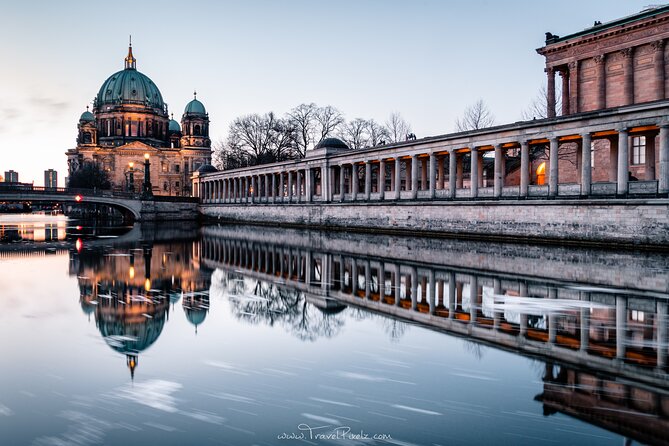
The Bundeskanzleramt, or Federal Chancellery, adds another bold modern structure to the route. Its scale and open surroundings can make a photograph feel dramatic, but large buildings also present a challenge. You need to decide how much sky, pavement, and surrounding space belongs in the frame.
That is where personalized instruction matters. One participant may need help with basic camera controls, while another may want suggestions for a more striking composition. The experience is designed to adapt to those different needs rather than deliver one fixed lecture.
Potsdamer Platz provides a different city mood. Its modern towers and broad public spaces are well suited to evening photography, especially when artificial lights begin to compete with the last daylight. If you are interested in city scenes, architecture, or night photography, this may be the most useful portion of the route.
The exact sequence matters less than the lesson. You are not being promised a long stop at every building. Instead, you are given a chance to photograph several types of Berlin architecture while learning how to handle changing conditions.
Unter den Linden, Berlin Cathedral, and Gendarmenmarkt
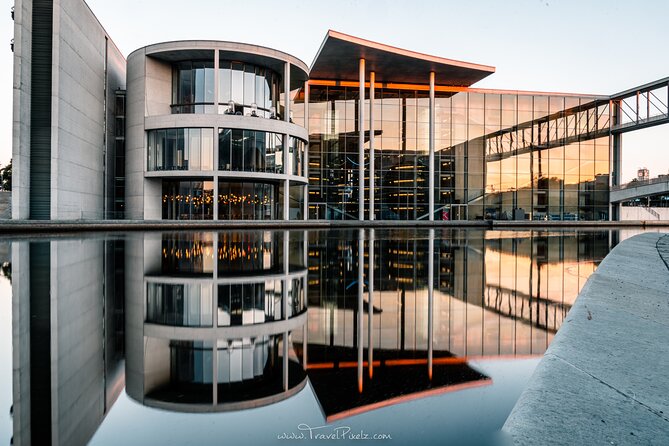
The alternative route down Unter den Linden shifts the focus toward some of Berlin’s grandest central sights. Berlin Cathedral offers a strong subject with a large dome, detailed stonework, and a recognizable silhouette.
Gendarmenmarkt brings another classic setting, with formal architecture and a more composed square. These locations can suit photographers who want postcard views, but they also reward careful framing. Look for balance between the buildings, space around the subject, and the way the evening sky affects the whole scene.
Because the route can change, confirm your preferred focus with Fabian before setting off. Someone visiting Berlin for the first time may want the classic landmarks, while a repeat visitor may prefer contemporary architecture and less familiar angles. The tour works best when you make that choice clear early.
Why blue hour is the right time to learn
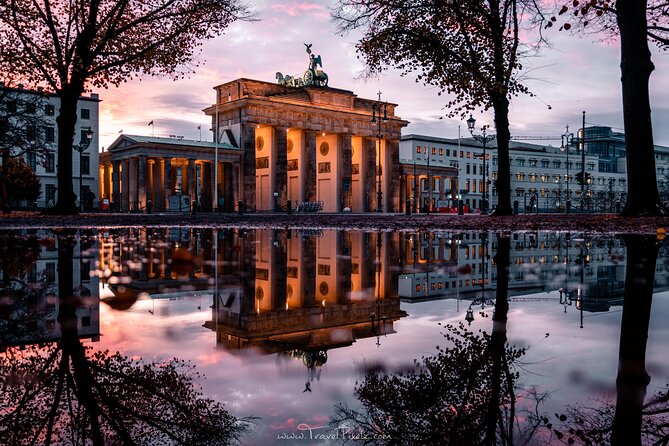
The timing is one of the most valuable parts of this experience. The blue hour gives you more interesting light than a flat midday session, but it can also be harder to manage.
The sky retains color while buildings and streetlights begin to brighten. That creates a balanced scene, though the useful window is short. You may need to adjust settings quickly and decide whether the sky, architecture, or artificial light should dominate the image.
Fabian specifically teaches tips for this period. Past participants have used sessions starting about an hour before sunset to work through changing light and then take night photographs. That timing also helps you see how the same location changes within a short period.
If you are new to photography, do not worry that blue-hour shooting is only for advanced users. The instruction is adapted to your level. If you are already comfortable with your camera, you can use the time to refine night shots and composition instead of spending the whole session on basic controls.
Instruction for cameras, phones, and mixed skill levels
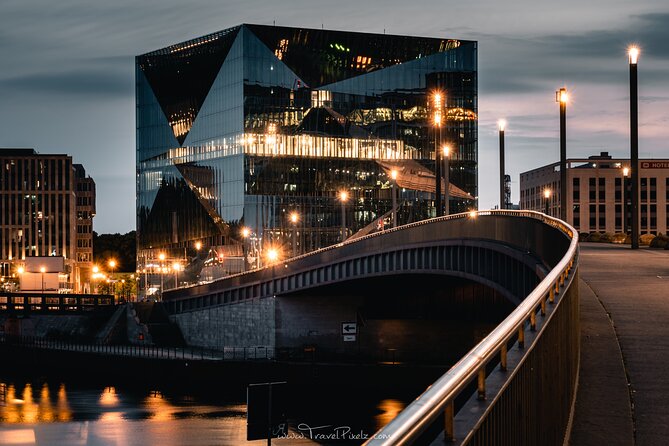
You do not need expensive equipment. One particularly useful feature is that Fabian can show you how to use an iPhone for better photographs. That makes this a practical choice if you are interested in photography but do not want to travel with a large camera.
The teaching is not limited to button pressing. You can work on composition, lighting, and finding a better vantage point. Fabian has also provided follow-up reading material to help participants keep practicing after the walk, which adds value beyond the 90 minutes.
Mixed ability levels are possible because the group is small and the instruction is tailored. Still, you should be realistic. If the other participants have very different goals, Fabian will need to divide his attention. The cap of five reduces that problem, but it does not remove it.
Two tripods are available if you do not bring one. That is helpful for long exposures and night scenes, though availability is limited to two units. If tripod photography is central to your plan, ask about it before the session rather than assuming one will be reserved for you.
Price, group size, and practical value
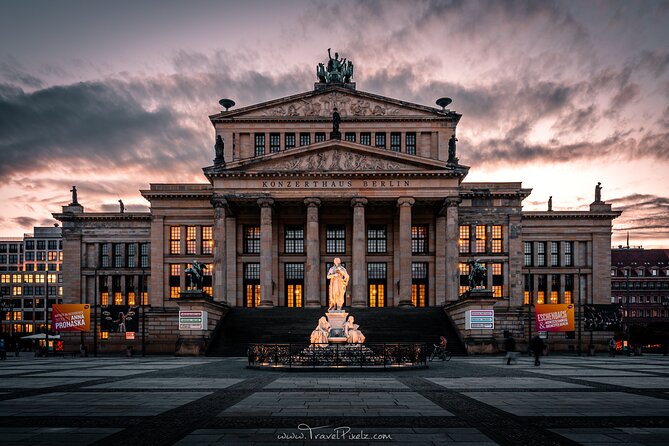
At $130.96 per person, this is not a cheap sightseeing walk. The value depends on what you want from it. If you only want a guide to point out the Brandenburg Gate, you can see that landmark without paying for a photo lesson.
If you want personal instruction, the price makes more sense. A small group, a professional photographer, advice matched to your equipment, and time spent practicing in real city light are the main benefits. You are paying for a skill-building experience as much as for the route.
The five-person limit is important here. A large group would make it difficult to ask questions or receive help with your own camera. With fewer people, you have a better chance of getting specific advice rather than general tips.
The session lasts about one hour and 30 minutes. That is enough time for a focused lesson, but not enough for a slow architectural study at every stop. You should book it for quality of instruction and selected photo locations, not sheer sightseeing coverage.
The activity is offered in English and is available daily from 7:00 AM to 10:30 PM during the stated operating period. Since blue hour is central to the experience, your start time will matter more than the broad opening hours.
Who should book this photo walk
I would recommend this experience to:
- Beginners who want clear help with camera settings and composition
- Intermediate photographers seeking stronger city and night images
- Solo visitors who want a social but small-group activity
- Phone photographers who want to improve their results without carrying a camera
- Visitors interested in Berlin architecture rather than only historical commentary
- Couples or small groups who want a few guided photographs of major sights
It is less suitable if you want a full historical tour, a private session guaranteed for your party, or a long visit inside Berlin’s landmarks. It may also disappoint you if you expect a leisurely pace and time to photograph every listed stop in depth.
Most people can participate, and service animals are allowed. The activity requires good weather. If poor conditions cancel the walk, you are offered another date or a full refund.
Booking and cancellation details
Confirmation is provided at booking. You can cancel up to 24 hours before the start time for a full refund. Cancellations or changes made less than 24 hours before the start time are not accepted for a refund, and cut-off times follow Berlin local time.
I would contact the provider before the day if you have a strong preference for the government district, Unter den Linden, classic landmarks, or modern buildings. That simple conversation can help Fabian shape the walk around your interests and camera experience.
Should you book the Berlin Photo Tour?
Book it if you want to learn while photographing Berlin, especially around sunset and blue hour. Fabian’s strengths are patient instruction, flexible guidance, and the ability to help with everything from an iPhone to more advanced camera work.
Skip it if your priority is a long list of sights, detailed interior visits, or the lowest possible price. For the right person, the best souvenir is not just a set of Berlin photographs, but a better understanding of how to make them.
FAQ
Where does the Berlin Photo Tour begin?
The tour begins at Pariser Platz 4, 10117 Berlin, Germany, by the Brandenburg Gate.
Where does the activity end?
The activity ends back at the meeting point.
How long does the photo walk last?
The walk lasts approximately one hour and 30 minutes.
How many people can join the tour?
The experience has a maximum of five participants.
Do I need a professional camera?
No. Instruction can be adapted to your equipment, including an iPhone. Two tripods can also be provided if needed, subject to availability.
What happens if the weather is poor?
The experience requires good weather. If it is canceled due to poor conditions, you can choose another date or receive a full refund.
Just added around Berlin
- Berlin Highlights in One Day★ 5.0 · 3 reviews
- Private Berlin One Day Tour with a Local: See the City Unscripted★ 3.5 · 3 reviews
- Individual city tour Berlin for max. 8 persons★ 5.0 · 3 reviews
- Transfer from Berlin Schönefeld Airport (SXF) to Berlin city Hotels – ROUND TRIP★ 4.0 · 3 reviews
- Berlin: Museum Island Tour★ 5.0 · 3 reviews
- Private Analogue Photography Experience in Berlin★ 5.0 · 3 reviews
- Berlin: Local Food Tour in Secrets Hidden Gems★ 4.0 · 3 reviews
- Berlin & The Third Reich Private Guided Tour★ 5.0 · 3 reviews
Photography Sessions, compared.
5hours: Guide, Chauffeur & Photographer in Berlin private Tour
Read our review →
Ticket for Photography Exhibitions at C/O Berlin
Read our review →
Berlin Photography Masterclass – Private Photography Lesson
Read our review →
Browse the lists this tour appears in