
Review · FOOD & DRINK
Classic Bites and Culinary Trends Neighborhood Food Tour in Berlin
Berlin’s food story is less about grand German cooking than about street food shaped by immigration, division, and change. This small-group walk through Prenzlauer Berg serves up coffee, pastries, savory bites, local beer, and dessert while your guide explains how Berlin became the city it is today.
I like the generous amount of food and the way the tour joins eating with neighborhood history. I also like the small group limit of eight, which makes it easier to ask questions of guides such as Tiago, Holger, Violeta, Jane, or Sean. The main caution is price: at $205.67 per person, this is costly for a walk built largely around casual food and beer, so arrive hungry and decide if the quantity and local context justify the spend.
In This Review
- Key points before you book
- Why Berlin’s food story starts in the former East
- Schönhauser Allee and a taste of East Berlin
- Stargarder Straße and the changing Prenzlauer Berg
- Pappelallee coffee and Dunckerstraße pastries
- Fusion food, Berlin beer, and street drinking rules
- Kastanienallee and Berlin’s immigrant food culture
- Kulturbrauerei and the last dessert stop
- What the $205.67 price really buys you
- Walking, access, and practical planning
- Who will enjoy this Berlin food walk?
- Should you book Classic Bites and Culinary Trends?
- FAQ
- How long does the Classic Bites and Culinary Trends tour last?
- How much does the tour cost?
- What food is included?
- Is beer included?
- Is the tour offered in English?
- Where does the tour begin?
- Where does the tour end?
- How many people can join the group?
- Can I cancel for a full refund?
Key points before you book
- More than ten tastings: Six food locations cover lunch, with extra samples for some people.
- A local, mixed food story: Expect East Berlin street food, pastries, coffee, kebab or falafel-style dishes, fusion food, beer, and seasonal dessert.
- Prenzlauer Berg on foot: The route uses Schönhauser Allee, Stargarder Straße, Pappelallee, Dunckerstraße, Kastanienallee, and Oderberger Straße.
- History between bites: Guides explain the former East Berlin, life before the Wall, reunification, immigration, and changing neighborhoods.
- Small-group format: The standard maximum is eight people, though one account describes a group of nine.
- Plan for a full stomach: The tastings are intended to replace lunch, and the walk can cover about four miles.
Why Berlin’s food story starts in the former East
The tour begins at Espresso House, Schönhauser Allee 116, in the former East Berlin. This is a useful starting point because you do not simply begin with a snack. Your guide first gives you a sense of the area and sets up the city’s divided past.
Berlin’s food culture makes more sense once you understand that the city was split for decades. The route uses streets in and around Prenzlauer Berg, an area where old buildings, refurbished side streets, cafés, bars, and newer food businesses now sit close together. Guides such as Holger, a native of West Berlin, have used the walk to explain how Berlin changed after the city was reunited.
That background gives the food some meaning. A dish associated with East Berlin is not just a quick bite. It reflects what was available, what people ate on the move, and how food habits changed after the Wall came down. You get a city lesson without sitting in a museum for three hours.
The opening stop lasts about 15 minutes and is free of separate admission charges because food and drinks are covered within the tour price. The exact opening drink or first sample can vary, but you should expect the guide to get the group settled before the route gains pace.
More food tours in Berlin:
- Berlin Center Food Tour with 8+ Authentic Local Tastings
★ 5.0 · 1,227 reviews - Berlin City Bike Tour with Beer Garden Stop
★ 5.0 · 917 reviews - Kreuzberg: Culinary Food Tour
★ 4.5 · 770 reviews
Schönhauser Allee and a taste of East Berlin
The first food stop on Schönhauser Allee centers on a historic East Berlin street-food snack. The precise dish is not named in the schedule, but other stops and past outings have included Berlin favorites such as currywurst and ketwurst.
This is the kind of food that suits a walking tour. It is informal, easy to taste, and closely tied to Berlin’s everyday eating habits. Do not expect a formal plate of classic German cuisine. The appeal is local character rather than fine dining.
Your guide connects the snack to the neighborhood and the old East Berlin setting. That is one of the tour’s strongest features. You are not just handed food and sent along. You learn why this type of snack matters and how Berlin’s food identity often grows from simple, portable dishes.
Stargarder Straße and the changing Prenzlauer Berg
The walk continues along Stargarder Straße, through refurbished side streets in Prenzlauer Berg. The route gives you time to look at the neighborhood instead of rushing from one counter to the next.
The area is presented through two time periods: life before the Berlin Wall and the changes that followed. This makes the walk useful early in your stay. Guides can point out the character of the streets while giving you a framework for understanding Berlin’s social and political shifts.
One account described the route as a good way to find places that would be difficult to locate alone. Another praised the streets, cafés, and local character. I would treat this part as an important balance to the eating. The food is the draw, but the neighborhood is what turns the tour into a proper introduction to Berlin.
You will be walking between stops, and one outing covered roughly four miles. Wear practical shoes. This is not a short series of tastings beside one subway station.
Pappelallee coffee and Dunckerstraße pastries
At Pappelallee, the group visits a small coffee bar that roasts its own beans and serves eight types of espresso. For coffee drinkers, this may be one of the most distinctive stops.
The wording suggests a tasting rather than a standard café order. You can compare different espresso styles while hearing about the local business. Since the tour is in English, your guide can explain what you are drinking and how this newer coffee culture fits into Berlin’s food scene.
The next stop on Dunckerstraße moves to sweets. A Berlin patisserie supplies handmade cakes and selected pastries. This is where the route shifts from history and coffee to indulgence.
Past outings have included Berlin donuts, and several guides have made a point of the quality of these sweet stops. If you prefer savory food, this section may feel like a lot of sugar after the earlier snack. If you enjoy pastries, it is a strong reason to keep your appetite in reserve.
The stop lasts about 20 minutes. That is enough time for a proper sample and a little conversation, but not a long café break. You should expect the tour to keep moving.
A different side of Berlin on the same trip:
- Berlin: Reichstag, Dome and Government District Guided Tour
★ 4.7 · 18,288 reviews - Berlin: 1-Hour City Tour by Boat with Guaranteed Seating
★ 4.3 · 16,993 reviews - Berlin: Boat Tour Along the River Spree
★ 4.4 · 11,252 reviews - Discover Berlin Half-Day Walking Tour
★ 5.0 · 9,624 reviews
Fusion food, Berlin beer, and street drinking rules
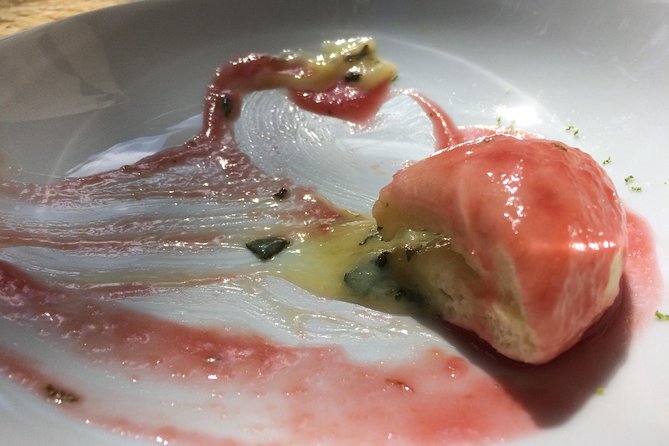
The central savory stop in Prenzlauer Berg features a fusion dish paired with a locally brewed drink. This is where the tour makes its main argument about modern Berlin: the city’s best-known food may come from many places, not only from old German recipes.
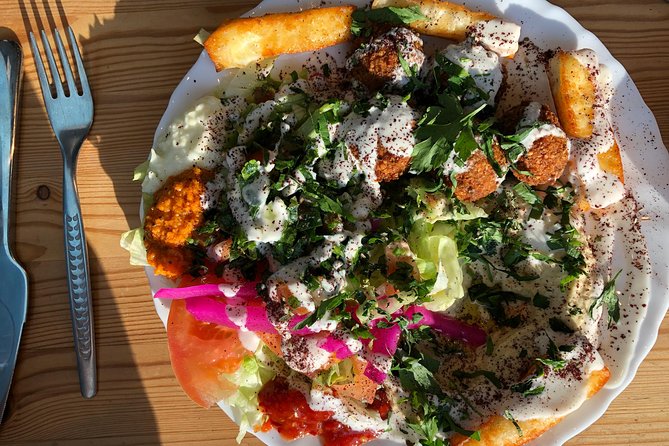
That point is repeated in several tastings. You might encounter kebab, falafel, or another immigrant-influenced dish, depending on the route and season. One especially praised combination was falafel and kebab, while another outing included a place called Kebab with Attitude. The schedule does not promise one fixed menu, so you should think in terms of food categories rather than guaranteed dishes.
The savory tasting lasts around 30 minutes and is intended to count as lunch. Portions are substantial enough that some people split later samples. If you want to try everything, do not eat a large meal before meeting the group.
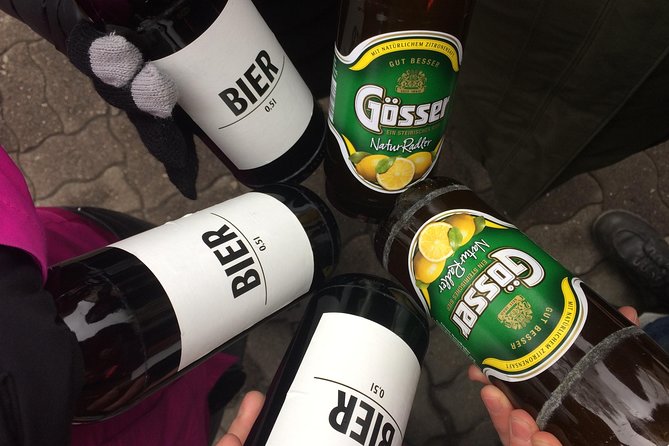
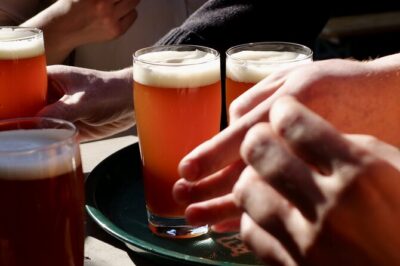
Beer follows in Prenzlauer Berg. Berlin’s relaxed approach to drinking outdoors becomes part of the discussion, and you take part in a tasting game involving classic and craft Berlin beers. A local beer garden may be used in spring, summer, and autumn when the weather allows.
This part has a social feel. It is not a brewery tour, and it is not designed for serious beer study. It is a chance to taste local beer, compare styles, and hear why street drinking is such a visible part of Berlin life.
The alcohol matters when deciding if this is right for you. The tour includes regional beer and alcoholic drinks, but it is not a good fit if you do not drink. The food component remains the main event, yet beer is woven into the route rather than added as an afterthought.
Kastanienallee and Berlin’s immigrant food culture
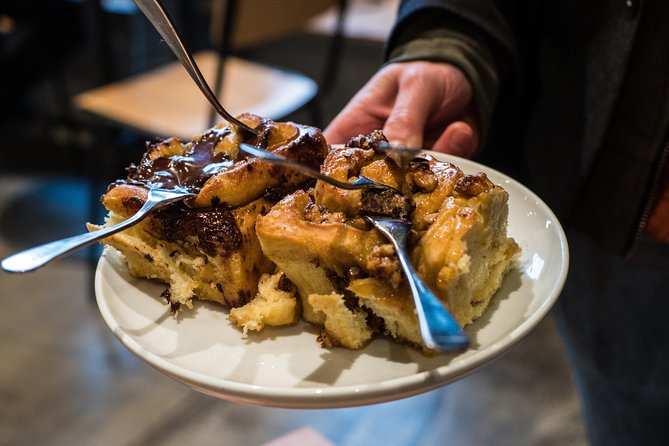
Kastanienallee is the clearest expression of the tour’s culinary theme. Here, the guide talks about the role Berlin’s immigrant communities have played in the city’s food scene, with another tasting attached to the lesson.
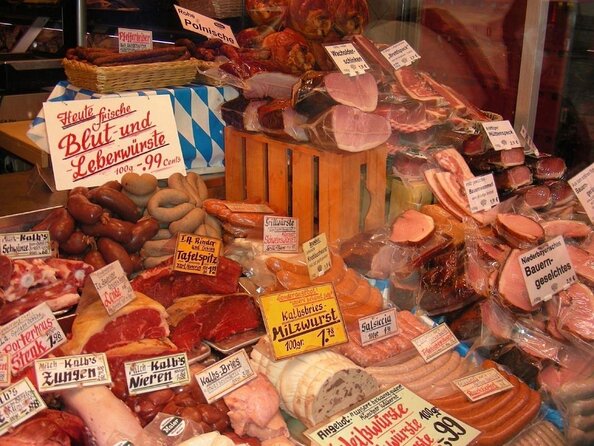
This is useful because Berlin food is often described too narrowly. You may arrive expecting pork, sausages, and traditional regional plates. Instead, you get a broader picture that includes foods brought and adapted by communities from outside Germany.
One account specifically noted that the food choices were multinational rather than purely German. That is not a flaw, but it is essential to understand before booking. If your goal is a strict survey of old-fashioned German dishes, this tour may disappoint. If you want to understand why kebab, falafel, currywurst, pastries, and modern café food all belong in a Berlin conversation, the route makes sense.
The guide’s role is especially important here. Tiago has been praised for explaining both the food and the city. Holger has been valued for placing Berlin’s cultural changes in context. Violeta, Jane, Sean, Marcel, Elena, and Dov have also led outings, so the tone may vary by guide, but the format depends on a host who can connect the stops into one story.
Kulturbrauerei and the last dessert stop
Between food stops, the route passes the brick Kulturbrauerei. In the mid-1800s, this former brewery was Germany’s largest beer producer. You pause for background and photographs rather than a formal interior visit.
This is a welcome visual marker on the route. The building connects the beer tasting to Berlin’s industrial past and gives you something substantial to look at between bites. It also helps explain why the city’s beer culture has such a long public history.
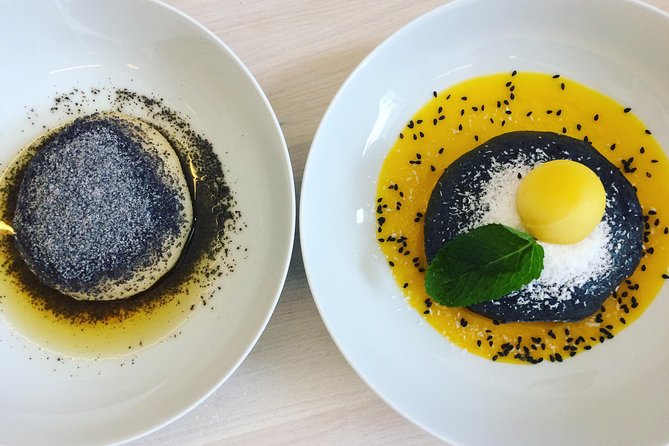
The final scheduled stop is on Oderberger Straße. Dessert depends on the season. You might receive natural ice cream, visit a Berlin beer garden, or try a warm, fluffy dessert.
That seasonal change is worth noting. You do not book this tour for one guaranteed final dish. You book it for a sequence of food experiences shaped by the time of year and weather. Ice cream will feel right on a warm day, while a hot dessert is better suited to colder weather.
The route ends near Eberswalder Straße, at 10437 Berlin. The nearby U2 underground line and M10 and M12 trams make it easy to continue sightseeing. Since the finish is not at the start, you should keep your plans flexible. The walk can run longer when the group moves slowly, especially if someone needs extra help over uneven pavement.
What the $205.67 price really buys you
At $205.67 per person, this tour is a serious purchase. You are paying for food, regional beer, a guide, lunch-sized tastings, and a three-and-a-half-hour neighborhood walk. Six food locations and more than ten tastings can add up, especially if you sample the full range.
The best value comes if you treat the tour as both lunch and orientation. You receive food at several stops, but you also get a guide who explains Berlin’s division, reunification, local streets, immigrant influence, and current food habits. Several outings included practical recommendations for places to eat after the tour, which can make the experience more useful during the rest of your stay.
The weaker value comes if you judge it as a restaurant meal. Much of the food is casual street food, coffee, pastries, beer, and international fare. One outing considered the price high for a tour centered on street food and beer. That is a fair concern.
Group discounts may be available, and the usual maximum is eight people. Smaller groups are ideal because you can ask questions and the guide can keep the pace personal. One account describes a group of five, while another had nine, so the actual size may vary slightly.
Walking, access, and practical planning
You should arrive hungry, but not uncomfortably so. The tastings cover lunch and may be enough for more than one meal’s worth of food. If you have dietary restrictions, the supplied details do not explain how substitutions are handled, so ask before booking rather than assuming.
Most people can participate, and the tour operates near public transportation. Service animals are allowed. The route is marked as wheelchair friendly, with no stairs at the food venues, but uneven Berlin streets can still be difficult. If you use a wheelchair or bring a stroller, contact the operator in advance. A private tour may be more suitable when one person needs a slower pace, since a public group can be delayed by rough pavement.
The tour is offered in English and uses a mobile ticket. It lasts about three hours and 30 minutes, though a slower group or accessibility needs can extend the day. Free cancellation is available up to 24 hours before the start time. A late cancellation or change is not refunded, and the operator may offer another date or a full refund if the minimum group size is not reached.
Who will enjoy this Berlin food walk?
I would choose this tour near the start of a Berlin visit. It gives you food recommendations, a sense of Prenzlauer Berg, and useful context for the city’s divided past. It is especially good for people who like to walk, snack often, and ask questions between stops.
It also suits couples, small groups, and solo visitors who prefer a social outing without a large coach. The guides are a major part of the experience, so a warm, well-informed host can make the route much better. The strongest accounts praise Tiago, Holger, Violeta, Jane, and others for combining humor, history, and food.
I would hesitate if you want formal German cooking, a short stroll, or a low-cost tasting tour. You may also find the quantity overwhelming. One group was so full after lunch that they split later samples, which is a useful warning for anyone with a modest appetite.
Should you book Classic Bites and Culinary Trends?
Book it if you want a filling introduction to Berlin’s food culture and neighborhoods, not just a list of traditional German dishes. The strongest parts are the small group, the wide range of tastings, the coffee and pastry stops, the beer game, and the explanations of how Berlin’s immigrant communities shaped what the city eats.
Skip it if $205.67 feels too high for casual food, or if you want a tightly focused German cuisine tour. For the right audience, the price buys a long lunch, a substantial walk, and a useful first look at Berlin’s past and present. For everyone else, the food may be good but not enough to justify the cost.
FAQ
How long does the Classic Bites and Culinary Trends tour last?
The tour lasts approximately three hours and 30 minutes.
How much does the tour cost?
The listed price is $205.67 per person. Group discounts are available.
What food is included?
The tour includes food tastings at six locations, with more than ten tastings in total. The food covers lunch, with extra portions for some people.
Is beer included?
Yes. Regional beer and local alcoholic drinks are included. The route features a beer tasting game with classic and craft Berlin beers.
Is the tour offered in English?
Yes. The tour is offered in English.
Where does the tour begin?
The meeting point is Espresso House at Schönhauser Allee 116, 10439 Berlin, Germany.
Where does the tour end?
The tour ends at Eberswalder Straße, 10437 Berlin, near the U2 underground line and the M10 and M12 tram routes.
How many people can join the group?
The tour has a maximum of eight participants, although group size may occasionally vary.
Can I cancel for a full refund?
Yes, if you cancel at least 24 hours before the experience start time. Cancellations or changes made less than 24 hours before the start time are not refunded.
Just added around Berlin
- Berlin Highlights in One Day★ 5.0 · 3 reviews
- Private Berlin One Day Tour with a Local: See the City Unscripted★ 3.5 · 3 reviews
- Individual city tour Berlin for max. 8 persons★ 5.0 · 3 reviews
- Transfer from Berlin Schönefeld Airport (SXF) to Berlin city Hotels – ROUND TRIP★ 4.0 · 3 reviews
- Berlin: Museum Island Tour★ 5.0 · 3 reviews
- Private Analogue Photography Experience in Berlin★ 5.0 · 3 reviews
- Berlin: Local Food Tour in Secrets Hidden Gems★ 4.0 · 3 reviews
- Berlin & The Third Reich Private Guided Tour★ 5.0 · 3 reviews
Food & Drink, compared.
Berlin Center Food Tour with 8+ Authentic Local Tastings
Read our review →

Berlin’s first original craft beer tour & experience
Read our review →Browse the lists this tour appears in