
Review · TOURS
Discover Berlin Express Tour: 2hr Highlights
Berlin’s past is packed into a surprisingly small part of the city center. This two-hour walking tour links the Brandenburg Gate, Reichstag, Holocaust memorials, Hitler’s bunker site, the Berlin Wall, and Checkpoint Charlie in one brisk route. I like that it gives you a clear timeline, from Nazi Germany to the Cold War and reunified Berlin, without asking you to spend half a day on your feet.
I especially like the thoughtful memorial stops and the fact that you finish at Checkpoint Charlie, where it is easy to continue sightseeing on your own. The price, $23 per person, is also fair for an English-speaking academic guide. The main drawback is pace: you see many important places from outside, but you do not enter buildings, and two hours leaves little time for long discussion at each stop.
In This Review
- At a glance
- Why this short Berlin walk works
- Pariser Platz and Brandenburg Gate
- The Sinti and Roma Memorial
- The Reichstag and the Politicians’ Memorial
- The Soviet War Memorial in Tiergarten
- The Memorial to the Murdered Jews of Europe
- Hitler’s bunker site
- The Finance Ministry and the Berlin Wall
- Checkpoint Charlie and the end of the route
- What $23 buys you
- Pace, comfort, and access
- Who should book this walk?
- Should you book the Discover Berlin Express Tour?
- FAQ
- How long does the Berlin Express Tour last?
- Where does the tour begin?
- Where does the tour end?
- What language is the tour in?
- Does the tour enter any buildings?
- Is the walking route wheelchair accessible?
At a glance
- A fast route through modern Berlin: The tour focuses on Berlin’s 20th-century story rather than trying to cover every era of the city.
- Start at Pariser Platz: Meet in front of the Tourist Information Office, beside the Brandenburg Gate.
- Serious history, handled through places: The Sinti and Roma Memorial, Jewish memorial, bunker site, and Soviet War Memorial give the walk emotional weight.
- Finish at Checkpoint Charlie: You end at one of Berlin’s best-known Cold War landmarks, with the rest of the city still open for exploration.
- English-speaking academic guide: The tour is designed around explanation and questions, not just a string of photo stops.
- Accessible and weather-dependent: The route is wheelchair friendly, but comfortable shoes and clothing suited to the weather matter.
Why this short Berlin walk works
Berlin is not a city where the most important sights fit neatly into one postcard view. A war memorial may sit beside a government building, while a piece of the Berlin Wall appears a short walk from an ordinary city street. This tour makes sense of those contrasts by keeping its attention on contemporary German history.
The route is especially useful if you have only a short stay, a long layover, or a first morning in Berlin when you want to get your bearings. You will not receive a full survey of the city, but you will leave with a strong map in your head: Prussian Berlin at the Brandenburg Gate, Nazi Berlin around the bunker site, wartime memory near the Reichstag, and divided Berlin at Checkpoint Charlie.
I also like the balance between famous landmarks and quieter memorials. Brandenburg Gate and Checkpoint Charlie are obvious stops. The Sinti and Roma Memorial and the Politicians’ Memorial ask for more attention, and they keep the tour from becoming a simple parade of postcard views.
The trade-off is clear. This is an express version of a longer three-and-a-half to four-hour Berlin tour, with some overlapping sights. If you are already booking the longer version, taking both would repeat much of the central route. If you want detail, time for questions, or museum interiors, choose a longer experience instead.
Other Berlin tours people book alongside this one:
- Berlin: Reichstag, Dome and Government District Guided Tour
★ 4.7 · 18,288 reviews - Berlin: 1-Hour City Tour by Boat with Guaranteed Seating
★ 4.3 · 16,993 reviews - Berlin: Boat Tour Along the River Spree
★ 4.4 · 11,252 reviews
Pariser Platz and Brandenburg Gate
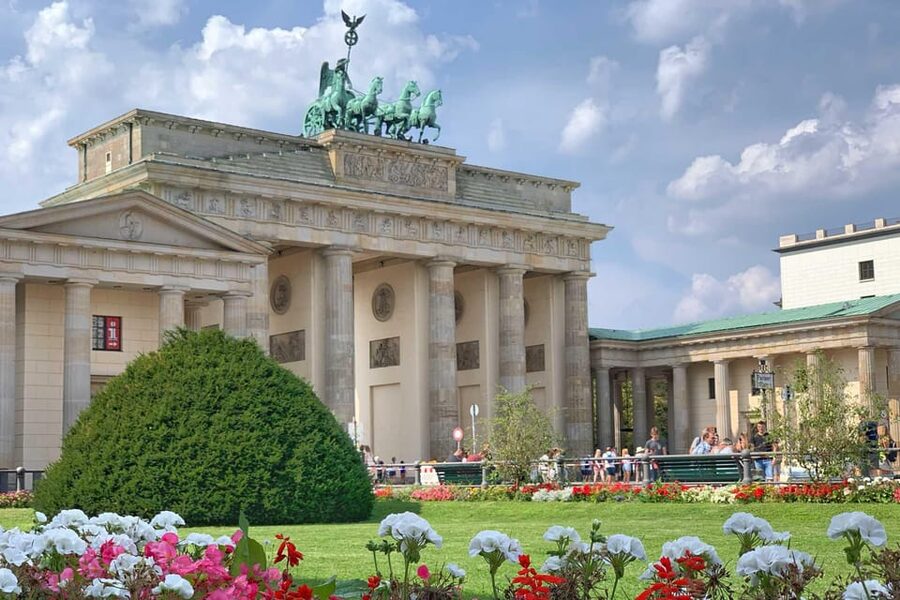
The walk begins at Pariser Platz, in front of the Tourist Information Office. This is a practical meeting point because the Brandenburg Gate is right there, and the square gives you an immediate sense of Berlin’s ceremonial center.
Your guide introduces the neoclassical buildings around the square before turning to the gate itself. Brandenburg Gate has served as a symbol of power, division, and eventual unity, so it is a fitting place to begin a tour about Berlin’s modern past.
Allow yourself a few minutes before the start to find the meeting point and look around. Pariser Platz can be crowded, and the gate is large enough that a small group can spread out quickly. A guide-led introduction is useful here because a quick photograph does not explain why this single structure has carried so much political meaning.
The stop is guided rather than a museum visit. You will hear the story from outside, then move on. That keeps the tour moving, but it also means you should not expect an extended architectural lecture.
The Sinti and Roma Memorial
From the gate, the route turns to the Memorial to the Sinti and Roma Murdered under the National Socialist Regime. It is one of the most important stops on the walk because it brings attention to a group often left out of quick introductions to Holocaust history.
The memorial is a place for quiet reflection rather than a lively sightseeing stop. Your guide explains the persecution and mass murder of Sinti and Roma people under the Nazi regime, connecting the physical site to the wider system of racial persecution.
I value this part of the route because it broadens the story. The tour does not treat Berlin’s past as only a story of famous leaders and major buildings. It also asks you to remember people targeted because of their identity.
Keep in mind that the tour covers several memorials in a short period. You may want to return later if you prefer to spend more time reading, reflecting, or visiting a related museum. The two-hour format introduces the subject, but it cannot give every memorial the time it deserves.
The Reichstag and the Politicians’ Memorial
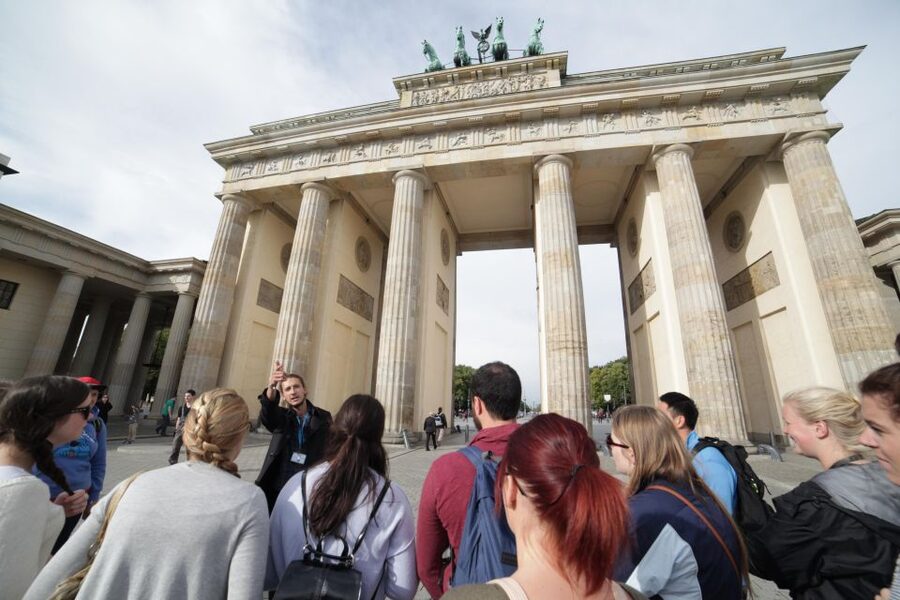
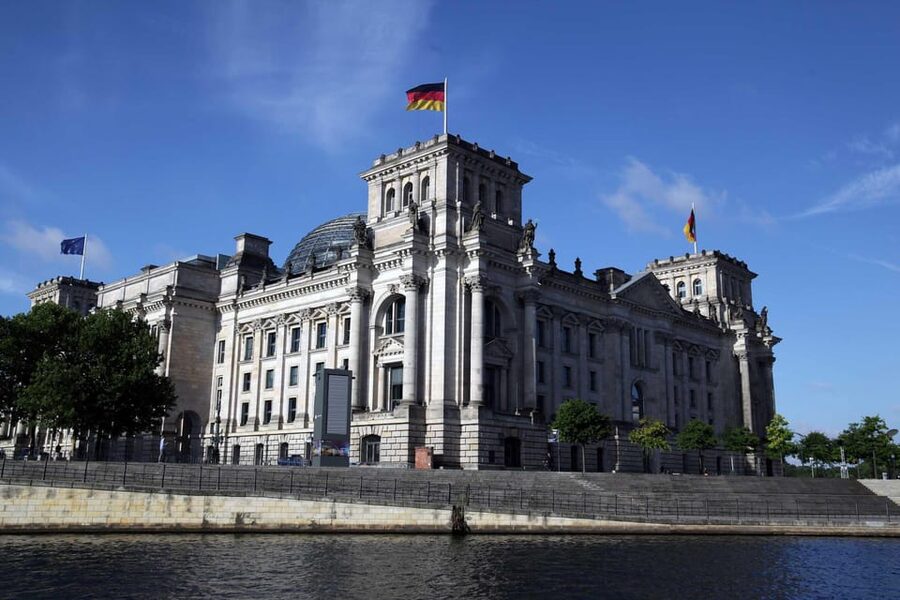
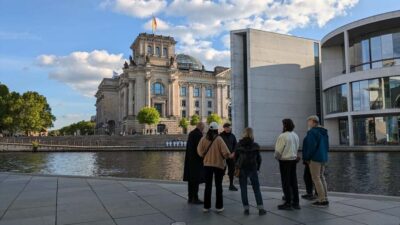
The Reichstag is next, and its exterior offers plenty to discuss. Germany’s parliamentary building has witnessed the country’s changing political systems, from the Weimar Republic through dictatorship, war, division, and the modern federal government.
The building is visually impressive, but the value of this stop comes from the explanation around it. Your guide places the Reichstag within the political story of Berlin rather than presenting it as just another grand facade.
Nearby, the Politicians’ Memorial remembers political figures who suffered persecution during difficult periods in German history. This stop shifts the focus from national institutions to individuals who paid a price for political belief or democratic principles.
That pairing works well. You see the building connected with German government, then consider the people whose lives were damaged or destroyed by political repression. It is one of the tour’s better examples of using two nearby places to tell a larger story.
You do not enter the Reichstag. If the glass dome or parliamentary interior is on your wish list, you will need to arrange that separately. The tour gives you outside context and a useful orientation, not an inside visit.
A different side of Berlin on the same trip:
- Discover Berlin Half-Day Walking Tour
★ 5.0 · 9,624 reviews - Berlin: Hop-on Hop-off Bus Tour with Live Commentary
★ 4.3 · 8,579 reviews - Berlin: Government District around the Reichstag Guided Tour
★ 4.7 · 8,447 reviews - Berlin: Reichstag, Plenary Chamber, Cupola & Government Tour
★ 4.6 · 8,422 reviews
The Soviet War Memorial in Tiergarten

The route continues into the Tiergarten to the Soviet War Memorial. This is a solemn and imposing site dedicated to Soviet soldiers who died in the Battle of Berlin during World War II.
The setting changes here. After the formal architecture around Pariser Platz and the Reichstag, the memorial offers a more open space and a direct reminder of the final battle for the city. Your guide explains the memorial’s purpose and the role of Soviet forces in the defeat of Nazi Germany.
This stop adds another viewpoint to the war’s final chapter. Berlin’s story is not only about German decisions and German suffering. It also involves the armies that fought their way into the city and the enormous human cost of the battle.
The memorial is outdoors, so weather makes a real difference. Bring a coat or rain layer when needed, and wear shoes that can handle two hours of steady walking. Since the tour has several stops, a little comfort goes a long way.
The Memorial to the Murdered Jews of Europe
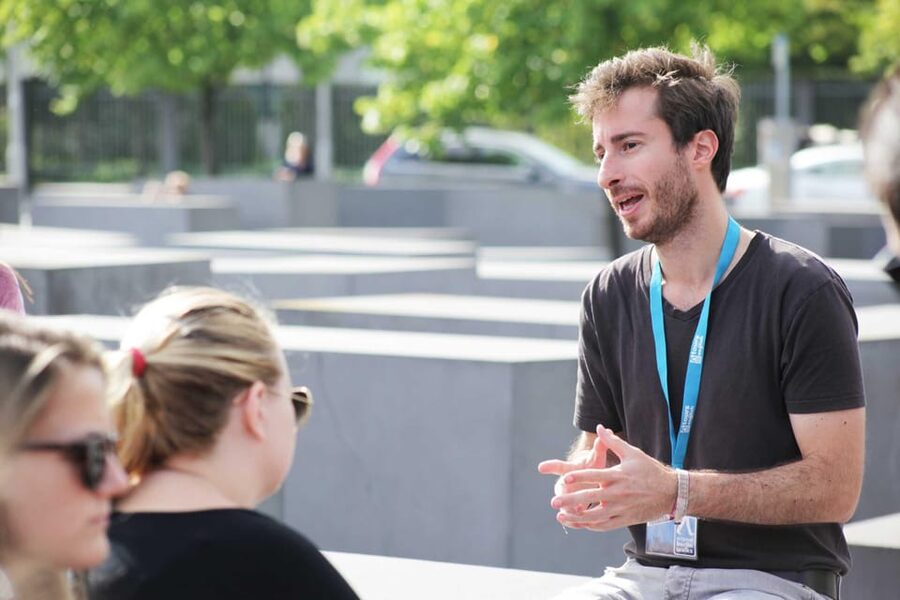
The Memorial to the Murdered Jews of Europe is one of Berlin’s most powerful public memorials. Its field of concrete slabs changes as you walk through it, with the ground rising and falling around you.
You are given time to experience the space while the guide explains its purpose and the Holocaust’s place in Berlin’s modern memory. The design does not offer a simple statue or a single written message. Its effect comes from moving among the slabs and feeling the space change around you.
This is not a cheerful sightseeing stop, and it should not be treated like one. I appreciate that it appears within a historical route rather than as an isolated attraction. The walk helps connect the memorial with the government district, the bunker site, and the political history discussed earlier.
As with the Sinti and Roma Memorial, you may want to return on your own if you prefer a slower visit. The tour can explain the memorial and give you a first encounter, but the short schedule does not allow for an extended museum visit or long personal reflection.
Hitler’s bunker site
The tour then takes you to the site of Hitler’s bunker. There is no dramatic underground room to enter and no preserved bunker interior on this walk. The location is marked in the city above, and the guide explains what happened there during the final days of the Third Reich.
That lack of spectacle is part of the point. The site is intentionally understated, and the tour helps you understand why. You stand in an ordinary part of central Berlin while hearing about the collapse of the Nazi government beneath the ground.
This is a useful stop for separating fact from popular myth. The site has attracted decades of fascination, but the tour keeps attention on the historical events and the way Berlin dealt with the location after the war.
You should expect explanation, not a cinematic experience. No building entry is included, and there is no preserved room to explore. If you want to study the subject at length, treat this stop as an introduction and plan further reading or a separate visit elsewhere.
The Finance Ministry and the Berlin Wall
The route passes the Finance Ministry, a modern government building with a history tied to the changing political systems of Berlin. It provides a sharp contrast with the memorials and historic landmarks around it.
This is one of those stops where the surrounding building matters as much as the facade. Your guide explains the history held within the walls, helping you see how present-day government uses spaces shaped by earlier regimes.
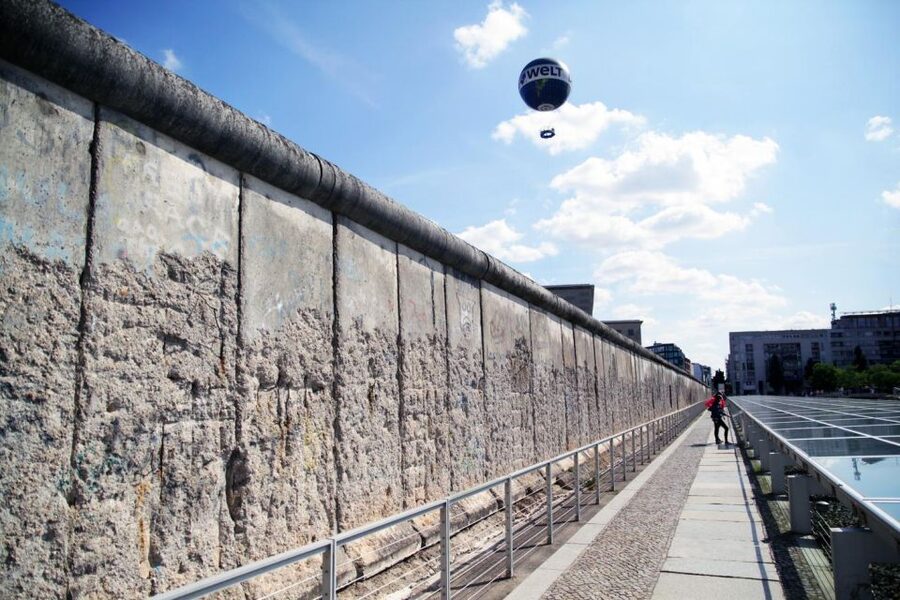
The walk then reaches remnants of the Berlin Wall near the Topography of Terror. Here, the focus shifts from World War II to the Cold War and Berlin’s division. You learn how the Wall shaped daily life, movement, and political tension in the city.
The Topography of Terror area is particularly useful because it links Nazi persecution with later German memory and the physical remains of the divided city. The juxtaposition can be unsettling, but it reflects Berlin’s real character. Different chapters of the 20th century are often only a few minutes apart on foot.
The Wall section is not a full museum visit. You see remnants and hear the background, but you do not enter a separate exhibition as part of the tour. If you want a longer look at Cold War Berlin, leave time after the walk for another site.
Checkpoint Charlie and the end of the route
Checkpoint Charlie is the final stop. Once a crossing point between East and West Berlin, it is now one of the city’s most recognizable Cold War landmarks.
Your guide covers the border crossing, escape attempts, espionage stories, and the role the checkpoint played during the division of Berlin. This gives the tour a natural ending because the route has moved from Nazi dictatorship and wartime destruction to the struggle over a divided city and the pursuit of freedom.
Checkpoint Charlie is also a practical place to finish. You can continue exploring central Berlin from here, look for nearby museums, or simply stop for a break after the walk. The tour does not include an indoor visit, so plan your next activity separately.
A word of caution: the landmark itself can feel more commercial and theatrical than the solemn memorials earlier in the route. The guide’s historical context is what gives the stop value. Without that explanation, you may see only a famous sign and a busy street.
What $23 buys you
At $23 per person, this is a modestly priced way to put Berlin’s central historical district into order. You are paying for two hours with an experienced academic guide who speaks perfect English, not for admission tickets or transport.
That distinction matters. Since no buildings are entered, your costs remain predictable, but you also need to budget separately if you want museums, the Reichstag interior, or other indoor attractions afterward.
The value is strongest for a first visit. In two hours, you get a useful overview of major sites that would be harder to connect on your own. You also gain access to explanations at memorials where a quick photograph would tell you very little.
The value is weaker if you already know central Berlin well or want a slow, specialist tour. The express format keeps the cost and time down, but it limits the amount of detail at each stop.
Pace, comfort, and access
The tour lasts two hours and covers the route on foot. A past booking described the balance between information and walking as comfortable, while another found it informative without being too long. That matches the design of the experience: it is active, but not an all-day commitment.
Wear comfortable shoes. The route includes city streets, open memorial spaces, and outdoor areas, so weather-appropriate clothing is important. There is no promise of indoor shelter during the walk.
The route is wheelchair friendly. Still, because the experience moves through public outdoor spaces, it is sensible to consider your own pace and comfort before booking. If you need frequent stops or a very relaxed rhythm, a longer private option may suit you better, though that is not part of this experience.
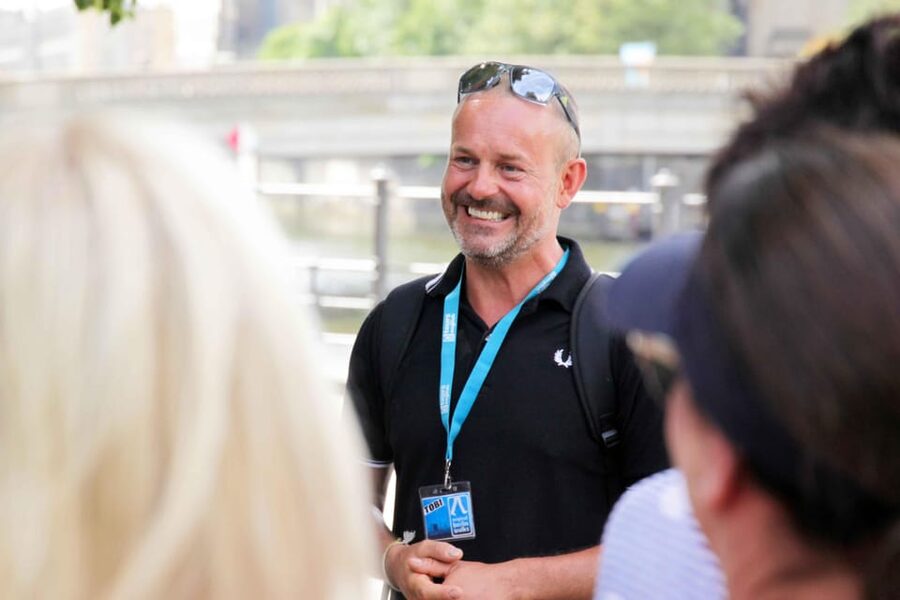
The live tour is in English. A guide such as Dylan has been praised for giving clear information and answering questions, but guide assignment can vary. The key point is that the tour is built around a live academic guide rather than an audio recording.
Cancellation is flexible: you can cancel up to 24 hours before the start for a full refund. You can also reserve now and pay later, which helps if your Berlin schedule is still shifting.
Who should book this walk?
I would choose this tour if you have limited time and want the central story of modern Berlin in one sitting. It is a good fit for first-time visitors, short-break city explorers, and anyone who prefers a guide to connect places that might otherwise seem unrelated.
It also suits people who want serious historical content without spending four hours on a longer route. The guide covers Nazi persecution, World War II, political repression, the Holocaust, the Berlin Wall, and the Cold War in a compact format.
Families with older children or teenagers may find the clear sequence useful, though the memorials and subjects are heavy. Anyone interested in Berlin’s political history will get more from this walk than someone looking mainly for palaces, art, or food.
I would not book it as your only Berlin history experience if you want museum interiors or long time at each memorial. I also would not pair it with the longer Discover Berlin tour unless you are comfortable repeating much of the same central route.
Should you book the Discover Berlin Express Tour?
Book it if you want a focused two-hour introduction and a guide who can explain why Berlin’s major sights matter. The route is well chosen, the price is reasonable, and the final stop at Checkpoint Charlie leaves you in a useful part of the city.
Skip it if you prefer to move slowly, enter historic buildings, or spend an hour with each memorial. For everyone else, this is a practical first look at Berlin’s hardest and most important stories, delivered in a short route that leaves plenty of time for the rest of your day.
FAQ
How long does the Berlin Express Tour last?
The tour lasts two hours.
Where does the tour begin?
It begins at Pariser Platz, in front of the Tourist Information Office.
Where does the tour end?
The tour ends at Checkpoint Charlie.
What language is the tour in?
The live tour is conducted in English.
Does the tour enter any buildings?
No. The tour takes place outdoors, and building entry is not included.
Is the walking route wheelchair accessible?
Yes. The tour is described as wheelchair friendly. Comfortable shoes and clothing suited to the weather are recommended.
Just added around Berlin
- Berlin Highlights in One Day★ 5.0 · 3 reviews
- Private Berlin One Day Tour with a Local: See the City Unscripted★ 3.5 · 3 reviews
- Individual city tour Berlin for max. 8 persons★ 5.0 · 3 reviews
- Transfer from Berlin Schönefeld Airport (SXF) to Berlin city Hotels – ROUND TRIP★ 4.0 · 3 reviews
- Berlin: Museum Island Tour★ 5.0 · 3 reviews
- Private Analogue Photography Experience in Berlin★ 5.0 · 3 reviews
- Berlin: Local Food Tour in Secrets Hidden Gems★ 4.0 · 3 reviews
- Berlin & The Third Reich Private Guided Tour★ 5.0 · 3 reviews
Tours, compared.
Reichstag, Dome and Government District Guided Tour
Read our review →
1-Hour City Tour by Boat with Guaranteed Seating
Read our review →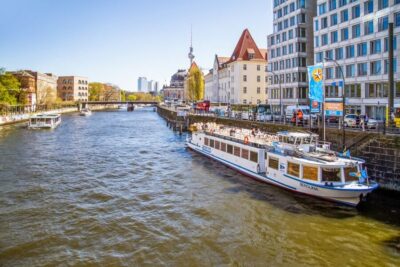

Reichstag, Plenary Chamber, Cupola & Government Tour
Read our review →