
Review · TOURS
The Old Berlin Tour: Travel Through Time With a Historian
Berlin is easiest to understand when you stop treating its sights as isolated monuments. On this walk, historian Sean Stewart connects Alexanderplatz, a ruined monastery church, St. Mary’s Church, and Nikolaiviertel into a story of a city repeatedly rebuilt, erased, and reshaped.
I like the small maximum of eight people, which should make it easier to ask questions and hear the guide. I also like the focus on reading Berlin rather than simply collecting photographs, a point reflected in the way Sean explains vanished streets, courtyards, contradictions, and the city’s shifting power.
The main consideration is pace and scope. Two hours gives you a useful framework, not a complete education in German history, and the tour stays outdoors, so poor weather can cause a cancellation or rescheduling.
In This Review
- Key points to know before booking
- Why this short Berlin walk works
- Alexanderplatz and the city that disappeared
- Franziskaner Klosterkirche and a medieval ruin
- St. Mary’s Church and Berlin’s medieval center
- Nikolaiviertel, reconstruction, and the problem of old Berlin
- From medieval Berlin to the Berlin Wall
- Sean Stewart’s guiding style
- What the $23 price really buys
- Who should book this walk?
- Should you book The Old Berlin Tour?
- FAQ
- How long does The Old Berlin Tour last?
- What time does the tour start?
- Where does the tour begin?
- Where does the tour end?
- Which places are included on the route?
- Is a guide included?
- How large is the group?
- Is food or drink included?
- Can I cancel for a full refund?
Key points to know before booking
- Follow Berlin through many centuries: The walk links medieval beginnings, imperial Berlin, wartime destruction, reconstruction, and the division that led to the Berlin Wall.
- Start at Alexanderplatz Station: Meet at Espresso House Alea 101, Rathausstraße 6, at 11:00 a.m.
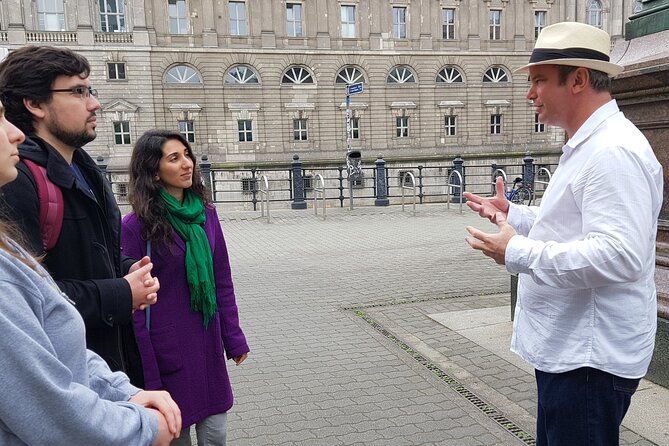
- Hear history from Sean Stewart: The guide is a professional historian who uses buildings, courtyards, ruins, and street plans as evidence.
- See four central Berlin locations: The route includes Alexanderplatz, Franziskaner Klosterkirche, St. Mary’s Church, and Nikolaiviertel.
- Expect an easy walking pace: The route is designed as a relaxed city walk and ends near Berlin Cathedral.
- Pay $23 for a compact introduction: Food and drinks are not included, but the small group and specialist guide add value for history-minded visitors.
Why this short Berlin walk works
The best feature here is the way the tour treats Berlin as a city of changes rather than a tidy old European capital. Berlin’s center has been damaged, rebuilt, ideologically redesigned, and rebuilt again. You can look at a square or church and see several periods at once, but only if someone points out what vanished and why.
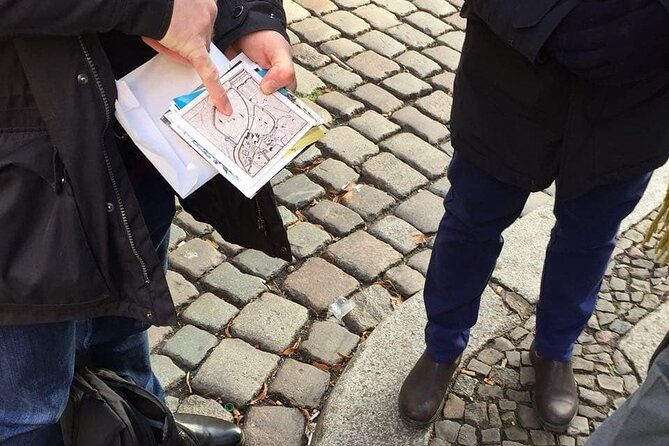
That is where Sean Stewart’s background matters. The information provided describes him as a professional historian, and his approach is not limited to naming buildings or listing dates. He explains how to read the city, including the role of courtyards, altered streets, political decisions, irony, and contradiction.
This suits you if you want a clear framework for Berlin’s past before visiting more museums or memorials. It can also work well on a repeat visit. One account describes a guest who had already seen the main sights and asked for a different kind of walk, after which Sean adapted the experience toward less familiar details.
The route is central and manageable. You do not need to set aside half a day, and you do not need to plan meals around it. At $23, the cost is reasonable for a two-hour walk led by a historian, especially with a group capped at eight people. The value comes from interpretation, not from entry tickets, since the listed stops have no admission charge.
You should keep your expectations in check. This is not a museum tour, and no interior admission is included. The route gives you context around major places, but you will not spend long periods inside exhibits or receive a full survey of every era in Berlin.
Other Berlin tours people book alongside this one:
- Berlin: Reichstag, Dome and Government District Guided Tour
★ 4.7 · 18,288 reviews - Berlin: 1-Hour City Tour by Boat with Guaranteed Seating
★ 4.3 · 16,993 reviews - Berlin: Boat Tour Along the River Spree
★ 4.4 · 11,252 reviews
Alexanderplatz and the city that disappeared
The walk begins near Alexanderplatz Station, with the meeting point at Espresso House Alea 101 on Rathausstraße. Arrive with enough time to find the café and gather before the 11:00 a.m. start.
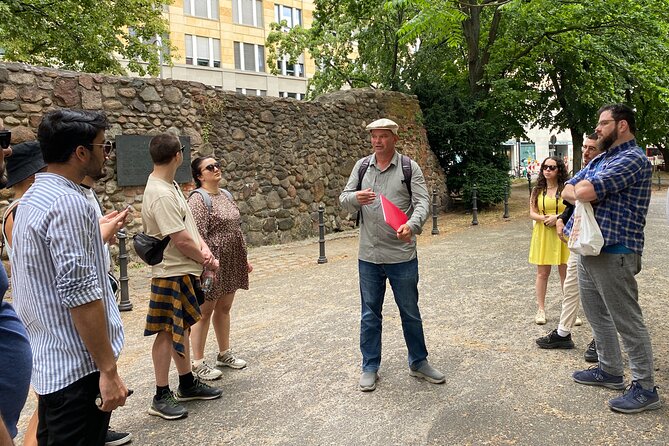
Alexanderplatz is useful precisely because it is not a preserved medieval square. The stop focuses on vanished streets and buildings, giving you a first lesson in Berlin’s habit of replacement. What you see today is only part of the story. The missing pieces help explain how war, planning, politics, and redevelopment changed the city center.
You may already know Alexanderplatz as one of Berlin’s best-known public spaces. This tour asks you to look beyond its present appearance. Instead of simply checking off a famous location, you begin by asking what once occupied the site, what was removed, and which forces decided the change.
The scheduled time here is about 15 minutes. That is enough for a focused explanation, but not enough for every detail. I see that as a strength at the start of a two-hour walk. You get a clear opening idea without using most of the tour before reaching the older buildings.
The station meeting point is also practical. Alexanderplatz is near public transportation, so you can reach it from other parts of Berlin without arranging a special transfer. The tour later ends at Berlin Cathedral, placing you close to another major central sight.
Franziskaner Klosterkirche and a medieval ruin
From Alexanderplatz, the route continues to Franziskaner Klosterkirche, described as Berlin’s only medieval romantic ruin. Its appeal is not polished beauty. The broken remains let you see the physical cost of Berlin’s past and the way fragments can survive when whole neighborhoods do not.
The word ruin matters here. You should expect an atmospheric stop rather than a fully restored church visit. That makes Sean’s explanation especially important. Without context, partial walls can be hard to read. With a historian explaining what the site represents, the ruin becomes evidence of the city’s older layers and later destruction.
The stop lasts about 15 minutes and has no admission fee. You will want comfortable shoes because this is a walking route, though the overall pace is described as easy. The supplied information does not promise a detailed accessibility assessment, so if you need specific ground or surface information, ask before booking.
This is one of the places where the tour’s style seems most useful. Sean has been described as someone who knows Berlin’s courtyards and can connect ordinary spaces with larger historical forces. You may find that a modest remnant tells you more about the city than a grand monument, especially when the guide explains what has been lost around it.
St. Mary’s Church and Berlin’s medieval center
St. Mary’s Church provides another look at Berlin’s medieval past. The stop is built around the church’s importance during the medieval period, giving you a chance to place religious institutions within the early development of the city.
The value here is not simply seeing an old church. It is learning how medieval Berlin was organized and why certain buildings mattered. The tour’s stated aim is to trace Berlin from the Middle Ages to modern times, and St. Mary’s is one of the clearest points on that timeline.
Again, the planned visit lasts about 15 minutes. That makes this a site explanation, not a long church tour. If you want a detailed study of the building’s art, architecture, or interior, this walk may leave you wanting more. If you want to understand its place in the city’s growth, the shorter stop should work well.
I like the contrast between St. Mary’s and the ruined Franziskaner church. One presents a continuing landmark, while the other emphasizes damage and absence. Together, they show that Berlin’s past is not preserved in one neat form. Some of it survives in active buildings, some in fragments, and some only through the street plan and the guide’s explanation.
A different side of Berlin on the same trip:
- Discover Berlin Half-Day Walking Tour
★ 5.0 · 9,624 reviews - Berlin: Hop-on Hop-off Bus Tour with Live Commentary
★ 4.3 · 8,579 reviews - Berlin: Government District around the Reichstag Guided Tour
★ 4.7 · 8,447 reviews - Berlin: Reichstag, Plenary Chamber, Cupola & Government Tour
★ 4.6 · 8,422 reviews
Nikolaiviertel, reconstruction, and the problem of old Berlin
Nikolaiviertel is the final listed stop and perhaps the most complicated. It is described as Berlin’s reconstructed medieval Disneyland, a pointed way to signal that the district looks old but is not simply an untouched medieval quarter.
That distinction is valuable. You can enjoy the setting while also asking how and why it was reconstructed. The area becomes a lesson in the politics of memory: what a city chooses to recreate, what it leaves out, and how an imagined past can serve modern purposes.
This is a good place for Sean’s reported interest in contradiction and irony. A rebuilt medieval-looking neighborhood can feel historic while also reflecting a much later vision of what history should look like. The tour does not ask you to accept appearances at face value.
The stop lasts about 15 minutes. You may find this brief visit enough to understand the main idea, but it will not cover every building or design decision in the quarter. If you enjoy architecture and urban planning, note the places you want to revisit after the walk.
Nikolaiviertel also helps bridge the route’s older history with the modern city. By the end of the tour, you should have a better sense of Berlin as a place where the past is not only preserved. It is selected, rebuilt, debated, and sometimes deliberately overwritten.
From medieval Berlin to the Berlin Wall
The tour promises a broad story that reaches from medieval times to the Berlin Wall. The listed route does not include a separate Wall stop, so you should understand this as historical context rather than a visit to a Wall memorial or preserved section.
That is not a flaw, provided you book it for the right reason. The Wall makes more sense when you understand Berlin’s earlier pattern of division, central control, destruction, and redesign. A historian can use the central sights to show how the city developed before its twentieth-century split.
You may also benefit from taking this walk early in your stay. The tour can give you a set of questions to carry into later visits to museums, memorials, and surviving sections of the Wall. It is less useful if your only goal is to spend time at Cold War sites, since none are listed as stops.
The route ends at Berlin Cathedral on Am Lustgarten. That is a convenient finish in central Berlin, and you can continue sightseeing afterward. The information provided does not include a detailed end time, but the experience lasts about two hours, so the 11:00 a.m. start should put the finish around early afternoon.
Sean Stewart’s guiding style
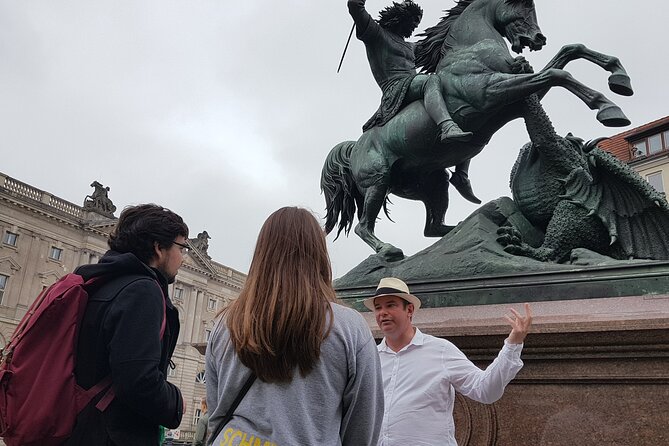
The strongest praise centers on Sean’s ability to interpret Berlin, not on entertainment or speed. His method is described as teaching you what the city has to say rather than encouraging you to photograph everything without a reason.
That approach suits a city like Berlin. You can easily spend a day taking pictures of famous sights without understanding why the center looks so uneven, why old and new buildings sit beside one another, or why a reconstructed quarter can feel both historical and artificial.
Sean is also described as flexible. One account says he first asked about previous visits and what the guest wanted to see, then adjusted the walk for someone who had already covered the main landmarks. Since the group is limited to eight, you may have a better chance to ask questions than on a large bus or crowded city tour.
You should still remember that a small group does not guarantee a private tour. The experience is capped at eight people, not advertised as a one-to-one walk. The guide’s personal adjustment may depend on the group and the time available.
The comments also point to Sean’s ability to find interest in places even a Berlin resident had not noticed. That is a useful quality for repeat visitors. You do not need to be a specialist, but you should come ready to look closely and listen to connections between places.
What the $23 price really buys
At $23, this is an affordable history-focused activity in a major European capital. You are paying mainly for Sean’s time and interpretation, not for admission to attractions. The listed sites have free entry, and food and drinks are not included.
For me, the price makes sense if you value orientation and historical context. A two-hour walk can save you from treating Berlin’s central sights as disconnected photo stops. It can also help you decide which museums or memorials deserve more of your time later.
The value is lower if you want a full sightseeing package with interiors, transport, meals, or a long list of landmarks. You will need to buy your own refreshments, and the tour does not advertise entry tickets or hotel pickup.
The mobile ticket keeps the booking simple. Confirmation is provided at booking, and the meeting point is close to public transportation. Service animals are allowed, and most people can participate, according to the supplied practical information.
The tour requires good weather. If conditions are poor, the experience can be canceled and you will be offered another date or a full refund. You can also cancel for a full refund up to 24 hours before the 11:00 a.m. start. Inside that 24-hour window, changes and refunds are not accepted, except when the provider cancels under the stated conditions.
Who should book this walk?
I would choose this for a first or second day in Berlin if I wanted to understand the central district before exploring alone. It is also a good match for history students, architecture fans, repeat visitors, and anyone who prefers a thoughtful walk to a rapid list of attractions.
You do not need advanced knowledge of German or European history. The guide speaks English and is presented as a professional historian, so the tour is built around explanation rather than prior expertise.
The small size is helpful for solo visitors and couples who want room to ask questions. Families with older children may also find the format workable, though the supplied information does not specify a child program or age range.
You may want another activity instead if you need a fully indoor plan, a dedicated Berlin Wall tour, or extensive time inside churches and museums. Since weather affects the schedule, have a backup plan for a rainy day.
Should you book The Old Berlin Tour?
Book it if you want Berlin to make more sense. For $23, you get a short, focused walk with historian Sean Stewart, four central stops, and a useful thread running from medieval origins to modern division.
Skip it if you mainly want ticketed attractions, a long Wall visit, or a broad route covering every famous sight. The tour’s strength is not quantity. It is the chance to pause at ordinary-looking places and understand the decisions, losses, reconstructions, and contradictions behind them.
I would especially recommend it to repeat visitors who have already seen Berlin’s headline monuments. The route’s emphasis on vanished streets, ruins, courtyards, and reconstructed history offers a different way to read the city.
FAQ
How long does The Old Berlin Tour last?
The tour lasts approximately two hours.
What time does the tour start?
The tour starts at 11:00 a.m.
Where does the tour begin?
The meeting point is Espresso House Alea 101, Rathausstraße 6, 10178 Berlin, Germany, near Alexanderplatz Station.
Where does the tour end?
The walk ends at Berlin Cathedral, Am Lustgarten, 10178 Berlin, Germany.
Which places are included on the route?
The listed stops are Alexanderplatz, Franziskaner Klosterkirche, St. Mary’s Church, and Nikolaiviertel.
Is a guide included?
Yes. The experience includes the services of a professional historian and English-speaking guide. The guide named in the supplied information is Sean Stewart.
How large is the group?
The tour has a maximum of eight participants.
Is food or drink included?
No. Food and drinks are not included in the $23 price.
Can I cancel for a full refund?
Yes. You can cancel at least 24 hours before the local start time for a full refund. Cancellations or changes made less than 24 hours before the start are not refunded, unless the experience is canceled because of poor weather or because the minimum number of participants is not met.
Just added around Berlin
- Berlin Highlights in One Day★ 5.0 · 3 reviews
- Private Berlin One Day Tour with a Local: See the City Unscripted★ 3.5 · 3 reviews
- Individual city tour Berlin for max. 8 persons★ 5.0 · 3 reviews
- Transfer from Berlin Schönefeld Airport (SXF) to Berlin city Hotels – ROUND TRIP★ 4.0 · 3 reviews
- Berlin: Museum Island Tour★ 5.0 · 3 reviews
- Private Analogue Photography Experience in Berlin★ 5.0 · 3 reviews
- Berlin: Local Food Tour in Secrets Hidden Gems★ 4.0 · 3 reviews
- Berlin & The Third Reich Private Guided Tour★ 5.0 · 3 reviews
Tours, compared.
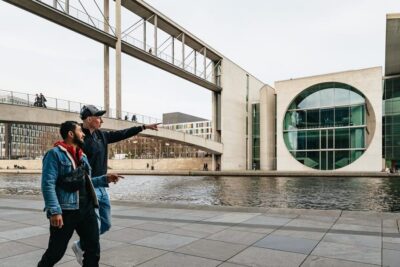
Reichstag, Dome and Government District Guided Tour
Read our review →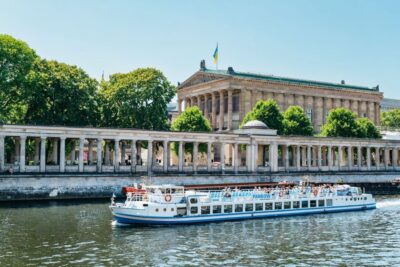
1-Hour City Tour by Boat with Guaranteed Seating
Read our review →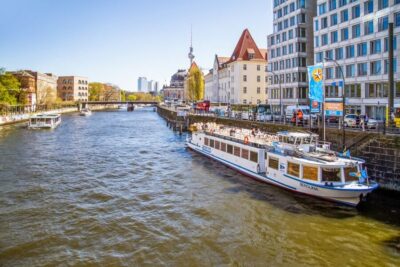


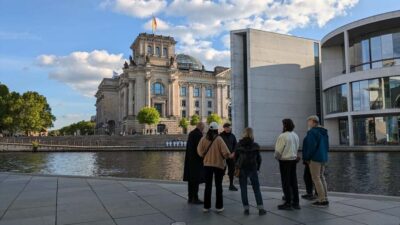
Reichstag, Plenary Chamber, Cupola & Government Tour
Read our review →