
Review · TOURS
Wall Tour Berlin – Fates, Heroes & Love Stories
The Berlin Wall is easiest to understand when you stop treating it as a strip of concrete and start seeing it as a machine built to control ordinary lives. This two-hour walk follows Bernauer Strasse, where homes, churches, railway stations, escape tunnels, and family windows became part of the border.
I like the route’s human scale and its use of real places instead of a simple lecture. I also like the range of stories, from tunnel escapes and Conrad Schumann’s famous leap to love stories that survived the division. The main concern is reliability: the experience has a 4.1 rating from nine reviews, including two serious reports that no guide appeared at the meeting point.
In This Review
- Key points to know before booking
- Why Bernauer Strasse is the right place to learn about the Wall
- Nordbahnhof and the first glimpse of divided Berlin
- How a border became a fortified strip
- The memorial window and the people behind the numbers
- The viewing platform and the shape of the border zone
- The Reconciliation Chapel and a church caught in the middle
- Passenger agreements, children, and political control
- Windows facing freedom on Bernauer Strasse
- Tunnel escapes and the battle over the story
- Conrad Schumann’s famous leap
- Kidnapping and the darker work of the state
- The loudspeaker war and the final road to Mauerpark
- What $19.66 buys you
- Important booking caution
- Who will get the most from this walk
- Should you book Wall Tour Berlin?
- FAQ
- Where does the Wall Tour Berlin start?
- Where does the tour end?
- How long does the tour last?
- What does the tour cost?
- What places do you visit?
- Does the tour explain ghost stations?
- Does the tour discuss people who died at the Wall?
- Is the tour conducted outdoors?
- How many people can join?
- Can I cancel for a full refund?
Key points to know before booking
- The route follows Bernauer Strasse: You see the Berlin Wall Memorial, the former border strip, the viewing platform, the Reconciliation Chapel, and Mauerpark.
- The stories are personal and difficult: Expect accounts of deaths, forced separation, propaganda involving young people, kidnappings, and desperate escapes.
- Ghost stations open the tour: The walk begins near Nordbahnhof, with an explanation of how Berlin’s divided railway system worked.
- The viewing platform adds useful context: From above, you can make sense of how the border zone was organized.
- The tour costs $19.66 per person: Since all stops are free, you are paying mainly for the guide’s interpretation and the convenience of a planned route.
- Operations deserve caution: Free cancellation is available up to 24 hours before departure, but reports of missed departures mean you should keep booking details and contact information close at hand.
Why Bernauer Strasse is the right place to learn about the Wall
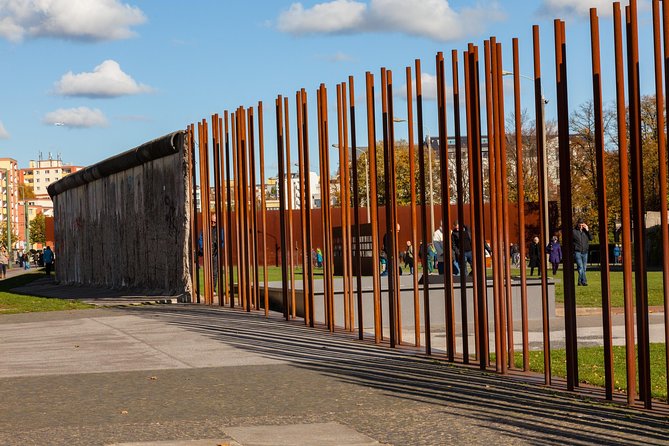
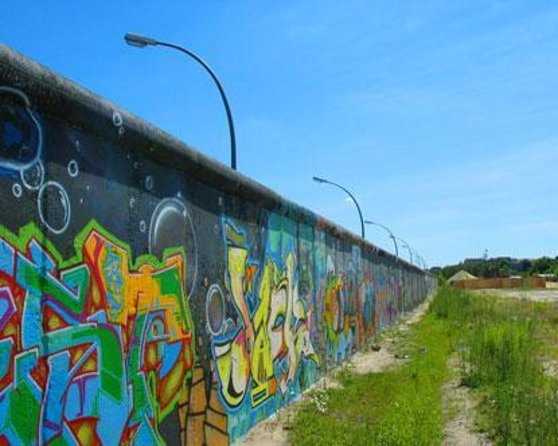
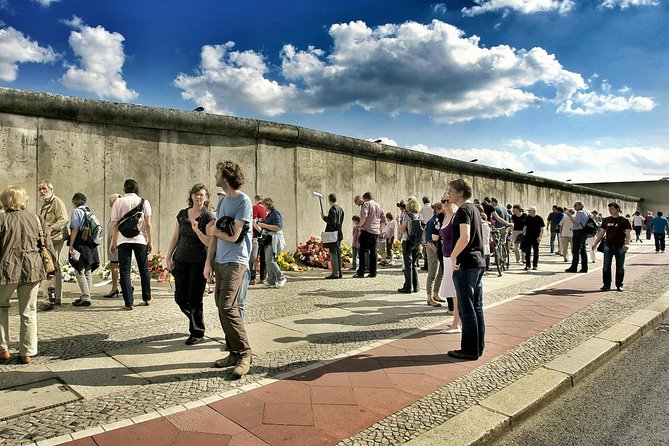
The Berlin Wall ran for more than 40 kilometers through the city and divided Berlin for 28 years. That scale can be hard to grasp from a photograph. Bernauer Strasse helps because the Wall was not an abstract line here. It cut across streets, homes, churches, railway routes, and family life.
This walk stays mainly around the Berlin Wall Memorial, rather than trying to cover every famous Wall site in the city. That is a sensible choice for a two-hour experience. You get one concentrated stretch with enough time to hear the story behind each location.
I like that the route moves through several kinds of evidence. You see the remains and memorial areas, look across the former border strip from a platform, and pause at places connected to escapes and deaths. The guide’s job is to connect those pieces so the walk does not become a string of disconnected facts.
The subject is heavy. The tour covers people who died trying to cross, families facing forced separation, and children and young people used for political purposes by the East German state. If you want a light introduction to Berlin, choose another walk. If you want a direct account of how political decisions affected individual lives, this route has real value.
Other Berlin tours people book alongside this one:
- Berlin: Reichstag, Dome and Government District Guided Tour
★ 4.7 · 18,288 reviews - Berlin: 1-Hour City Tour by Boat with Guaranteed Seating
★ 4.3 · 16,993 reviews - Berlin: Boat Tour Along the River Spree
★ 4.4 · 11,252 reviews
Nordbahnhof and the first glimpse of divided Berlin
The walk begins at Elisabeth-Schwarzhaupt-Platz, near the entrance to the Nordbahnhof S-Bahn station on Gartenstrasse. The first stop is described as jumping over the Wall at the station entrance, a playful reference to the crossing from one side of the former division to the other.
The opening subject is the so-called ghost stations. During the East German period, some railway stations in West Berlin became sealed or heavily controlled when train lines passed through East Berlin. The guide explains why these stations existed and how the divided city affected everyday public transport.
This is a clever beginning because it shows that the Wall was not only a physical barrier above ground. It also changed the way people moved beneath and through the city. You begin with a practical question, how could a railway station become inaccessible in a living city, before moving toward the larger political story.
The initial explanation is brief, only a few minutes, so do not expect an extended station visit. It is a starting point that gives the rest of the walk some structure.
How a border became a fortified strip
At the start of the Berlin Wall Memorial, the guide gives a short explanation of how the Wall could be built at all. The crucial date is June 15, 1961, when East German leader Walter Ulbricht made the statement that no one intended to build a wall. Less than two months later, on August 13, the border was sealed and construction began.
The important lesson here is speed. The change from an open city to a closed border happened with startling force. The guide then explains how the border strip was constructed, helping you picture the layers of control rather than imagining one isolated wall.
You should pay attention to the physical arrangement around the memorial. The route is valuable because it lets you compare what you see today with the way the border once divided the street. At the same time, the stop lasts about ten minutes, so the explanation is an overview rather than a technical study of every barrier.
This part also gives the guide a chance to explain the human cost of a political system that closed the border. The tone is blunt, and the subject matter is not softened. That directness will suit you if you prefer historical tours that deal plainly with state power and personal loss.
The memorial window and the people behind the numbers
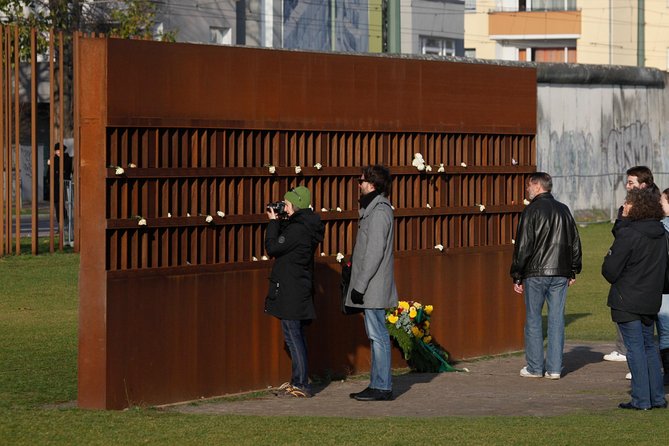
At least 140 people died at the Berlin Wall between 1961 and 1989, although the exact number of victims remains unknown. At the memorial window, the guide tells the stories of people who paid with their lives while trying to gain freedom.
This is one of the strongest parts of the route because a number alone can feel remote. Personal accounts give the statistic a face and a decision. You are asked to think about what it meant to approach the border knowing that the attempt could end in death.
The stop lasts about ten minutes, but the emotional effect may last much longer. The tour does not treat the deaths as a footnote to the Wall’s construction. They are central to the story.
You may want a little quiet time after this stop. The walk continues, and the guide keeps adding information, but you do not need to rush your own response. The memorial setting gives you a chance to look carefully and listen without turning the subject into spectacle.
A different side of Berlin on the same trip:
- Discover Berlin Half-Day Walking Tour
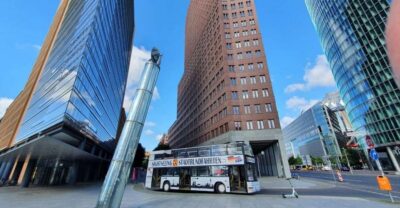
★ 5.0 · 9,624 reviews - Berlin: Hop-on Hop-off Bus Tour with Live Commentary
★ 4.3 · 8,579 reviews - Berlin: Government District around the Reichstag Guided Tour
★ 4.7 · 8,447 reviews - Berlin: Reichstag, Plenary Chamber, Cupola & Government Tour
★ 4.6 · 8,422 reviews
The viewing platform and the shape of the border zone
The guide then takes you to a viewing platform overlooking the former border strip on Bernauer Strasse. This is a practical pause in the walk because the border’s design is much easier to understand from above.
From ground level, walls and memorial markers can seem scattered. From the platform, you can see how the controlled zone separated the two sides and why crossing it was so dangerous. The fifteen-minute stop is longer than most of the earlier pauses, which gives the guide room to explain the arrangement and gives you time to look for yourself.
I especially like this part for first-time visitors. You do not need specialist knowledge to follow the explanation. The physical view does much of the work, while the guide fills in the meaning.
The platform also helps prevent the tour from becoming too dependent on spoken history. You are not just hearing about the border. You are looking at the space it occupied.
The Reconciliation Chapel and a church caught in the middle
Near Ackerstrasse, the route reaches the chapel of the Church of Reconciliation. The original church once stood in the middle of the border strip. Before the border closed, people from East and West Berlin worshipped there together.
The church’s position made it a powerful symbol of the division. It was part of ordinary community life, yet the new border placed it inside a controlled zone. The guide explains what happened to the church after the border was closed.
This five-minute stop is short, but it adds an important religious and civic dimension. The Wall did not only separate political systems. It disrupted shared institutions and familiar places where people met.
The chapel is also a useful reminder that the border did not follow a neat, empty line. It cut through an existing neighborhood. That fact makes the next stories about houses and windows easier to understand.
Passenger agreements, children, and political control
The tour next explains passenger agreements negotiated between the Senate of West Berlin and the East German government. These agreements were intended to make the Wall more permeable in limited ways.
This portion shows that the border was not entirely static. There were rules, negotiations, and controlled exceptions. The existence of such agreements did not make the division humane, but it reveals the constant effort to manage movement across it.
The guide also discusses how the East German state used children and young people for propaganda. This is a difficult subject, especially because it concerns the abuse of trust and age for political purposes.
The stop lasts about ten minutes and broadens the tour beyond escape attempts. You learn not only how adults tried to cross the border, but also how the state tried to shape the thinking and behavior of the next generation.
Windows facing freedom on Bernauer Strasse
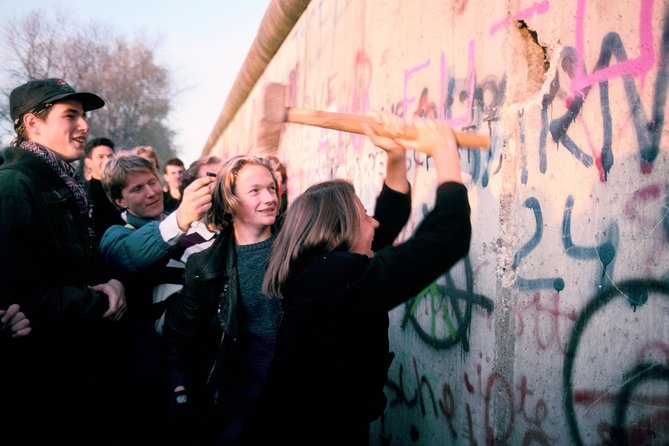
Along Bernauer Strasse, residential buildings stood on East German territory while their windows and exits faced West Berlin. After the border closed, these homes became part of a grim and unstable frontier.
The guide explains the tragedies that followed. Hundreds of people jumped from windows in fear and desperation, sometimes toward people and fire crews on the other side. The photographs and videos here can be viewed at your own pace, which matters because this is one of the most distressing sections.
You should not rush through these images. They show why the Wall was more than a barrier placed at street level. It reached into private homes and made a family’s window a possible escape route, a place of danger, or both.
This is also where the tour’s focus on individual fate is most clear. Political decisions created immediate risks for people standing in their own apartments. The guide’s account gives the location meaning, while the visual material lets you examine the evidence directly.
Tunnel escapes and the battle over the story
The 1960s saw many tunnel escapes, and one famous tunnel lies close to the border house. The guide takes you there and explains how the East German government changed the historical story for propaganda purposes.
This stop is useful because it introduces a different kind of escape. A tunnel required planning, secrecy, and cooperation below ground. It also shows how information itself became part of the Cold War conflict.
The story was not finished when someone reached the other side. The government could try to control how an escape was understood, reported, and remembered. That makes the tunnel more than an engineering tale. It becomes a case study in who gets to define events.
The stop lasts around ten minutes. If escape stories are the part of Wall history that interests you most, this is one of the places where you will get the clearest connection between the physical site and the political message built around it.
Conrad Schumann’s famous leap
The route then turns to border guard Conrad Schumann, whose jump to freedom became one of the most famous images associated with the Wall. The guide explains Schumann’s life and why he remained wanted until the fall of East Germany.
The five-minute stop is brief, but the photograph behind the story is instantly memorable. Schumann’s leap captures a split-second decision in a way that few historical images can.
A short stop also keeps the story from taking over the entire walk. The guide places Schumann within the wider account of the border, rather than presenting one famous photograph as the whole history.
This is a good example of the tour’s range. You hear about civilians, families, escape planners, church communities, young people, and a border guard. The Wall affected people in different positions, though not in equal ways.
Kidnapping and the darker work of the state
One of the more unusual subjects on the route is kidnapping. The guide explains how former members of the National People’s Army and People’s Police were kidnapped from the West and taken back to East Germany by criminal groups acting on East German orders.
The tour also covers one kidnapping that ended in death. This is not a familiar tourist story, and it adds a darker layer to the political conflict. The Wall was not only guarded at the border itself. Pressure could reach across the city and across national lines.
The stop lasts five minutes, so expect a compact account rather than a long investigation. Still, it shows the guide’s effort to move beyond the most familiar escape photographs and include less visible forms of coercion.
The loudspeaker war and the final road to Mauerpark
Berlin’s Cold War conflict included a loudspeaker war. The West and East used loudspeakers to make life difficult for people on the other side, turning sound into another tool of confrontation.
This five-minute stop may seem minor beside deaths and escapes, but it helps you understand how division filled daily life. The border was visible in concrete, armed control, blocked routes, and homes. It could also arrive through repeated public messages and noise.
The walk ends at Mauerpark, near Bernauer Strasse and Oderberger Strasse. Here, the guide explains that the Wall’s fall also has its own story. The tour therefore follows the whole arc, from construction and repression to the events that brought the division to an end.
The ending is practical as well as historical. From the area around Oderberger Strasse, you can take the M10 tram to Berlin Central Station. The finish near Mauerpark also makes it easy to continue exploring the neighborhood on your own, though the activity itself ends with the guide’s account of the Wall’s fall.
What $19.66 buys you
At $19.66 per person, this is a modestly priced walking tour. Every listed stop has free admission, so the fee pays for the guide, the route planning, and the interpretation that connects the memorial sites.
I think the price is fair if you want structure. You could visit the Berlin Wall Memorial independently, but you would need to work out the sequence and research why each location matters. Here, the route gathers ghost stations, construction, victims, the viewing platform, the chapel, windows, tunnels, Schumann, kidnappings, loudspeakers, and the Wall’s fall into one two-hour story.
The value depends on the guide’s delivery. The strongest written feedback describes the tour as exciting, easy to follow, and able to create a good impression of the period despite the difficult subject. That matches the design of the route: short stops keep the pace moving, while the memorial sites give the discussion substance.
The group can include up to 25 people. That is not a tiny private walk, so you may need to stay close to the guide and listen carefully around busy streets. The two-hour length is a good fit if you want a focused introduction, but it does not leave room for long museum visits or extended discussion at every stop.
Important booking caution
The most serious issue is not the history. It is the risk of a missed departure. Two separate complaints describe groups arriving at the correct meeting point and finding that no guide appeared. One account also describes a late and discourteous response when the group tried to make contact.
That is a significant warning, especially because the meeting point and start time matter greatly on a walking tour. Keep your confirmation available on your phone, arrive early, and save the provider’s contact details before leaving. If the guide is missing, document the time and your attempts to make contact.
The overall score is 4.1 from nine reviews, so the sample is small. The positive experiences describe a compelling, entertaining history walk, while the two no-show accounts point to a basic service problem. I would not ignore either side.
Free cancellation is available until 24 hours before the start time for a full refund. Inside that 24-hour window, changes and cancellations are not accepted for a refund. The activity can also be canceled because of poor weather or because the minimum number of participants is not reached. In those cases, you are offered another date or experience, or a full refund.
Who will get the most from this walk
I would choose this experience if you want to understand the Berlin Wall through places and people rather than a museum display alone. It suits adults and older children who can handle serious subjects, as well as anyone who wants a short historical walk before exploring Berlin independently.
It is especially useful for you if the following appeal:
- You want a guided explanation of the Berlin Wall Memorial.
- You prefer real escape stories to a broad political overview.
- You have about two hours and want a focused route.
- You want to see the former border strip from a viewing platform.
- You are interested in less familiar subjects such as ghost stations, kidnappings, loudspeaker propaganda, and the Reconciliation Church.
I would think twice if you want a carefree outing, have difficulty walking for two hours, or need a tour with a spotless record of departures. The route includes difficult stories and relies on the provider turning up at the appointed place and time.
Should you book Wall Tour Berlin?
Book it if the human stories are what you want from Berlin’s Wall Memorial, and if you are comfortable accepting some operational risk. At a low price, the route covers a lot: the Wall’s construction, the border strip, deaths, window escapes, tunnels, propaganda, Conrad Schumann, the church, kidnappings, the loudspeaker conflict, and the fall of the Wall.
I like the route and its emphasis on authentic places. The positive accounts describe a lively, worthwhile walk that makes a painful subject easier to understand. But the two no-show reports are too serious to hide. Confirm everything carefully, keep the free-cancellation deadline in mind, and consider booking only when the schedule gives you room to recover if plans change.
FAQ
Where does the Wall Tour Berlin start?
The tour starts at Elisabeth-Schwarzhaupt-Platz, 10115 Berlin, near the entrance to the Nordbahnhof S-Bahn station on Gartenstrasse.
Where does the tour end?
The tour ends at Mauerpark, near Bernauer Strasse and Oderberger Strasse in Berlin’s Pankow district.
How long does the tour last?
The tour lasts approximately two hours.
What does the tour cost?
The stated price is $19.66 per person.
What places do you visit?
The route includes the Berlin Wall Memorial, the Nordbahnhof area, the viewing platform over the former border strip, the Reconciliation Chapel area near Ackerstrasse, the former residential buildings on Bernauer Strasse, a nearby escape tunnel, the location connected with Conrad Schumann, and Mauerpark.
Does the tour explain ghost stations?
Yes. The tour begins near Nordbahnhof and includes an explanation of ghost stations during the East German period.
Does the tour discuss people who died at the Wall?
Yes. At the memorial window, the guide discusses people who died while seeking freedom. The tour states that at least 140 people died at the Wall between 1961 and 1989, although the exact number is unknown.
Is the tour conducted outdoors?
The scheduled experience is a walking route through Berlin’s Wall Memorial areas, Bernauer Strasse, Ackerstrasse, and Mauerpark. It requires good weather.
How many people can join?
The maximum group size is 25 people.
Can I cancel for a full refund?
Yes, if you cancel at least 24 hours before the experience start time. Cancellations or changes made less than 24 hours before the start are not refunded.
Just added around Berlin
- Berlin Highlights in One Day★ 5.0 · 3 reviews
- Private Berlin One Day Tour with a Local: See the City Unscripted★ 3.5 · 3 reviews
- Individual city tour Berlin for max. 8 persons★ 5.0 · 3 reviews
- Transfer from Berlin Schönefeld Airport (SXF) to Berlin city Hotels – ROUND TRIP★ 4.0 · 3 reviews
- Berlin: Museum Island Tour★ 5.0 · 3 reviews
- Private Analogue Photography Experience in Berlin★ 5.0 · 3 reviews
- Berlin: Local Food Tour in Secrets Hidden Gems★ 4.0 · 3 reviews
- Berlin & The Third Reich Private Guided Tour★ 5.0 · 3 reviews
Tours, compared.
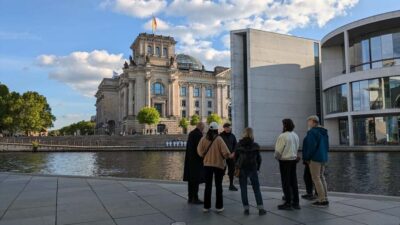
Reichstag, Dome and Government District Guided Tour
Read our review →
1-Hour City Tour by Boat with Guaranteed Seating
Read our review →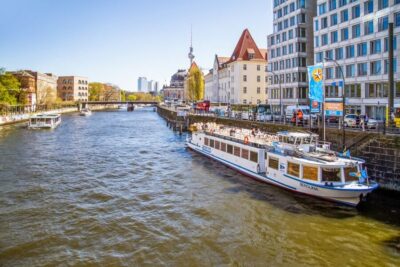

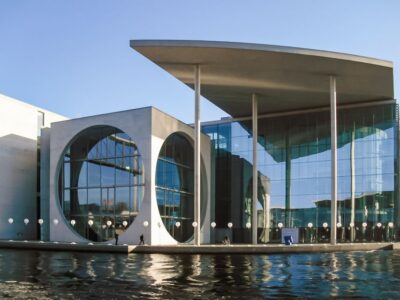
Reichstag, Plenary Chamber, Cupola & Government Tour
Read our review →