
Review · CITY TOURS
Berlin: City-West Walking Tour with a Real Berliner
Berlin’s City-West tells a different story from the familiar Brandenburg Gate and Berlin Wall routes. This two-hour walk follows the old West-Berlin center, from Wittenbergplatz to Savignyplatz, with stories about the divided city, Cold War life, grand department stores, and the local food scene. KaDeWe and Kurfürstendamm give the route its polished face, while the Kaiser Wilhelm Memorial Church recalls a much darker past.
I like the small group limit of 10, which leaves room for questions and makes a personal guide possible. I also like the practical angle: Carlo, the guide named in several bookings, shares food tips and ideas for other Berlin sights, not just dates and building names. The main consideration is the pace: two hours covers a lot, so you will see exteriors and hear context rather than make a long visit inside every stop.
In This Review
- Key points
- Why City-West is worth two hours
- Wittenbergplatz and the first look at KaDeWe
- Europa-Center and the changing face of West-Berlin
- Kurfürstendamm and Berlin’s golden twenties
- Kaiser Wilhelm Memorial Church at Breitscheidplatz
- Zoologischer Garten and the Cold War city
- From grand avenues to Savignyplatz
- How much does the $43 price buy you?
- Timing, weather, and access
- Who will get the most from this walk?
- Should you book Berlin’s City-West walk?
- FAQ
- Where does the tour begin?
- Where does the tour finish?
- How long is the walking tour?
- What landmarks are included?
- Which languages are available?
- How large is the group?
- Is the tour wheelchair accessible?
- What happens if it rains?
- Can I cancel the booking?
Key points
- See the old West-Berlin center: Follow a clear route from Wittenbergplatz through the area around Zoologischer Garten to Savignyplatz.
- Hear Cold War stories: Learn why this part of the city became West-Berlin’s main center during the division of Germany.
- Visit Berlin icons from outside: See KaDeWe, Europa-Center, Kurfürstendamm, and Kaiser Wilhelm Memorial Church along one walk.
- Ask plenty of questions: The group is limited to 10, and Carlo is praised for being approachable, prepared, and helpful.
- Get useful local advice: The tour includes suggestions for typical Berlin food and other places worth visiting.
- Plan for the weather: The walk runs in all conditions, so comfortable clothing and sensible shoes matter.
Why City-West is worth two hours
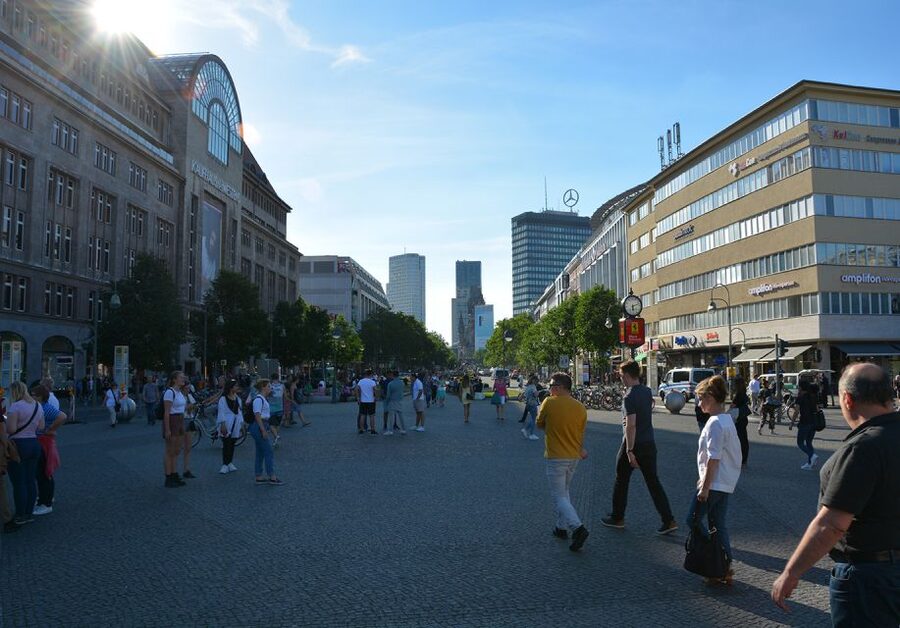
Many first visits to Berlin focus on the former East, especially Museum Island, Unter den Linden, and the Wall memorials. City-West deserves its own look because it was the capital’s main showcase and daily center in the years when Berlin was split in two.
This route helps you understand that division through ordinary city life. Instead of seeing only checkpoints and political monuments, you see department stores, traffic hubs, shopping streets, hotels, churches, and nightlife districts. Those places show how West-Berlin functioned as an island of freedom surrounded by East Germany.
The walk also places the twentieth century in a wider setting. Kurfürstendamm recalls the glamour of Berlin’s golden twenties, while the area around Zoologischer Garten became a vital center during the Cold War. The result is a useful introduction to western Berlin, especially if you want history tied to real streets rather than a string of dates.
The guide speaks German, English, or Italian, and the small-group format is a real advantage. A group of up to 10 is large enough to feel social but small enough for direct questions. One February booking had only one participant, and the tour still went ahead, so the experience can sometimes feel almost private.
More walking tours in Berlin:
- Discover Berlin Half-Day Walking Tour
★ 5.0 · 9,624 reviews - Berlin: Third Reich and Cold War 2 Hour Walking Tour
★ 4.9 · 6,830 reviews - Berlin: Discover Berlin Walking Tour
★ 4.9 · 5,998 reviews
Wittenbergplatz and the first look at KaDeWe
Meet at Wittenbergplatz U-Bahn station, at the Tauentzienstrasse exit. Look for the guide carrying the Get Your Guide, You in Berlin flag. This is a useful starting point because Wittenbergplatz puts you right beside one of City-West’s best-known landmarks, KaDeWe.
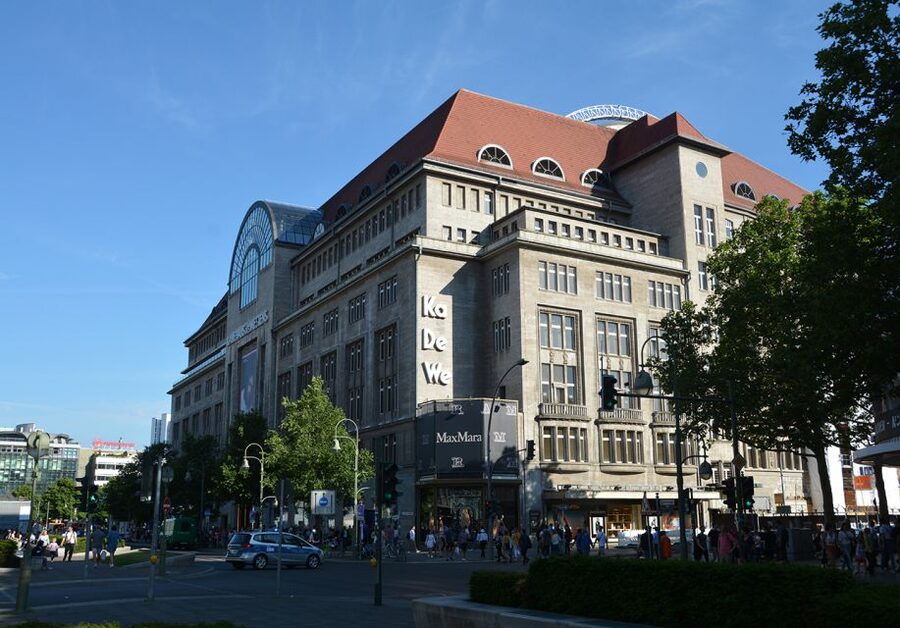
KaDeWe, short for Kaufhaus des Westens, is Continental Europe’s biggest department store. The building represents more than shopping. During the divided years, it became a symbol of West-Berlin’s access to consumer goods and its connection to the western world.
Your guide’s job here is not simply to point at the façade. The value comes from hearing how the area worked as a public statement during the Cold War. A department store could carry political meaning in a city where daily life was watched and compared across an ideological border.
You should expect a guided look and street-level explanation rather than an extended shopping visit. If you want to browse inside KaDeWe or visit its food areas, plan separate time before or after the walk. The tour itself keeps moving.
Europa-Center and the changing face of West-Berlin
From KaDeWe, the route continues toward the Europa-Center. This high-rise complex is one of the recognizable pieces of postwar City-West and helps show how Berlin rebuilt its commercial center after the Second World War.
The Europa-Center and KaDeWe make an interesting pair. One is a department store with a long commercial and social role. The other expresses the modern, upward-looking West-Berlin of the postwar period. Together, they show how the city’s western center mixed shopping, offices, entertainment, and public identity.
This section is useful if you like architecture but do not want a specialist lecture. The guide connects the buildings to the city around them, explaining why this particular district grew so important. You get a better sense of how Berlin’s western center was planned and promoted, rather than seeing isolated attractions without a common thread.
The route is urban and busy. That is part of the point, but it also means this is not a quiet walk through old lanes. Expect traffic, pedestrians, shops, and large streets. Wear shoes that can handle pavement, and do not dress as if you are heading on a country path.
Kurfürstendamm and Berlin’s golden twenties
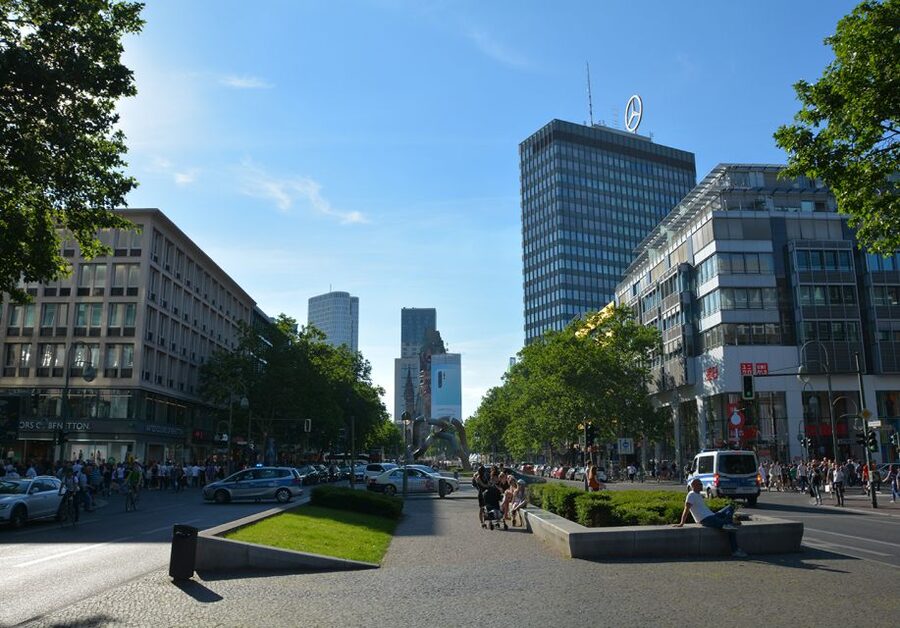
Kurfürstendamm, often shortened to Ku’damm, is the grand avenue at the heart of this tour. Its shops, cafés, hotels, and broad urban scale make it one of the clearest places to discuss Berlin’s golden twenties.
The guide uses the avenue to explain how the city center developed before the war and how its role changed after 1945. You will hear about the lively cultural life associated with the period, then move into the more difficult story of division and reconstruction.
I like this part because it gives you a feel for Berlin as a city of style and experiment, not just a place of memorials. The tour also links the avenue to Berlin’s reputation for culture, art, tolerance, lifestyle, and creative work. That connection helps explain why City-West still feels important even after the historic center shifted east following reunification.
Do not expect a detailed stop at every shop or building. The point is the avenue as a whole and the layers of history along it. If you want to shop at KaDeWe or Ku’damm, use the tour as an orientation walk, then return later with more time.
A few more Berlin tours worth weighing up
- Berlin: 1-Hour City Tour by Boat with Guaranteed Seating
★ 4.3 · 16,993 reviews - Berlin: City Sightseeing Hop-On Hop-Off Bus Tour
★ 4.1 · 4,233 reviews - Potsdam: City and Castles Tour
★ 4.7 · 3,721 reviews - Berlin: 1-Hour City Sightseeing Cruise
★ 4.4 · 2,210 reviews
Kaiser Wilhelm Memorial Church at Breitscheidplatz
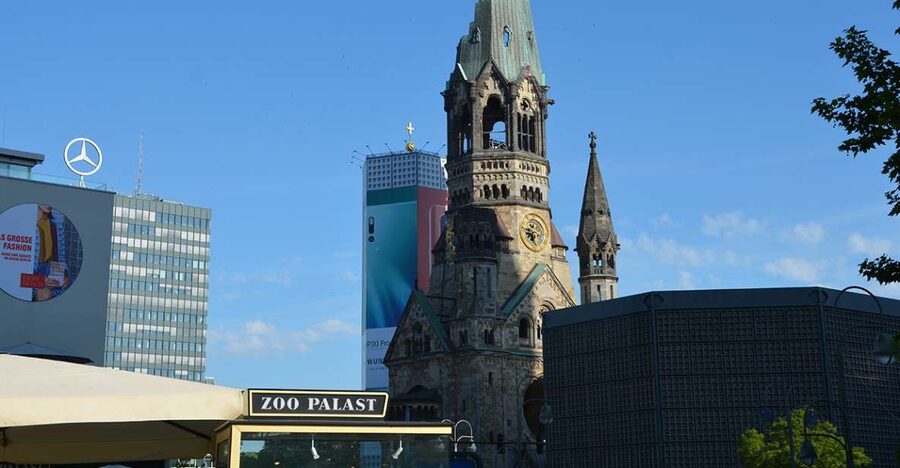
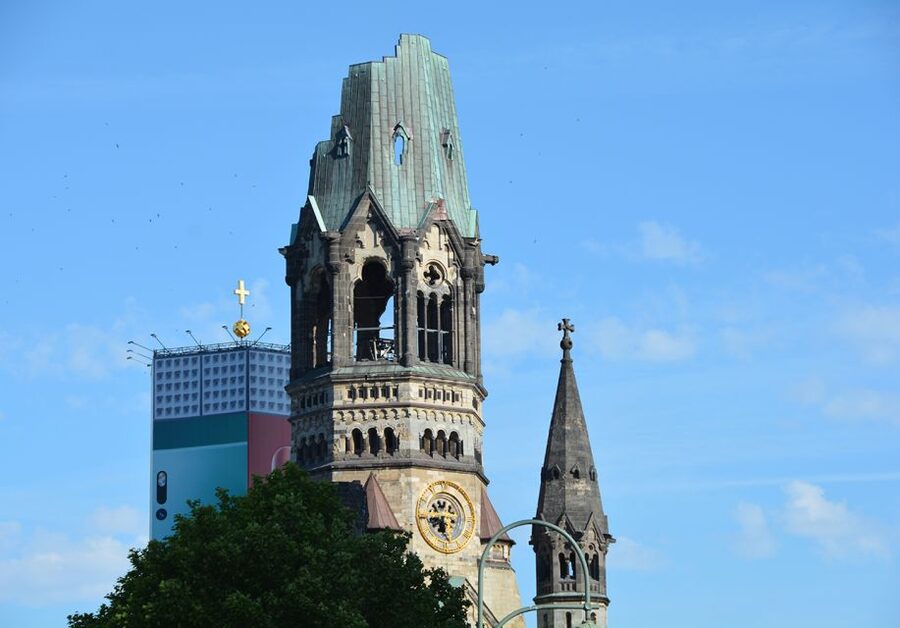
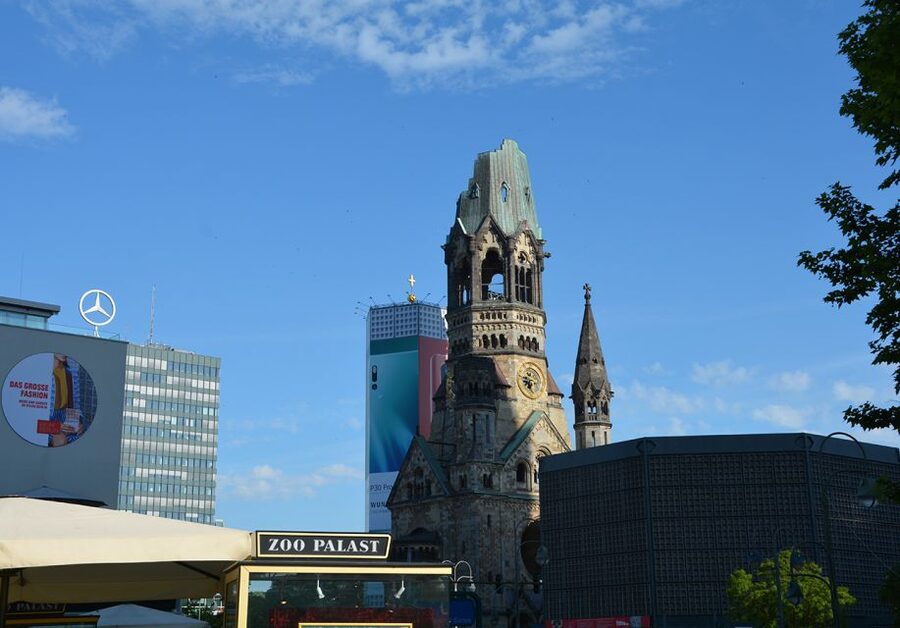
The Kaiser Wilhelm Memorial Church is the emotional center of the route. Its damaged tower, preserved after wartime destruction, gives the history a physical presence that no general explanation can match.
At Breitscheidplatz, the guide can explain the church’s place in Berlin’s past and its position in the busy modern center. The contrast is striking: shoppers, traffic, and city life continue around a ruin that recalls the destruction of war.
This is also a good place to connect the Second World War with the later Cold War. City-West was rebuilt as a working capital of West Germany’s isolated western outpost, and the memorial church became one of its best-known symbols. You see how remembrance and modern city life occupy the same square.
The stop is especially useful for first-time visitors because it links several parts of Berlin’s story without sending you across town. You will want to listen closely here. The square can be active, and the church is surrounded by the normal noise of a central district.
Zoologischer Garten and the Cold War city
The walk takes you through the area around Zoologischer Garten, one of Berlin’s major transport centers. Its location helps explain why the western center grew around it. Rail, U-Bahn, buses, shopping, and nearby entertainment made this district a practical meeting point for West-Berlin.
The guide’s Cold War stories give the area its meaning. West-Berlin was separated from the surrounding East German territory, yet it had to function as a normal city. People went to work, met friends, shopped, used public transport, and built a culture that was distinct from the East.
This is where a local guide can add something a basic sightseeing route may miss. You are not only told that Berlin was divided. You learn how the division shaped the city center and why City-West became the main place to see, be seen, shop, and spend time.
A review from the United States praised the opportunity to ask questions about the city layout, history, and other sights. That is good advice for you: bring questions. If you are unsure how to organize the rest of your Berlin visit, this part of the walk is a natural time to ask for direction.
From grand avenues to Savignyplatz
The final stretch leads toward Savignyplatz, a more relaxed destination than the large commercial streets earlier in the walk. The route ends at Savignyplatz, 10629 Berlin, Germany.
This finish gives the walk a useful change of mood. You begin among major stores and broad avenues, then end in an area known for its restaurants and local city life. The guide can point you toward places to try typical Berlin food in the western part of town.
The food advice is one of the most practical features of the experience. A guide can help you decide what to eat after the walk and where to continue exploring, which is often more useful than another list of monuments. Specific restaurant names are not provided in the tour details, so ask directly during the walk for current suggestions.
Savignyplatz also works well as a stopping point because you can continue your evening from there. The tour does not include a meal, and food or drinks are not listed among the inclusions, so budget separately if you plan to eat afterward.
How much does the $43 price buy you?
At $43 per person, this is not the cheapest way to move through Berlin. You can walk along Kurfürstendamm and photograph several landmarks without paying for a guide. The fee makes sense if you want the background that ties those places together.
You are paying for two hours with a professional city guide, a defined route, and the chance to ask questions in a group of no more than 10. That matters most in City-West, where the significance of a building is not always obvious from its exterior.
The value is strongest for a first visit, or for anyone who has already seen Berlin’s central landmarks and wants to understand the western side. It is less useful if you mainly want indoor visits, shopping time, or a long stop at the memorial church.
Several bookings describe Carlo as friendly, professional, prepared, and willing to help. One Italian-language booking praised his many anecdotes, while another participant found the walk so informative that they would return. The guide may not always be Carlo, but the tour is offered in German, English, and Italian, and the available feedback points to an approachable guiding style.
Timing, weather, and access
The walk lasts two hours, with starting times depending on availability. An evening departure can be a smart choice in summer. One participant specifically noted that the later hour brought cooler walking conditions, with summer sunset in Berlin as late as 9:30 p.m.
That timing also suits City-West. The commercial streets and squares have a different feel later in the day, though the tour remains a city walk rather than a nightlife outing. If you prefer daylight for photographs, choose an earlier departure.
The tour runs in all weather and on public holidays. Bring a rain layer if the forecast looks uncertain, and wear shoes suited to hard pavement. There is no reason to expect a strenuous hike, but two hours on city streets still calls for comfortable clothing.
The activity is wheelchair accessible. The small group size, clear meeting point at Wittenbergplatz U-Bahn station, and finish at Savignyplatz make the route relatively easy to follow, though you should still confirm any personal access needs when booking.
You can cancel up to 24 hours in advance for a full refund, and reserve now while paying later. Those terms are useful if your Berlin schedule is still changing.
Who will get the most from this walk?
I would choose this tour for a first-time visitor who wants a quick grip on Berlin’s western center. It is also a strong fit if you care about twentieth-century history but prefer stories about how people lived, shopped, traveled, and met during the Cold War.
It suits solo visitors particularly well. The group is small, and the guide’s willingness to continue even with one participant means you may get plenty of room for questions. Couples and families who want a short orientation walk should also find the two-hour length manageable.
This is a good choice for English, German, or Italian speakers. It is less suited to anyone looking for a museum-heavy activity, a food tour with tastings, or a route focused on the Berlin Wall itself. The walk explains division through City-West, but it does not replace a dedicated Wall or Cold War museum visit.
I would also avoid booking it immediately before a train or flight. The tour ends at Savignyplatz, not where it begins, and city walks can be affected by weather, traffic, and the natural pace of a small group.
Should you book Berlin’s City-West walk?
Book it if you want Berlin’s history connected to real streets and everyday city life. The route covers KaDeWe, Europa-Center, Kurfürstendamm, Breitscheidplatz, Kaiser Wilhelm Memorial Church, Zoologischer Garten, and Savignyplatz without taking up half a day.
The strongest reasons to go are the Cold War context, the small group, and the chance to ask a local guide for food and sightseeing advice. Carlo’s friendly, helpful style is a good sign, though guide assignments can vary.
Skip it if your priority is shopping time, extended church visits, or indoor attractions. For $43, you are buying interpretation and local conversation, not admission tickets or a meal. For most visitors who want to understand why West-Berlin mattered, that is a fair trade.
FAQ
Where does the tour begin?
Meet at Wittenbergplatz U-Bahn station at the Tauentzienstrasse exit. Look for the guide holding the Get Your Guide, You in Berlin flag.
Where does the tour finish?
The walk ends at Savignyplatz, 10629 Berlin, Germany.
How long is the walking tour?
The tour lasts two hours.
What landmarks are included?
The route includes KaDeWe, Europa-Center, Kurfürstendamm, Kaiser Wilhelm Memorial Church at Breitscheidplatz, the area around Zoologischer Garten, and Savignyplatz.
Which languages are available?
The tour is offered in German, English, and Italian.
How large is the group?
The group is limited to 10 participants.
Is the tour wheelchair accessible?
Yes, the activity is listed as wheelchair accessible.
What happens if it rains?
The tour takes place in all weather conditions, so wear suitable clothing for the forecast.
Can I cancel the booking?
Yes. You can cancel up to 24 hours in advance for a full refund. You can also reserve now and pay later.
Just added around Berlin
- Berlin Highlights in One Day★ 5.0 · 3 reviews
- Private Berlin One Day Tour with a Local: See the City Unscripted★ 3.5 · 3 reviews
- Individual city tour Berlin for max. 8 persons★ 5.0 · 3 reviews
- Transfer from Berlin Schönefeld Airport (SXF) to Berlin city Hotels – ROUND TRIP★ 4.0 · 3 reviews
- Berlin: Museum Island Tour★ 5.0 · 3 reviews
- Private Analogue Photography Experience in Berlin★ 5.0 · 3 reviews
- Berlin: Local Food Tour in Secrets Hidden Gems★ 4.0 · 3 reviews
- Berlin & The Third Reich Private Guided Tour★ 5.0 · 3 reviews
City Tours, compared.
1-Hour City Tour by Boat with Guaranteed Seating
Read our review →
Berlin City Hop-on Hop-off Tour with Optional Cruise
Read our review →

Browse the lists this tour appears in