
Review · BERLIN WALL TOURS
Berlin Wall: City Tour of Divided Germany
Berlin’s Cold War border was not just a line on a map. It cut through railway stations, government buildings, parks, streets, and family life. This two-hour walking tour follows that story from the Palace of Tears at Friedrichstraße station to major sites such as the Brandenburg Gate, Potsdamer Platz, and Checkpoint Charlie.
I like the route for two clear reasons: it links famous sights to the physical border that once ran through them, and it adds smaller stories about ordinary people caught between East and West. Guides named Stefan or Stephan have been especially praised for personal, detailed storytelling. The main limitation is just as clear: the tour is conducted in German only, so you need a strong command of the language to get the full value.
In This Review
- Key points at a glance
- Beginning at Friedrichstraße’s Palace of Tears
- Friedrichstraße and the daily mechanics of division
- Along the Spree toward the government district
- The Brandenburg Gate as a former border crossing
- The Holocaust Memorial and the former death strip
- Potsdamer Platz and the Tiergarten Triangle
- A remaining Wall section and Checkpoint Charlie
- What the guides add to the walk
- Is two hours enough for Berlin’s divided past?
- Is $21 a fair price?
- Who should book the City Tour of Divided Germany?
- FAQ
- Where does the Berlin Wall City Tour of Divided Germany begin?
- How long does the tour last?
- What language is the tour conducted in?
- Which Berlin sights are included?
- What should I bring?
- How much does the tour cost?
Key points at a glance
- Start at the Palace of Tears: Meet outside Tränenpalast, the former border crossing at Friedrichstraße station.
- Follow Berlin’s former border: See how the division reached the Spree, the government district, the Brandenburg Gate, and Potsdamer Platz.
- Hear personal stories: The guide adds human detail about daily life and the fate of people divided by the Wall.
- Visit famous Cold War landmarks: The route includes Checkpoint Charlie and a remaining section of the Berlin Wall.
- Expect a brisk walking tour: The experience lasts two hours, so wear comfortable shoes and dress for the weather.
- Strong value at $21: The price is modest for a focused history walk led by a live guide, especially if you want context rather than only photographs.
Beginning at Friedrichstraße’s Palace of Tears
Meet at the entrance of Tränenpalast, also called the Palace of Tears, in front of Friedrichstraße station on Reichstagufer. The address is 10117 Berlin, and the building has only one entrance, which makes the meeting point fairly easy to identify once you are at the station.
This is an excellent place to begin because Friedrichstraße was a major crossing point between East and West Berlin during the Cold War. The station itself was used by people moving between the divided parts of the city, while the Palace of Tears became associated with painful farewells between people who could not freely visit one another.
Your guide uses this opening point to explain the basic shape of divided Berlin. That matters because the Wall was never only a concrete barrier. It affected train journeys, family visits, work, housing, shopping, and the simple question of which streets you could use.
The meeting point is central and practical, but you should arrive with enough time to find the correct entrance. The tour is on foot, and the first moments may involve orienting the group around the station and the riverfront.
More of the Berlin Wall, end to end:
- Skip-the-Line: Berlin Wall Museum at Checkpoint Charlie
★ 4.1 · 2,041 reviews - Berlin: East Side Gallery Spree Cruise in a Solar Catamaran
★ 4.0 · 1,039 reviews - Cold War, Berlin Wall, Spies and the East Side Gallery
★ 5.0 · 1,024 reviews
Friedrichstraße and the daily mechanics of division
The tour presents Friedrichstraße station as the single border station during the Cold War. That detail gives the early part of the walk a useful focus. Instead of starting with a broad political lecture, you begin with a place where border rules shaped the movement of real people.
The strongest part of this approach is the attention to routine. A divided city affected far more than headline events. It changed how people reached work, where they could shop, how they visited relatives, and how they understood their own neighborhood.
I would pay close attention to the guide’s personal examples here. The best moments of this walk appear to come from stories that are not obvious from the pavement or surviving buildings. The guides Stefan and Stephan have both been singled out for personal information and clear explanations, though the guide assigned to your departure is not guaranteed.
The tour is listed as German-language only. That is not a minor detail. If you understand German well, the language can make the experience feel direct and natural. If you do not, this is not the right choice unless you are comfortable missing much of the spoken explanation.
Along the Spree toward the government district
From Friedrichstraße, the route follows the Spree toward Berlin’s parliament and government district. Buildings here were partly positioned along the former border, giving the walk a strong connection between present-day government and the city’s divided past.
This section helps you see how the frontier cut through central Berlin. The border did not sit only at the edge of town. It ran through an area that now represents the German state and its political institutions.
You should expect the guide to point out how the former border related to the surrounding buildings and open spaces. The value is visual: you can stand in a functioning modern district while learning that the same area once formed part of a heavily controlled frontier.
Do not expect a long indoor museum visit during this experience. The included service is a city tour, so the emphasis is on walking, looking, and listening. That keeps the price low and lets the guide connect several sites in one sitting, but it also means the depth of each stop depends on the pace and the questions asked by the group.
The Brandenburg Gate as a former border crossing
The Brandenburg Gate is one of Berlin’s essential sights, but this tour uses it for more than a quick photograph. The border once ran through this symbolic monument, which made the gate a powerful image of the divided city.
That contrast is what makes the stop useful. Today, you can approach the Brandenburg Gate as an open public landmark. During the division, its position carried a very different meaning. The guide explains how the gate came to represent both the split of Berlin and the city’s fate.
I like this part of the route because it gives familiar scenery a new layer. If you have already seen the Brandenburg Gate on a standard sightseeing walk, the Cold War context changes what you notice. The monument is no longer just a grand neoclassical entrance. It becomes a marker of restriction, separation, and political symbolism.
The stop also shows why a specialist city tour can offer better value than a general orientation walk. You are not simply collecting landmarks. You are following one theme and watching it appear again and again in the city center.
A few more Berlin tours worth weighing up
- Berlin: 1-Hour City Tour by Boat with Guaranteed Seating
★ 4.3 · 16,993 reviews - Berlin: City Sightseeing Hop-On Hop-Off Bus Tour
★ 4.1 · 4,233 reviews - Potsdam: City and Castles Tour
★ 4.7 · 3,721 reviews - Berlin: 1-Hour City Sightseeing Cruise
★ 4.4 · 2,210 reviews
The Holocaust Memorial and the former death strip
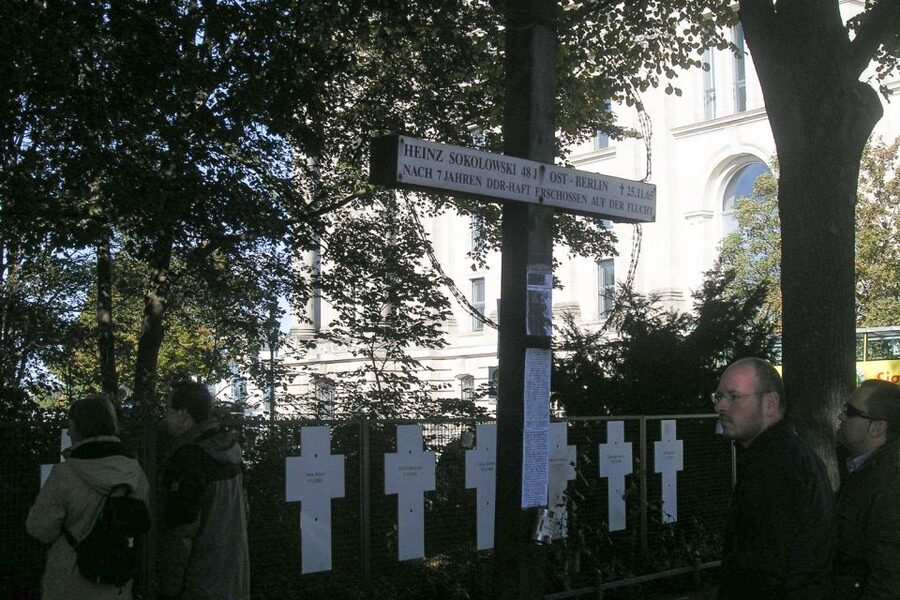
The tour continues from the Brandenburg Gate to the Holocaust Memorial, located at the site of what is described as the former death strip. This is an important and serious part of the experience, linking two painful chapters of Berlin’s twentieth-century story.
The guide’s role here is to explain the setting with care. The memorial itself addresses the murder of Europe’s Jews, while the surrounding location also carries the physical memory of the Berlin Wall and the controlled border zone. These subjects are distinct, but their proximity shows how several layers of German history meet in central Berlin.
You should allow yourself a slower pace at this point. The walk is scheduled for two hours, yet not every moment needs to feel rushed. The guide can provide context, but the memorial also asks for quiet attention.
This stop may feel emotionally heavy, especially because the itinerary places the Holocaust Memorial within a larger discussion of state power, borders, and human loss. That is a reason to choose this tour with care. It is not a light sightseeing stroll, even though it covers famous city landmarks.
Potsdamer Platz and the Tiergarten Triangle
At Potsdamer Platz, the division becomes especially visible in the area known as the former Tiergarten Triangle. The tour uses this section to show how a major urban space was split and later reshaped.
Potsdamer Platz is useful because it brings together several time periods. You can consider the pre-division city, the empty and controlled border zone, and the rebuilt modern center. The guide’s explanation gives you a way to read those changes instead of seeing only new architecture.
I find this kind of stop more useful than a simple Wall photo. It explains absence. The border created spaces where normal city life had been interrupted, and later construction changed the appearance again. Without context, it can be hard to tell what you are looking at. With a good explanation, the open areas and new buildings become part of the story.
The route may cover several sites in a short period, so this is another place where the guide’s pace matters. A small group can make it easier to hear, ask questions, and pause when something needs more explanation. One account describes a small group and an exceptionally intensive walk, with the guide extending the tour by an hour. That extra time should be treated as a pleasant possibility, not a scheduled feature.
A remaining Wall section and Checkpoint Charlie
The tour also visits the longest remaining stretch of the Berlin Wall and the famous Checkpoint Charlie. These are two of the most recognizable Cold War locations in Berlin, but they offer different kinds of value.
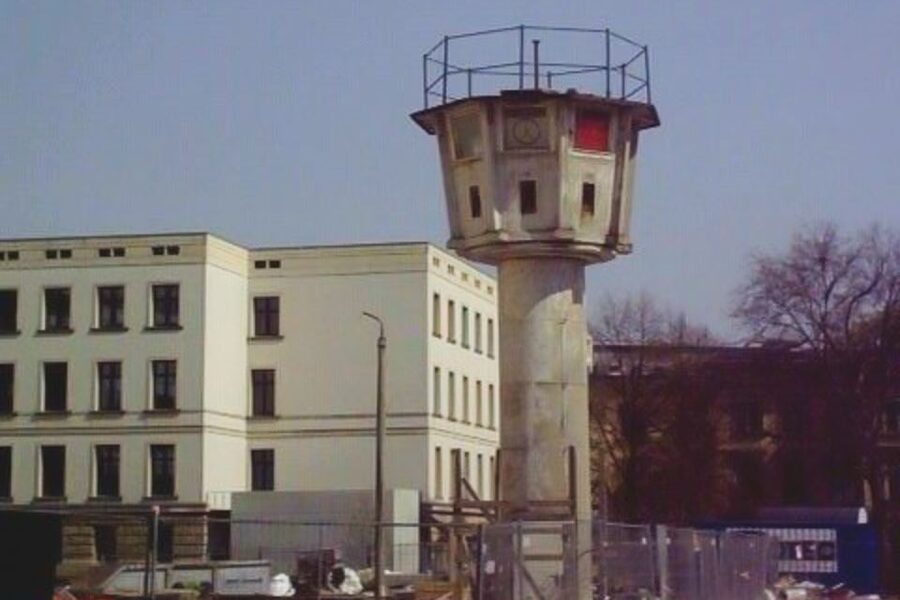
A surviving Wall section gives you a physical sense of the barrier. Even a short remaining stretch can make the scale of the division easier to grasp than a photograph or a history book. Look for the guide’s explanation of how the border shaped the space around it, rather than treating the concrete as a stand-alone monument.
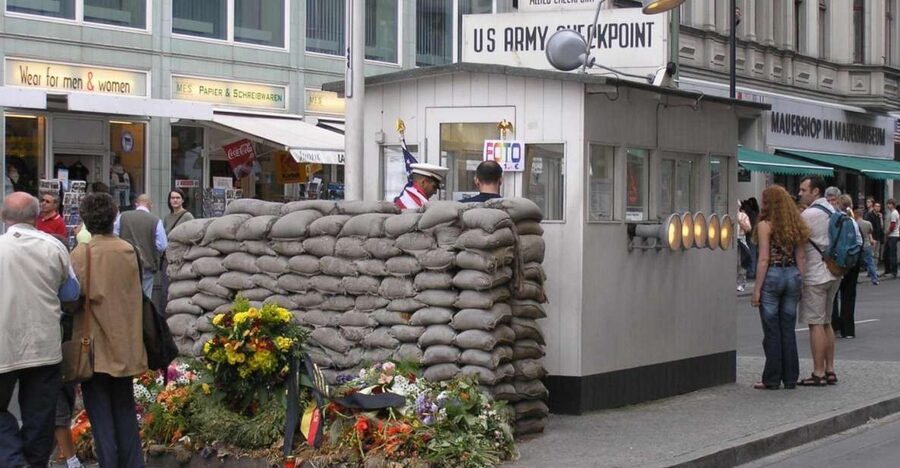
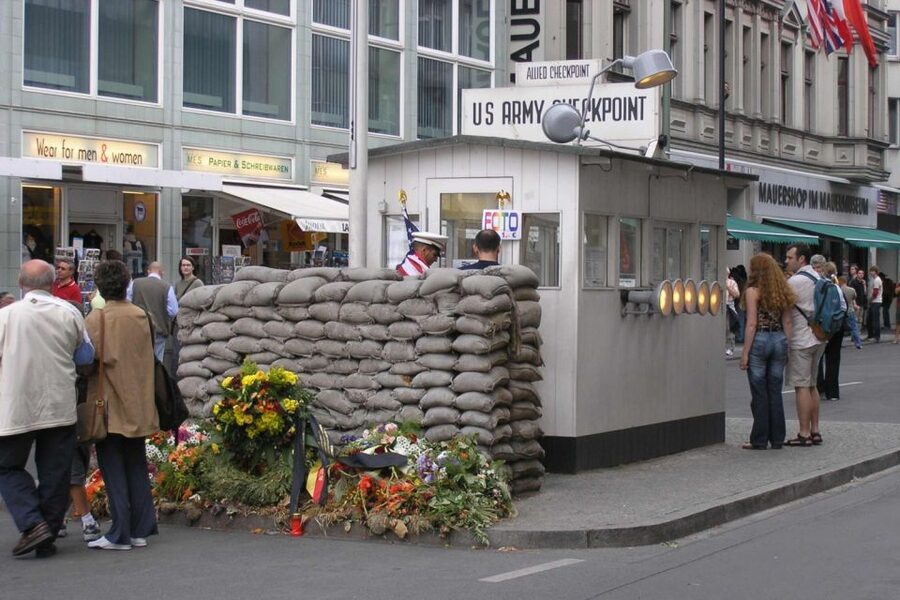
Checkpoint Charlie is more familiar and more heavily associated with Berlin sightseeing. The name refers to the former Allied checkpoint, and the site has become one of the city’s best-known Cold War stops. Its fame can make it feel less intimate than other parts of the walk, but the historical setting still matters.
The guide helps place Checkpoint Charlie within the wider border system. That is the main reason to see it on this tour rather than only stopping for a quick picture. You learn how this crossing fit into a larger network of controls and restrictions.
The supplied route description mentions both Potsdamer Platz and the longest remaining Wall section, but it does not specify the exact street-by-street order or precise location of that Wall segment. If seeing one particular memorial or stretch of Wall is essential to you, ask the guide at the start how the route will be handled that day.
What the guides add to the walk
A history walk depends heavily on its guide, and the strongest praise here centers on personal storytelling. One German-language comment specifically highlights the guide’s personal accounts. Another describes the guide as very good, while a separate account credits Stefan with information that was not easily found elsewhere.
That kind of detail is valuable in Berlin. The major facts of the Wall are easy to find, but the daily effects of division are harder to picture. A personal account can explain what a border meant at the level of a station platform, a family meeting, or a trip across town.
You should also expect an informative rather than theatrical style. The activity promises a live guide, not a costumed performance or a museum workshop. The experience works best if you enjoy asking questions and connecting facts to the places around you.
The guide language remains the key condition. German speakers can get the full benefit of the stories and explanations. If you need English, this particular tour does not provide it according to the supplied details.
Is two hours enough for Berlin’s divided past?
Two hours is enough for a well-focused introduction, but not enough for every detail. The tour works by connecting a chain of significant locations rather than spending a long time inside any one museum or memorial.
That length suits you if you want a clear framework early in your Berlin visit. Afterward, you will have a better sense of how Friedrichstraße, the government district, the Brandenburg Gate, Potsdamer Platz, the Wall, and Checkpoint Charlie relate to the city’s division.
The pace may be brisk. You are covering central Berlin on foot, and the tour includes several major stops. Comfortable shoes are specifically recommended, and I would take that advice seriously. Cold weather also deserves attention, since one account describes remaining satisfied despite low temperatures.
The tour may suit families with older children, history students, and first-time visitors who want more meaning behind the central sights. It is less suitable if you want a relaxed café-and-photo walk, an English-language explanation, or a long museum visit.
Is $21 a fair price?
At $21 per person, this is a strong price for a live, two-hour specialist walk in central Berlin. You are paying for a guide who organizes the route and supplies the historical links, not for admission to a large attraction.
The value is highest when you would otherwise pass these places without understanding their Cold War setting. A general city walk might show you the Brandenburg Gate and Checkpoint Charlie, but this tour gives those sights one clear subject: how division shaped Berlin and its people.
There are limits. The price does not include a museum visit or any extra attraction admission. The tour is German only, and the exact quality of the experience depends on the guide assigned to your departure.
Flexible booking improves the practical value. You can cancel up to 24 hours before the tour for a full refund, and you can reserve now and pay later. Those policies are useful if your Berlin schedule is still changing, but they do not alter the central question: can you follow a German-speaking history walk?
Who should book the City Tour of Divided Germany?
I would choose this tour if you want a focused introduction to Berlin’s division and can follow German comfortably. It is particularly useful early in a visit, before you explore the city on your own, because it gives meaning to several central locations.
You will likely appreciate it if personal stories matter as much as dates and political events. The emphasis on ordinary life, border crossings, and the fate of divided families gives the walk a human scale.
I would skip it if you need English, dislike walking in cold or uncertain weather, or want a self-guided visit that lets you linger at each stop. You should also avoid expecting a guaranteed three-hour experience simply because one guide extended a departure. The advertised duration is two hours.
If you do book, arrive at the one entrance of Tränenpalast, wear comfortable shoes, and be ready for a serious subject. At $21, the walk offers very good value for German-speaking visitors who want Berlin’s most famous Cold War sights explained as parts of one connected story.
FAQ
Where does the Berlin Wall City Tour of Divided Germany begin?
The meeting point is at the entrance of Tränenpalast, the Palace of Tears, in front of Friedrichstraße station on Reichstagufer, 10117 Berlin, Germany. Tränenpalast has only one entrance.
How long does the tour last?
The scheduled duration is two hours. A previous departure was extended by an hour, but extra time is not listed as a standard part of the tour.
What language is the tour conducted in?
The live tour guide speaks German. German is the only language specified for this activity.
Which Berlin sights are included?
The route includes Friedrichstraße station and Tränenpalast, the Spree, the parliament and government district, the Brandenburg Gate, the Holocaust Memorial, Potsdamer Platz, the former Tiergarten Triangle, a remaining stretch of the Berlin Wall, and Checkpoint Charlie.
What should I bring?
Bring comfortable shoes because the experience is a walking tour.
How much does the tour cost?
The listed price is $21 per person. You can reserve now and pay later, and cancellation up to 24 hours in advance is allowed for a full refund.
Just added around Berlin
- Berlin Highlights in One Day★ 5.0 · 3 reviews
- Private Berlin One Day Tour with a Local: See the City Unscripted★ 3.5 · 3 reviews
- Individual city tour Berlin for max. 8 persons★ 5.0 · 3 reviews
- Transfer from Berlin Schönefeld Airport (SXF) to Berlin city Hotels – ROUND TRIP★ 4.0 · 3 reviews
- Berlin: Museum Island Tour★ 5.0 · 3 reviews
- Private Analogue Photography Experience in Berlin★ 5.0 · 3 reviews
- Berlin: Local Food Tour in Secrets Hidden Gems★ 4.0 · 3 reviews
- Berlin & The Third Reich Private Guided Tour★ 5.0 · 3 reviews
Berlin Wall Tours, compared.

Skip-the-Line: Berlin Wall Museum at Checkpoint Charlie
Read our review →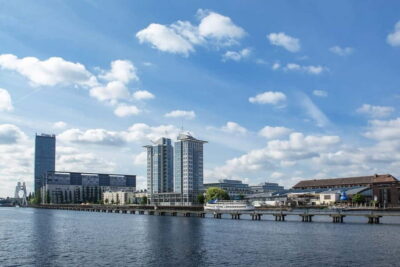
East Side Gallery Spree Cruise in a Solar Catamaran
Read our review →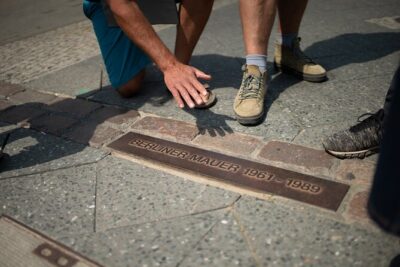
Cold War, Berlin Wall, Spies and the East Side Gallery
Read our review →

Guided Bike Tour of the Berlin Wall and Third Reich
Read our review →

Browse the lists this tour appears in